How to Grow and Care for Celebrity Tomatoes
Learn how to grow Celebrity tomatoes from seed to harvest, with practical timing, spacing, support, watering, feeding, container, and troubleshooting advice.
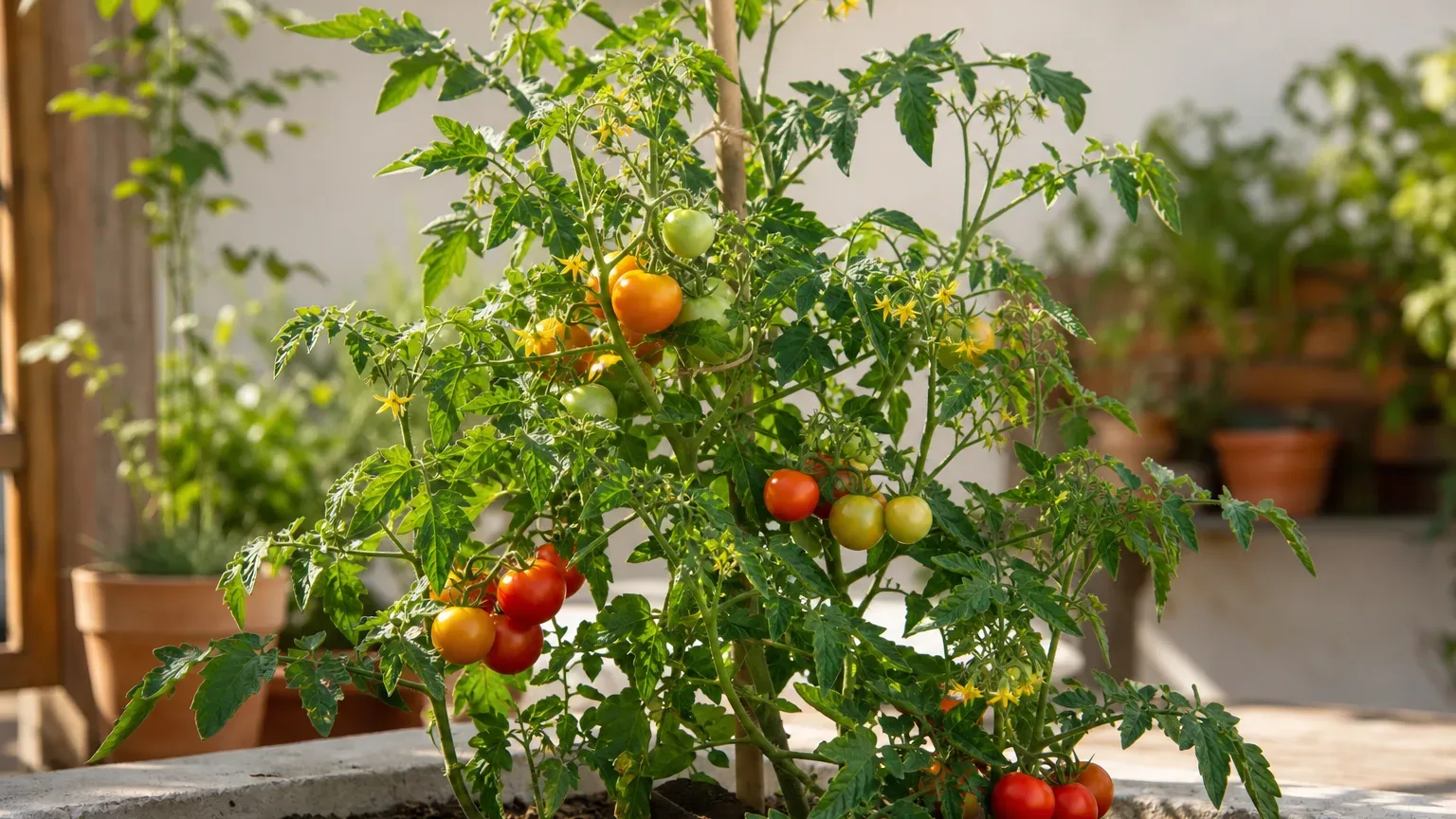
Celebrity is a reliable, mid-early tomato for gardeners who want firm, red slicers without managing a huge, continuously climbing vine. Give it full sun, warm soil, a cage or stake from planting day, and steady moisture; the first fruit can begin ripening roughly 70 to 75 days after transplanting, though weather and plant size change that estimate.
The cultivar has a small naming wrinkle: some references describe it as determinate, while seed sellers and garden writers sometimes call it semi-determinate. In practice, expect a compact, bushier plant that can still grow tall and carry heavy fruit. It is easier to manage than an indeterminate vine, but it is not a miniature patio tomato that can be left unsupported or planted in a tiny pot.
Is Celebrity a Good Tomato for Your Garden?
Celebrity is a hybrid slicing tomato with round, deep-red fruit, usually around 8 ounces, and a firm texture suited to sandwiches, salads, and fresh cooking. The All-America Selections profile for Celebrity lists the cultivar as a mid-early determinate variety and notes that it can grow as a bush, in a cage, or on a short stake. It records the 1984 AAS award and a 75-day harvest estimate from transplant; Epic Gardening places maturity near 70 days, so plan for roughly 70 to 75 days rather than a fixed date.
You may see a seed packet or growing guide use “semi-determinate.” The labels are not consistent across references, but both descriptions point to a bushier habit than an indeterminate vine; check your seed packet for the habit and resistance details of that seed line. In either case, plan for a sturdy plant that needs support and will not keep vining upward indefinitely.
Celebrity is a good fit if you want a dependable midseason tomato and can give one plant a sunny bed or a large container. It is less suitable if your only goal is the longest possible harvest from one plant, or if you need a very compact, unsupported tomato for a narrow windowsill. Its disease resistance is useful, but it does not remove the need for rotation, airflow, and sensible watering.
Treat the days-to-maturity number as a planning estimate, not a harvest promise. Seed companies count from transplanting, not sowing; a rootbound transplant, cool soil, shade, or a heat spell can shift the first ripe fruit by days or weeks. Starting early indoors gives a short-season garden a head start, but planting into cold ground can stall a healthy seedling and erase that advantage.
Celebrity Tomato Care at a Glance
| Care factor | Practical target |
|---|---|
| Light | At least 6 hours of direct sun; 8 hours is better where summers are mild |
| Planting window | After frost risk has passed, when soil is warm and nights are settling above about 55°F |
| Bed spacing | About 24–36 inches between plants; widen in humid, crowded gardens |
| Support | Install a sturdy cage or stake when transplanting |
| Water | About 1–1½ inches weekly as a starting point; adjust for rain, soil, heat, and pot size |
| Container | One plant in a pot of at least 5 gallons with open drainage; larger pots are easier to keep evenly moist |
| First harvest | Roughly 70–75 days from transplant, depending on conditions |
These figures describe a starting point rather than a rigid schedule. Penn State Extension’s tomato growing guide gives useful targets for sun, water, and plant support; local soil, rain, and weather should determine the adjustments.
When to Start Seeds and Plant Outdoors
Start Celebrity indoors about five to seven weeks before your area’s last expected spring frost, or buy a compact transplant when the weather is nearly ready. The plant needs a warm growing season, so use the frost date as a first check and the temperature of the soil and nights as the final checks before planting.
Start seedlings early enough, but not too early
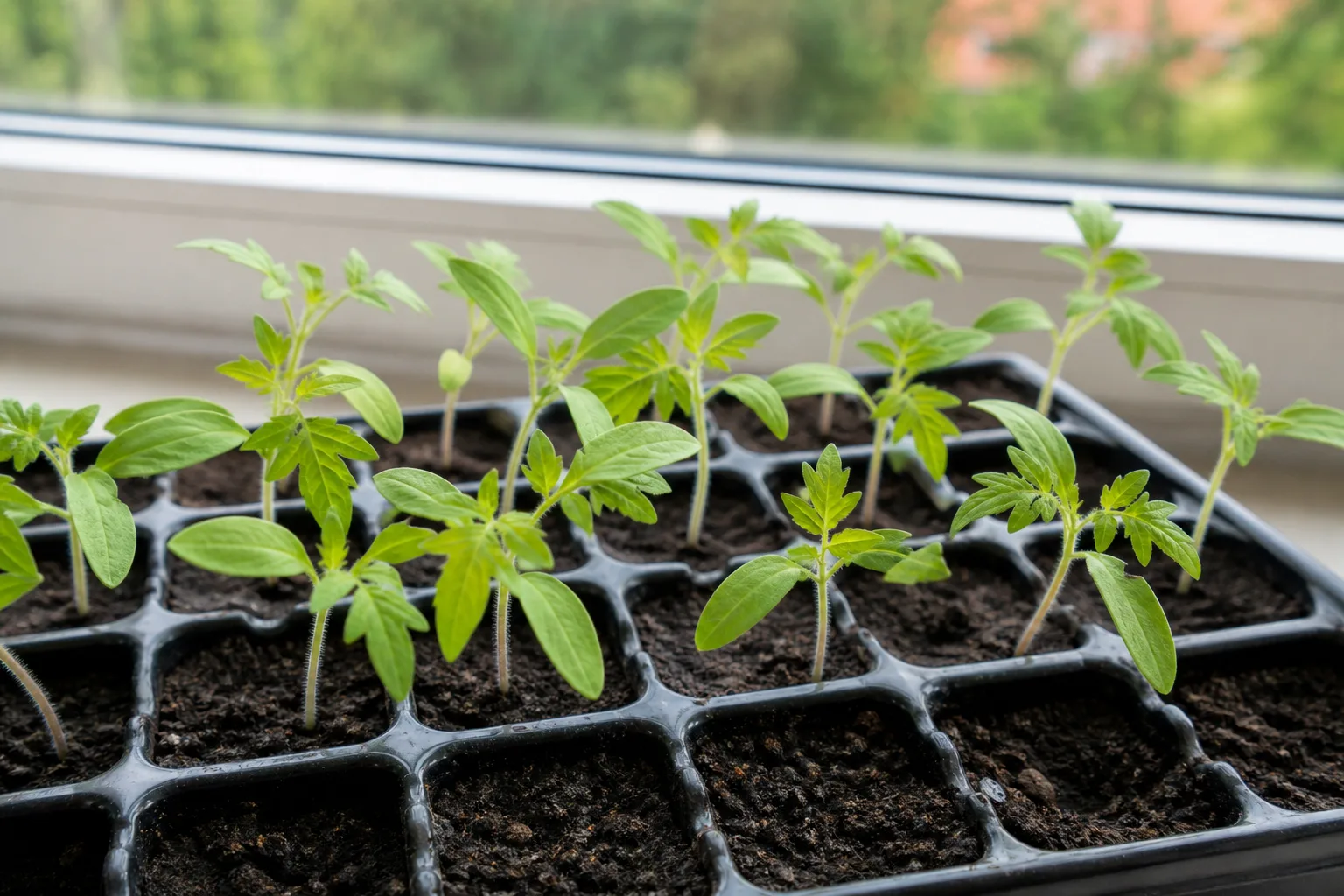
Sow seed about ¼ inch deep in a clean tray filled with seed-starting mix, then keep the mix evenly damp rather than saturated. Warmth helps germination; once seedlings emerge, give them strong light close to the leaves so the stems grow short and sturdy instead of thin and stretched. A sunny window can work, but a grow light is more reliable if the window is dim or the seedlings lean toward the glass.
Pot seedlings on when roots fill the cells, and keep them growing steadily until the bed is ready. Do not keep them in a tiny container for weeks just because they are tall enough to transplant; crowded, circling roots and flowers forming on a stressed indoor plant are signs the seedling has been held too long. If outdoor weather is delayed, move it to a larger pot and continue providing strong light.
Harden off before transplanting
Give a nursery plant or homegrown seedling about a week to adjust to outdoor sun and wind. Begin with a few hours in a sheltered, bright spot, extend the time outside each day, and protect it from strong wind, intense midday sun, or a cold night. If the leaves bleach or wilt even though the mix is moist, give it another day in gentler conditions before increasing exposure.
Transplant after frost danger has passed and the soil has warmed; around 60°F soil and nights consistently above roughly 55°F are safer guides than the calendar alone. Penn State Extension notes that frost kills tomato plants and that blossom drop can occur when night temperatures fall below 55°F or rise above 75°F. Those figures are useful warnings, not guarantees for every garden, because wind, humidity, and a warm wall can change a plant’s microclimate.
Choose a Sunny Site and Prepare the Soil
Choose a bed that receives six or more hours of direct sun, has room for a support, and drains after heavy rain. In a humid climate, a breezy location and a little extra spacing help foliage dry; in a very hot climate, morning sun with protection from harsh late-afternoon heat may preserve flowers and fruit better than reflected heat from pavement or a south-facing wall.
Celebrity grows best in fertile soil that holds some moisture but does not stay waterlogged. A soil test is more useful than adding lime or fertilizer by guesswork; Penn State Extension gives a slightly acidic range near pH 6.2–6.8 for tomatoes, while NC State Extension also recommends moist, loamy, slightly acidic soil. Mix finished compost through the bed if it is low in organic matter, but do not plant the root ball in a pocket of pure compost that holds water differently from the surrounding soil.
Rotate tomatoes away from tomatoes, peppers, eggplants, and potatoes when space allows. These crops share soilborne disease risks, so an alternate bed and removal of diseased debris can help reduce repeated exposure. NC State Extension’s tomato profile suggests leaving three to four years between nightshade-family crops when possible; in a small garden, move plants as far as practical or use a large container with fresh potting mix rather than reusing soil that carried a serious wilt or root disease.
Plant Deeply, Space Well, and Add Support
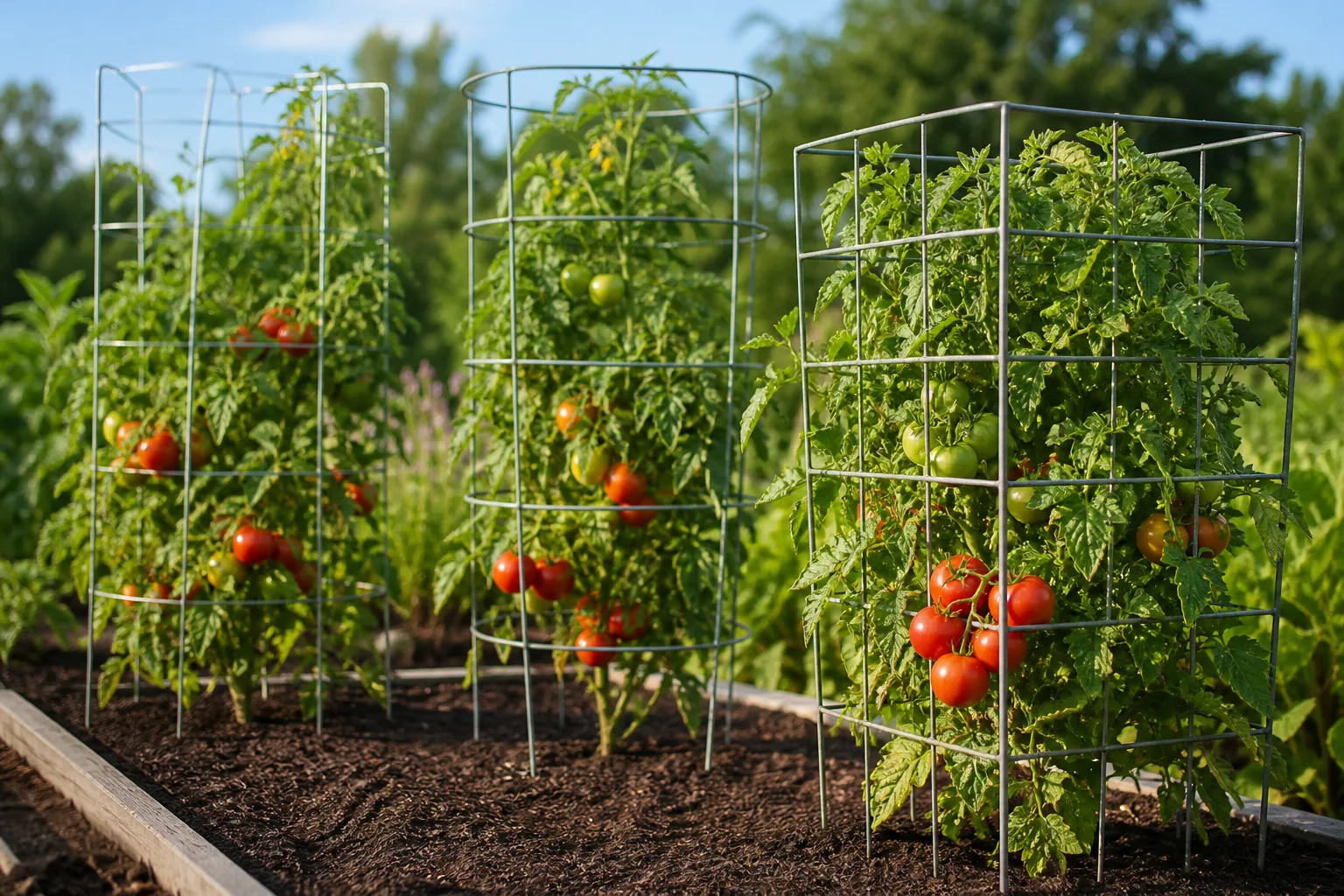
Set plants about 24–36 inches apart, with rows roughly three feet apart if you have room. Wider spacing is useful where summer humidity is high, plants stay wet after rain, or you expect a dense canopy. The AAS cultivar profile lists two to three feet as the garden spacing for Celebrity, which is a good fit for an average home bed.
Tomato stems can produce roots along buried sections, so remove leaves that would sit below the soil and plant the root ball deeply. If the transplant is leggy, lay part of the stem in a shallow trench and leave the leafy top above ground; the stem will turn toward the light. Water thoroughly after backfilling to settle soil around the roots, then check that the plant is upright and the support is stable.
Choose a cage or stake before planting
Install the cage or stake at transplanting so you do not stab mature roots later. A sturdy tomato cage around three to four feet tall suits a bushier Celebrity plant; a short stake also works if you tie the main stem loosely as it grows. Avoid flimsy, narrow cages that tip under wet foliage and clusters of heavy fruit.
Support keeps fruit off the soil, makes picking easier, and gives air a path through the canopy. Tie stems with soft garden tape or cloth, leaving enough room for the stem to thicken; wire or a tight knot can cut into it. If a stem leans after a storm, add a second tie near the bend rather than pulling the whole plant upright in one hard tug.
Grow Celebrity Tomatoes in a Container
One Celebrity plant can grow in a container, but choose the pot for its root system and your watering habits. NC State Extension lists five gallons as a minimum for a tomato, and a deeper, wider pot gives you more room for roots and a larger reserve of moisture. Use one plant per container, select a stable pot with unobstructed drainage holes, and fill it with quality potting mix rather than dense garden soil.
Place the pot where it will receive full sun and will not tip in wind. Add a cage or stake at planting, and check the soil at least once a day during hot weather; a small pot may need water again by evening even when an in-ground plant is fine. If you travel or often miss a watering, choose a larger container or a self-watering setup rather than trying to compensate with a shallow daily splash.
Container growing also concentrates fertilizer salts and nutrients in a smaller volume of mix. Use a fertilizer labeled for edible container plants, follow its rate, and watch the plant’s growth rather than adding extra feed every week. If water runs straight down the pot sides or the mix has pulled away from the container, soak it slowly until the root ball is wet throughout, then let the excess drain.
Water Evenly and Mulch the Root Zone
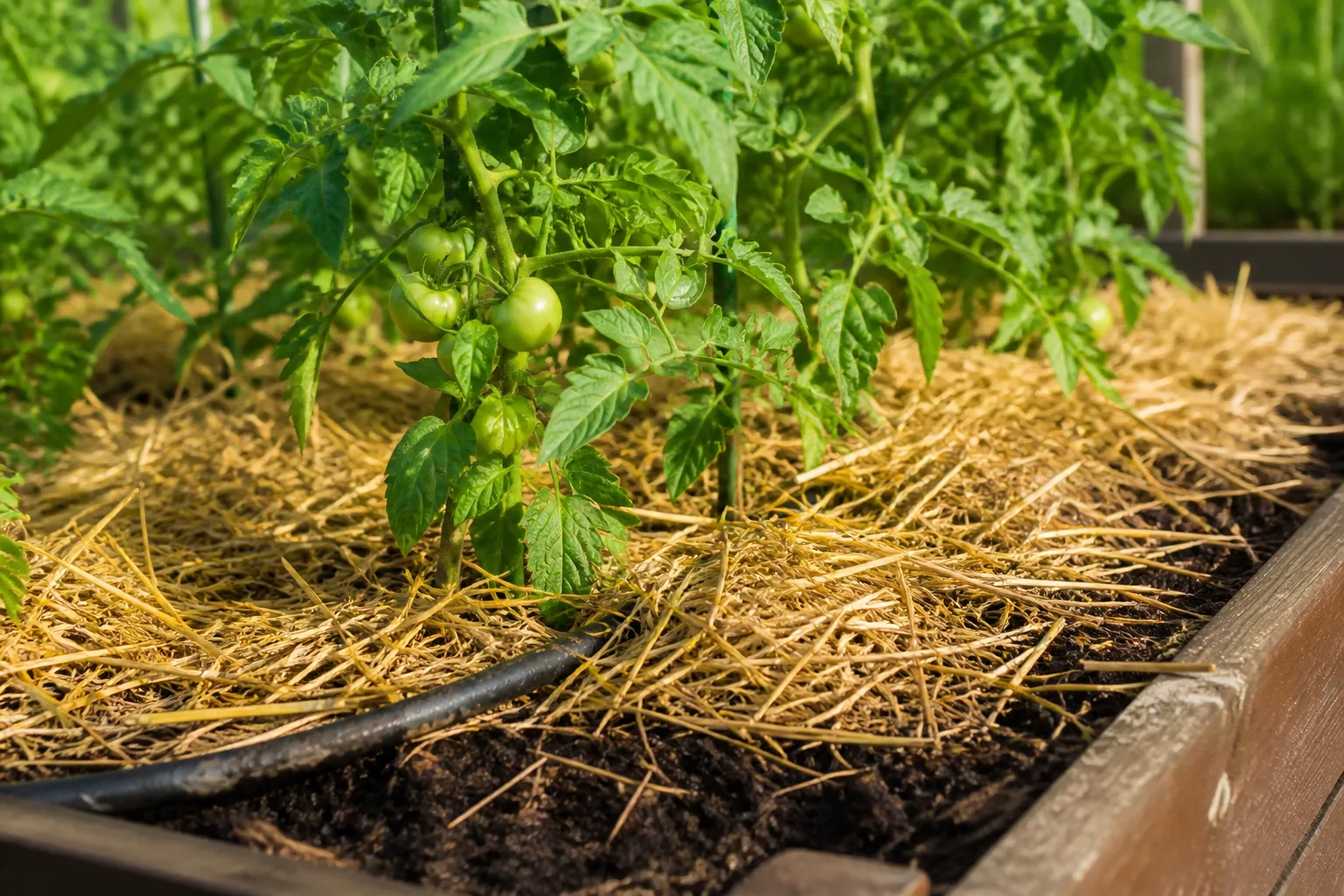
Aim for a deep, even supply of moisture rather than a strict daily watering ritual. Penn State Extension’s guidance of about 1–1½ inches of water per week is a useful starting point in a garden bed, but rainfall, soil texture, heat, and container size change what the plant actually needs. Check the soil a couple of inches below the surface; water when that layer is beginning to dry, not only after the leaves droop.
Direct water to the soil with a drip line, soaker hose, or watering can. Keeping leaves dry can reduce some foliar disease pressure, and a slow soak encourages roots to explore more of the bed than a quick spray at the stem. Water in the morning when possible, especially if the plant’s foliage is likely to get wet, so it has time to dry before night.
Once the soil has warmed, spread two to three inches of clean straw, shredded leaves, or another garden mulch over the root zone, leaving a small gap around the stem. Mulch slows evaporation, softens the swing between a dry afternoon and a soaking rain, and reduces soil splash onto lower leaves. That steady moisture matters during flowering and fruit growth: abrupt dry-to-wet changes can contribute to fruit cracking and blossom-end rot.
If fruit develops a dark, sunken patch at its blossom end, do not immediately add calcium. Blossom-end rot is linked to poor calcium delivery to developing fruit, often because roots cannot take up water consistently; it does not always mean the soil lacks calcium. Remove badly affected fruit, stabilize watering, and test the soil before adding amendments.
Feed for Fruit Instead of Excess Leaves
Prepare the bed with compost and use a soil test to decide whether fertilizer is needed. When test results are unavailable, use a balanced vegetable fertilizer at the label rate rather than a large dose of high-nitrogen feed. Too much nitrogen can make Celebrity produce a lush canopy with fewer flowers, later fruit, and foliage that dries slowly after rain.
If you fertilize at planting, keep granules away from the stem and water them in as the label directs. A light side-dressing when the first fruit begins to form may help in poor soil, but a repeated calendar schedule is not automatically better. If the plant is deep green, growing rapidly, and not flowering, stop adding nitrogen and review sunlight, temperature, and watering before reaching for another product.
The same restraint applies to calcium supplements and “tomato boosters.” If a soil test shows adequate calcium and the plant has blossom-end rot, correct irregular moisture first; extra calcium cannot solve every uptake problem. Follow the product label for any edible-crop fertilizer, and do not combine products just because each one is sold for tomatoes.
Help Flowers Set Fruit Through Heat and Cool Spells
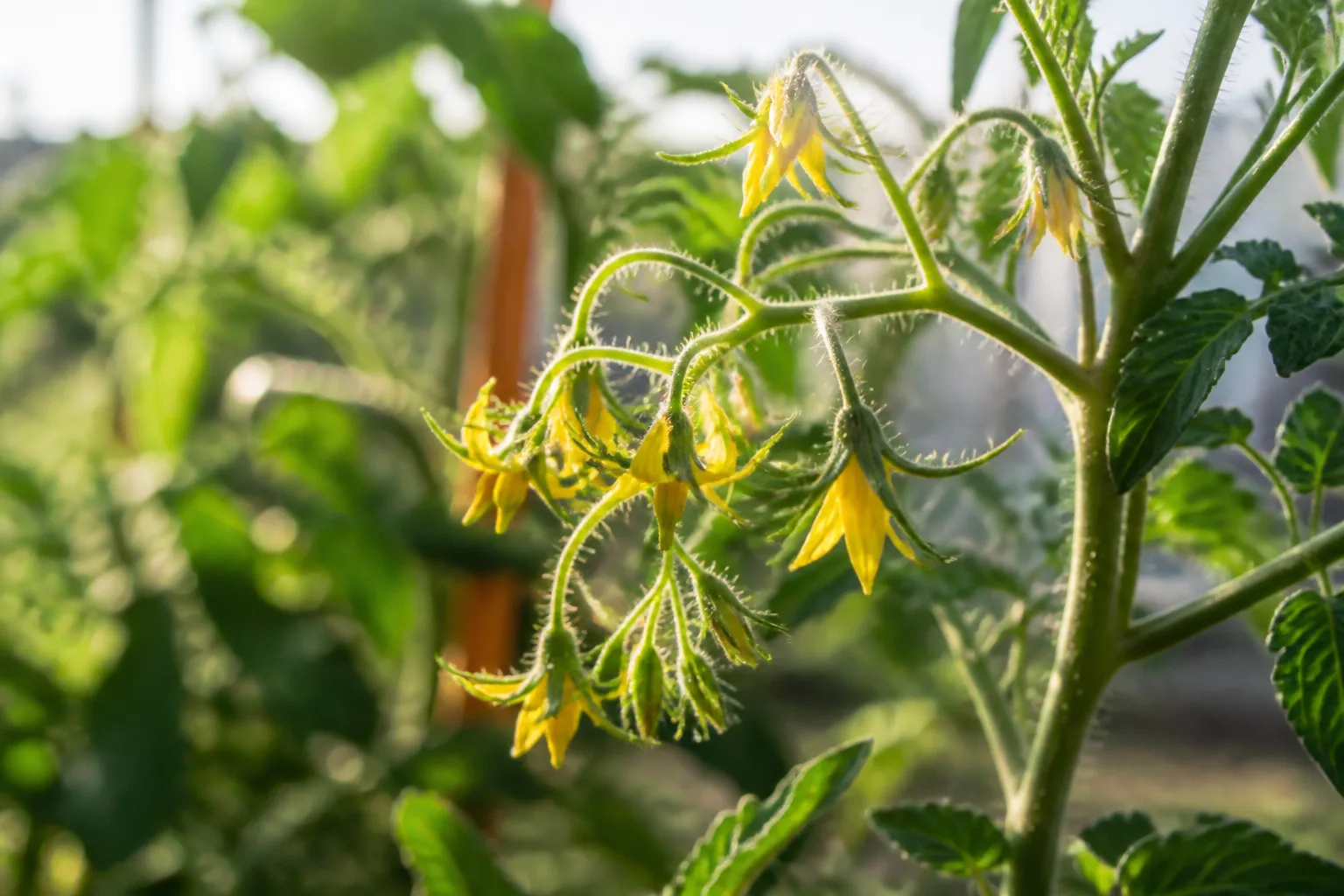
Tomato flowers are self-fertile, but pollen still needs movement to reach the flower’s female parts. In a normal open garden, breeze and insect activity usually provide enough vibration. In a sheltered greenhouse, screened porch, or still corner, gently tap the cage or flower trusses around midday when the blossoms are dry to help release pollen.
Temperature can interrupt fruit set even on a healthy plant. Penn State Extension notes that cool nights below about 55°F and hot nights above about 75°F can lead to blossom drop; high daytime heat can also reduce pollen performance. When flowers fall without forming small fruit, check recent nighttime temperatures, sunlight, and moisture before assuming that Celebrity needs more fertilizer.
Keep the root zone evenly moist during a heat spell and avoid severe pruning that suddenly exposes fruit. In a container, move the pot a short distance away from reflected heat if afternoon paving becomes extremely hot, but do not trade away nearly all of the plant’s sunlight. A few lost flower clusters during a temperature swing are frustrating, yet a plant may resume setting fruit when conditions settle.
Prune Lightly, If at All
Celebrity does not need the aggressive sucker removal used to train some indeterminate tomatoes to a single vine. Its bushier habit carries fruit on branching growth, so stripping every side shoot can reduce the number of productive stems and expose tomatoes to sunscald. The Epic Gardening care guide describes pruning as optional for this bush type; leave healthy branches in place unless they are causing a specific problem.
Remove leaves that touch the soil, turn yellow, or show clear disease symptoms, and thin a small amount of crowded lower growth if it prevents air from moving through the plant. Use clean pruners, avoid cutting the main growing points, and do not remove a large portion of the canopy at once. For general tomato pruning guidance, see our tomato pruning guide.
If the plant grows taller than expected, tie the main stems to the support instead of topping them automatically. Remove a sucker only when you need to make a crowded cage manageable or want to improve airflow; keep a healthy leaf canopy above developing fruit. In intense summer sun, foliage is useful shade, not wasted growth.
Prevent Disease and Scout for Pests
Resistance is a reason to choose Celebrity, not a substitute for garden hygiene. Start with a healthy transplant, rotate the crop, mulch to limit soil splash, water at the base, and look over leaves and fruit at least weekly. If you spot a problem, note whether it begins on lower leaves, new growth, flowers, or fruit; that pattern helps separate a disease from drought, nutrient stress, or insect feeding.
Early blight and Septoria leaf spot can still affect resistant cultivars, particularly when foliage stays wet or plants are crowded. Remove a few badly affected lower leaves with clean pruners, bag diseased material rather than composting it in a cool home pile, and keep the remaining canopy supported and dry. Penn State Extension’s tomato diseases and disorders guide helps distinguish leaf spots, wilts, fruit cracking, and blossom-end rot; avoid treating every brown leaf as the same disease.
Check leaves and stems for hornworms, aphids, stink bugs, and other feeding damage. Hand-pick large caterpillars when there are only a few, and identify a pest before choosing any control; a spray meant for one insect may also harm beneficial insects. If you use a pesticide, use only a product labeled for tomatoes and follow the label’s application and harvest interval.
Understand what the resistance package covers
The AAS profile lists Celebrity resistance to tobacco mosaic virus, Verticillium wilt, Fusarium wilt races 1 and 2, and root-knot nematodes. Resistance is specific to those listed pathogens or races; it does not mean that every plant is immune or that every seed packet sold under a similar name has identical resistance. Check the disease-resistance codes on your own packet when selecting a seed line.
That distinction matters if a plant wilts, yellows, or develops leaf spots. A resistant cultivar may still struggle with heat, poor drainage, root damage, other pathogen strains, or an unrelated disorder. Use the symptoms and the garden’s recent history to guide the next step, and consult your local extension service when several plants decline or the cause is unclear.
Harvest Red Fruit and Ripen the Last Tomatoes
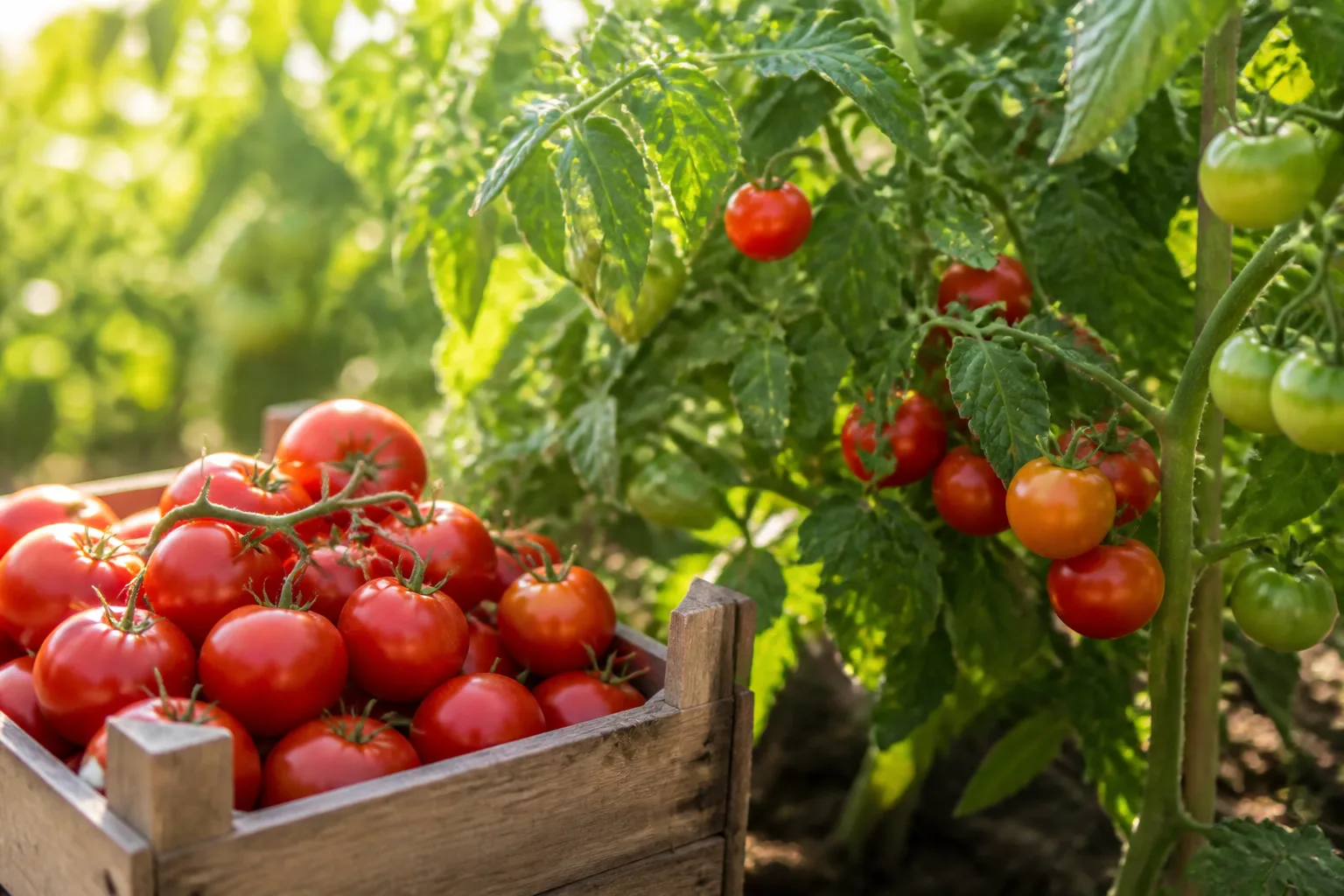
Pick Celebrity tomatoes when they have turned red across most of the skin and feel firm with a slight give. Harvesting at full color usually gives the best fresh flavor, while a ripe fruit that has begun to soften should come off before it splits or attracts pests. Hold the branch with one hand and twist gently, or use clean pruners to avoid tearing a heavy stem.
Check plants every few days once the first fruit colors. Regular picking keeps ripe tomatoes from sitting in wet foliage and gives you a chance to notice cracks or insect damage early. Celebrity is often described as producing over an extended period, but it is not an indeterminate vine that will keep expanding indefinitely; expect a main crop and additional fruit as growing conditions allow.
As fall approaches, leave green fruit on the plant while days are warm enough for it to keep coloring. When frost threatens or cool weather stalls ripening, pick mature fruit that has started to change color and bring it indoors. BBC Gardeners’ World Magazine’s late-tomato guidance recommends giving fruit as much warmth and light on the plant as practical, then using indoor ripening methods when the season is ending. Keep harvested fruit at room temperature away from direct sun; refrigerate only fully ripe tomatoes if you need to slow spoilage for a short time.
Celebrity is a hybrid, so seed saved from this season may not produce plants identical to the parent. If you want the same habit, fruit, and resistance package next year, buy seed sold as Celebrity rather than relying on saved seed. The fruit is the edible harvest; keep pets and small children from chewing the leaves, stems, or roots, which NC State Extension flags as plant material with poisonous characteristics.
Troubleshoot Common Celebrity Tomato Problems
Use the first visible symptom to choose a response instead of changing fertilizer, watering, and pruning all at once.
| What you see | Likely first check | What to do first |
|---|---|---|
| Flowers drop before fruit forms | Night temperatures, heat, dry soil, shade | Keep moisture steady, confirm sun, and wait for temperatures to settle before adding fertilizer |
| Leaves grow lushly but there are few flowers | Excess nitrogen, limited sun, heat | Stop nitrogen feeding, check direct-sun hours, and protect roots from severe heat |
| Fruit splits near the stem | Dry soil followed by heavy rain or irrigation | Mulch, water more evenly, and harvest fruit as soon as it begins to color |
| Fruit has a dark, sunken blossom-end patch | Moisture swings or root stress | Remove damaged fruit, stabilize watering, and test soil before adding calcium |
| Lower leaves develop spots or yellowing | Leaf-wetness, crowding, soil splash, or disease | Improve airflow, avoid overhead watering, remove badly affected leaves, and compare symptoms with extension guidance |
| The plant wilts despite moist soil | Poor drainage, damaged roots, or possible wilt disease | Check whether the root zone is saturated; do not add more water until drainage and soil moisture are clear |
Change one variable at a time so you can see whether the plant responds. A tomato that droops on a hot afternoon but recovers by evening may need more consistent moisture; a plant that remains wilted in wet soil needs a drainage or root-health check, not another soak. When the pattern spreads quickly to neighboring plants, take a clear photo and contact your county extension service for a diagnosis.
Conclusion
Celebrity is easiest to grow when you treat it as a compact but substantial tomato: wait for warm conditions, plant it in full sun, install support before roots spread, and keep the soil evenly moist without overfeeding. Its disease resistance and manageable habit make it a dependable slicer, but the variety still needs the same careful observation as any tomato.
Expect the first ripe fruit roughly 70 to 75 days after transplanting, then use color, firmness, and weather—not the calendar alone—to decide when to pick. If you give Celebrity enough root room, airflow, and steady care, you can enjoy a strong summer harvest without forcing the plant into a pruning or fertilizer routine it does not need.