16 Indoor Garden Ideas Anyone Can Do
Explore 16 indoor garden ideas for apartments, windowsills, shelves, bathrooms, and kitchens, with practical notes on light, watering, space, and upkeep.
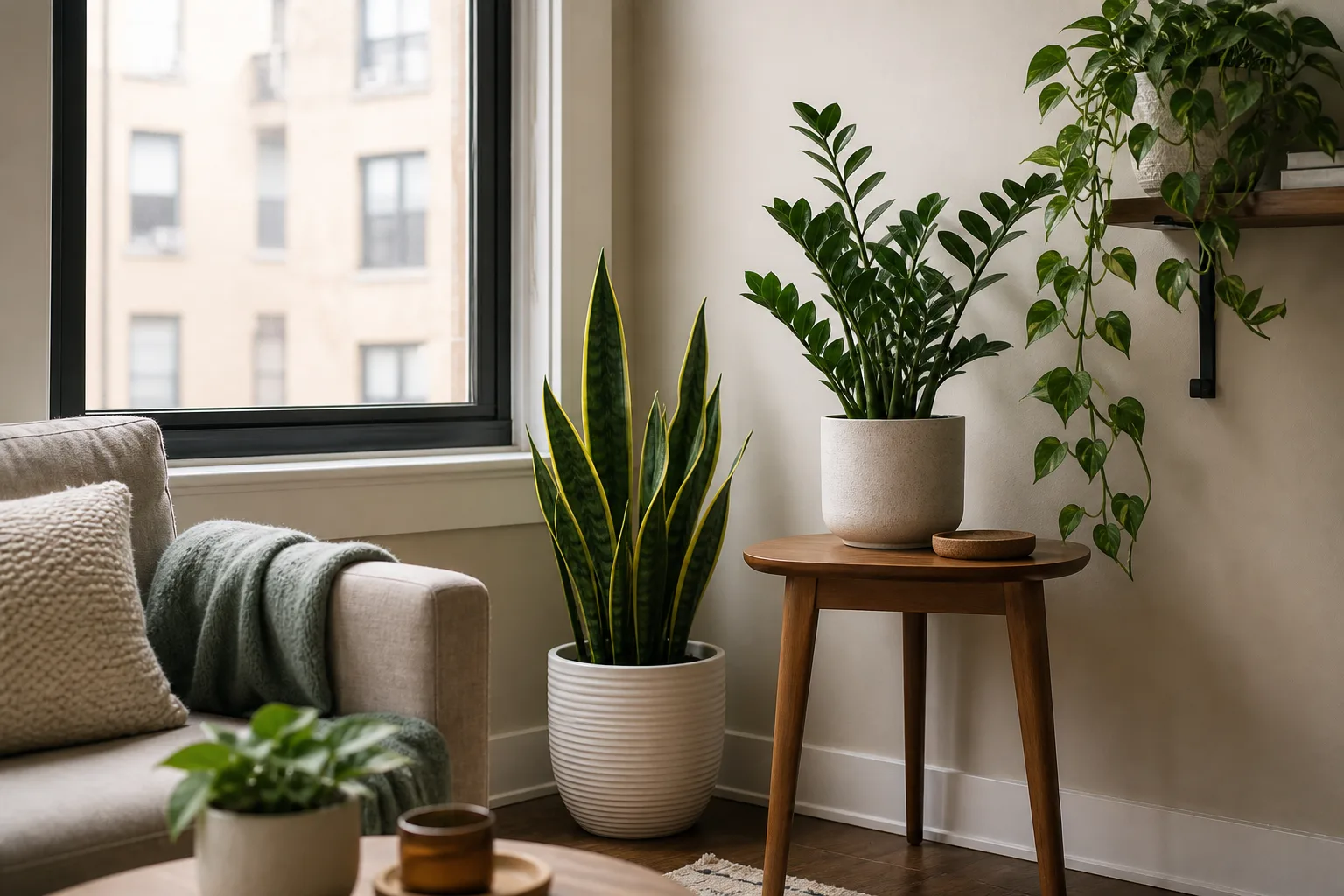
An indoor garden can be a single pot of basil beside the kitchen sink or a whole shelf of foliage plants. The best setup depends less on how much space you have than on where the usable light falls, how you can water without making a mess, and whether you want leaves to look at or food to harvest.
Use the ideas below as starting points, not rigid recipes. A sunny kitchen window might suit herbs, while a dim hallway is better for a small group of shade-tolerant foliage plants with supplemental light if growth stalls. The University of Georgia Extension guide to growing indoor plants identifies light as a major factor in indoor growth and explains that the amount changes with the window, season, shade, and other room conditions. That is why a practical indoor garden begins with the spot, then the plants.
Before You Start: Match the Setup to the Room
Watch the room at different times of day before you buy anything. Note which surfaces get direct sun, which stay bright without sunbeams, and which are dim even at midday; then compare those conditions with the needs of the plants you want. If you are unsure, start with one or two plants and observe new growth for a few weeks before expanding the display.
Plan for the water as carefully as the greenery. Most potted plants need a container with drainage, and decorative pots without holes should work as outer cachepots rather than as the planting pot itself. Set trays under containers, leave room to lift pots for watering, and keep shelves away from heat vents and electrical outlets. A crowded display that is difficult to reach will become a chore even if it looks beautiful on day one.
1. Grow Cooking Herbs on Your Brightest Windowsill
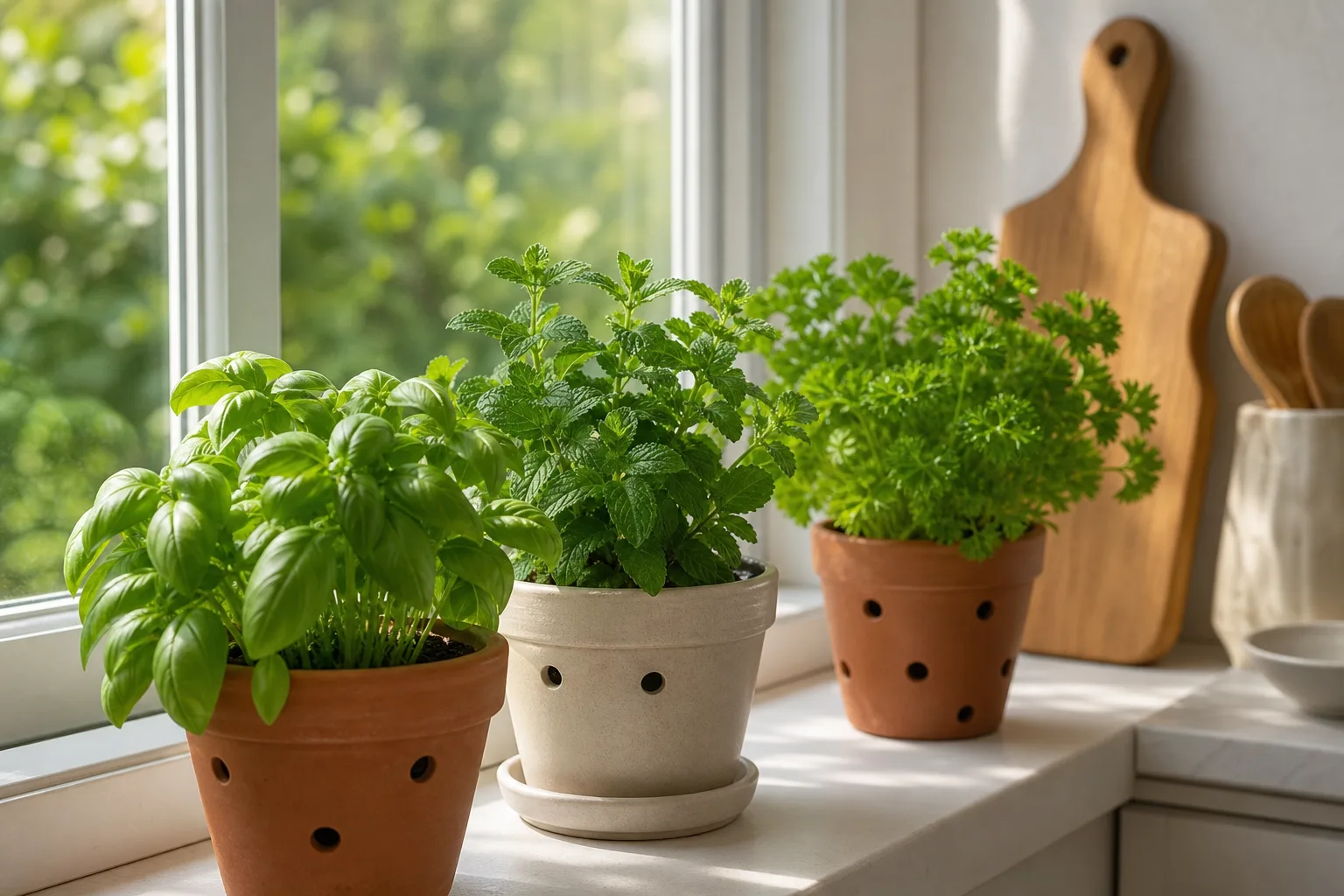
A windowsill herb garden makes the most of a narrow ledge and gives you something useful to harvest. Basil, parsley, chives, mint, and cilantro are common choices, but light matters: Penn State Extension’s indoor herb guide notes that many herbs need several hours of direct sun, while some tolerate less. If your window is shaded by buildings or trees, grow herbs under a suitable light instead of expecting a dark kitchen counter to produce a steady crop. See the indoor herb growing guide for more help matching herbs to a room.
Use separate pots with drainage so that a thirsty basil plant does not dictate how often you water rosemary or thyme. Set the pots in a waterproof tray, rotate them occasionally so growth does not lean toward the glass, and harvest lightly while plants establish. For extra color, group several pots in matching ceramic covers, but remove each inner pot to water and empty excess runoff before putting it back.
2. Turn a Shelf Into a Small Plant Nursery
A wire rack or sturdy bookcase can hold more plants than a windowsill, especially when you fit it with a grow light. Put seedlings, leafy greens, or light-hungry foliage on the brightest shelves, and reserve darker lower levels for plants that can tolerate lower light. A shelf near a window may still need supplemental lighting because the light reaching the back or bottom can be much weaker than what reaches the top.
Attach the light securely and follow its directions for distance and daily use; set a timer if you want a repeatable routine. Add waterproof trays to catch drips, leave space around foliage for air movement, and check that the shelf is rated for the combined weight of wet pots and trays. If you want year-round indoor herbs or compact greens, start with one lit shelf rather than filling every level at once. The grow light guide explains how to choose and position a fixture.
3. Set Up a Water Propagation Station
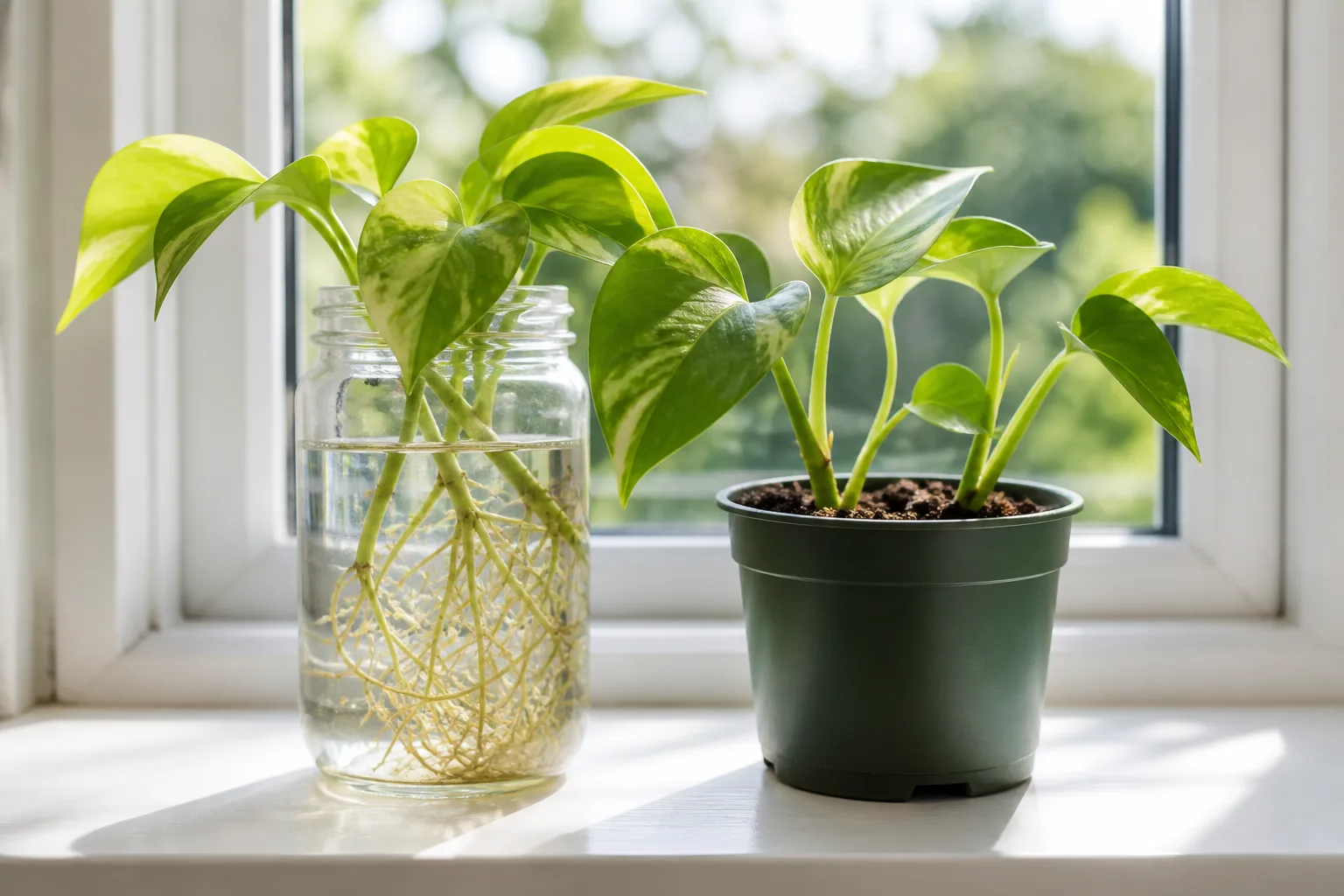
Propagation jars turn a bright shelf into a small growing project. Use a clean glass or bottle for a cutting that can root in water, making sure a node sits below the waterline while leaves stay above it. Change the water when it becomes cloudy, and keep the jars in bright indirect light rather than baking them in hot direct sun.
Treat the jars as a temporary rooting station, not a permanent home for every cutting. Once roots are established, pot the plant into a suitable mix or keep it in water only if the species and your care routine support that method. A simple tray prevents rings on wood and makes it easier to move several jars together. For the differences between rooting in water and soil, use the houseplant propagation guide.
4. Make a Glass-Cabinet Mini Greenhouse
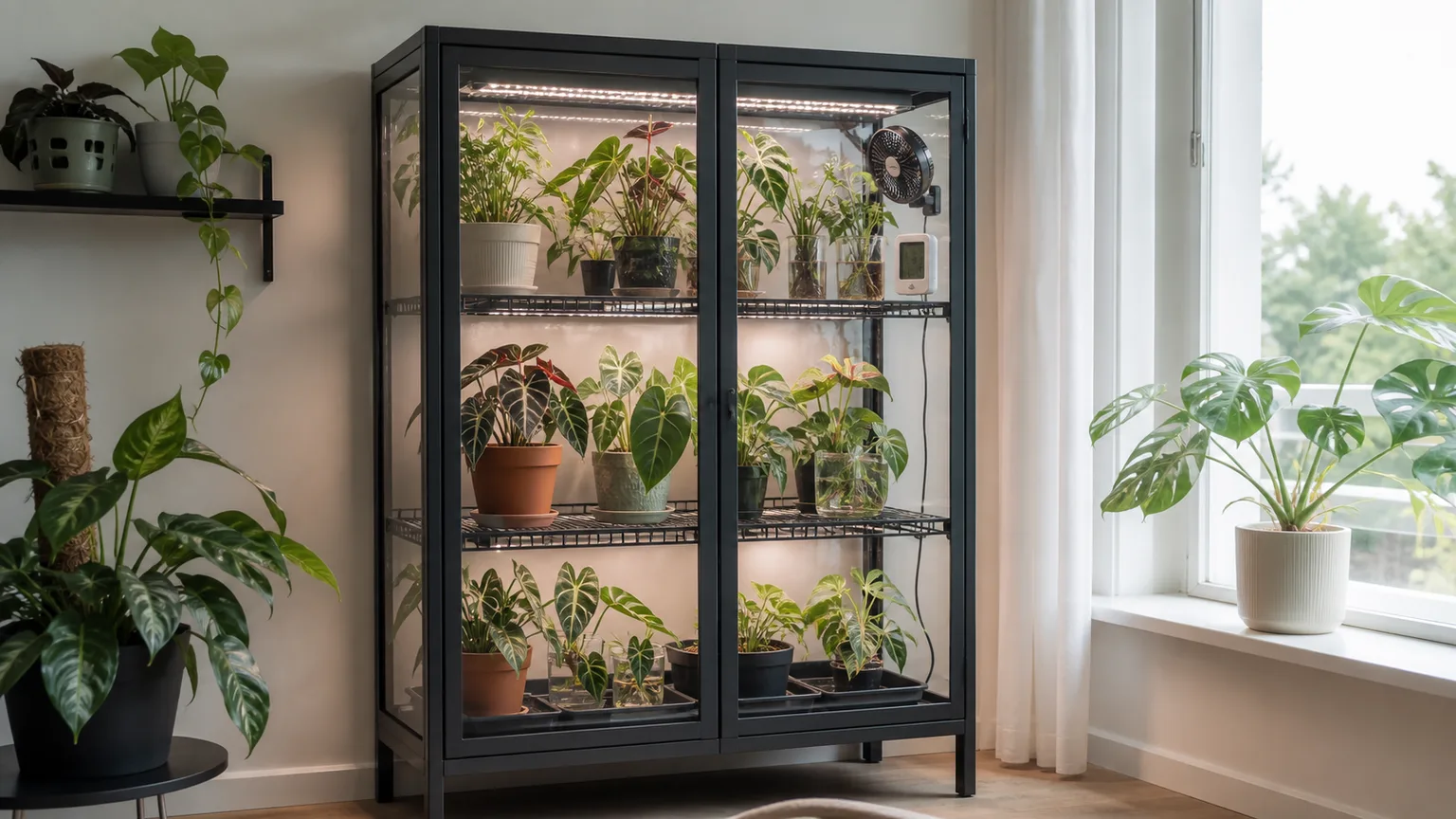
A glass cabinet can create a bright display for humidity-loving plants that struggle in dry rooms. Add shelves, a grow light if needed, and a small fan or ventilation openings so air does not sit still around damp foliage. Keep the cabinet out of direct sun; glass can trap heat, and a cabinet that is too warm or sealed can turn condensation into a persistent problem.
Use this setup for a limited collection with similar moisture preferences, then check the cabinet rather than assuming the glass will manage conditions by itself. Open the door if condensation stays heavy, and water individual pots according to their soil instead of pouring water into the cabinet. An old display cabinet can work, but protect the base from drips and make sure the shelves are strong enough for planters. The cabinet greenhouse setup guide covers more ways to adapt a glass cabinet.
5. Build a Terrarium for Plants With Similar Needs
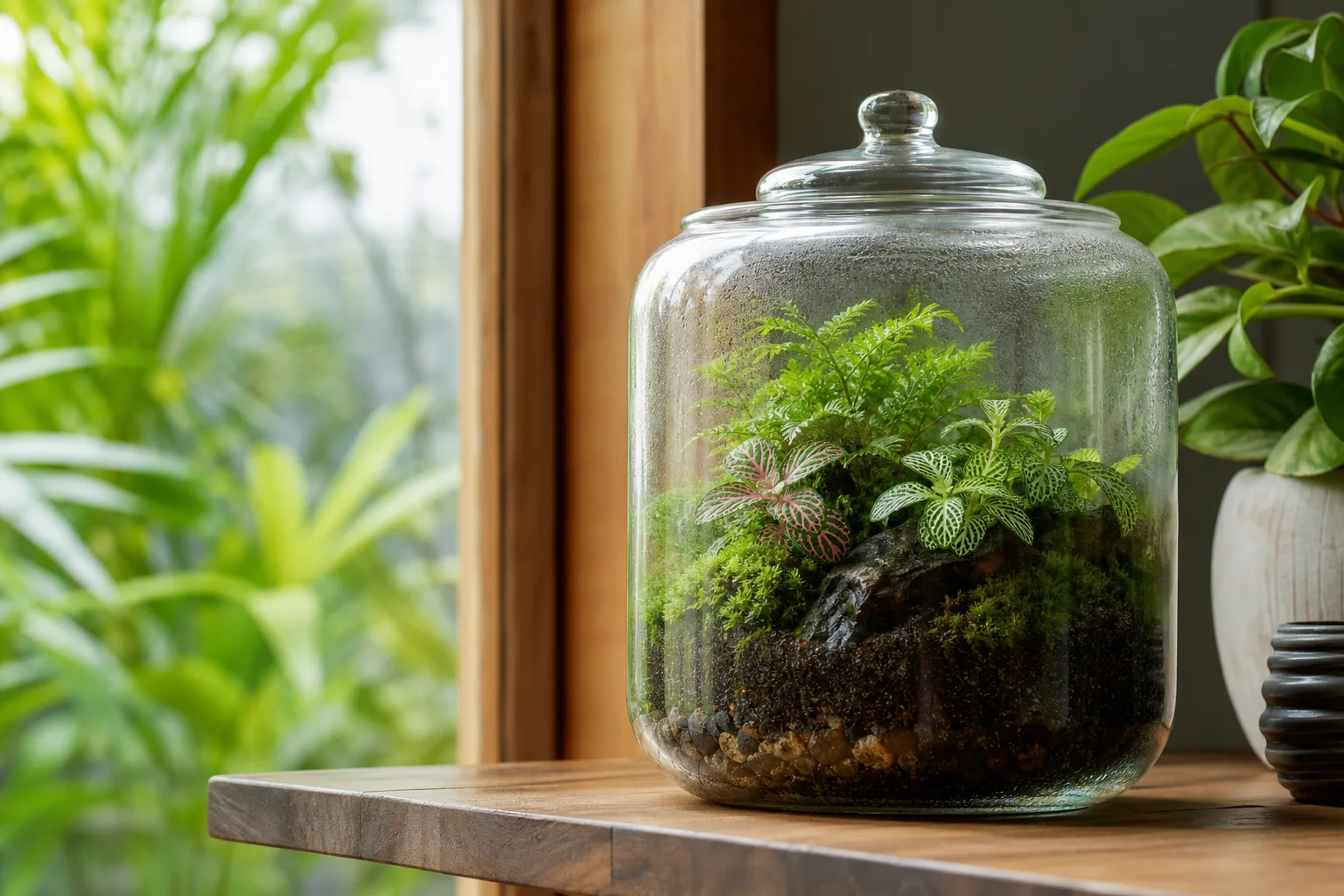
A terrarium gives a few small plants a contained landscape that can fit on a desk or side table. A lidded container suits compact plants that appreciate steady humidity, while an open bowl is easier to manage for plants that prefer drier air. Avoid combining a cactus that wants its mix to dry with a fern that needs consistently more moisture; they may look compatible at first and then require opposite care.
Place the glass in bright indirect light and keep it away from a hot window. Do not add water by habit: closed containers hold moisture, and too much water can leave the root zone soggy. Trim plants before they crowd one another, and remove dead leaves promptly so the small space stays tidy. For a full materials and planting walkthrough, see how to make a terrarium.
6. Use a Living Wall in a Narrow Room
A wall garden uses height instead of floor area. For an easy first version, mount a sturdy shelf or a few modular planters and keep the plants in removable nursery pots. This gives you the look of a living wall without forcing every plant into one shared pocket or making routine watering difficult. BBC Gardeners’ World describes modular living-wall systems and vertical shelves as space-saving options; indoors, the same idea needs a plan for light and runoff.
Protect the wall with a waterproof backing, choose an anchor that suits the wall material and load, and keep a catch tray beneath the lowest row. Water the pots where you can drain them, then return them once they stop dripping. A living wall is a poor fit for a wall that gets little light or cannot be safely mounted; a freestanding shelf can provide a similar vertical effect with easier access. See BBC Gardeners’ World’s vertical garden ideas for examples of modular systems and vertical shelves.
7. Hang Trailing Vines From a Secure Shelf
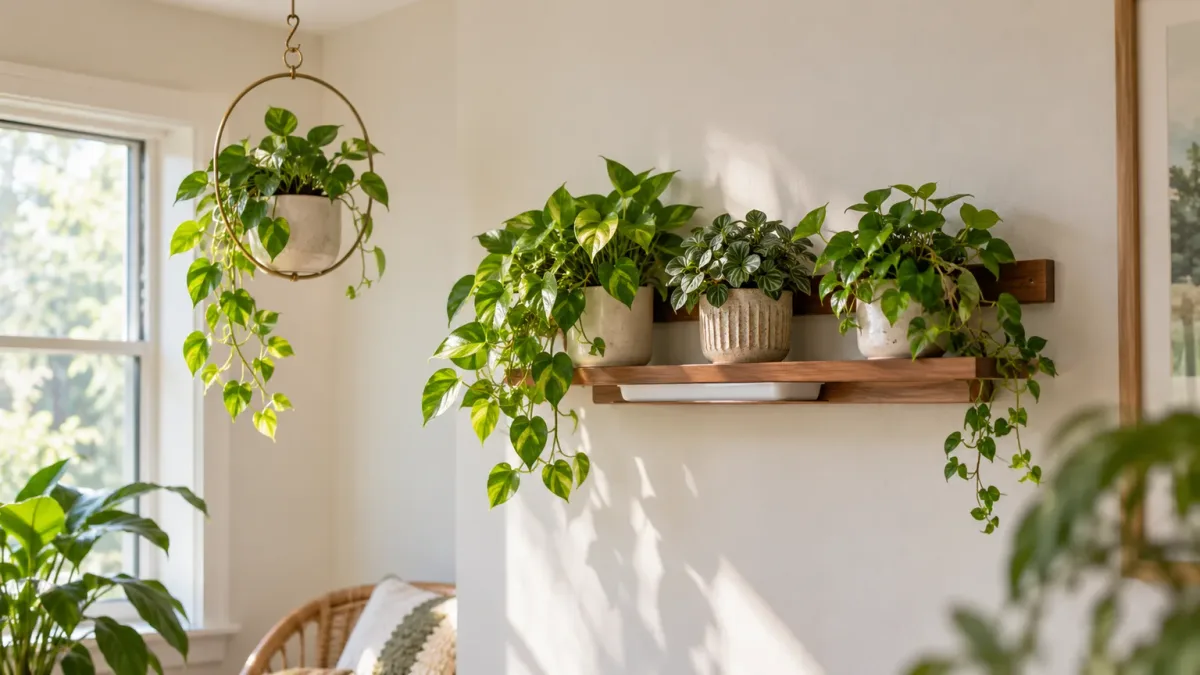
Trailing plants can soften the edge of a bookcase or add greenery above a desk without using floor space. Put a trailing pot on a deep, stable shelf or use a ceiling hook fixed into a suitable support; do not assume a curtain rod or adhesive hook will hold a heavy, watered planter. Choose a location where the leaves have room to hang without brushing a hot lamp, blocking a window, or getting caught in a doorway.
Keep the pot in a removable inner container with drainage, and use a drip tray or cachepot that you can lift out for watering. This arrangement works best when the plant remains reachable for pruning and checking the soil. If you have pets or young children, check that the selected plant is safe for your household and place it out of reach when needed.
8. Create a Bathroom Plant Group Around the Window
A bathroom can be a convenient place for plants that tolerate humidity, particularly if the room has a window. Arrange a few compact pots on a shelf or the edge of a vanity, and let each plant keep its own pot so you can move it to the sink for watering. Ferns and other foliage plants may enjoy the room’s humid periods, but the bathroom’s light—not the steam from a shower—still determines what can grow there.
If the bathroom has no window, do not mistake a bright fixture used for a few minutes each day for plant lighting. Either add a grow light on a regular schedule or choose a different room. Keep pots away from soap splashes, avoid standing water on wood or stone, and allow airflow after showers so foliage and surfaces are not constantly wet.
9. Make Kokedama a Small Moving Display
Kokedama is a plant grown in a soil-and-moss ball that can sit on a saucer or hang from a support. It makes one plant feel like a finished object, so it works well as a centerpiece or as a small group at different heights. Choose a plant that can handle the moisture pattern of a moss-wrapped root ball instead of selecting only by leaf color.
The ball is the container, so you cannot check it by peeking through a drainage hole. Lift it to learn how heavy it feels, then soak it when it becomes light and let it drain fully before returning it to a dish or hanging it back up. Hanging versions need a strong support and a catchment plan because water may drip after soaking. If you want a detailed materials list and care steps, see the DIY kokedama guide.
10. Curate a Beginner-Friendly Plant Collection
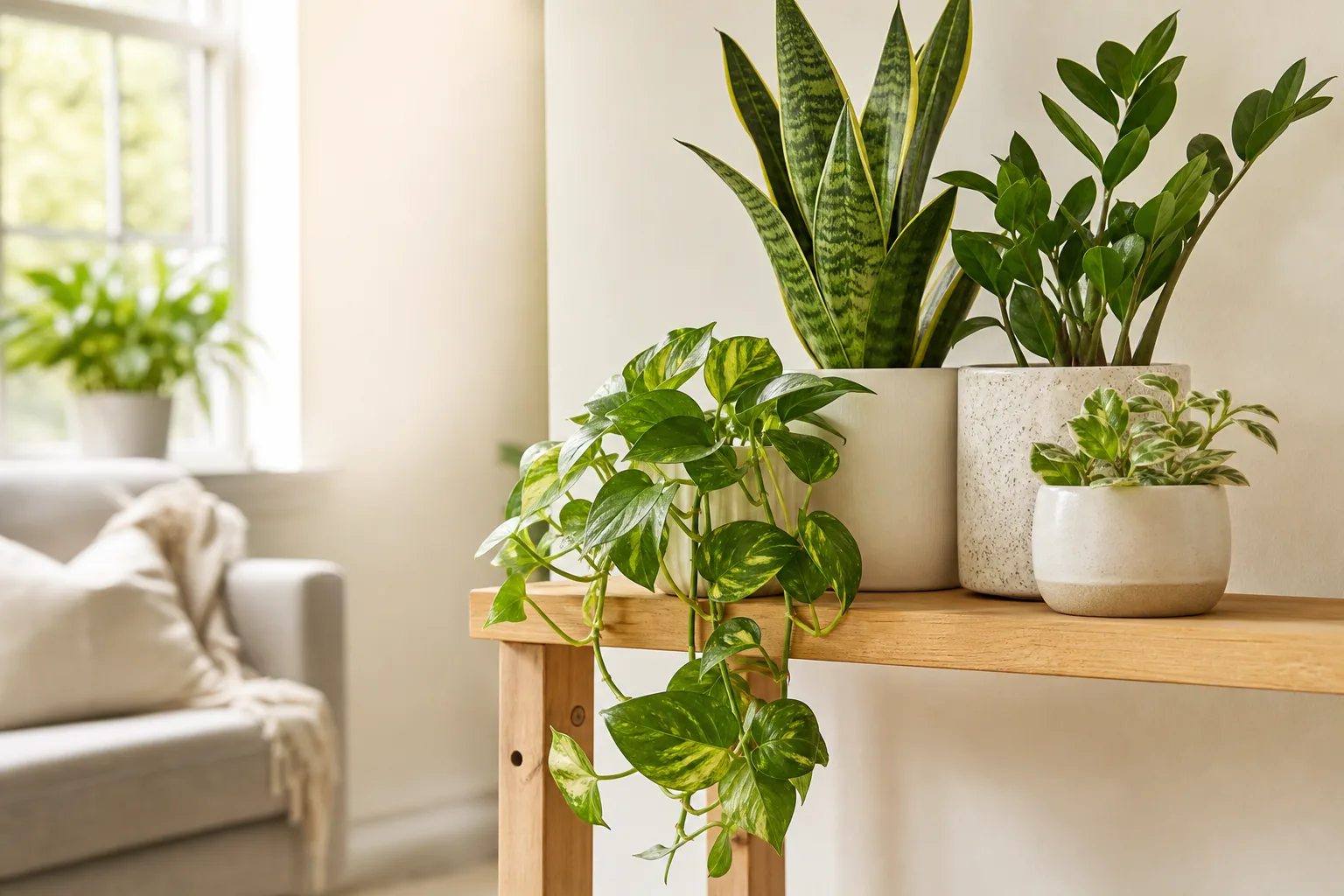
A small, coordinated group is easier to care for than a room full of unrelated plants. Start with three plants that want similar light, then group their pots on one shelf or side table. The display can mix upright and trailing shapes, but keep each plant in its own container so you can adjust watering without disturbing the others.
“Easy care” does not mean no care, and a plant labeled for low light still needs usable light to stay healthy. Pick varieties that fit the actual room, and do not buy a high-light cactus for a dark bookshelf simply because it is sold as low maintenance. If you want a shortlist to start from, compare the best beginner indoor plants with the best low-light plants.
11. Arrange a Dry-Loving Cactus or Succulent Display
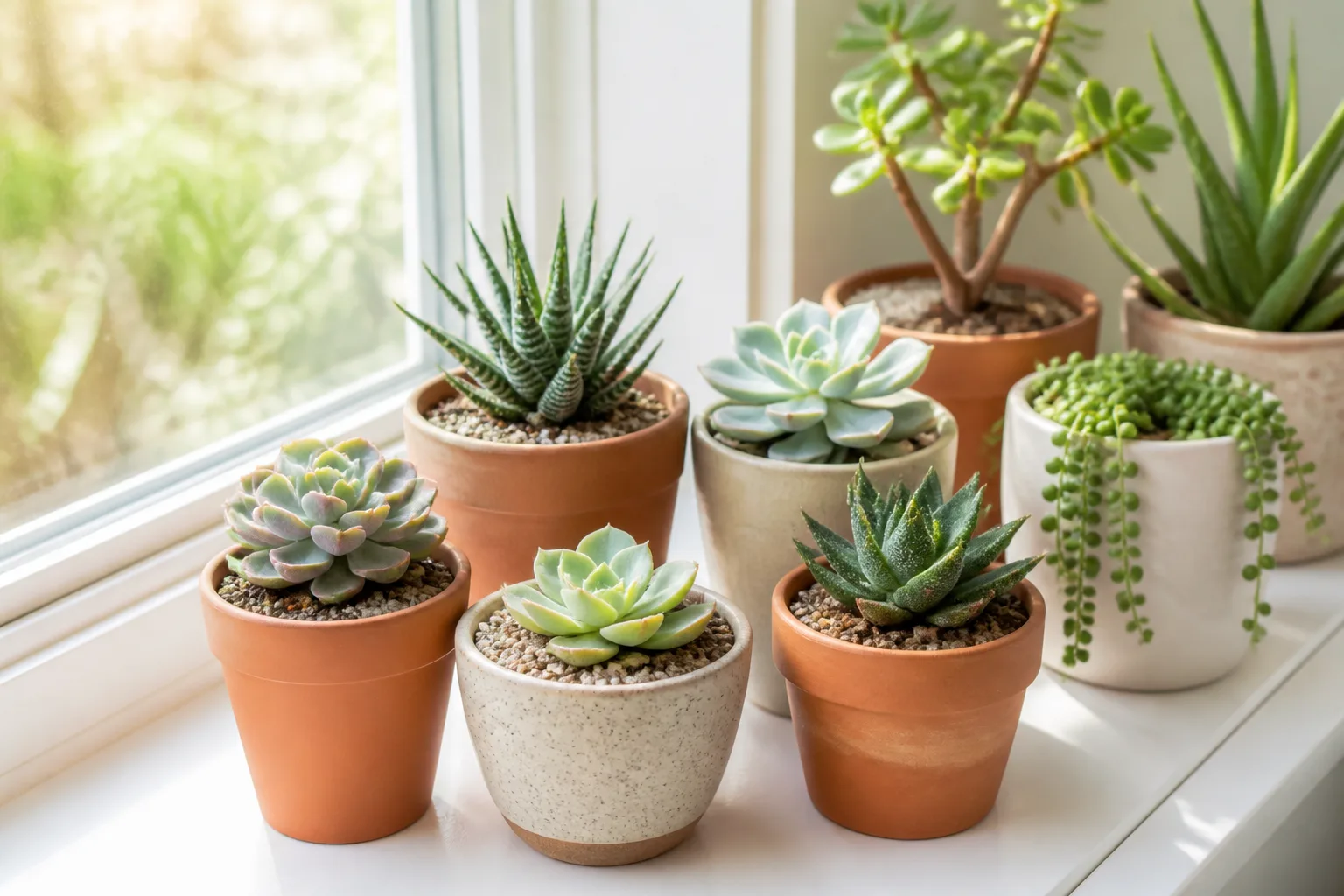
Cacti and succulents bring sculptural shapes to a bright table, sunny sill, or plant stand. Use individual pots with drainage and a fast-draining growing mix, then cluster the pots inside a shallow tray for the appearance of one small garden. The separate containers matter: they let you shift a plant into brighter light or water it differently without disturbing the whole display.
Keep this group apart from moisture-loving tropicals, and do not water on the same calendar as the rest of your houseplants. Let the mix dry between waterings according to the plant and season, and acclimate plants gradually if you move them into stronger direct sun. A shallow dish can catch drips, but it should not hold standing water beneath the pots.
12. Group Tropical Plants for a Lush Corner
A tropical display creates the feel of an indoor jungle by mixing broad leaves, fine fern fronds, and trailing stems. Place plants in a cluster near suitable light, using a small stand or stool to vary their height. Grouping containers can make watering and inspection easier, but leave enough space for air to move between leaves and for you to reach the soil.
Use pots that can be lifted out of decorative baskets, and match plants by their actual care needs rather than by their shared tropical look. A fern, a succulent, and a dry-loving vine do not become compatible just because they look attractive together. If one plant needs brighter light or dries faster, move it to a separate shelf instead of changing the whole group’s routine.
13. Grow Microgreens on a Kitchen Counter
Microgreens offer an edible indoor garden that needs little space and does not require a permanent collection of pots. A shallow tray on a counter can hold a sowing of quick-growing greens; place it where it gets bright light or add a small grow light if seedlings stretch toward the window. Use a tray with drainage and a second tray beneath it to protect the counter.
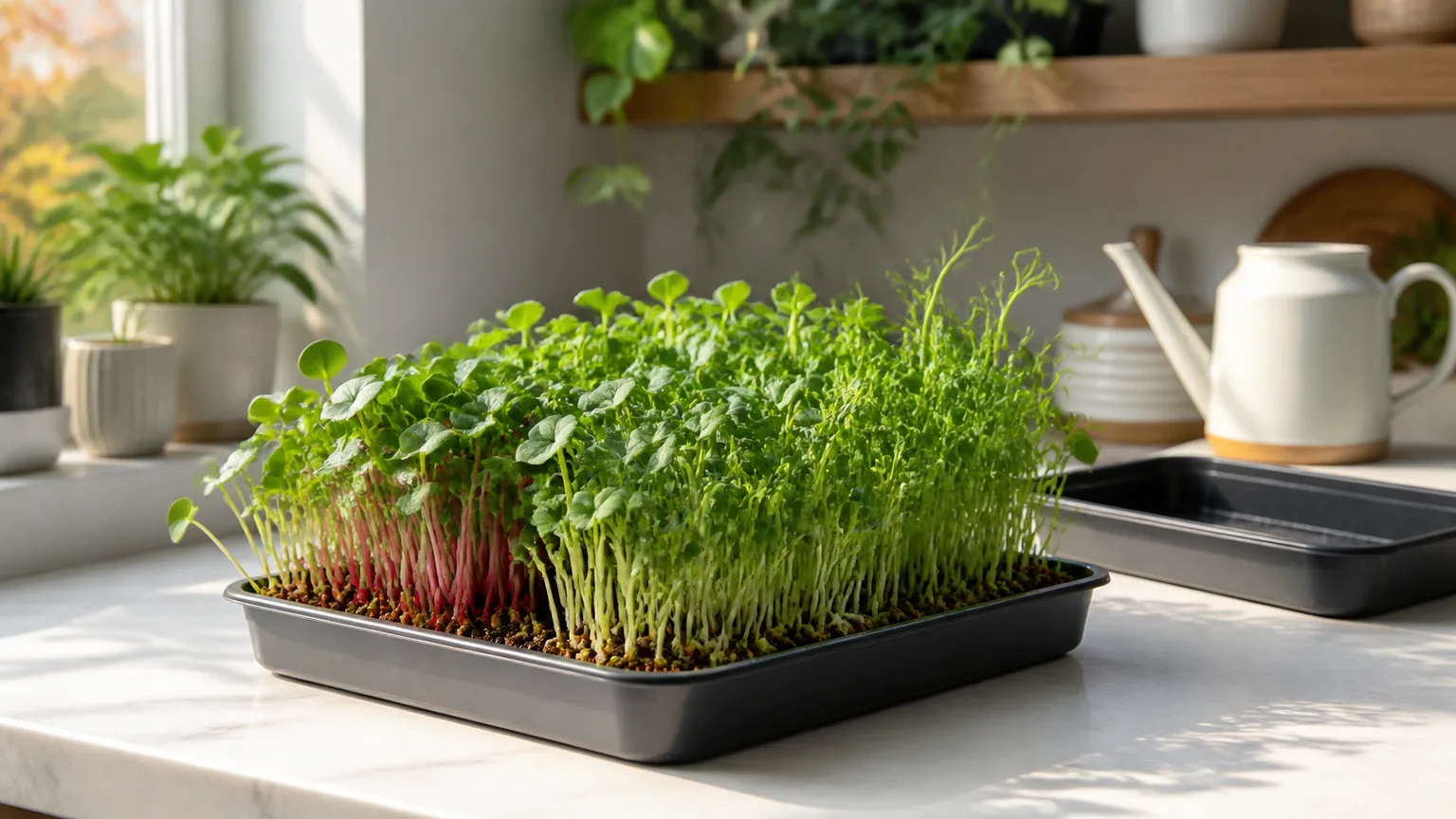
Sow a small amount first so you can learn how quickly the mix dries in your kitchen. Keep the surface evenly moist while seeds establish, then avoid leaving the roots sitting in runoff. Sow a new tray after the first one begins producing so you have a staggered harvest instead of a single flush. For a deeper overview of crop choices and timing, see the microgreens growing guide.
14. Try a Countertop Hydroponic Garden
A compact hydroponic kit is a neat option if you want leafy greens or herbs but do not want potting mix on the counter. The unit holds plants above a reservoir and usually pairs them with a built-in or attached grow light. It can make a useful kitchen project, especially in a home without a sunny sill, but the system still needs attention.
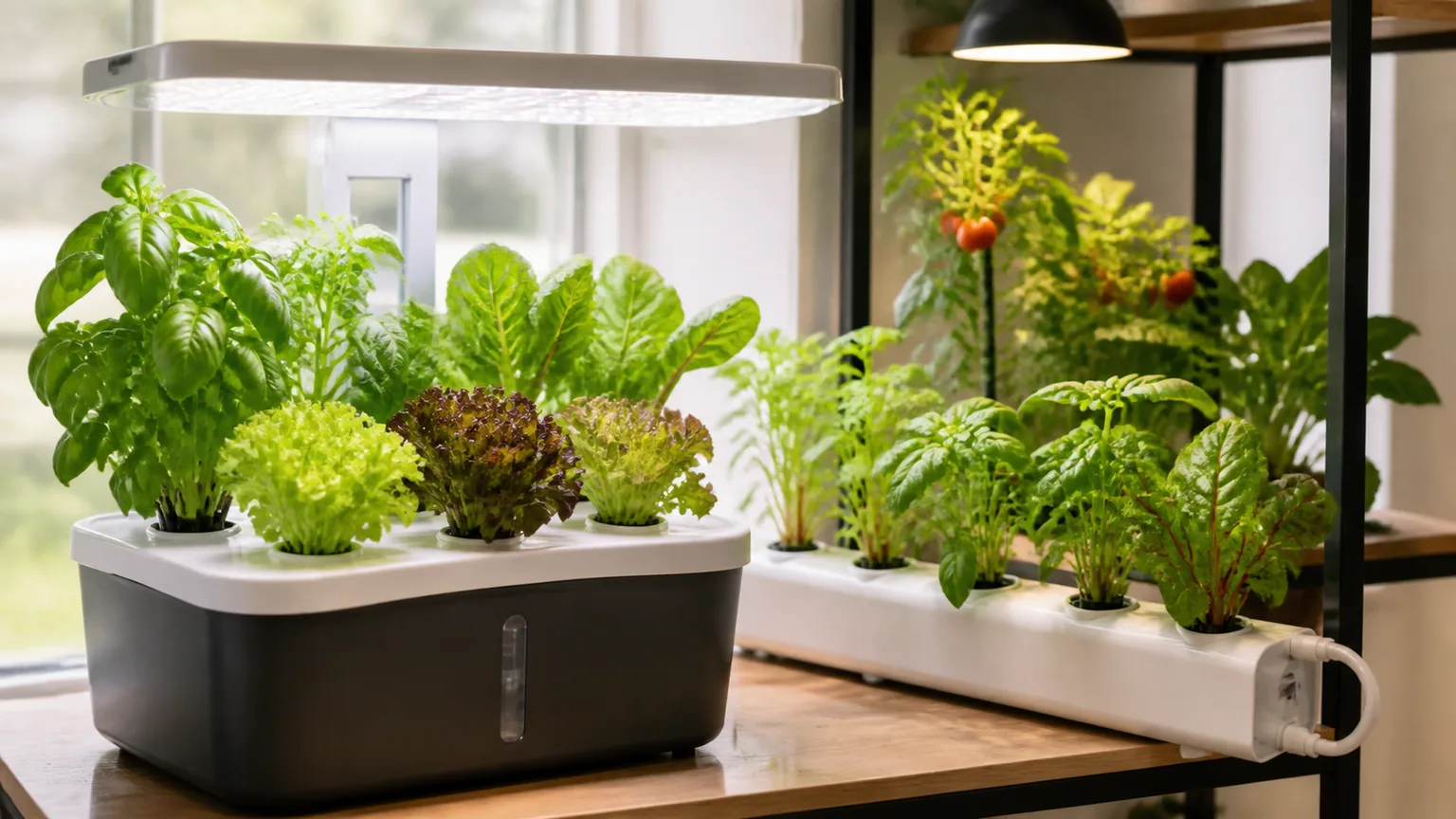
Check the reservoir, follow the kit’s instructions for nutrients, and clean the components as recommended so old water and plant debris do not build up. A countertop garden is not maintenance-free, and it takes some space near an outlet while keeping electrical parts protected from splashes. Before buying a kit, compare its footprint, replacement supplies, and ongoing upkeep with a simple lighted shelf; the hydroponic garden cost guide can help with that decision.
15. Build a Tiered Plant Display
A tiered plant stand lets you show more containers in a small footprint and gives smaller plants room to be seen. Use the top level for plants that need the brightest light, then reserve lower levels for plants that tolerate less. BBC Gardeners’ World’s space-saving herb-pot instructions use tiers to separate herbs with different moisture and drainage needs; a home display can use the same principle by keeping pots separate and choosing placements deliberately.
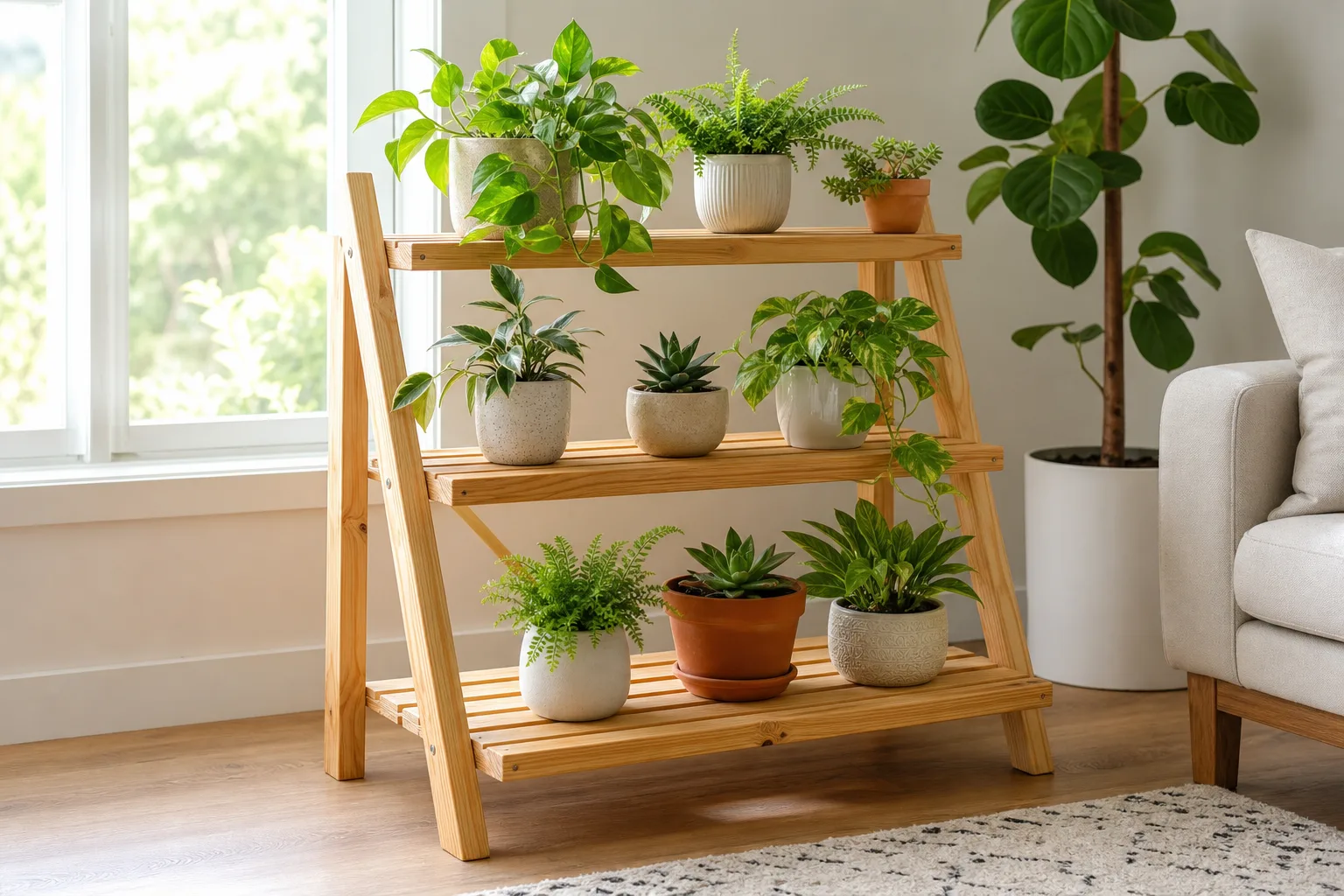
Before loading a stand, check that it stays steady on your floor and can carry the weight of wet pots. Place a waterproof tray under each level, avoid letting leaves shade neighboring plants, and leave enough clearance to remove each pot. A ladder-style stand can look lighter than a wide bookcase, while a low stand is easier to water and better for plants that need frequent attention.
16. Turn a Spare Corner Into a Plant Nook
A chair, a small table, and a few well-chosen plants can make an unused corner feel like a destination. Put the chair where it receives comfortable light, then arrange one taller plant behind it, a medium pot beside it, and a smaller plant on the table. Use a rug or tray only if it can be kept dry; repeated splashes can damage floors and fabrics.
Keep the arrangement simple enough that you can open windows, reach outlets, and move the pots when you need to clean. A plant nook does not need rare or demanding species: three healthy plants matched to the light can make a stronger display than a dozen crowded containers. If you later add another plant, give it a specific place and care role instead of filling every empty surface.
Conclusion
The easiest indoor garden to begin is the one that fits a real spot in your home. Choose windowsill herbs for a bright kitchen, a lighted shelf when natural light is limited, a terrarium for a compact humid display, or a small foliage group when you want greenery with a simple routine.
Start with one setup, protect the surface beneath it, and learn how quickly its pots dry before expanding. When you choose plants for the light and care you can provide, an indoor garden becomes easier to enjoy and easier to keep.