How to Grow and Care for Japanese Flowering Cherry
Grow a Kwanzan cherry with confidence: choose the right site, plant it correctly, protect spring flowers, and troubleshoot common pests and diseases.
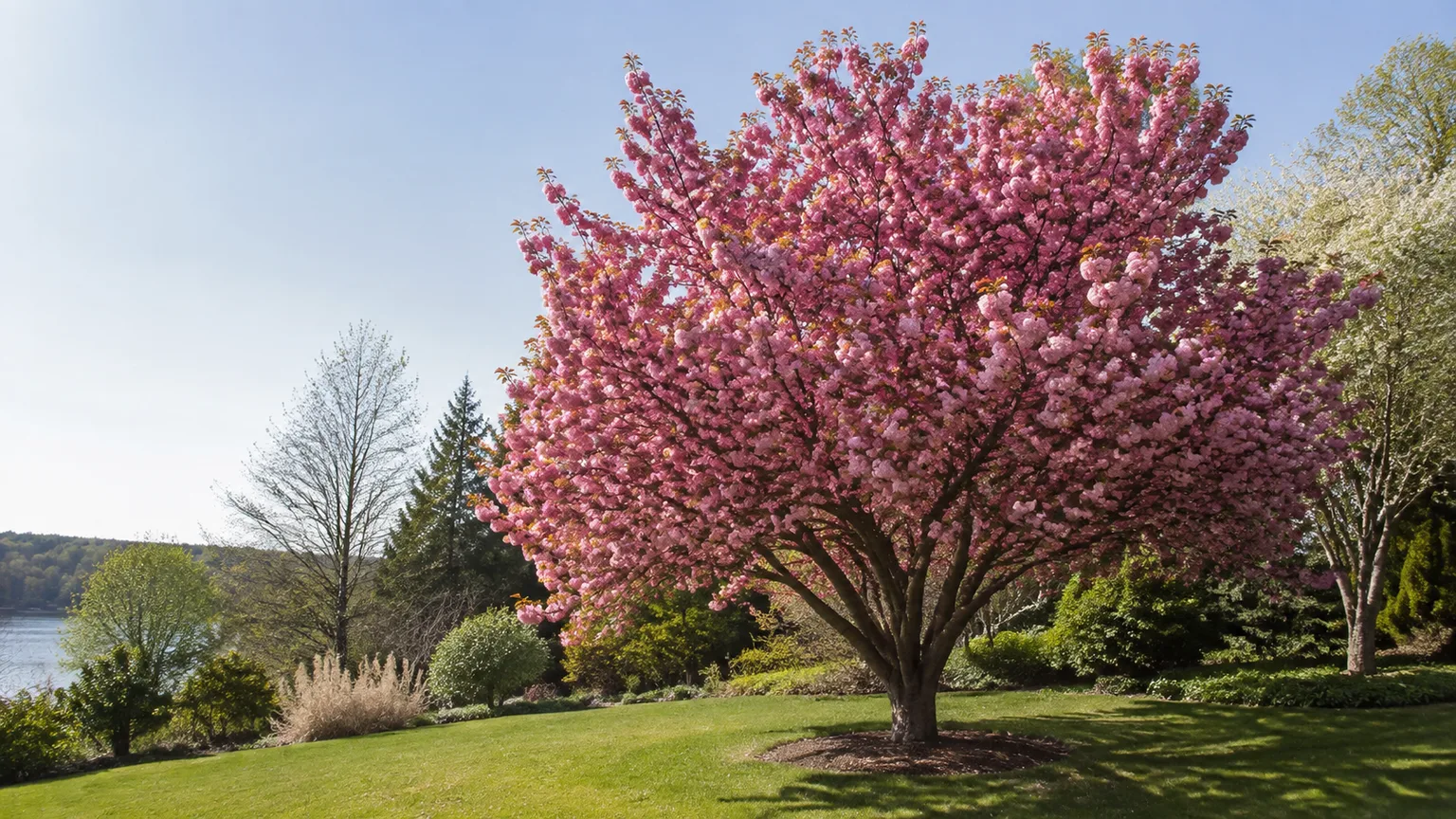
The Kwanzan cherry—also sold as Kanzan, Prunus serrulata ‘Kanzan’, or ‘Sekiyama’—is grown for one spectacular event: a canopy crowded with deep pink, fully double flowers in spring. It is a specimen tree, not a dependable fruit tree, and its beauty comes with a trade-off. The tree needs a good site, steady moisture while young, careful pruning, and quick attention to trunk, leaf, and blossom problems.
The most important decision happens before you dig. Give this cherry full sun, room for a broad mature crown, and soil that drains after rain. Then keep the root flare visible, water deeply during establishment, and prune only with a specific reason. Those basics do more for its health and flowering than a shelf of fertilizer or a calendar full of routine sprays.
Is a Kwanzan cherry the right ornamental tree for your yard?
Choose this tree when you want a spring focal point, not when you need edible cherries, evergreen screening, or a tree that can tolerate a permanently wet corner. Young trees often have a vase-like outline; older specimens spread into a rounded crown. In a small yard, that eventual width—not the size of the nursery tree—is the constraint that decides whether the placement works.
NC State Extension describes ‘Kanzan’ as a deciduous, showy tree that can reach roughly 25 to 36 feet tall and 25 to 30 feet wide, with large double pink flowers and orange-bronze fall color. Use those dimensions as planning guidance, then check the exact tag because rootstock, growing conditions, and nursery labeling change the final silhouette. It works as a lawn specimen, small group, or street-style tree where roots and branches have room. (NC State Extension)
The tree is also a poor choice for a low-maintenance promise. Ornamental cherries can be affected by borers, scale, aphids, caterpillars, Japanese beetles, leaf spots, dieback, powdery mildew, root rot, and fire blight. That does not mean every tree will fail; it means a stressed tree in a wet, crowded, or poorly matched site is a bad investment.
Japanese flowering cherry at a glance
| Need | Practical target |
|---|---|
| Light | Full sun, ideally at least six hours of direct light; light shade is tolerated but may reduce bloom and airflow |
| Soil | Moist, fertile soil with good drainage; loam is convenient, but sandy or clay soil can work when structure and drainage are adequate |
| Water | Deep, slow watering when the root zone begins to dry; young trees need more consistent attention than established trees |
| Mature size | Commonly about 25–36 feet tall and 25–30 feet wide, depending on cultivar and rootstock |
| Flowers | Deep pink, double blooms in hanging clusters, usually before or as leaves emerge |
| Use | Specimen, small group, street-style planting, or open lawn tree |
| Climate | Match the cultivar and local nursery advice to your winter chill, summer humidity, and hardiness zone |
The word “cherry” causes avoidable confusion. A Kwanzan is an ornamental flowering cherry selected for flowers and form. Some plants may produce small dark fruit, but the commonly sold double-flowered cultivar is not the tree to choose for a harvest. If your goal is pies or fresh eating, shop for a fruiting cherry matched to your climate and pollination needs instead.
Choose a site that protects roots and spring flowers
Start with the canopy, then work down to the roots. Mark the tree’s expected mature spread on the ground with a hose or string. Keep the trunk away from buildings, driveways, utility lines, and places where a low branch will interfere with a walkway. A tree that fits for three years can become a pruning problem once the branches thicken and the crown begins to shade the house or scrape a roof.
Full sun gives the best bloom display and helps foliage dry after rain. A site with morning sun and afternoon shade may keep a tree alive, but it is a compromise: less light can mean fewer flowers, slower drying, and a more open or uneven crown. Avoid a wind tunnel and a frost pocket if possible. Late spring freezes can kill opening buds even when the tree itself survives, so a slightly protected but still sunny position is useful in climates with erratic spring weather.
Do not improve a bad site by filling the hole with a small pocket of rich soil. Roots eventually move into the surrounding ground, and a sharply different pocket can hold water or discourage outward growth. Improve broad soil structure when needed, or choose another spot. Keep lawn and aggressive groundcovers away from the trunk so you can see the root flare and inspect for injury.
If you are comparing flowering trees for a tighter garden footprint, our guide to star magnolia trees is a useful contrast: it has a different mature shape, bloom style, and site tolerance, so the choice should follow the space rather than the flower color alone.
Test drainage before you plant
Dig a test hole about 12 inches deep and wide, fill it with water, and let it drain. Fill it again and watch the second soak. If water remains for many hours or the hole is still saturated the next day, treat that as a warning rather than a challenge to overcome with extra compost. A raised planting area, drainage correction, or different tree may be safer than putting a cherry in a bathtub of soil.
Soil pH does not need to be chased to a single number. A soil test is more useful than guessing from leaf color, and it tells you whether nutrients are actually limiting. Japanese flowering cherry tolerates more soil textures than the phrase “loamy soil” suggests, but it does not tolerate roots that stay airless and wet. (NC State Extension)
Plant a Kwanzan cherry without burying the trunk
Planting depth is one of the highest-impact details for a young tree. A buried root flare encourages stem-girdling roots, holds moisture against the trunk, and can make a tree look fine until heat, drought, or disease exposes the damage. A wide hole and a shallow root ball are safer than a narrow, deep hole.
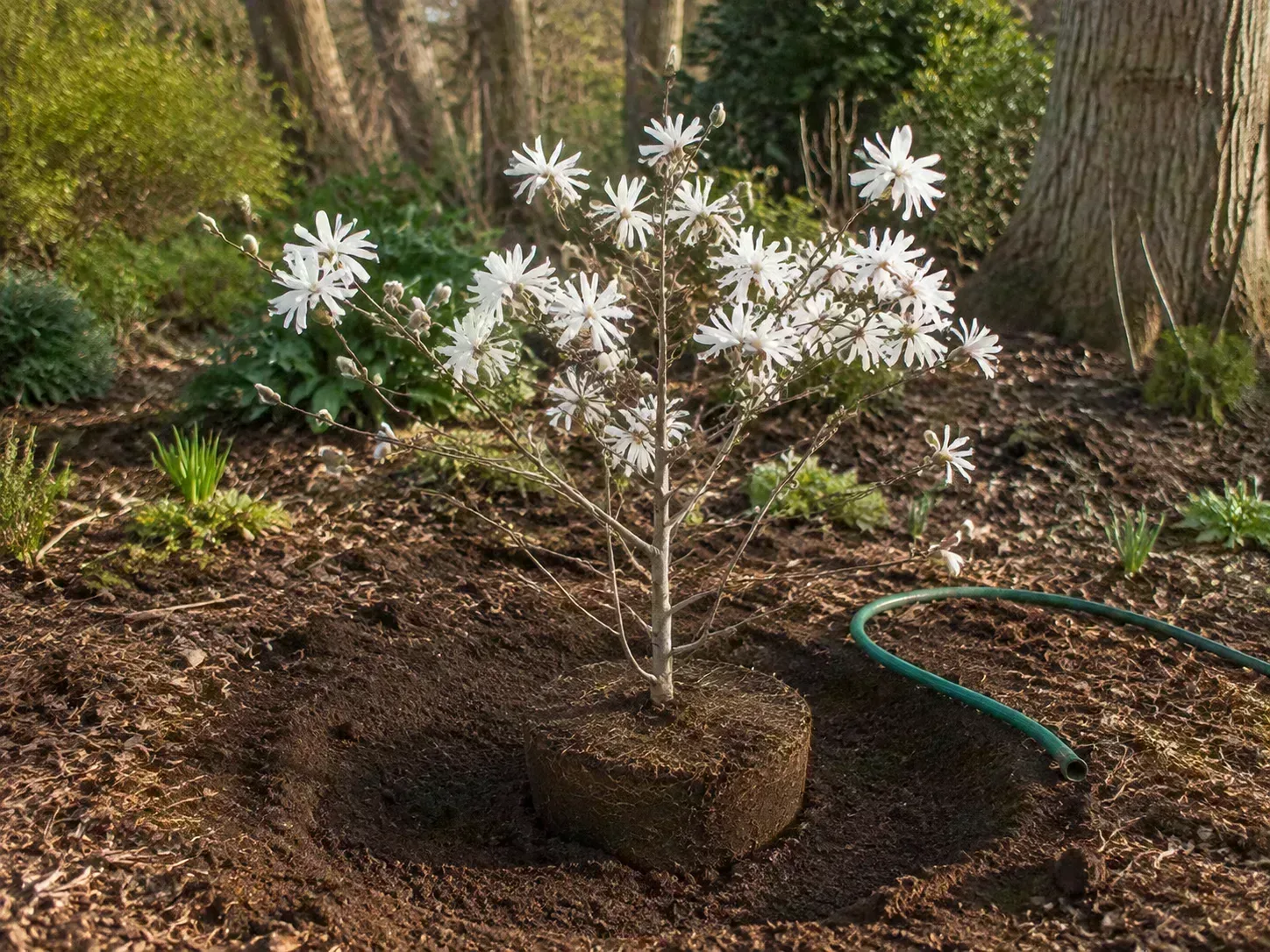
A reliable planting sequence
- Choose the season. Early fall is useful where the ground remains workable and the tree has time to make roots before hard freezes. Spring planting is also workable when you can water consistently; avoid planting into frozen soil or during a heat wave.
- Inspect the tree. Reject a tree with a buried flare, circling roots that cannot be corrected, torn bark, a damaged graft union, or a root ball that has dried and pulled away from the container.
- Measure the root ball. Dig no deeper than the root ball’s height, and make the hole at least twice as wide. In heavy soil, set the root ball slightly high so settling does not bury the flare. The topmost major roots should end up at grade, not several inches below it. (Trees.com)
- Correct circling roots. Slide a container tree out carefully, loosen outer roots, and cut only roots that are truly circling or matted. Do not shred the entire root ball or remove healthy soil unnecessarily.
- Set the tree straight. Find the trunk flare and the graft union, if present. Keep both visible. Rotate the tree so its strongest structure faces the view, but do not force a trunk that naturally leans.
- Backfill with the excavated soil. Break up clods, remove obvious rocks, and firm the soil lightly. Do not tamp so hard that air spaces disappear, and do not create a compost-rich bowl around the root ball.
- Water slowly. Soak the entire root ball and the surrounding loosened soil. If water runs off, pause and let it infiltrate before watering again.
- Mulch broadly and shallowly. Apply about 2 to 3 inches of organic mulch over the root zone, keeping it several inches away from the trunk. A mulch volcano holds dampness against bark and invites trouble.
- Stake only if needed. If the root ball shifts in wind, use two flexible stakes temporarily and remove them after establishment. A rigidly tied tree that cannot move develops a weaker trunk.
Do not paint wounds, wrap the trunk automatically, or prune for appearance on planting day. Remove only broken or dangerously damaged wood. The first job is root-to-soil contact and moisture, not a perfectly shaped crown.
Watering and mulching through establishment
Water by checking the soil, not by repeating a universal schedule. During the first growing season, probe several inches down near—but not directly against—the root ball. Water slowly when that zone is beginning to dry, then let excess drain. In hot, windy weather the interval may be short; in cool, rainy weather it may be long.
A deep soak is more useful than a daily sprinkle. Run a hose at a trickle, move it around the root zone, and stop when water begins to run off or the soil is thoroughly moist. Extend the watered area outward as roots grow. A frequent mistake is to wet only the planting hole while the surrounding root zone becomes powder-dry.
Established trees tolerate short dry periods better than newly planted ones, but “drought tolerant” is not a good label for this tree. Heat, lawn competition, restricted roots, and a heavy flower crop can combine into stress. Mulch reduces evaporation and moderates soil temperature, but it does not replace water. Keep mulch off the bark and refresh it before it becomes a thick, sour layer.
Fertilizing without forcing weak growth
Do not fertilize a newly planted cherry automatically. If the soil test shows adequate nutrients and the tree is making normal shoots and healthy leaves, extra nitrogen can create lush, soft growth that is more vulnerable to stress and may distract from root establishment. Water, weed control, and correct planting depth are usually the better first-year investments.
In later years, feed only when growth, leaf color, soil-test results, or a professional diagnosis point to a need. Apply a product labeled for ornamental trees at the stated rate and timing; never assume more fertilizer means more blossoms. A spring application may make sense in a nutrient-poor site, but avoid late-season nitrogen that pushes tender growth before winter.
Spread granular fertilizer across the root zone rather than piling it at the trunk. Water it in according to the label, and keep fertilizer off paved surfaces and waterways. If a tree is declining, diagnose the cause before feeding: fertilizer will not repair girdling roots, saturated soil, a canker, or a borer tunnel.
Choose the right Japanese flowering cherry cultivar
‘Kanzan’ is the classic choice for dense, deep pink, double flowers and a strong upright-to-rounded habit. It is often sold under the spelling “Kwanzan.” The naming variation matters when you compare nursery tags, but the site requirements matter more than the spelling.
Other Japanese flowering cherry cultivars change the design decision. A weeping form such as ‘Kiku-shidare’ needs room for cascading branches and often a more deliberate focal position. ‘Shirotae’ brings white flowers and a softer, arching outline. ‘Fugenzo’ shifts from white toward pink as flowers age, while ‘Asano’ is narrower and has especially full blooms. Availability, mature dimensions, rootstock, and disease history vary by nursery.
Ask four questions before buying: What is the grafted height and mature width? Is the plant grafted, and where is the union? Does the nursery guarantee the cultivar name? What disease issues are common in my region? A smaller tag size does not mean a dwarf tree, and a tree advertised for a zone does not guarantee reliable flowering in every winter pattern.
Prune lightly and at the right time
Japanese flowering cherry usually needs selective structural pruning, not annual shearing. Remove dead, broken, crossing, rubbing, or dangerously weak branches, and preserve a balanced scaffold. Heavy pruning opens large wounds and can trigger vigorous shoots that ruin the form you were trying to improve.
For routine shaping, prune after flowering or during a locally appropriate dry window when you can see the branch structure. Pruning immediately before bloom removes flower-bearing wood; pruning in wet conditions increases the chance that cuts become infection sites. A mature or storm-damaged tree that needs large limbs removed belongs with a qualified arborist.
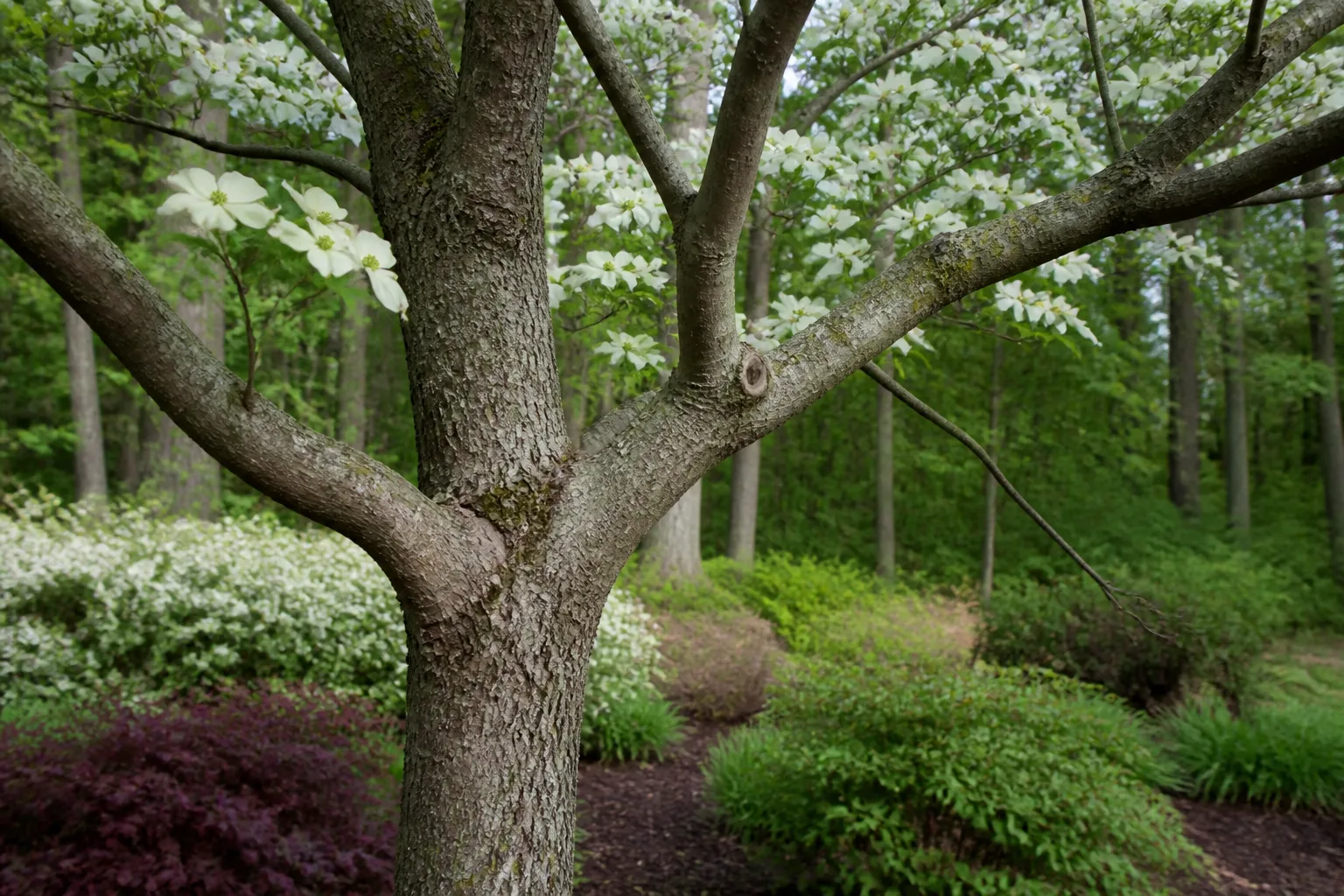
Make smaller, safer cuts
First stand back and identify the trunk, the main scaffold branches, and the branch collar—the slightly swollen area where a branch joins its parent. Cut just outside the collar. A flush cut removes protective tissue; a long stub dies back and leaves a larger wound. Use hand pruners for pencil-size wood, loppers only when their capacity is appropriate, and a pruning saw for larger branches.
Disinfect tools between trees and between cuts when you are removing visibly diseased wood. Make a relief cut before a final saw cut on a heavy limb so bark does not tear. Never climb into a large tree with household tools or attempt to remove a limb near wires. The right pruning decision is sometimes to stop, photograph the symptom, and call an arborist or local extension office.
For a broader visual walkthrough of branch unions, pruning windows, and tool selection, see our guide to pruning a dogwood tree; apply its general cut-making principles here without copying a different species’ bloom timing.
Propagation, grafts, and container limits
Most landscape Kwanzan cherries are grafted: a chosen flowering top is joined to a rootstock selected for vigor or hardiness. That is why a cutting or seedling may not reproduce the tree you admired. Seed-grown plants can vary, and many ornamental cultivars are not useful sources of true-to-type seed. If you want an identical tree, buy a named, grafted plant from a reputable nursery.
Summer semi-hardwood cuttings are possible as an experiment, but rooting can be inconsistent and the result will not carry the original rootstock. Use a clean, well-drained medium, bright indirect light, high humidity, and patience; do not tug daily to check for roots. A cutting that stays green is not proof that it has rooted.
Containers are best reserved for a genuinely compact graft, patio display, or bonsai project. A full-size Kwanzan will outgrow an ordinary pot, dry rapidly, and become top-heavy. Use a deep container with drainage, expect regular watering and root-zone temperature swings, and plan for eventual root pruning or planting out. Container culture is a special project, not an easier version of landscape care.
Pests: inspect before you spray
Look at the whole tree before choosing a treatment. Aphids cluster on tender growth and may leave sticky honeydew. Scale looks like fixed bumps on stems or leaves. Spider mites prefer hot, dry conditions and can cause stippling or fine webbing. Caterpillars chew leaves; Japanese beetles leave skeletonized patches. NC State lists these pests along with borers, leafhoppers, and tent caterpillars as potential problems for ‘Kanzan’. (NC State Extension)
Start with the least disruptive effective response. Confirm the pest, prune out a small localized infestation when practical, wash accessible foliage with a firm water spray, and protect beneficial insects. A large tree cannot be treated safely with a casual kitchen recipe. Follow the product label, observe pollinator restrictions, and never spray open flowers simply because a pest is visible elsewhere on the tree.
When trunk gum points to borers
Gum, sawdust-like frass, holes, cracked bark, or a declining branch near the trunk raises concern about a borer. The gum itself is a symptom, not a diagnosis; mechanical injury, cankers, and other stress can also produce sap. Look for the entry point and compare the affected side of the tree with healthy tissue.
Keep the tree vigorous with correct watering and mulch placement, but do not pour insecticide into a wound or guess at a rate. Treatments depend on the borer, life stage, tree size, season, and product label. On a valuable or declining tree, have an arborist or extension service identify the cause before treatment. Removing a visibly infested small branch may help, but trunk infestation can threaten structure and is not a casual DIY repair.
Diseases: prevent wet foliage and crowded growth
The best disease program begins with placement and cleanup. Give the canopy air, irrigate the soil rather than repeatedly wetting leaves, remove dead or diseased material, and rake fallen leaves when disease has been active. Do not compost suspect material unless your local guidance says the process will destroy the pathogen.
Common diagnoses overlap. Leaf spots can look like several different fungi or bacteria; dieback may begin with a canker, drought stress, root injury, or borer; powdery mildew is more likely where foliage is crowded and air is still; root rot follows prolonged saturation; fire blight can kill shoots and flowers. A photograph is useful, but an exact treatment often requires a close look at the pattern, weather, bark, roots, and timing.
If blossoms turn brown and collapse, inspect buds and nearby twigs for brown rot symptoms and check whether frost struck during bloom. Remove fallen infected flowers and dead twigs promptly with clean tools. Fungicides are preventive or timing-dependent for many diseases, not a magic eraser after a canopy is already damaged. Use only products registered for the intended plant and disease in your location.
Do not carve bark casually when you see a split. A crack can be caused by frost, sunscald, mechanical injury, or structural stress, and cutting around it without understanding the cause can enlarge the wound. A split trunk, a spreading canker, rapid dieback, or a branch over a target needs professional assessment.
Why a healthy tree may not bloom
When a Kwanzan cherry fails to flower, diagnose in this order: light, age, winter and frost, stress, pruning, then disease or pests. A tree receiving only a few hours of sun may remain leafy but make a weak flower show. A young tree may need time to establish. A late freeze can destroy this season’s open buds while leaving next year’s potential intact.
Next check the previous summer. Drought, root disturbance, trunk injury, overfertilization, and severe pest pressure can reduce the energy available for flower-bud formation. Pruning before bloom may simply have removed the buds. A tree with dead twigs, collapsed blossoms, leaf spots, or cankers needs diagnosis rather than a bloom booster.
Bloom timing varies with climate and the year. Spring flowering is often brief—roughly a couple of weeks—but wind, rain, heat, and frost can shorten the display. The answer is not to keep the soil constantly soaked or to add high-nitrogen fertilizer. Protect the root zone, improve light and airflow where possible, and judge the tree over more than one season.
Winter protection and the yearly care rhythm
In most suitable climates, a mature tree needs no elaborate winter wrapping. Water before the ground freezes if autumn has been dry, keep a proper mulch layer over the root zone, and prevent rodents from nesting against the trunk. Young trees in exposed cold sites may benefit from a temporary trunk guard, but leave room for air circulation and remove it before it becomes a hiding place for pests.
Use the calendar as a reminder, not a substitute for observation:
- Late winter: inspect the trunk, root flare, graft union, and scaffold branches. Remove only clearly dead or broken wood when conditions are dry and the cut is justified.
- Spring bloom: enjoy the flowers, scout for aphids and caterpillars, and avoid broad insecticide sprays that can harm pollinators.
- After flowering: complete light structural pruning, remove spent or diseased material, and replenish mulch without touching the trunk.
- Summer: water deeply during dry spells, check leaves and bark weekly, and watch for borer evidence, scale, and heat stress.
- Autumn: rake disease-laden debris, reduce competition from turf, water if the soil is dry, and plant new trees early enough to establish before hard freezes.
The plant is toxic to dogs, cats, and horses according to ASPCA, which lists cyanogenic glycosides and identifies stems, leaves, and seeds as the risky parts, especially as plant material wilts. Keep prunings, fallen leaves, and fruit away from animals that chew yard debris, and contact a veterinarian or poison-control service immediately if ingestion is suspected. (ASPCA)
Conclusion
Growing a Japanese flowering cherry successfully is less about chasing a perfect fertilizer or spray schedule and more about preventing avoidable stress. Choose a sunny, well-drained site with room for a 25- to 36-foot tree; plant the root flare at grade; mulch broadly but not against the trunk; water deeply while the tree establishes; and prune only for structure, safety, or disease removal.
Expect a dramatic spring display, but also expect a tree that rewards attention. If the canopy thins, the trunk gums, bark splits, or blossoms collapse, identify the pattern before treating it. That habit—matching the response to the actual cause—is what gives a Kwanzan cherry its best chance to stay beautiful for as long as its site and health allow.