How to Keep Mice Out All Winter With Steel Wool
After years of winter mouse problems, tight steel-wool packing plus caulk can close the routes mice use. Full inspection checklist, materials, and mistakes to avoid.
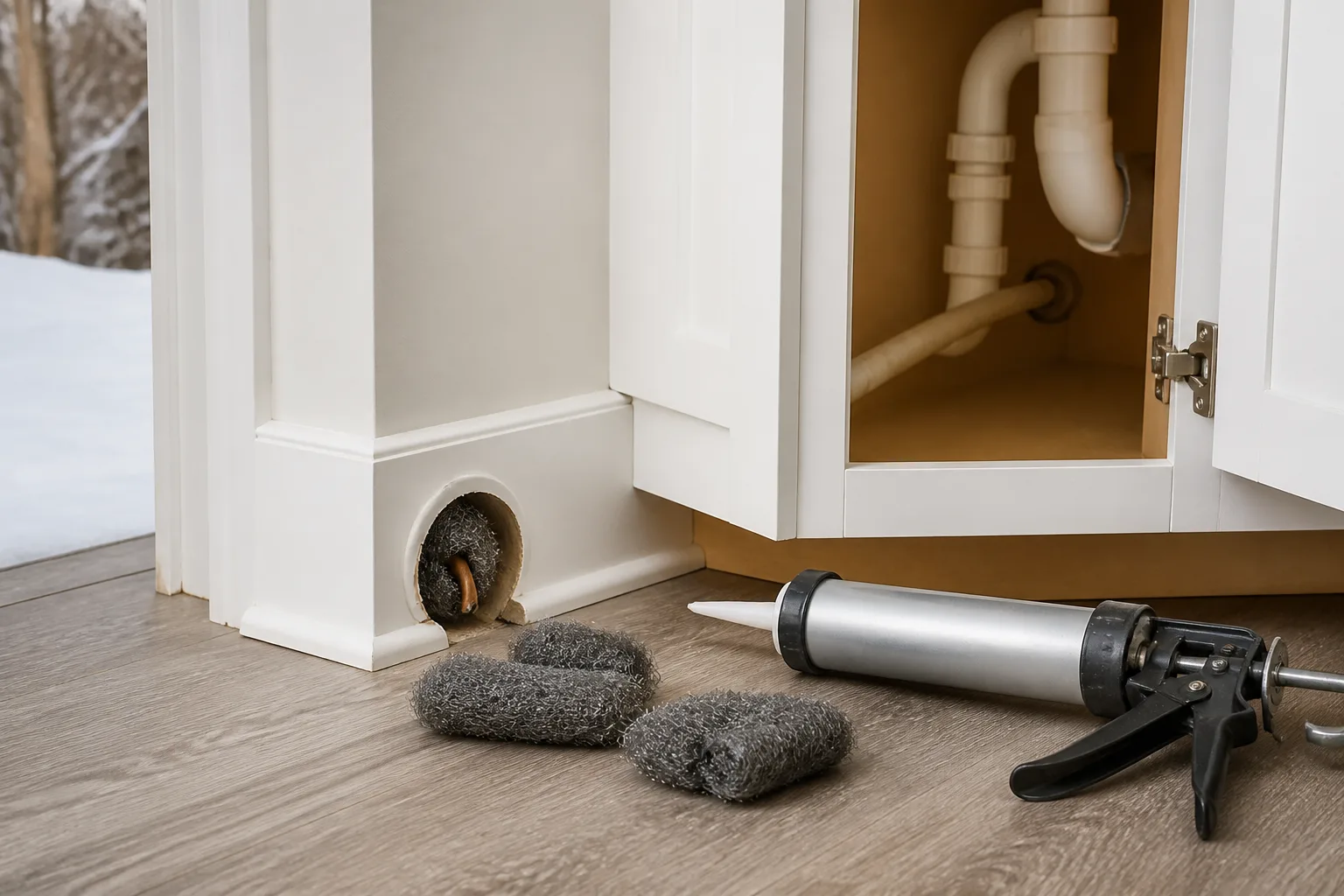
If you have fought the same winter mouse problem year after year—snap traps in the cabinet, peppermint oil along the baseboards, a landlord who shrugs and says “plug the holes”—the fix that finally sticks is usually less dramatic than it sounds. Pack coarse steel wool tightly into every gap wider than a pencil, then seal it in place with caulk or another gnaw-resistant cover. That is the whole hack. The reason it works after a decade of false starts is not the wool itself; it is that most people never find every gap, never pack it dense enough, or never seal the plug so mice cannot pull it out from the edges.
Steel wool is not a repellent and not a trap. It is a physical lock on the quarter-inch openings house mice (Mus musculus) use to move from cold crawl spaces, shared walls, and foundation gaps into warm kitchens. Do it once, thoroughly, and winter becomes a maintenance check instead of a monthly crisis.
The Short Answer: Pack Steel Wool Into Every Gap Wider Than a Pencil
Winter mouse-proofing that lasts follows four moves in order: inspect with a flashlight, pack steel wool into openings about ¼ inch (6 millimeters) or larger, seal the plug so it cannot be pulled out, and trap any mice already inside while you remove food and nesting material. The CDC recommends filling small holes with steel wool and putting caulk around the wool to hold it, or using metal, cement, or hardware cloth for larger damage. That sequence matches what extension programs call integrated pest management: sanitation, exclusion, population reduction, monitoring—not a single product.
If you only remember one measurement, use the pencil test. Slide a pencil into a gap under the sink, behind the stove, or along a pipe chase. If it fits, a mouse can too. Your job is to eliminate that opening, not to hope the next trap catches faster than the colony breeds.
Why Winter Sends Mice Through Walls You Did Not Know Existed
Mice do not invade in winter because your home is dirty. They invade because outdoor shelter gets cold, food gets scarce, and your foundation leaks heat through gaps you never notice in summer. A mouse needs roughly one-tenth of an ounce of food per day and a hidden runway more than it needs spotless counters. Crumbs under a stove plus a pipe penetration the width of a dime are enough.
In apartments and row houses, the pressure is worse. Mice travel along shared walls, utility chases, and garbage-room routes long before you see one in your kitchen. A neighbor’s open pet-food bag or a super’s delayed trash pickup can feed the same population that scratches behind your heater at 2 a.m. That is why “I keep a clean place” does not prevent winter entry—and why exclusion matters more than embarrassment.
The Quarter-Inch Rule That Changes Your Inspection
A house mouse can fit through a hole about ¼ inch across—roughly the width of a pencil or a dime. The CDC seal-up page uses that standard explicitly. Rats need a larger opening, but mice exploit the tiny gaps: warped door bottoms, cable TV penetrations, gaps around dryer vents, spaces where a radiator pipe meets drywall, and the soft joint where a cabinet back does not meet the wall.
Train your eye on transitions—where two materials meet, where a pipe passes through wood or brick, where vibration has widened a old seal. Mice compress ribs and skull plates to slip through; a gap that looks cosmetic to you is a doorway to them. Carry a pencil, a phone flashlight, and a mirror on a stick for behind-appliance checks. Photograph each gap before you seal it so you can compare next winter.
Why Steel Wool Works When Traps and Sprays Keep Failing
Traps catch individuals. Sprays and ultrasonic devices might nudge behavior in a small zone. Neither closes the hole that lets the next mouse in tomorrow night. If you have trapped three mice and heard scratching again within a week, you were bailing water without patching the hull.
Steel wool works because mice gnaw constantly to wear down incisors and to open routes—but fine metal fibers are miserable to chew compared with wood, plastic, or cardboard. A dense wool plug fills the void so there is no soft tunnel to excavate. The Internet Center for Wildlife Damage Management groups effective house-mouse control around sanitation, exclusion with gnaw-resistant materials, and trapping—not scent gimmicks alone.
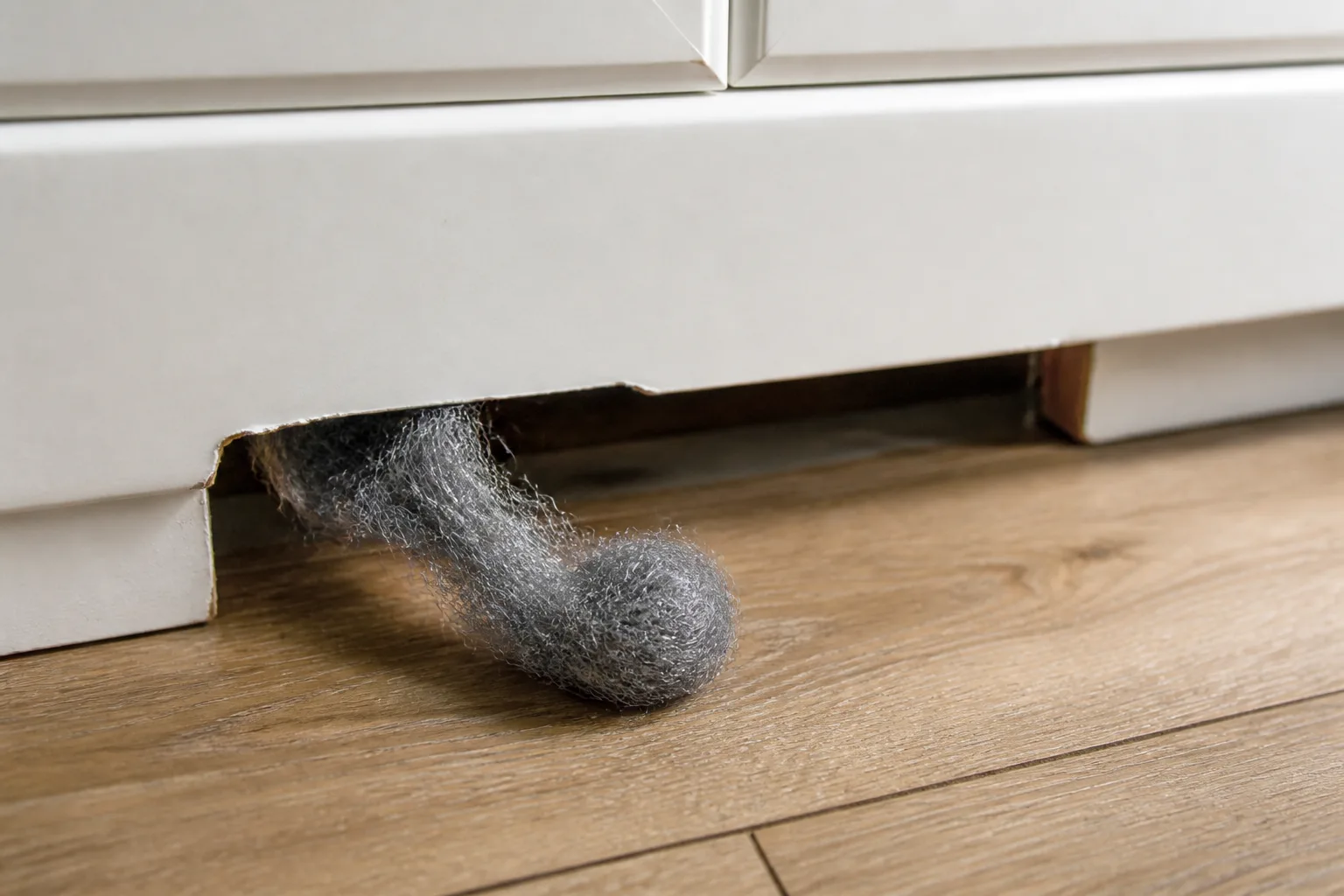
The method succeeds when wool is packed like you’re stuffing a cork, not fluffed like a nest. Loose balls invite mice to pull fibers out or work around the edges. Tight layers, pushed to the back of the opening with a flat tool, turn a gap into a wall.
What Makes Steel Wool Different From Foam, Paper, and Duct Tape
Great Stuff foam alone is often chewed or tunneled through once it cures soft. Foam can still help as a cover layer over steel wool on irregular gaps—but not as the only filler. Paper, cloth, and cardboard are nesting material, not barriers. Duct tape holds wool temporarily but adhesives fail with heat, moisture, and gnawing at the tape edge; use tape only as a short-term clamp while caulk cures, not as the permanent seal.
For comparison: steel wool handles small, irregular holes where metal sheet would be awkward. Hardware cloth, lath screen, or sheet metal handle larger holes and pipe bundles. Match the repair to the opening size, then think about moisture—rust weakens carbon-steel wool outdoors.
What You Need Before You Start Mouse-Proofing
Gather supplies before you crawl under the sink so you do not leave half-packed holes overnight.
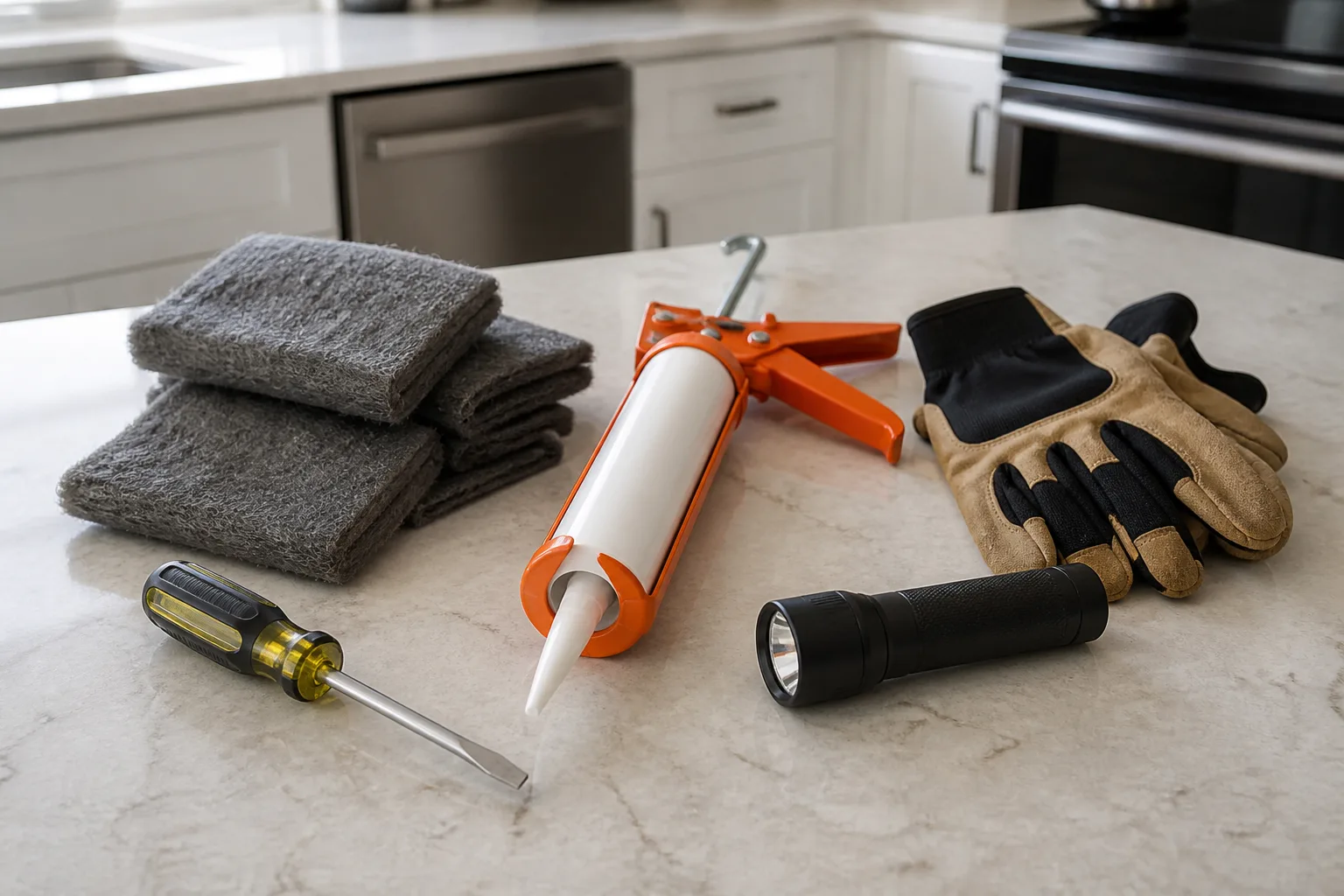
Core kit: medium-coarse plain steel wool (not soap-filled scouring pads), silicone or latex caulk rated for your surface, a caulk gun, work gloves (wool splinters), a flathead screwdriver or putty knife for packing, a flashlight, and a roll of painter’s tape to mark zones you have finished. Add snap traps sized for mice if you have any sign of active animals inside.
Upgrade kit for bigger jobs: copper mesh or stainless steel wool for damp exterior gaps, 1/4-inch hardware cloth, tin snips, screws or staples, and door sweeps or weather stripping for threshold gaps too wide for wool alone. A hand mirror or phone on a selfie stick helps behind stoves and refrigerators.
Budget roughly $15–$30 for a first apartment pass if you already own basic tools—less than one month of bait stations that never address the entry point.
Choosing the Right Grade of Steel Wool
Hardware-store steel wool is graded from extra-fine (#0000) to coarse (#3). For mouse exclusion, choose medium to coarse wool—grades #1 or #2, or any “coarse” pad not labeled for polishing. Ultra-fine wool is hard to pack densely and tears apart when you push it deep into a hole.
Use plain carbon steel wool indoors on dry pipe chases and cabinet gaps. On exterior foundation gaps, garage thresholds, or damp crawl spaces, prefer stainless steel wool or copper mesh so the plug does not rust, sag, and reopen the gap. Never use soap-impregnated pads meant for dishes; you do not want detergent residue in wall cavities.
When Copper Mesh or Hardware Cloth Is the Better Choice
Steel wool wins on tight, irregular gaps—the classic hole behind a dishwasher drain hose or a cable knock-out in a baseboard. Copper mesh (knitted copper “stuff-it” rolls) shines on wider wall openings and damp zones because it does not rust and holds shape when mice tug at it. Hardware cloth or lath screen is the right call for holes larger than about an inch, damaged vent screens, or gaps at the foundation where you can screw metal over the opening and caulk the edges.
The CDC advises metal, cement, or hardware cloth for larger repairs. Think of steel wool as the dental floss of rodent exclusion—it goes where sheet goods will not, but it is not structural bracing for a softball-sized hole.
How to Inspect Your Home Like You Are Hunting for a Leak
Treat mouse-proofing like finding air leaks before winter. Move room by room at night with a bright, raking light along floors and walls. Mice travel with whiskers against vertical surfaces; follow the baseboard line and every utility penetration.
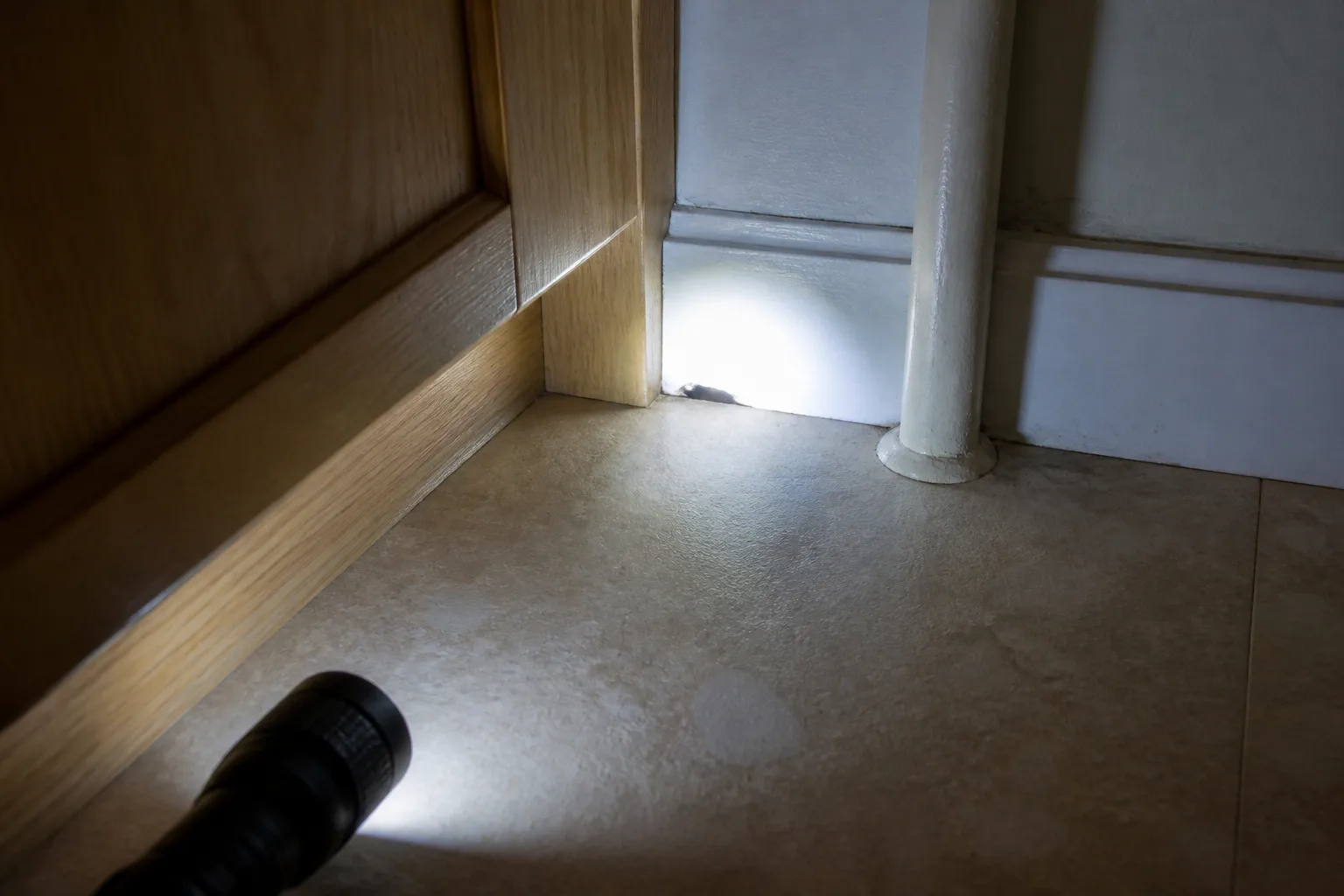
Start where you have evidence: droppings, gnawed food boxes, grease rub marks, or sounds. If you are not sure whether activity is current, see our guide on signs that you still have mice or rats before you seal blindly.
Inside Spots Mice Use Most Often
Work this inside checklist systematically:
- Under kitchen and bathroom sinks—flexible supply lines, drain tailpieces, and the gap where the cabinet back meets the wall
- Behind and under the stove, refrigerator, and dishwasher—gas lines, electrical conduits, and soft corners installers never sealed
- Around radiator and baseboard heater pipes—especially in older apartments where floors have settled
- Laundry areas—dryer vent hoses, standpipe gaps, and washing-machine water lines
- Closets on exterior walls—floor corners and plate lines
- Attic and basement access panels, floor drains, and around fireplace hearths
- Interior garage doors—threshold gaps and the jamb where concrete meets framing
In each zone, run the pencil test and mark every fail with tape on the floor so you can pack them in one session.
Outside and Shared-Wall Zones in Apartments
Outside, walk the perimeter once:
- Foundation cracks and where siding meets brick or stucco
- Around outdoor faucets, AC lines, and gas meters
- Garage doors and under garage siding
- Attic and crawl-space vents with damaged screens
- Roofline gaps at soffits and where additions meet the original structure
Renters should also inspect shared chases: pipe walls between units, gaps around bathtub plumbing accessed from a neighbor’s panel, and door sweeps on hallway doors that mice use as highways. You cannot seal another tenant’s unit, but you can armor your side of the penetration and coordinate with building management when grease marks track along a common wall. Document photos before and after; it speeds super responses.
For garage-specific routes, pair this pass with how to keep bugs and rodents out of the garage.
Step-by-Step: The Steel Wool Method That Actually Holds
Once gaps are marked, work one opening at a time so nothing stays half open overnight.
1. Clear the zone. Pull out under-sink cleaners, slide the stove slightly if you safely can, and vacuum crumbs so you can see the full penetration. Wear gloves if old droppings are present; never sweep dry droppings—see poison-free rodent-proofing methods for wet cleanup steps.
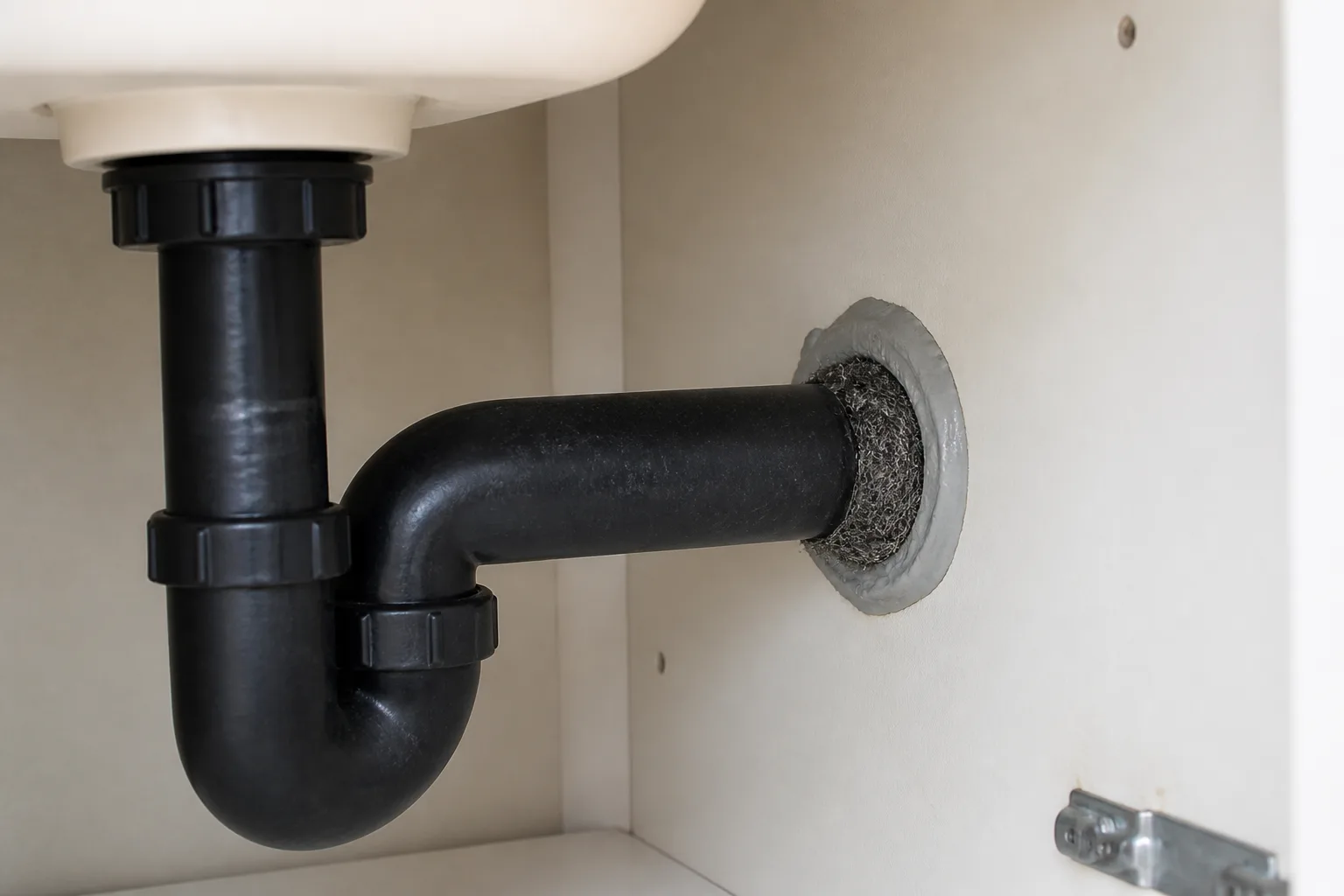
2. Pull and twist the wool. Unroll a strand and twist it into a tight rope before you push it in. Pack in layers, pressing each layer to the back of the hole with a screwdriver or putty knife until the cavity feels firm. If a pencil slips past anywhere, add more wool.
3. Fill the entire depth. Mice attack shallow plugs. Push wool to the far side of the gap when you can reach it, especially on pipe chases that open into wall voids.
4. Seal the face. Run a bead of caulk around the wool and tool it flat so fibers cannot be pulled out. On larger irregular gaps, a thin skin of low-expansion foam over wool is acceptable if the wool remains the gnaw barrier—avoid filling deep voids with foam alone.
5. Label and log. A dot of painter’s tape with the date on the cabinet door inside tells you what you sealed this season.
Pack, Seal, and Label Every Opening
The difference between a hack that lasts ten years and one that fails in ten days is edge integrity. Mice rarely chew through the center of a properly packed plug; they find the soft seam where wool meets drywall. Caulk bridges that seam. In high-vibration spots—refrigerator compressor wall, garage door near the opener—recheck caulk in spring.
For threshold gaps too wide for wool alone, add a door sweep or metal threshold plate after packing the sub-gap. For vent screens, replace torn mesh with hardware cloth screwed over the opening, not wool alone across a four-inch hole.
What to Do About Mice Already Living Inside
Do not seal every hole on day one if you have fresh droppings or nightly scratching. Closing entries while mice remain inside can push them into living spaces—or trap them in wall voids where they die and smell.
Use this sequence instead:
-
Set multiple mouse-size snap traps along walls where you see signs, bait ends toward the wall, protected from pets and children. Our best mouse traps guide covers placement detail.
-
Remove food sources—pet kibble on the floor, open pantry boxes, birdseed in the laundry room—while trapping runs.
-
Pack and seal gaps once activity drops, or seal the exterior and non-active rooms first while trapping the hot zone.
-
Monitor for two weeks with zero new droppings before you call the job done.
If mice are inside walls you cannot reach, read how to get rid of mice in walls before you caulk yourself into a bigger problem. Natural repellents such as peppermint sprays can supplement sealing but never replace it—see natural ways to get rid of mice that pros love for where scents actually help.
The Mistakes That Make Steel Wool Fail Within a Week
Loose packing is the top failure. If you can hook a finger behind the wool, a mouse can hook a tooth. Wool without caulk is number two—mice pull bundles out like nesting material. Foam-only repairs look finished but get tunneled. Sealing interior holes before exterior routes can drive mice through new paths or trap them in voids.
Other common errors: using fine polishing wool, skipping behind-appliance gaps because moving the stove is annoying, trusting ultrasonic plug-ins instead of metal, and ignoring garage or mudroom doors while perfecting the kitchen. Duct tape alone peels; steel wool in standing water rusts open.
If a friend swears baking soda or DIY poison baits solved their problem, treat that as anecdote—not a plan. See does baking soda get rid of mice for why exclusion and trapping outperform kitchen-cabinet chemistry.
When Steel Wool Alone Is Not Enough
Call a pest professional or landlord escalation when:
- Fresh signs continue in multiple rooms after two weeks of trapping and careful sealing
- You hear activity in inaccessible voids, ducts, or insulation
- Droppings accumulate in attics or crawl spaces you cannot safely clean
- You suspect rats (larger droppings, burrows outdoors) rather than mice
- Wiring or chewed refrigerant lines appear—fire and safety risks outweigh DIY savings
- You live in a region with deer mice in rural structures and need hantavirus-aware cleanup (UC IPM house-mouse and deer-mouse guidance)
Steel wool is a maintenance tool, not a guarantee against a building-wide infestation or a landlord’s refused structural repair. The EPA notes that rodenticides are a last resort indoors and never substitute for exclusion; poison without sealing often leaves dead rodents in walls.
How Often to Recheck Seals and What to Watch For
Inspect your steel-wool repairs at least twice a year—late fall before the first freeze and once in late spring after freeze-thaw cycles and appliance vibration. Also check after any plumbing, HVAC, or cable work that disturbs walls.
Watch for pulled caulk, rust stains on exterior wool, new droppings beside a previously clean zone, and chew marks on food packaging. A five-minute flashlight pass under sinks beats discovering a breeding nest in February.
In mild climates, mice still move indoors for shelter; do not assume winter-only vigilance if your region has cool, wet seasons. Pair seasonal sealing with the full seven-step plan in poison-free rodent-proofing methods when you want a whole-house IPM checklist.
Conclusion
The “simple hack” that ends a decade of winter mice is not a secret product—it is finding every pencil-width gap, packing coarse steel wool until the hole feels solid, and sealing the plug so nothing can be pulled out. Trap and sanitize while you work so you are not locking rodents inside, then maintain the seals like you would weatherstripping.
Mice are survivors, not judges of your housekeeping. When cold weather pushes them toward your warmth, metal-filled gaps turn your apartment or house from easy shelter back into a dead end. Do the inspection once, do it thoroughly, and winter finally stops feeling like an annual surrender.