Philodendron Rugosum Care: Light, Water and Soil
Learn Philodendron rugosum care with practical light, watering, soil, humidity, climbing support, propagation, troubleshooting, and pet-safety guidance.
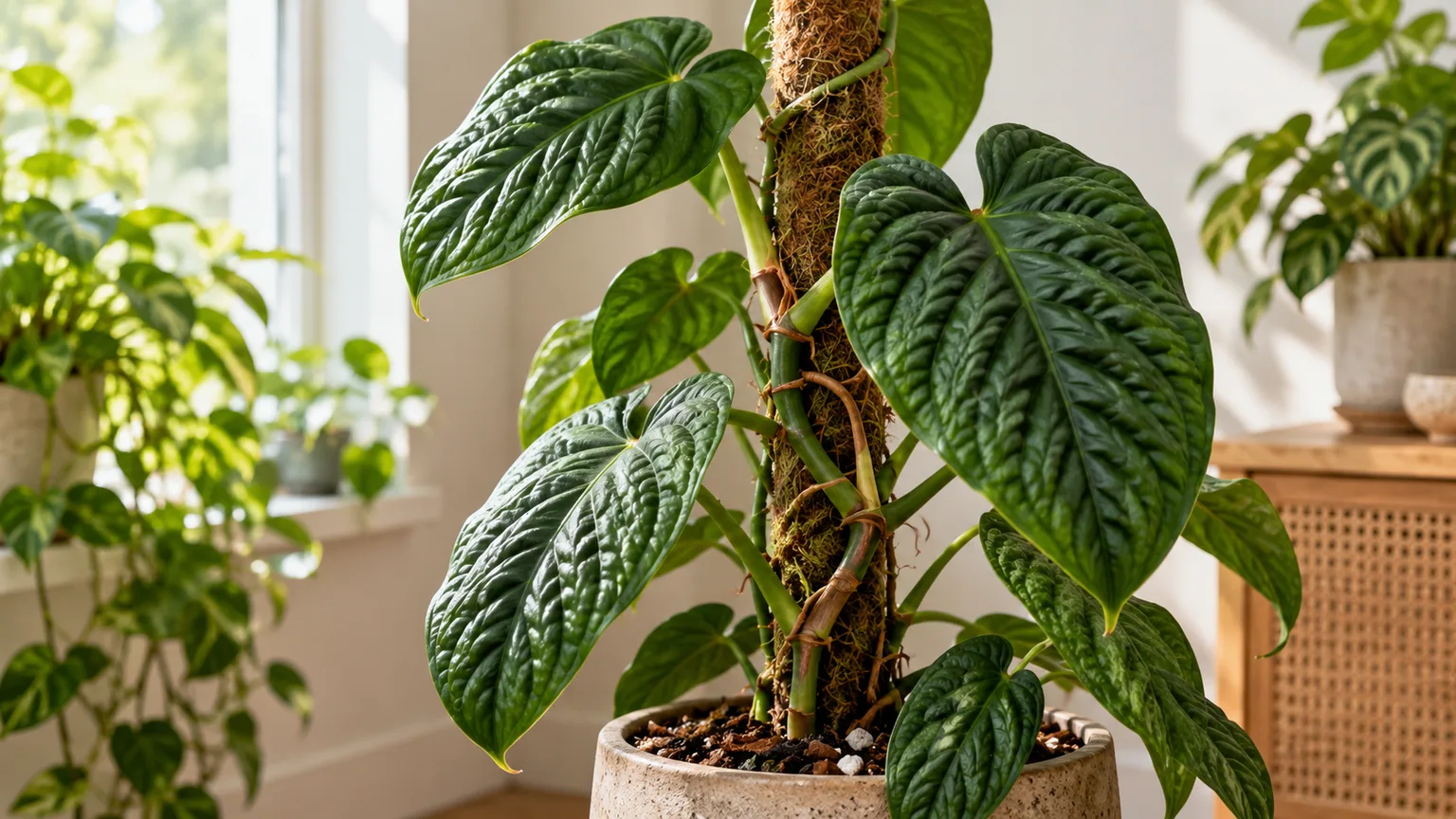
Philodendron rugosum is a climbing aroid known for thick, deeply corrugated leaves that feel almost quilted. That texture earns it the names sow’s ear and pigskin philodendron, but it also means you should look at the plant’s newest growth and roots rather than judging its health by whether every leaf looks smooth. Indoors, the most dependable starting point is bright filtered light, an airy potting mix, and thorough watering only after the root zone has begun to dry.
Kew’s Plants of the World Online record accepts the species and places its native range from southern Colombia to Ecuador, describing it as a climber of wet tropical biomes. That habitat gives useful context, but a pot in a home is not a rainforest tree: you are trying to keep roots oxygenated while avoiding long dry spells, and to give a climbing stem enough light and support to grow well. Exact cultivation trials for this species are limited, so the care ranges below are practical starting points informed by its known habit and established philodendron guidance.
Philodendron Rugosum Care at a Glance
| Care factor | Practical indoor starting point | What to adjust |
|---|---|---|
| Light | Bright, indirect light; gentle early sun may be tolerated | Move back or filter light if leaves bleach or scorch |
| Water | Let the upper 2–5 cm (about 1–2 in) dry slightly; also check pot weight | Wait longer in a cool, dim room or heavy pot |
| Mix | Loose, chunky aroid mix in a pot with drainage holes | Add bark or perlite if the mix stays wet too long |
| Temperature | Typical warm room conditions, about 18–29°C (65–85°F) | Protect from cold windows, drafts, and heater blasts |
| Humidity | Average home air can work; moderate humidity supports growth | Improve room humidity only if leaf edges repeatedly crisp |
| Support | Stable pole, board, or trellis as the vine lengthens | Tie loosely and keep the support from wobbling |
| Feeding | Dilute houseplant fertilizer during active growth | Reduce or stop when growth slows and light drops |
These are starting points, not guarantees or strict thresholds. A young plant in a small nursery pot under a grow light can dry far faster than a mature vine in a large decorative cachepot, so care needs to follow the conditions you actually have.
Recognize the Plant and Its Climbing Habit
The defining feature is the leaf surface: mature leaves are thick and puckered, with pronounced ridges rather than a smooth, glossy blade. A new leaf may emerge rolled and take time to harden; do not handle or force it open, because it can tear before it has expanded. Dust can settle in the grooves, so clean the leaves gently with a soft damp cloth rather than applying leaf shine that may collect residue.
Rugosum is a climbing philodendron, not a compact self-heading rosette. As the stem extends, nodes mark where leaves and aerial roots emerge. Those roots help the vine attach to a support; they are not a sign that the plant is escaping its pot or that you need to cut them all off. If a seller’s plant looks much smoother or has a different growth form, compare the label and mature foliage carefully: young leaves and poor photographs can make exact identification difficult.
Choose Bright, Filtered Light
Give the plant a place near a bright window where the leaves receive plenty of ambient daylight without baking in strong midday sun. An east-facing window is a useful first try; a bright south or west window can also work if the plant sits back from the glass or behind a sheer curtain. The aim is steady light on the foliage, not a dark corner chosen because the species is tropical.
Low light usually shows up as a slow-growing vine with long gaps between leaves and smaller new foliage. Move it closer to a window or add a suitable grow light gradually over several days. A sudden shift from dim store lighting to intense sun can bleach or burn leaves, while too little light can make the potting mix stay wet for longer and raise the risk of root trouble. Philodendron care guidance from NC State Extension and the Royal Horticultural Society favors bright indirect light and warns that direct sun can scorch leaves; treat those as genus-level principles, then judge this plant by how its next leaf develops.
Rotate the pot a little if growth consistently leans toward the window. Avoid moving it back and forth between rooms to chase a perfect reading: stable conditions make it easier to interpret new growth and watering needs.
Build an Airy Aroid Root Zone
Roots need both moisture and air. A dense, peat-heavy mix can stay saturated in a cool home even when its surface appears dry, while a very coarse mix may dry so quickly that the plant wilts between checks. A practical starting blend is one part quality indoor potting mix or coco-based medium, one part orchid bark, and one part perlite or pumice. Adjust the ratio if your room is unusually dry or if your container stays damp for many days.
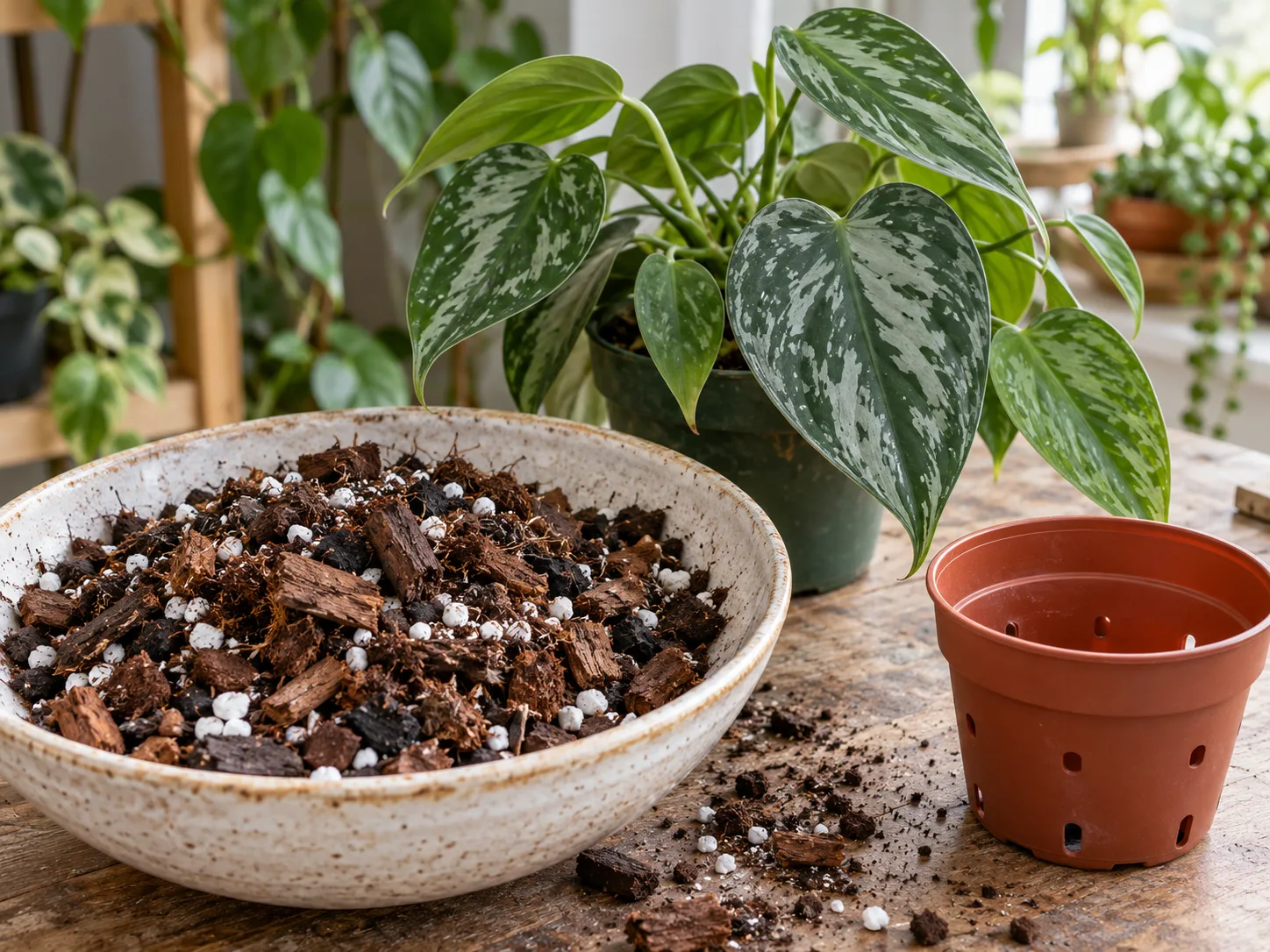
You do not need to add gravel to the bottom of the pot; it does not replace a drainage hole or make a heavy mix drain freely. Choose a container with open drainage, and use a saucer or cachepot only if you can empty the runoff. RHS philodendron guidance recommends a loose, free-draining medium and warns that oversized pots remain wet longer. If water runs through immediately while the center stays dry, the mix may have become hydrophobic or compacted; rehydrate slowly or refresh it rather than watering repeatedly from the top.
Water by Dry-Down, Not by Calendar
Check the upper 2–5 cm (1–2 inches) of potting mix and lift the pot before deciding to water. When the upper layer has dried somewhat and the container feels lighter, water slowly across the surface until water exits the drainage holes. Let it finish draining, then empty the saucer. This gives the whole root ball a drink while allowing oxygen to return as the mix dries.
Do not wait for the entire root ball to become bone-dry, and do not water simply because seven days have passed. A small plastic pot in warm bright light may need water sooner; a large ceramic pot in winter can remain wet much longer. Use a wooden skewer or your finger at more than one depth if you are unsure: a dry surface above a damp lower root zone is not a cue to add more water.
Iowa State University Extension advises watering philodendrons when the soil surface dries and keeping the mix evenly moist but not wet. For rugosum, translate that into a modest dry-down, not prolonged drought or permanent saturation. Bottom-watering can help evenly rehydrate a very dry, water-repellent root ball, but it is not a cure for poor drainage; soak only until the mix is moist, then let the pot drain fully.
If the plant wilts, feel the mix before watering. A light pot and dry soil point toward thirst; a heavy pot and wet soil suggest root stress, where more water makes the problem worse. Change one variable at a time and record how long the pot takes to dry in the current season. That interval is more useful than an internet watering schedule.
Balance Warmth, Humidity, and Airflow
Keep the plant in a warm, stable room, away from cold panes, frequently opened doors, air-conditioning blasts, and hot radiators. Around 18–29°C (65–85°F) is a reasonable indoor range based on NC State Extension’s guidance for philodendrons; that is not a species-specific survival limit. A chilly, wet root ball is especially slow to recover, so reduce watering when days are cool and light is weak.
Average household humidity is often workable. If new leaves repeatedly emerge with dry edges or become stuck while unfurling, first rule out erratic watering, low light, or pests; then consider a room humidifier and a hygrometer. Moderate humidity with gentle air movement is better than sealing the plant into a stagnant, constantly wet enclosure. Misting the leaves briefly changes humidity only at the surface and may leave water in the leaf grooves without solving a dry room.
A pebble tray will not transform the humidity of an entire room. If you use one, keep the pot above the waterline and empty stagnant water regularly. Grouping plants or using a clean humidifier near, but not blowing directly onto, the leaves is more controllable.
Feed Only While Growth Is Active
Fertilizer supports new foliage, but it cannot compensate for poor light or unhealthy roots. During spring and summer, if the plant is making new leaves, apply a balanced liquid houseplant fertilizer at a conservative label rate. Feeding less often at a dilute strength is safer than concentrating fertilizer in a small pot. Apply it to already damp mix, not to a dry root ball.
Pause or reduce feeding when growth slows in dim winter conditions. A white crust on the mix or pot rim, brown margins, or a sudden decline after repeated feeding can indicate salt buildup. Flush the pot with clean water if the root system is otherwise healthy, make sure the runoff drains, and resume only when active growth returns. If the plant is newly purchased, recently repotted, or recovering from root rot, let it settle before fertilizing.
Train the Vine Before It Becomes Heavy
A climbing support is optional for survival but useful for a plant you want to grow upward. A moss pole, coir pole, plank, or narrow trellis can keep the stem organized and make the leaves easier to display. Secure the pole firmly in the pot and guide the stem against it with loose plant ties; never cinch a tie around a growing node or petiole. The aerial roots may attach if they meet a suitable surface, but you do not need to force them into it.
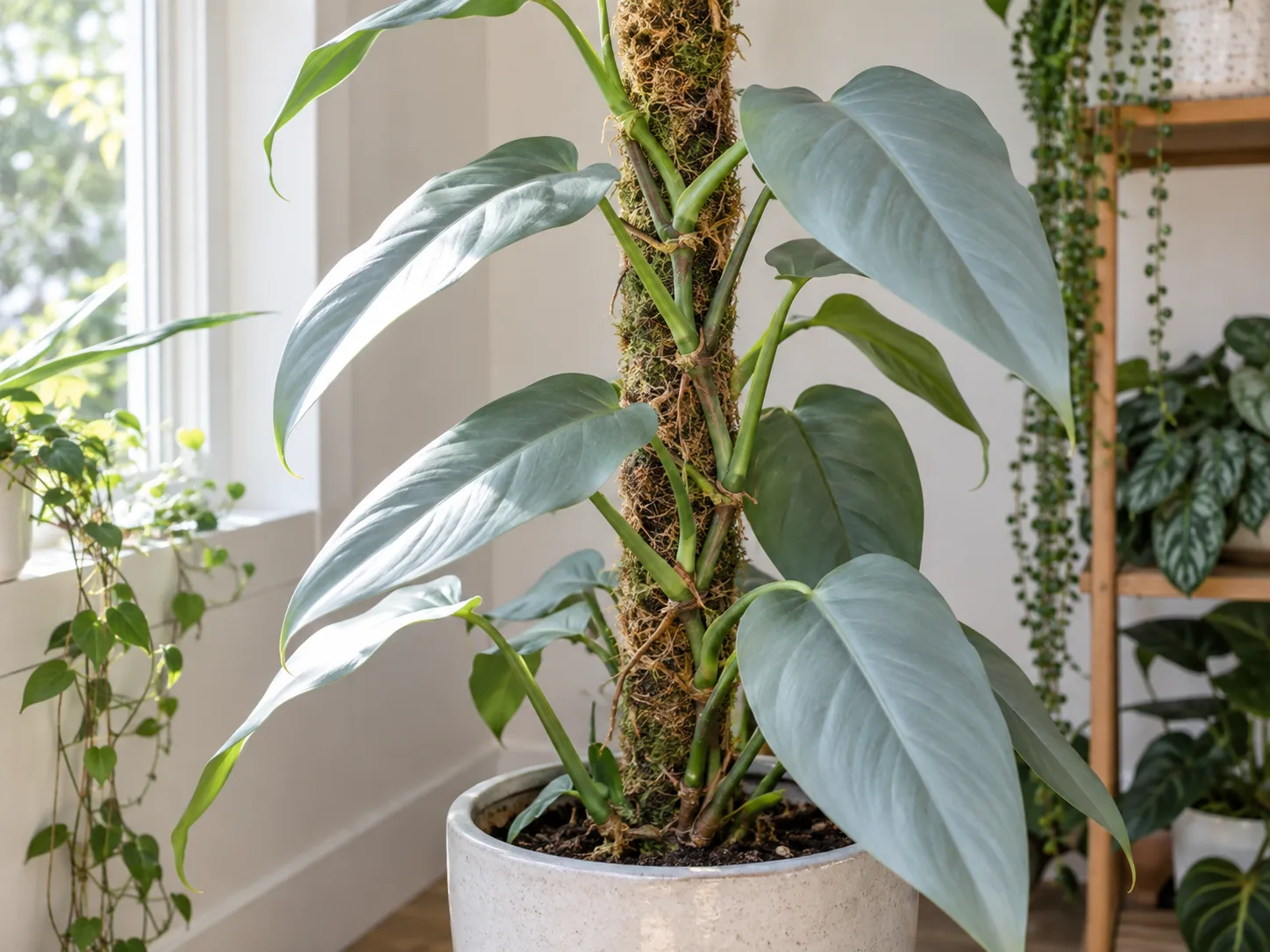
A support works best when installed before the vine sprawls across a shelf. If you add one later, stabilize the root ball and avoid pushing a stake through the main stem or a thick root. A moss pole can encourage aerial roots to anchor and may support more upright growth, but larger leaves are not guaranteed; adequate light, healthy roots, and a mature plant matter too. If you prefer a trailing shape, use a wide, stable shelf or hanging planter and prune the vine before its weight pulls the pot over. The RHS explains how climbing philodendrons can be tied to moss poles and trained as they grow in its philodendron guide.
Repot When Roots Need More Room
Repot when roots form a dense coil, circle the drainage holes, push the plant upward, or when the mix has broken down and stays wet despite careful watering. Roots emerging from one hole alone do not always mean the plant is urgently pot-bound. Spring or early summer is convenient because growth is active, but a failing, sour-smelling mix should be corrected when you find it rather than left until a calendar date.
Choose a pot only one size larger than the root ball, with drainage holes. Loosen the outside of tightly circling roots gently; remove only roots that are clearly dead, hollow, or mushy, and keep healthy firm roots intact. Set the plant at the same depth it was growing before, fill around it with fresh airy mix, and water enough to settle the medium. Do not pack the mix hard around the stem or move it into a dramatically oversized decorative pot that will remain wet for weeks.
After repotting, return the plant to bright filtered light and wait to feed until it resumes growth. A short pause in growth is normal after root disturbance. If a plant is already stressed by pests, cold, and wet soil, address the urgent issue first rather than making several major changes on the same day.
Propagate From a Viable Node
Use a healthy stem cutting that includes at least one node, the joint where a leaf attaches and a new bud or aerial root may form. A leaf with a long petiole but no piece of stem cannot normally produce a new vine on its own. Because rugosum may be a costly or hard-to-replace plant, take one small cutting rather than stripping several leaves from a weak mother plant.
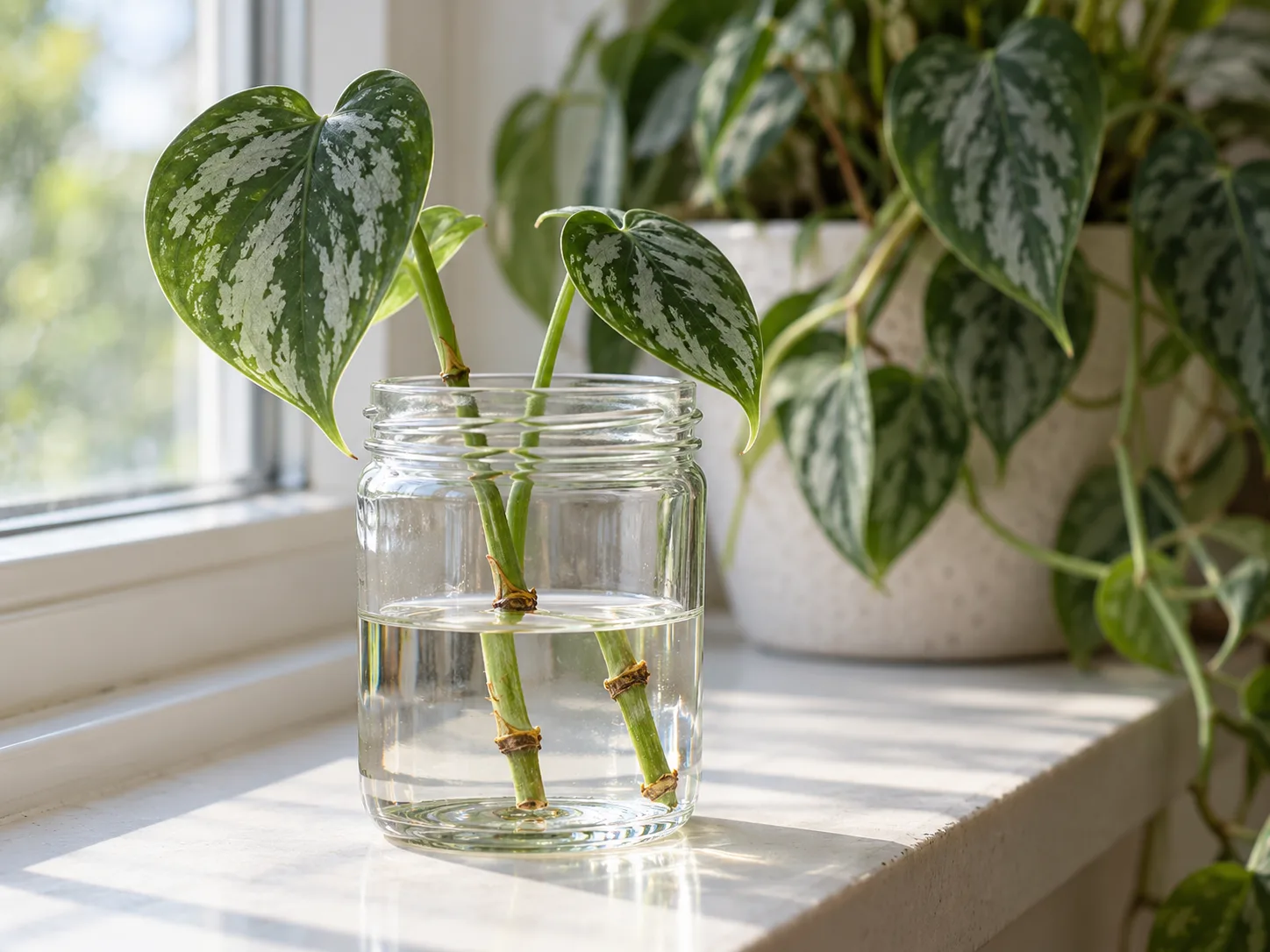
- Choose a firm, pest-free stem with a visible node and at least one healthy leaf. Use clean, sharp snips and cut just below the node.
- Remove any leaf that would sit in water or rooting medium. Keep the leaf and node attached to the cutting, and do not let the blade or petiole be submerged.
- Root it in clean room-temperature water, lightly moist sphagnum, or a fine airy propagation mix. The node must contact the medium, while the leaf stays above it.
- Place the cutting in warm bright indirect light. Keep the medium lightly moist, not waterlogged, and check it every few days for decay or drying.
- Pot it into a small draining container once it has several healthy roots and begins to branch. Keep the new mix lightly and evenly moist as the water-grown roots adapt, then return to normal dry-down checks.
A clear jar makes roots easy to monitor, but change the water if it turns cloudy and keep the node submerged while the leaf remains dry. In sphagnum or propagation mix, airflow matters; sealed humidity domes can help a drying cutting but should be vented and checked for mold. Do not leave the cut end exposed to dry for a week or two before rooting. A fresh tropical stem can lose water and viability; put it into the chosen medium promptly after making the cut. The RHS propagation guide describes node-based cuttings for climbing philodendrons, and GardenersPath’s philodendron propagation guidance also emphasizes cuttings that include a stem node.
Diagnose Yellowing, Curling, and Brown Edges
The thick, wrinkled surface is normal; new growth may look softer before it hardens. Diagnose changes by checking whether they affect one old leaf or several new leaves, which side of the plant is affected, and how wet the root ball feels.
| What you see | Check first | A useful first response |
|---|---|---|
| One older lower leaf turns yellow | Is new growth healthy and the mix drying normally? | Remove the leaf once mostly yellow; keep monitoring |
| Several yellow leaves with a heavy, wet pot | Drainage, pot size, and root condition | Pause watering and inspect roots if decline continues |
| Yellowing with a very light pot and dry mix | How deep the dryness extends | Water thoroughly, then shorten the next dry-down interval |
| Bleached or tan patch on the window side | Direct sun or heat against glass | Filter light or move the plant back gradually |
| Brown, crisp edges | Dry-down, salts, and room humidity | Correct the root issue first; flush salts only if drainage is sound |
| Curling or drooping leaves | Soil moisture and root health | Distinguish a dry root ball from wet, damaged roots before watering |
| Smaller leaves and long spaces between nodes | Light and support | Increase filtered light and give the stem somewhere to climb |
Yellowing does not automatically mean fertilizer deficiency, so do not feed a struggling plant before checking the roots and light. If leaves yellow while the mix remains wet, investigate drainage and root health; if the pot is very light and the mix has pulled away from the sides, rehydrate slowly. One old leaf aging out can be normal, but multiple leaves changing at once deserve a closer look.
Brown tips can also result from mineral salts or repeated dry spells, not just low humidity. Compare the affected leaf with the newest one, inspect for pests, and review changes made over the previous few weeks. The best diagnostic is whether the next leaf improves after one targeted adjustment.
Check for Pests Before They Spread
Inspect both leaf surfaces, the undersides, petiole joints, and the stem nodes every week or two. Mealybugs look like small white cottony clusters; scale appears as fixed bumps; spider mites may leave fine webbing and pale stippling; thrips can cause silvery scarring and distorted new leaves. The grooves in rugosum’s foliage can hide pests, so use a bright light and look closely rather than relying on a quick glance from above.
If you find a pest, isolate the plant from other houseplants and check nearby leaves. Rinse the foliage or remove visible insects with a damp cloth, then use an insecticidal soap or other product only if its label permits the plant and indoor use. Test a small leaf area first, keep treated foliage out of direct sun while it dries, and repeat only as the label directs because eggs or newly hatched pests may survive a single treatment. Avoid applying several products at once; the combination can damage leaves and makes it harder to learn what worked. The RHS philodendron guide lists mealybugs, scale, and spider mites among pests to watch for on philodendrons.
Respond to Root Rot Without Panic
Root rot is a pattern of root damage associated with persistently wet, poorly aerated conditions. Warning signs include a mix that remains wet for an unusually long time, a sour smell, yellowing across multiple leaves, and roots that are brown and soft rather than firm. A single yellow leaf is not enough to diagnose it, and healthy roots can naturally be tan rather than pure white.
Slide the plant from the pot if symptoms continue despite a dry-down. If roots are mushy, cut away only the damaged sections with clean shears, remove soggy old mix, and repot into a clean draining container with fresh airy medium. Keep the crown at its original height. Water modestly to settle the roots and do not leave the pot standing in runoff. If most roots are gone, reduce leaf demand by removing only the worst damaged foliage and consider taking a viable stem cutting as insurance.
Afterward, give bright filtered light and warmth, then wait until the new mix has begun to dry before watering again. Do not respond by putting the rescued plant in the brightest hot sun, applying fertilizer, and watering daily; those changes stack stress on damaged roots. Root recovery can be slow, so judge progress by firmer remaining stems and new growth rather than expecting old yellow leaves to turn green again. Philodendron-care guidance from RHS links overwatering and poorly draining mix with root rot and yellowing foliage.
Flowering, Mature Size, and Indoor Expectations
Philodendron rugosum is grown primarily for foliage. A mature philodendron can produce the characteristic spathe and spadix inflorescence, but indoor flowering is not a practical measure of whether this plant is healthy. Do not keep the roots wet, apply excess fertilizer, or use an extreme grow-light schedule to force a bloom.
Its eventual size depends on age, support, light, and growing conditions. A climbing plant can use substantial vertical space over time, but a young plant may remain modest for years. Plan for a stable pole and room to extend the stem; prune a vine cleanly above a node if it outgrows the space, and root the healthy cutting if you want to make a second plant.
Buy and Acclimate a Responsibly Grown Plant
Because rugosum is less commonly stocked than many philodendrons, compare sellers on plant condition and provenance rather than choosing the cheapest listing. Look for a firm stem, intact leaves, visible growth points, and roots that are not sitting in a saturated, sour-smelling mix. Ask whether the plant was propagated in cultivation and how it has been packed; a seller who can answer clearly is more useful than a dramatic rarity claim.
A limited retail supply is not itself proof of endangered status. Kew’s current species record identifies the accepted name, range, and climbing habit; do not infer a conservation category from scarcity or repeat one without a current primary assessment. Buying cultivated stock with clear provenance is a sensible choice for a collector, especially when wild collection cannot be verified.
When it arrives, inspect for pests and damaged stems, then keep it apart from the collection while it adjusts. Give it a stable warm position with filtered light, and wait before repotting unless the mix is failing or roots are in immediate danger. Shipping, a new room, and root disturbance all demand recovery time; changing the pot, light, fertilizer, humidity, and water routine at once makes it difficult to identify the cause if leaves decline.
Keep the Plant Away From Pets and Children
Treat Philodendron rugosum as unsafe to chew. ASPCA Poison Control lists philodendron varieties among plants with insoluble calcium oxalate crystals; chewing can cause mouth pain, drooling, retching, vomiting, or difficulty swallowing. Keep the whole plant, pruning scraps, and fallen leaves out of reach, and wash hands after handling cut stems because philodendron sap may irritate skin.
If a pet chews the plant, contact a veterinarian or animal poison service for case-specific advice instead of waiting for symptoms. If a person may have swallowed plant material, contact a poison center; MedlinePlus’ philodendron poisoning guidance recommends prompt expert help and warns against inducing vomiting without professional direction. Seek urgent medical or veterinary care for trouble breathing or swallowing. The ASPCA’s guidance on calcium oxalate houseplants explains why philodendron varieties can irritate the mouth and throat.
Use a Simple Weekly Check-In
Once a week, look at the newest leaf and stem, check the top layer of mix, and lift the pot. Water only when the plant’s dry-down cues line up; if the container is still heavy, wait and check again. Scan under leaves and around nodes for pests, and make sure the saucer is empty and the support is stable.
Every month or so during active growth, wipe dusty leaves, loosen any tie that has become tight, and decide whether feeding is warranted. In autumn and winter, expect growth and water use to slow when the room is cooler or darker. You do not need to create a complicated routine: stable filtered light, an airy root zone, and small adjustments based on the plant’s actual growth prevent most avoidable problems.
Conclusion
Good Philodendron rugosum care begins with the root zone: use a loose mix, a draining pot, and water only after the top layer has dried somewhat and the pot has become lighter. Give the climbing stem bright filtered light and stable support, then use new growth—not a rigid schedule—to decide whether your setup needs adjustment.
Its leaves are naturally corrugated, and its exact indoor thresholds are not as well documented as general philodendron care. Start with the checks in this guide, change one condition at a time, and keep the plant and cuttings away from curious pets. That approach protects both the plant’s distinctive foliage and the roots that sustain it.