How to Grow and Care for Philodendron Splendid at Home
Learn Philodendron Splendid care with practical light, watering, soil, humidity, support, and propagation advice, plus clear fixes for common leaf problems.
The care priorities that matter most
Philodendron Splendid grows best when its roots get air between waterings and its leaves receive steady, filtered light. Start with a warm spot near a bright window, a pot with open drainage holes, and a loose mix that does not stay sodden; add a support when the stem begins to climb or lean. You do not need a sealed plant cabinet or a precise watering calendar to begin.
This is a slow, tropical aroid, so changes show up over weeks rather than overnight. Judge the plant by its newest leaves and the moisture in the pot, not by a single older leaf or another grower’s schedule. If the plant stalls, change one condition at a time so you can tell whether more light, faster drainage, or steadier humidity actually helped.
A practical weekly check takes a minute: feel the mix below the surface, lift the nursery pot to judge its weight, inspect leaf undersides and stem joints for pests, and look at the most recent growth. Empty any runoff from the saucer. Those checks prevent the most common problem—watering again while the center of the root ball is still wet.
What Philodendron Splendid is and how it grows
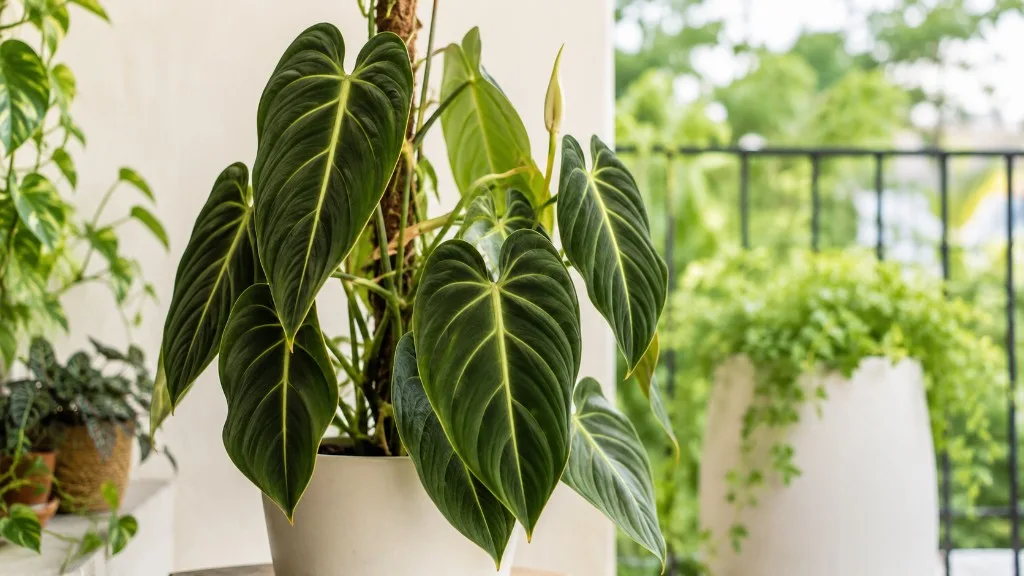
Philodendron Splendid is generally sold as a cultivated hybrid of Philodendron melanochrysum and Philodendron verrucosum. It is prized for elongated, heart-shaped leaves with a velvety surface and contrasting veins. Individual plants can differ in leaf proportions, color, and vigor, so use the name as a useful identity rather than a guarantee that every specimen will match a photograph exactly.
Its growth habit is climbing, not creeping along the soil. As a stem lengthens, nodes—the joints where leaves attach—can produce aerial roots that grip a rough support. The plant may stay compact while young, then lean or climb as it adds stem, especially when light comes from one side. A support gives it a place to grow upward, but it is not a rescue treatment for poor light or unhealthy roots.
The genus contains both climbers and self-heading plants, which is one reason care advice for “philodendrons” can sound contradictory. The Royal Horticultural Society’s philodendron guide describes this range and explains that many philodendrons use aerial roots to climb in their native habitat. For Splendid, think of the pole as a way to manage its climbing stem and display—not as a requirement to keep the plant alive.
Choose a healthy plant and help it acclimate
When choosing a plant, look past the largest leaf and check the base, newest growth, and roots if the seller allows it. A firm stem, an intact growing point, several leaves without spreading damage, and roots that are pale and firm are more useful signs than an unusually tall pole or a single perfect leaf. Avoid a sour-smelling pot, mushy stem tissue, or a root ball that is soaked and compacted.
Turn the leaves over and inspect where each petiole meets the stem. Fine webbing, cottony deposits, small hard bumps, and silvery scars can indicate spider mites, mealybugs, scale, or thrips. The RHS recommends choosing philodendrons with strong growth, plenty of roots, and undamaged leaves; keep a new arrival separate from your collection while you check it over the next couple of weeks.
After bringing it home, keep the plant in one stable location and give it time to adjust before repotting, pruning, or changing its light dramatically. A nursery mix that drains and a pot with holes can usually stay in place while the plant acclimates. Repot sooner only if the mix remains wet for an unusually long time, the container has no drainage, or you find soft, decaying roots.
Give it bright, filtered light
Place Philodendron Splendid near a bright window where direct sun does not beat on the leaves for hours. An east-facing window often gives gentle morning light; a south- or west-facing window may work with a sheer curtain or more distance from the glass. The RHS growing guide and Fine Gardening’s philodendron care overview both favor bright or medium-bright indirect light and caution against harsh direct exposure.
A plant in a dim corner may stay alive but grow slowly, with longer gaps between leaves and smaller new foliage. At the other extreme, direct midday or afternoon sun through glass can leave pale, dry patches that will not turn green again. Move the pot gradually: several days in a slightly brighter place are safer than shifting it from a dark room straight into a hot window.
Avoid using leaf shine or a fixed distance from the window as the only light test. Window direction, season, outdoor shade, curtains, and nearby walls all change the actual exposure. If natural light is weak, a grow light can help; keep it far enough away that the leaf surface does not heat up, and judge the result by the next leaves rather than expecting old leaves to repair.
Read new growth to adjust its position
The newest two or three leaves give you better feedback than an older, settled leaf. If each new leaf is smaller and farther from the previous one, or the stem bends strongly toward the window, move the plant closer to the light source or add a grow light. Make the change in steps, because sudden high exposure can scorch foliage that has been growing in shade.
If a new leaf opens with less pronounced color or a softer shape, wait until it has fully unfurled and hardened before diagnosing a problem. Color and size vary with the plant’s age, season, and growing conditions. Look for a repeated pattern across several growth cycles before adjusting fertilizer or attempting a severe prune.
Water when the root zone has partly dried
Splendid wants moisture while it is growing, but its roots also need oxygen. A wet pot is not the same as a hydrated, healthy root zone: when fine mix stays saturated, roots can lose function and begin to decay. The RHS advises letting philodendron compost dry slightly between waterings, while Fine Gardening recommends checking below the surface before watering.
Check the top couple of inches of mix with a finger or wooden skewer. If it feels cool and damp farther down, wait; if the upper layer has dried and the pot feels noticeably lighter, water slowly until water drains from the bottom. Let the pot finish draining, then empty its saucer or cachepot rather than letting it sit in runoff.
How long that takes depends on the light, season, pot size, mix, and room temperature. A plant in a warm, bright room can dry much sooner than one in a cool, shaded corner. Use any weekly schedule only as a reminder to inspect the pot, never as an instruction to water regardless of moisture.
Use a repeatable watering check
Before watering, check the mix below the crust, notice whether the pot feels light or heavy, and compare the plant’s leaves with their usual posture. A dry, light pot and slightly limp leaves suggest the plant may need water; yellow lower leaves in a heavy pot call for a drainage and root check instead. Drooping by itself does not tell you which problem is happening.
When watering, wet the whole root ball rather than adding a small sip to one edge. If water runs straight down the sides without soaking the center, the mix may have shrunk away from the pot or become difficult to rewet; apply water in two slow passes or briefly bottom-water, then drain completely. Repeated tiny top-ups leave some roots dry and keep other parts of the pot consistently damp.
In winter or whenever growth slows, the plant usually uses water more slowly, so let the mix dry farther before checking again. Do not compensate for a missed watering by leaving the roots standing in water. The goal is a full drink followed by a clear drying interval, not alternating drought and saturation.
Build an airy mix and choose the right pot
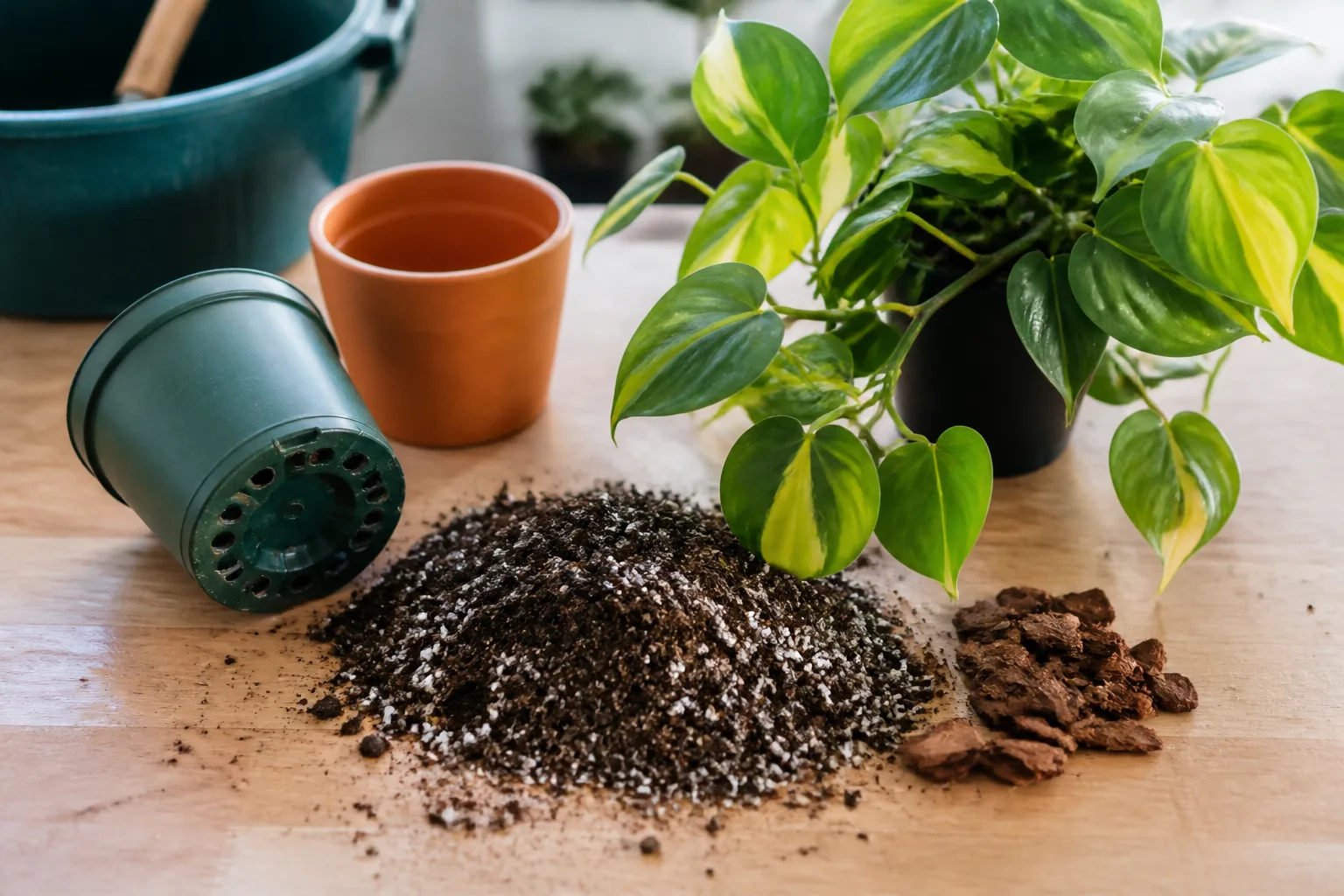
Use a potting medium that holds some moisture but contains coarse pieces that keep air spaces around the roots. A practical starting blend is one part indoor potting mix, one part fine orchid bark, and one part perlite or pumice; a small amount of coco coir can help the blend hold moisture in a very warm, dry room. The exact ratio is not a formula for every home—adjust the aeration if the mix stays soggy or dries in a day.
The mix should feel loose after watering, not like mud and not like dry bark that sheds water. Avoid dense garden soil in a container, and do not add a layer of gravel at the bottom as a substitute for drainage holes. The Better Homes & Gardens philodendron guide also recommends a well-draining medium and a pot with drainage to reduce waterlogging.
Choose a container only modestly larger than the root ball. A pot that is much wider holds unused wet mix around a small root system, which can prolong drying and make watering harder to judge. Plastic retains moisture longer than terracotta; neither is automatically best, so match the material to your room and your tendency to water often.
Balance warmth, humidity, and airflow
Keep the plant in a warm room away from cold drafts, air-conditioning vents, and direct heat from radiators. The RHS suggests keeping philodendrons above 15°C (59°F); a stable household temperature comfortably above that is a sensible target. Avoid leaving it outdoors during cold nights or exposing it to abrupt temperature swings.
Moderate humidity is usually workable, while added humidity may help new leaves unfurl with less drying at the edges. A small hygrometer placed near the plant is more useful than misting by habit. If your room is very dry, group plants together or run a clean humidifier nearby; a pebble tray has limited reach and should never leave the pot standing in water.
Higher humidity works best with moving air and dry foliage. Leave a little space between leaves and neighboring pots, and avoid repeatedly wetting the velvety surfaces with mist. If a new leaf repeatedly sticks or dries before opening, first check that the plant is warm, hydrated, and free of pests; then consider a modest humidity increase rather than sealing the plant in a stagnant, wet enclosure.
Feed lightly while it is growing
Use a balanced houseplant fertilizer during active growth, following the product label and starting at the lower end of its recommended dilution if you are unsure how the plant responds. Feed only when the root zone is moist and the plant is producing new growth. Fertilizer cannot make a slow or recently stressed plant grow faster if light, temperature, or root health is the real limit.
Reduce or pause feeding when growth slows in cooler, darker months. A pale crust on the mix, brown margins after repeated feeding, or a sudden decline following a strong dose suggests excess salts rather than hunger. Flush a well-draining pot with plain water, let it drain fully, and resume feeding only after the plant is growing steadily again.
Support the climbing stem without forcing it
A support becomes useful when the stem leans, the pot feels unstable, or aerial roots begin reaching for something to climb. A stake offers simple stability; a trellis spreads the plant across a wider area; a moss or coir pole gives aerial roots a textured surface to attach to. Select a support that the pot can hold securely and that you can maintain without soaking the root ball.
Set a pole close to the stem and attach the stem loosely with soft ties, leaving room for it to thicken. Avoid tying leaf petioles to the support; fasten the main stem instead. Adding a pole during repotting reduces the chance of pushing it through established roots, but you can also slide a narrow stake in carefully near the pot wall.
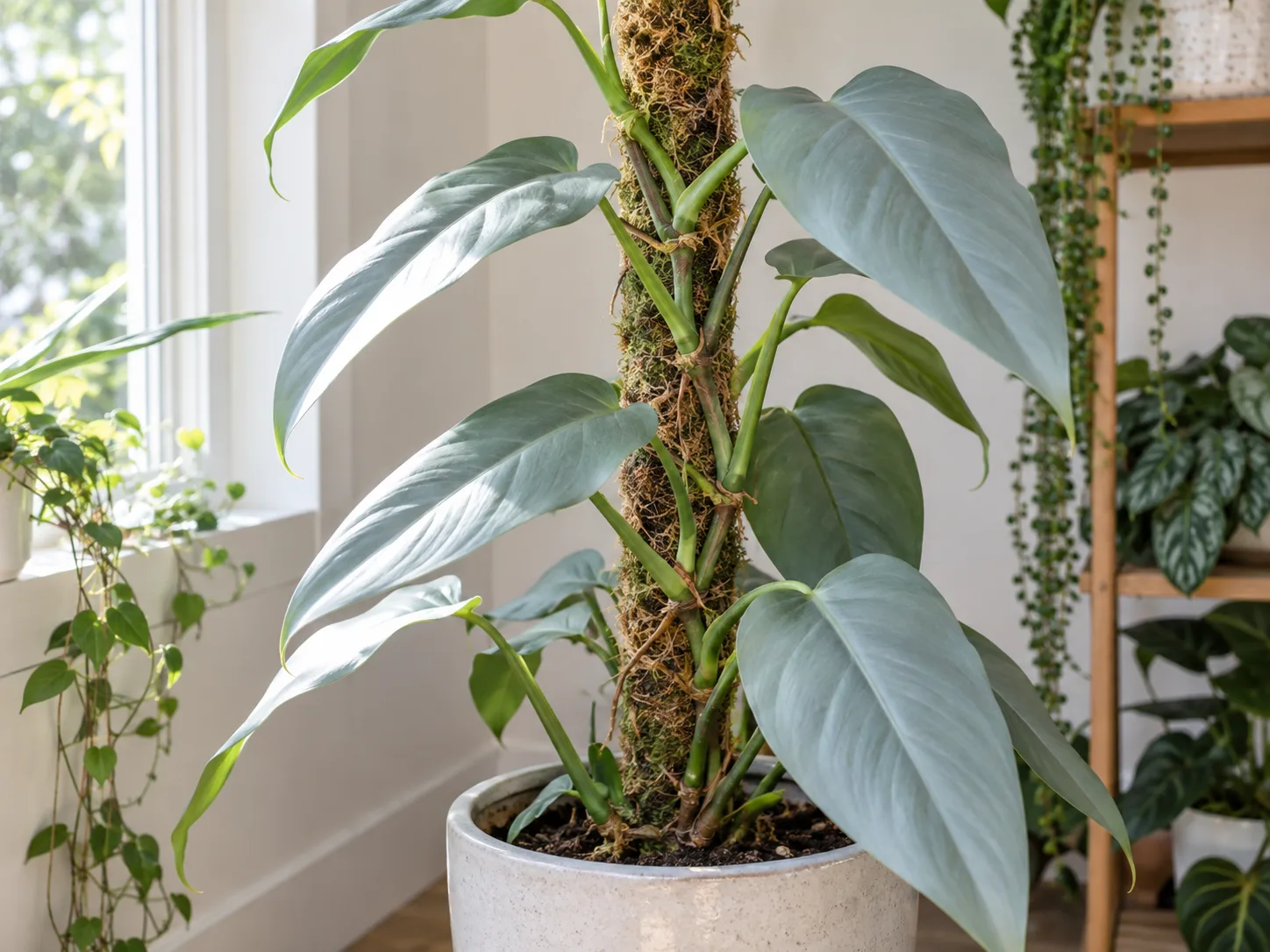
As aerial roots grow, guide them toward the support rather than cutting them off automatically. Aerial roots help anchor a climbing philodendron and may take up moisture when they contact a damp, textured pole. They can be trimmed if they are dry, damaged, or in the way, but do not remove every healthy root simply for a tidier appearance.
Propagate from a healthy stem node
A new philodendron needs a node, the point on the stem where a leaf, bud, and sometimes an aerial root emerge. A leaf blade or petiole without a node cannot produce a new climbing stem. For the best chance of success, take a cutting from a healthy, actively growing section with at least one firm node and an attached leaf.
Use clean, sharp pruners and cut just below the node. Remove any leaf that would sit underwater or inside the rooting medium, but leave healthy foliage above it. The Gardening Know How guide to philodendron propagation likewise emphasizes cutting near a node and keeping submerged leaves out of the water; those practical steps apply to climbing philodendrons generally.
Spring and summer are convenient because warmth and active growth support rooting, but a healthy indoor plant can sometimes be propagated at other times if conditions stay warm and bright. Do not take multiple cuttings from a small plant that has only a few leaves. Leave enough foliage on the parent to keep it growing, and remember that a cutting may take several weeks to make visible roots.
Root the cutting and move it into mix
For water rooting, place the node under clean water and keep the leaf above the surface. Set the container in bright indirect light, refresh the water if it turns cloudy or smells, and wait for several firm roots before potting it. For sphagnum, perlite, or a loose propagation mix, keep the medium evenly damp rather than waterlogged and check often enough that the node does not dry out.
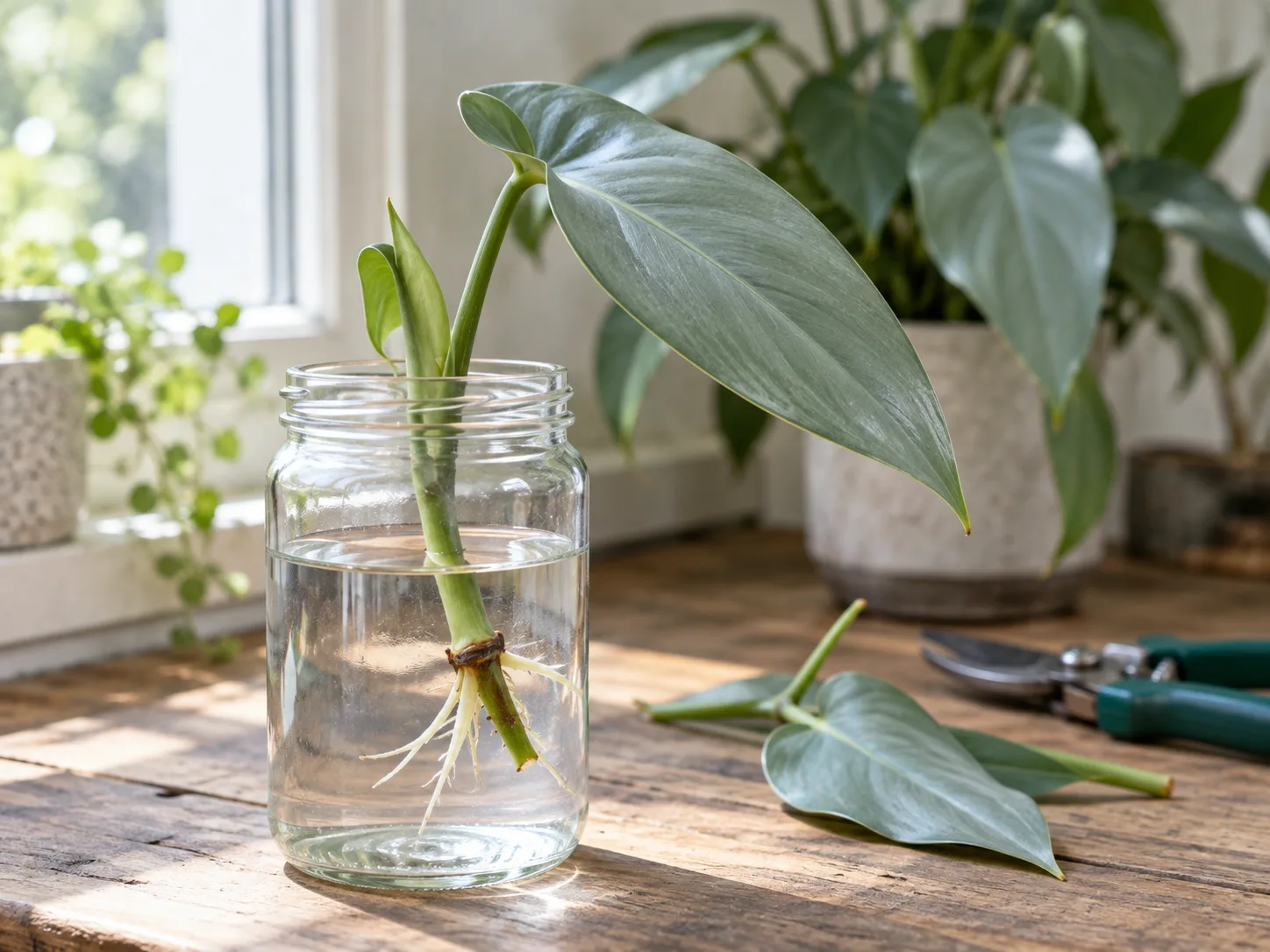
Move the cutting into a small pot once it has a few roots long enough to hold the mix, often around an inch or two. Keep the new mix lightly and evenly moist while water-grown roots adapt, then return to the normal dry-down routine. A clear pot can make root growth easier to watch, but opaque pots work just as well if you rely on drainage and leaf growth instead.
If the base turns soft, dark, or foul-smelling, remove the cutting from its medium and inspect it. Trim back only to firm tissue with a healthy node; discard a cutting with no sound node left, and clean the container before trying again. A firm cutting with no roots after a short wait may simply need more time, so avoid repeatedly unpotting it to check.
Repot and prune only when there is a reason
Repot when roots circle the inside of the pot, emerge from several drainage holes, or the medium has broken down and stays wet or dries unevenly. The calendar alone is not a reason: a slow-growing plant may not need a larger pot every year. When you do repot, move up one pot size rather than jumping into a container with lots of extra soil.
Slide the plant out gently and keep the stem base at its previous depth. Loosen only soil that comes away easily, then cut off roots that are clearly mushy or dead with clean shears. Add fresh airy mix around the root ball, water it through, and allow it to drain before returning it to its place.
Prune to remove a dead or badly damaged leaf, manage a long stem, or take a cutting. Use a clean blade and cut the petiole or stem without tearing the plant tissue. Wipe dust from velvet leaves with a soft, dry or barely damp cloth rather than polishing them; avoid leaving water trapped on the foliage in a cool room.
Prevent pests and limit disease spread
Check the undersides of leaves, petiole joints, and the stem where it meets the support. Spider mites can leave fine webbing and pale stippling; mealybugs look cottony; scale resembles small fixed bumps; thrips may leave silvery scars and dark specks. A new plant is a common way to introduce pests, so keep it separate while you inspect it regularly.
If you find insects, isolate the plant, identify the pest, and remove what you can by rinsing or wiping the leaves. If you use an insecticidal soap or another pesticide, choose a product labeled for the plant and pest and follow its directions; test a small area first because velvet foliage can mark easily. Repeat inspections matter because eggs or hidden insects can survive a single cleaning.
Dark, expanding spots are different from dry brown edges. Keep leaves dry, improve spacing and airflow, and avoid splashing water between plants while you work out whether spots are spreading. If the damage progresses quickly or stems soften, isolate the plant and check the roots and growing point before applying a treatment; a photograph alone may not identify the disease reliably.
Troubleshoot yellow leaves, brown tips, and stalled growth
One older lower leaf turning yellow while new leaves look healthy can be normal aging. Several leaves yellowing together, especially in a pot that remains heavy and wet, suggest root stress; a pale, dry pot with curling leaves points in the opposite direction. Check soil moisture and drainage before changing fertilizer or humidity.
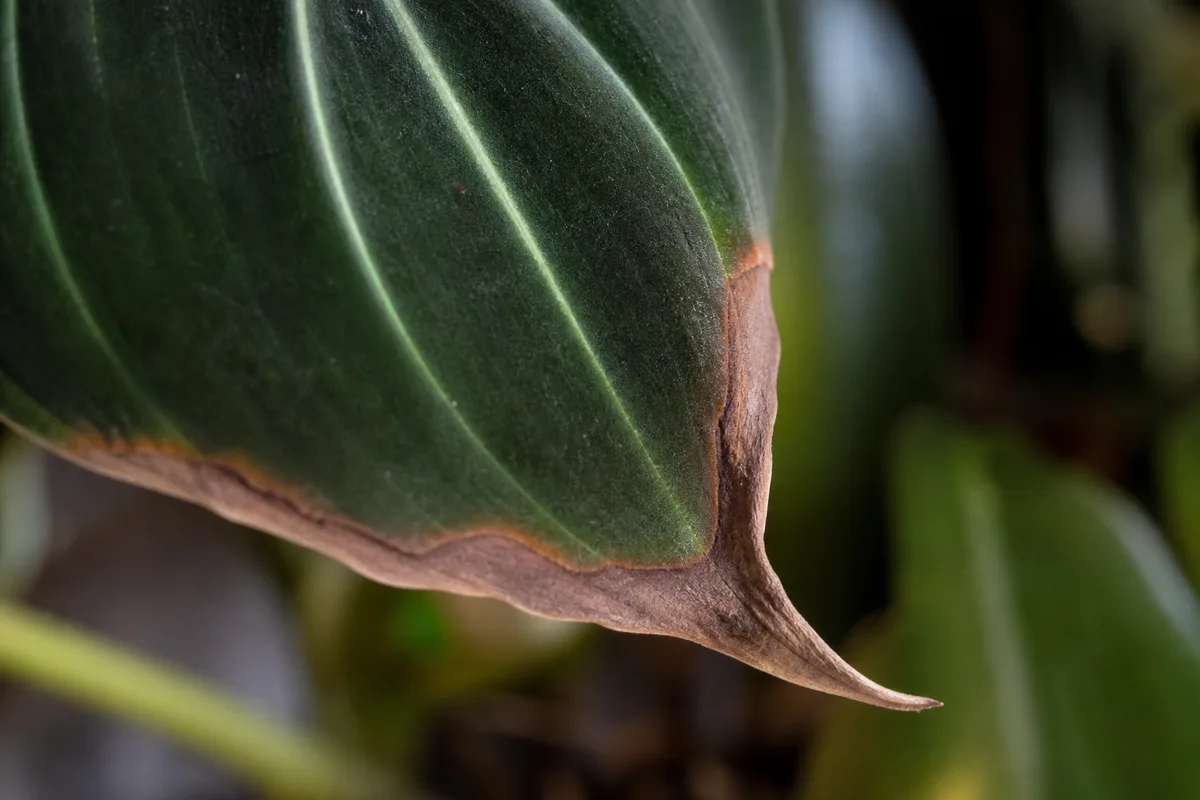
Brown tips can follow dry air, irregular watering, excess salts, root damage, direct sun, or temperature stress. Brown patches that face the window and feel papery suggest scorch; wet-looking spots that expand or have a halo deserve more caution than a single dry tip. The Fine Gardening guide notes that philodendron problems often follow overwatering and poor drainage, but the same symptom can have several causes, so compare the leaf pattern with the pot before acting.
Match the symptom pattern to the first check
| What you see | Check first | Low-risk first move |
|---|---|---|
| One old lower leaf yellows | Whether new growth is healthy | Remove the leaf once fully yellow and keep monitoring |
| Several leaves yellow while the pot stays heavy | Drainage, pot size, and root firmness | Let the mix dry; inspect roots if the decline continues |
| Limp leaves with a light, dry pot | Moisture in the center of the root ball | Rewater slowly and let excess drain |
| Crisp tips or edges | Recent dry spells, hard water, fertilizer crust, and hot sun | Correct the likely stress and avoid changing several things at once |
| Small new leaves and long stem gaps | Light reaching the newest growth | Increase filtered light gradually |
| Soft, dark stem base or sour pot | Persistent saturation and damaged roots | Isolate, unpot, remove decayed tissue, and replace soggy mix |
Do not expect a damaged leaf to become smooth and green again. Correcting the cause protects the next leaf; trimming a brown edge is cosmetic and should wait until you can preserve the natural outline. If the plant is still declining after you correct the obvious moisture or light issue, inspect for pests and root decay before adding fertilizer.
Keep the plant away from pets and small children
Like other philodendrons, Splendid should be treated as an ingestion hazard. Philodendron tissue contains insoluble calcium oxalate crystals that can irritate the mouth and throat when chewed. The ASPCA lists philodendrons as toxic to cats and dogs, and Pet Poison Helpline describes oral irritation, drooling, gagging, and vomiting after pets chew the plant.
Put the pot where pets and children cannot reach dangling leaves, fallen pieces, or prunings. Wear gloves when taking cuttings or repotting if your skin is sensitive, wash your hands and tools afterward, and dispose of plant material where it cannot be chewed. Do not rely on a high shelf if a cat can jump onto nearby furniture.
If a person may have swallowed plant material, contact a poison-control service or medical professional for case-specific advice; MedlinePlus identifies calcium oxalate as the poisonous ingredient in philodendron. If a pet chews it, call your veterinarian or an animal poison service, particularly if there is swelling, repeated vomiting, trouble swallowing, or any breathing change. Keep the plant label or a photo available so the plant can be identified accurately.
Conclusion: build a stable root zone first
The most reliable Philodendron Splendid routine is simple: give it bright filtered light, water when the upper root zone has partly dried, and use a loose mix in a draining pot. Keep it warm, check new growth rather than chasing a fixed leaf size, and add support when the climbing stem needs it. Higher humidity can help, but steady care and airflow matter more than an enclosed display case.
When the plant struggles, start with what you can observe: how wet the mix is, whether the pot drains, which leaves are changing, and whether the newest growth is reaching for light. Those clues help separate root trouble from sun, humidity, or pest stress. Make one change, wait for the next growth response, and keep the toxic foliage out of reach while you enjoy the plant’s slow, climbing habit.



