How to Grow and Care for Portulaca (Moss Rose)
Moss rose thrives on sun and neglect—but only with fast drainage. Full portulaca care: beds, baskets, seed, cuttings, pet safety, and midseason renewal.
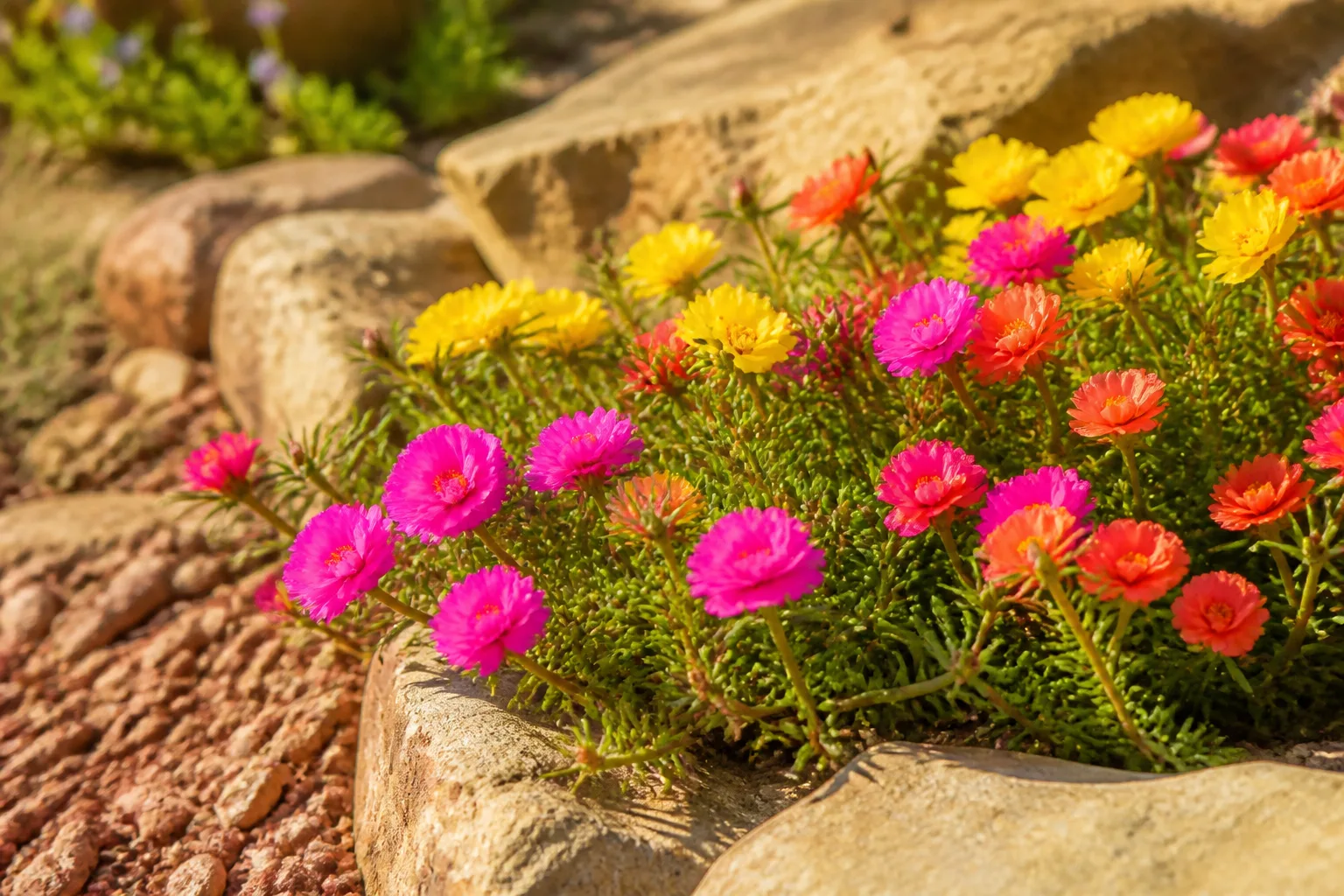
Portulaca grandiflora, the bedding plant most gardeners call moss rose or simply portulaca, is a low, spreading annual built for blazing sun, lean soil, and summer heat. Its needle-like succulent leaves store water, and its papery flowers open in bright light in shades from white and pastel pink to orange, red, and magenta. Treat it like a sun-loving succulent that happens to bloom all summer, not like a thirsty petunia, and it will reward you with weeks of color from a small footprint.
The mistake I see most often is buying moss rose for a shady porch or watering it on the same schedule as impatiens. Portulaca tolerates drought remarkably well, but it does not forgive wet roots, crowded shade, or heavy clay. Get drainage and light right first; everything else is refinement.
What Moss Rose Actually Is
Moss rose is a semi-succulent annual (or tender perennial in frost-free climates) native to hot plains in Argentina, southern Brazil, and Uruguay, according to University of Wisconsin–Madison Extension. Plants form a mat roughly 3 to 8 inches tall and up to about 12 inches wide, with reddish, branching stems and fleshy cylindrical leaves arranged alternately or in small clusters.
Flowers are saucer-shaped, rose-like, and held face-up above the foliage on stem tips. Species-type plants carry single or semi-double blooms about 1 to 3 inches across with five heart-shaped petals and a cluster of yellow stamens in the center. After pollination, tiny seed capsules form; when ripe, they split and scatter iridescent blue-gray seeds that can produce volunteer seedlings the following year.
In the nursery trade, labels may list Portulaca grandiflora, P. umbraticola, or even P. oleracea because many modern cultivars are hybrids. That labeling mess matters less for basic culture—sun and drainage still rule—but it explains why two pots labeled “portulaca” can look slightly different in leaf shape and trailing habit.
Portulaca vs Purslane: Do Not Mix These Up
Gardeners use “purslane” and “portulaca” interchangeably in conversation, but the plants behind those names are not always the same thing. Ornamental moss rose (P. grandiflora) is grown for showy summer flowers. Common purslane (P. oleracea) is a widespread summer annual weed with smaller yellow flowers and flat, paddle-shaped leaves; it is foraged as an edible green in some cuisines. Wingpod purslane (P. umbraticola) sits between them horticulturally, with broader leaves and many popular hybrid series.
Do not assume every fleshy ground-hugging plant is edible purslane. Spotted spurge and other unrelated weeds can look vaguely similar from a distance. If you did not plant it and cannot confirm the species, do not eat it. For ornamental beds, buy named cultivars and keep volunteer purslane weeds out of the same patch so identification stays simple.
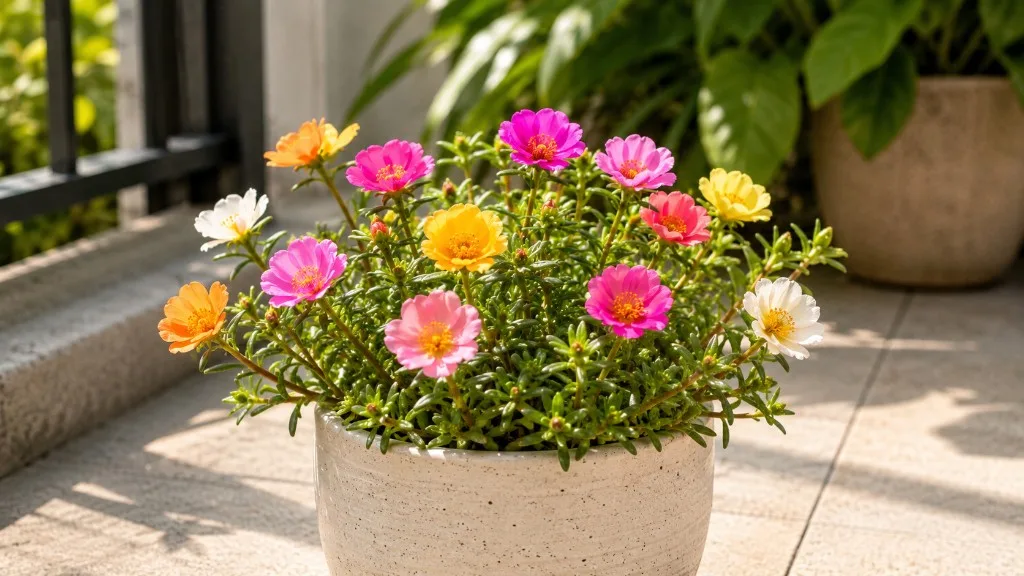
Portulaca at a Glance
| Feature | What to expect |
|---|---|
| Common names | Moss rose, portulaca, rose moss, sun plant |
| Botanical name | Portulaca grandiflora (and hybrid cultivars) |
| Plant type | Annual or tender perennial; frost-sensitive |
| Size | About 3–8 inches tall, 6–12+ inches wide |
| Light | Full sun (6+ hours of direct sun) |
| Soil | Sandy, rocky, or gritty; fast drainage essential |
| Bloom season | Late spring through fall until frost |
| Water | Drought-tolerant; water after soil dries |
| Fertilizer | Little to none in average soil |
| Propagation | Seed; stem cuttings in summer |
| Wildlife | Attracts bees, butterflies; deer usually avoid |
| Pet safety | Toxic to dogs, cats, and horses (ASPCA) |
Is Portulaca Right for Your Garden?
Portulaca earns its place when you have a hot, sunny, well-drained site and want low-care color without constant deadheading on modern hybrids. NC State Extension recommends it for rock gardens, crevice plantings, container edges, hanging baskets, and the front of sunny borders where taller plants would shade it out.
Portulaca is a strong fit if you:
- Have a south-facing bed, patio, driveway edge, or mailbox strip that bakes in summer
- Want trailing color in hanging baskets or window boxes
- Need a ground-hugging filler between flagstones (not in the path itself—stems break easily)
- Prefer an annual that does not demand rich soil or frequent feeding
- Garden in a climate with hot, humid summers where cool-season annuals collapse
Skip portulaca or scale back if you:
- Have deep shade, north-facing walls, or tree-root competition that keeps soil cool and damp
- Cannot provide drainage in clay or low spots that hold rain
- Need a plant that tolerates daily foot traffic
- Want blue flowers (moss rose does not come in true blue)
- Keep curious pets that chew plants in reach of containers
Moss rose is not invasive in the sense of a woody shrub, but it reseeds lightly in warm sites. Deadheading reduces volunteers; allowing seed drop gives you free plants next year with unpredictable colors if hybrids cross.
Choosing Cultivars That Match Your Climate
Walk into a garden center in May and you will see dozens of moss rose mixes. The differences that actually affect your results are flower stay-open time, early-season cold tolerance, and habit (mounding vs trailing).
For cloudy or cool spring regions, choose series bred to stay open in lower light. Wisconsin Extension highlights the ‘Sundial’ series for double flowers that remain open in cooler, cloudier weather, and ‘Happy Hour’ for earlier bloom with fuller, double flowers on a compact plant. ‘Afternoon Delight’ stays open longer into the afternoon than older species types.
For maximum flower size and saturated color in hot sun, look at ‘Mojave’, ‘Rio’, and ‘Margarita’ series. Mojave cultivars in particular are selected for large blooms and strong heat performance in commercial trials.
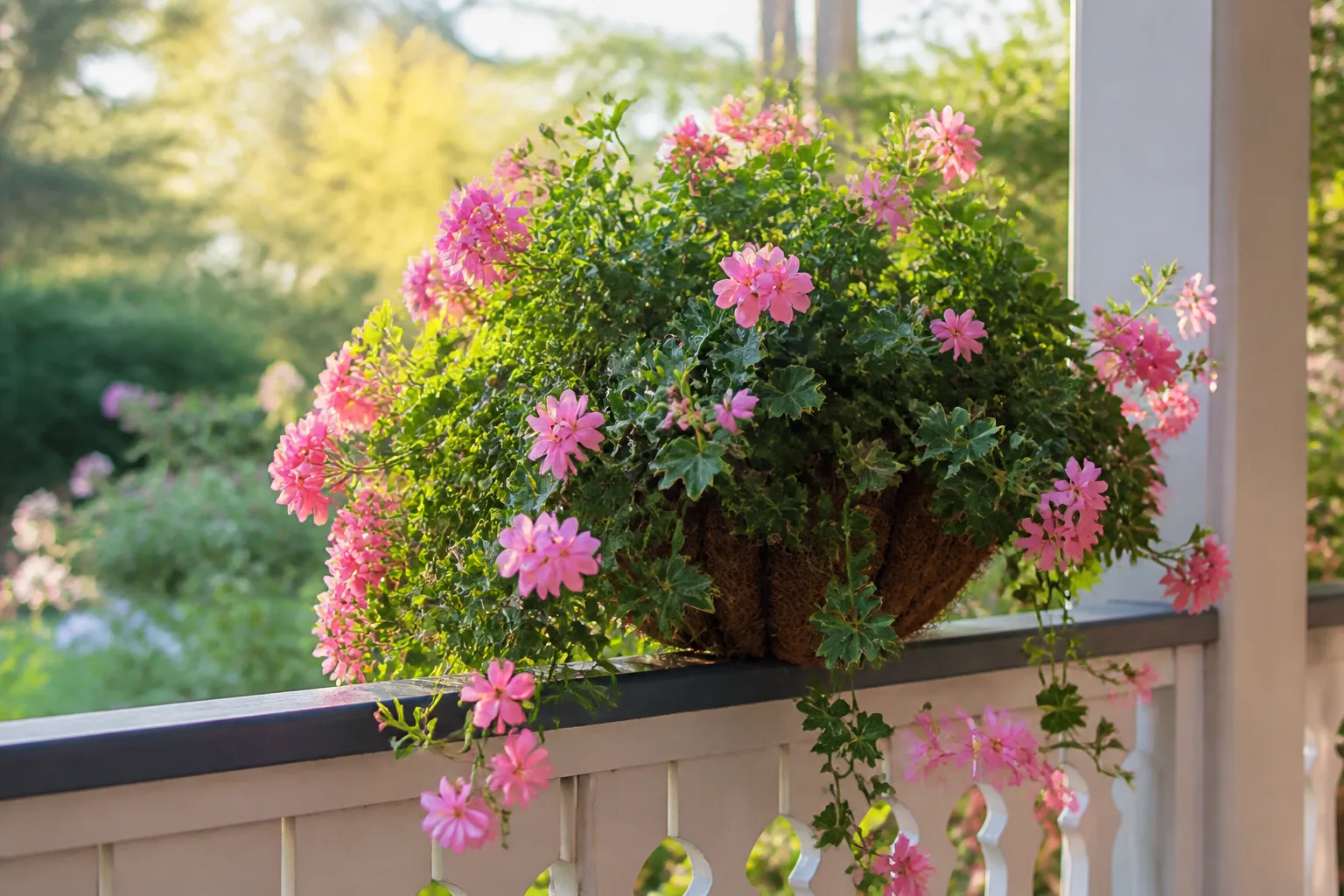
For hanging baskets and spillover, trailing types such as ‘Yubi Summer Joy’ produce broad leaves and large single flowers that stay open late in the day, with a more cascading habit than tight mounding margarita types.
Shopping checklist at the bench:
- Choose plants with many unopened buds, not only open flowers
- Avoid yellowing, mushy stems—a sign of overwatering at the grower
- Read the tag for series name; “portulaca mix” alone does not tell you whether flowers will close on overcast weeks
- For baskets, pick trailing labels; for edging, pick compact mounding series
When and Where to Plant Portulaca
Moss rose is frost-tender. Wait until soil has warmed and all danger of frost has passed before planting outdoors. In most temperate regions that means late spring, when nighttime temperatures stay consistently above about 50°F. Cold, wet soil at planting time is a common reason newly purchased flats stall instead of taking off.
You can start seed indoors 4 to 8 weeks before your last frost for earlier bloom, or direct-sow after the soil warms. Wisconsin Extension notes seeds germinate in about 1½ to 2 weeks when kept warm and barely covered—light aids germination, so do not bury seed deeply.
Beds, Rock Gardens, and Driveway Edges
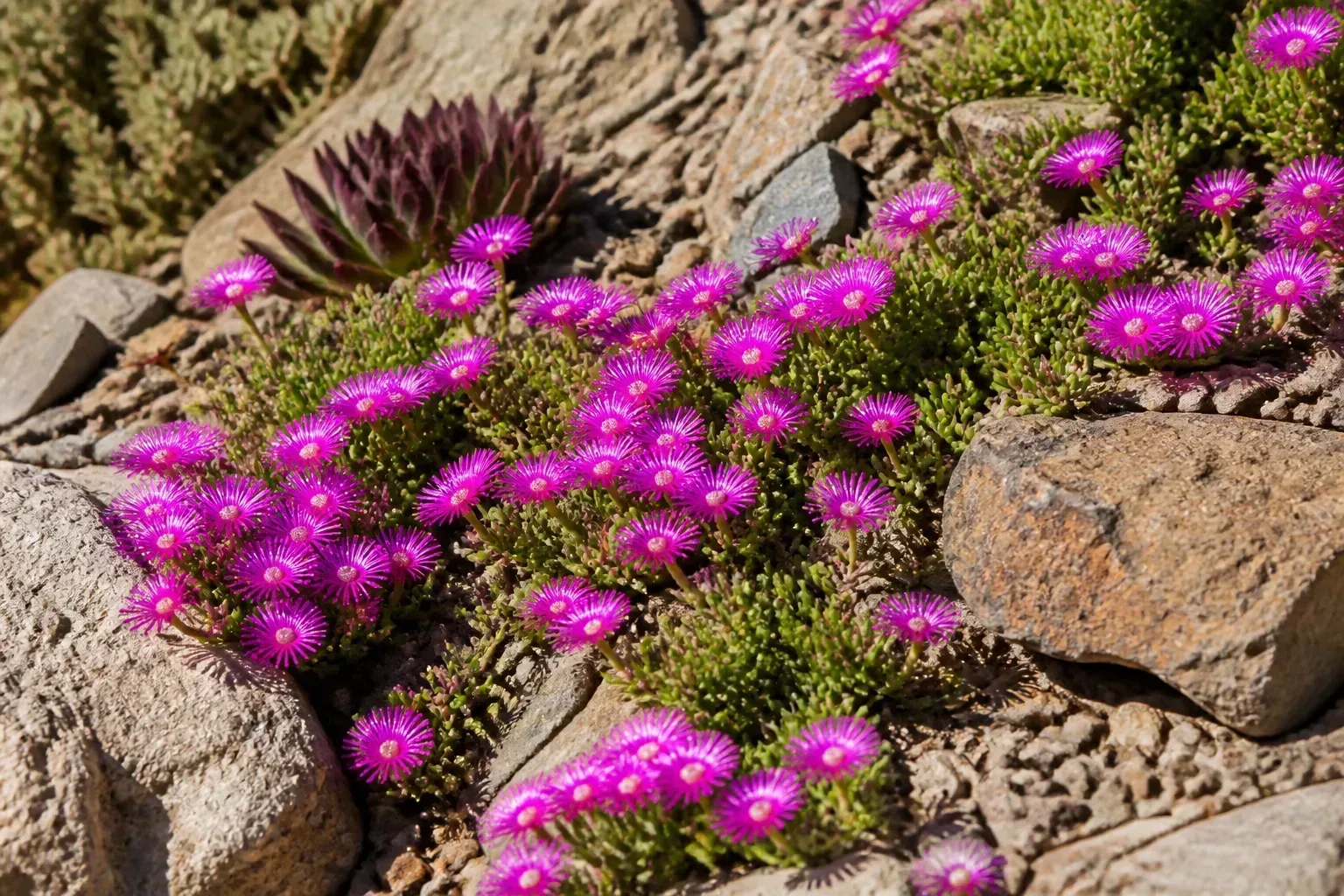
In the ground, loosen the top few inches and avoid planting in sunken bowls where water collects. Raised mounds, gravel mulch, and rock-garden pockets all suit moss rose better than flat clay pans. Space plants 6 to 12 inches apart depending on cultivar vigor; faster spreaders need more room.
Moss rose shines along walkway fronts, at the top of retaining walls where stems can cascade, and in crevice gardens where roots stay dry between rains. It pairs well with other heat lovers—zinnias, nasturtiums, lantana, and ornamental grasses—for contrast in leaf texture and height. Do not plant it where sprinklers hit the same spot every morning; constant leaf wetness encourages rot and aphids.
Containers and Hanging Baskets
Containers elevate moss rose to eye level and let you control drainage precisely. Use pots with drainage holes, a commercial cactus or succulent mix (or potting mix amended with perlite and coarse sand), and a saucer you empty after watering. Shallow bowls work visually, but they dry out fast in July; check them daily in heat waves.
In mixed containers, give moss rose the sunniest rim and avoid pairing it with heavy drinkers that stay wet. Sweet potato vine, for example, can overrun a small moss rose in the same pot by August unless the vine is restrained or the portulaca has the leading edge in a basket.
Light, Soil, and Drainage
Light: Moss rose needs full sun—at least six hours of direct sun daily, and more is better for the tightest habit and heaviest bloom. NC State Extension lists full sun as a hard requirement. Afternoon sun beats weak morning sun on a north patio. If you must fudge, choose a Sundial-type hybrid and accept fewer flowers—not shade-tolerant species behavior.
Soil: Sandy, gravelly, rocky, or lean loam is ideal. Moss rose tolerates poor soil better than enriched, moisture-retentive mixes. Heavy clay should be amended with coarse material and planted on a mound, not dug into a water-holding pocket.
Drainage test: After a hard rain, does the site puddle for hours? If yes, move the planting or build a raised pocket. Crown rot from saturated soil is the primary disease issue extension sources list for this plant.
pH: Slightly acidic to neutral soil (roughly 6.0–7.0) is fine. Portulaca is not a lime-hating specialty plant; drainage matters far more than pH tweaking.
Reflected heat: Moss rose handles the extra warmth from south-facing walls, asphalt driveways, and light-colored hardscape better than most annuals. That same reflected heat dries containers quickly—pair a hot wall planting with a mulch of fine gravel rather than moisture-holding bark chips that stay wet against the crown.
Watering Without Root Rot
Portulaca is drought-tolerant, not drought-proof in a tiny pot. The goal is deep, infrequent watering once plants are established, not a daily sprinkle that keeps the surface damp while roots suffocate.
Water when the top 1 to 2 inches of soil in a bed—or the full root zone in a small pot—has dried. Then water thoroughly until excess drains out. In a heat wave, a hanging basket may need water every day; an in-ground planting on a slope may need none for a week after rain.
Do not water on a calendar. Wet soil plus heat equals root rot. If leaves look slightly limp in late afternoon on a brutal day, check soil moisture at depth before reacting; plants often recover overnight when roots are actually dry, but they will not recover if you add water to already-saturated mix.
During prolonged rainy spells, pull containers under an eave if possible. Remove mushy brown flower buds—they often appear when humidity stays high and airflow is poor. In-ground plants in flat yards may simply bloom less until weather turns; avoid compensating with fertilizer.
Fertilizer and Midseason Feeding
Moss rose prefers lean conditions. NC State Extension and Wisconsin Extension both note that rich soil or heavy feeding pushes foliage at the expense of flowers. In average garden soil, you may never need supplemental fertilizer.
If plants pale or stall in very sandy, nutrient-washed containers, apply a dilute balanced liquid feed once or twice in early summer—never high-nitrogen lawn fertilizer nearby. Compost worked into the bed before planting is a safer slow source than repeated soluble feeds.
The one exception: after a midseason renewal cut (see below), a single light feeding can support new branching. Skip this on plants already sitting in wet soil.
Getting Maximum Blooms All Season
Species-type moss rose blooms from late spring until frost, with each flower lasting up to about two weeks while new buds keep forming. Hybrids extend the show with larger doubles and earlier start times. Expect the peak display in July and August in northern gardens, with good color continuing until nights turn cold.
To keep color coming:
- Site in maximum sun
- Keep soil on the dry side of moist
- Choose modern hybrids if your spring is cloudy
- Pinch or shear lightly when stems stretch in early summer
- Remove dried, brown buds during humid weather so energy goes to fresh flowers
Why Flowers Close at Night (and When That Signals Stress)
Moss rose flowers are nyctinastic: they open in bright sunlight and close at night, reopening the next morning. On overcast days, older species types may stay closed; that is normal behavior, not necessarily a death sentence. Hybrid series such as Sundial, Sundance, and Happy Hour were bred to stay open longer in cooler or cloudier conditions.
Closure is a problem when plants in apparently sunny sites remain shut most of the day, stretch toward light, or produce few buds. That pattern usually means too much shade, recent transplant shock, or root stress from overwatering—not a need for more fertilizer.
Pollinators still find open flowers; moss rose has no fragrance, but bees, butterflies, and occasionally hummingbirds visit the bright blooms.
Pruning, Deadheading, and Renewal Cuts
Moss rose needs little grooming compared with petunias or geraniums. Spent flowers on many modern cultivars are relatively self-cleaning. Still, pinching young plants once or twice in June encourages branching before the main flush.
Deadheading is optional for bloom quantity but improves appearance: snap off dried brown buds during humid weeks to reduce mold and tidy the mat. Wisconsin Extension recommends pinching or deadheading to promote flowering and limit reseeding if you do not want volunteers.
By mid to late summer, mats sometimes look leggy or open in the center, especially in part shade or after heavy rain. Shear plants back by up to one-third to one-half, water lightly once, and let them regrow in full sun. This “summer haircut” often triggers a second wave of buds in August.
Stems are somewhat brittle; handle flats gently at planting. NC State Extension warns that moss rose does not transplant well once established—disturb roots as little as possible when moving from cell packs to the garden.
Propagate from Seed or Cuttings
From seed: Mix tiny seed with dry sand for even sowing. Press seed into moist seed-starting mix and barely cover—light helps germination. Keep trays warm (about 70–75°F) and lightly moist. Germination typically occurs in 7 to 21 days indoors. Harden off seedlings before full sun. Direct-sow after soil reaches about 65°F, thinning to several inches apart, then to final spacing as plants spread.
From cuttings: In early to mid-summer, take 2- to 4-inch stem tips without flowers. Strip lower leaves, let the cut end dry for a few hours, and insert into moist, gritty potting mix. Roots often form in one to two weeks in warm, bright shade. Cuttings preserve named hybrid colors better than seed from mixed beds.
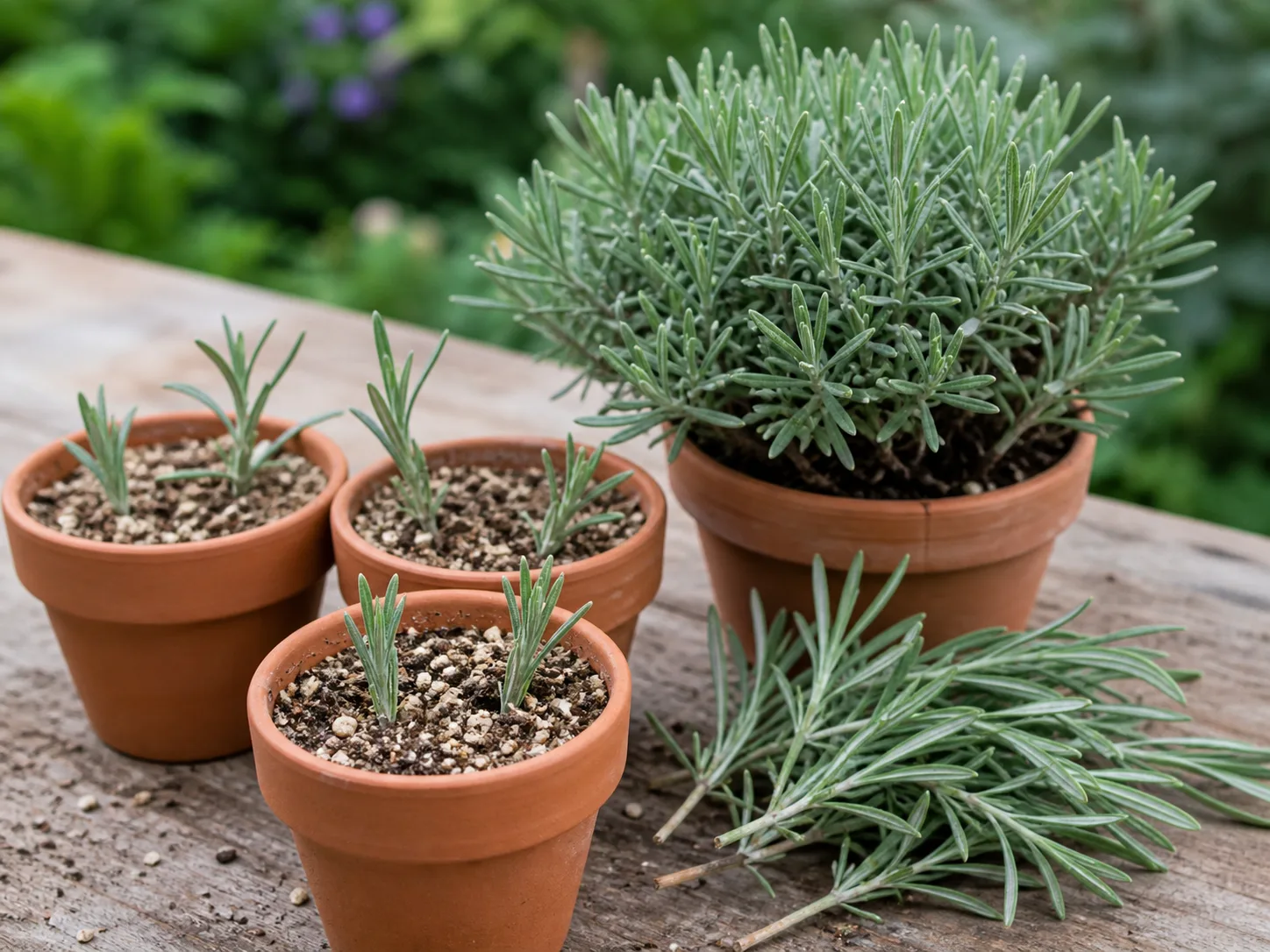
Broken stems that fall on moist soil may root on their own—useful in a garden bed, annoying if you were trying to keep a narrow color scheme.
When saving a favorite color for next year in cold climates, start cuttings in late July or August so plants are well rooted before you move pots indoors to a bright windowsill. Expect slower winter growth; the goal is survival until you can set them out again after frost.
Pests, Diseases, and Quick Fixes
Moss rose is relatively trouble-free when drainage and sun are correct.
Aphids occasionally cluster on new growth in nitrogen-rich, irrigated landscapes. A strong water rinse or insecticidal soap on a cool morning usually suffices; fix the underlying overwatering or overfeeding.
Slugs may nibble in wet, shady edges—not typical in full-sun rock gardens.
Crown and root rot show as wilting despite wet soil, brown mushy stems at the crown, and plant collapse. There is no chemical rescue; remove affected plants, improve drainage, and do not replant moss rose in the same soggy pocket.
Leggy, few flowers: increase sun, reduce water, shear back, and stop fertilizing.
Yellowing with wet soil: root issue; dry out or repot into grittier mix.
Closed buds that turn brown: often humidity or rain damage; pop them off and improve airflow.
Deer generally leave moss rose alone, though hungry deer in drought may sample anything.
Pet Safety Notes
Ornamental portulaca is toxic to dogs, cats, and horses according to the ASPCA. Plants contain soluble calcium oxalates that can cause oral irritation, vomiting, or diarrhea if chewed. Keep baskets off low railings where pets browse, and teach children not to confuse ornamental plants with edible garden greens.
Common purslane’s edibility does not extend automatically to all Portulaca species or bedding hybrids. Treat ornamental moss rose as display-only.
Conclusion
Portulaca is one of the easiest summer annuals when you respect what it is: a sun-loving, drought-adapted succulent bloomer that wants fast drainage and air on its roots. Plant after frost in the brightest spot you have, choose a hybrid series that matches your spring weather, and water only when the soil has actually dried. Shear tired mats in late summer, take cuttings if you fall in love with a color, and let rainy-week brown buds go rather than fighting the weather with more water.
Get light and drainage right and moss rose will paint a low carpet of color through the hottest months with less fuss than almost any other bedding plant. Miss on shade or soggy soil and no amount of fertilizer will coax the display you saw on the nursery bench—adjust the site, not the plant.