What to Do When Roses Wilt in the Heat
Find out what to do when roses wilt in the heat despite watering, with a root-zone check, rescue steps, container tips, mulch guidance, and warning signs.
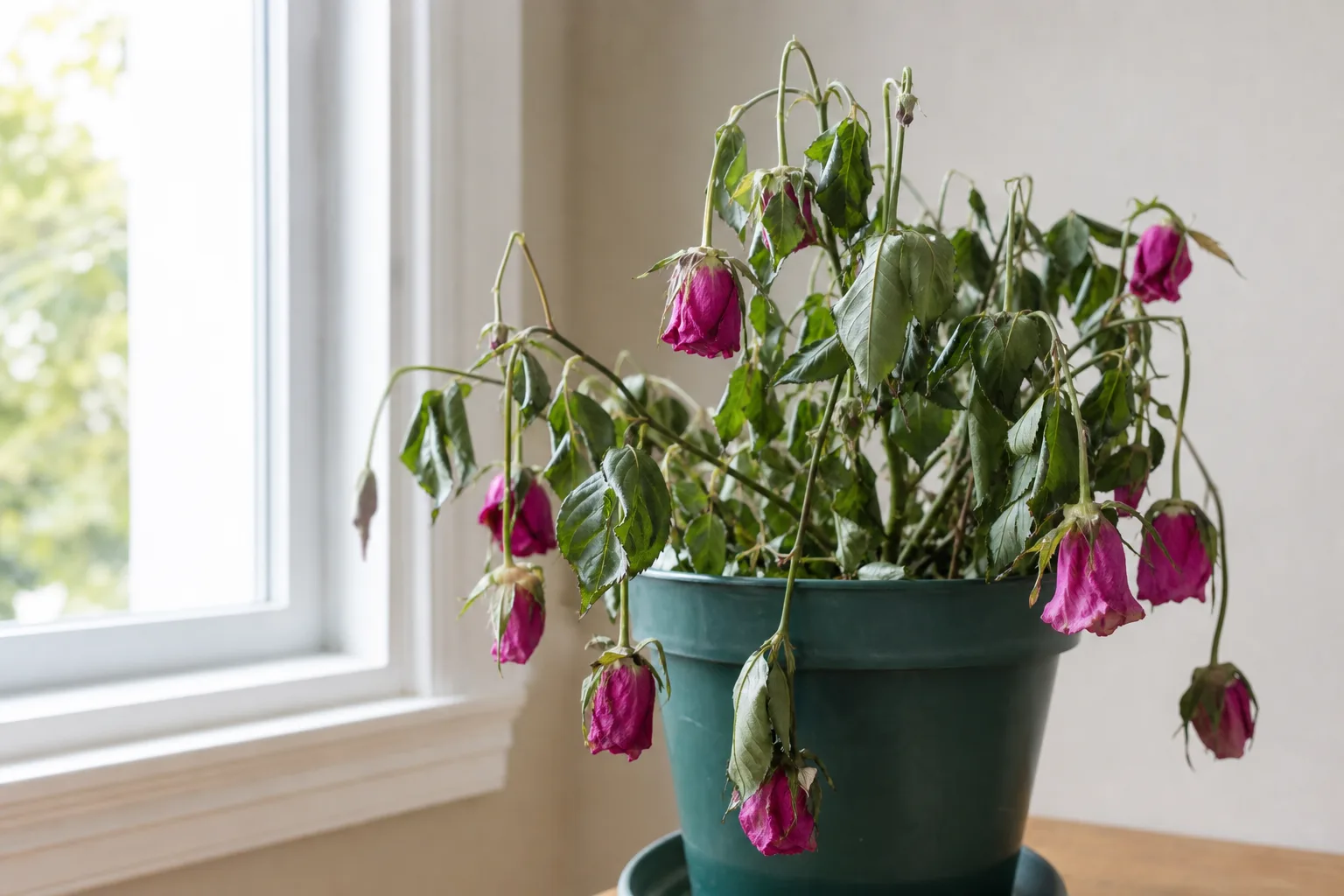
If your rose droops every afternoon even though you watered it, do not reach for the hose again until you check the soil below the surface. A rose can wilt because the root zone is genuinely dry, because hot leaves are losing water faster than the roots can replace it, or because excess water has damaged the roots. Those three situations can look almost identical from across the garden, but adding water is helpful in only one of them.
Start with a quick moisture check, reduce the plant’s heat load, and then choose either a slow soak or a no-water recovery period. This check–shade–soak–observe sequence is more dependable than a fixed summer schedule, especially when a heat wave follows rain, the rose grows in a container, or the bed has heavy clay or compacted soil.
Start With a Root-Zone Check, Not Another Watering
Wilt is a visible loss of firmness in leaves, stems, or flowers; it is not a diagnosis. During hot weather, a rose may close or partially close the tiny openings through which it exchanges gases and loses water. Heat, wind, low humidity, and reflected warmth from pavement or a wall can push water loss above the rate of root uptake for part of the day, even when some moisture remains in the soil.
Push a finger, wooden skewer, or narrow trowel into the soil 2 to 3 inches away from the canes. Test several spots, including near the outer edge of the canopy, because an established rose’s active roots extend well beyond the stem. The surface can be crusted and dry while deeper soil is moist, or a brief shower can make the surface look wet while the root ball underneath remains dry.
Read the Pattern Before You Water
Use the plant’s timing, leaf texture, soil condition, and overnight response as a field diagnosis. It is not a substitute for a local plant clinic, but it keeps a common afternoon droop from turning into a cycle of panic watering.
| What you notice | What it usually suggests | First response |
|---|---|---|
| Droop begins in the hottest hours, leaves remain mostly green, and the rose firms after sunset or by morning | Temporary heat stress | Provide afternoon shade and wait for the next soil check |
| The rose is limp in the morning, soil is dry several inches down, flowers collapse early, or leaf edges crisp | Root-zone drought stress | Soak the soil slowly and thoroughly at the base |
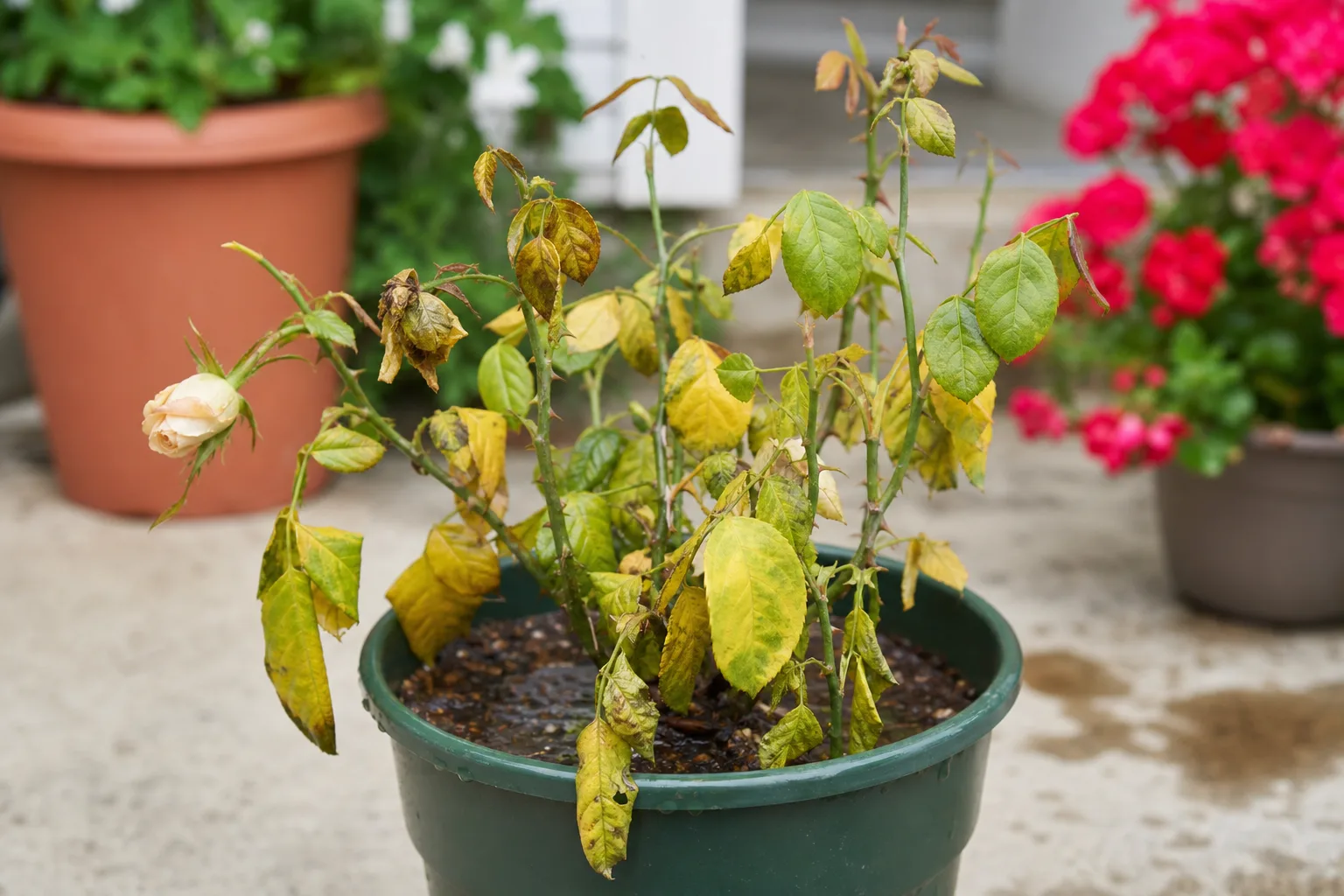
| Soil stays saturated, leaves yellow and feel soft, water pools, or the plant stays limp overnight | Waterlogged roots or poor drainage | Stop watering and inspect the drainage path |
| Fine yellow stippling, webbing, or distorted new growth appears during hot, dry weather | Spider mites or another pest | Inspect leaf undersides before treating |
A rose that recovers overnight is giving you useful information: its stems and roots may still be functioning, but the canopy is under more daytime demand than the plant can comfortably meet. A rose that becomes worse each morning, loses foliage quickly, or remains wilted in wet soil needs a broader diagnosis rather than another drink.
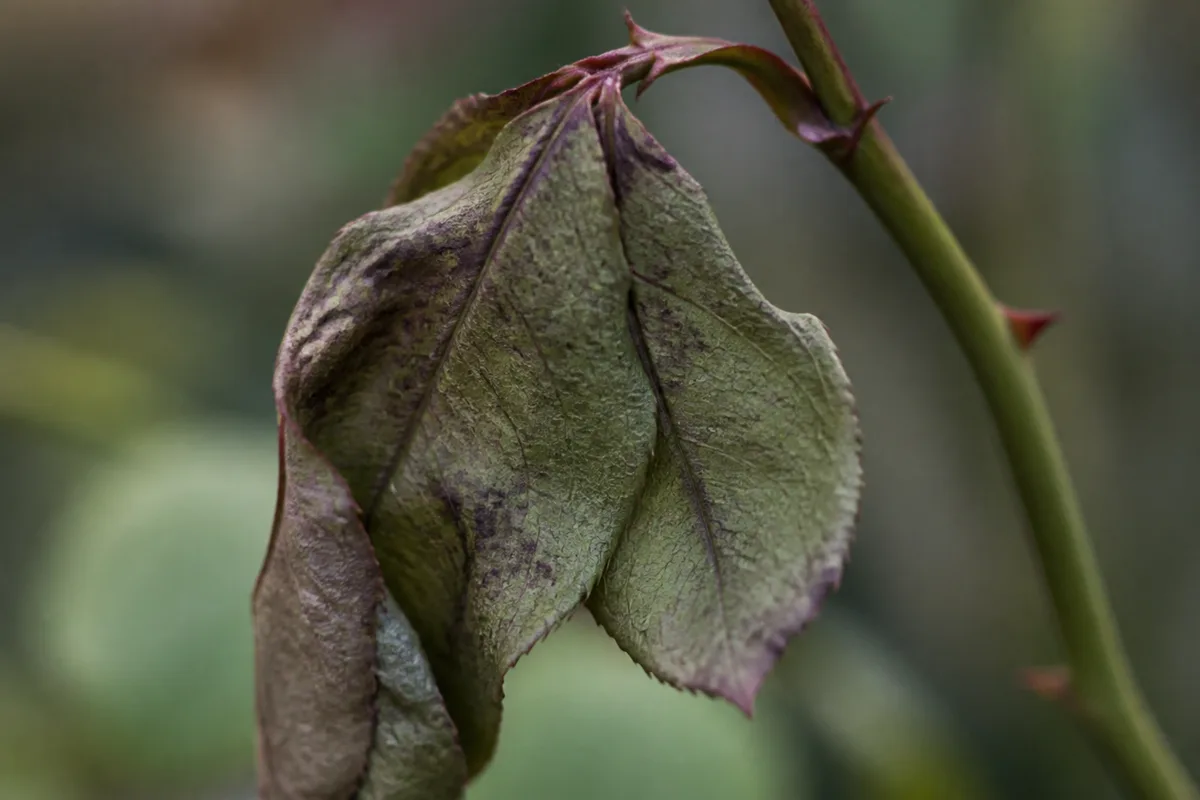
Why Water Can Be There While Leaves Still Wilt
Plants move water from roots through stems and out of leaves in a process called transpiration. Under heat stress, water status can fall and photosynthesis can slow; a peer-reviewed review of plant heat physiology describes declining water potential and relative water content as common heat-stress responses, while also noting that plants regulate transpiration to balance water loss and heat dissipation. In plain language, the leaf canopy can temporarily outpace the roots.
That distinction matters because a wet surface does not prove that the roots are taking up water effectively. Compacted soil, saturated clay, damaged roots, an overheated container, or a dry pocket beside the actual root ball can all interrupt the path between water in the ground and the leaves above it. The UC Statewide IPM Program’s rose cultural-practices guidance likewise separates drought stress, which can cause defoliation and cane sunburn, from overwatering or poorly drained soil, which can contribute to root disease and nutrient problems.
Give a Heat-Stressed Rose a 30-Minute Rescue
When the plant looks collapsed during a heat spike, work in this order:
- Check moisture at depth rather than judging from the surface.
- Move a container out of reflected heat or set up temporary afternoon shade for an in-ground rose.
- If the root zone is dry, apply water slowly at soil level in a broad ring.
- Pause when water begins to run off, let it infiltrate, and resume until the root zone is evenly moist.
- Once the soil is moist, add a suitable mulch layer and pause fertilizer, hard pruning, and root disturbance.
Lower the Heat Load First
Move a potted rose off black pavement, a metal balcony, or a south- or west-facing wall. A location with bright morning sun and afternoon shade is a useful emergency position, but keep the plant outdoors with air movement rather than placing it in a dark room. The goal is to soften the hottest few hours for several days, not to remove the strong light roses need indefinitely.
For an in-ground rose, support shade cloth, a patio umbrella, or light fabric above the canopy so air can move around the plant. Do not drape a heavy sheet directly over leaves, seal the plant inside a cover, or leave dense shade in place after the heat spike. Temporary shade is most useful when the rose droops at midday but firms overnight; if the soil is dry, combine shade with a proper soak.
Re-Wet Dry Soil Slowly and Completely
Dry soil can become hard to wet, especially when a container mix has pulled away from the pot wall or a garden bed has baked into a crust. Begin with a small amount of water around the root zone, wait a few minutes, and then apply more in a slow ring. Several gentle passes let the soil accept water instead of sending it down a crack or across the surface.
Keep the stream at soil level and spread the water beneath the canopy and toward the drip line. A shallow basin can catch water on a slope, but keep the canes and graft union above the basin and avoid blasting the crown. With a hose, a soft spray or slow trickle is more useful than a jet; with drip tubing or a soaker hose, check that the wetting pattern actually reaches the root zone rather than only one narrow strip.
As a planning reference, Epic Gardening’s rose-watering guide gives roughly 2 to 5 gallons per rose per week, or about 1 to 3 inches, for moderate climates with average soil. It also recommends increasing sessions during hot, dry, or windy periods and in sandy soil. Treat that range as a starting point, not a prescription: a large climbing rose, a young plant, a raised bed, and a compact shrub in heavy clay will not use water at the same rate.
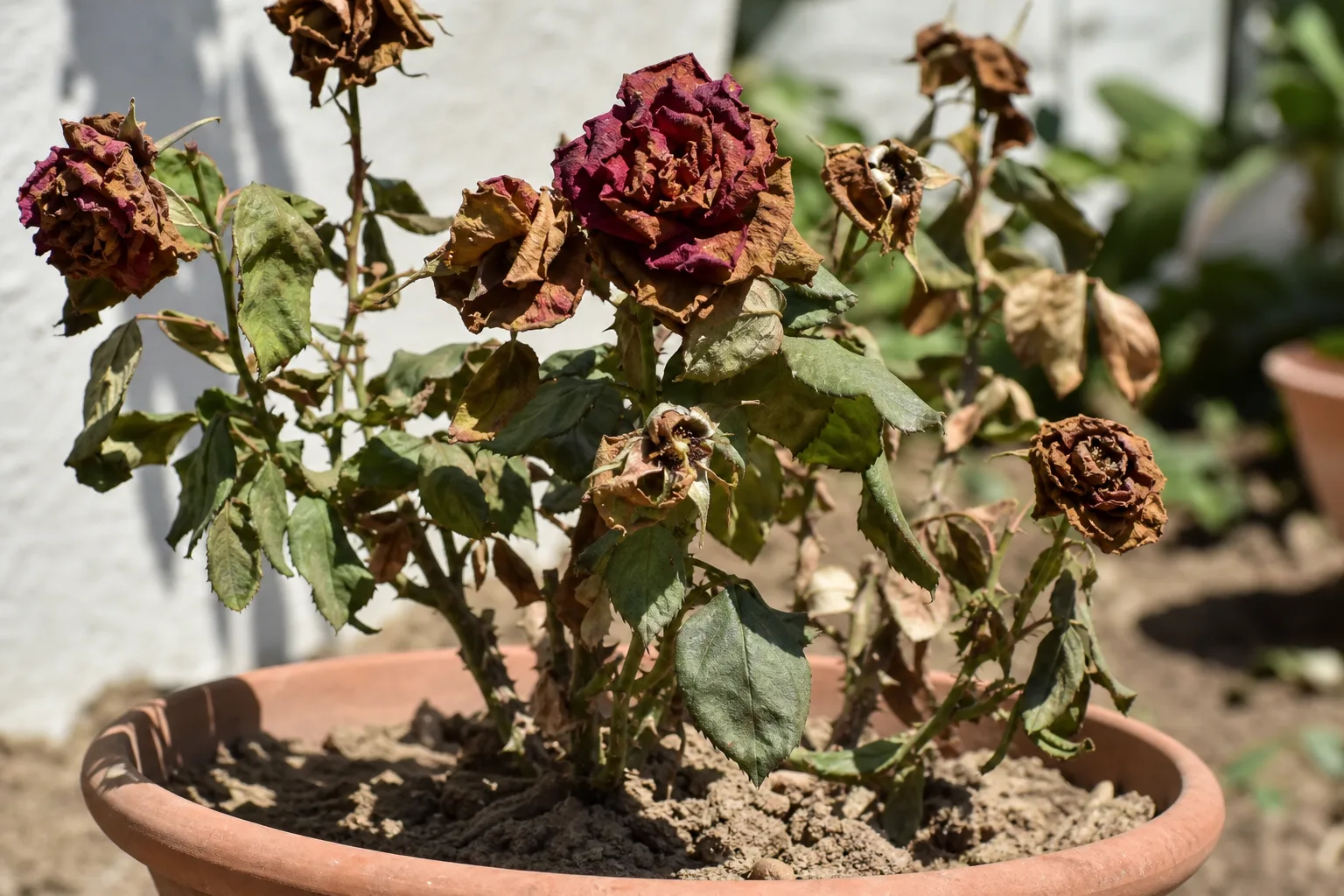
After watering, probe the soil again in more than one spot. The goal is even moisture through the active root zone without a pond that remains hours later. If the top inch is wet but the soil below is dry, keep watering in stages; if water is pooling or traveling sideways, stop and solve the infiltration problem before adding more.
Build a Watering Routine Around the Rose’s Situation
The most useful summer schedule is not “every day” or “twice a week.” It is a repeatable check that accounts for how quickly this particular root zone is losing usable moisture. The New Mexico State University rose-growing guide explains that frequent, light irrigation encourages shallow roots, while soil texture and weather determine how often a rose needs a thorough soaking.
Established and Newly Planted Roses Need Different Checks
An established in-ground rose in moisture-holding soil often prefers a deep soak followed by a drying interval. During ordinary summer weather, check the soil every few days while you learn the bed. During extreme heat, inspect daily in sandy soil, a raised bed, an exposed slope, or a site beside hot masonry; checking daily does not mean watering daily.
Soil texture changes the interval. Sandy soil drains quickly and may need more frequent irrigation, while clay can hold water long after the surface appears dry. Loam with organic matter can hold moisture and still drain excess water, but even good soil can dry quickly in wind. NMSU describes wetting the full root zone—approximately 2 feet in its rose guidance—as the aim, yet home gardeners should use a probe and the plant’s response rather than trying to force a fixed volume into every site.
Newly planted roses have a smaller, shallower root system and a nursery root ball that may dry at a different speed from the surrounding bed. Check around the original root ball as well as the nearby soil, and do not let the new plant cycle from bone-dry to flooded. It may need water more often than an established rose during a heat wave, but each session should still be slow enough to wet the root ball and drain excess water.
Rain changes the plan too. A short shower can wet leaves and the top layer without reaching the roots, while a long storm may leave clay or a low bed saturated. Use a rain gauge if you have one, but verify the soil before making up rainfall or adding a scheduled irrigation session.
Container Roses Lose the Margin for Error
A container has less soil, more exposed surface area, and often more heat around the roots than an in-ground bed. Dark or metal pots can heat rapidly, terracotta loses moisture through its sides, and a pot on a sunny balcony may dry while the surrounding garden still feels comfortable. Check container roses daily during a heat wave and check more than once when the pot is small, windy, or exposed to afternoon sun.
Water a dry container thoroughly until a little drains from the bottom, then empty the saucer. Do not keep a rose standing in collected water; constantly saturated mix can deprive roots of oxygen even while the leaves droop. If the mix has become hydrophobic, use two or three gentle passes so the whole root ball rehydrates instead of allowing water to race down the gap along the pot wall.
The David Austin heatwave watering guidance also recommends daily checks for container roses and thorough watering in very hot weather, with extra attention to dry peat-free mixes that are difficult to re-wet. Move the pot to afternoon shade, group it with other containers, or shield the container from reflected heat while keeping the foliage ventilated. A cooler pot location can reduce stress without sacrificing the morning light that supports growth and flowering.
Keep Water in the Root Zone Without Creating a Bog
Watering harder is not the same as watering deeper. If the bed is compacted, sloped, root-bound, or covered by a water-repellent crust, a longer hose session may simply send more water away from the rose. Fix the path that water takes, then adjust the schedule after the next dry-down.
Solve Runoff, Compaction, and Poor Drainage
For runoff, make a low, broad basin around the outer root zone so water pauses long enough to soak in. Do not build a volcano around the canes. Water in stages, especially on a slope, and use a hose-end flow that the soil can absorb. The RHS recommends directing water to the root zone and using a shallow basin when needed rather than splashing the foliage or watering through the hottest part of the day.
Compaction is best corrected when the soil is workable, not by digging aggressively beside a wilted rose in peak heat. A thin layer of organic matter incorporated during an appropriate maintenance window can improve structure over time, but piling fresh compost into a hole or burying the crown during an emergency can change drainage in the wrong direction. The UC IPM guidance notes that compost can impede water movement in some planting situations, which is a reminder to improve the whole bed rather than guessing at an amendment.
Once the root zone is moist, apply about 2 to 4 inches of loose organic mulch such as shredded bark, leaf mold, or well-aged compost. Mulch shades the soil, slows evaporation, moderates temperature swings, and reduces weed competition. Leave several inches of bare space around the canes and graft union so damp material does not sit against the wood.
Mulch is a buffer, not a substitute for irrigation or drainage. Do not lay a thick mat of wet grass clippings against the plant, and do not pile a fresh layer onto baked soil that cannot accept water. In an established bed during a severe drought, the RHS heatwave guidance cautions that adding mulch at the wrong moment can delay rainfall from entering the soil; if that describes your bed, water first and add the maintenance layer when the surface can absorb it.
Protect Foliage and Blooms During the Heat Wave
Heat management is about reducing demand while preserving enough light and airflow for the rose to recover. A plant that is protected from the hottest hours can often keep its remaining leaves and canes alive even if the current flush of flowers is poor.
Use Shade and Leaf-Dry Watering Together
Water at the base in the early morning whenever practical. Morning gives the root zone time to absorb moisture before peak heat and gives accidentally splashed foliage time to dry. Ideal Home’s rose-watering guidance similarly recommends early watering and keeping water off leaves to reduce disease pressure.
Evening base watering is not automatically harmful when the rose is genuinely dry, especially in a dry climate, but it is less forgiving if the foliage is soaked and stays damp overnight. Avoid routine midday sprinkling: it loses water quickly to evaporation and does little to correct a dry root zone. Water droplets do not turn leaves into a special magnifying lens; the practical reasons to avoid midday overhead watering are wasted water, uneven root-zone wetting, and prolonged leaf wetness that can favor some diseases.
Temporary shade should leave the sides open. Roses still need strong light, and permanent deep shade can reduce flowering and create a weak, poorly ventilated canopy. In regions with intense afternoon sun, morning sun followed by afternoon protection may be a sensible long-term site adjustment, especially for a container, a newly planted rose, or a cultivar that repeatedly scorches beside masonry.
Accept Temporary Flower Loss Instead of Forcing New Growth
A heat-stressed rose may open flowers quickly, fade them faster, drop buds, or pause blooming. Fine Gardening’s hot-weather rose advice notes that roses can slow down or enter a temporary shutdown during very hot, dry conditions; this is a useful reminder that fewer flowers do not automatically mean the plant needs more fertilizer.
Do not try to force a new flush with extra nitrogen while the soil and roots are under heat stress. New shoots and leaves increase the plant’s water demand, and fertilizer salts are more likely to injure a dry root system when there is not enough moisture for them to be diluted and taken up safely. Wait for cooler weather and active recovery before returning to the normal feeding plan.
Likewise, avoid stripping healthy leaves or giving the bush a hard structural prune in the middle of a heat wave. Leaves may look scorched at the edges but still provide shade for the canes and help the plant recover. You can remove clearly dead tissue later, and light cleanup of spent blooms is a cosmetic choice, but the priority during the heat spike is preserving living foliage and root function.
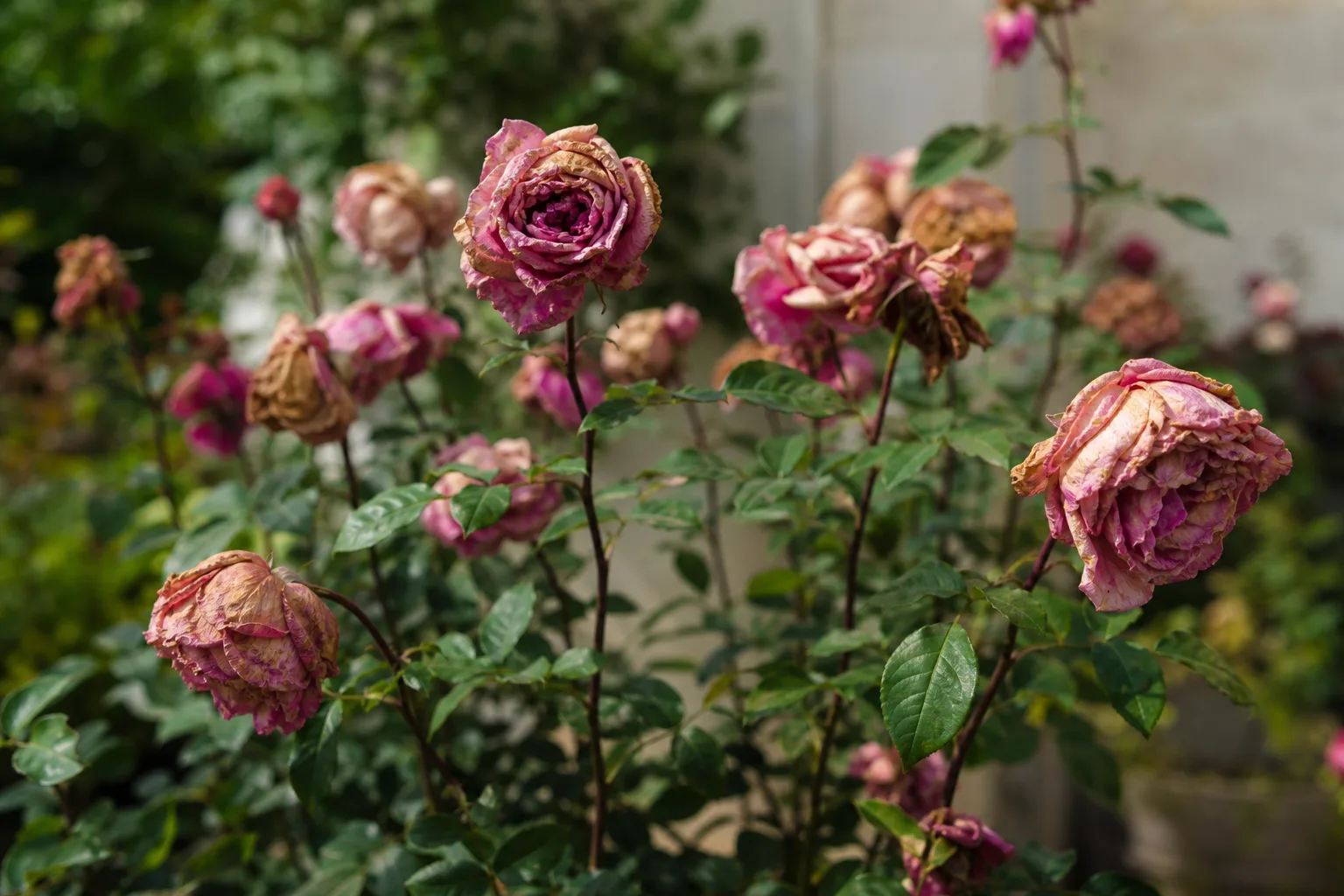
Rule Out Problems That Look Like Heat Wilt
If the rose does not improve after a cooler night, appropriate moisture, and reduced heat exposure, widen the diagnosis. A heat wave often reveals a pre-existing drainage problem or pest population rather than causing every symptom by itself.
Wet Roots, Crown Gall, Spider Mites, and Disease
Waterlogged roots are the most important opposite diagnosis to dry soil. Stop watering if the root zone stays saturated, water pools after irrigation, leaves turn yellow and soft, or the plant remains limp despite wet soil. Check that drainage holes are open in containers and that a low spot, blocked outlet, or compacted layer is not holding water around the roots. Persistent wet wilt may require a local extension diagnosis before you dig or replace soil; removing roots or transplanting during extreme heat can add another major stress.
Rough swellings on the roots, crown, or graft union point to a problem such as crown gall rather than ordinary heat wilt. NMSU’s Growing Roses guide describes crown gall as rough galls or swellings that may appear where tissues were injured during cultivation. Do not assume a gall is a harmless knot or try to cure it with extra water; photograph it, avoid spreading contaminated soil or tools, and ask a county extension office or plant clinic for a diagnosis.
Hot, dry conditions can also favor spider mites. Look for fine yellow or bronze stippling, dull leaves, webbing, or tiny moving specks on the undersides rather than relying on wilt alone. The NMSU guide recommends a strong stream of water for keeping spider mites within manageable levels, but rinse early enough for leaves to dry and avoid turning a drought-stressed rose into a wet, disease-prone one.
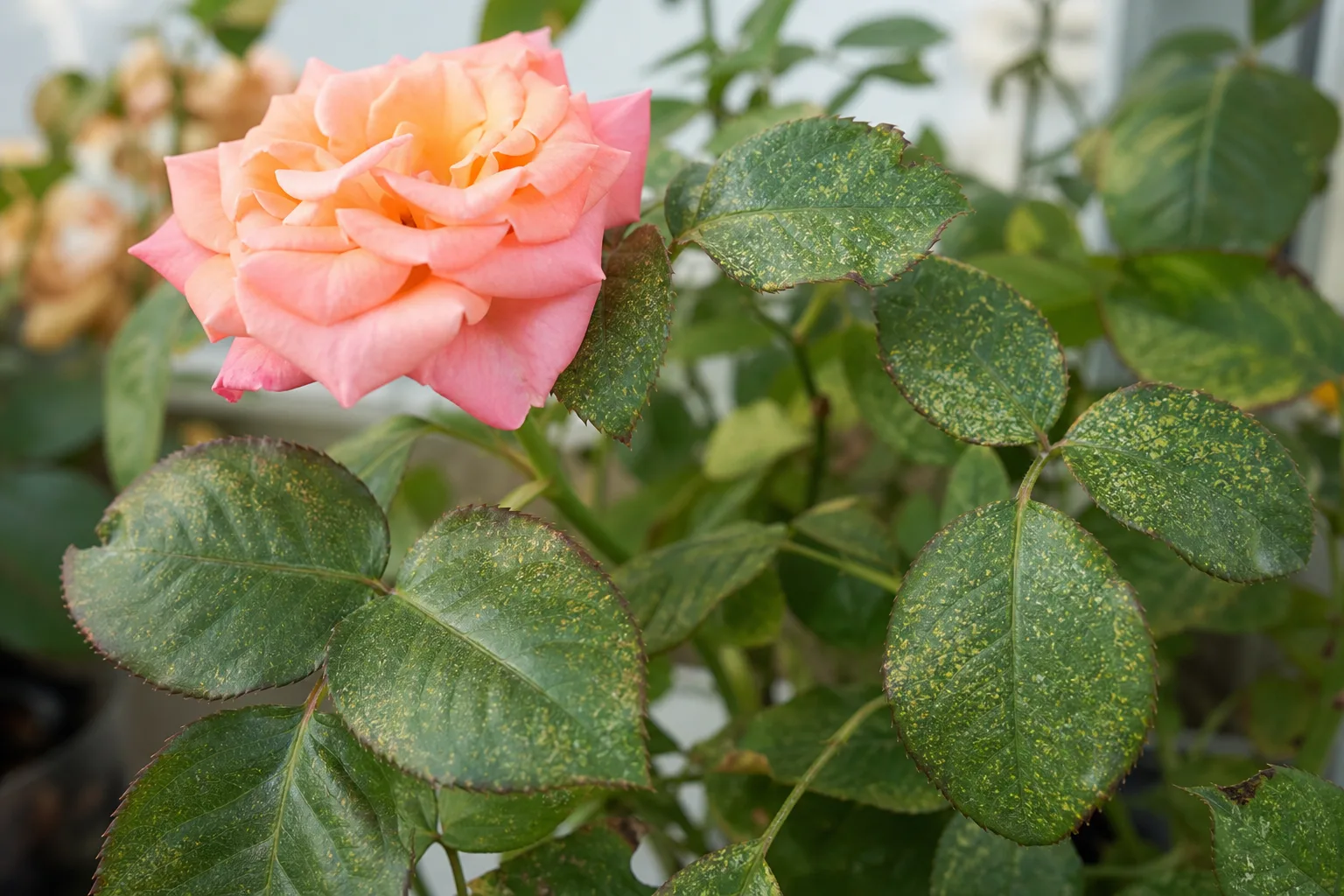
Dark lesions with yellowing, white powdery growth, distorted buds, or a pattern that spreads regardless of soil moisture suggests disease or another pest. Routine overhead irrigation can leave foliage wet, while crowded growth and poor airflow extend the wet period. Use sanitation and base-level watering first, and if a pesticide or fungicide is warranted, choose a product labeled for roses and the identified problem; never apply horticultural oil or another spray to heat- or drought-stressed foliage unless the current label specifically permits it under those conditions.
Prepare the Rose and Site for the Next Heat Wave
The best heat-wave intervention begins before the forecast turns dangerous. Choose a rose for your climate and exposure, give it well-drained soil, maintain airflow, and learn how quickly its root zone dries in ordinary weather. NMSU recommends at least 6 hours of sun for roses but also notes that prolonged temperatures above about 90°F can stop some varieties from blooming; in very hot regions, protection from the harshest late-afternoon sun can improve performance without putting the plant in deep shade all day.
Cultivar choice is regional, not a universal ranking. The University of Florida IFAS rose trial found strong performers under Florida’s hot, humid conditions, including ‘Mrs. B. R. Cant’, ‘Spice’, ‘Louis Philippe’, and Knock Out®, while also documenting differences in susceptibility to black spot, Cercospora leaf spot, and chilli thrips. That is useful evidence for Florida gardeners, not a promise that the same list will be best in a dry inland garden, a cool coastal climate, or a site with heavy clay.
Before the next heat wave, walk through this short preparation list:
- Mark a few soil-check spots near the canopy and keep a simple note of how long a deep soak remains usable.
- Test a hose, drip line, or soaker hose so the wetting pattern reaches the root zone without washing soil away.
- Keep a rain gauge nearby and adjust irrigation after meaningful rainfall rather than watering on autopilot.
- Maintain a loose mulch layer with a clear gap around canes, and keep grass and weeds from competing for moisture.
- Have shade cloth or a high, stable umbrella ready for containers, young plants, and roses beside hot walls or paving.
- Inspect leaf undersides during hot, dry spells so spider mites are caught before stippling becomes severe.
For long-term improvement, correct compaction and drainage after the heat passes, when the plant is no longer trying to balance extreme water loss. A rose with an open, well-aerated root zone, suitable mulch, and a watering routine based on soil depletion has more resilience than one maintained by frequent surface splashes.
Conclusion: Trust the Soil Before the Calendar
When a rose wilts in the heat despite watering, the next move is not automatically more water. Check below the surface, compare the plant’s morning and afternoon behavior, reduce the hottest exposure, and then choose a slow soak only if the root zone is dry. If the soil is wet, give the roots air and investigate drainage instead.
Most heat-stressed roses need a few cooler days to show what tissue is still alive. Keep the root zone appropriately moist, protect the canopy temporarily, avoid fertilizer and hard pruning, and watch for overnight recovery. If the rose continues declining in wet soil, develops galls, shows heavy stippling, or loses leaves rapidly, treat those as diagnostic clues and get local plant-disease help rather than trying to solve every symptom with a hose.