When to Harvest Vegetables Before a Heat Wave
A crop-by-crop guide to harvesting before extreme heat: greens, tomatoes, cucumbers, peppers, melons, squash, and the care that follows.
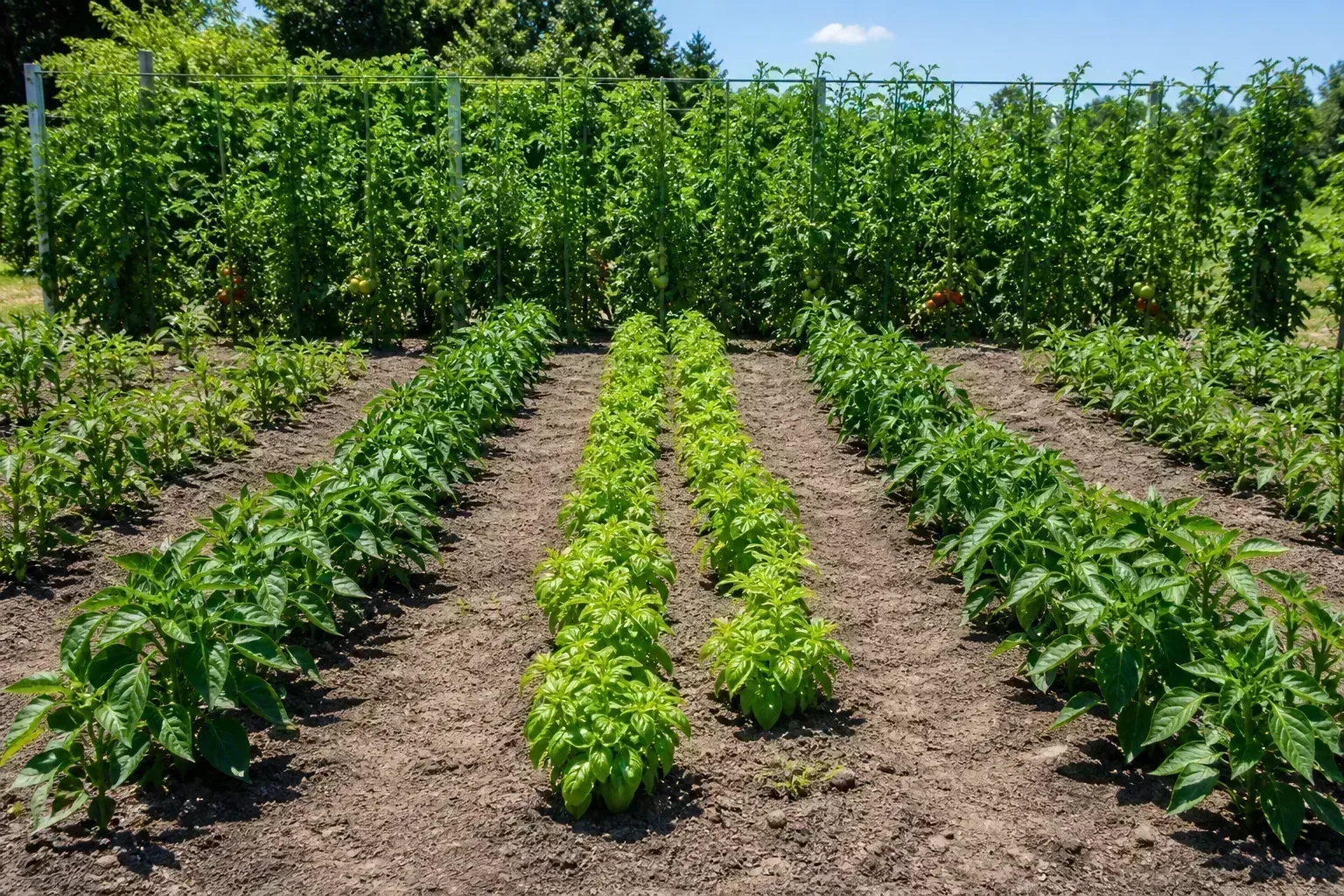
If a heat wave is coming, do not strip the garden bare and do not leave every crop in place just because the plants look healthy. The useful rule is more specific: harvest anything that is already at good eating maturity or is likely to lose quality in the heat, and leave fruit that still needs the plant to finish developing.
That usually means picking lettuce, spinach, cilantro, basil, ripe or blushing tomatoes, tender cucumbers, zucchini, green beans, and ready okra before several hot days arrive. It usually means leaving immature watermelons, melons that have not reached their maturity signs, developing winter squash, pumpkins, and ears of corn that are not yet at the milk stage. Peppers and eggplants sit in the middle: size, gloss, color, and your intended use matter more than the forecast alone.
The short answer: harvest by crop stage, not by temperature alone
A heat wave is a reason to inspect and prioritize, not a harvest signal for every vegetable. Washington State University Extension describes prolonged temperatures above 90°F as a point where growth slows and heat-stress symptoms become more likely, with the response changing according to crop type, plant maturity, drought, and wind. That is a useful warning range, but it is not a universal “pick everything now” threshold. Washington State University Extension also notes that many plants recover after temporary afternoon wilt, while prolonged wilt raises the risk of lasting damage.
The decision gets easier if you ask what the heat can damage. A tender leaf may become bitter or bolt; a ripe tomato may crack, soften, or sunscald; a cucumber may grow past its best texture in a day or two. A half-grown watermelon, however, cannot be made ripe by picking it early, so removing it simply trades a possible future harvest for a certain immature one.
Ask four questions before you pick
Walk the garden the evening before the hottest day, or early the next morning, and ask these questions in order:
- Is the crop at its normal eating stage? Check size, color, firmness, gloss, seed development, and any crop-specific maturity signal rather than relying on a calendar date.
- Does this crop continue to ripen after picking? Tomatoes that have begun to change color can finish indoors; watermelons generally need to remain attached until mature.
- Will heat damage quality faster than the plant can improve it? Greens, herbs, beans, okra, and oversized cucumbers are often better in the basket today than in the garden after three hot afternoons.
- Can the plant still use its leaves to protect developing fruit? If the fruit is immature, keep healthy foliage and leave it in place unless it is damaged, diseased, or collapsing.
When the answer is mixed, choose the crop that is closest to its preferred harvest stage and pick only that portion. You can harvest the colored tomatoes and tender beans without removing the green fruit, flowers, and healthy canopy that will carry the plant through the weather.
Why heat changes harvest decisions
Heat changes both the plant and the produce. At the plant level, high temperature can increase water loss, reduce photosynthetic efficiency, disrupt flowering and pollination, and divert energy toward survival. A review in the International Journal of Molecular Sciences describes heat stress as affecting photosynthesis, water status, development, and crop productivity; that does not mean a few hot days will kill a healthy garden, but it explains why growth and fruit set can pause. Plant Responses to Heat Stress is a useful physiology overview.
At the harvest level, heat can accelerate changes that gardeners notice in the kitchen: leaves lose tenderness, pods become fibrous, cucumbers become seedy, and exposed fruit develops sunscald or cracks. Harvesting mature produce before the hottest stretch reduces the time it spends sitting in a high-temperature, high-water-demand environment, but harvesting immature produce can sacrifice flavor and yield.
Heat stress and water stress are linked but not identical
A wilted plant does not always need to be picked; it may need water, shade, or simply time for the afternoon temperature to fall. Plants can roll or cup leaves, close stomata, drop flowers, or wilt temporarily as they reduce water loss. A plant that recovers by evening may have experienced a reversible heat response, while a plant that is still wilted early in the morning needs a closer look at root-zone moisture and root health.
This distinction matters because gardeners often make two opposite mistakes. They may ignore a plant that is dry because it still has fruit on it, or they may harvest everything and remove the leaves that shade the remaining fruit. Penn State Extension recommends early watering, mulch, and securely supported shade cloth while also warning that compacted, waterlogged soil damages roots; the answer is a moist, aerated root zone, not a permanently saturated bed. Penn State Extension’s heat-proofing guidance covers those trade-offs.
Quick crop decision table
Use this as a starting point, then apply the maturity signs in the sections below. “Harvest” means pick produce that has reached a useful stage; it does not mean removing every flower or immature fruit.
| Crop or group | Before a heat wave | Leave it growing when… | What to look for |
|---|---|---|---|
| Lettuce, spinach, arugula, cilantro, dill | Harvest mature leaves or whole heads you can use | Small leaves remain and the plant is still tender | Flower stalks, bitter taste, elongated growth |
| Basil, parsley, chives | Cut usable stems and pinch flower buds | The plant is still leafy and not crowded | Buds, flowers, woody stems |
| Tomatoes | Pick ripe, blushing, or nearly mature fruit | Fruit is clearly immature and foliage is healthy | Color change, firm full size, cracking, sun exposure |
| Cucumbers and zucchini | Pick firm eating-size fruit | Fruit is still tiny and needs more growth | Firmness, cultivar size, seed softness |
| Green beans and okra | Pick tender pods frequently | Pods are still too small to use | Bulging seeds, fibrous texture, woody okra |
| Peppers and eggplant | Pick full-size fruit if you need to reduce load | More color or size is still needed | Pepper size and color; glossy eggplant skin |
| Cantaloupe and muskmelon | Pick at normal slip or aroma stage | The stem has not loosened or fruit is immature | Slip, aroma, netting, cultivar signs |
| Watermelon | Leave unless its maturity signs are present | Tendril, field spot, rind, and sound are not ready | Variety-specific maturity signs |
| Winter squash and pumpkins | Pick only if mature or frost/damage is imminent | Vines are healthy and rind is still soft | Hard rind, mature color, corking stem |
| Corn, onions, carrots, beets, radishes | Pick crops at their normal eating or storage stage | Roots or ears are still immature and soil stays moist | Milk stage, falling tops, root size and texture |
The table reflects the central principle shared by extension guidance and practical horticulture sources: protect quality first, then protect the plant. A crop-by-crop guide from Harvest to Table is useful for comparing mature crops that can be picked with crops that need more time on the plant.
Harvest these crops before the heat hits
These crops either lose quality quickly in high temperatures or are already at a stage where picking helps you capture the harvest. The goal is not to harvest young plants prematurely; it is to avoid waiting for a perfect-looking stage that the weather may push past.
Leafy greens and herbs
Lettuce, spinach, arugula, mustard greens, cilantro, dill, and other cool-season crops deserve the earliest inspection. High temperatures can accelerate bolting, which is the plant’s shift from leaf production to a flowering stalk; once that happens, leaves often become bitter or tough. Heat is not the only trigger—day length and plant age also play roles—but a heat wave can push a crop already near bolting over the line.
Harvest the largest usable leaves first, leaving a healthy inner cluster if the plant still has a chance to produce after the weather breaks. If a head is nearly mature, cut it cleanly at the base in the cool morning and chill it promptly. For spinach and arugula, a cut-and-come-again harvest may be better than pulling every plant, especially if temporary afternoon shade is available.
Herbs are more forgiving, but their harvest window is still worth using. Cut basil, parsley, dill, cilantro, and chives before the hottest stretch, and pinch basil or other herbs just above a leaf pair rather than removing every stem. If flowers are already open, the leaves may have a stronger or different flavor; that does not make them unsafe, but it can make them less useful for the dish you planned.
Penn State Extension lists lettuce, leafy greens, beets, cabbage, and celery among crops that can bolt in summer heat and recommends shade cloth for extending greens. It also notes that shade cloth must be supported above the foliage rather than lying on the plants, where heat and wind can cause damage.
Tomatoes at breaker or blush stage
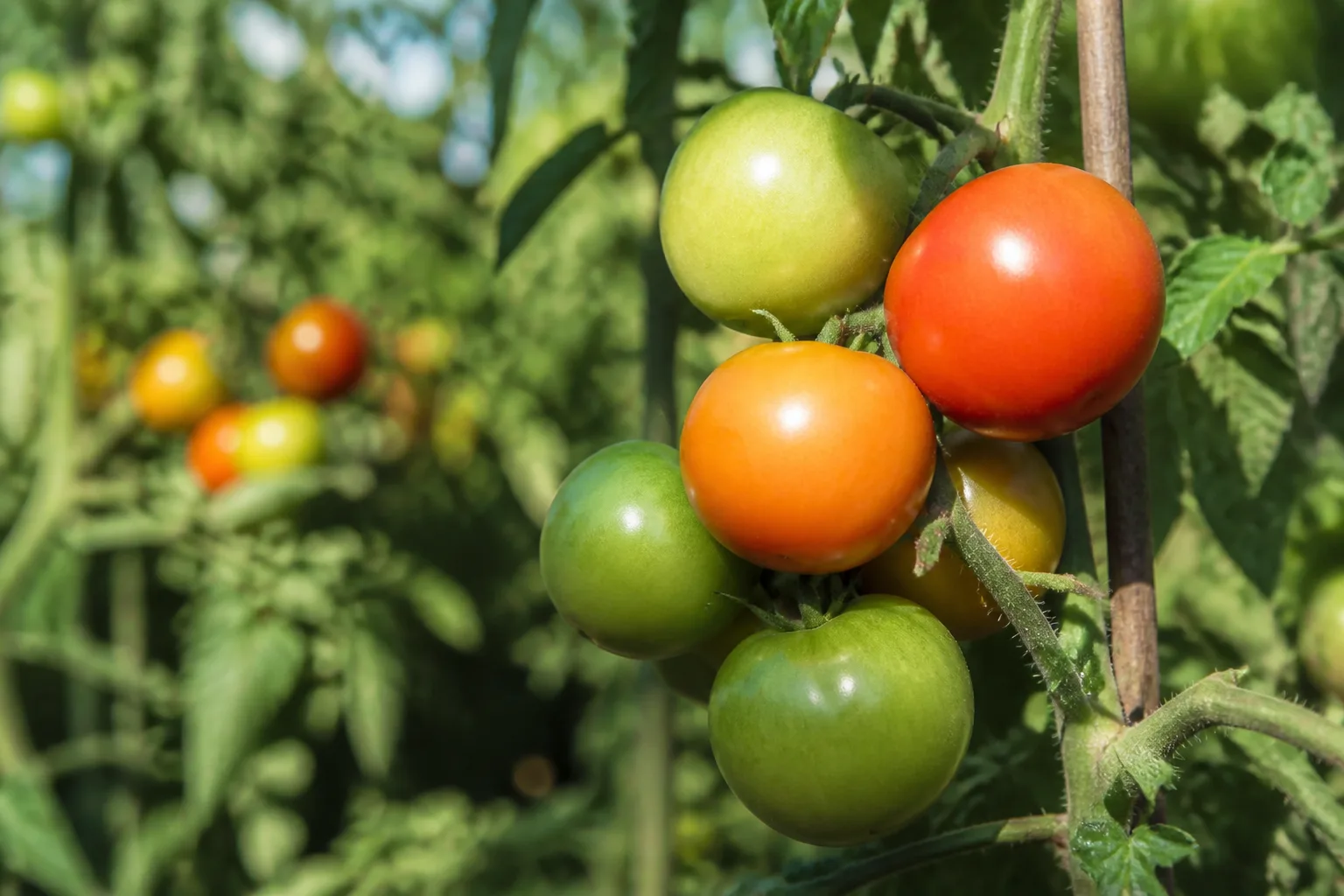
Tomatoes are the classic heat-wave judgment call. Pick fully colored fruit, fruit that has started changing from green to its mature color, and nearly full-size fruit that is showing the first blush when the forecast calls for several days of intense heat. A mature tomato in the breaker or blush stage can finish ripening indoors in a shaded, room-temperature spot; a tomato that is small, hard, and uniformly green may not have reached the same physiological stage and can be less flavorful when forced off the vine.
Look first at fruit that is exposed on the outside of the canopy. Sunscald is more likely when intense sunlight hits fruit that is no longer shaded by enough foliage, and heat can compound cracking when watering swings from very dry to very wet. Pick with a short piece of stem if it comes away easily, but do not yank the truss or strip leaves to expose every tomato to the sun.
Keep ripening tomatoes out of direct sun and do not place them in a refrigerator while they are finishing color. Fully ripe tomatoes should be used or processed promptly; blushing fruit can be staged on a counter so that the garden does not lose an entire flush at once. If a tomato is cracked, leaking, or badly sunscalded, remove it rather than leaving damaged tissue to attract pests.
Cucumbers, zucchini, beans, and okra
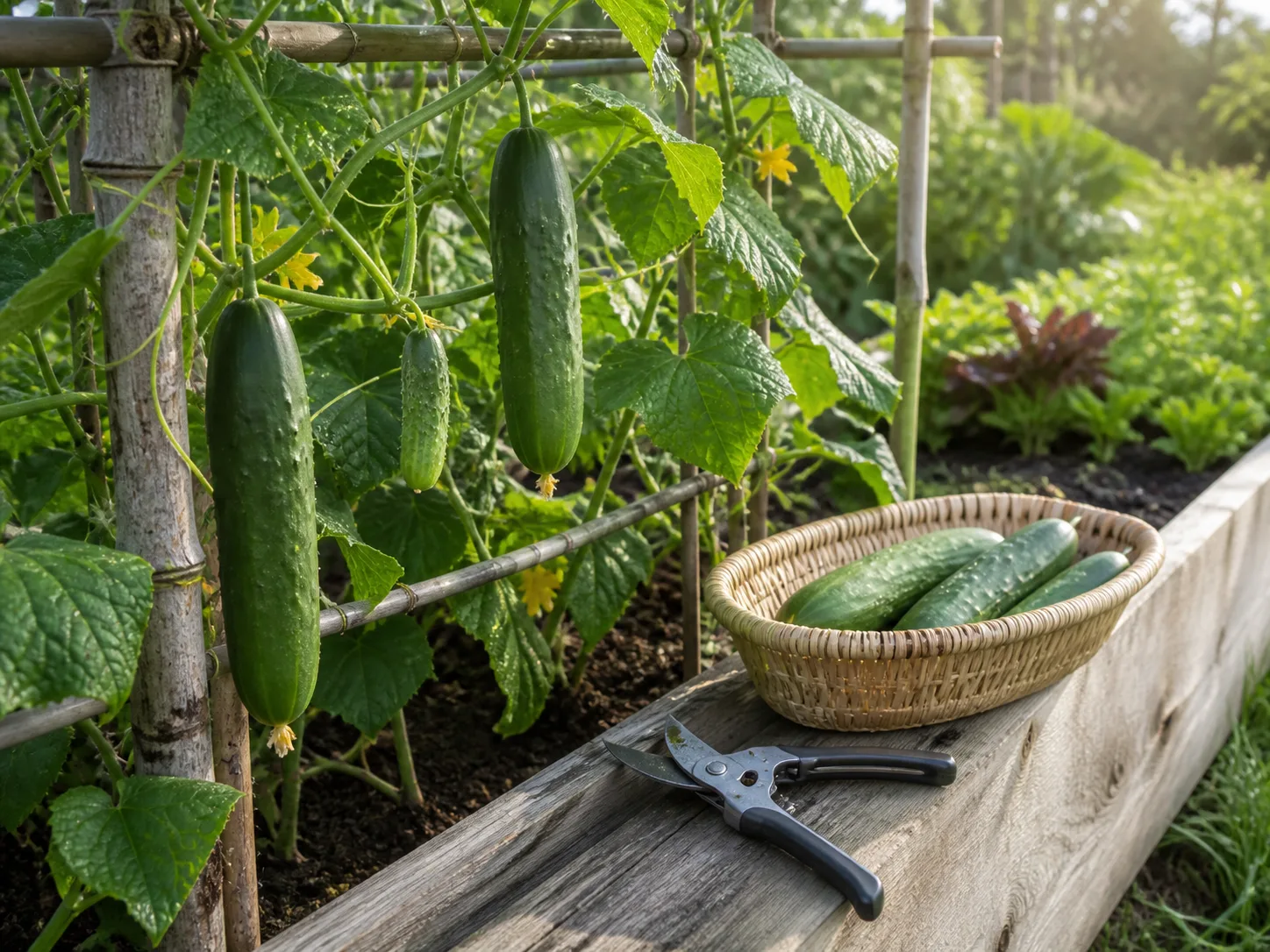
Cucumbers and summer squash grow quickly when nights are warm, which makes them easy to miss before a heat event. Pick cucumbers when they are firm, evenly colored, and at the size your variety is meant to reach; do not wait for the fruit to become huge just because it is still technically edible. Oversized cucumbers can have larger seeds and tougher or bitter flesh, while oversized zucchini becomes seedy and spongy.
Zucchini does not need to be exactly six or eight inches to be good. A small cultivar may be ready sooner, and a round or striped type may have a different target size, so use firmness and tenderness alongside the seed packet or variety description. Cut the stem with a knife or pruners, and check the plant again the next morning because a fruit that is small at dusk can be harvestable by breakfast.
Green beans are best picked while the pods are crisp and the seeds have not begun to swell. Okra is even less patient: pods become fibrous quickly, so inspect plants every day or two during hot weather. Frequent, correctly timed harvests keep these plants from spending energy on mature seed and help maintain a steady production cycle once temperatures moderate.
Leave these crops on the plant
Leaving a crop in the garden is not neglect. It is the right choice when the plant still needs to supply sugars, water, or structural development that cannot be recreated on a kitchen counter. Before you pick, check whether the crop has a reliable maturity signal and whether an early harvest would produce something merely edible instead of good.
Peppers and eggplants
Peppers can be harvested green once they have reached their mature size, especially if the plant is carrying a heavy load or the weather will make the fruit vulnerable to sunscald. However, green does not always mean fully mature: many varieties need more time to develop their final red, yellow, orange, or purple color and sweetness. If the fruit is still undersized, leave it and prioritize water, mulch, and afternoon protection instead.
Eggplant is ready when it has reached the variety’s expected size and the skin is glossy, springy, and bright. Dull skin, soft spots, or a very large fruit usually signal that the best texture is passing, so harvest mature fruit before the heat rather than waiting for it to become enormous. Use a knife or pruners because the calyx and stems can be tough and prickly.
Both crops may drop blossoms or pause growth during a prolonged heat wave, even when existing fruit looks fine. That is a temporary production problem, not a reason to pick immature fruit. Washington State University Extension lists blossom and fruit drop among common heat responses in peppers, squash, and cucumbers and notes that many plants resume normal production after temperatures fall.
Melons, watermelons, winter squash, and pumpkins
Muskmelons and cantaloupes should stay attached until their normal maturity signs appear. Depending on the variety, that may include a stem that slips easily from the fruit, a stronger aroma, a change in background color, and fully developed netting. A melon that is merely large is not necessarily ripe, so do not use size alone to justify an early harvest.
Watermelon requires even more patience. It generally does not continue ripening after it is cut from the vine, so leave it unless the fruit has its variety-specific signs: a dried tendril near the stem, a changed or creamy field spot, a duller rind, and other cues that are reliable for that cultivar. The sound test can be one clue, but it is not a substitute for knowing the variety or tracking fruit age.
Winter squash and pumpkins are also better left to finish on a healthy vine. Pick only when the rind has hardened, the mature color is established, and the stem is beginning to cork, or when a storm, frost, disease, or broken vine makes leaving the fruit riskier than cutting it. During a heat wave, protect the vine’s root zone and leaves rather than removing developing fruit that still needs them.
Corn, onions, and root crops
Sweet corn is ready at the milk stage, when kernels are plump and release a milky liquid when punctured. Ears that are not there yet should stay attached; picking early does not create sweetness later. Once corn is ready, harvest in the cool morning and use it quickly because sugars begin converting to starch after picking.
Onions can remain in the bed while their tops are green and upright. Harvest for storage when the tops naturally bend or fall and the neck begins to dry, then cure bulbs in a dry, shaded, well-ventilated place rather than baking them in direct sun. Green onions are different: harvest them whenever they reach the size and tenderness you want.
Carrots and beets can tolerate a short heat wave when the soil stays evenly moist, although roots may become tougher or less pleasant if drought and heat last. Radishes are less patient and can become pithy or bolt, so pick them when they are ready rather than gambling on another week. If the bed is drying deeply and irrigation is uncertain, harvesting mature roots is a reasonable quality decision; it is not necessary to pull every young root simply because the air is hot.
How to harvest without adding stress
The harvest itself is a small disturbance, especially when you bend stems, remove leaves, or leave cut surfaces exposed in heat. Plan the work so the plant is hydrated, the produce is shaded immediately, and you do not need to make a second pass through the garden at midday.
Timing, tools, cooling, and storage
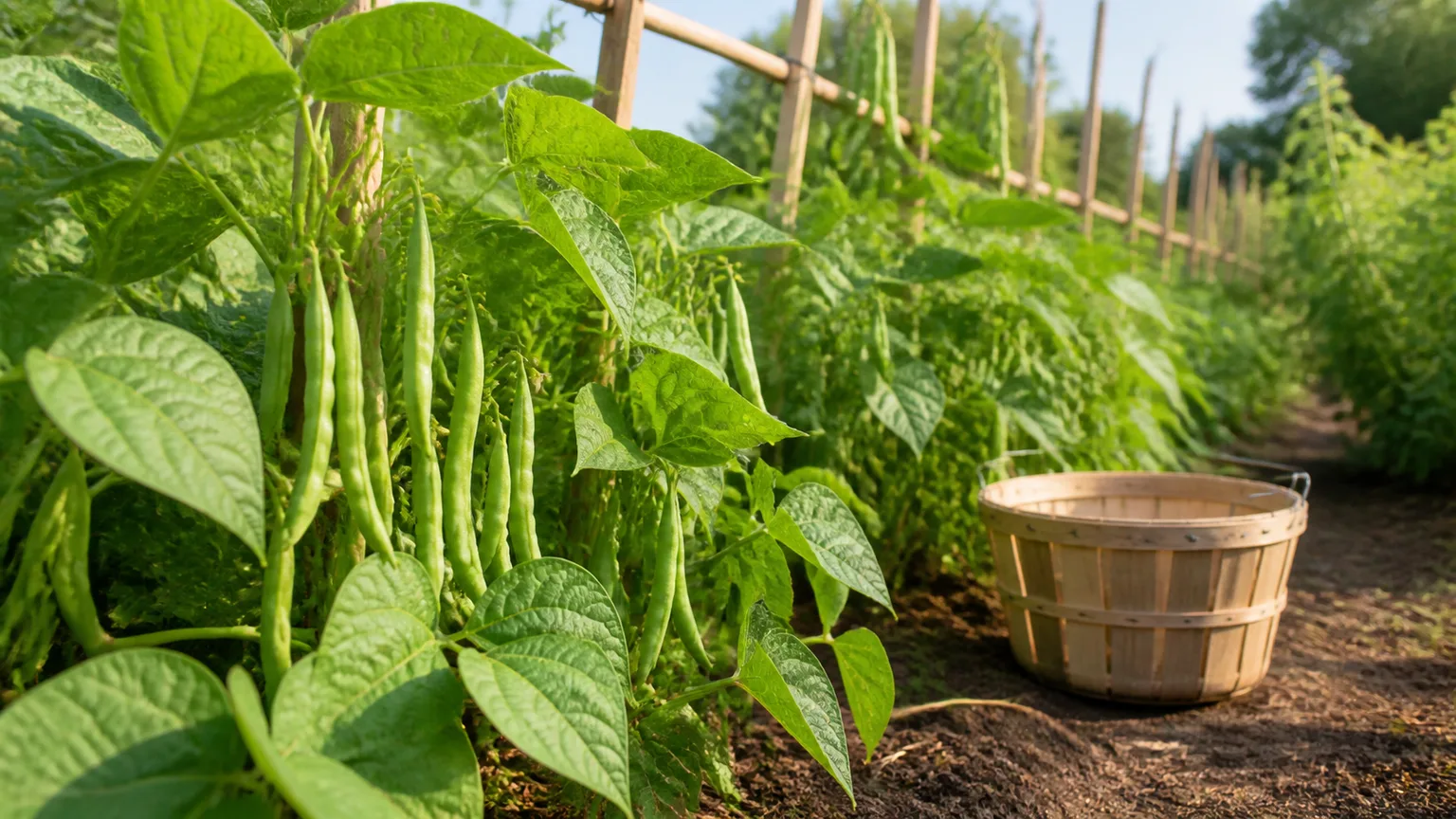
Harvest early in the morning after the foliage has dried, or in the evening once the air and soil have begun to cool. Morning is often the best choice for leafy crops and crisp pods because plants and produce have not yet accumulated the day’s field heat. Avoid working in dangerous outdoor heat; the garden can wait for a safer window, and a heat-stressed gardener is not improved by a perfect harvest.
Use a sharp knife or clean pruners for crops that resist a gentle snap, and support the vine or branch with your free hand. Put a shallow basket or crate in the shade rather than setting produce on hot soil or a metal surface. Penn State Extension recommends moving harvests out of strong sun and cooling them promptly; for tender greens, a quick rinse and refrigeration can remove field heat, while tomatoes and onions are better kept dry until you are ready to use or cure them.
Do not pack warm, delicate vegetables tightly into a deep container. Greens and herbs benefit from prompt cooling and airflow, cucumbers and beans should be protected from heat and bruising, and ripe tomatoes should not be chilled if you want the best texture. If you use ice, keep it appropriate to the crop and prevent meltwater from turning a basket of produce into a wet, crushed pile.
Leave healthy leaves and immature fruit in place. A canopy is not wasted foliage during a heat wave; it shades fruit and continues photosynthesis while the plant manages water loss. Remove only ripe, overripe, damaged, diseased, or clearly declining material, and postpone cosmetic pruning until the weather settles.
Heat-wave garden triage
Harvest decisions work best when paired with basic heat preparation. A ripe tomato picked at the right time will still suffer if the plant’s root zone is dry, and shade will not repair an overripe cucumber that was left on the vine. Think of harvest as one part of a short sequence: inspect, pick selectively, water the root zone, reduce afternoon stress, and reassess after the heat breaks.
What to do before the heat arrives
The day before the hottest stretch, walk every bed and container with a short checklist:
- Harvest quality-ready crops. Pick greens, herbs, ripe or blushing tomatoes, eating-size cucumbers and zucchini, tender beans, ready okra, and any fruit that is likely to crack, soften, or sunscald.
- Water deeply if the root zone is dry. Soak slowly enough to reach the active roots, then confirm that water is infiltrating instead of running off. Penn State Extension warns that dried soil can resist water and that compacted, waterlogged soil also damages roots, so drainage matters as much as volume.
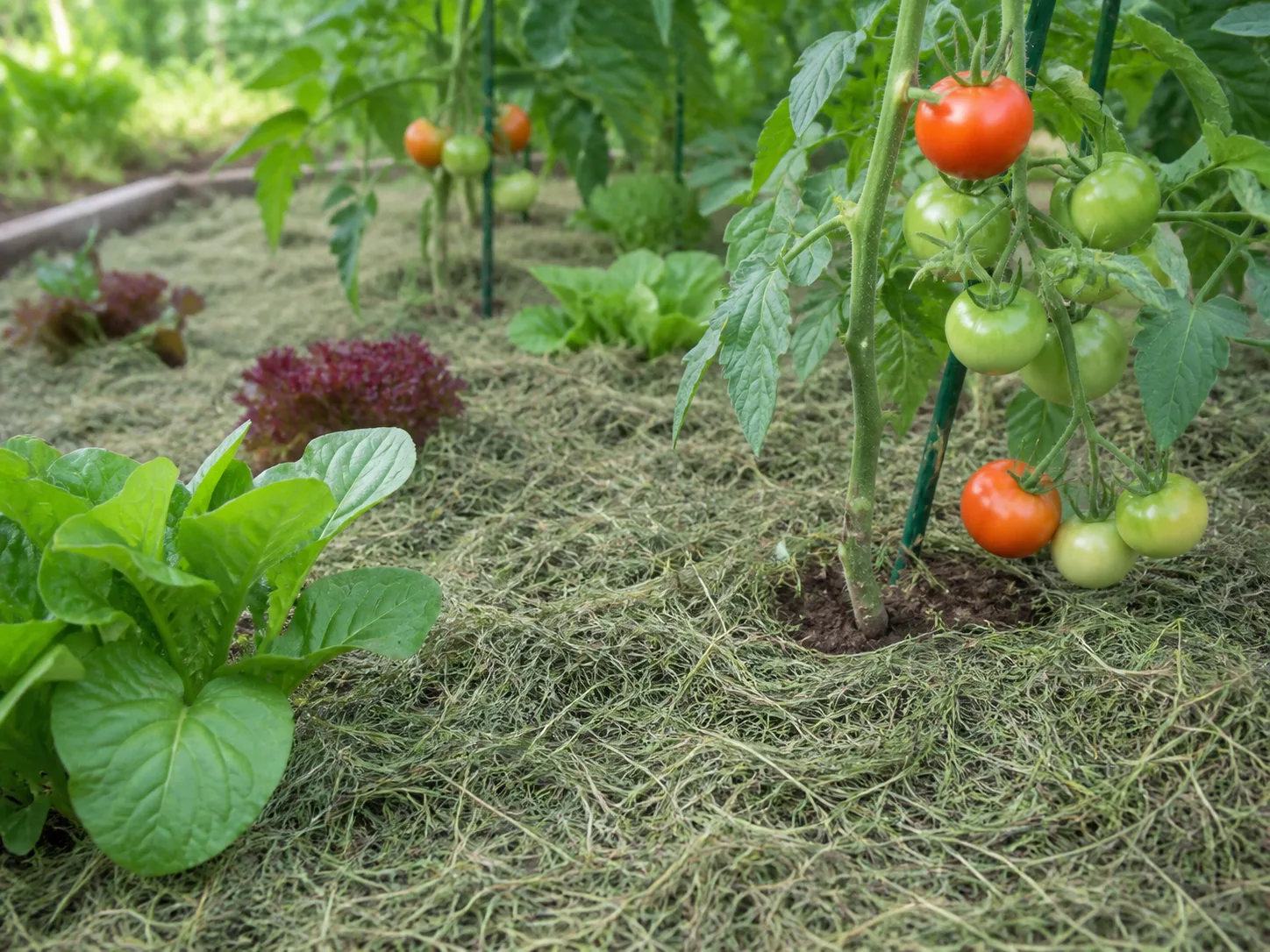
- Apply or refresh organic mulch. A two- to four-inch layer of straw, shredded leaves, or another appropriate organic mulch helps moderate soil temperature and slow evaporation; keep it off stems and crowns.
- Set up shade before plants wilt. A securely supported shade cloth can reduce afternoon load, especially for greens and young fall-crop seedlings. Penn State recommends roughly 30% to 50% shade for many vegetables, while Better Homes & Gardens suggests that heat-sensitive lettuce may need heavier shade for a short period; follow the crop and cloth instructions rather than making a dark tent over everything.
- Remove weeds that are actively competing for water. Weed now, when you can still see the soil and plant bases, but avoid unnecessary digging that disturbs roots just before the heat.
- Open or remove hot coverings. Row covers, tunnels, and cold frames can trap heat. Ventilate them so they do not turn a hot day into a sealed greenhouse.

Do not fertilize to “push through” the heat. New growth has a high water demand and can be more vulnerable, and applying fertilizer to dry or heat-stressed roots increases the risk of injury. Also delay routine pruning, transplanting, and nonessential sprays; Washington State University Extension advises checking product labels carefully because some treatments can damage plants in high temperatures.
What to do during and after the heat
During the heat wave, check the soil and the plants rather than watering by the clock. Water early when possible, but if a plant is severely wilted and the root zone is dry, water as soon as it is reasonable rather than waiting for a preferred time. Containers, shallow beds, young transplants, and plants in windy exposures can dry much faster than established in-ground crops.
Look at the plant early in the morning. Morning wilt, crispy new growth, cracked stems, or dry soil several inches down signals a more urgent problem than leaves that curl only during the hottest afternoon and recover by evening. Check for sunscald on exposed tomatoes, peppers, and melons; blossom or fruit drop; and bolting in greens. These symptoms can be caused or amplified by heat, but not every brown spot is heat, so avoid escalating to a spray without identifying the problem and reading the label.
Once temperatures moderate, do not immediately compensate with heavy fertilizer, hard pruning, or a flood of water. Resume consistent irrigation, remove tissue that is clearly dead or diseased, and give the plant a few days to show which stems are still alive. Heat-tolerant crops often restart flowering, and paused tomato or pepper production can return after cooler nights; regular harvesting then helps prevent the next round of overripe fruit.
Conclusion
Yes, you should harvest some vegetables before a heat wave—but the right question is which vegetables are ready enough to benefit from picking, and which still need the plant to finish them. Pick quality-ready greens, herbs, blushing tomatoes, tender cucumbers, zucchini, beans, okra, and other produce that will lose texture or suffer exposure during the hot spell. Leave immature watermelons, not-yet-ripe melons, developing winter squash, pumpkins, and unfinished corn on the plant, and use maturity signs rather than anxiety to decide.
Make the selective harvest in the cool part of the day, move produce out of the sun, keep healthy foliage on the plant, and follow the basket with deep root-zone watering, mulch, and temporary afternoon shade where needed. That combination protects tonight’s meal without sacrificing the fruit, flowers, and leaves that can carry the garden into the next harvest after the heat breaks.



