How to Grow and Care for Stephanotis
Grow Madagascar jasmine with the right light, moisture rhythm, cool winter rest, and support—plus bloom triggers most generic guides skip.
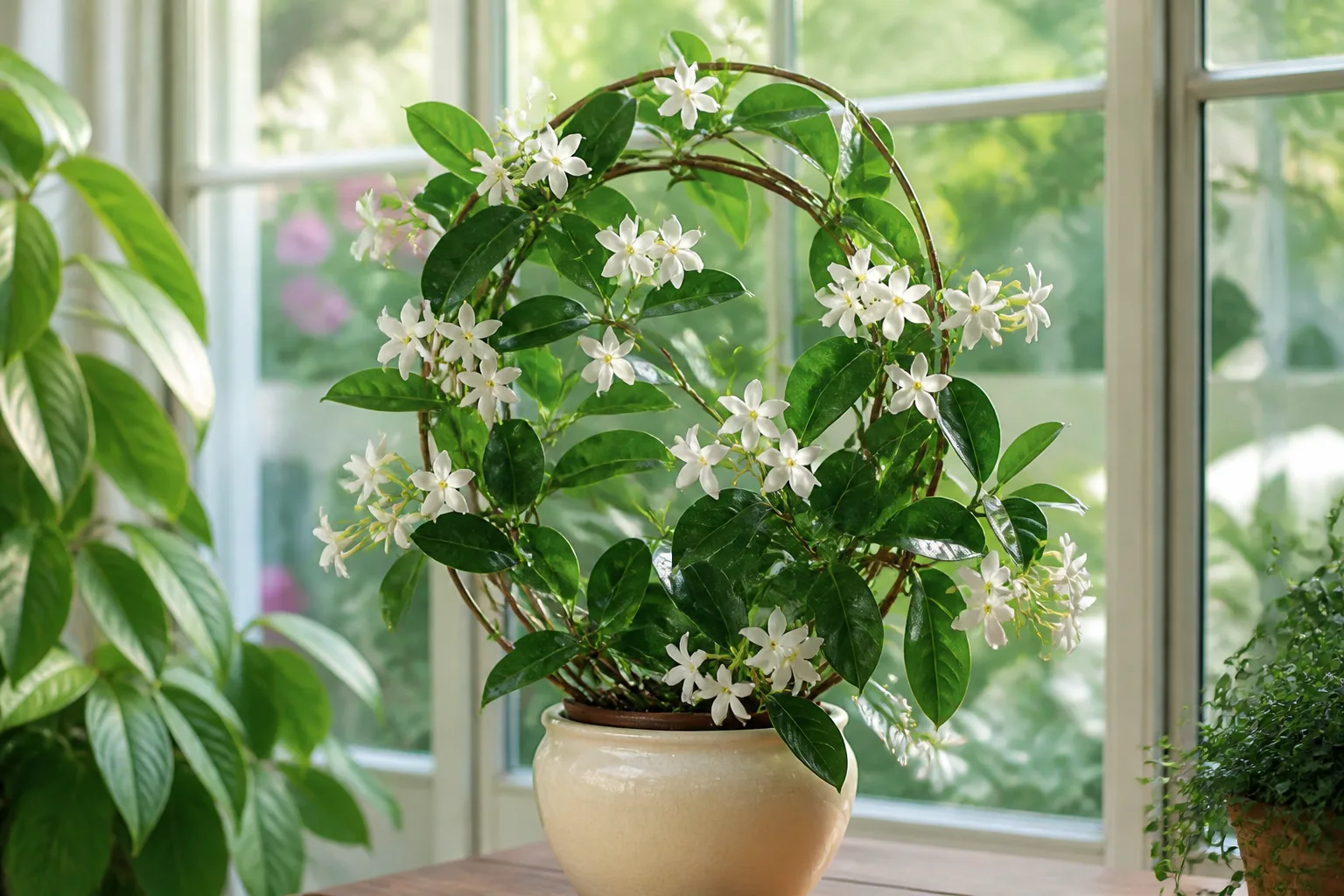
Stephanotis—usually sold as Madagascar jasmine or bridal flower—is a twining tropical vine grown for clusters of waxy white, intensely fragrant blooms and glossy evergreen leaves. It is not a set-and-forget houseplant. It is a seasonal rhythm plant: warm, bright, humid summers; a cool, drier winter rest; and steady support on a trellis or wire hoop. Get that rhythm right and you can keep the same vine for years. Skip the winter rest or move the plant while it is budding, and you will wonder why the buds turn yellow and fall.
This guide is built for the real job: decide whether stephanotis belongs indoors, on a summer patio, or in a conservatory; place it for light without scorch; water on evidence instead of a calendar; manage humidity in active growth without drowning roots in winter; train the vine; and troubleshoot bud drop before you blame yourself. If you also grow true jasmine, see our jasmine hub for a different genus with overlapping common names but different care.
| Care decision | Reliable starting point |
|---|---|
| Light | Bright light; some direct morning sun; protect from hot midday sun indoors |
| Water | Moist while actively growing; much drier in winter rest |
| Soil | Loam- and peat-based mix with perlite or coarse sand |
| Humidity | High in spring–summer; normal dry air acceptable in winter rest |
| Temperature | About 68–90°F in growth; cool bright winter near 50–60°F |
| Support | Trellis, hoop, or lattice from day one |
| Fertilizer | Balanced flower feed monthly in active growth only |
| Hardiness | Frost-intolerant; outdoor only in frost-free climates |
What Stephanotis Is (and Why It Is Not True Jasmine)
Shop tags say “jasmine,” but stephanotis is not a true jasmine. True jasmines belong to Jasminum in the olive family (Oleaceae). Stephanotis sits in Apocynaceae—the dogbane family alongside mandevilla and hoya—and climbs by twining and clinging stems rather than the growth habit of many jasmines. The resemblance is visual and aromatic: small white trumpet-shaped flowers with a rich perfume. That perfume is why stephanotis shows up in wedding work, where it is called bridal flower, wax flower, or Hawaiian wedding flower.
Botanical names and common labels
You will see two scientific names on labels. Stephanotis floribunda is still the name most nurseries and extension pages use. Botanists also list Marsdenia floribunda as the current accepted name for the same plant. Treat them as one species unless your label clearly points to a different vine. NC State Extension describes an evergreen woody climber from Madagascar with leathery oval leaves and clusters of pure white, waxy, intensely fragrant tubular flowers. Indoors it often stays around 3–4 feet on a support; outdoors in frost-free climates it can climb 10–20 feet or more.
Cultivars bred for cut-flower production include ‘Isabella’ and ‘Puanani’, selected for larger blooms and vigorous growth (University of Hawaii Extension). Home pots may be unnamed seedlings; care is the same even when flower size varies.
Mature leaves are glossy and leather-textured, often 4 inches or longer, on thick flexible stems. Flowers form in clusters on short stalks, each bloom about 2 inches across, lasting a few days on the vine. House Plants Expert notes that indoor plants can bloom outside spring if light, warmth, and humidity align—but most home growers see the heaviest flush in late spring through summer, with occasional later flowers.
Indoor vs Outdoor: Where Stephanotis Actually Works
Stephanotis is a tropical vine, not a temperate garden default. In the United States it is most often grown as a conservatory, greenhouse, or bright-window houseplant, then moved to a sheltered patio for summer where nights stay warm. The decision is simple: if your area drops near freezing, plan on pots you can carry indoors.
USDA zones and frost limits
NC State Extension warns that stephanotis is very frost-intolerant and should return indoors when temperatures approach 39°F (4°C). USDA zone 12 is the textbook outdoor hardiness marker for year-round planting in the ground. In practice, gardeners in zones 10–11 sometimes keep established vines outdoors in frost-free microclimates, but any surprise cold snap can defoliate or kill top growth. Treat outdoor culture as a privilege of climate, not a nationwide assumption.
Indoors, the species does best in the 68–90°F range during active growth. A cool, bright winter room around 50–60°F supports the rest phase that triggers next year’s flowers. Below about 45°F (7°C) for extended periods risks cold damage; above 90°F without humidity and airflow, buds may abort. The Balcony Garden UK recommends conservatories or greenhouses in cool climates, with summer patio time only after nights stay reliably mild.
If you buy a blooming plant in winter, expect some bud drop after the move home—that is normal acclimation stress, not instant failure. Give it a stable bright spot, avoid repotting until spring, and follow the winter-rest rules below instead of pushing fertilizer to “save” flowers.
Light Requirements for Healthy Growth and Blooms
Light drives both leaf quality and flower initiation. Outdoors, stephanotis wants full sun with afternoon shade in hot climates to prevent scorch. Indoors, place it at the brightest window you can manage—east or south exposures are common choices—with sheer filtering if midday sun heats the glass.
Signs you need more or less light
Too little light: long, weak stems; small pale leaves; no buds; soil staying wet too long. Move closer to the glass or add supplemental grow lights for 10–14 hours in the dim months.
Too much sudden sun: bleached or blistered patches on leaves, especially after moving from a shaded shop to a hot sill. NC State Extension specifically warns that sudden full-sun exposure causes leaf blister and burn. Acclimate over 7–10 days, increasing direct sun gradually.
During active growth, four to six hours of bright light daily is a practical minimum for indoor bloom attempts. In winter rest, cool brightness matters more than intensity—think unheated sunroom or cool bedroom window, not a dark corner.
Soil, Pots, and Drainage
Stephanotis soil should be rich, slightly acidic, and fast-draining. NC State Extension recommends a high loam and peat moss base with generous perlite or coarse sand. A workable home mix is two parts peat or coco coir, one part quality potting loam, and one part perlite. Avoid heavy garden soil in pots—it compacts and suffocates roots.
Always use a container with drainage holes. Stephanotis appears to flower best when somewhat root-bound, so do not jump to oversized pots “to help it grow.” A pot only 1–2 inches wider than the root ball at repot time is enough. Terracotta dries faster than plastic; adjust watering when you change materials.
Mulch the surface outdoors with shredded bark to keep roots cool, as extension guidance suggests for in-ground culture. Indoors, skip deep mulch on the soil surface—it can hold moisture against the crown in winter.
Watering Without Root Rot
Stephanotis likes moist but never soggy soil in the growing season. The classic failure is compensating for dry winter air by overwatering a cool, slow vine—that invites root rot, the most common disease on this plant.
Seasonal watering rhythm
Spring through summer (active growth): Water when the top inch of soil feels dry, then soak until a little drains from the bottom and empty the saucer. In bright, warm weather you may water weekly or more; in a cool, dim room, stretch the interval.
Autumn transition: As growth slows, lengthen the gap between waterings. Let the top 2 inches dry before soaking.
Winter rest: Water sparingly—sometimes only every two to three weeks in a cool room. The goal is barely moist roots, not wet soil. NC State Extension notes that cool indoor temperatures slow growth and require very infrequent watering until warmth returns.
Use rainwater, distilled, or filtered water if your tap is very hard; chronic yellowing on new growth with wet soil often traces to mineral buildup (House Plants Expert). Flush the pot once with clean water in spring if salts crust the soil surface.
Never let the pot sit in standing water. If leaves yellow while soil smells sour or stays wet for days, unpot, trim mushy roots, and repot into fresh mix before warmth returns.
Humidity and Temperature
Humidity is the care task most growers underestimate—and the one you change by season. In spring and summer, stephanotis appreciates high humidity, especially when indoor air conditioning or heating strips moisture.
Winter rest period
Here is the counterintuitive part: during winter rest, stop chasing humidity. NC State Extension describes keeping plants cool, sunny, and dry so they “rest” until outside temperatures rise. That dry rest is part of the bloom cycle, not neglect.
Active season humidity tools (ranked):
- Humidifier near the plant—most reliable.
- Pebble tray with pot above water level—not in it.
- Grouping with other plants to raise local moisture.
- Misting—temporary; fine as a supplement, not a substitute.
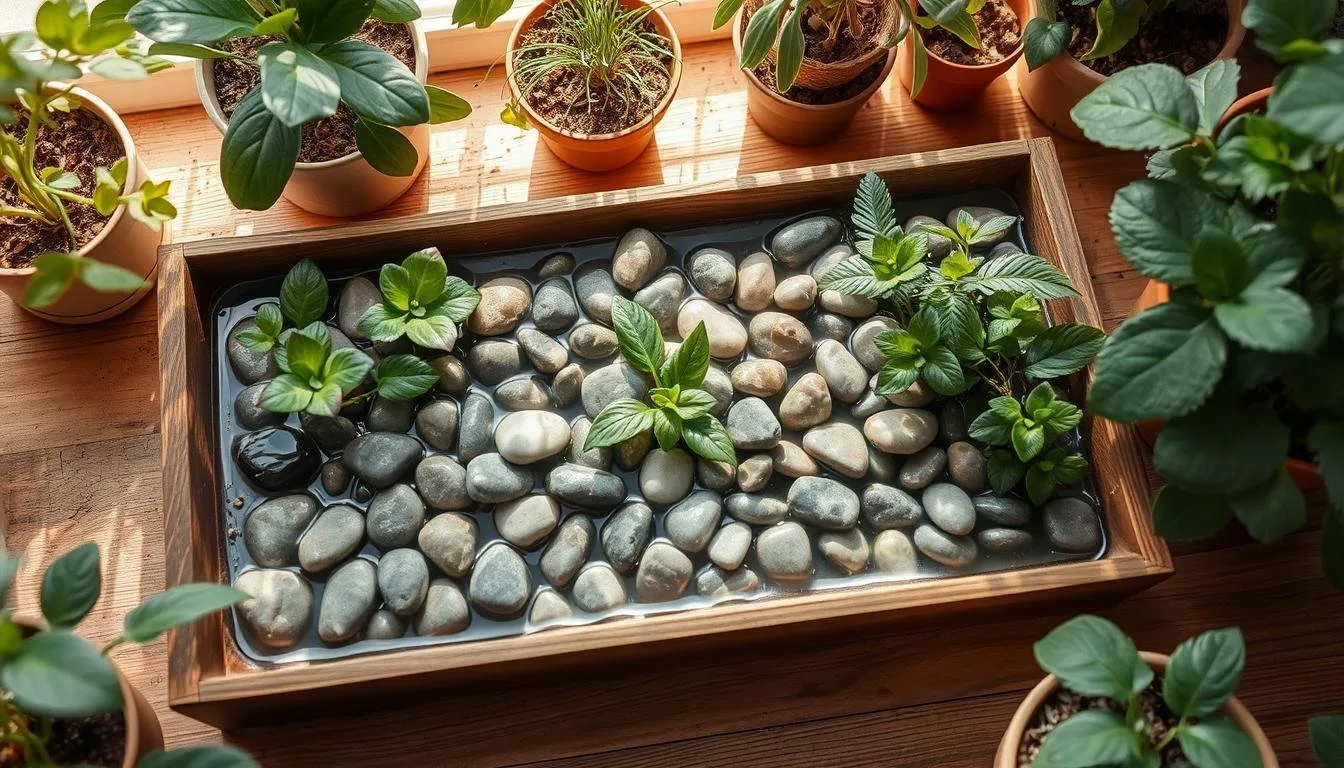
Keep the vine away from radiators, forced-air vents, and fireplace drafts. The Balcony Garden UK links sudden leaf drop to cold drafts and humidity crashes—common when a patio plant comes indoors in autumn.
Target 65–80°F in active growth and 55–60°F for roughly four to eight weeks of winter rest before spring warmth. Avoid letting the room swing wildly day to night; bud formation hates instability.
Fertilizer and Bloom Timing
Feed only when the vine is actively growing. In spring, as new shoots lengthen, apply a balanced flower fertilizer at half the label strength about once a month through late summer. NC State Extension lists abundant water, high humidity, and balanced fertilizer as summer growth requirements alongside full sun.
Do not fertilize during winter rest—salt buildup on idle roots worsens yellow leaves. If the plant pushed flowers in late summer, let it recover rather than forcing another flush with heavy feed.
Organic options like diluted fish emulsion work if you prefer slow release; whichever product you choose, keep rates modest. Overfeeding in a root-bound pot shows up as brown leaf tips and dropped buds more often than extra flowers.
Trellis Support and Training
Stephanotis is a twining climber. Without support, stems tangle and break under their own weight. Install a trellis, wire hoop, lattice, or moss pole at planting time—not after the vine is 3 feet long.
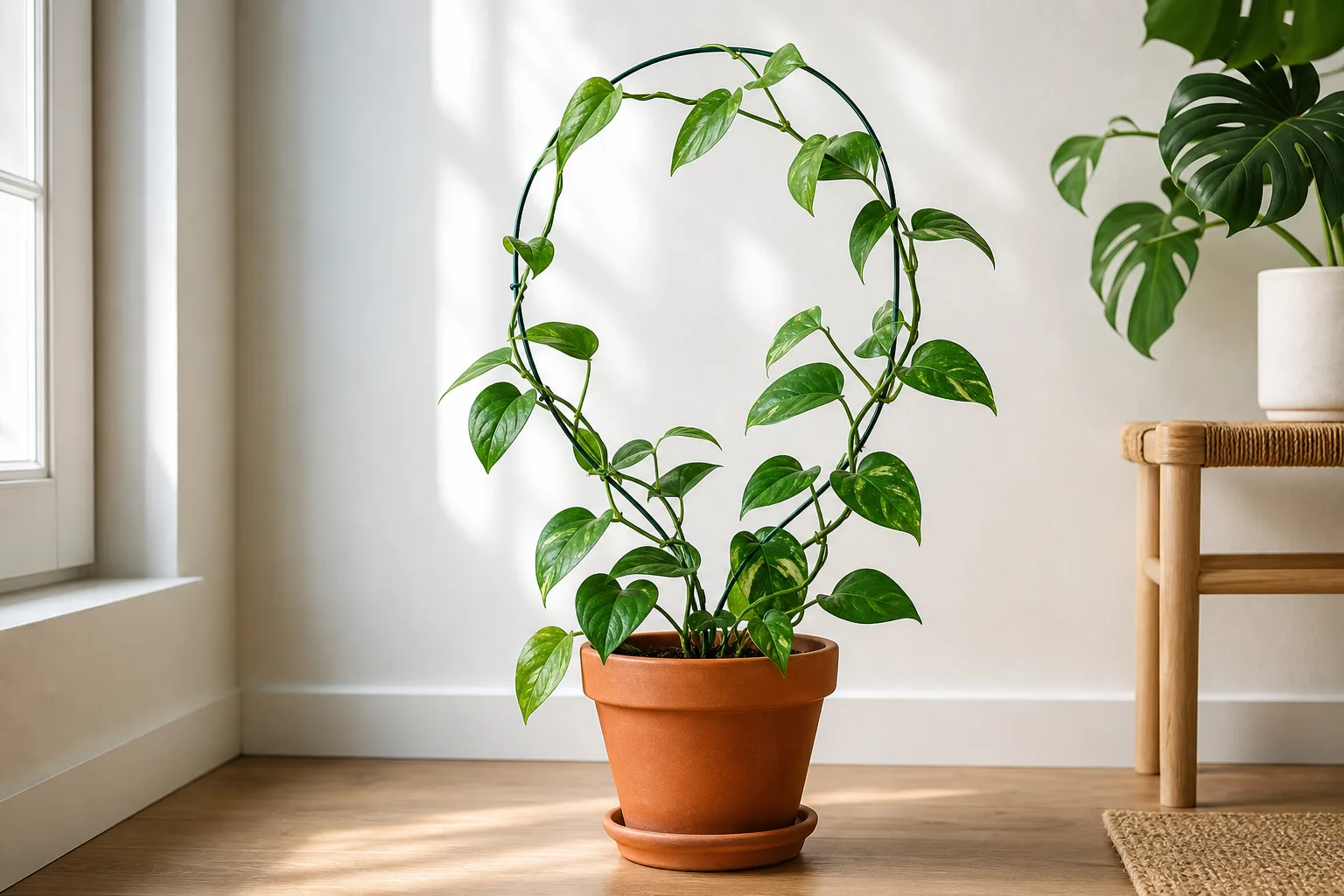
Guide new shoots clockwise or counterclockwise around the support every few days while stems are flexible. Retail plants often arrive on a wire frame; keep that structure unless it is rusted or too small. Outdoors, train against a pergola or fence in frost-free gardens, checking ties monthly so they do not cut into thickening stems.
Wind is an underrated enemy on balconies. Stake the pot and shelter the vine from constant gusts that desiccate leaves and knock off buds.
Pruning and Sap Safety
Pruning will not dramatically rejuvenate stephanotis the way it does some vines, but light shaping keeps size manageable. The best window is late winter or early spring, just before active growth resumes—not during winter rest.
Remove weak side shoots to open the frame, or shorten main stems by up to half if the plant has outgrown its support. Wear gloves: cut stems bleed a milky sap that can irritate skin and stain furniture. Wipe cuts with a damp cloth and wash tools after.
Deadhead spent flowers during the bloom season to tidy the plant; it is optional for rebloom but keeps energy from going to seed pods on older vines.
Propagating Stephanotis
Most home growers propagate by stem cuttings, not seed. Seeds are viable only when mature vines produce pear-shaped pods that take months to ripen—uncommon on young indoor plants.
Stem cutting method:
- In late spring or summer, take a non-flowering cutting with at least two nodes.
- Remove lower leaves; keep one or two small leaves at the tip.
- Optional: dip the base in rooting hormone.
- Insert into a mix of perlite and peat or sand; cover with a clear bag or propagator.
- Keep warm (about 70°F or warmer), bright indirect light, and steady humidity.
- Expect roots in three to six weeks; tug gently before potting up.
Bottom heat improves success rates. Seed sowing, when pods are available, needs warmth near 75°F, high humidity, and patience—seedlings may take years to reach blooming size.
Repotting (and When to Leave It Root-Bound)
Repot every two to three years, or when water runs straight through dry soil and roots circle the pot. Choose a container about 2 inches wider with fresh, airy mix. Spring—just as growth resumes—is the safest timing.
Because stephanotis often blooms best slightly root-bound, do not repot a plant in bud unless the soil is clearly failing. If you must repot, expect temporary bud drop and skip fertilizer for four to six weeks while roots settle.
Always reinstall the trellis immediately after repotting so new shoots have something to climb.
Getting Stephanotis to Bloom
Bloom is the payoff—and the stress test. Commercial growers hit year-round flowers with greenhouse climate control. At home, think in three phases:
- Winter rest (cool, bright, dry): Roughly 55–60°F, reduced water, no feed, stable light.
- Spring wake-up (warmth + humidity): Move to brighter warmth, resume watering and monthly feed.
- Summer carry (light + airflow): Protect from scorch; maintain humidity; avoid moving the pot once buds form.
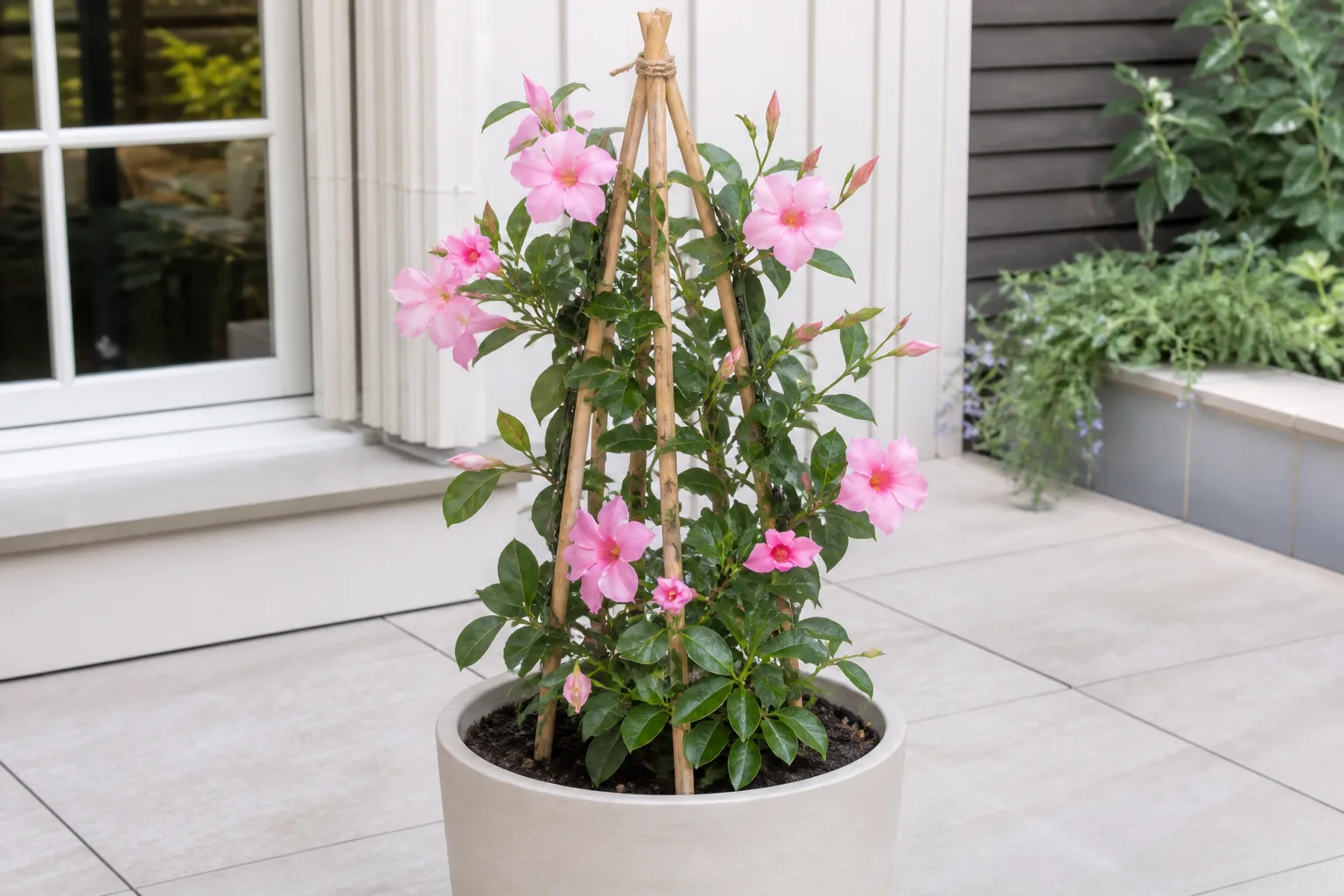
Buds often fail when a plant is moved, repotted, or chilled after buds set. House Plants Expert lists relocation and temperature swings as top causes of yellow, unopened buds. If buds drop, fix stability before changing fertilizer.
Warm days near 80–85°F with adequate light support the heaviest flower clusters outdoors. Afternoon shade prevents petal burn in hot climates. Cut flowers last longest on the vine; if you harvest blooms, keep arrangements cool and humid.
Pests, Diseases, and Troubleshooting
Routine checks matter because pests hit stressed vines first. Look under leaves weekly for spider mites in dry air, scale and mealybugs on stems, plus aphids and thrips on new growth. Greenhouse culture amplifies spider mite cycles—raise humidity and rinse foliage before escalating to insecticidal soap.
Root rot follows overwatering, especially in cool winter rooms. Symptoms: yellow leaves, wilting with wet soil, sour smell. Trim affected roots and repot into dry mix.
Sooty mold grows on the sticky honeydew left by sap feeders. Solve the insect problem first; wipe leaves with mild soapy water once pests are controlled.
| Symptom | Likely cause | First action |
|---|---|---|
| Buds yellow and fall | Move, draft, or uneven water | Stop moving; stabilize temperature |
| Leaves blister or bleach | Sudden hot sun | Filter light; acclimate slowly |
| Lower yellow leaves, wet soil | Overwatering / root issue | Dry down; inspect roots |
| Crisp tips, dry air | Low humidity in growth season | Humidifier or pebble tray |
| Webbing under leaves | Spider mites | Rinse; increase humidity; treat if persistent |
| Wooly patches on stems | Mealybugs or scale | Alcohol swab; repeat weekly |
Extension tags list stephanotis as non-toxic to cats, dogs, and horses (NC State Extension), but sap may irritate skin and the plant is not a food crop—keep it out of reach of curious chewers anyway.
Conclusion
Stephanotis care rewards patience more than perfectionism. Give the vine bright light, warm humid summers, a cool dry winter, steady trellis support, and calm handling once buds appear. It is not true jasmine, and it is not a beginner vine—but a well-rested plant in a bright room can perfume an entire corner each spring. Start with placement and seasonal watering before you chase fertilizer or a bigger pot. When in doubt, protect roots from winter wetness and let the plant finish its rest. Flowers usually follow stability, not force.



