Best Lawn Fertilizer Picks by Season and Grass Type
Compare six lawn fertilizers by NPK, release type, and season—plus soil-test rules, nitrogen math, and when weed-and-feed is a mistake.
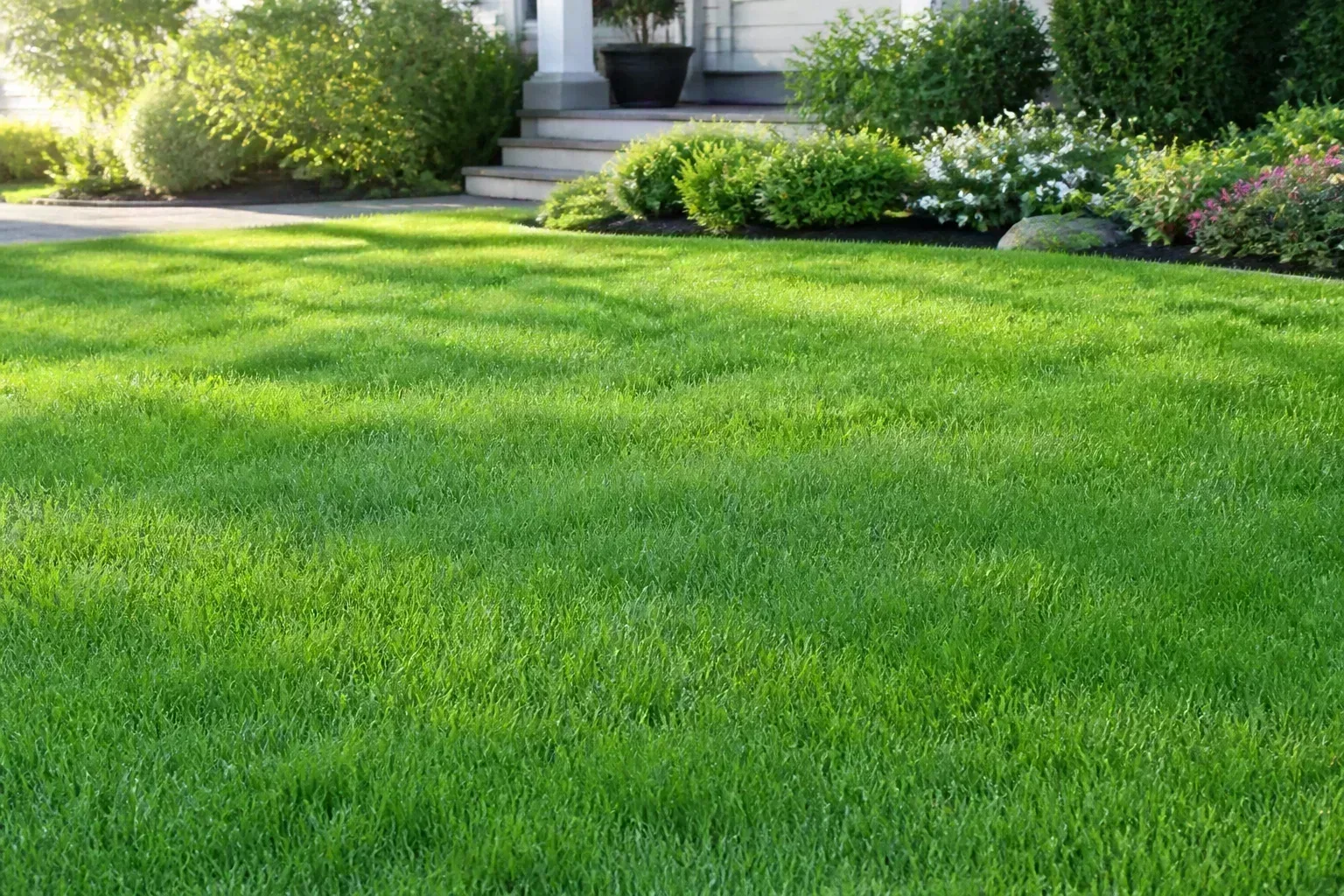
The best lawn fertilizer is not the bag with the greenest marketing photo. It is the product whose NPK ratio, release type, and application window match your grass species, your soil test, and the season you are actually in. Spread the wrong nitrogen at the wrong time and you can green up for a week, then watch fertilizer burn, weed explosions, or runoff fines follow.
This guide compares six widely available lawn fertilizers, explains how to read the label without guesswork, and gives you a seasonal feeding calendar for cool-season and warm-season turf. If you are still deciding whether spring feeding is necessary at all, start with our guide on whether to fertilize grass in spring—then come back here to pick the right bag.
Quick Picks — Match the Bag to Your Lawn Job
| Best for | Product | NPK | Release type | Coverage | Key note |
|---|---|---|---|---|---|
| Overall maintenance | Scotts Turf Builder Lawn Food | 32-0-4 | Slow-release granular | 5,000 sq ft | High-N, phosphorus-free; works on most established lawns |
| Spring wake-up (organic) | Espoma Spring Lawn Booster | 8-0-0 | Slow-release granular | 5,000 sq ft | Low burn risk; light odor; calcium + sulfur boost |
| Weeds + feed in one pass | BioAdvanced 5-in-1 Weed and Feed | 22-0-4 | Slow-release + herbicide | 4,000 sq ft | Grass-type restrictions; conflicts with seeding |
| Fast color rescue | Scotts Green Max Lawn Food | 27-0-2 | Quick-release + iron | 5,000 sq ft | Visible green-up in days; short residual; burn risk in heat |
| Organic maintenance | Purely Organic Lawn Food | 10-0-2 | Slow-release granular | 6,250 sq ft | Plant-based; kid/pet friendly same day per label |
| Fall root strength | GreenView Fall Lawn Food | 22-0-10 | Slow-release granular | 5,000 sq ft | Higher potassium for stress recovery and winter prep |
Prices shift by retailer and season. Treat labeled NPK, coverage, and grass restrictions as the stable comparison points—not today’s sale price.
Before You Buy: Soil Test, Grass Type, and Realistic Goals
Fertilizer feeds grass; it does not fix compaction, shade, dog urine patterns, or a mower set too low. Before you load a spreader, decide whether nutrition is actually the limiting factor.
Start with a soil test (not a guess)
Penn State Extension is direct: fertilization does more to improve turf than almost any other single practice—but phosphorus and potassium needs can only be determined from a soil test. Nitrogen requirement cannot be read from a soil test because nitrogen moves through soil quickly and turf constantly uses it.
A basic lawn soil test tells you pH, phosphorus, potassium, and often organic matter. Many established lawns in the United States already have adequate phosphorus from years of complete fertilizers. University of Minnesota Extension warns that phosphorus overuse is a serious environmental concern and recommends choosing a low- or zero-phosphorus product when your report does not call for P.
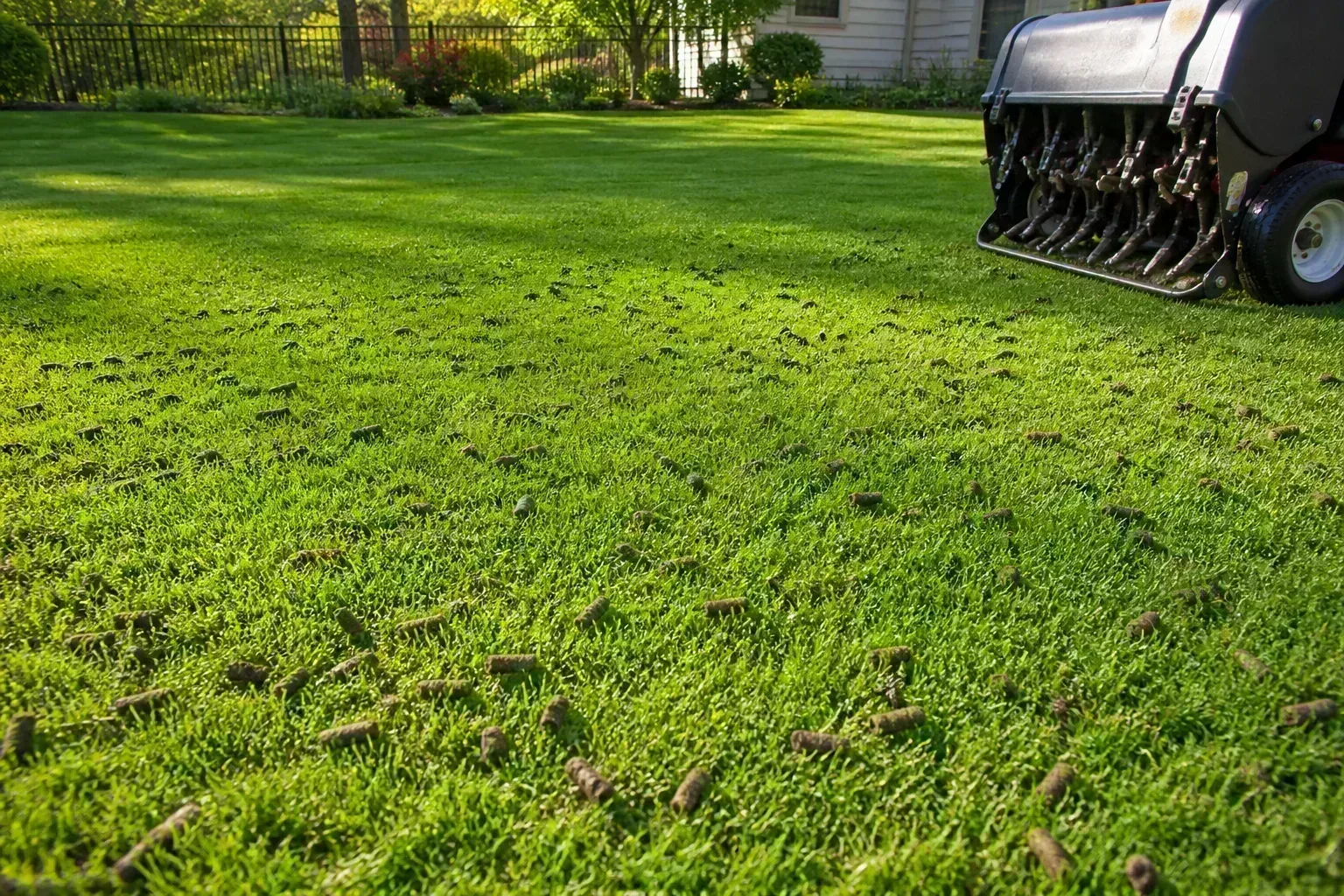
If your lawn is uniformly pale, thin, and weedy, fertilizer may help—but so might aeration, overseeding, or fixing irrigation. See signs you need to aerate your lawn before you assume the problem is hunger.
Know whether you grow cool-season or warm-season turf
Cool-season grasses—Kentucky bluegrass, tall fescue, fine fescue, perennial ryegrass—grow most actively in spring and fall. Their primary feeding windows are late summer through fall and a lighter spring pass if the lawn needs it.
Warm-season grasses—bermudagrass, zoysiagrass, St. Augustinegrass, centipedegrass—green up after soil warms and peak in summer. They need nutrition during active growth, not while dormant.
Buying a “year-round” bag without knowing your grass type is how homeowners spread the right chemistry at the wrong calendar moment. Match the product to the grass on the label, then match timing to growth—not to the first warm weekend in March.
How to Read NPK Numbers on a Fertilizer Bag
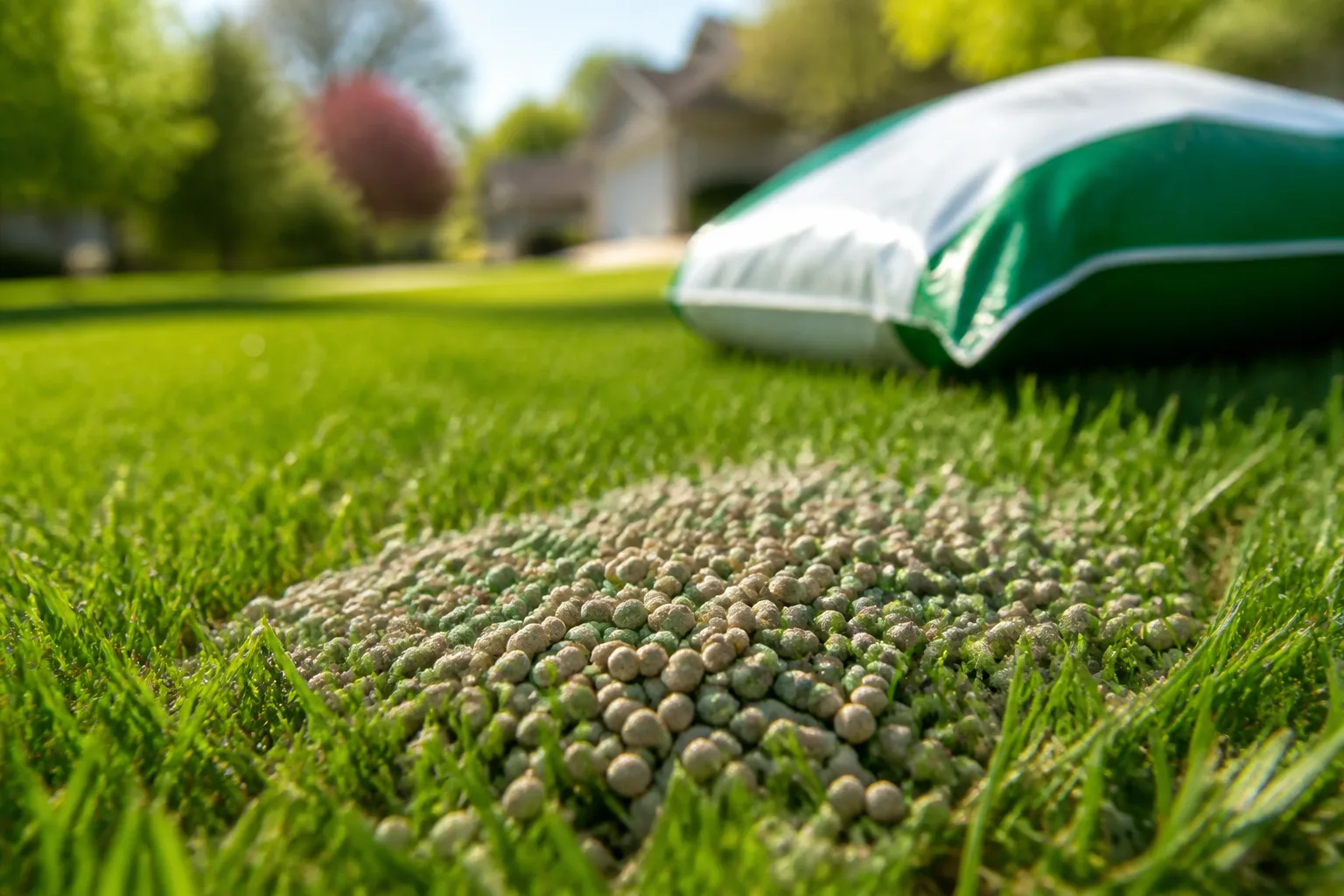
Every fertilizer bag displays three numbers—the NPK ratio—showing the percentage by weight of nitrogen (N), phosphorus as P₂O₅ (P), and potassium as K₂O (K). A 32-0-4 label means 32% nitrogen, 0% phosphorus, and 4% potassium by weight.
- Nitrogen drives green color and leaf growth. Lawn fertilizers usually lead with a high first number because turf demands nitrogen more than any other nutrient during the growing season.
- Phosphorus supports root development and is critical for new seed and sod establishment. Most mature lawns need little or none—and excess P contributes to water pollution. The EPA links excess nitrogen and phosphorus in runoff to harmful algal blooms and dead zones in waterways.
- Potassium improves drought tolerance, disease resistance, and winter hardiness. Fall “winterizer” blends often carry a higher third number for that reason.
RHS spring and summer lawn guidance recommends applying a spring/summer lawn feed high in nitrogen while grass is actively growing, typically mid-spring—while also noting that many lawns recover on their own after summer without extra feeding.
Nitrogen math: how much product equals 1 pound of N?
Extension turf programs often cite about 1 pound of actual nitrogen per 1,000 square feet per application as a common maintenance target for many cool-season lawns—always confirm against your soil test, grass species, and local guidelines. The math is simple once you read the label:
Pounds of product needed = (desired lbs of N ÷ % N on bag) × (lawn sq ft ÷ 1,000)
Example: To deliver 1 lb of nitrogen per 1,000 sq ft using Scotts Turf Builder (32% N):
(1 ÷ 0.32) × (5,000 ÷ 1,000) = 15.6 pounds of product for a 5,000 sq ft lawn.
That is why coverage claims matter. A bag labeled for 5,000 sq ft at the recommended rate is doing this calculation for you—if you set the spreader correctly. Joe Gardener’s fertilizer breakdown points to UMass Extension’s turf fertilizer label guide for readers who want the full label-decoding walkthrough.
Why most established lawns need little or no phosphorus
Phosphorus binds to soil and accumulates. Decades of 10-10-10-style lawn feeding left many suburban soils phosphorus-rich. Several states restrict phosphorus in lawn fertilizers except for new lawns or deficient soils verified by test.
For an established yard with adequate P, a 32-0-4 or 22-0-4 maintenance formula is usually smarter than another complete fertilizer. Save phosphorus for seeding projects—then use a starter fertilizer at the rate your soil test recommends.
Slow-Release vs Quick-Release Lawn Fertilizer
Slow-release granules break down over weeks or months, feeding turf gradually as moisture and soil microbes work on the coating or organic matrix. Most of the picks on this list are slow-release because they forgive timing slightly, reduce surge growth, and lower burn risk when applied at label rates.
Quick-release fertilizers—often urea-based or liquid—make nitrogen available immediately. They green turf fast, which is useful for a event-week rescue or a lawn that stalled after winter. The trade-off is shorter residual, more mowing, and higher burn risk if you over-apply or spread during heat and drought.
Penn State Extension recommends fertilizers containing some slow-release nitrogen for most lawns, applied mid- to late spring and/or late summer to early fall. Quick-release has a place; it should not be your only strategy all season.
Organic vs Synthetic: What Actually Changes for Your Lawn
Plants absorb nitrogen whether it started as feather meal or ammonium sulfate. The practical differences are speed, salt index, soil biology, and odor.
Synthetic fertilizers dissolve quickly, deliver predictable NPK, and are easy to calibrate. Used at label rates on established turf, they are effective and widely studied. Over-application or hot-weather spreading causes the burn patterns most homeowners recognize.
Organic lawn fertilizers—corn gluten, soybean meal, poultry litter, distiller’s grains—release nutrients as soil organisms break them down. They are gentler, build organic matter over time, and are often labeled for same-day pet and kid activity. They can smell for a day or two after application, green up more slowly, and may not deliver the immediate color punch of a high-N synthetic.
Joe Lamp’l at Joe Gardener notes that compost topdressing and organic feeding can maintain healthy turf with less supplemental water—but even his program still uses slow-release organic fertilizer when the lawn needs a measured nitrogen boost.
Choose organic if low burn risk and environmental preference matter more than weekend color. Choose synthetic slow-release if you want predictable maintenance on a fixed calendar.
When Weed-and-Feed Helps — and When It Creates New Problems
Weed-and-feed products combine fertilizer with pre-emergent and/or post-emergent herbicides. BioAdvanced 5-in-1 is on this list because it solves a real problem—broadleaf weeds and crabgrass in one granular pass—but only on lawns that match the label.
Use weed-and-feed when:
- Your grass species appears on the product label
- Weeds are the primary issue and you are not seeding this season
- You can apply to slightly damp turf and water in per directions
Skip weed-and-feed when:
- You plan to overseed or lay sod within the herbicide waiting period
- Your lawn is St. Augustine, centipede, or another species excluded on northern blends
- Weeds are sparse and a spot treatment or dedicated pre-emergent (best crabgrass killer timing) is more precise
Herbicides do not know the difference between weed seeds and grass seed. Treating nutrition and weed control as one default step is how spring renovation projects fail.
The 6 Best Lawn Fertilizers
Best overall: Scotts Turf Builder Lawn Food
NPK: 32-0-4 | Type: Slow-release granular | Feed duration: 6–8 weeks | Coverage: 5,000 sq ft
Scotts Turf Builder earns the overall slot because it is a high-nitrogen, phosphorus-free maintenance formula that fits most established cool- and warm-season lawns when a soil test does not call for phosphorus. The 4% potassium adds modest stress support without turning the bag into a specialty winterizer.
What we like: Works across common turf types; bag includes spreader settings; no watering required immediately after application on many lawns (though a light irrigation or rainfall still helps move granules off leaf blades). Slow-release nitrogen reduces the surge-growth spike you get from straight urea.
What to watch: Not formulated for new lawns that need phosphorus for root establishment. If you are seeding, switch to a starter fertilizer instead. At 32% nitrogen, double-passing the spreader is an easy way to burn turf—calibrate and walk at the labeled rate.
Best for: Homeowners who want one dependable maintenance bag for established turf and already have adequate soil phosphorus.
Best for spring: Espoma Spring Lawn Booster
NPK: 8-0-0 | Type: Slow-release organic granular | Feed duration: ~12 weeks | Coverage: 5,000 sq ft
Espoma’s Spring Lawn Booster is a low-nitrogen organic wake-up feed with calcium and sulfur in addition to 8% nitrogen. The low analysis is a feature, not a weakness: it greens cool-season turf coming out of dormancy without the pushy top growth that draws mower traffic before roots are ready.
What we like: Kid- and pet-friendly per label; low burn risk when applied as directed; suits most turf types. Organic matter supports soil biology over repeated seasons.
What to watch: Initial organic odor—often described as faint manure or poultry notes—fades after watering. Apply to a dry, recently mowed lawn; water in if no rain is forecast within 24 hours. In cold-winter regions, target February through April; in mild-winter areas, January through February per label timing.
Best for: Organic-minded gardeners who want a gentle spring feed on established lawns, especially where phosphorus is restricted or unnecessary.
Best weed-and-feed: BioAdvanced 5-in-1 Weed and Feed
NPK: 22-0-4 | Type: Slow-release granular + herbicides | Feed duration: Up to 3 months weed control | Coverage: 4,000 sq ft
This product targets homeowners fighting crabgrass and broadleaf weeds while feeding the lawn. The 22-0-4 analysis delivers meaningful nitrogen with potassium support, and the herbicide package handles many common weeds when applied to compatible grasses on a damp lawn followed by irrigation.
What we like: One pass for fertility and weed control on eligible lawns; strong option when weeds—not color—is the main complaint. Residual pre-emergent activity reduces summer annual pressure when timed correctly.
What we watch carefully: Grass-type label restrictions. Use only on fescue, bermuda, buffalo, Kentucky bluegrass, ryegrass, seashore paspalum, or zoysia per product directions—not on every lawn. Conflicts with seeding and new sod. If weeds are already sparse, separate fertilizer and targeted herbicide is often cleaner.
Best for: Northern and transition lawns with labeled grass species and a weed problem, when you are not overseeding this season.
Best quick-release green-up: Scotts Green Max Lawn Food
NPK: 27-0-2 | Type: Quick-release with iron | Feed duration: 6–8 weeks | Coverage: 5,000 sq ft
When the lawn looks tired and you need color before guests arrive, Scotts Green Max is the rescue bag. The iron supplement deepens green beyond nitrogen alone, and manufacturer claims point to visible improvement within a few days when weather cooperates.
What we like: Can be applied dry or dissolved for liquid application; strong value per square foot at listed coverage; good for a one-time boost before an event.
What to watch: Quick-release nitrogen burns easily if over-applied or spread during hot, dry stress. Reapply only on the label interval—this is not a monthly food. Pair with irrigation and avoid drought weeks. For long-term health, follow with slow-release maintenance later in the season.
Best for: Short-term color correction on established lawns—not your year-round program.
Best organic: Purely Organic Lawn Food
NPK: 10-0-2 | Type: Slow-release organic granular | Feed duration: ~8 weeks | Coverage: 6,250 sq ft
Purely Organic Lawn Food uses plant-based ingredients—distiller’s grains and soybean meal—rather than synthetic salts. The moderate 10-0-2 analysis feeds steadily with low burn potential on established turf.
What we like: Covers more square footage per bag than many competitors; safe for kids and pets same day per label; works on cool- and warm-season grasses. No phosphorus keeps you aligned with runoff-conscious programs.
What to watch: Not for new lawns needing phosphorus. Light beer-like scent from distiller’s grains dissipates after watering. Organic feeds green more gradually than 32-0-4 synthetics—set expectations accordingly.
Best for: Families wanting plant-based maintenance on established lawns without phosphorus supplementation.
Best for fall: GreenView Fall Lawn Food
NPK: 22-0-10 | Type: Slow-release granular | Feed duration: ~8 weeks | Coverage: 5,000 sq ft
Fall is when cool-season turf builds roots and stores reserves for winter. GreenView’s 22-0-10 analysis shifts nitrogen toward a moderate rate and pushes potassium to 10%—the classic winterizer direction for stress recovery after summer heat.
What we like: Helps lawns recover from summer drought and foot traffic; supports root growth before soil cools; works on most common turf types. Strong value at typical retail pricing.
What to watch: Apply when nighttime temperatures are still in the 60s°F—generally September through November depending on zone, not during summer heat or on frozen turf. Sweep spills off hardscape to prevent staining. Water in if rain is not expected.
Best for: Cool-season lawns and transition-zone yards needing a fall root-and-stress feed after summer damage. Pair with fall overseeding only when herbicide-free fertilizer is required—this bag is nutrition only, which is what you want before seeding.
Seasonal Lawn Fertilizer Calendar by Grass Type
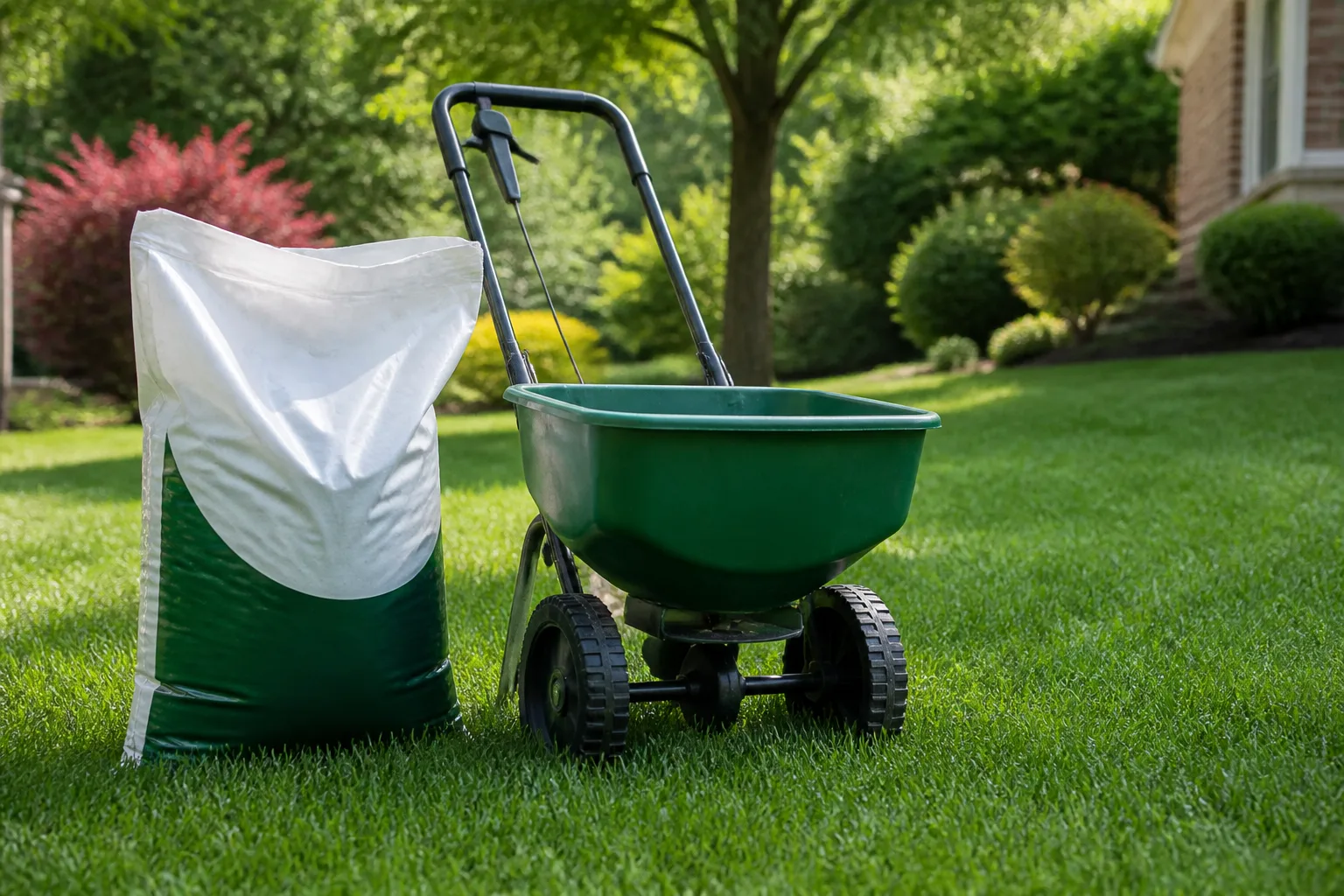
Timing beats brand. Use this calendar with your grass type, then pick a product from the table above.
Cool-season lawns (Kentucky bluegrass, fescue, ryegrass):
- Early spring (optional): Light slow-release nitrogen if fall feeding was missed or turf is thin—see spring fertilization guidance.
- Late summer to early fall (priority): Primary feeding window; turf rebuilds roots and density. Ideal for overseeding projects paired with fall overseeding advice.
- Late fall: Winterizer or high-potassium feed (GreenView Fall pattern) while grass is still photosynthesizing but top growth has slowed.
Warm-season lawns (bermuda, zoysia, St. Augustine, centipede):
- After full green-up (late spring): First feed when soil warms and blades actively grow—usually April through June depending on latitude.
- Mid-summer: Second application during peak growth if label allows and lawn is not drought-stressed.
- Avoid late fall feeding where frost follows quickly; new succulent growth can winter-kill.
Both types: Skip feeding during drought, dormancy, or extreme heat when grass cannot use nitrogen and salts accumulate in soil. Summer lawn stress guides matter as much as product choice.
Most established lawns need two to three feedings per growing season, not monthly bags. More fertilizer is not greener—it is often yellower two weeks later.
Application Best Practices That Prevent Burn and Runoff
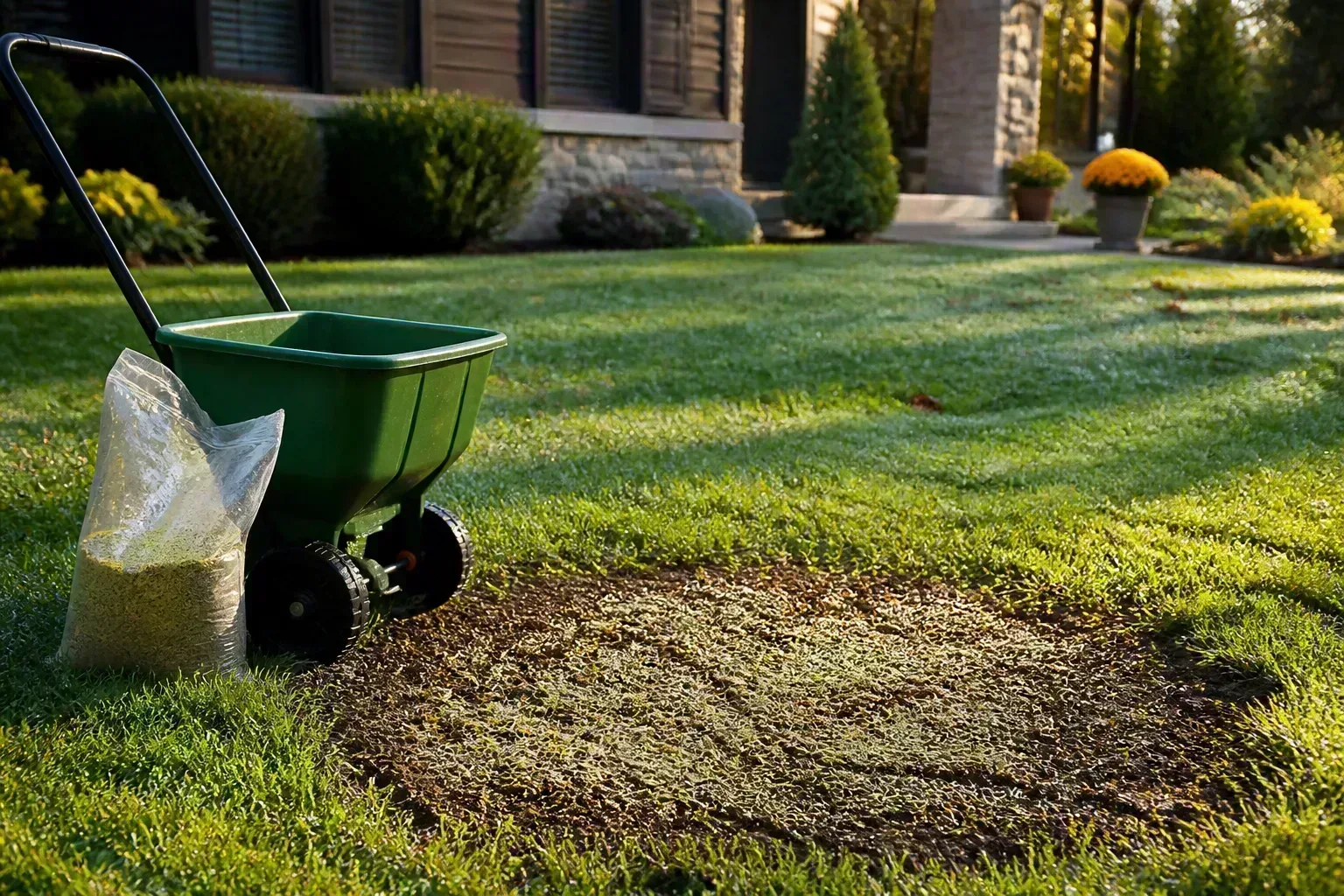
Calibrate the spreader. Bag settings are a starting point; half the spreader chute on a weak setting beats guessing. Walk at a steady pace and overlap wheel tracks slightly—skip-row gaps create zebra stripes.
Apply on calm, dry days when granules can fall through the canopy to soil. Sweep hardscape spills immediately; phosphorus and nitrogen on driveways wash straight to storm drains.
Water in according to the label. Many slow-release granules benefit from 0.25 inch of irrigation or rainfall to move product off blades and activate release. Quick-release feeds need water soon after application to avoid leaf burn.
Keep people and pets off until safe. Organic products often allow same-day activity; synthetic herbicide combos may require 24–48 hours or until watered in. Read the specific re-entry statement.
Stop if the lawn is yellow from drought, disease, or pet spots. Fertilizer does not fix yellow grass patterns caused by water, shade, or fungus. Diagnose first.
Do not fertilize before heavy rain unless the product is designed for it—soluble nitrogen can leach before roots absorb it, wasting money and feeding waterways.
Conclusion
The six fertilizers above cover the jobs homeowners actually face: steady maintenance (Scotts Turf Builder), organic spring wake-up (Espoma), weed-and-feed rescue (BioAdvanced—only on labeled grasses), fast color (Scotts Green Max), plant-based feeding (Purely Organic), and fall root support (GreenView). None of them replaces a soil test, correct mowing, or watering.
Start with your soil report and grass type, choose an NPK ratio that respects phosphorus limits, match slow- or quick-release to the calendar, and spread at the labeled nitrogen rate. Do that and the best lawn fertilizer is simply the one that fits this season’s job—not the loudest bag on the shelf.