14 Trees to Plant in Fall for a Shadier Yard
Choose the right trees to plant in fall for spring shade. Compare mature size, soil fit, USDA Zones, site risks, and the aftercare that helps roots establish.
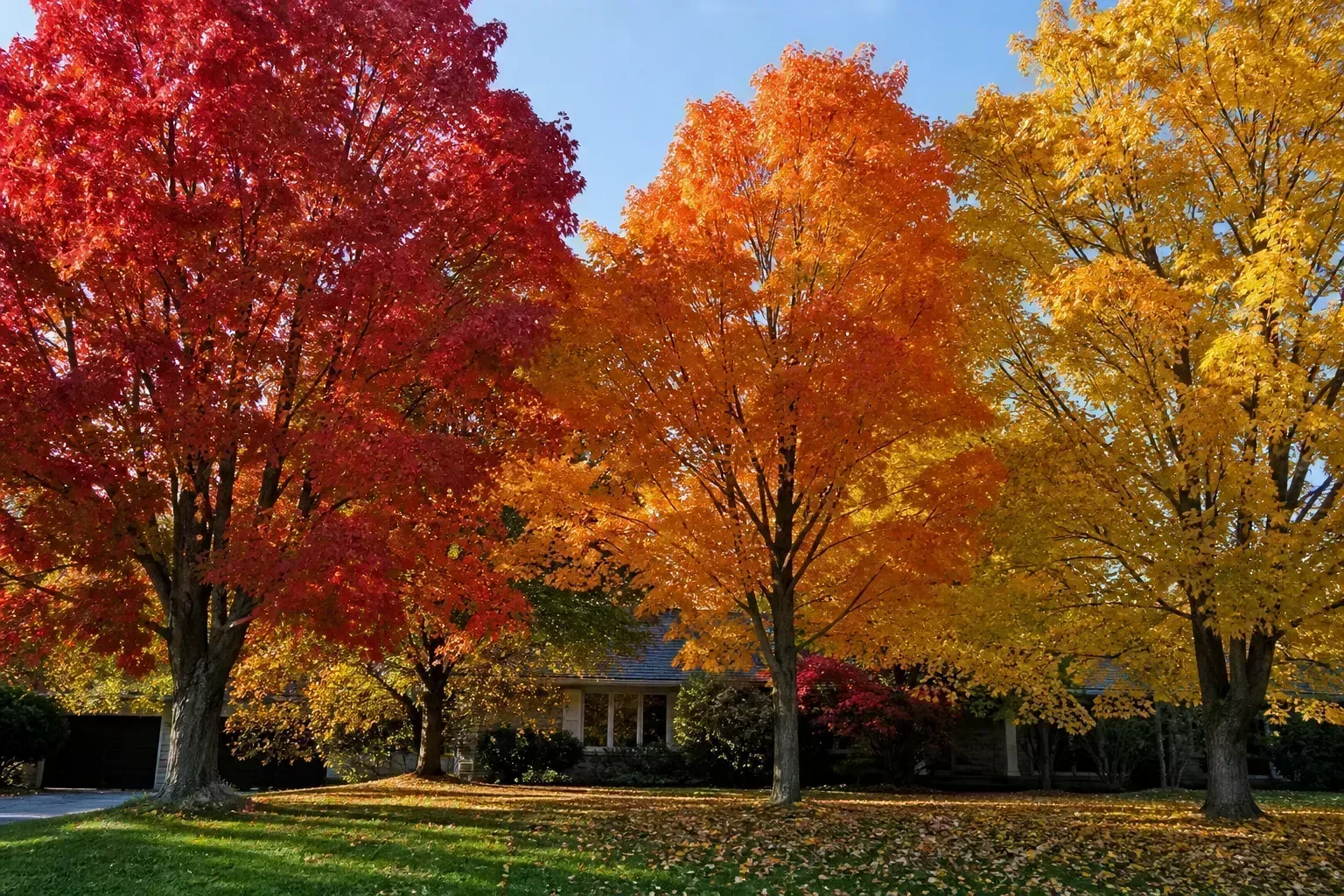
Fall is a smart season to plant many deciduous trees, but the best choice is not simply the one with the fastest growth rate. A tree that adds shade quickly can also develop a canopy too wide for your lot, thirsty roots that struggle in dry soil, or weak wood that becomes a long-term storm problem. The right match is the tree whose mature size, root behavior, moisture needs, and climate fit your yard.
The 14 trees below range from compact flowering trees to enormous canopy trees. Treat mature-size figures as planning ranges, and check the exact cultivar with NC State Extension’s Plant Toolbox before you buy.
Will a Fall-Planted Tree Really Shade Your Yard by Spring?
It may provide some additional shade by late spring or summer, but a newly planted tree will not create a mature shade canopy in a few months. Most of the important work after a fall planting happens below ground: roots begin exploring the surrounding soil while cool air reduces the demand for leaves and shoots. When spring arrives, an established root system can support new buds more confidently than a tree planted immediately before a hot summer.
Fall also has limits. A deciduous tree usually has a better chance to settle before summer heat, but it still needs water until the ground freezes and again during dry periods the following year. Savvy Gardening’s comparison of spring and fall planting notes that deciduous trees can focus on root growth after leaf drop, while evergreen trees continue losing water through their foliage and need more careful timing. The list here is mostly deciduous, which is one reason it works well for an autumn planting plan.
Check the Site Before You Buy a Tree
This five-minute site audit prevents the most expensive tree-planting mistake: choosing a healthy tree that eventually becomes the wrong tree for the property. Walk the yard at the time you expect to use the shade, and mark the center of the future canopy rather than the nursery pot’s edge.
Plan for Mature Canopy, Roots, and Utility Lines
Write down the tree’s mature height and spread before you shop. A tree that is 8 feet tall in a container can still become 80 feet tall and 60 feet wide. Measure from the proposed trunk to the house, roofline, driveway, sidewalk, fence, septic field, and any overhead wires. Keep in mind that branches grow outward before they grow upward, and roots often extend well beyond the visible dripline.
Do not place a large shade tree where you will later need to top it away from a power line. Use the utility-clearance guide to think through the full mature shape; a compact ornamental tree is usually safer under or beside wires than a tulip poplar, sycamore, or pecan. Account for surface roots and branch clearance near pavement too.
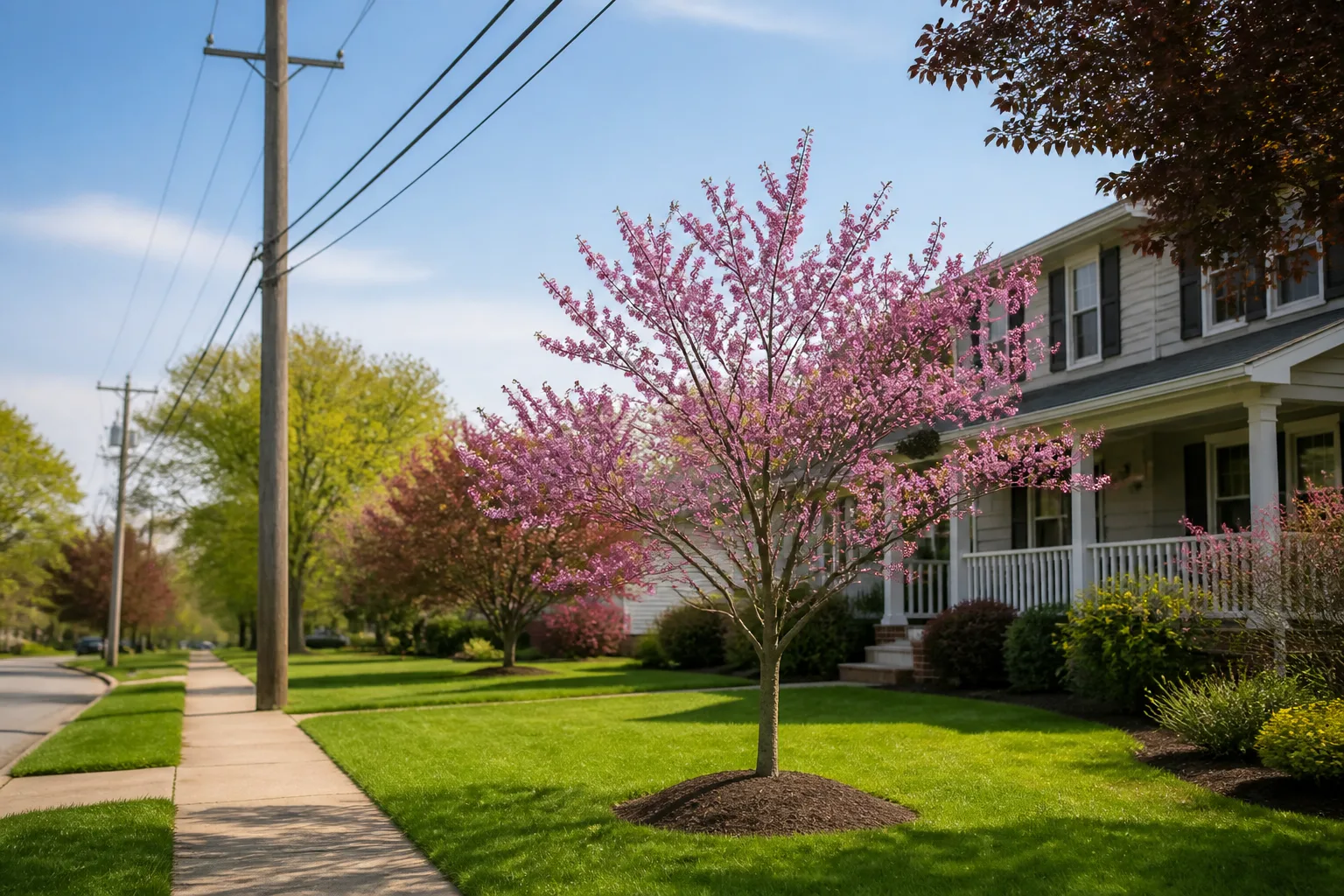
Match the Tree to Sun, Soil, and Moisture
Most of the shade trees in this guide grow best in full sun, which means a location with roughly six or more hours of direct light during the growing season. Redbud and flowering dogwood are more comfortable with some afternoon shade, especially in hot climates. A tree that starts life beneath an existing canopy may need more shade tolerance than the same species planted in an open lawn.
Check how quickly water drains after a soaking rain. Dig a hole about 12 inches deep, fill it with water, let it drain, and fill it again; if the second filling remains for a very long time, you may have a drainage problem that favors a wet-soil tree or calls for a different planting spot. Do not “fix” a persistently wet site by placing a moisture-loving tree in a small raised mound over compacted soil. Roots still need oxygen, and a perched root ball can dry out while the surrounding ground stays saturated.
A fall planting site should be free of competing turf around the trunk. Grass pulls moisture from the same shallow zone that a new tree needs first, while a broad mulch ring kept away from the trunk gives roots a better start.
Choose the Right Fall Planting Window
Plant after the worst heat has passed and before the soil is frozen. Your window depends on the local freeze pattern, the tree’s root condition, and whether it is container-grown or balled and burlapped; the soil should be workable, not muddy, with time for several thorough waterings.
For many cold-winter regions, early to mid-fall gives a deciduous tree the safest runway. In warmer regions, planting can continue later as long as the tree is not pushing tender new growth into a sudden freeze and irrigation is available. A regional fall-planting example from Brownswood Nursery describes the advantage of cooling air while soil remains warm enough for roots to keep growing; the exact calendar is different in a northern yard.
Container-grown trees are easier to handle because their root ball stays intact, but check for circling roots. Balled-and-burlapped trees can be excellent specimens, yet digging reduces part of their root system, so they deserve careful watering. Never buy a tree with a dry, cracked root ball, broken trunk, loose bark, or uncorrectable circling roots.
Broad Shade Standouts for Lawns and Large Beds
These choices suit open ground and a broad crown rather than a tiny accent. They are long-term trees, not instant shade devices, so give large species room instead of planning to correct spacing with aggressive pruning.
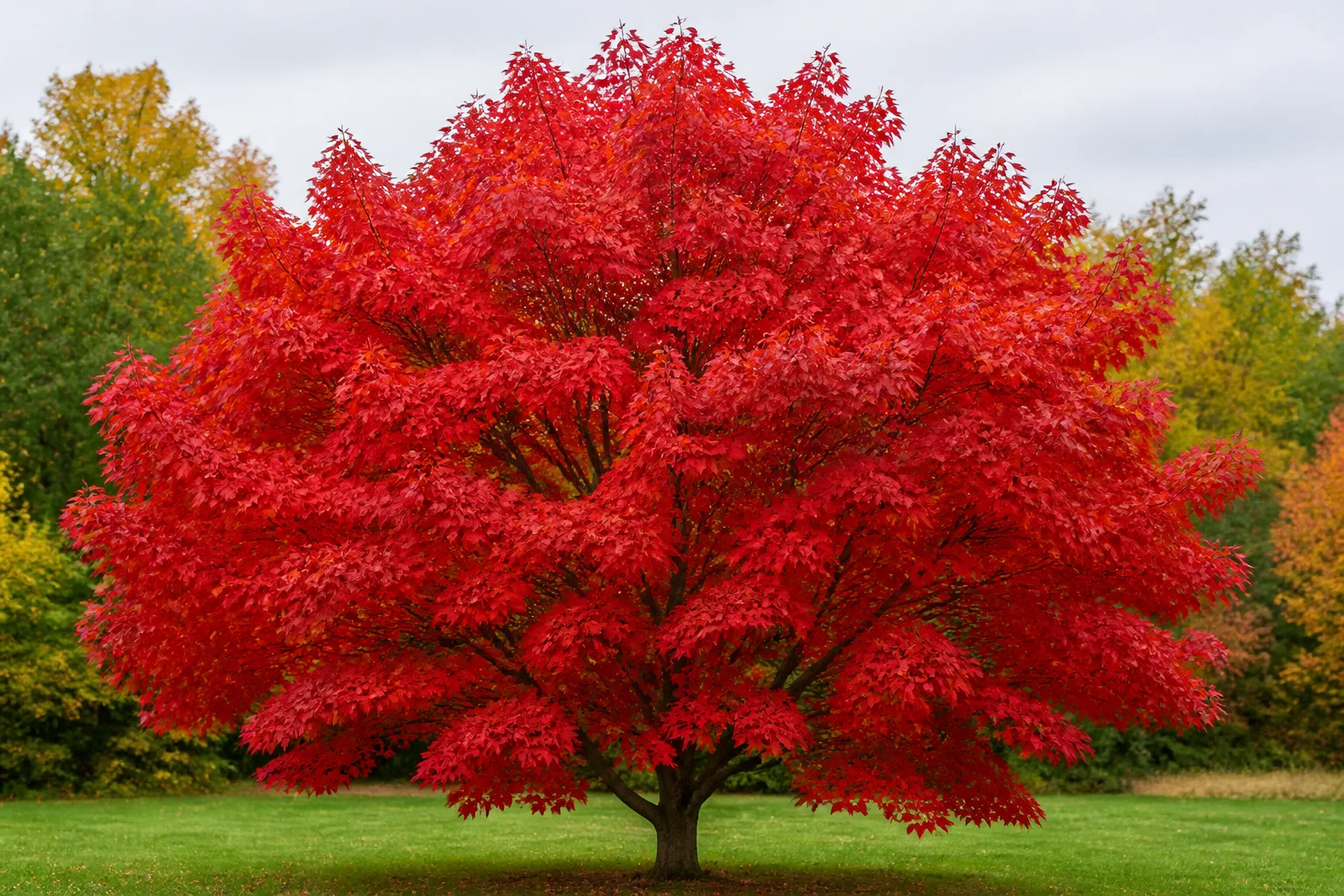
Maples: Sugar Maple and Red Maple
1. Sugar maple (Acer saccharum) — Zones 3–8; about 40–80 feet tall and 30–60 feet wide. Sugar maple offers one of the strongest combinations of dense summer shade, brilliant fall color, and long-term wildlife value. It is most at home in moist, fertile, well-drained, slightly acidic soil. NC State Extension’s sugar maple profile warns that heat, drought, road salt, soil compaction, and urban stress can reduce its performance, so it is a better pick for a roomy lawn or park-like bed than a salty street edge.
Give it lateral room and avoid the shallow pocket between pavement and a foundation. Its dense shade can make sun-loving lawn or perennials difficult underneath, so choose it when durability and seasonal color matter more than the quickest canopy.
2. Red maple (Acer rubrum) — Zones 3–9; about 40–70 feet tall and 30–50 feet wide. Red maple is a more adaptable alternative for many yards, tolerating full sun to partial shade and a wider range of soils than sugar maple. Its red flowers, winged seeds, and fall foliage extend seasonal interest, while its rounded crown creates useful shade once the tree gains size. NC State’s red maple guidance also calls out its shallow surface roots, which can buckle pavement when the tree is placed too close to a driveway or sidewalk.
Select a cultivar for the actual site when consistent fall color or a narrower form matters. Keep soil evenly moist during establishment; “tolerates many soils” does not mean red maple will thrive in compacted, alkaline fill with no irrigation.
Northern Red Oak and American Basswood
3. Northern red oak (Quercus rubra) — Zones 4–8; about 50–75 feet tall and 40–60 feet wide. Northern red oak earns its place when you want a substantial native shade tree with a broad crown, reddish fall color, and acorns for wildlife. It prefers full sun and moist to dry, well-drained, fertile soil. NC State’s red oak profile describes it as moderate to fast growing and relatively easy to transplant, but it still needs enough room for a broad canopy and mature root zone.
The trade-off is seasonal litter and a long wait before the tree looks large. Acorns can feed wildlife or become a nuisance over a patio, so plant it where leaves and acorns are acceptable rather than in the strip between a house and road.
4. American basswood or American linden (Tilia americana) — Zones 3–8; about 60–80 feet tall and 30–60 feet wide. Basswood forms a generous shade canopy and produces fragrant, pale flowers that attract bees. It tolerates clay better than many large trees and has some drought tolerance once established, but it prefers fertile, moist, well-drained soil. NC State’s American linden profile notes sensitivity to heat and soil compaction, so give it open lawn soil instead of a hard-packed parking strip.
Flowers and wildlife value make basswood good for a backyard that doubles as a pollinator and shade garden. Leave mature-width clearance and expect some aphids or scale without treating every insect as a removal emergency.
Smaller Flowering Trees for Everyday Yards
If your yard needs shade near a sitting area but cannot accommodate a 70-foot canopy, start with a small tree and accept that the shade will be dappled and seasonal. These species earn their space with spring flowers, wildlife value, and a manageable scale, though each has a different tolerance for heat, moisture, and urban stress.
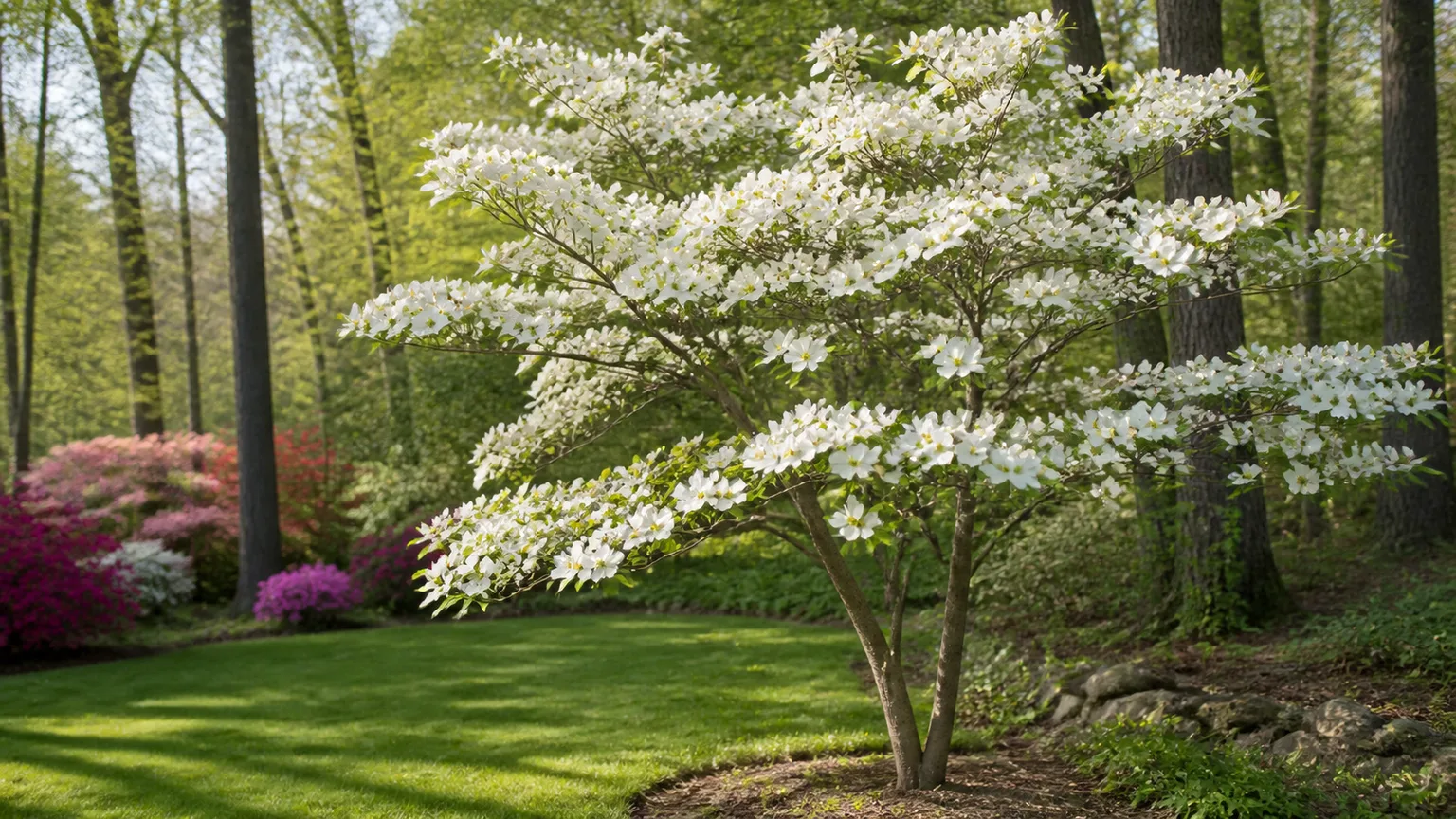
Eastern Redbud, Flowering Dogwood, and Flowering Crabapple
5. Eastern redbud (Cercis canadensis) — Zones 4–9; about 20–30 feet tall and 20–35 feet wide. Redbud is one of the best small trees for a yard that needs spring color before summer shade. Pink to purple flowers appear on bare branches, followed by heart-shaped leaves and a broad, often low-branched crown. NC State’s redbud profile places it naturally beneath taller trees and emphasizes permanent siting, regular water while young, and protection from branch breakage.
Do not use “drought tolerant once established” as permission to neglect a fall planting. Young redbuds can struggle with heat, drought, wet soil, herbicide drift, and root disturbance, so give one good drainage, protection, and afternoon relief in hot climates.
6. Flowering dogwood (Cornus florida) — Zones 5–9; about 15–25 feet tall and wide. Flowering dogwood is a classic understory tree with white or pink bracts, red fruit, and a spreading form that delivers light, comfortable shade. It prefers well-drained soil with organic matter and full sun to partial shade; in hot regions, afternoon shade can be valuable. NC State Extension’s dogwood profile describes it as beautiful but sometimes tricky in landscape settings, with disease pressure and sensitivity to pollution among the reasons to choose the site carefully.
Plant dogwood in morning or filtered light, with mulch keeping roots cool without holding water against the trunk. Its small canopy suits a patio but cannot replace an oak’s deep shade; exposed, polluted, or chronically wet sites may need a better-adapted native alternative.
7. Flowering crabapple (Malus hybrids) — Zones 4–8, depending on cultivar; about 15–25 feet tall and 12–20 feet wide. Crabapple is useful when spring flowers, fall fruit, and a modest shade canopy matter as much as summer cooling. The genus includes many sizes and habits, including dwarf and columnar forms. NC State’s Malus profile recommends full sun and moist but well-drained, humus-rich soil and notes the potential for fire blight, rust, scab, powdery mildew, and insect pests.
Choose a disease-resistant cultivar with fruit size and persistence suited to your cleanup tolerance. Small fruit can feed birds or drop on a walkway, so give crabapple sun and air movement instead of a crowded, shaded corner.
Trees for Moist or Rain-Friendly Sites
Wet ground is not one condition. A site that is damp after storms but drains later is different from a low area that stays saturated, and both are different from a dry lawn with a downspout nearby. The following two trees tolerate more moisture than most choices in the list, but they still need room, sunlight, and oxygen around their roots.
River Birch and Bald Cypress
8. River birch (Betula nigra) — Zones 4–9; about 40–70 feet tall and 40–60 feet wide. River birch is a strong candidate for a moist lawn edge, rain garden, or low area where its peeling cinnamon-colored bark can be seen in winter. It tolerates flooding better than paper birch and handles heat better than many birches. NC State’s river birch profile recommends consistently moist soil and notes that drought can cause interior leaf drop, twig shedding, and stress.
Keep river birch away from the house and gutters if you want low cleanup. A soaker hose and breathable mulch help in dry summers, but they cannot replace a site that naturally holds enough moisture.
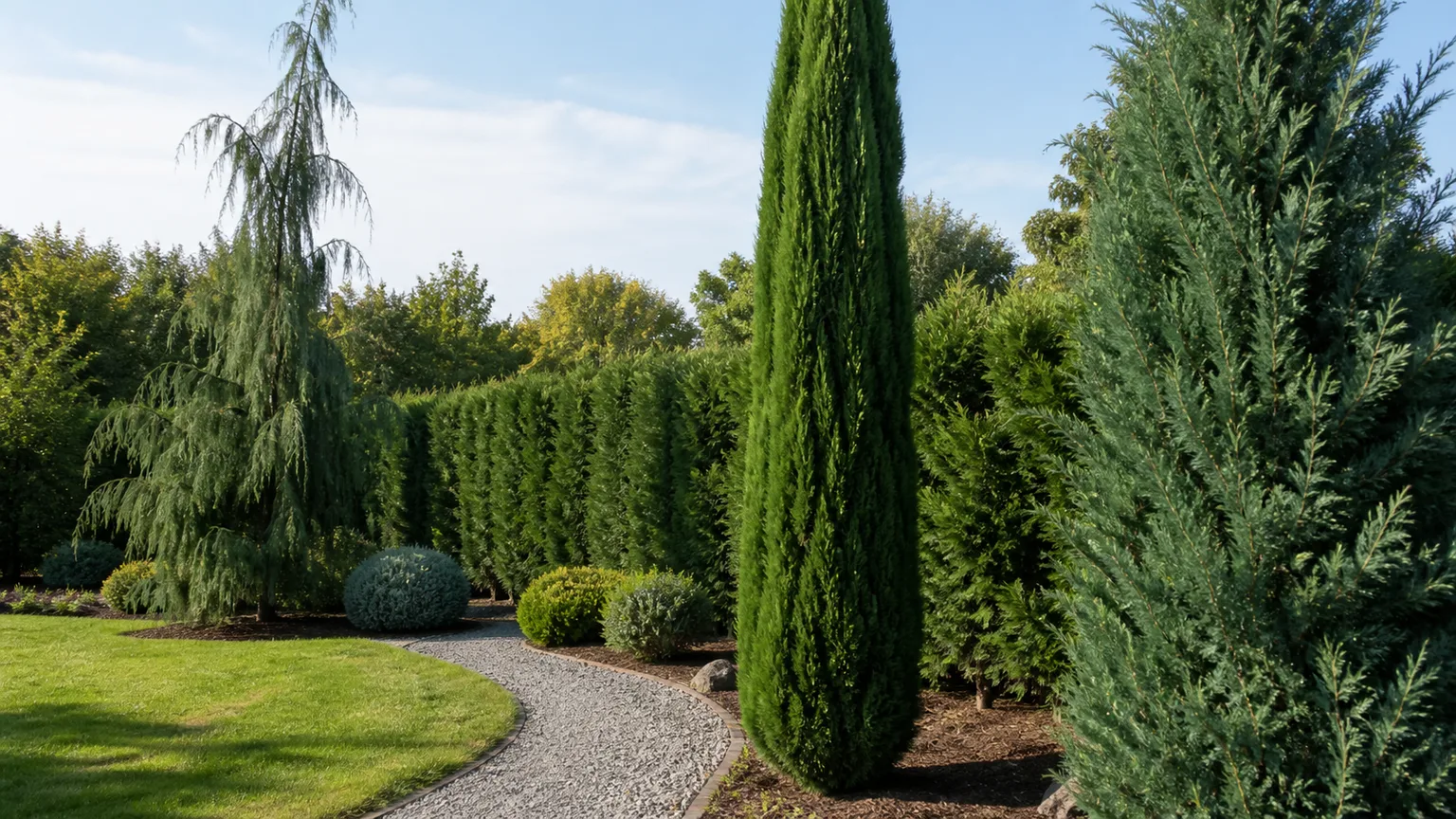
9. Bald cypress (Taxodium distichum) — Zones 4–9; about 50–70 feet tall and 20–30 feet wide. Bald cypress is a deciduous conifer that combines a strong pyramidal young form with rust-colored fall foliage and unusual winter structure. It is famous for swampy sites, yet NC State’s bald cypress profile explains that it also grows well in drier upland soils when planted in full sun to partial shade. That flexibility makes it more useful than its “swamp cypress” name suggests.
Give it room for height and plan around cypress knees in persistently wet ground. Bald cypress belongs where a large specimen, wildlife value, and easy fall cleanup matter more than a tidy foundation bed.
Big-Property Trees That Need Room to Run
The next five trees suit a large lot, acreage, meadow edge, or naturalized planting. On a small property, rapid growth or mature spread can become a liability. If the site cannot accommodate the full tree, choose a smaller species; the small-space tree guide is a better starting point.
Paper Birch and Quaking Aspen
10. Paper birch (Betula papyrifera) — Zones 2–7; about 50–70 feet tall and 25–50 feet wide. Paper birch is prized for white, peeling bark, light shade, and quick early growth. It performs best in cool northern climates with consistently moist, acidic, well-drained soil. NC State’s paper birch guidance cautions that heat, humidity, pollution, shallow roots, and warmer climates can shorten its useful life.
Choose paper birch for a cool northern yard rather than a hot exposed lawn. Afternoon shade and an insulated root zone can help, but cannot fix a climate mismatch. A small group can create a pale-barked grove; keep it far enough from pavement that shallow roots do not become a hardscape problem.
11. Quaking aspen (Populus tremuloides) — Zones 1–6; roughly 20–50 feet tall and 20–30 feet wide. Quaking aspen brings white bark, fluttering leaves, and bright yellow fall color to a cool-climate landscape. It is fast when young, but its root system can spread and produce new stems, making a grove more likely than a single, perfectly contained specimen. NC State’s aspen profile highlights its preference for cooler northern conditions and its intolerance of heat and humidity.
Plant aspen only in a large, naturalized setting where you can manage suckers. It is a poor choice near foundations, septic systems, narrow paths, or a formal small lawn. In the right landscape, its movement and pale trunks are an asset; in the wrong one, its spreading habit becomes the project.
Hardy Pecan, Tulip Poplar, and American Sycamore
12. Hardy pecan (Carya illinoinensis) — Zones 5–9; about 70–100 feet tall and 40–75 feet wide. Pecan is a long-lived, broad shade tree that also produces edible nuts and supports wildlife. It tolerates clay, sand, and loam when drainage is good and has useful drought tolerance after establishment. NC State’s pecan profile emphasizes the deep taproot, large mature size, brittle branches, and the pollination planning required for reliable nut crops.
Treat pecan as a permanent large-property decision, not a small-backyard impulse. If nuts are part of the plan, research pollination types and whether your growing season is long enough for a reliable crop. Give the litter, branch spread, and root zone distance from buildings, pavement, and play areas.
13. Tulip poplar (Liriodendron tulipifera) — Zones 4–9; about 70–130 feet tall and 30–60 feet wide. Tulip poplar can add height quickly and produces tulip-shaped flowers, broad leaves, and golden fall color. It prefers deep, moist, well-drained soil and full sun. NC State’s tulip poplar profile describes it as one of the largest native trees in North America and warns that fast growth can mean weaker wood, shallow roots, and limb breakage in wind, ice, or snow.
Use tulip poplar for a large naturalized property, not a narrow side yard. Keep it away from lines and structures; a young, narrow tree will not stay that way. If considering a smaller cultivar, confirm its mature dimensions rather than relying on “tulip tree” on the tag.
14. American sycamore (Platanus occidentalis) — Zones 4–9; about 75–100 feet tall and equally wide. Sycamore is a dramatic, fast-growing shade tree with mottled bark, huge leaves, and a canopy that can eventually dominate a landscape. It favors full sun and moist soil with good drainage. NC State’s sycamore profile is explicit about its enormous spread, messy twigs and fruit, wind susceptibility, and need for very large space.
Plant sycamore along a spacious stream edge, meadow, or park-like lawn where leaf and fruit cleanup will not be a daily frustration. It is not a tree to squeeze between a house, driveway, and sidewalk. When it can reach 100 feet in both height and width, the site—not early growth rate—is the limiting factor.
How to Plant and Water a Tree in Fall
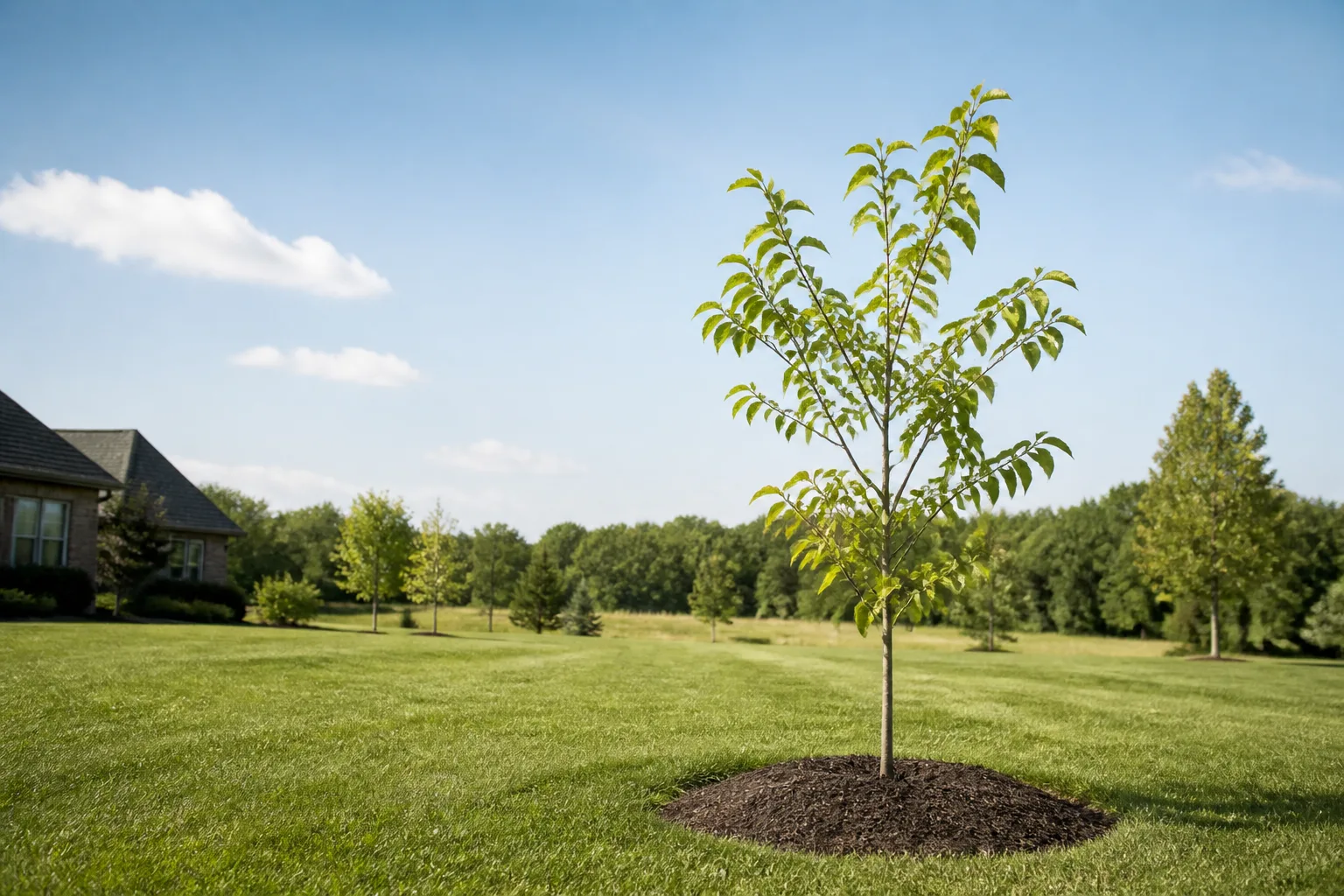
Once you have chosen a species that fits, planting quality matters more than starter fertilizer. Create a wide transition zone for new roots while keeping the trunk flare visible and the root ball evenly moist.
A Planting Sequence That Protects Roots
-
Water the tree in its container before moving it. Handle it by the root ball, never the trunk, and keep roots shaded during delays.
-
Find the root flare. Remove excess nursery soil if needed. The finished grade should place the trunk flare at or just above surrounding soil, not several inches below it.
-
Dig wide, not deep. Make the hole roughly two to three times the root ball’s width, with a firm bottom. Break up glazed sides in clay, but do not make a deep pocket of loose amended soil.
-
Correct circling roots and remove containers. Cut or straighten severe circling roots as appropriate, remove twine and synthetic materials, and follow local guidance for burlap and wire baskets. Never leave a plastic pot around the roots.
-
Set the tree straight and backfill with native soil. Check the trunk from several directions. Use removed soil unless a soil test or local recommendation supports broad amendment; a rich pocket can discourage roots from moving outward.
-
Water slowly until the root ball and surrounding soil are wet. Use a low temporary berm only if water runs off. After settling, check that the root flare remains visible.
-
Mulch broadly and shallowly. Apply 2–3 inches over the root zone, extending outward, but leave a clear gap around the trunk. A mulch volcano traps moisture against bark. See the mulch basics guide for a proper ring.
For the first weeks, water based on the soil and weather rather than a rigid calendar. A slow, deep soak is more useful than a daily sprinkle that wets only the surface. Named Master Gardener Phyllis Ferguson’s Trees.com watering guidance recommends checking moisture several inches down, watering the root zone rather than the foliage, and giving newly planted trees consistent moisture while roots establish.
A practical starting framework is to check the soil every few days, water when the upper root zone begins to dry, and adjust for rain, clay, sand, wind, and the tree’s root-ball size. Small nursery trees may take a few gallons per watering; large root balls need more water applied slowly so it infiltrates rather than runs down the lawn. Continue monitoring through the first summer, when heat and leaf area can expose a weak root system that looked fine in cool fall weather.
Do not fertilize heavily at planting unless a soil test or local professional directs you to do so. Newly planted trees need root contact and steady moisture more than a flush of tender top growth. Do not stake automatically, either: stake only when the site is windy or the root ball cannot stand, and remove supports after the tree can flex on its own.
Common Fall-Planting Mistakes
Choosing by growth rate alone. “Fast growing” is not a site plan. Tulip poplar, sycamore, pecan, and some poplars can outgrow a small property, while a slower sugar maple or compact redbud may deliver a better result over time.
Planting at the wrong depth. A buried root flare is one of the easiest ways to create long-term trunk and root problems. Nursery soil can hide the flare, so inspect before digging the final hole.
Watering the trunk instead of the root zone. Keep water moving across the root ball and the surrounding soil, not concentrated against the bark. Repeated shallow sprinkling encourages a shallow root pattern and may leave the deeper root ball dry.
Assuming rain has handled the job. Light autumn rain can wet the surface while the root ball remains dry inside. Push a finger or a narrow probe into the soil at the edge of the root ball, and learn how the soil feels after a slow soak.
Piling mulch against bark. Mulch should conserve moisture and moderate soil temperature; it should not stay wet against the trunk. Leave several inches of clear space around the flare and pull mulch outward as the tree grows.
Planting a wet-site tree in a dry site, or a dry-site tree in a wet one. River birch and bald cypress tolerate more moisture, while paper birch and quaking aspen need cool conditions and may fail in hot, humid regions. Read the site requirement, not just the common name.
Ignoring winter exposure. Newly planted trees can dry out in windy weather even after leaf drop. Water thoroughly before the ground freezes when the soil is dry, protect thin bark from animal damage where needed, and avoid piling snow or deicing salt around the root zone.
Pruning for instant shape. Remove broken, dead, or badly crossing branches, but postpone major structural pruning until the tree has recovered. Removing too much live canopy at planting reduces the energy available for root establishment.
Conclusion
The best trees to plant in fall are the ones that fit the yard you will still own when their mature canopy arrives. Sugar maple, red maple, red oak, and basswood suit broad lawns; redbud, dogwood, and crabapple fit smaller everyday spaces; river birch and bald cypress handle wetter conditions; paper birch, aspen, pecan, tulip poplar, and sycamore need more specialized climates or substantially more room.
Before buying, measure the site, find the mature spread, check drainage, and look up overhead utilities. Plant while soil remains workable, expose the root flare, dig wide, water deeply, and mulch without touching the trunk. A fall planting may not turn the yard shady by the first warm weekend of spring, but a correctly matched tree can begin the root-establishment work that makes reliable shade, flowers, wildlife value, and fall color possible for many years.



