Why Crop Rotation Pays Off in Your Garden
Learn why crop rotation prevents soil-borne disease, pest buildup, and nutrient drain—and get copyable 3- and 4-year rotation plans for beds and small gardens.
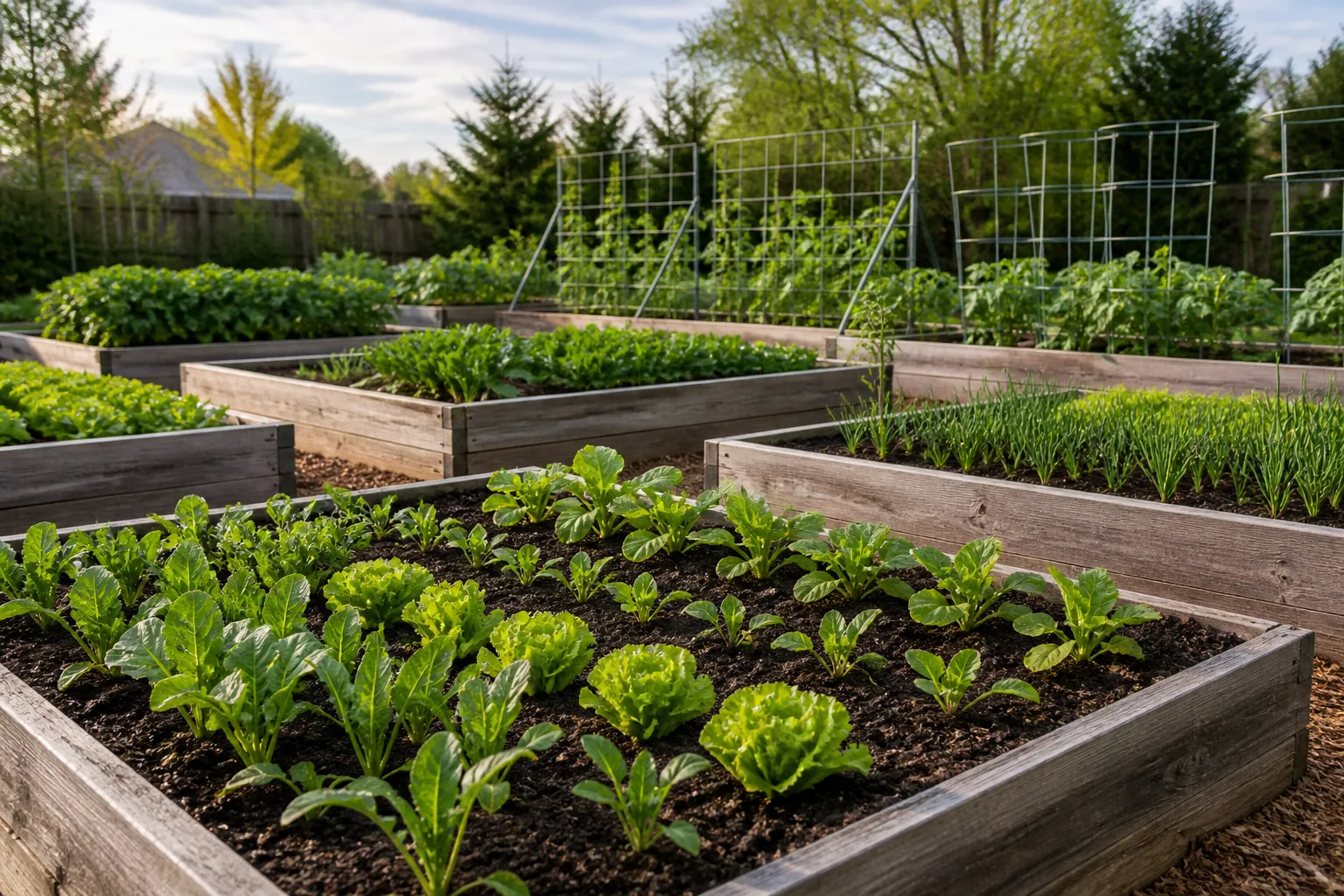
You can order the right seeds, build perfect raised beds, and still watch yields slide year after year if every tomato, pepper, and potato lands in the same square foot of soil. Crop rotation is the planning habit that breaks that pattern: you deliberately move plant families to new ground each season so pests, diseases, and nutrient drains do not compound in one place. Farmers have done this for centuries. Home gardeners get the same payoff on a smaller scale—if rotation is written into the plan before the first seed goes in, not patched in after a bad harvest.
This guide explains what rotation means in a backyard plot, why repeating crops in one spot backfires, how to group vegetables by family, and how to run simple three- or four-year plans in full yards, tight raised-bed setups, and containers. For bed spacing and sun orientation that make rotation possible, pair this page with our vegetable garden layout and raised garden bed layouts guides.
What Crop Rotation Actually Means in a Home Garden
Crop rotation is the planned sequence of different crops—and ideally different plant families—on the same piece of ground across seasons or years. The RHS defines it as growing specific vegetable groups on a different part of the plot each year to reduce crop-specific pest and disease buildup and to match cultivation needs to what the soil can supply.
Rotation is not the same as succession planting (replacing one crop with another in the same season) or intercropping (growing two crops together at once). Those tactics can complement rotation, but they do not replace it. Rotation is about where a family sat last year and where it may sit next year.
Perennial vegetables—rhubarb, asparagus, artichokes—live outside the rotation blocks in a dedicated zone because they occupy the same soil for many years. Annual crops that you pull at season’s end are the rotation players.
Why Planting the Same Crop in the Same Spot Backfires
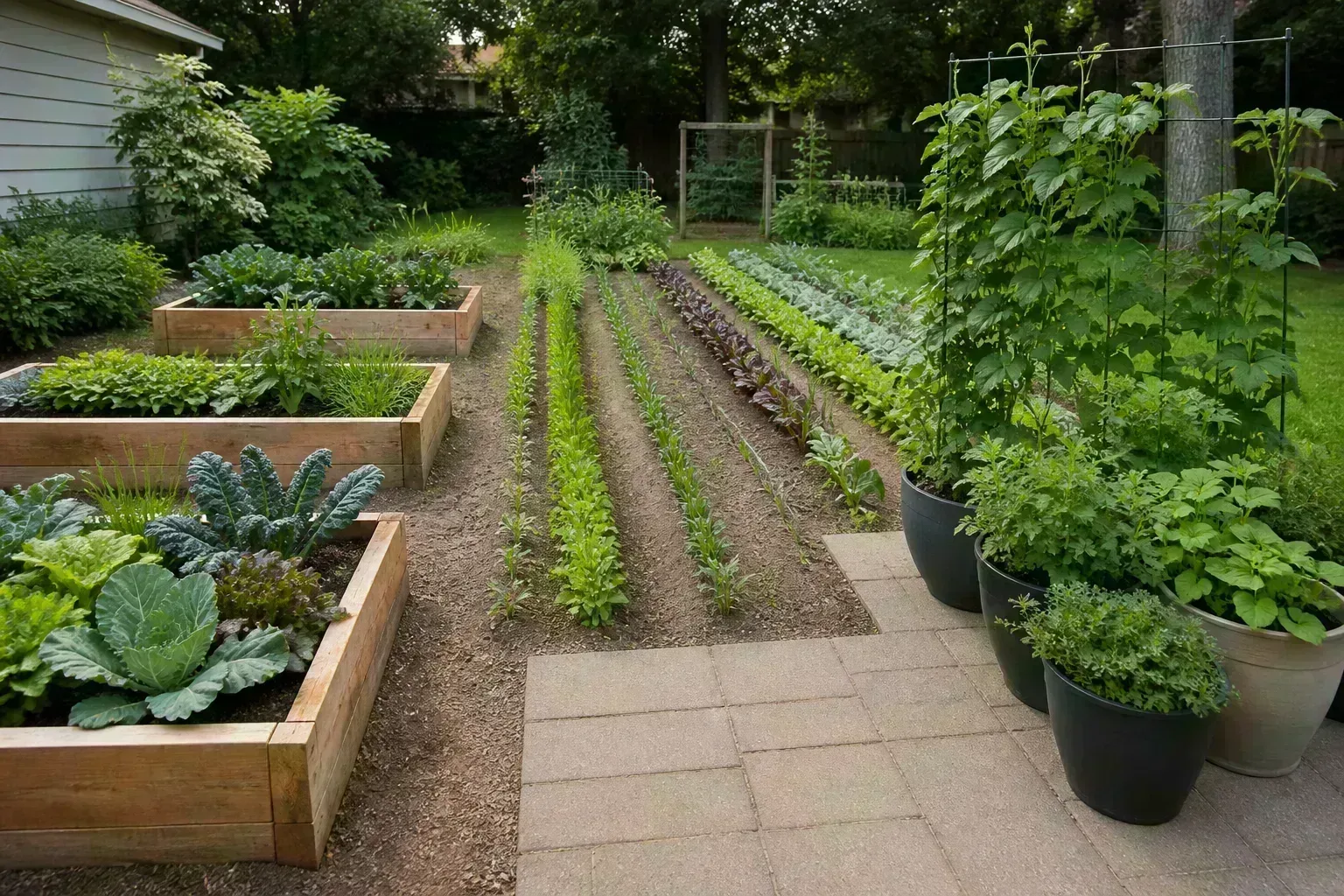
Convenience is the usual reason gardeners repeat crops in one bed. The hose reaches there. The soil is already loose. You know the sun pattern. That short-term ease trades away three long-term problems: skewed fertility, accumulating pathogens, and localized pest pressure.
Nutrient Imbalances You Cannot Fertilize Away
Different crops pull different nutrients in different ratios. Leafy brassicas and corn are heavy nitrogen users. Root crops such as carrots lean harder on phosphorus. Fruiting crops like tomatoes and peppers need potassium and calcium during bloom and fruit set. When the same family occupies the same soil every year, the soil’s nutrient profile tilts toward that family’s appetite and away from what the next crop needs.
Fertilizer can mask the problem briefly, but it does not reset biology. Legumes in the rotation—beans, peas, and cover crops such as clover—partner with rhizobia bacteria to fix atmospheric nitrogen into forms other plants can use, as soil scientists note in practical rotation guides from Epic Gardening. Following legumes with heavy feeders is one of the oldest fertility strategies in gardening because it works with soil life instead of only pouring on soluble nutrients.
Soil-Borne Diseases That Build Up Over Time
Many vegetable diseases survive in soil as spores or resting structures long after the infected plant is gone. Clubroot in brassicas, verticillium wilt in nightshades, fusarium in tomatoes and melons, and onion white rot in alliums all punish gardeners who plant susceptible crops in the same place too soon.
The RHS specifically recommends rotation to help avoid clubroot in brassicas and white rot in onions. Rotation does not sterilize soil, but it starves pathogens of their preferred host for long enough that populations decline. For clubroot, extension services often suggest seven years or more before brassicas return to infected ground; for onion white rot, eight years is a common minimum. Those intervals are longer than most backyard rotation charts show—which is why knowing the disease matters as much as knowing the family.
Pests That Learn Your Address
Soil-dwelling larvae, overwintering eggs, and root-feeding insects often specialize on one plant family. Colorado potato beetle favors nightshades. Cabbage worms target brassicas. Squash vine borer hunts cucurbits. Replanting the same family gives those pests a reliable food source and a head start every spring.
In large fields, distance between host patches can break pest cycles. In small gardens, rotation is weaker against flying insects—but it still helps against soil-borne stages and it pairs well with cleanup, row cover, and companion planting that attracts predators. Think of rotation as one layer of integrated pest management, not a solo fix.
The Golden Rule: Rotate by Plant Family, Not by Variety
The golden rule of crop rotation is simple: do not plant members of the same botanical family in the same bed or plot section in consecutive years. Swapping cherry tomatoes for paste tomatoes in the same soil is not rotation. Moving tomatoes to a bed that held beans last year is.
Families share root exudates, nutrient demands, and many of the same pests and diseases. Grouping by family is how rotation charts, extension plans, and allotment traditions stay coherent.
The Nine Families Most Backyard Gardens Use
Use this working list when you sketch your map. Latin names change in textbooks; what matters is that you never follow a family with itself.
Nightshades (Solanaceae): tomato, potato, pepper, eggplant, tomatillo. Heavy feeders; share blights, verticillium, and potato beetle pressure.
Brassicas (Brassicaceae): broccoli, cabbage, cauliflower, kale, Brussels sprouts, arugula, radish, turnip, rutabaga. Heavy nitrogen users; clubroot and cabbage worms are the headline risks.
Legumes (Fabaceae): bush and pole beans, peas, edamame. Nitrogen fixers; relatively light feeders that set up the next year’s hungry crops.
Cucurbits (Cucurbitaceae): cucumber, zucchini, summer and winter squash, pumpkin, melon. Sprawling vines; squash bugs and powdery mildew travel with the family.
Alliums (Amaryllidaceae): onion, garlic, leek, shallot. Moderate feeders; onion white rot persists for years in infected soil.
Roots and umbels (Apiaceae): carrot, parsnip, celery, celeriac, parsley, dill, cilantro. Many are lighter feeders; carrot rust fly and celery leaf spot are family-linked issues.
Goosefoot (Amaranthaceae, formerly Chenopodiaceae): beet, chard, spinach. Related nutrient profiles; leaf miners can carry over.
Aster/sunflower (Asteraceae): lettuce, endive, chicory. Often grouped with “salad” beds; slugs and downy mildew favor repeated lettuce in one spot.
Grains and corn (Poaceae): sweet corn. Heavy nitrogen user; takes space but fits a “grain” block in larger rotations.
Some crops are flexible. The RHS notes that cucumbers, squash, lettuce, and sweetcorn can slot into convenient gaps as long as they are not grown too often in the same place. Peppers and eggplant share nightshade genetics but sometimes suffer fewer soil issues than potatoes and tomatoes; many gardeners still group them with nightshades for simplicity.
When in doubt, err on the side of grouping. A rotation chart you actually follow beats a perfect taxonomy you abandon by June.
Quick reference — disease-sensitive families:
| Problem | Affected family | Minimum return interval (ideal) |
|---|---|---|
| Clubroot | Brassicas | 7+ years if soil is infected |
| Onion white rot | Alliums | 8+ years in infected soil |
| Verticillium wilt | Nightshades, some cucurbits | 4+ years; remove infected debris |
| Early blight / septoria | Nightshades (tomato, potato) | 3–4 years; mulch and stake to reduce splash |
| Root-knot nematodes | Many vegetables | 3+ years; solarize soil in warm climates |
These intervals assume you are not also importing infected transplants or compost from diseased plants. Rotation buys time; sanitation closes the loop.
How to Build a Simple Rotation Plan Before Spring
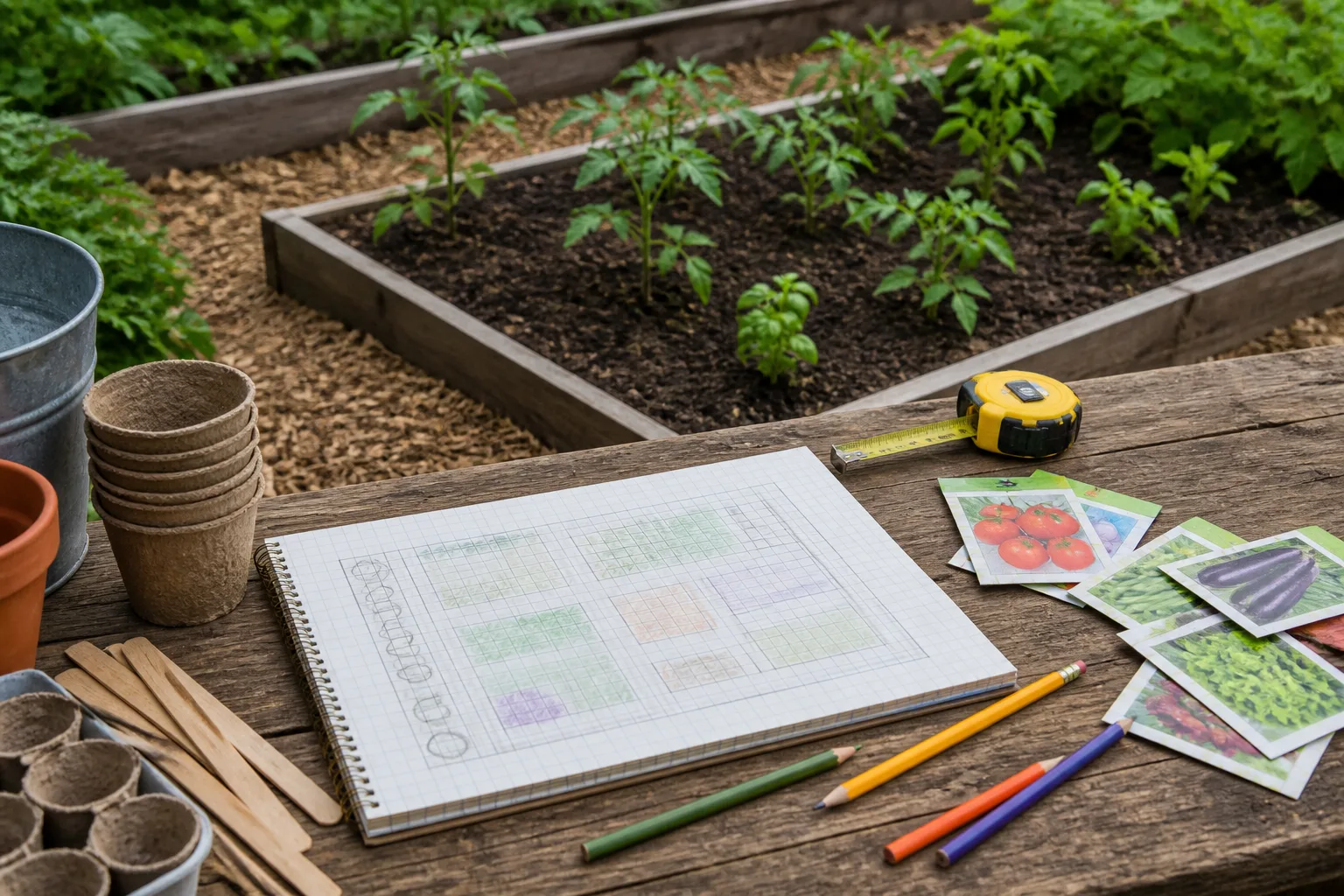
Rotation planning happens on paper—or in a notebook app—before you order seeds. Waiting until planting day guarantees you will default to last year’s bed because the stakes are in and the compost is open.
Step 1: List what you actually grow. Be honest about favorites. A rotation plan that ignores tomatoes because you “always plant them there” is fiction.
Step 2: Mark last year’s families per bed. If memory is fuzzy, check old seed packets, photos, or journal notes. No record? Assume the worst case and start a fresh log this season.
Step 3: Divide the garden into equal rotation blocks. Three blocks support a three-year cycle; four blocks support a four-year cycle. Each block should be similar in size and sun so no section becomes the dumping ground for shade lovers every year. Our vegetable garden layout guide walks through mapping paths, sun, and block size.
Step 4: Assign families to blocks for the coming year so no block repeats last year’s family. Move blocks forward in the same direction every year—like turning a dial.
Step 5: Slot perennials and flexible crops. Keep asparagus and rhubarb out of the dial. Tuck lettuce or cucumbers into gaps after an early crop comes out.
If you use raised beds, treat each bed as a rotation unit rather than each row inside a bed. That is how the RHS structures allotment plans, and it scales down cleanly to four 4×8-foot boxes.
Three-Year and Four-Year Rotation Templates You Can Copy
Extension and RHS traditions compress families into workable groups. Below are copyable templates. “Section” means one equal slice of your garden or one dedicated bed.
When a Three-Year Cycle Makes Sense
Use a three-year rotation when potatoes and brassicas dominate your diet and you have three distinct blocks. This is the classic RHS pattern:
Year 1: Section A — potatoes (nightshade); Section B — legumes, onions, and roots; Section C — brassicas.
Year 2: Section A — legumes, onions, and roots; Section B — brassicas; Section C — potatoes.
Year 3: Section A — brassicas; Section B — potatoes; Section C — legumes, onions, and roots.
Then return to Year 1 positions. Tomatoes substitute for potatoes in the nightshade slot if you do not grow spuds. The logic: potatoes break soil and suppress weeds; legumes restore nitrogen; brassicas follow a nitrogen boost.
When to Stretch to Four Years
A four-year rotation helps when you grow lots of onions and roots and need more legume space than a three-block plan allows:
Year 1: Legumes — Section 1; brassicas — Section 2; potatoes — Section 3; onions and roots — Section 4.
Year 2: Brassicas — 1; potatoes — 2; onions and roots — 3; legumes — 4.
Year 3: Potatoes — 1; onions and roots — 2; legumes — 3; brassicas — 4.
Year 4: Onions and roots — 1; legumes — 2; brassicas — 3; potatoes — 4.
Minimum wait for the same family in the same section: one full year in tiny gardens; three to four years is the practical target for nightshades and brassicas when space allows. If you have only two beds, alternate families every year and accept that rotation will be imperfect—then lean harder on cover crops and soil renewal.
Small Gardens and Raised Beds: Rotation Without Extra Land
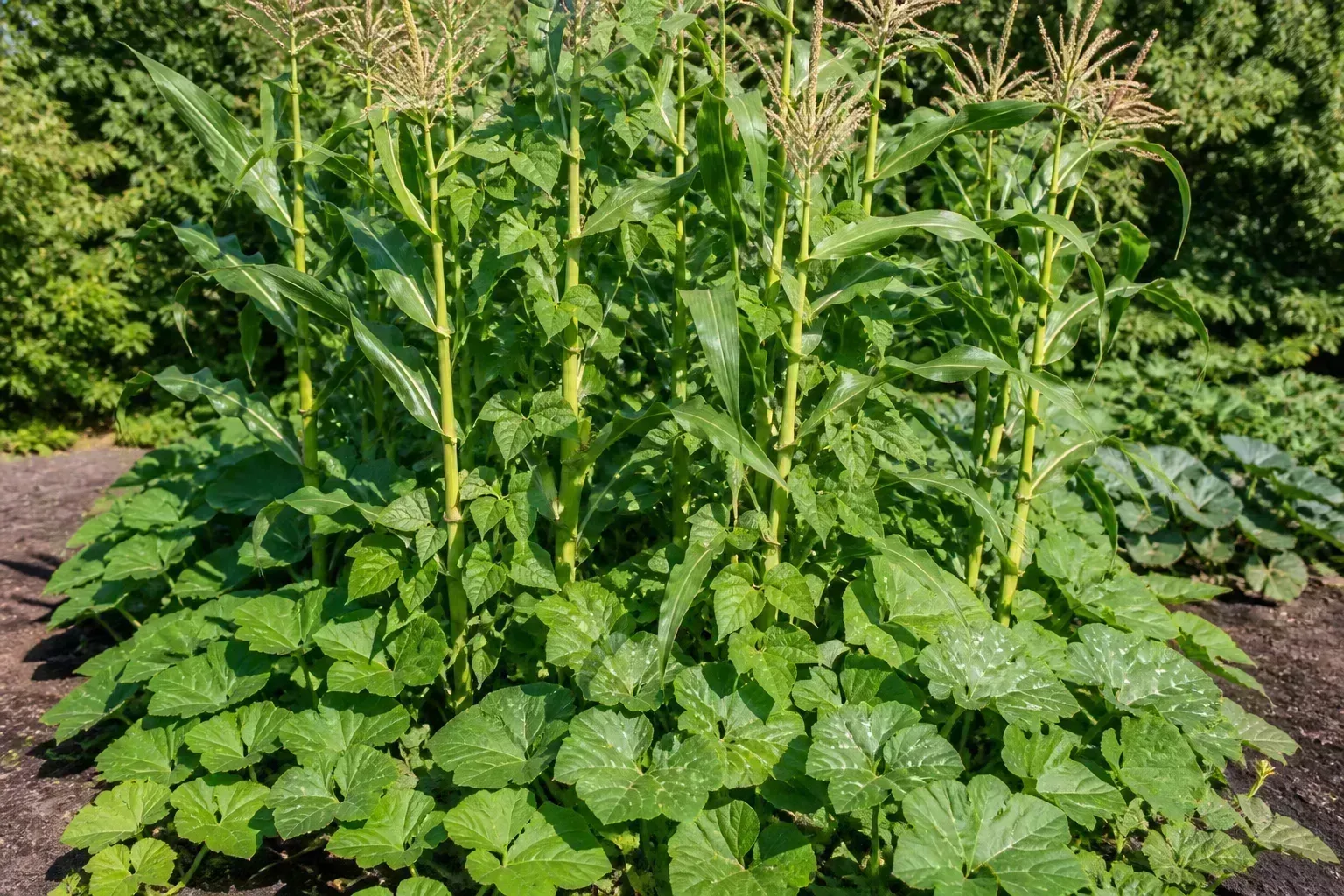
“I do not have enough beds to rotate” is the most common objection—and it is half true. You may not run a textbook four-year cycle on a patio plot, but you can still move families and break disease clocks.
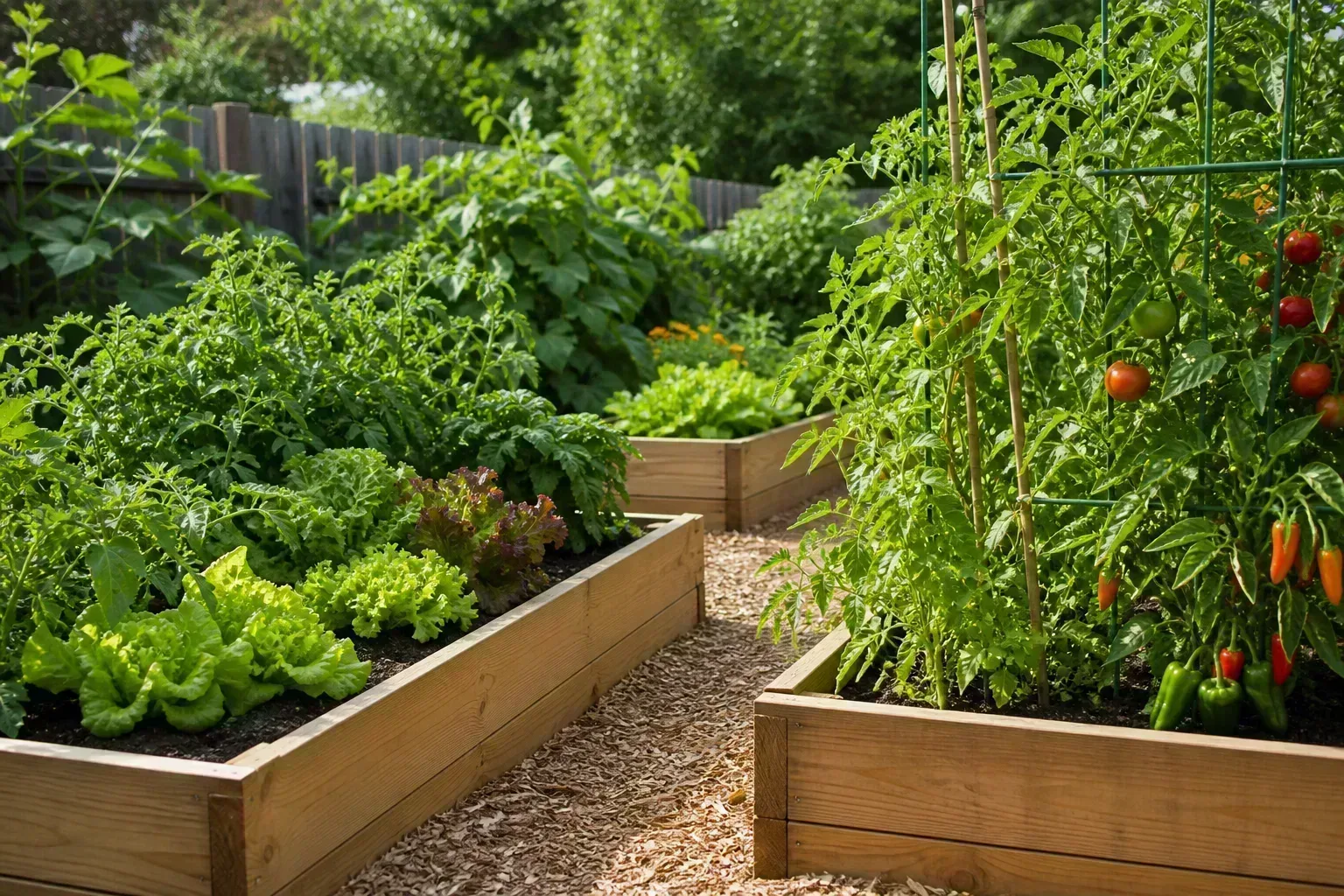
Bed-by-Bed Rotation in Raised Gardens
With three or more raised beds, assign each bed a role in the three-year dial and physically move crops clockwise every spring. Two beds? Strict alternation beats stasis: if Bed 1 held nightshades in 2025, Bed 1 gets legumes or roots in 2026, even if Bed 2 must carry brassicas both years while you expand.
Width and path planning matter because rotation fails when every bed is unreachable or shaded by last year’s trellis. The raised garden bed layouts guide covers reach distances and why multiple shorter beds beat one long monolith for rotation.
Mix families within a bed only when you understand the risk. A tomato with basil is intercropping, not rotation. A tomato followed by kale in the same soil next spring is a rotation win.
Container Gardens and Grow Bags
Containers simplify rotation: move the pot, replace the mix, or both. Soil-borne disease in a 5-gallon bucket is a closed system—pathogens do not walk, but they do persist in old mix.
Rules for containers:
- Do not reuse potting soil for the same family without refreshing. See our can you reuse potting soil guide for solarization and amendment steps.
- Rotate family at the container level: last year’s pepper pot becomes this year’s bean pot.
- Elevate pots off soil if you had blight on the ground below; splashing can reintroduce spores.
Grow bags make rotation cheaper because you can dump spent mix into a compost pile—not back into next year’s tomato bag.
Label containers with a grease pencil: 2025 — nightshade (pepper) saves you from guessing in March. If blight hit a pot, quarantine that bag’s soil away from compost you will reuse on solanaceous crops.
Record Keeping That Makes Rotation Stick
Rotation fails in memory before it fails in soil. The fix is boring and effective: log what went where while plants are still standing.
Keep a simple table: year, bed or section number, plant family, main varieties, problems noted (wilting, pests, low yield). A phone photo of each bed in August beats a perfect diagram you never drew.
Update records during or immediately after harvest, when stakes and labels still exist. Winter recall is optimistic; you will convince yourself the peppers were in Bed 2 when they were in Bed 3.
Store seed leftovers with the year written on the packet. Tie logs to our how to store seeds over winter routine so next spring’s order matches last summer’s map.
If you prefer apps, any grid notebook works. Fancy garden planners are optional; consistency is not.
When Full Rotation Is Not Possible
Sometimes land, time, or habit blocks a clean rotation. You still have levers short of giving up.
Cover Crops and Green Manure Between Cash Crops
Cover crops fill gaps when a bed would otherwise sit empty. Legumes add nitrogen; grasses add organic matter and hold soil; brassica cover crops such as forage radish break compaction with taproots, as described in Epic Gardening’s rotation overview.
Sow cover crops after you pull summer vegetables or in late summer for winter cover. Terminate them before they set seed—mow, tarp, or turn under depending on your no-till goals. A fallow year with rye or crimson clover is still rotation progress because the host family changed.
Soil Replacement and Fallow Strategies
When disease hits hard—clubroot confirmed, white rot in alliums—rotation intervals may exceed your garden’s size. Options then escalate:
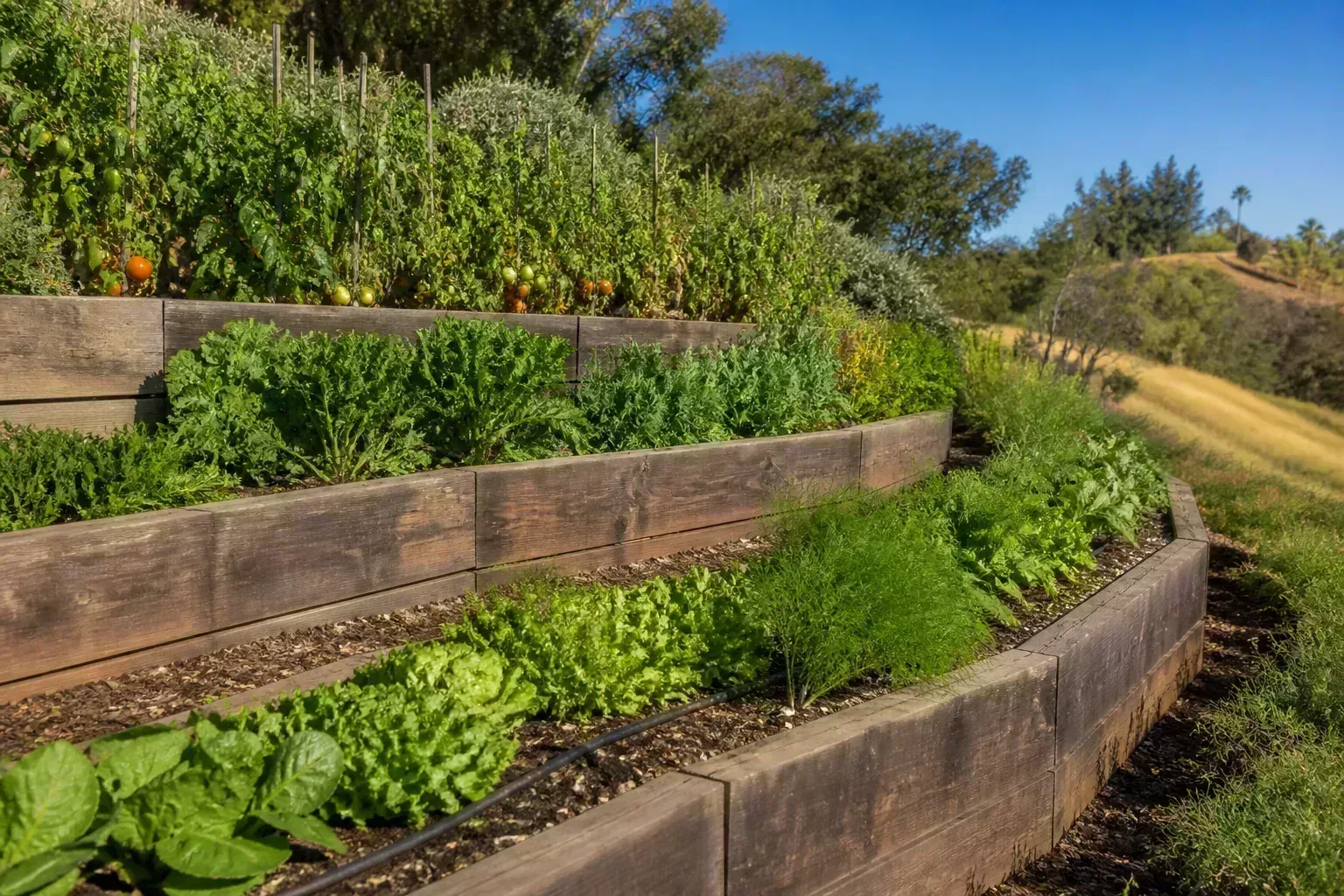
- Replace the top 12 inches of mix in a raised bed and do not return that family until the recommended wait passes. Expensive but targeted.
- Fallow with mulch or tarp to smother weeds while biology shifts. Not glamorous; works as a pause button.
- Mix families across the whole garden so no single patch is a monoculture even if blocks cannot move far.
Penn State Extension and other land-grant guides stress that rotation is the first defense, not the only one. Resistant varieties, lime for clubroot pH management, and strict cleanup of infected roots all belong in the same playbook.
If you skipped rotation for several seasons and yields collapsed, treat recovery as a multi-year project. Year one: soil test, remove diseased residue, sow a cover crop or fallow with tarp. Year two: plant a non-host family only. Year three: reintroduce the desired crop on a trial scale in a refreshed bed before committing the whole plot.
Conclusion
Crop rotation pays off because it turns garden planning from a repeat-order habit into a fertility and disease strategy. Move plant families to new ground each year—or each container—so nitrogen fixers set up heavy feeders, soil pathogens lose their host, and pests cannot count on the same meal two seasons running. Sketch a three- or four-year dial on paper before spring, treat each raised bed as its own rotation unit, and log placements while you can still see the labels.
Perfection is rare in small yards. Even imperfect rotation—alternating nightshades and legumes on two beds, swapping grow-bag mix, sowing a cover crop where tomatoes once ruled—beats planting the same family in the same soil forever. The harvest you protect is next year’s, not this week’s convenience.



