Dracaena Compacta Fertilizer Guide: When & How to Feed
Dracaena Compacta Fertilizer Guide: When & How to Feed
Dracaena Compacta Fertilizer Guide: When & How to Feed
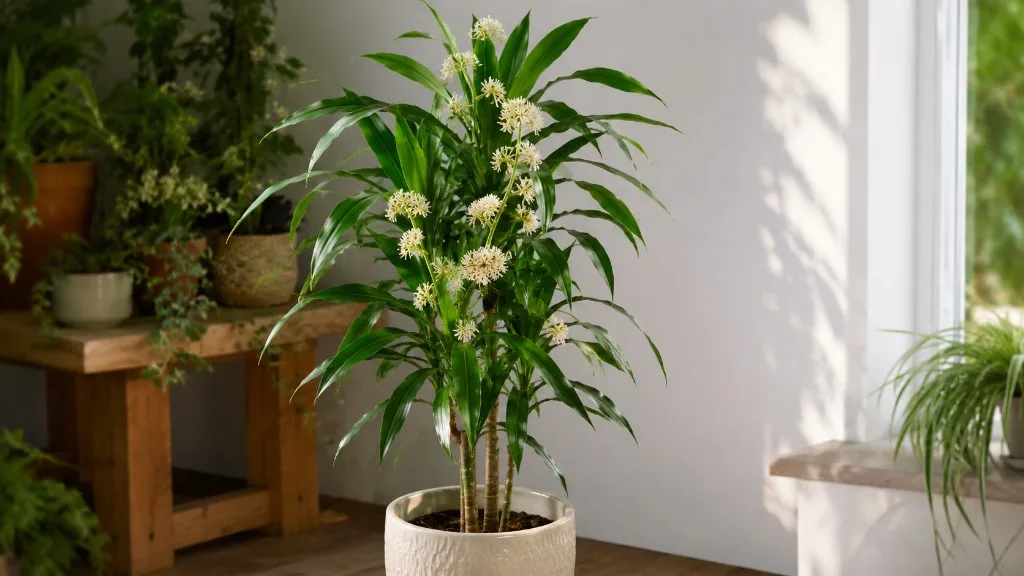
Dracaena fragrans ‘Compacta’ — sold as Dracaena Compacta or Janet Craig Compact — is the short, bushy corn-plant form with tightly stacked dark green leaves on thick canes. It stays much smaller than standard D. fragrans and suits tabletops and floor corners where a 6 ft corn plant would overwhelm the room. That compact body changes how you feed it: smaller pots, slower crown growth, and a metabolism that uses nutrients gradually — not the heavy seasonal push of a tall floor specimen.
Dracaena Compacta fertilizer should be a light, seasonal supplement — not a year-round growth booster. The Royal Horticultural Society advises applying a balanced liquid feed monthly in the growing season for this cultivar, while watering sparingly in winter (RHS — Dracaena fragrans ‘Compacta’). Get water quality, light, and drainage right first; then feed at half strength only when new leaves appear at the crown. Brown tips after feeding usually mean salt or fluoride stress, not a cry for more nutrients.
Why Compacta Needs Light Feeding, Not Corn-Plant Doses
Most dracaena fertilizer articles assume a large corn plant in a 10–12 inch pot pushing strap leaves all summer. Janet Craig Compact rarely lives in that setup. Mature plants top out around 2–4 ft with a narrow spread, and most growers keep them in 6–8 inch containers on desks and side tables. The root zone is shallower, new leaves emerge slowly from a tight rosette, and the plant simply does not pull nutrients at the rate tall D. fragrans specimens do indoors.
Slow Growth in a Small Root Zone
Compacta is still Dracaena fragrans, and Pacific Northwest extension guidance applies: fertilize sparingly on fluoride-sensitive dracaenas, because excess feeding combined with dry spells can worsen brown tips (PNW Handbooks — Dracaena Tip Burn). For this dwarf cultivar, “sparingly” often means monthly at half strength during active growth — not the every-four-weeks-on-a-calendar approach written for faster cane plants in bigger pots.
Nutrients in potting mix deplete over time as you water and roots absorb what they need. Nitrogen supports leaf development, phosphorus aids root function, and potassium helps overall stress tolerance. A balanced supply keeps the glossy rosette deep green without pushing soft, pale growth. But Compacta can only use so much at once. Excess fertilizer does not speed up a slow grower — it accumulates as soluble salts, raises osmotic stress on roots, and shows up as burned leaf margins that owners blame on underwatering or low humidity.
Clemson Cooperative Extension notes that leaf tips and margins may burn or yellow when dracaenas are fertilized too heavily (Clemson HGIC — Dracaena). For Compacta, the goal is steady maintenance nutrition during the months when the crown actually produces leaves — not maximizing growth rate in a plant bred to stay compact.
When to Fertilize Dracaena Compacta
Dracaena Compacta fertilizer belongs in the growing season only — roughly April through September in the Northern Hemisphere for typical indoor homes. During this window, longer daylight and warmer rooms support occasional new leaves at the crown, and roots actively take up water and nutrients. Outside this window, growth stalls, and any fertilizer you apply sits unused in the mix, building salts that damage roots over time.
RHS general dracaena guidance recommends feeding from April to October with a general liquid houseplant fertiliser, while warning that overfeeding can damage roots and reduce plant health (RHS — How to grow dracaena). For Compacta in a dim office or cool winter room, lean toward the shorter end of that window — start when you see new crown growth, stop when leaves stop appearing.
Before every feeding, look for evidence of active growth: a new leaf unfurling from the center of the rosette or visibly expanding foliage at the crown. If your Compacta has not produced new growth in six weeks or more, skip the feed regardless of what the calendar says. Slow growers tell you when they are ready.
Spring Through Late Summer Only
The primary feeding window runs from early spring through late summer. In spring, resist feeding the moment days lengthen. Compacta roots wake before top growth is obvious, but applying fertilizer before a fresh crown leaf appears adds salts that slow roots are not yet using efficiently. Wait until you see new growth, then start with one half-strength application.
Through late spring and summer, monthly feeding at half strength matches RHS Compacta guidance and Clemson’s recommendation to feed dracaenas with liquid foliage plant fertilizer once a month during spring and summer (Clemson HGIC — Dracaena). A plant in bright indirect light may use nutrients slightly faster; one in moderate office light may do fine stretching feeds to every six weeks. Adjust based on new leaves, not a rigid reminder.
Once a month during the feeding season, replace one watering with a plain-water flush to leach accumulated salts — especially important in small pots where mineral buildup concentrates quickly. NC State Extension notes that corn plant is sensitive to fluorides and built-up salts; if leaves brown, flush salts monthly (NC State Extension — Dracaena fragrans).
Winter Pause and Dormant Roots
From late autumn through early spring, stop fertilizing Dracaena Compacta entirely in typical homes. RHS Compacta cultivation is explicit: water sparingly in winter (RHS — Dracaena fragrans ‘Compacta’) — and sparing feeding should match sparing water. Shorter days slow photosynthesis even when the thermostat stays warm. Roots become less active, transpiration drops, and the dense rosette may add almost no new leaves for weeks.
Fertilizer applied during dormancy does not disappear. It concentrates in the potting mix and raises the salt index of the soil. Over-fertilizing during winter is a leading cause of tip burn that appears weeks later, when owners assume the problem is water quality alone. Resume feeding in early spring when the first new crown leaf of the season appears. Start at half strength and return to your regular rhythm over two to three weeks.
Best Fertilizer Type for Janet Craig Compact
The best dracaena compacta fertilizer is a dilute balanced liquid formula applied to moist soil during active growth. Liquid fertilizers dissolve completely in water, distribute evenly through the shallow root zone of a desk pot, and let you control the exact dose — critical advantages for a salt-sensitive plant in a small container.
Balanced means nitrogen (N), phosphorus (P), and potassium (K) appear in roughly equal proportions. A standard houseplant liquid labeled 10-10-10 or 20-20-20 works well for foliage-focused Compacta grown indoors. Either ratio is fine as long as you dilute and feed sparingly. Avoid slow-release pellets in 6-inch pots unless you understand their release rate — one heavy application can supply months of nutrients this plant does not need.
Balanced Liquid at Half Strength
Always mix liquid fertilizer to half the label strength for Dracaena Compacta, and consider quarter strength for newly repotted plants or any specimen showing tip burn. Full-strength houseplant fertilizer is designed for faster-growing species and will stress Compacta roots over time.
Apply to moist soil only — never bone-dry mix, never waterlogged anaerobic soil. Water thoroughly with plain low-fluoride water the day before feeding, or feed immediately after a regular watering when the top 2 inches have just been soaked and drained. Pour the diluted solution over the soil surface until it runs from drainage holes, then empty the saucer within 10–15 minutes.
Organic options such as diluted fish emulsion or seaweed extract can work if you know the NPK and rinse salts regularly. Synthetic balanced liquids are not inherently harmful; the risk comes from concentration, frequency, and combined fluoride load — not the source alone.
What to Avoid in the Formula
Compacta rarely flowers indoors, so high-phosphorus bloom booster formulas (ratios like 10-30-20) add phosphorus the plant does not need and can increase salt buildup without benefit. Stick with balanced or foliage-oriented ratios.
Clemson HGIC is direct: do not use fertilizer which contains superphosphate since it often has high levels of fluorine (Clemson HGIC — Dracaena). Michigan State University Extension notes that single superphosphates in fertilizer are a significant fluoride source for sensitive crops, including dracaena (MSU Extension — Fluoride toxicity). Check ingredient lists before buying.
Fluoride Sensitivity and Fertilizer Salts
Dracaena Compacta inherits the fluoride sensitivity of D. fragrans. PNW Handbooks document that corn plant is very sensitive to fluoride toxicity, with fluoride acting as an accumulative poison that concentrates at leaf margins (PNW Handbooks — Dracaena Tip Burn). Fertilizer salts and fluoride damage look similar — brown, necrotic tips and margins — but the fixes differ slightly.
Superphosphate, Perlite, and Combined Mineral Load
Fluoride reaches Compacta from three main sources: municipal tap water (often fluoridated around 1 ppm), potting mixes containing perlite, and fertilizers with superphosphate. MSU Extension warns growers not to over-fertilize crops susceptible to fluoride toxicity and to monitor soluble salts (MSU Extension — Fluoride toxicity).
Clemson recommends keeping soil pH between 6.0 and 6.5 to reduce fluoride availability and avoiding perlite-heavy mixes for sensitive dracaenas (Clemson HGIC — Dracaena). That matters for Compacta because many desk pots use perlite-heavy soil blends for drainage — a reasonable trade-off only if you also use low-fluoride water and feed lightly.
Salt burn from a recent heavy feed tends to appear shortly after application, sometimes with white crust on the soil surface. Fluoride accumulation worsens gradually over months despite conservative feeding, especially when tap water is fluoridated. If tips keep browning on a lean feed schedule with good timing, change the water before increasing fertilizer.
Existing damaged leaf tissue does not recover. New crown leaves arrive clean once you fix the source. Trim old brown tips for appearance — they will not green up again.
How Often to Feed Compacta Indoors
During active growth, fertilize Dracaena Compacta every four to six weeks at half strength, or follow RHS Compacta guidance of monthly balanced liquid feed in the growing season. For most tabletop Compacta in moderate light, monthly at half strength is the safe default; push toward every four weeks only if the plant is in bright indirect light and actively pushing multiple crown leaves.
| Situation | Frequency | Notes |
|---|---|---|
| Bright indirect light, warm room, regular new leaves | Every 4 weeks | Half-strength balanced liquid on moist soil |
| Moderate office or living room light | Every 5–6 weeks | Monthly matches RHS Compacta guidance |
| Winter or no new growth 6+ weeks | None | Pause regardless of calendar |
| After repotting | Wait 4–6 weeks | Fresh mix may contain starter fertilizer |
| Visible salt crust or tip burn | None until flushed | Leach three times with plain water first |
After repotting into fresh mix, wait four to six weeks before fertilizing. Disturbed roots in a small pot need time to re-establish before handling nutrient loads. Feeding too soon after repotting is a common cause of post-transplant leaf drop on slow cane plants.
Step-by-Step: Feeding Compacta Safely
Follow this sequence every time you fertilize Janet Craig Compact to minimize root burn and salt stress in a shallow pot:
- Check the season and the plant. Confirm you are in the spring-to-late-summer window and see new crown growth. If either fails, skip feeding.
- Verify soil moisture. Water with plain low-fluoride water first if the top 2 inches are dry, or feed right after a regular soak when mix is evenly moist.
- Mix at half strength. Measure using the product label, then cut the dose in half. Use a dedicated spoon or syringe — guessing is risky in 6-inch pots.
- Apply to soil only. Pour slowly over the mix surface, not into the rosette. Avoid foliar feeding — unnecessary for Compacta and can spot leaves.
- Drain fully and empty the saucer. Do not let the plant sit in fertilizer runoff.
- Record the date. Prevents accidental double-feeding, which hurts more than skipping a month.
Signs Feeding Is Working on a Slow Rosette
When timing and dose are correct, Compacta tells you through steady, proportional growth — not dramatic spurts. New crown leaves emerge at normal size for the cultivar: glossy, dark green, and tightly stacked — not oversized and soft, not stunted and pale. The soil surface stays free of white crystalline crust, and the short cane remains firm at the soil line.
Because growth is slow, patience matters. A stable rosette that adds a few clean leaves each growing season beats a quick flush followed by tip burn. If you fed six weeks ago and the plant looks unchanged but healthy, that is often exactly right for Janet Craig Compact.
Signs of Over-Fertilizing and Fluoride Burn
Over-fertilizing is the most common feeding mistake with Compacta, and symptoms overlap with fluoride toxicity and overwatering — so read the full care picture, not one leaf.
Signs of over-fertilizing or salt buildup:
- Brown, crispy leaf tips and margins, often shortly after feeding
- White or yellowish crust on the soil surface
- Yellowing lower leaves while tips burn
- Sudden leaf drop without obvious pest cause
- Stunted new crown growth that emerges small or distorted
Signs linked to fluoride accumulation:
- Gradual tip burn worsening over months, not overnight after one feed
- Burn concentrated on margins while the leaf center stays green longer
- Symptoms persisting despite reduced feeding, especially with fluoridated tap water
- Other fluoride-sensitive plants nearby (spider plant, lily) showing similar margins
If the cane feels soft at the soil line or roots are mushy, stop feeding and inspect for root rot — fertilizer will not fix compromised roots and can accelerate decline.
Flushing Salts After Over-Feeding
If you suspect over-fertilizing, act quickly:
- Stop feeding immediately. Do not apply another dose to “balance things out.”
- Flush with plain low-fluoride water until water runs freely from drainage holes. Wait thirty minutes, then flush again. Repeat a third time for severe crust or recent double-feeding.
- Empty saucers completely after each flush.
- Hold fertilizer four to six weeks until new crown growth appears clean.
- Repot in spring if white crust covers much of the soil surface and flushing fails twice — fresh well-draining mix may be cleaner than repeated leaching in a small pot.
Badly salt-stressed roots may take one to two leaf cycles to recover. Pale new growth from root damage is not the same as nutrient deficiency — adding fertilizer to damaged roots makes things worse.
When NOT to Fertilize Dracaena Compacta
Hold off on feeding entirely when any of these apply:
- Soil is dry — water first, feed later.
- Plant was repotted within four to six weeks.
- Active stress signals — widespread yellowing, drooping on wet soil, leaf drop, pests.
- Fall through early spring with no new crown growth.
- White salt crust visible on the soil surface.
- You fed within the last three weeks and the plant already looks worse.
- Root ball smells sour or soil stays wet for weeks — fix drainage before adding nutrients.
Fertilizer is not medicine. It will not revive a struggling Compacta and can accelerate decline when roots are already compromised. Fix water, light, and root conditions first; add feeding only when the plant is stable and growing.
How Fertilizer Connects to Water, Light, and Soil
Fertilizer only works when the rest of the routine supports nutrient uptake. Compacta in bright indirect light photosynthesizes actively and uses feed efficiently. The same plant in a dim corner metabolizes slowly — it needs less food and builds salts faster if you feed on a bright-light schedule.
Water quality matters enormously. Fluoride in tap water does not evaporate by sitting overnight. Mixing fertilizer with fluoridated tap water adds to the total mineral burden in a small root zone. Use rainwater, distilled, or reverse-osmosis water for both watering and feeding when tips persist despite correct timing.
Soil composition affects salt retention. Heavy peat-rich mixes hold minerals longer; a monthly flush matters more. Chunky, well-draining mixes leach faster but may contain perlite — a fluoride trade-off Clemson flags for sensitive dracaenas. Match feeding frequency to your specific pot size and mix, not a generic houseplant blog schedule.
Think of fertilizer as the last layer: correct light, correct water, appropriate soil, then light feeding during growth. Skip any layer below and fertilizer becomes a liability instead of a benefit.
Common Compacta Fertilizer Mistakes
These errors account for most feeding problems on Janet Craig Compact indoors:
- Feeding at full label strength in a 6-inch pot designed for faster species
- Monthly reminders that fire in November regardless of growth
- Using bloom booster or high-phosphorus formulas on a non-flowering foliage plant
- Ignoring fluoride in fertilizer and water while misting for “humidity”
- Slow-release pellets in small pots with unpredictable release
- Feeding every watering at micro-dose without ever leaching salts
- Double-feeding after missing a month — one skipped feed is safe; two doses are not
- Stacking fertilizer before fixing chronic overwatering or bad tap water
Each mistake is preventable with a lighter hand and a growth-based mindset.
Conclusion
Dracaena Compacta fertilizer demands restraint more than enthusiasm. Use a dilute balanced liquid — 10-10-10 or 20-20-20 at half strength — and apply it monthly during the growing season only, from spring through late summer when new crown leaves appear. Pause completely in fall and winter, never feed dry or stressed plants, and flush salts monthly with plain low-fluoride water during the feeding season.
Pay special attention to fluoride sensitivity: avoid superphosphate-based fertilizers, prefer rainwater or filtered water for mixing, and keep soil pH near 6.0–6.5. Brown tips from over-feeding or fluoride are common but preventable — only new crown growth tells you the fix worked.
When in doubt, skip a feeding. Janet Craig Compact survives missed nutrients far better than it survives excess. Watch for new leaves at the rosette, keep the soil leached and moist, and let the plant’s actual growth — not the calendar — guide your schedule.
When to use this page vs other Dracaena Compacta guides
- Dracaena Compacta overview — Start here for whole-plant context before deep-diving feeding.
- Dracaena Compacta watering — Fix water quality and dry-down timing before stacking fertilizer; brown tips often start here.
- Dracaena Compacta light — Adjust feeding frequency after changing placement; light drives how fast Compacta uses nutrients.
- Dracaena Compacta soil — Address perlite, drainage, and pH when feeding is timed right but tips still burn.
- Overwatering on Dracaena Compacta — Escalate when yellow leaves and wet soil persist; do not feed stressed roots.