Underwatering on Dracaena Compacta: Causes, Checks & Fixes
Quick answer
Underwatering on Dracaena Compacta shows as limp tight rosette leaves, a very light small pot, and dry mix 2 inches down—common when a slow grower sits in bright light on a sparse calendar. First fix: one thorough soak until water drains, then resume top-2-inch dry checks.
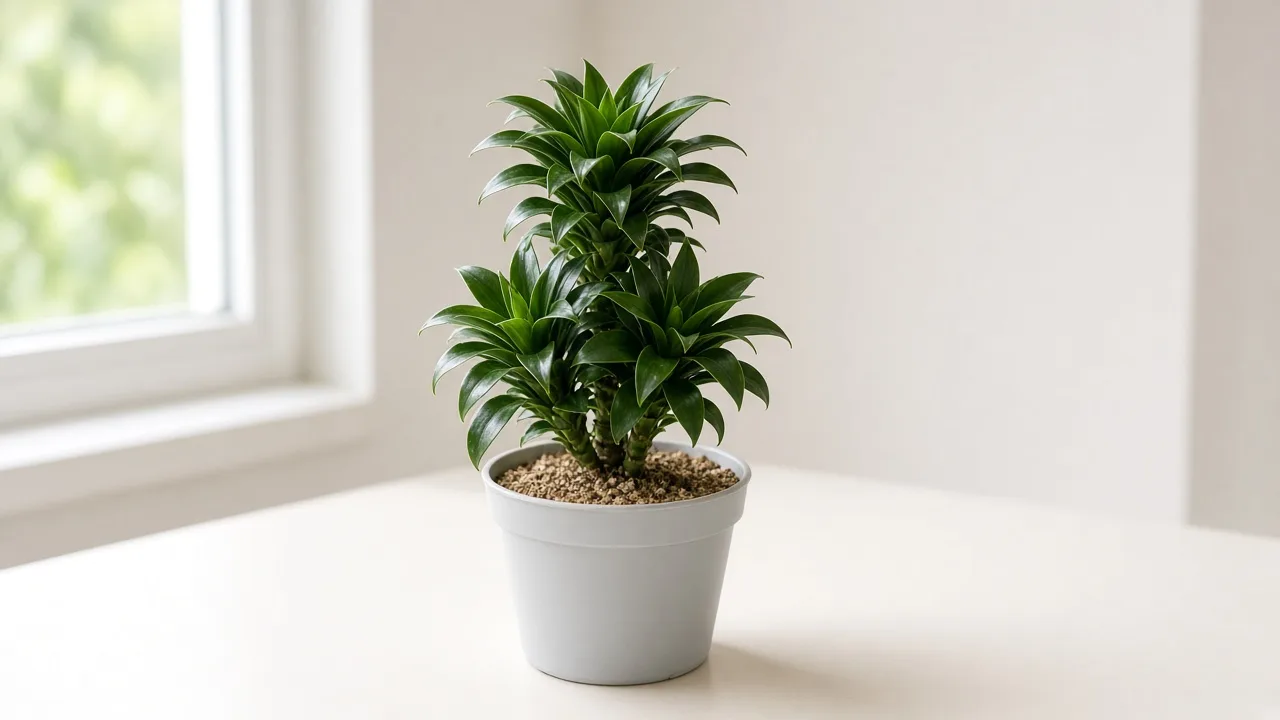
Underwatering on Dracaena Compacta: Causes, Checks & Fixes
This guide covers underwatering on Dracaena Compacta. See also the general Underwatering guide, watering, and light pages for this plant.
Underwatering on Dracaena Compacta: Causes, Checks & Fixes
Quick answer
Underwatering on Dracaena Compacta (Dracaena fragrans ‘Compacta’, Janet Craig Compact) means the shallow root ball in a small desk or tabletop pot stayed dry too long for this slow cane plant to replace water through its dense, upright rosette. The pot feels light, the top 2 inches of mix are dry, and the tight stack of glossy leaves loses turgor and may curl slightly inward.
Owners often underwater Compacta because guides written for tall corn plants say “let half the pot dry” or “water every three weeks”—reasonable in a 12-inch floor pot, but risky in a 6–8 inch container beside a bright window. For how chronic drought stresses roots in general, see our underwatering guide. On Compacta, the pattern usually shows up as a limp rosette on bone-dry upper soil while the short cane still feels firm.
First step: give one thorough watering until water runs freely from the drainage hole, then let the pot drain completely. Do not mist the rosette, do not fertilize, and do not pour daily sips. Resume normal checks and water again only when the top 2 inches feel dry. Full dry-down rhythm lives in the Dracaena Compacta watering guide.
What underwatering looks like on Dracaena Compacta
Early drought on Compacta is easy to miss because the plant is marketed as forgiving and growth is slow. By the time the rosette looks obviously tired, the mix has often been dry at depth for several days.
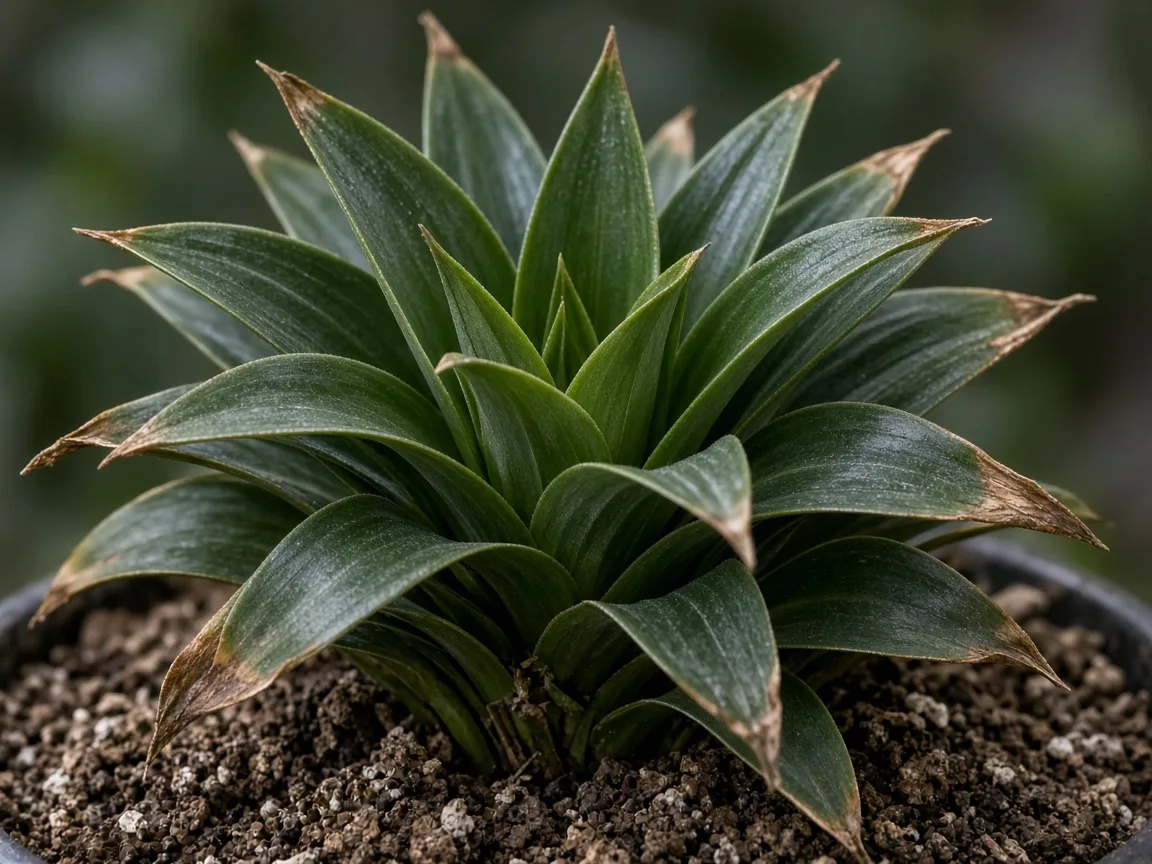
Underwatering on Dracaena Compacta — compare drooping glossy leaves with dry, pale soil at the surface.
Typical signs include:
- Limp, drooping leaves in the tight columnar rosette while short canes stay firm—unlike soft rot at the soil line
- Very light pot weight in plastic nursery containers common for desk-size Compacta
- Dry mix 2 inches down, sometimes with soil pulling away from the pot wall
- Crispy brown tips or margins on older outer leaves when dry spells repeat—excessive drying between waterings can brown tips on fluoride-sensitive D. fragrans
- Slow or stalled new leaves at the crown despite good light—a thirsty Compacta stops pushing the next tight leaf
- Premature lower-leaf yellowing after you finally water, which can look like you made things worse
Compacta leaves are short, dark green, and tightly stacked on thick canes—more like a dwarf corn plant than a Dracaena marginata. Under drought stress the whole rosette hangs as one unit rather than individual straps flopping separately.
What underwatering does not look like: yellow lower leaves on soil that stays wet for a week, a musty smell, fungus gnats at the surface, or a soft mushy cane at the soil line. Those patterns point to overwatering or root rot until a soil check proves otherwise.
Why the top-two-inch rule matters on small Compacta pots
Most dracaena underwatering articles assume a large corn-plant pot where the top half can dry while the center stays moist. Dracaena Compacta rarely lives in that setup. Mature plants top out around 2–4 ft in 6–8 inch containers on desks and side tables. In that geometry, 2 inches is often the upper third of the soil column—the same depth RHS dracaena guidance uses (top 5 cm dry before watering).
Pacific Northwest extension notes that D. fragrans should dry out and is easily overwatered—true for Compacta, but small pots in bright rooms can cross into drought in five to seven days while you still follow a “low-maintenance monthly” habit. Missouri Botanical Garden describes corn plant care as uniformly moist soil during active growth with soils allowed to dry slightly between waterings and reduced watering from fall through winter (Missouri Botanical Garden — Dracaena fragrans). Compacta’s slow metabolism stretches the winter interval, but it does not eliminate the need to check.
RHS lists D. fragrans ‘Compacta’ specifically: water moderately in the growing season and sparingly in winter, preferably with rainwater (RHS — Dracaena fragrans ‘Compacta’). That seasonal split is your calendar hint—not permission to ignore a bright summer windowsill.
Why Dracaena Compacta gets underwatered
Fear of root rot is the leading trigger. Because dracaenas are easily overwatered and Compacta rots fast when soil stays soggy, many owners wait too long between drinks—especially after one yellow-leaf scare from wet mix.
Other Compacta-specific causes:
- Calendar watering from winter while the plant sits in hot, bright indirect light that dries a small pot in days
- Shallow sips that dampen only the surface while the cane-heavy root ball stays dry in the center
- Hydrophobic old peat mix after neglect; water channels down the pot wall without rewetting roots
- Misreading brown tips as humidity or fertilizer problems when fluoride and drought both injure margins on D. fragrans—see brown tips on Dracaena Compacta when margins brown on otherwise moist soil
- Travel or busy weeks when a dense rosette still transpires faster than expected in dry forced air
- Tight soil that dried rock-hard after the pot was left beside a heating vent
During cool winter rest in a dim room, underwatering is less common—but still possible if the plant sits in dry HVAC airflow or on a sunny sill that bakes the mix while growth pauses.
How to confirm the cause
Dracaena Compacta droops when overwatered and when underwatered—plants can wilt when soil is too dry or too wet—so foliage alone is not enough. Work through these checks before you pour:
- Top 2-inch finger test — Press into the mix at the pot edge and near the cane. Dry and crumbly at that depth supports underwatering. Cool, clingy soil means wait, even if leaves look tired.
- Pot weight — Lift the container. A very light pot plus dry soil at depth confirms drought. A heavy pot with limp leaves suggests damaged roots or overwatering, not thirst.
- Soil gap test — Dry mix separated from the plastic wall is a classic sign the root ball has shrunk from moisture loss.
- Cane-base firmness — Press gently at the soil line. Firm short canes fit drought. Soft, dark, or mushy tissue does not.
- Smell — No sour or swampy odor. Mustiness with wet soil rules out simple underwatering.
- Recent care — Skipped checks during a heat wave, vacation, or after repotting into very airy mix? Context matters.
If the top inch looks dry but the center still feels cool and dense, you may be seeing surface crust only—give it another day. If water races through instantly and the pot weighs almost nothing two days after a drink, suspect hydrophobic soil rather than a normal dry cycle.
Underwatering vs overwatering vs fluoride tip burn
Because Compacta wilts in both moisture directions—and brown tips have multiple causes—use pot signals, not leaf droop alone.
| Signal | Underwatering (dry soil) | Overwatering (wet soil) | Fluoride / tip burn |
|---|---|---|---|
| Pot weight | Feather-light | Heavy days after watering | Often moderate; moisture can look “normal” |
| Top 2-inch soil | Dry, crumbly | Cool, clingy, or soggy | Variable |
| Leaf pattern | Limp whole rosette; crisp edges if drought repeats | Yellow lower leaves; dull canopy | Brown margins/tips; center may stay green |
| Cane base | Firm | Soft or mushy at soil line | Firm |
| Smell | Neutral dry soil | Musty or sour | Neutral |
| After thorough watering | Turgor returns in 24–48 h if roots are healthy | Wilting may return on still-wet mix | No perk from watering alone |
When the middle column matches, read overwatering on Dracaena Compacta and drooping leaves before assuming thirst. When the right column matches on damp soil, prioritize brown tips and low-fluoride water per Clemson HGIC dracaena guidance.
First fix for Dracaena Compacta
Water thoroughly once drought is confirmed at the 2-inch depth.
Set the pot in a sink or tub. Use a long-spouted can and water slowly across the entire soil surface until water runs steadily from the drainage hole. That single pass should rewet the full shallow root ball—not just the top inch. Let the pot drain for fifteen to thirty minutes, then empty the saucer or cachepot completely.
This is the whole first fix. Do not add fertilizer, do not repot, and do not prune heavily on day one. Compacta recovers fastest when roots get one complete drink and then stable follow-up checks tied to the watering guide.
If the mix is extremely dry or repels water
When soil has pulled away from the pot or water channels straight through without soaking in, hydrophobic potting mix may need deliberate soaking:
- Bottom-water — Set the nursery pot in a tray of room-temperature water for twenty to forty minutes until the surface darkens, then lift and drain fully.
- Repeat once if needed — Very dry peat-heavy mix in small pots sometimes needs two passes the same day.
- Confirm with weight — The pot should feel substantially heavier; if it still feels hollow-light, the center may not have rewet.
Avoid leaving the plant submerged for days. Compacta needs drainage and air between drinks—bottom-watering is a rewetting tool, not a new lifestyle.
Recovery timeline and what to expect
Mild underwatering — The tight rosette often regains turgor within 24 to 48 hours after a proper soak if canes are still firm and roots are healthy. You should see leaves lift before new growth appears.
Moderate drought — Brown-tipped or crispy older leaves will not green up again. Success looks like a stable rosette, no further drop, and the next small glossy leaf opening at the crown over two to six weeks—Compacta’s slow growth means patience.
Repeated dry cycles — Chronic underwatering stresses fine roots and can trigger leaf drop when water finally returns—a shock response that panics owners into daily watering, which swings the plant toward rot. Hold steady: one thorough drink, drain well, then wait until the top 2 inches dry again.
Signs recovery is working:
- Pot weight stays moderate between scheduled checks
- New crown leaves emerge firm and glossy
- Drooping stops spreading to the newest growth
- Soil no longer gaps away from the pot wall after each cycle
Signs the problem is worsening:
- Cane softening at the base despite dry soil—inspect roots; unlikely to be drought alone
- Continued widespread drop after two proper soaks a week apart
- Wilting that returns within hours of watering on a heavy pot—root damage, not thirst
- Confusion with wilting from heat shock or root failure
Most healthy Compacta plants recover fully from a single missed watering. Recovery from weeks of neglect depends on how much fine root tissue survived on the short cane.
Lookalike symptoms to rule out
Before you label every limp rosette as drought, rule out:
- Overwatering — Heavy pot, wet mix, yellow lowers, soft cane
- Brown tips — Margin burn with adequate moisture; switch water source
- Low humidity — Crisp edges in dry winter air without extreme soil dryness
- Not enough light — Pale, weak growth without a clearly dry root zone
- Heat shock beside a radiator or hot window glass—may droop even with moist soil until the spot is fixed
Cross-check the Dracaena Compacta overview and problems hub when multiple symptoms overlap.
What not to do
- Do not overcorrect by keeping mix constantly wet after one drought episode—Compacta rots quickly.
- Do not switch to daily shallow sips; that leaves the root core dry while the surface looks damp.
- Do not use softened water on fluoride-sensitive dracaena roots.
- Do not fertilize immediately after severe drought stress.
- Do not ignore a soft cane base; that is not a drought-only sign.
How to prevent underwatering
Build prevention around pot size and placement:
- In bright indirect light, many indoor Compacta plants need checks every 7–14 days in summer (Clemson HGIC advises allowing dracaenas to dry slightly, then watering thoroughly).
- In dim corners, intervals may stretch toward 14–21 days in winter per RHS Compacta guidance—but still verify with the 2-inch test.
- Always water by root-zone dryness and pot weight, not a fixed date on the calendar.
Dracaena is toxic to cats and dogs; keep short canes and fallen leaves out of reach when you move pots to the sink for soaking.
When to worry and escalate
Escalate when:
- Leaves do not improve 48 hours after a complete rewet
- Cane base softens or darkens
- Pot remains oddly heavy despite drought assumptions
- New crown growth stalls for multiple weeks with worsening yellowing
At that point, inspect roots and compare with root rot and overwatering before repeating drought treatment.
When to use this page vs other Dracaena Compacta guides
- Dracaena Compacta watering guide — Use for routine top-2-inch dry checks before assuming underwatering is the main issue.
- Dracaena Compacta problems hub — Browse common issues on this cultivar.
- Brown tips on Dracaena Compacta — Different entry point when margins brown on moist soil.
- Drooping leaves on Dracaena Compacta — Broader wilt routing when moisture checks are ambiguous.
- Overwatering on Dracaena Compacta — Opposite branch when soil stays wet and canes soften.