Slow Growth on Dracaena Compacta: Causes, Checks & Fixes
Quick answer
Dracaena Compacta is a slow grower by design—one new tight leaf every several weeks in bright months is typical, not a defect. Worry when no crown leaves open through spring and summer in decent light, or when the short cane softens while soil stays wet. First step: brighten light at the rosette crown and confirm the top 2 inches of mix dry before you fertilize or upsize the pot.
Slow Growth on Dracaena Compacta: Causes, Checks & Fixes
This guide covers slow growth on Dracaena Compacta. See also the general Slow Growth guide, watering, and light pages for this plant.
Slow Growth on Dracaena Compacta: Causes, Checks & Fixes
Quick answer
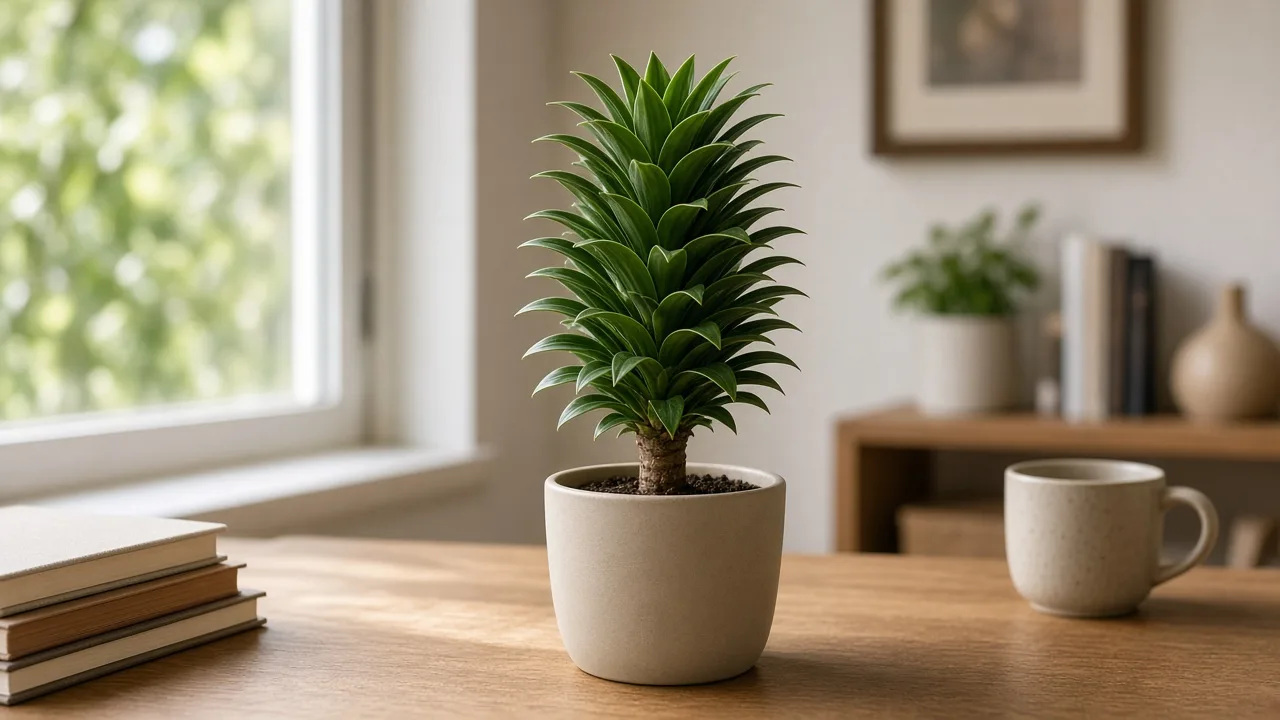
Dracaena Compacta (Dracaena fragrans ‘Compacta’—Janet Craig Compact, Compact Corn Plant) is the dwarf columnar corn plant: glossy dark green leaves stacked in dense rosettes on short, slow canes, usually topping out around 2–4 ft indoors instead of the 6 ft strap-leaf Mass Cane form. UF/IFAS lists ‘Janet Craig Compacta’ among slow interiorscape dracaenas grown for tight foliage, not rapid height (EP149). Janet Craig types are also described as slow-growing broadleaf evergreens that tolerate low light—so a quiet plant on a dim shelf is often genetics plus placement, not disease.
Slow growth becomes a problem when the crown produces no new leaves through a full warm season in reasonably bright filtered light, when new leaves stay smaller and pale, or when lower leaves yellow while the mix stays wet for weeks. For how chronic bottlenecks work across houseplants, see the slow growth hub—on Compacta, the pattern usually shows up as a frozen rosette on a firm short cane.
First step: improve light at the crown and match watering to that slower metabolism. Push your finger 2 inches into the mix; water only when dry at that depth per the watering guide. Do not repot, prune hard, or fertilize until you know whether the rosette starts moving again within a few weeks.
What slow growth looks like on Dracaena Compacta
On this cultivar, “slow” means the terminal rosette barely changes—not a vine that stalls mid-run.
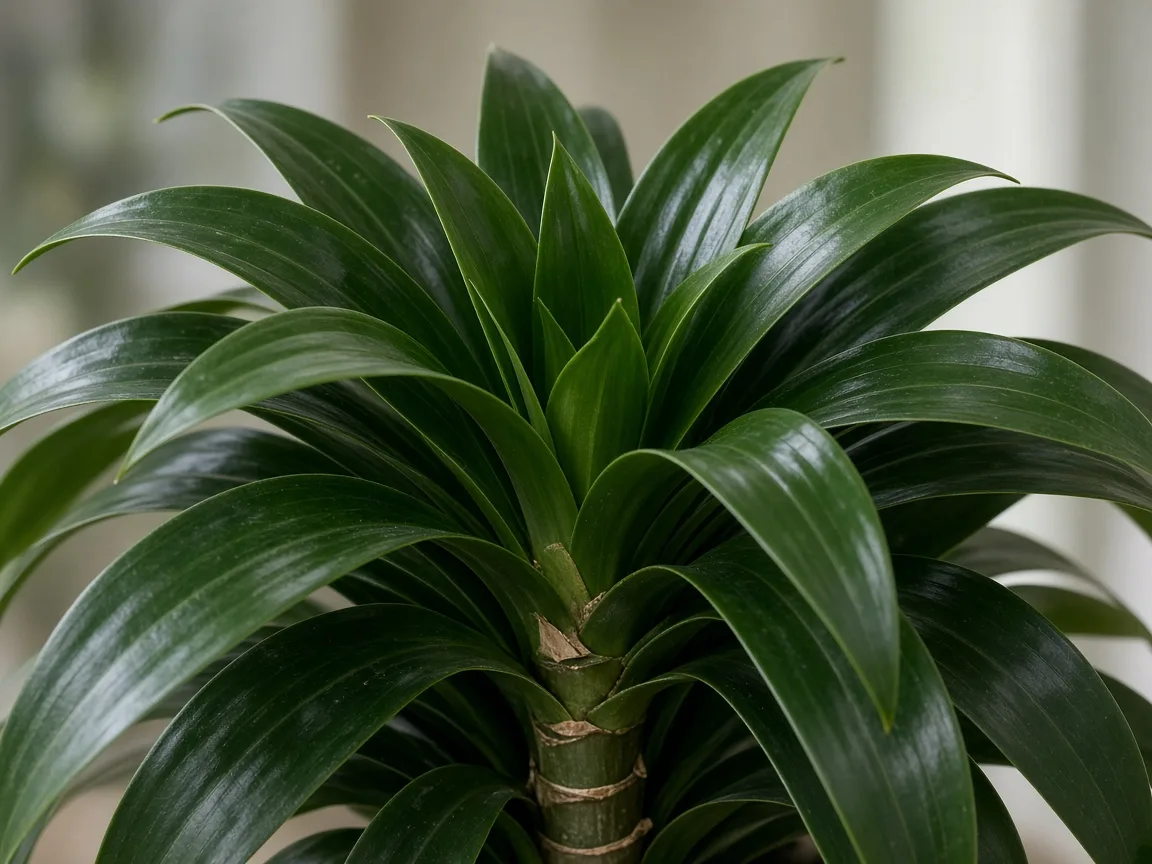
Slow Growth symptoms on Dracaena Compacta - compare crown spacing with older glossy leaves on the same cane.
Usually normal slow pace:
- Firm woody cane, often only a few inches above soil before leaves begin
- Tightly stacked mature leaves with a glossy, narrow profile
- Long gaps between new crown leaves, but occasional unrolling in spring and summer
- Stable deep green color without rapid yellowing up the column
- Pot drying on a predictable rhythm—often 7–14 days in summer and 14–21 days in winter in typical home light
Likely a true stall or decline:
- No new crown leaf from March through September in a spot that should receive bright filtered daylight
- New leaves emerge thin, twisted, or much smaller than the last flush, then stop
- Lower leaves yellow in clusters while soil stays damp and heavy—see overwatering
- Soft or darkening cane at the soil line with sour smell—treat as possible root rot
- Persistent brown tip burn on fresh crown leaves after light is adequate—often fluoride or salt stress (PNW handbook on dracaena tip burn)
This differs from leggy growth, where internodes on the short cane lengthen and leaves look sparse. It differs from not enough light when the main complaint is faded, narrow leaves—not a crown that has gone completely idle.
Why Compacta’s column grows slowly
Built-in dwarf habit
Compacta is selected for bushy rosettes on slow canes, not annual feet of height. Corn plant (D. fragrans) is a slow-growing broadleaf evergreen indoors; the Compacta form compresses that pace into a tabletop silhouette. Expect inches per year, not weekly visible change, even when care is correct.
The desk-and-shelf light trap
Because Compacta fits desks and tight corners, it often lands far from windows. It tolerates partial shade better than it thrives in it—weak light keeps the column alive but stops crown flushes for months. Missouri Botanical Garden notes corn plants prefer bright indirect light; Compacta on a interior bookshelf rarely gets enough photons for steady new leaves.
Wet roots in dim rooms
In low light, transpiration drops. Owners who water on a calendar schedule keep the mix wet too long. Oxygen-poor roots cannot support new crown tissue even though older leaves stay green. The dim-room loop is common: less light → slower drink → more frequent watering → stalled rosette.
Cool drafts and winter pause
UF/IFAS recommends 70–80°F for interior dracaena performance (EP149). Cold AC drafts, chilly window glass in winter, and short days all throttle growth. A zero-flush winter in a heated home is normal; zero flushes through late spring in a warm bright room is not.
Fluoride, salts, and tight new leaves
Dracaena is sensitive to fluoride and soluble salts, which show as tip burn and can blunt new crown leaves. If growth stopped while fresh leaves brown at the margins on a regular tap-water schedule, switch to low-fluoride water before assuming the plant needs more fertilizer.
Rootbound or exhausted mix
After years in the same pot, crowded roots and compacted peat can slow uptake. Growth may stall even when light and watering look fine—especially if water runs straight through or the plant dries out within two days every cycle. Cross-check repotting timing; Compacta rarely needs frequent upsizing because of its slow habit.
How to confirm the cause
Work through these checks in order—each narrows the diagnosis before you change multiple variables.
- Season – Is it mid-winter with short days? Pause judgment until March. If it is April–September and the crown is static, keep investigating.
- Crown bud – Look at the very center of the rosette. A rolled glossy spear or tiny emerging leaf means the plant is growing, just slowly. A bare crown with no movement for two warm months confirms a stall.
- Light at the rosette – Stand where the plant sits at midday. If you cannot see window glass from the crown without turning the pot, light is likely the bottleneck. Compare with the light guide.
- Dry-down – Probe 2 inches deep. Mix that stays wet seven or more days after one watering in a dim corner points to root stress. Bone-dry soil for weeks with limp leaves may mean underwatering is limiting growth—see underwatering.
- Cane firmness – Press the cane at soil level. Firm wood suggests storage tissue is intact. Mushy or hollow feel escalates to root inspection.
- Leaf quality on last flush – Smaller, pale, or tip-burned new leaves compared with older glossy foliage suggest fluoride, salt, or nutrient stress—not simple genetics.
- Pests – Check crown axils and leaf undersides for scale, mealybugs, or spider mite stippling on stagnant plants in dry heat.
First fix for Dracaena Compacta
Move the rosette into brighter filtered light, then change nothing else for three to four weeks.
Place the pot within about 1–2 m of an east-facing window or several feet back from south or west glass behind a sheer curtain. Avoid jumping from deep shade to hot afternoon sun—Compacta’s narrow leaves scorch easily.
After the move:
- Water only when the top 2 inches of mix are dry, not on a fixed weekday schedule.
- Do not fertilize a stalled plant immediately.
- Do not repot into a larger container unless roots clearly circle the pot wall.
If tip burn on new leaves is the pattern, begin using distilled, reverse-osmosis, or rainwater for several months while you watch the next crown flush. Once growth resumes, follow the fertilizer guide at reduced strength during warm months only.
Step-by-step recovery
When light and watering align with Compacta’s slow metabolism:
- Rotate the pot a quarter turn weekly so all sides of the rosette receive similar light.
- Resume a dry-down rhythm—typically every 7–14 days in summer and 14–21 days in winter, adjusted to your room and pot size.
- After two to three healthy new crown leaves, trim any fully yellow lower leaves to redirect energy—see pruning for cane-safe cuts.
- Repot in spring only if roots are dense against the pot or water behavior is erratic; use well-draining soil and a pot one size larger, not a desk-swallowing tub.
- Keep temperatures in the 18–27°C (65–80°F) comfort band and away from cold AC blasts on the cane base.
Recovery timeline
Compacta rewards patience:
- 2–4 weeks – Stabilization; no further yellowing or softening is the first win.
- 4–8 weeks – First visible new crown leaf or unrolling spear if light was the main limit.
- 2–4 months – Clearer flush rhythm with evenly spaced glossy leaves on the short cane.
Older leaves with tip burn or yellow margins do not fully green again. Judge success by new crown tissue, not by repairing every lower leaf. See yellow leaves if color loss keeps climbing the column.
Lookalike symptoms
| What you see | Likely cause | What to do first |
|---|---|---|
| No growth Nov–Feb only | Winter slowdown | Reduce water slightly; wait for longer days |
| Longer gaps between leaves but some crown movement | Leggy growth from weak light | Brighten; compare leggy growth |
| Yellow lowers + wet soil | Overwatering / root stress | Dry down; inspect roots if yellowing spreads |
| Crispy tips on newest leaves | Fluoride or salt injury | Change water source; leach salts if needed |
| Drooping rosette + very dry pot | Underwatering | Deep soak once, then reset dry-down rhythm |
| Sticky leaves or webbing | Pests draining vigor | Treat pests—not a fertilizer fix |
Mistakes to avoid
Do not water more often because growth is slow in a dim corner—that deepens wet-root stalls. Do not fertilize heavily before light and moisture are corrected. Do not repot into a huge pot hoping for speed; excess soil stays wet on a slow drinker. Do not compare Compacta to a tall corn plant in the same room—the dwarf form will always look quieter. Do not stack repotting, pruning, and feeding in one week; fix light and water first, then adjust one variable at a time.
How to prevent chronic slow decline
Treat Compacta as a bright-filtered-light plant that happens to tolerate shade, not as a zero-light survivor. Match watering to how fast the pot dries in that light. Refresh mix and pot size before roots become a solid mat. Scout the crown monthly. Keep pots off low shelves if you have pets—dracaena is toxic to cats and dogs. Review the overview for baseline expectations before buying another “slow” cultivar.
When to worry
Escalate beyond a simple light move if you see soft cane at the base, sour soil smell, multiple yellow leaves in one week on wet mix, or no crown response after six to eight weeks in brighter filtered light with corrected watering. Those patterns need root assessment—not another window shuffle alone.
When to use this page vs other Dracaena Compacta guides
- Dracaena Compacta watering – Use for routine moisture checks before blaming genetics for a stall.
- Not enough light – Use when leaves look faded or narrow; this page focuses on crown idle pace.
- Leggy growth – Use when internodes stretch on the short cane.
- Dracaena Compacta problems hub – Browse all common issues on this species.
Related Dracaena Compacta guides
- Overview – Cultivar hub and baseline care
- Light – Placement for a tight rosette
- Watering – Top-2-inches dry-down rhythm
- Soil – Drainage for slow canes
- Fertilizer – When to feed after a stall
- Overwatering – Wet-mix compound stalls
- Root rot – Soft cane and sour mix
- Yellow leaves – Symptom overlap
- Problems hub
Conclusion
Slow Dracaena Compacta growth is often normal dwarf pace or a fixable light-and-water mismatch on a desk-friendly column. Brighter filtered exposure plus true dry-down watering restarts crown flushes within weeks in the growing season. Judge success by new glossy leaves at the rosette—not by how fast a Mass Cane would grow in the same home.