Root Rot on Dracaena Compacta: Causes, Checks & Fixes
Quick answer
Root rot on Dracaena Compacta follows chronically wet mix in small pots—especially when a desk cachepot traps runoff. Stop watering, press the short cane at the soil line, and unpot if the top 2 inches stay damp while lower leaves yellow on a heavy pot.
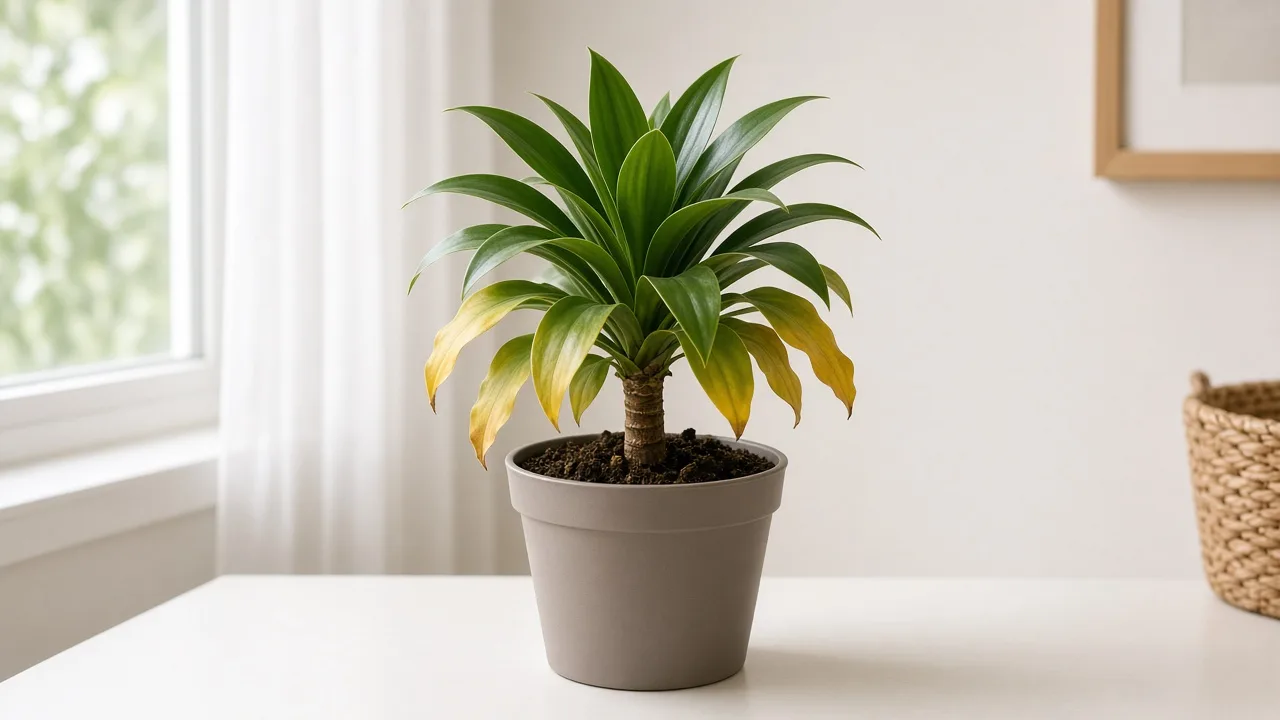
Root Rot on Dracaena Compacta: Causes, Checks & Fixes
This guide covers root rot on Dracaena Compacta. See also the general Root Rot guide, watering, and light pages for this plant.
Root Rot on Dracaena Compacta: Causes, Checks & Fixes
Quick answer
Dracaena Compacta (Dracaena fragrans ‘Compacta’ — Janet Craig Compact) is the dwarf, columnar corn plant with tightly stacked dark green leaves on short slow canes, not the 6 ft floor specimen most generic dracaena advice imagines. Root rot here is almost always chronic wet mix in a small pot, often worsened by a desk cachepot that re-soaks the root ball overnight. For how saturated soil kills roots in general, see our root rot guide; on Compacta the warning pattern is yellow lower rosette leaves + heavy wet pot + firm-looking crown that still will not dry down.
First step: stop all watering. Press the cane where it meets the soil — it should feel solid, not spongy. If the top 2 inches of mix stay damp while lower leaves yellow or the pot smells sour, unpot and inspect roots before you repot, fertilize, or pour again expecting the rosette to perk up.
Root rot vs. other Compacta problems
Compacta’s dense rosette hides stress until several lower leaves fail at once. Use pot weight, depth moisture, cane firmness, and smell — not leaf limpness alone.
| Pattern | Top 2 inches | Pot weight | Short cane at soil | Likely cause |
|---|---|---|---|---|
| Root rot | Damp days after last drink | Heavy, cool | Softening or denting | Failed roots on saturated mix |
| Early overwatering | Wet surface, damp core | Heavy | Still firm | Pause before rot — overwatering |
| Underwatering | Dry, crumbly | Light | Firm | Missed watering — underwatering |
| Fluoride brown tips | Variable | Normal | Firm | Tap water salts — brown tips |
| Low light slow dry-down | Wet for weeks | Heavy | Firm, pale rosette | Reduce drinks — not enough light |
Wilted leaves may mean soil is too dry or too wet — rotting roots cannot take up water even when the pot is heavy. Pacific Northwest extension guidance is explicit for corn plant: allow D. fragrans to dry out; it is easily overwatered. Compacta follows that fragrans rule in a shallower, slower-draining root zone than tall canes in deep floor pots.
What root rot looks like on Dracaena Compacta
Rot develops in the root ball while the tight crown still looks acceptable from across the room.
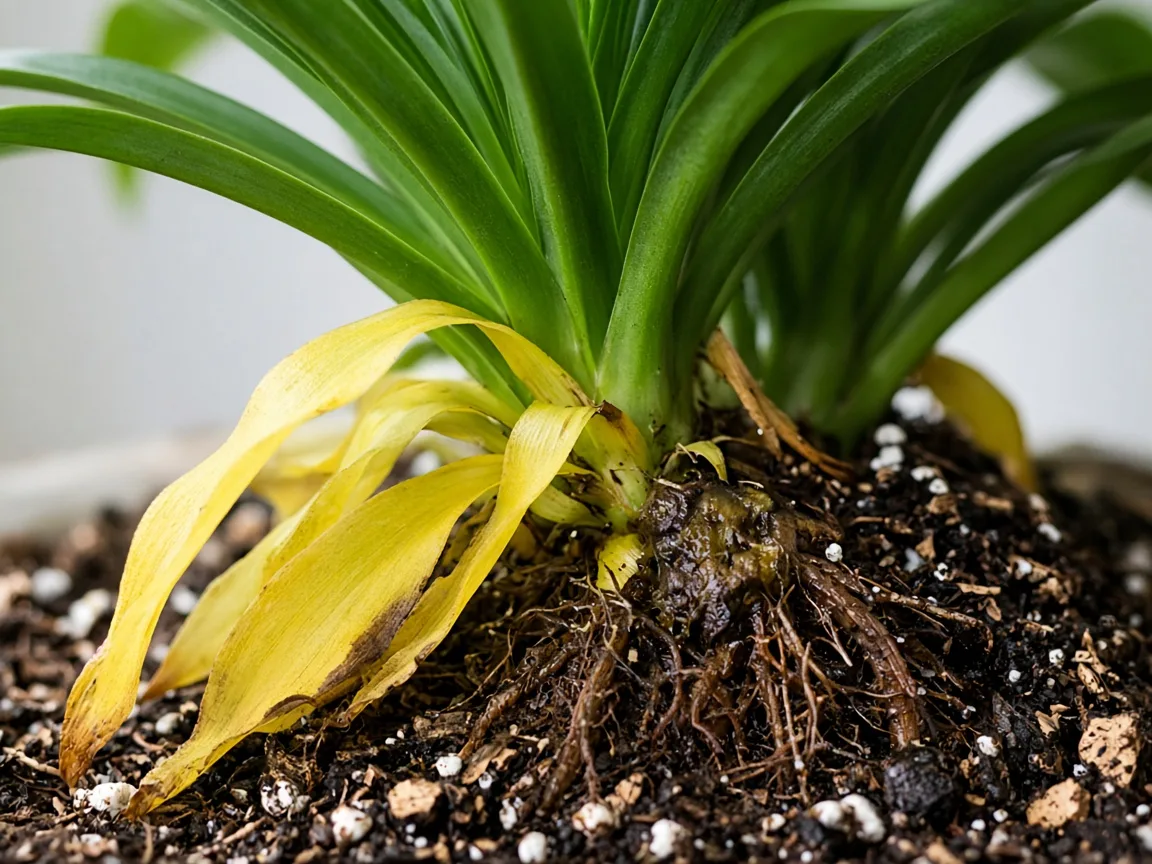
Root rot on Dracaena Compacta — compare yellowing lower rosette leaves with firm upper growth on the same plant.
Early signs:
- Yellow lower leaves in clusters while the top 2 inches stay damp
- Drooping rosette on wet soil that does not rebound after you stop watering
- Sour or musty smell when you lift the small pot off a desk mat
- Fungus gnats hovering over a surface that never dries
- Stalled new leaves at the crown — no tight glossy openings for weeks
Advanced signs:
- Soft or discolored cane at the soil line on a plant only 12–24 inches tall
- Brown, mushy roots when you unpot; healthy dracaena roots are firm and whitish to tan
- Whole rosette collapse on saturated mix despite moisture at depth
- Blackened basal tissue — salvage may shift to cane propagation above all soft zones
Compare with wilting: dry lightweight pots and firm leaves point away from rot.
Why small-pot Compacta rots faster than tall corn plants
Most corn-plant rot articles assume a 10–12 inch floor pot and a half-depth dry-down check. Compacta usually lives in 6–8 inch containers on desks and side tables. Less soil volume means less buffer between one heavy watering and a fully saturated root zone, and slow growth uses water slowly — so the same weekly schedule that works for a fast-draining tall cane can leave Compacta wet for two weeks in a dim corner.
Desk cachepot and liner traps
A nursery pot inside a decorative shell is a common Compacta setup. If runoff collects in the outer pot, bottom roots sit in standing water until the mix goes anaerobic. Having plants standing in water or growing in pots without drainage holes is asking for trouble. Lift the inner pot after every soak and empty the cachepot — the same discipline as the watering guide empty-saucer rule.
Winter calendar-watering on a slow cultivar
Missouri Botanical Garden advises reducing watering from fall to late winter when indoor growth slows. RHS notes D. fragrans ‘Compacta’ should be watered sparingly in winter. Summer habits in a cool, dim room keep the top 2 inches wet while transpiration drops — the classic winter rot setup on a plant that already drinks modestly.
Fluoride stress can mask the real problem
Dracaenas are sensitive to fluorides and built-up salts; brown margins can push owners to water more often. Fluoride injury is not root rot, but extra irrigation on already wet mix accelerates decay. After rescue, switch toward rainwater or filtered water per the overview hub — not more corrective soaking during active rot work.
How to confirm the cause
Work through this sequence before trim-and-repot.
- Top-2-inch test: Push a finger or dry skewer 2 inches deep near the pot edge. Clinging damp mix with yellow lower leaves supports rot over thirst.
- Pot weight: Lift the container. Still heavy several days after your last drink? The root zone is likely saturated.
- Cane squeeze: Press the short cane at the soil line. Firm is better; give-way or denting is urgent.
- Drainage and cachepot: Confirm holes are open; pour out outer-shell water.
- Smell: Sour odor from drainage holes or lifted root ball suggests active decay.
- Unpot gently: Rinse old mix from roots. Healthy tissue is firm and pale; rotted tissue is brown, slimy, or hollow.
If roots are still mostly firm and only the surface was wet, follow overwatering recovery first. Return here once mushy roots, sour odor, or basal cane softening confirm decay.
First fix for Dracaena Compacta
Stop all watering. That is the single first action — not misting wilted leaves, not fertilizer, not a peroxide drench on day one.
When mushy roots or advanced symptoms are confirmed:
- Unpot and shake or rinse away wet mix over newspaper.
- Trim all soft, brown, or smelly roots with clean scissors; sterilize blades between cuts on badly affected plants.
- Air-dry trimmed roots and cut surfaces for several hours to overnight in bright indirect light (extend in cool humid rooms).
- Repot into fresh well-drained mix per the soil guide — typically peat- or coir-based houseplant mix with 20–25% perlite — in a pot sized to the trimmed root mass, not the rosette width.
- Water lightly once to settle mix, then wait until the top 2 inches dry before the next thorough soak.
- Place in bright indirect light away from cold drafts; NC State notes corn plants need drainage holes and moist-but-not-soggy culture during recovery.
Plants with partial rot may be salvaged by pruning out the rotted part of the root system. If the basal cane is soft through several inches with no firm roots, focus on firm cane cuttings per propagation instead of repotting the whole rosette.
Recovery timeline
Compacta grows slowly, so rescue is slower than on fast tropicals.
| Phase | What to expect |
|---|---|
| Days 0–2 | Stop water; unpot, trim, air-dry. Lower yellow leaves may keep dropping. |
| Days 3–7 | Downsized repot; surface mix should dry steadily. Cane should stay firm. |
| Week 2 | First cautious soak only if top 2 inches read dry. No fertilizer. |
| Weeks 3–8 | Leaf drop slows; pot weight normalizes for your light level. |
| Weeks 8–12+ | New tight crown leaves are the real recovery signal — not old yellow blades re-greening. |
Improvement: firm basal cane, no returning sour smell, new glossy rosette leaves, firm roots on a gentle tug after several weeks.
Worsening: softness climbing the cane, odor on dry mix, rosette collapse despite corrected watering — re-inspect or propagate from firm tissue above rot.
What not to do
- Do not keep watering a drooping rosette when the top 2 inches are wet. Watering a plant with rotting roots makes the problem worse.
- Do not repot into a oversized decorative pot “for stability” — extra wet mix kills trimmed roots.
- Do not fertilize until new crown growth resumes.
- Do not bury a wobbly short cane deeper to prop it up — that invites crown rot.
- Do not assume every yellow lower leaf is rot — single old leaves fade slowly; clusters on wet soil are the warning. See yellow leaves for the fork.
Pet safety when handling damaged tissue
Dracaena is toxic to cats and dogs due to saponins. Wear gloves when trimming mushy roots or fallen leaves, bag debris, and keep cuttings away from pets. Contact your veterinarian if a pet ingests plant material — this guide is not medical advice.
How to prevent root rot next time
- Water only when the top 2 inches dry — not on a desk-calendar reminder.
- Empty saucers and cachepots within 30 minutes of every soak.
- Match pot size to roots when you repot — resist jumping several inches at once.
- Reduce winter frequency when growth slows; verify depth moisture, not the date.
- Improve light so mix dries predictably — see light for Compacta.
- Treat fungus gnats as a moisture audit, not an isolated spray problem.
Clemson HGIC lists root rot among common dracaena problems tied to overwatering — prevention on Compacta is almost entirely drainage discipline in a small pot.
When to use this page vs other Compacta guides
- Dracaena Compacta watering — routine top-2-inch dry checks before assuming rot.
- Overwatering — early wet-soil intervention when roots may still be firm.
- Wilting — separate dry wilt from wet wilt before unpotting.
- Yellow leaves — aging vs stress vs rot patterns.
- Dracaena Compacta problems hub — browse all issues on this cultivar.