Not Enough Light on Dracaena Compacta: Causes, Checks &
Quick answer
Dracaena Compacta tolerates shade but needs bright indirect light to keep its tight rosette—weak light loosens the crown, shrinks new leaves, and slows drying so soil stays wet. First step: move the pot within a few feet of an east or filtered west/south window before fertilizing or watering more.
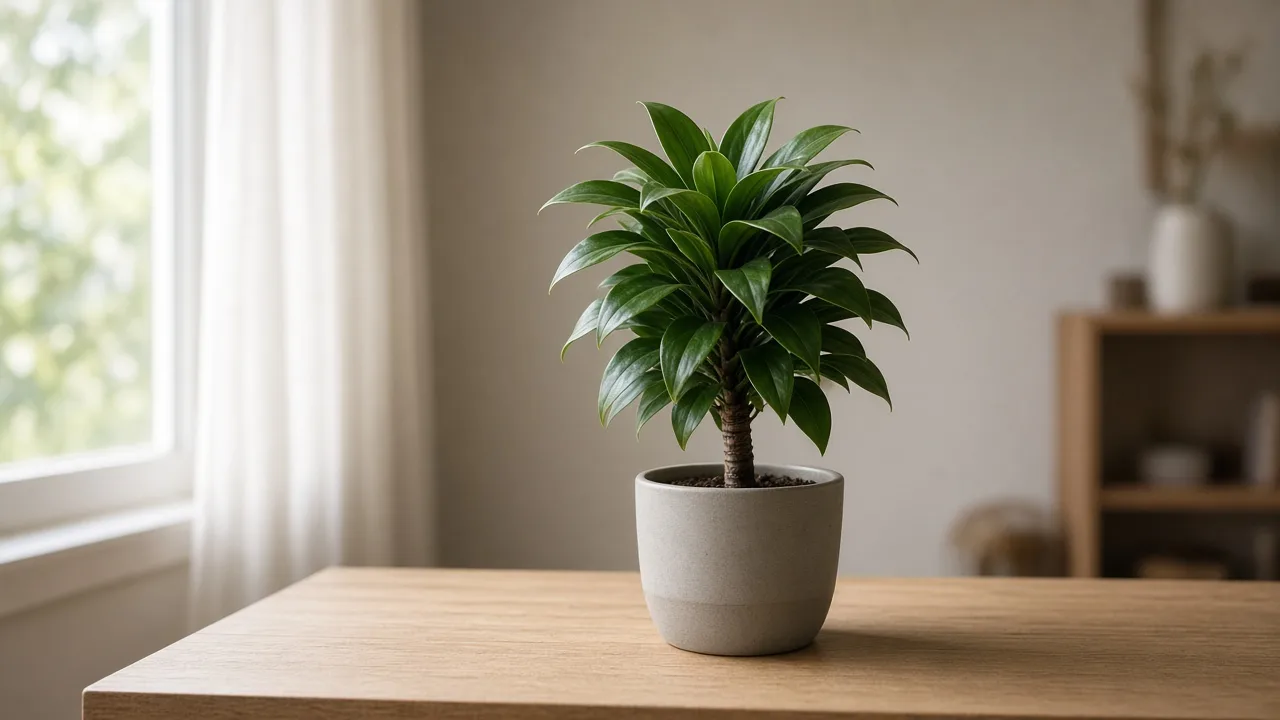
Not Enough Light on Dracaena Compacta: Causes, Checks & Fixes
This guide covers not enough light on Dracaena Compacta. See also the general Not Enough Light guide, watering, and light pages for this plant.
Not Enough Light on Dracaena Compacta: Causes, Checks & Fixes
Quick answer
Dracaena fragrans ‘Compacta’ (Janet Craig Compact) is sold as a low-light survivor, and it will persist on a desk far from glass—but the dense columnar rosette that makes this cultivar special only stays tight when photosynthesis keeps pace. Without enough light, new crown leaves open smaller, the stacked rosette loosens, and growth nearly stalls even though watering looks “fine.”
For how chronic shade limits usable energy in general, see our not enough light hub. On Compacta, the tell is crown architecture: short upright leaves should stay packed at the cane tip, not spaced out like a miniature palm.
First step: move the pot into brighter indirect light per the Dracaena Compacta light guide—typically within a few feet of an east-facing window or back from a filtered south or west window. Do that before repotting, fertilizing, or watering more often. Dim light also slows evaporation; wet soil plus weak light is how compact corn plants slide into overwatering stress.
Not enough light vs. leggy growth on Compacta
Both pages start with insufficient photosynthetic light, but they answer different search moments:
| Your situation | Start here |
|---|---|
| Loose rosette, tiny new leaves, stalled crown; plant still relatively short | This page — confirm placement and dry-down rhythm |
| Visible cane stretch with long bare sections between leaf clusters | Leggy growth on Dracaena Compacta |
| No new leaves for months but rosette shape still looks normal | Slow growth on Dracaena Compacta |
| Yellow lower leaves with wet soil | Overwatering or root rot |
| Window direction, acclimation, grow-lamp bands | Light guide |
Fixing low light always means brighter placement—the difference is which symptoms you use to confirm the diagnosis before you move the pot.
Reading the Compacta rosette (not a tall corn plant)
Standard D. fragrans Mass Cane shows light stress as a leafy crown on a tall bare trunk. Compacta keeps leaves short and upright in dense rosettes on slow canes, usually topping out around 1–1.5 m indoors over many years. That dwarf habit changes what “leggy” looks like:
- Stretch may show up as wider gaps between leaf clusters at the crown, not a 3 ft bare cane.
- New leaves may stay narrower and shorter than the glossy older ones still hugging the tip.
- The whole rosette can tilt toward one window while the opposite side looks thinner.
A lower cane with no leaves is often normal aging on woody dracaenas—not proof of low light. Watch new tissue at the crown.
What not enough light looks like on Dracaena Compacta
Missouri Botanical Garden describes corn plant as best in bright indirect locations protected from long direct sun, while tolerating some low light. Compacta inherits that range but grows slowly even in good conditions, so symptoms creep in over months.
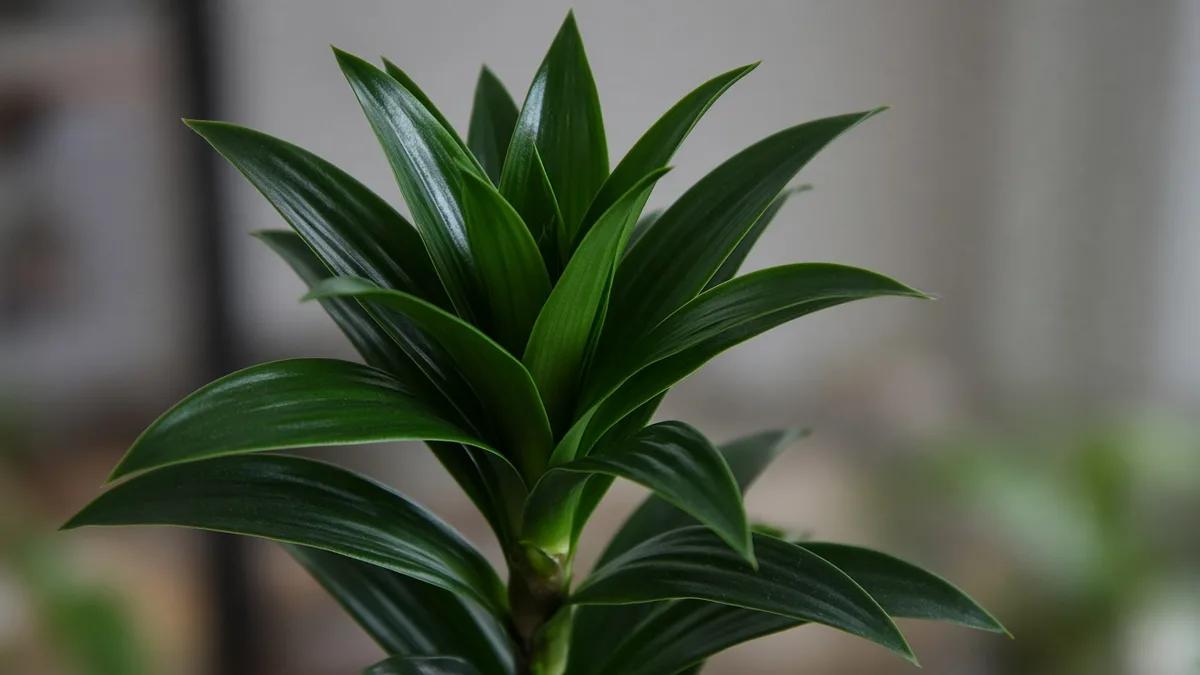
Smaller newest leaves and a looser crown rosette on Janet Craig Compact — move within bright indirect range before changing fertilizer or watering.
Typical low-light patterns on Compacta:
- Looser crown rosette — leaves that should stack tightly look slightly fanned or gappy.
- Smaller new leaves at the tip compared with older crown foliage.
- Leaning or one-sided growth — the rosette points at the brightest source.
- Very slow or absent crown growth — no new leaf unfurling for many weeks during warm indoor months.
- Deep, dull green color — chlorophyll density can increase in dim conditions, so leaves look oddly dark rather than pale.
- Soil that stays wet — low light reduces water use; the top 2 inches may remain moist far longer than in a brighter spot.
Not the same as low light:
- Brown dry tips on otherwise stable rosettes — often fluoride in tap water or low humidity; see brown tips on Dracaena Compacta.
- Soft mushy cane at soil line with sour mix — overwatering or rot; light correction alone will not fix wet roots.
- Lower leaves yellowing one at a time on an otherwise firm cane — can be normal senescence on mature stems.
Desk and tabletop placement traps
Compacta is marketed for offices and nightstands precisely because it stays small—but those spots are often the dimmest in the room. University of Maryland Extension groups Dracaena with medium-bright houseplants that need meaningful window light, not just ambient ceiling fixtures.
Common traps:
- Middle-of-room desks — intensity drops sharply even a few feet from glass.
- North-facing workstations — lowest natural light; Compacta may survive but rarely pushes tight new rosettes.
- Bookshelves between plant and window — the rosette reads “green” while receiving almost no photons.
- Winter without adjustment — shorter days reduce energy at the same window; a plant that was marginal in October can stall by February.
- Dusty crown leaves — short Compacta leaves collect dust quickly, which blocks the little light they already get. Wipe gently with a damp cloth after you improve placement.
Why slow growth hides light stress
Because Compacta is a slow-growing shrub, owners often blame fertilizer or “a bad batch” before considering light. A plant can look unchanged for a quarter while internodes at the crown slowly lengthen. Photograph the crown from the same angle monthly—subtle stretch is easier to see in pictures than by memory.
If growth is zero through spring and summer in a clearly dim spot, treat light as the primary limiter before reaching for fertilizer.
How to confirm the cause
Work through these checks before changing multiple variables:
- Window distance and direction — Note feet from glass and exposure. RHS advises bright but indirect light, such as east- or west-facing windows or filtered south light.
- Shadow test at midday — Hold your hand between plant and window. A soft shadow with recognizable edges suggests usable bright indirect light; a faint shadow means the spot is too dim for active crown growth.
- New-growth comparison — Measure crown leaf width or take a photo today. Move the pot closer to filtered window light for two to three weeks, then compare the next leaf flush.
- Soil dry-down speed — Follow the watering guide rule: water when the top 2 inches are dry. If soil stays wet for two weeks while lower leaves yellow, suspect overwatering compounding weak light.
- Season check — Symptoms that appear in late autumn may be winter light drop even if the pot never moved.
- Pest pass — Spider mites favor warm, dry, dim air. Inspect crown leaf undersides; stippling plus webbing is spider mites on Dracaena Compacta, not light alone.
Diagnosis is likely correct if: new crown leaves emerge closer together, look wider, and hold gloss within three weeks of brighter placement—without any other care overhaul.
Keep searching if: yellowing spreads quickly with soggy soil, or you find mushy roots or active pests.
First fix for Dracaena Compacta
Move the pot to the brightest location that still avoids hot direct sun on the leaves.
For most homes that means:
- Within 3–6 feet of an east- or west-facing window, or
- Several feet back from a south-facing window filtered by sheer curtain or room depth
Increase exposure gradually over one to two weeks if the plant lived in a very dark spot for a long time—sudden harsh direct sun can scorch glossy crown leaves. Rotate the pot a quarter turn weekly so the rosette grows upright instead of permanently leaning.
If no window reaches medium-bright levels, add a full-spectrum LED grow lamp 12–18 inches above the crown for 12–16 hours daily. Sixteen hours of light and eight hours of darkness work well for foliage houseplants when supplementing weak natural light.
Do not fertilize, water more, or repot as the first response. A stressed Compacta in dim light cannot use nutrients efficiently, and wet soil in low light is a common path to root problems.
Step-by-step recovery
Once the plant is in brighter indirect light or under a grow lamp:
- Adjust watering immediately — Brighter light increases transpiration. Keep watering when the top 2 inches dry, but expect checks to come sooner than in the dark corner.
- Remove only fully spent leaves — Snip lower leaves that are completely yellow or brown; do not strip healthy green foliage to “refresh” the rosette.
- Dust crown leaves — Short Compacta blades block light when dusty; wipe so the brighter spot pays off.
- Wait for one full leaf cycle — The next two or three crown leaves tell you whether light is adequate.
- Optional cane pruning after stabilization — If bare cane length bothers you, cut at the desired height once new growth looks healthy. See the pruning guide for semi-ripe timing on slow canes.
Recovery timeline
| Phase | What to expect |
|---|---|
| Week 1–2 | Leaning may slow; soil dries slightly faster; little visible leaf change |
| Week 3–4 | New crown leaf should look wider and sit closer to the previous node if light is sufficient |
| Month 2–3 | Steadier crown flushes; rosette looks tighter and glossier |
| Long term | Old stretched spacing on the cane remains; improvement shows in new tissue only |
Compacta may add only inches of cane per year in good light—patience is normal. If no new crown leaf appears after four to six weeks in a clearly brighter spot, the location is still too dim or roots/pests need attention.
Lookalike symptoms
| What you see | More likely cause | How to tell apart |
|---|---|---|
| Yellow lower leaves only | Aging or overwatering | Aging is slow and isolated; overwatering pairs with wet soil and possibly soft cane base |
| Brown leaf tips | Fluoride, salts, low humidity | Tips brown while rosette posture stays normal; use filtered water |
| Wilting with dry soil | Underwatering | Pot feels light; leaves droop without long-term crown stretch |
| Pale upper leaves + wet soil | Root rot starting | Mushy roots, sour smell; not fixed by light alone |
| Tiny dots + webbing | Spider mites | Pests on wipe test; may worsen in dim dry heat |
Low light and overwatering often overlap because dim spots slow water uptake. Fixing light without easing watering can worsen root decline just when photosynthesis increases.
Mistakes to avoid
- Assuming “low-light tolerant” means a windowless office — Compacta endures shade; it does not build a tight rosette in it.
- Jumping to direct south-window sun — Crown leaves scorch quickly; filtered bright indirect is the target.
- Fertilizing a stalled rosette — Feed only after light is adequate and new growth looks normal.
- Watering on a calendar — Dark rooms need less frequent drinks; brighter rooms need more frequent checks, not automatic extra water.
- Ignoring winter — Supplement or accept near-dormant crown growth December through February.
- Judging recovery on old leaves — Stretched spacing and smaller mature crown leaves will not remodel; watch the next flush.
Dracaena Compacta care cross-check
Light and watering move together on the overview hub. Compacta prefers bright indirect light paired with well-draining mix and a dry-down rhythm of roughly every 7–14 days in summer and 14–21 days in winter in typical indoor conditions—but those intervals assume reasonable light.
When you brighten placement:
- Shorten the interval between moisture checks per watering.
- Keep using rainwater or filtered water if fluoride brown tips were already an issue.
- Hold off on repotting until growth stabilizes unless roots are clearly failing—see soil for gritty mix if rot was involved.
How to prevent not enough light next time
- Choose the window before the furniture slot — Decide placement on light, not décor.
- Rotate weekly — Prevents permanent lean on short canes.
- Clean glass seasonally — More energy reaches the rosette.
- Supplement in winter — A timer-controlled LED grow lamp maintains medium-bright levels when days are short.
- Re-check after room changes — New monitors, blinds, or outdoor tree growth can shade a formerly adequate desk.
When to worry
Low light alone is rarely an emergency, but these combinations need faster action:
- Rapid yellowing of many leaves with soggy soil — Inspect roots; improve light and reduce watering.
- Cane softening at the base — Stem rot from chronic overwatering in a dim room; may require cutting affected tissue and repotting.
- No new growth for two or more warm months — Increase light or accept decline.
- Repeated pest outbreaks — Weak, dim-grown Compacta often signals overall stress; treat pests after correcting light.
When to use this page vs other Dracaena Compacta guides
- Watering guide — Use for routine moisture checks before assuming light is the main issue.
- Problems hub — Browse all common issues on this cultivar.
- Leggy growth — When bare cane stretch is already obvious.
- Slow growth — When the rosette looks fine but nothing new opens.
- Yellow leaves — When lower-leaf loss dominates the picture.
Related Dracaena Compacta guides
Related tool
Use the Plant Problem Diagnosis Tool to narrow causes for not enough light on this plant before changing multiple variables at once.