Dracaena Compacta Care Guide: Light, Water & Size
Dracaena fragrans 'Compacta'
Dracaena Compacta (Janet Craig Compact) care: compact corn plant form, bright indirect light, fluoride-safe watering, slow growth, and pet toxicity.
Dracaena Compacta Care Guide: Light, Water & Size
Start with wateringThe most common care mistake for Dracaena CompactaWatering guide →Dracaena Compacta care essentials
Light
Water
Water when top 2 inches are dry; every 7–14 days in summer; 14–21 days in winter.
Soil
Well-draining peat-free loam-based potting mix with perlite.
Humidity
40–60%
Temperature
18–27°C (65–80°F)
Fertilizer
Feed lightly with [balanced liquid fertiliser](https://www.
About Dracaena Compacta
Dracaena Compacta is native to Tropical Africa, typically reaches 2–4 ft indoors; dense columnar rosettes of short dark green leaves on slow canes indoors, with slow growth. Dracaena Compacta has a shrub like growth habit and part of the Asparagaceae family. It is also known as Janet Craig Compact, Compact Corn Plant, and Dracaena Janet Craig Compact.
| Detail | Information |
|---|---|
| Also known as | Janet Craig Compact, Compact Corn Plant, Dracaena Janet Craig Compact |
| Native region | Tropical Africa |
| Mature size | 2–4 ft indoors; dense columnar rosettes of short dark green leaves on slow canes |
| Growth rate | Slow |
| Growth habit | Shrub Like |
| Scientific name | Dracaena fragrans 'Compacta' |
| Family | Asparagaceae |
Dracaena Compacta Care Guide: Light, Water & Size
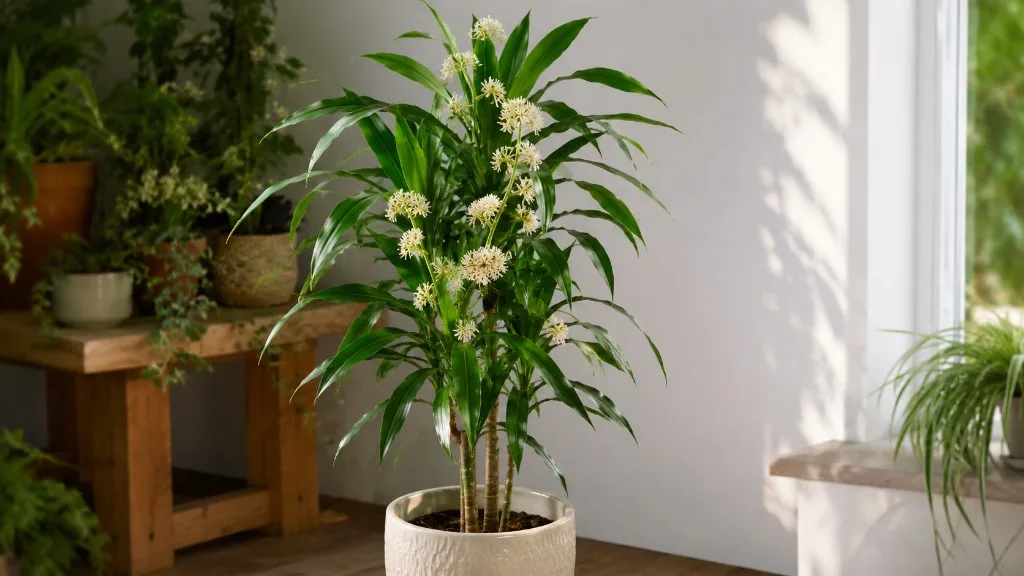
Dracaena fragrans (Compacta Group) ‘Compacta’ — sold as Dracaena Compacta, Janet Craig Compact, or compact corn plant — is the short, bushy form of corn plant with tightly stacked dark green leaves on thick canes. It stays much smaller than standard D. fragrans ‘Massangeana’ and suits tabletops and floor corners where a 6 ft lobby corn plant would overwhelm the room. Care matches other cane dracaenas: bright indirect light, real dry-down between drinks, and filtered or rainwater to limit brown tips from fluoride.
This overview is your starting map for the full Dracaena Compacta care cluster. It covers what the plant is, how big it actually gets, the non-negotiable basics for light, water, and soil, and where to go next when you need step-by-step depth on a single topic.
What Is Dracaena Compacta?
Dracaena Compacta is a slow-growing, tropical evergreen shrub in the asparagus family (Asparagaceae). Retail tags may list Dracaena fragrans (Compacta Group) ‘Compacta’ or the older synonym Dracaena deremensis ‘Compacta’. The plant forms upright, sparsely branching stems topped by dense rosettes of glossy, dark green leaves that are shorter and more upright than other corn-plant forms — the habit that creates its compact silhouette.
Like all D. fragrans types, Compacta traces to tropical Africa. Indoors it behaves as a woody, drought-adapted cane plant with storage in stems and roots — evolved for wet-dry cycles, not constantly wet mix. Mature specimens may produce fragrant white flowers and orange berries according to RHS, but blooms are rare in typical home conditions. Judge health by new leaf quality and cane firmness, not flowers.
Botanical Background and Trade Names
Garden centers use overlapping names for the same plant. Janet Craig Compact and Dracaena Compacta usually refer to this cultivar — not the full-size Janet Craig (D. fragrans ‘Janet Craig’), which carries wider, arching leaves and can reach 4–8 m in conservatory culture. Compact corn plant signals the fragrans lineage (broad strap leaves on cane) rather than dragon tree (D. marginata) or Song of India (D. reflexa).
When the tag is missing, identify Compacta by habit: multiple short canes or a single thick stem with tight leaf stacking and little bare wood compared with a tall Massangeana corn plant. Leaves are typically solid dark green without the yellow central stripe of ‘Massangeana’.
Why Compacta Looks Different From Janet Craig and Corn Plant
Three dracaenas often sit on the same bench but diverge in size and leaf carriage. Clemson HGIC describes standard Janet Craig as wide, glossy leaves on thick stems that can grow up to 10 feet tall, while ‘Compacta’ has 5-inch long leaves tightly clustered along slow-growing stems. RHS lists Compacta at 1–1.5 m (about 3–5 ft) mature height with a narrow spread — a fraction of the 4–6 ft typical indoor range for standard corn plant.
The practical takeaway: Compacta is chosen for footprint, not speed. It will not fill a corner with height as fast as Massangeana, and it will not stay as low and vase-shaped as dragon tree. It occupies the middle ground — bushy corn-plant foliage in a desk-to-floor size band — which changes how fast the pot dries and how often you need to intervene with pruning.
Growth Habit and Mature Size Indoors
Compacta grows as a columnar upright shrub with slow-to-moderate extension. Multiple stems in one pot are common at retail, giving a fuller silhouette without the staggered bare-cane look of large corn-plant installations.
How Fast Dracaena Compacta Grows
Expect inches per year, not feet per season. RHS notes time to maturity around 5–10 years to reach the listed height band. Growth accelerates in bright indirect light with stable warmth and clean water; it stalls after root stress, in dim corners, or when fluoride damage keeps trimming new tips.
New leaves tell you whether conditions work. Firm, normally sized blades with good color mean the current light and water rhythm fit the pot. Small new leaves, persistent tip necrosis, or a shrinking rosette mean adjust basics before reaching for fertilizer.
Dense Rosettes on Short Canes
The signature look is leaves borne in dense rosettes around stem tips with minimal internode stretch — why the plant reads as a leafy globe or short pillar rather than a palm with a bare trunk. Lower leaves may yellow and drop with age, but Compacta often retains foliage longer than a tall corn plant because the cane stays short.
If the plant becomes lopsided toward a window, rotate the pot every two to three weeks. A full-spectrum grow light 12–18 inches (30–45 cm) above the foliage on a 10–12 hour timer helps in north-facing rooms or dark winters without forcing the plant into direct sun.
Best Growing Conditions at a Glance
| Factor | Target for Dracaena Compacta |
|---|---|
| Light | Bright indirect; tolerates partial shade with slower growth |
| Water | Top 2 in (5 cm) dry before soak; often 7–14 days summer, 14–21 winter |
| Soil | Well-draining peat-free mix + perlite + coarse bark |
| Temperature | 65–80°F (18–27°C); avoid below ~55°F (13°C) |
| Humidity | 40–60% helpful; water quality often matters more |
| Feed | Light; monthly spring–summer at half strength |
| Repot | About every 2 years in spring when root-bound |
Treat this table as a checkpoint, not a substitute for reading the pot. Light level changes how fast soil dries; season changes how fast the plant drinks. The Dracaena Compacta watering guide goes deeper on moisture checks; the light guide covers placement by window direction.
Light, Water, and Soil Summary
These three variables decide most outcomes. Align them and feeding, repotting, and propagation become maintenance. Misalign one — especially water volume or fluoride — and decline shows up in leaf margins weeks later.
Light Placement in Brief
Bright, indirect light is the target: near an east window, or several feet back from filtered south or west glass where leaves receive strong ambient brightness without hours of direct sun on the blade surface. RHS lists full sun and partial shade for outdoor culture; indoors, interpret that as bright indirect — not a hot south sill.
Compacta tolerates lower light better than many showy tropicals, which is why it survives offices and interior corners — but tolerance is not thriving. Dim placement produces slower growth, smaller new leaves, and wider gaps between leaf nodes. Clemson HGIC links round dry patches and streaks to excessive sunlight on foliage — distinct from thin brown tips caused by fluoride. Full detail lives in the Dracaena Compacta light guide.
Watering Rhythm and Fluoride Sensitivity
Water when the top 2 inches (5 cm) of mix feel dry — roughly every 7–14 days in warm, bright months and every 14–21 days in cooler, dimmer months — but always verify with your finger before pouring. Clemson HGIC advises allowing dracaenas to dry slightly between waterings, then soaking thoroughly. RHS recommends checking that the top 5 cm is dry before watering and warns that wet compost causes root rot.
Water quality is the signature Compacta issue. Dracaenas accumulate fluoride in leaf margins, producing brown, necrotic tips and edges. RHS Compacta cultivation notes specifically recommend rainwater because plants dislike tap water. Chlorine may off-gas if water sits overnight; fluoride does not, so standing tap water is not a reliable fix. Use filtered, distilled, or rainwater if tips brown on an otherwise correct schedule.
Existing brown tips will not green up — trim them along the natural leaf curve and judge success by new leaves emerging clean after you change the water source. More water does not fix tip burn; it can worsen rot if roots are already stressed.
Soil, Drainage, and Pot Choice
Use well-draining potting mix with aeration: standard peat-free compost plus perlite (~20%) and coarse bark or grit. Missouri Botanical Garden recommends a loamy, peaty, well-drained indoor mix and uniform moisture during the growing season with reduced watering from fall through late winter.
Every pot needs a drainage hole. Cachepots work only if you empty the saucer after each watering. Oversized decorative pots that stay wet for days are a common root-rot path on slow-growing Compacta that drinks modestly in moderate light. Clemson HGIC also warns against perlite-heavy mixes and superphosphate fertilizers, which increase fluoride availability — keep soil pH near 6.0–6.5 when possible. The soil guide breaks down DIY blends and warning signs of failing mix.
Temperature, Humidity, and Feeding
Compacta accepts a wide range of indoor temperatures when other factors are stable. Aim for 65–80°F (18–27°C) during active growth. Cold is the sharper risk: Missouri Botanical Garden notes container plants should be protected before outdoor temperatures dip below 50°F (10°C); winter window glass and AC vents can injure indoor specimens the same way.
Humidity around 40–60% helps leaf margins in dry heating season, but when only tips brown while the rest of the blade stays green, suspect fluoride or salt buildup first, then humidity. Grouping plants or using a small humidifier beats misting, which raises humidity briefly and can wet foliage where airflow is poor.
Feed lightly. A balanced liquid houseplant fertilizer at half strength, monthly in spring and summer, matches RHS Compacta guidance and Clemson HGIC recommendations for dracaenas generally — skip fall and winter unless strong grow lights keep the plant producing new leaves. Hold fertilizer after repotting or root repair until new top growth returns. The fertilizer guide covers fluoride-safe products and overdose signs.
Repotting, Propagation, and When to Cut the Cane
Repot about every two years, or when roots emerge from drainage holes, mix dries within a day of watering, or the plant becomes top-heavy. Spring is the safest season. Move up only one pot size — oversized pots hold wet mix around small root systems and invite rot.
Propagation on a healthy plant follows standard dracaena cane logic: remove the top rosette with several inches of bare stem, or cut 6–12 inch (15–30 cm) cane sections with at least one node, and root in moist mix, perlite, or water. RHS lists semi-ripe cuttings in late spring to early summer with bottom heat for best rooting. The original stub often sprouts multiple shoots below the cut — useful if a single cane becomes leggy.
Because Compacta stays naturally short, beheading is less common than on tall corn plant — but the same technique applies if one stem stretches in low light. See the propagation guide for timing and the pruning guide for shaping and tip trimming.
Do not propagate plants with soft cane, sour soil, or active pest loads until the parent is stable. Sap may irritate skin on sensitive people — gloves are reasonable when making large cuts.
Common Dracaena Compacta Mistakes
Watering on a calendar without checking soil causes more harm than missed drinks. Slow down after moving the plant to lower light or into winter slowdown.
Using untreated tap water in fluoridated municipalities produces tip burn that looks like thirst. More water worsens the problem if roots are already stressed — see overwatering on Dracaena Compacta when multiple leaves yellow with a soft cane.
Keeping the pot in a full saucer suffocates roots within days. Empty runoff every time.
Interpreting lower yellow leaves incorrectly: one bottom leaf at a time on a firm cane is often normal aging; multiple yellow leaves with soft cane signals overwatering and possible root rot on Dracaena Compacta — stop watering and inspect roots before repotting.
Expecting lobby-plant height from a Compacta cultivar. If you need a 5–6 ft corn-plant silhouette, buy Massangeana or standard Janet Craig — not this form.
Buying for a pet household without planning placement. Compacta is not pet safe; see below.
Repotting on day one after purchase adds stress. Quarantine, learn the pot’s dry rhythm, and repot only when roots or mix clearly need attention. The repotting guide covers when to wait versus when to act immediately.
Pet Safety and Sap Handling
Dracaena Compacta is toxic to cats and dogs. The ASPCA lists Dracaena spp. with saponins as the toxic principle. Ingestion can cause vomiting (occasionally with blood), depression, loss of appetite, hypersalivation, and dilated pupils in cats. RHS also flags the plant as harmful if eaten by pets.
Keep Compacta completely out of reach of pets that chew plants. Tabletop placement is not safe if cats can jump to the surface. If ingestion is suspected, contact your veterinarian or the ASPCA Animal Poison Control Center at (888) 426-4435. Choose a confirmed pet-safe species for accessible shelves and floor pots.
When to Use This Page vs Other Dracaena Compacta Guides
Use this overview when you are new to the plant, confirming you have Compacta rather than tall Janet Craig or Massangeana, or building a baseline care rhythm before troubleshooting.
Open a topic guide when one variable needs full depth:
- Light — window placement, low-light limits, sun burn
- Watering — moisture checks, fluoride, seasonal intervals, rescue from soggy soil
- Soil — mixes, drainage, pH, wrong-soil signs
- Fertilizer — timing, products, salt buildup
- Repotting — pot sizing, root inspection, post-repot care
- Propagation — cane cuttings, water rooting, aftercare
- Pruning — shaping, trimming brown tips
Return here when you need the whole picture after fixing a single issue — light, water, and soil interact, and Compacta punishes stacked changes made all at once.
Related Dracaena Compacta Guides
- Dracaena Compacta hub — species landing page and cluster index
- Dracaena Compacta watering
- Dracaena Compacta light
- Dracaena Compacta soil
- Dracaena Compacta fertilizer
- Dracaena Compacta repotting
- Dracaena Compacta propagation
- Dracaena Compacta pruning
- Brown Tips on Dracaena Compacta
- Overwatering on Dracaena Compacta
Conclusion
Dracaena Compacta rewards a simple contract: bright indirect light when you can provide it, real dry-down between soaks, and fluoride-safe water when tips complain. It is the short, bushy corn-plant cultivar for smaller spaces — slower and denser than Massangeana, with a mature ceiling near 3–5 ft rather than lobby height. Read cane firmness first, moisture second, water chemistry third, light fourth when something looks wrong.
Identify whether you truly have Compacta — tight dark rosettes on slow canes, not wide arching Janet Craig leaves — then keep care boring for the first month while the pot teaches you its dry rhythm. Use sibling guides when a single topic needs depth; keep Compacta away from pets; trim brown tips for appearance but trust new growth to confirm your fix. Get those habits right and Janet Craig Compact becomes a long-lived structural plant that earns its spot for years without outgrowing the room.
How to care for Dracaena Compacta?
When should you water Dracaena Compacta?
Water when top 2 inches are dry; every 7–14 days in summer; 14–21 days in winter.
- Push finger 2 inches into soil; water only when dry at that depth - Water when top 2 inches are dry; every 7–14 days in summer; 14–21 days in winter.
- Drain excess water - Water when top 2 inches are dry; every 7–14 days in summer; 14–21 days in winter.
What soil works best for Dracaena Compacta?
Well-draining peat-free loam-based potting mix with perlite.
- standard peat-free potting compost - Well-draining peat-free loam-based potting mix with perlite.
- perlite (20%) - Well-draining peat-free loam-based potting mix with perlite.
- coarse grit or bark
Grower notes for Dracaena Compacta
What makes Compacta different from corn plant
Dracaena fragrans 'Compacta' is the dwarf, columnar corn-plant form — not the tall Mass Cane with 3 ft strap leaves. Its glossy dark green leaves stay short and upright in dense rosettes on slow canes, reaching roughly 2–4 ft indoors instead of 6 ft or more. Care matches other D. fragrans cultivars: fluoride-safe water, dry-down between drinks, and bright indirect light — but the compact habit suits desks, tabletops, and tight corners.
Best placement in a real home
Place Compacta where bright indirect light is realistic for most of the day — near an east window or several feet back from south or west glass. It tolerates partial shade better than it thrives in it; weak light slows growth and can narrow leaves. Water when the top 2 inches of mix dry. Humidity target: 40–60%. Temperature comfort zone: 18–27°C (65–80°F).
Before you buy this plant
Choose plants with firm canes, tightly stacked glossy leaves, and soil that does not smell sour. Be cautious if you see widespread brown tips on fresh growth, a soft squishy cane base, or a pot that stays wet in poor light. Labels vary — Janet Craig Compact and Compact Corn Plant are the same cultivar — but weak roots matter more than the name on the tag.
First month after bringing it home
Do not repot on day one unless the mix is failing or pests are obvious. Quarantine the plant, learn how fast the pot dries in your light level, and use filtered or rainwater if your tap water is fluoridated. Watch for brown tips, yellow lower leaves, and mushy canes. Fix water quality and drainage before stacking fertilizer, repotting, and pruning.
Safety note for Dracaena Compacta
Janet Craig Compact is toxic to cats and dogs. The ASPCA lists saponins as the toxic principle in corn plant (Dracaena fragrans), with vomiting and dilated pupils in cats. Keep short canes and fallen leaves out of reach on desks, floor pots, and low shelves.
How to tell Compacta is settling in
New leaves opening tight and glossy at the crown — without widespread brown margins — are the best sign the plant has found its spot. Because growth is slow, patience matters: a stable rosette over several months beats a quick flush followed by tip burn. Semi-ripe stem cuttings in late spring can propagate a backup if a cane gets too leggy.
Is it pet safe?
Dracaena Compacta is toxic to cats and dogs.
Contains saponins. Causes vomiting (sometimes with blood), anorexia, depression, and dilated pupils in cats. Keep completely out of reach of pets.
Watering Dracaena Compacta
For Dracaena Compacta, push finger 2 inches into soil; water only when dry at that depth and water every 7–14 days in summer; every 14–21 days in winter. Reduce frequency significantly in winter; compacta tolerates dry spells better than waterlogging.
| Detail | Information |
|---|---|
| How often | Every 7–14 days in summer; every 14–21 days in winter |
| How to check | Push finger 2 inches into soil; water only when dry at that depth |
| Seasonal changes | Reduce frequency significantly in winter; compacta tolerates dry spells better than waterlogging |
Signs of overwatering
- Yellow lower leaves
- soft mushy cane at soil level
- soggy soil that never dries
Signs of underwatering
- Drooping or curling leaves
- brown and dry leaf tips
- very light pot
Soil & potting for Dracaena Compacta
Use a mix of standard peat-free potting compost, perlite (20%), coarse grit or bark for Dracaena Compacta. Good drainage essential to prevent root rot. Target soil pH around 6.0–6.5. Repot every 2–3 years or when roots are very compacted, ideally in spring.
| Detail | Information |
|---|---|
| Recommended mix | standard peat-free potting compost, perlite (20%), coarse grit or bark |
| Drainage | Good drainage essential to prevent root rot |
| Soil pH | 6.0–6.5 |
| Repotting frequency | Every 2–3 years or when roots are very compacted |
| Best season to repot | Spring |
Signs it needs repotting
- Roots growing from drainage holes
- soil drying within a day of watering
- plant becoming top-heavy on short canes
Humidity & temperature for Dracaena Compacta
Dracaena Compacta prefers 40–60%, though normal home humidity is usually fine. Keep temperatures around 18–27°C (65–80°F).
| Detail | Information |
|---|---|
| Humidity | 40–60% - normal home humidity is fine. |
| Ideal temperature | 18–27°C (65–80°F) |
Fertilizer & pruning for Dracaena Compacta
Use feed lightly with [balanced liquid fertiliser](https://www. for Dracaena Compacta.
| Detail | Information |
|---|---|
| Fertilizer type | Feed lightly with [balanced liquid fertiliser](https://www. |
Common problems on Dracaena Compacta
Yellow Leaves
MediumLikely cause: Common on this plant type; confirm with recent watering, light, and root checks.
Quick fix: Inspect the plant and correct the most likely care stressor before stacking treatments.
Full fix guide →Brown Tips
MediumLikely cause: Common on this plant type; confirm with recent watering, light, and root checks.
Quick fix: Inspect the plant and correct the most likely care stressor before stacking treatments.
Full fix guide →Root Rot
MediumLikely cause: Common on this plant type; confirm with recent watering, light, and root checks.
Quick fix: Inspect the plant and correct the most likely care stressor before stacking treatments.
Full fix guide →Overwatering
MediumLikely cause: Common on this plant type; confirm with recent watering, light, and root checks.
Quick fix: Inspect the plant and correct the most likely care stressor before stacking treatments.
Full fix guide →Underwatering
MediumLikely cause: Common on this plant type; confirm with recent watering, light, and root checks.
Quick fix: Inspect the plant and correct the most likely care stressor before stacking treatments.
Full fix guide →Spider Mites
MediumLikely cause: Common on this plant type; confirm with recent watering, light, and root checks.
Quick fix: Inspect the plant and correct the most likely care stressor before stacking treatments.
Full fix guide →Mealybugs
MediumLikely cause: Common on this plant type; confirm with recent watering, light, and root checks.
Quick fix: Inspect the plant and correct the most likely care stressor before stacking treatments.
Full fix guide →Aphids
MediumLikely cause: Common on this plant type; confirm with recent watering, light, and root checks.
Quick fix: Inspect the plant and correct the most likely care stressor before stacking treatments.
Full fix guide →Leggy Growth
MediumLikely cause: Common on this plant type; confirm with recent watering, light, and root checks.
Quick fix: Inspect the plant and correct the most likely care stressor before stacking treatments.
Full fix guide →Slow Growth
MediumLikely cause: Common on this plant type; confirm with recent watering, light, and root checks.
Quick fix: Inspect the plant and correct the most likely care stressor before stacking treatments.
Full fix guide →Wilting
MediumLikely cause: Common on this plant type; confirm with recent watering, light, and root checks.
Quick fix: Inspect the plant and correct the most likely care stressor before stacking treatments.
Full fix guide →Drooping Leaves
MediumLikely cause: Common on this plant type; confirm with recent watering, light, and root checks.
Quick fix: Inspect the plant and correct the most likely care stressor before stacking treatments.
Full fix guide →Low Humidity
MediumLikely cause: Common on this plant type; confirm with recent watering, light, and root checks.
Quick fix: Inspect the plant and correct the most likely care stressor before stacking treatments.
Full fix guide →Not Enough Light
MediumLikely cause: Common on this plant type; confirm with recent watering, light, and root checks.
Quick fix: Inspect the plant and correct the most likely care stressor before stacking treatments.
Full fix guide →Fungus Gnats
MediumLikely cause: Common on this plant type; confirm with recent watering, light, and root checks.
Quick fix: Inspect the plant and correct the most likely care stressor before stacking treatments.
Full fix guide →Mold on Soil
MediumLikely cause: Common on this plant type; confirm with recent watering, light, and root checks.
Quick fix: Inspect the plant and correct the most likely care stressor before stacking treatments.
Full fix guide →