Wilting on Dracaena Compacta: Causes, Checks & Fixes
Quick answer
On Dracaena Compacta, wilting means the tight leaf rosette lost turgor—often from underwatering, waterlogged failing roots, heat shock, or pests—not a generic need for water. First step: check whether the top 2 inches of mix are dry and lift the pot before you pour.
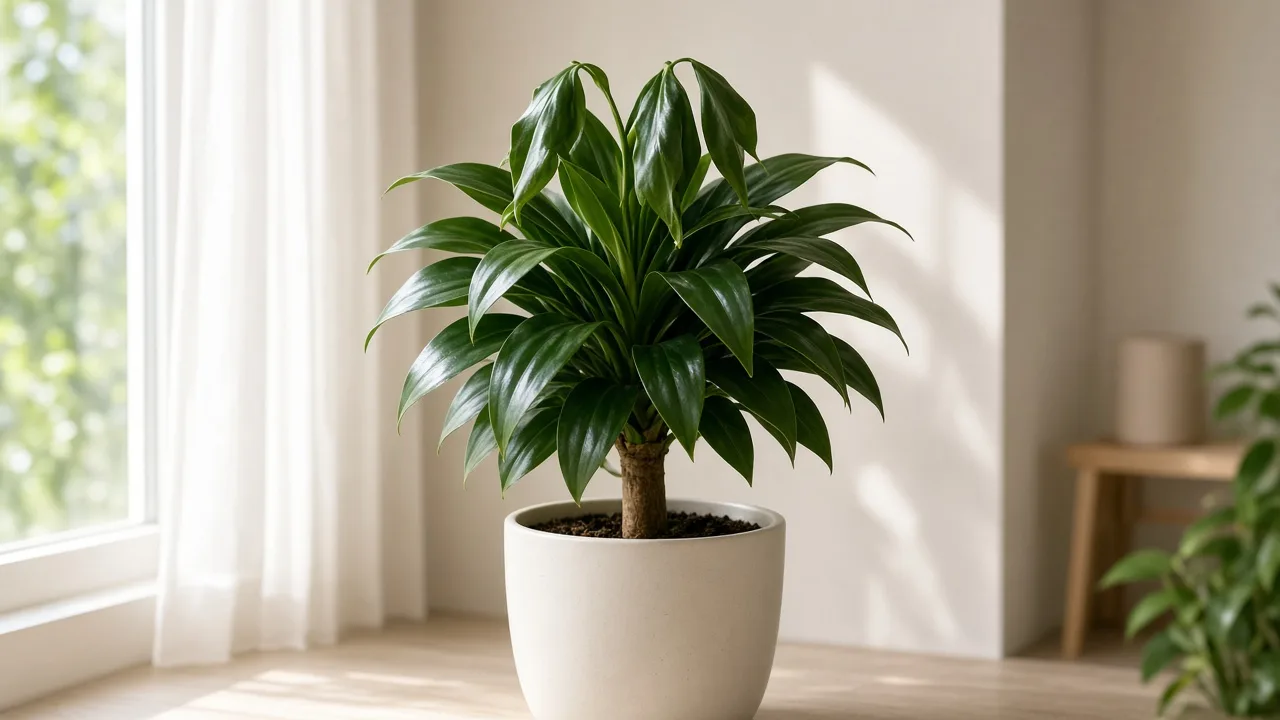
Wilting on Dracaena Compacta: Causes, Checks & Fixes
This guide covers wilting on Dracaena Compacta. See also the general Wilting guide, watering, and light pages for this plant.
Wilting on Dracaena Compacta: Causes, Checks & Fixes
Quick answer
Dracaena Compacta (Dracaena fragrans ‘Compacta’, Janet Craig Compact) wilts when water stops reaching the tightly stacked dark green leaves at the crown—not always because the plant is thirsty. The dwarf corn-plant form keeps short thick canes and a dense rosette in a small pot, so the same limp look can mean bone-dry upper mix, failing roots in soggy soil, a heat blast against a window, or sap-sucking pests in dry winter air. For how turgor collapse works in general, see our wilting guide. On Compacta, the fork that saves the plant is the top-2-inch check plus pot weight before you change anything else.
First action: push your finger 2 inches into the mix and lift the pot. Dry, light soil with a firm cane → one thorough soak until drainage runs, then empty the saucer. Cool, heavy, damp soil with a soft base → stop watering and press the cane at the soil line—do not repot, fertilize, or mist on day one.
What wilting looks like on Dracaena Compacta
Healthy Compacta holds its leaves upright in tight columns off short canes. Wilting removes that stiffness: blades hang or curl downward, the rosette looks flattened, and the whole plant may lean even though the cane still looks green.
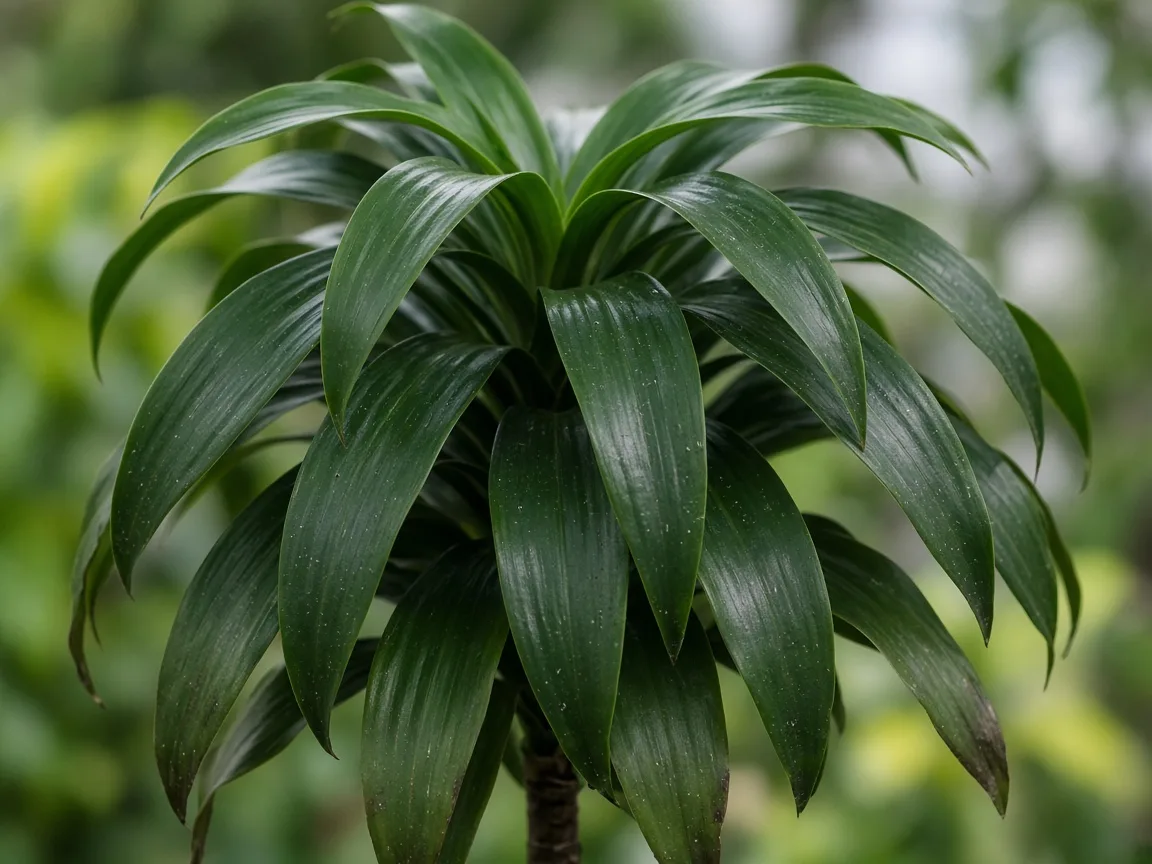
Wilting on Dracaena Compacta — compare limp upper leaves with firmer lower foliage on the same cane.
Limp rosette on dry, light mix (underwatering)
- Top 2 inches of mix are dry and may pull slightly from the pot wall
- Pot feels noticeably light compared with right after a full watering
- Leaves lose turgor from the outer rosette inward; tips may feel papery before they brown
- Short cane at the soil line stays firm when you squeeze it
- Recovery often starts within hours after one confirmed deep drink if roots are still white and firm
See underwatering on Dracaena Compacta when drought is the main pattern.
Collapse on wet, heavy mix (overwatering / root failure)
- Mix stays cool and damp at depth even when the surface looks merely “not dusty”
- Pot feels heavy; saucer may have held standing water
- Lower leaves yellow in clusters while the crown still looks limp
- NC State notes corn plants like moist growing-season soil but suffer when drainage fails—Compacta in a 6–7 inch pot hits rot faster than a tall floor specimen
- Soft, squishy cane at the soil line or sour smell when you disturb the surface
- The paradox: plant looks thirsty while soil is wet—damaged roots cannot move water upward
Pair with overwatering or root rot if the base softens or roots are mushy.
Sudden wilt after heat or cold shock
- Rapid limpness after the pot sat in a hot car, against a radiator, or in direct afternoon sun through glass
- Afternoon droop on otherwise moist soil that eases overnight once heat load drops
- Cold drafts below about 50 °F (NC State recommends keeping corn plants above 50 °F when possible) on wet roots can compound collapse in winter bedrooms
Stippling and limp new growth (spider mites / mealybugs)
- Fine stipples or bronzing, often before obvious webbing on a casual glance
- Cottony white clusters in leaf axils of the tight rosette—hard to see until you spread the crown
- NC State lists thrips and mealybugs as common dracaena problems
- Wilt here is sap loss and stress, not soil dryness—watering does not fix it
Use spider mites or mealybugs guides if pests are confirmed.
Wilting vs. drooping on Dracaena Compacta
Use this page when the rosette loses turgor quickly—leaves that were stiff yesterday hang limp today, often across several tiers at once. Drooping leaves on Compacta more often describe a gradual sag over weeks from chronic low light, slow root decline, or mild underwatering—not an acute collapse. If canes stay firm but leaves angle down with stretched, sparse growth, start with not enough light or the drooping-leaves page. If the whole crown feels deflated within a day, stay here and run the wet-vs-dry branch first.
Why Dracaena Compacta wilts
Compacta shares D. fragrans biology in a smaller package: slow growth, a shallow root ball in desk-sized pots, and leaves that transpire steadily in bright light but use little water in a dim winter office. Pacific Northwest extension guidance is blunt for the species—allow D. fragrans to dry out; it is easily overwatered—and that sensitivity applies even when the plant looks tough with thick leaves.
Underwatering dries fine roots and deflates the rosette. Owners who wait for calendar “weekly water” in January may skip drinks too long; owners who only dampen the surface never rewet the center of a dense root ball.
Overwatering and root rot produce the same visible wilt through a different path. Saturated mix drives out oxygen; owners see limp leaves and water again. In cool rooms, evaporation slows so the same summer interval keeps mix wet for weeks—classic wet-soil wilt on Compacta.
Heat and cold stress push transpiration faster than roots replace water. The Spruce notes sudden drooping on corn plants can follow extreme heat or cold, or root rot—not only slow drought.
Pests drain sap from axils and new growth in dry heated air. Mites and mealybugs are common dracaena companions per NC State.
Fluoride and salt burn cause brown tips and margins more often than whole-rosette wilt, but chronic tip damage on stressed plants overlaps with dehydration—Gardening Know How notes dracaenas are sensitive to fluoride, which can brown tips. If only margins crisp while the blade stays firm, see brown tips before you soak an already-wet pot.
How to confirm the cause
Work through these checks in order. Do not skip the 2-inch moisture test.
- Top-2-inch moisture — Dry and crumbly → suspect drought. Cool and clinging → suspect root failure, heat on wet mix, or pests—not thirst.
- Pot weight — Light with limp rosette fits underwatering. Heavy with limp rosette fits waterlogging or rot.
- Cane firmness — Press the short cane where it enters the mix. Firm with dry soil → thirst. Soft with wet soil → rot or advanced overwatering.
- Smell and gnats — Sour odor, algae, or fungus gnats support chronic saturation (overwatering cluster).
- Leaf axils and undersides — Spread the crown; look for webbing, stippling, or mealy cotton.
- Time pattern — Afternoon-only droop on moist soil suggests heat. All-day wilt on dry soil suggests drought. All-day wilt on wet soil suggests roots or pests.
- Recent events — Repotting within two weeks, a heat wave, a missed vacation watering, or a move beside a heating vent narrows the cause.
- Root spot-check if mismatch persists — Slide the plant out. Healthy dracaena roots are firm and pale. Brown mush confirms rot; dusty, brittle roots confirm drought damage.
First fix for Dracaena Compacta
Check top-2-inch moisture and pot weight—then act on what you find.
- If dry: Water thoroughly until water runs from drainage holes, then empty the saucer within 10–15 minutes. One deep drink beats repeated shallow sips that leave the core dry.
- If wet: Do not water. Move to brighter indirect light to speed safe drying, empty saucer water, and unpot if the cane is soft or the mix smells sour.
That single branch prevents the most common Compacta mistake: watering a rotting rosette because limp leaves look thirsty.
Do not fertilize, repot, or spray pesticides on day one unless you have confirmed mushy roots or active pests. Stacking fixes on a slow-growing dracaena adds salt and disturbance without solving the water pathway.
Step-by-step recovery by cause
If underwatering is confirmed
- Soak once until the root ball is evenly moist, then drain fully. For hydrophobic dry mix, bottom-water until the surface dampens.
- Trim only leaves that stay crispy and brown after 48 hours; green limp tissue often recovers turgor.
- Resume the watering rhythm—top 2 inches dry, not a calendar date.
- If the pot sat in harsh sun or above a vent, move it to bright indirect light while it recovers.
If overwatering or early root failure is confirmed
- Stop watering until the top 2 inches dry. Confirm drainage holes are open and saucers stay empty.
- If wilt persists after the surface dries, unpot, rinse roots, and trim brown mush back to firm tissue.
- Repot into airy, well-draining mix per the soil guide—only one pot size up if upsizing.
- Remove yellow leaves that continue to soften; they rarely re-firm.
- If the entire base is mushy, escalate using the root rot guide.
If spider mites or mealybugs are confirmed
- Rinse leaf axils and undersides with lukewarm water—pests hide in the tight rosette, not only on upper surfaces.
- Move the plant off hot glass or radiator lines; modest humidity helps dracaenas in heated air (NC State notes low humidity can brown tips).
- Apply insecticidal soap or horticultural oil labeled for the pest on a test leaf first; repeat on schedule until new growth emerges clean.
- Do not assume another drink fixes pest wilt—see spider mites or mealybugs for the full path.
If heat stress is confirmed
- Move the plant away from hot windows, radiators, and heating vents.
- Ensure soil moisture is even—not bone dry, not soggy.
- Filter intense afternoon sun with a sheer curtain.
- Expect recovery within 24–48 hours once heat load drops.
Recovery timeline
Underwatering: Noticeable perk within 2–12 hours after a thorough drink on healthy roots; a very dry small pot may need 24 hours for the full rosette to stiffen.
Overwatering / early rot: Days to weeks. Judge by firm cane and new tight leaves at the crown, not old yellow blades.
Pests: Stippling stops spreading within one to two weeks of consistent rinsing and treatment; clean new growth confirms success.
Heat stress: Often overnight to 48 hours once placement stabilizes.
Collapsed leaves rarely become perfect again—they drop or stay limp while new glossy leaves at the crown tell you recovery is real.
What not to do
Do not water every wilt without checking soil—wet-soil wilt needs drying and root inspection, not another drink.
Do not leave saucers full. Standing water keeps the bottom anaerobic in cool winter rooms where the surface dries slowly.
Do not move a wilted Compacta into direct sun to “dry it out.” Scorched rosette leaves add stress on already failing roots.
Do not fertilize collapsed plants. Salt stress on damaged roots slows recovery on fluoride-sensitive dracaenas.
Do not repot healthy dry wilt on day one—a deep watering usually fixes simple thirst in a firm cane.
Do not skip the crown axils. Mite and mealy wilt and water wilt look similar from across the desk.
Dracaena Compacta care cross-check
Wilting often exposes a mismatch between your routine and Compacta biology:
- Watering — Top 2 inches dry, soak thoroughly, empty saucers. Calendar watering in dim winter causes wet-soil wilt.
- Light — Bright indirect light uses more water than a shaded corner; low light narrows leaves per NC State and slows drying—adjust drinks, not just fertilizer.
- Mix and pot — Heavy peat in oversized pots stays wet at the center after the top looks dry. See soil and avoid cachepots that trap runoff.
- Water quality — Fluoride browns tips; chronic stress can overlap with wilt. Use filtered or rainwater when tips keep burning.
- Season — Short winter days slow growth; the same summer interval in January keeps mix soggy.
The Dracaena Compacta overview ties these variables together for baseline culture.
How to prevent wilting on Dracaena Compacta
Water when the top 2 inches of mix are dry, using finger, weight, or a skewer—not the day of the week. Gardening Know How advises watering dracaenas after the soil surface has dried, which for Compacta means that 2-inch depth, not a dust-dry crust alone.
Use pots with drainage holes and empty saucers within 15 minutes of every watering.
Repot when roots circle the pot or water runs through without wetting the center—see repotting and use only slightly larger containers.
Keep desk pots away from AC vents, radiators, and hot glass.
Inspect leaf axils weekly during winter heating season—pests on dracaenas reward early detection.
Match watering frequency to how fast your mix actually dries in your light and room temperature, not to how limp the rosette looked at first glance.
When to worry
Treat as urgent when:
- The rosette wilts on soggy soil with sour smell or a soft cane at the base
- Crown tissue softens while mix stays wet—likely advancing rot, not thirst
- Wilt spreads across the whole plant within days on damp soil
- The plant does not perk within 24 hours after confirmed dry-soil watering on a firm cane
- More than half the roots are mushy on inspection
- Pest webbing coats new growth and collapse accelerates despite rinsing
Less urgent but worth fixing soon: mild afternoon droop on moist soil in a hot window, single-rosette wilt on a dry desk pot, or wilt right after repotting with firm canes and no rot smell.
Conclusion
Wilting Dracaena Compacta is a diagnostic signal, not an automatic command to water. Top-2-inch moisture, pot weight, cane firmness, and crown axils tell you whether to drink, dry, rinse for pests, or repot. Acting on that check first saves slow-growing rosettes from rot and rescues thirsty desk plants before crispy damage spreads. Match your next move to how the mix actually feels—not to how limp the leaves look at first glance.
When to use this page vs other Dracaena Compacta guides
- Dracaena Compacta watering guide — Use for routine moisture checks before assuming wilting is the main issue.
- Dracaena Compacta problems hub — Browse all common issues on this species.
- Underwatering on Dracaena Compacta — Different entry point when symptoms overlap with wilting.
- Overwatering on Dracaena Compacta — Different entry point when symptoms overlap with wilting.
- Root rot on Dracaena Compacta — Different entry point when symptoms overlap with wilting.
Related Dracaena Compacta guides
- Dracaena Compacta overview
- Dracaena Compacta watering
- Dracaena Compacta light
- Dracaena Compacta soil
- Underwatering on Dracaena Compacta
- Overwatering on Dracaena Compacta
- Root rot on Dracaena Compacta
- Drooping leaves on Dracaena Compacta
- Dracaena Compacta problems
Related tool
Use the Plant Watering Calculator to narrow causes for wilting on this plant before changing multiple variables at once.