Yellow Leaves on Dracaena Compacta: Wet Roots, Light &
Quick answer
On Dracaena Compacta, yellow leaves usually trace to overwatered roots, too little light slowing dry-down, fluoride-heavy tap water, or normal shedding of the lowest rosette leaves. First step: push your finger 2 inches into the mix; if it is wet while lower leaves yellow and the pot feels heavy, skip the next drink and let the root zone dry before you change anything else.
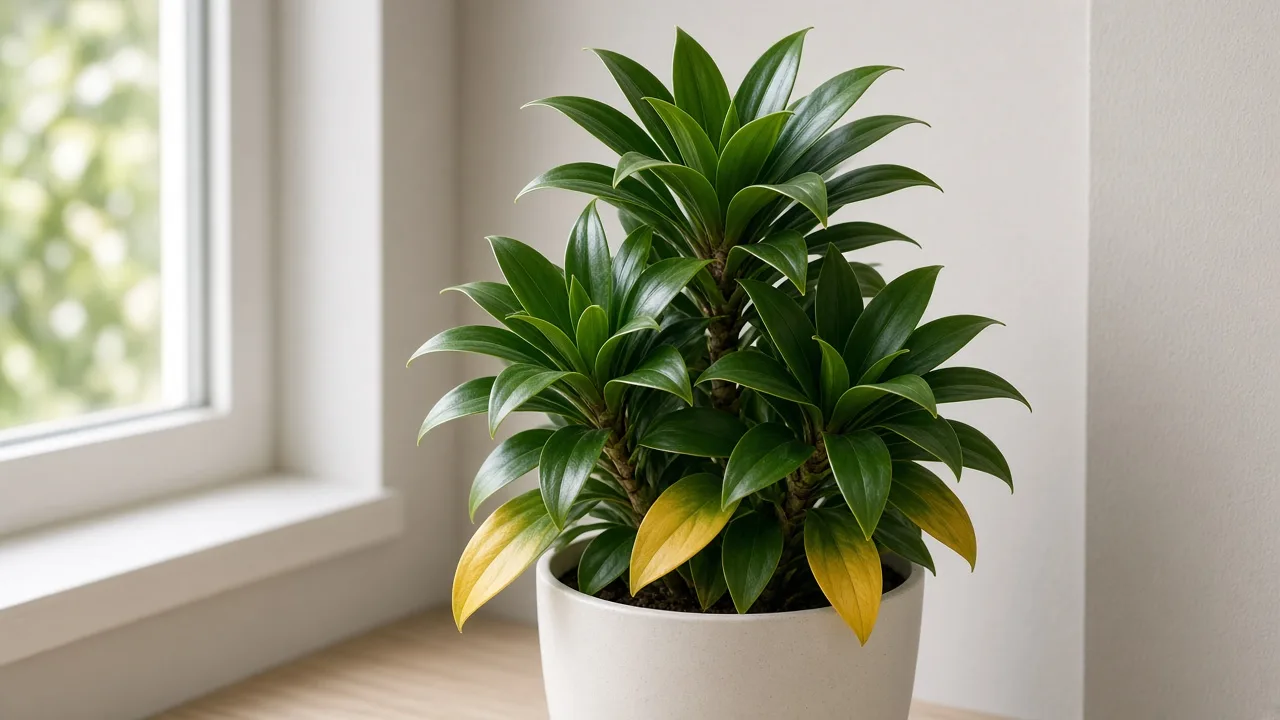
Yellow Leaves on Dracaena Compacta: Causes, Checks & Fixes
This guide covers yellow leaves on Dracaena Compacta. See also the general Yellow Leaves guide, watering, and light pages for this plant.
Yellow Leaves on Dracaena Compacta: Causes, Checks & Fixes
Quick answer
Yellow leaves on Dracaena fragrans ‘Compacta’ (Dracaena Compacta overview) are common—and often fixable without repotting on day one. This Janet Craig Compact form keeps dense, upright rosettes of short glossy leaves on slow woody canes, so yellowing usually means roots are too wet, light is too weak for the pot to dry, fluoride or salts are building in the mix, or the plant is simply dropping the lowest leaves in each stack.
First move: push your finger 2 inches (5 cm) into the mix per the watering guide. If it is wet at that depth while lower leaves yellow and the pot feels heavy, skip the next scheduled drink and do not fertilize until the root zone dries. If the pot is light and leaves droop, see underwatering instead. If the cane is soft at the soil line, read root rot before you water again.
For how yellow foliage works on houseplants in general, see our yellow leaves guide. On Compacta, the decisive clues are the 2-inch dry-down test, cane firmness above the soil, and whether yellow stays on the bottom rosette or climbs into new crown leaves.
| What you find | What it usually means | Read next |
|---|---|---|
| Bottom rosette yellow only, firm canes, bright indirect light | Normal old-leaf shed on slow canes | Watering guide — keep dry-down rhythm |
| Soft yellow leaves, heavy pot, sour smell | Saturated mix, failing roots | Overwatering |
| Yellow + mushy cane base | Advanced root or stem rot | Root rot |
| Pale yellow, soil stays damp weeks, dim room | Low light slowing dry-down | Not enough light |
| Yellow with brown tips/margins, watering looks fine | Fluoride or salt buildup | Brown tips |
| Yellow + webbing on leaf axils | Spider mites | Spider mites |
What yellow leaves look like on Dracaena Compacta
Yellowing on Janet Craig Compact shows up in patterns tied to its short, stacked leaf rosettes—not the long strap leaves of a tall Mass Cane. Match what you see before you treat:
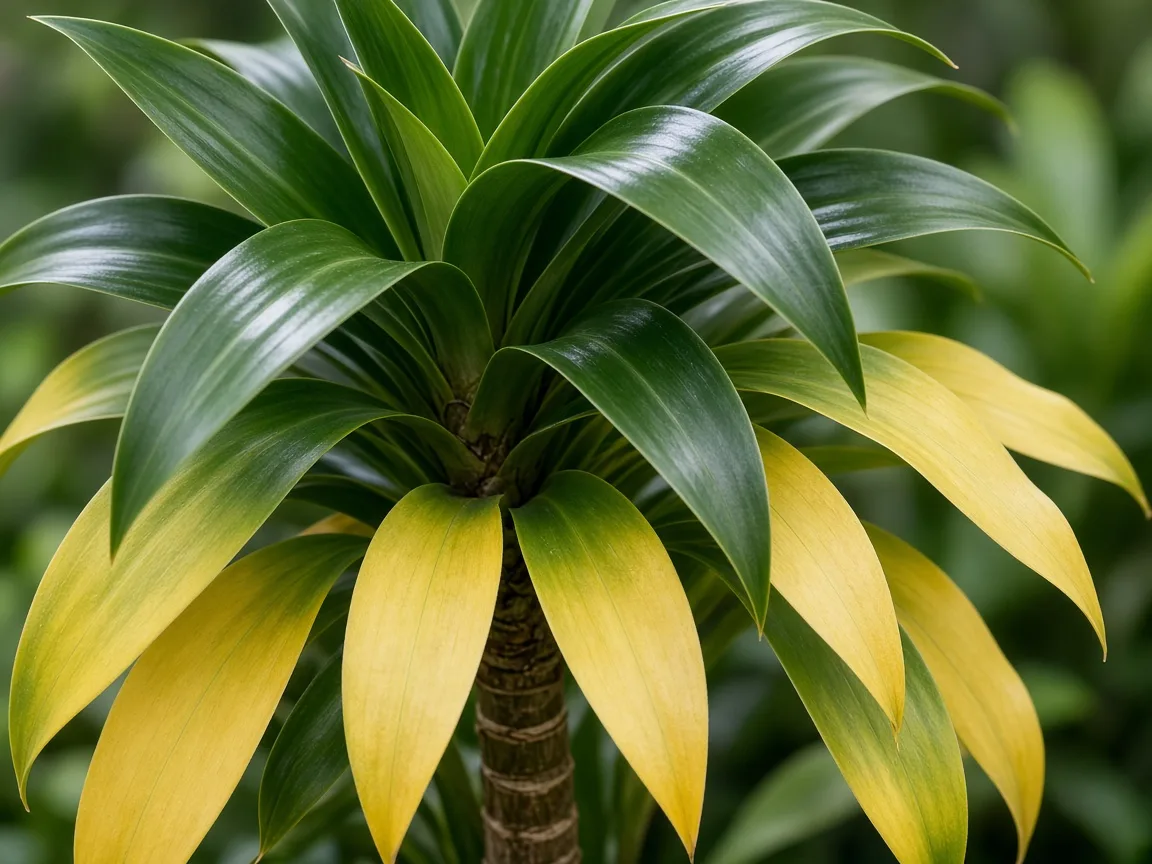
Yellow leaf symptoms on Dracaena Compacta—compare faded lower rosette leaves with firm green crown growth.
- Oldest leaves at the bottom of each rosette only — uniform yellow, then dry brown, while tips at the crown stay dark green. Common when growth is slow or you recently cut back winter water.
- Soft, limp yellow on several leaves at once — pot stays heavy days after watering; mix smells sour. Points to overwatering and oxygen-starved roots.
- Pale, washed-out yellow across many leaves — often with soil that never dries in a north-facing or interior room. Light stress and wet roots overlap on this shade-tolerant but not shade-loving cultivar.
- Yellow with brown or scorched tips — may follow fluoridated tap water or direct sun on the tight leaf stack. NC State Extension notes that dracaenas are sensitive to salts, chlorine, and fluoride in tap water that can cause leaf-tip browning; yellow may follow as tissue dies back.
- Yellow with stippling or fine webbing — check spider mites in the leaf axils where the short leaves overlap.
- Sudden yellow after a cold draft — leaves pale quickly; canes may show damage if temperatures dip below comfort range.
One or two yellow bottom leaves on firm canes with healthy new tips is often low urgency. Concern rises when yellow reaches new growth, the cane base softens, or wet soil persists more than a week.
Reading the short cane above the soil line
Unlike soft-stemmed foliage plants, Compacta grows on woody canes with a rosette of short leaves at the top. The cane just above the mix is your early warning:
- Firm, smooth cane — roots may still be healthy even if lower rosette leaves yellow from age, fluoride, or a single overwatering event you already corrected.
- Soft, wrinkled, or discolored cane at the soil line — rot is moving from roots into the stem. Yellow leaves are secondary; the base check is primary. See root rot.
- Multiple canes in one pot — one yellowing rosette while others stay green can mean uneven watering or root damage on only one stem after repotting.
The Miller Library’s dracaena Q&A notes that droopy yellow leaves can signal root rot from excess water, even when the surface felt dry—always confirm moisture 2 inches down, not only at the top.
Why the lowest rosette yellows first
Compacta’s tight column habit means the innermost and lowest leaves get less light and age out first. As the plant adds new short leaves at the crown, it often sheds the bottom ring of each rosette. That pattern is normal when:
- Canes stay firm
- New leaves at the tips open glossy and dark green
- Yellowing is slow (one leaf at a time), not a wave up the stem
If yellow skips the bottom and hits young leaves, or several rosettes fail together, treat it as care stress—usually water, light, or fluoride—not simple turnover.
Why Dracaena Compacta gets yellow leaves
Overwatering and slow dry-down
UF/IFAS warns not to overwater corn plant dracaenas, as root rot can kill the plant. Compacta tolerates dry spells better than waterlogging per its plant profile, but growers often water on a calendar because the glossy leaves still look fine while roots suffocate.
NC State Extension lists yellowing leaves among problems caused by overwatering on dracaenas, alongside root rot when soil stays overly moist. On Compacta, watch for fungus gnats hovering when you water—see fungus gnats when the top inch never dries.
Too little light for the pot to cycle
Compacta accepts partial shade but weak light slows growth and dry-down. Soil that stays damp for weeks in a dim office or far from glass can yellow leaves from the bottom up while the plant looks “fine” from across the room. Pair yellow leaves with leggy growth or slow growth and review the light guide.
Fluoride, chlorine, and salty tap water
Gardening Know How explains that dracaenas are extremely sensitive to excess fluoride from municipal water, which can cause yellowing at tips and margins that progresses to brown as toxicity builds. Perlite in potting mix and some fertilizers can add fluoride—relevant when you use a perlite-amended mix and tap water every week.
Pests in tight leaf axils
Spider mites and scale can yellow leaves by draining sap. On Compacta, inspect where short leaves overlap on the cane and undersides of the lowest rosette leaves before you assume watering is wrong.
Nutrient shortage (late suspect)
Nitrogen deficiency often yellows older leaves first while new growth stays pale. On a slow dracaena, this is uncommon indoors if you have not fertilized for years. The RHS chlorosis guide describes interveinal yellowing when specific nutrients are lacking—confirm water and light first, then consider a dilute balanced feed only after roots are healthy.
How to confirm the cause
Work in this order so you do not stack fixes:
- Moisture 2 inches deep — wet, barely damp, or dry throughout?
- Pot weight — heavy days after you thought you watered lightly?
- Cane firmness at the soil line — firm wood vs mush?
- Light context — how many hours of bright indirect light does the spot get?
- Water source — city fluoridated tap vs filtered/rain?
- Leaf pattern — bottom rosette only vs new crown leaves?
- Pests — stippling, webs, or sticky residue in axils?
Use the Yellow Leaves Diagnosis Tool if two causes still fit after these checks.
The first fix to try
If the mix is wet 2 inches down and lower leaves are yellowing: stop watering until the root zone dries to that depth, empty any cachepot saucer, and confirm drainage holes are open. That single dry-down cycle is the right first response—not repotting, pruning, and fertilizer on the same day.
If the mix is dry throughout and leaves droop: one thorough soak per the watering guide, then reset to dry-down checks.
If tips brown but roots are healthy: switch to filtered or rainwater for a month and flush the pot if salts built up.
If only the bottom leaf on each firm cane is yellow: gently remove the spent leaf; no other treatment required.
Recovery timeline and what “better” looks like
Compacta is a slow grower. After you correct watering or light:
- 1–2 weeks — soil dry-down rhythm stabilizes; yellowing should stop spreading
- Several weeks to months — new crown leaves open glossy green; that is the real success signal
- Already-yellow leaves — usually do not re-green; remove them once the cause is fixed
Judge recovery by new rosette growth and firm canes, not by hoping old yellow tissue revives.
Mistakes to avoid
- Fertilizing a yellow plant before roots and light are sorted—can burn stressed tissue.
- Repotting immediately when the only issue is one wet cycle—unless roots are black and mushy.
- Misting to “fix humidity” while soil stays wet—adds surface moisture without solving roots.
- Keeping Compacta in a dark corner because it “tolerates shade”—dry-down fails and lower leaves yellow.
- Ignoring fluoride when tips and margins discolor on an otherwise well-watered plant.
How to prevent yellow leaves next time
- Water when the top 2 inches dry, not on a fixed calendar—faster in summer, slower in winter per watering.
- Grow in bright indirect light so the potting mix cycles between drinks.
- Use filtered or rainwater if your tap is fluoridated; avoid unnecessary perlite if fluoride is a known issue.
- Lift the pot weekly—weight change beats guessing on slow dracaenas.
- Inspect leaf axils when you water—catch spider mites before yellow spreads.
- Browse the problems hub when symptoms overlap.
When to worry
Treat as urgent if:
- The cane base turns mushy or smells sour.
- Yellow climbs into new crown leaves within a week on wet soil.
- The plant wilts while mix is damp (advanced root failure).
- Several canes yellow together after a cold shock or flood event.
Seasonal loss of one bottom leaf per rosette on firm canes in good light is manageable—stay on the dry-down schedule and wait.
When to use this page vs other Dracaena Compacta guides
- Watering guide — Routine 2-inch dry-down before assuming yellow leaves is the main issue.
- Problems hub — Browse all common issues on this species.
- Overwatering — Entry point when the pot stays heavy and leaves feel soft.
- Underwatering — Entry point when the pot is light and leaves droop.
- Not enough light — Entry point when soil dries too slowly in a dim room.
- Brown tips — Entry point when margins brown before whole leaves yellow.