Dracaena Compacta Soil Mix, Drainage & pH Guide
Dracaena Compacta Soil Mix, Drainage & pH Guide
Dracaena Compacta Soil Mix, Drainage & pH Guide
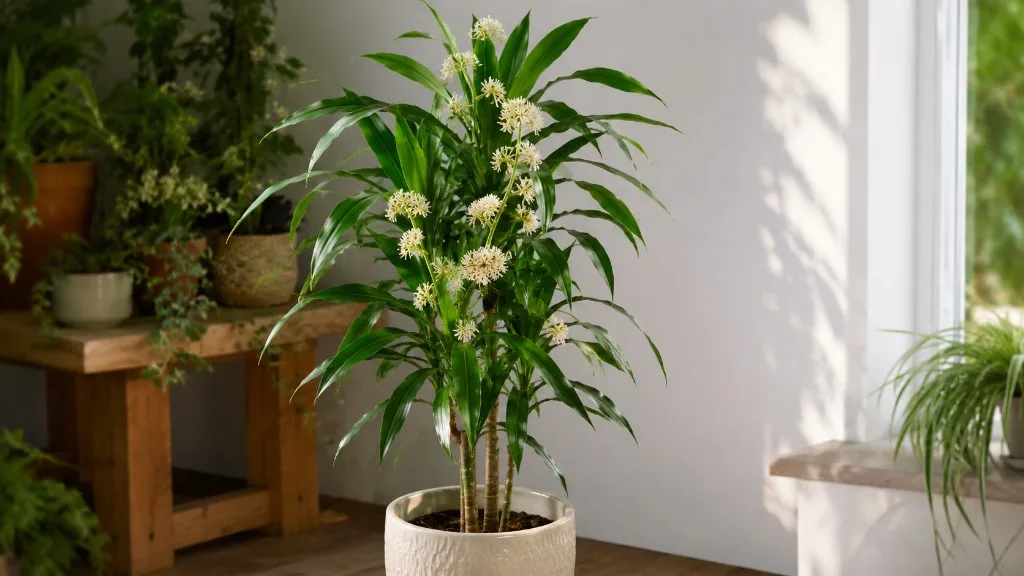
Dracaena fragrans ‘Compacta’ — sold as Dracaena Compacta or Janet Craig Compact — is the short, bushy corn-plant form with tightly stacked dark green leaves on slow canes. It stays much smaller than standard D. fragrans and suits tabletops and floor corners where a 6 ft corn plant would overwhelm the room. That compact body changes what “good soil” means: you are almost always working in a 6–8 inch pot with a slow-growing, columnar plant whose roots explore the mix gradually while the dense leaf rosette above drinks on a modest schedule.
Dracaena Compacta soil is the system that decides whether those roots get oxygen between waterings or sit in stale, anaerobic compost for weeks. The Royal Horticultural Society advises growing D. fragrans ‘Compacta’ in peat-free, loam-based potting compost with moist but well-drained conditions — not a desert blend, and never a soggy peat block. Pair that structure with a drainage hole, a pot sized to the root ball, and pH near 6.0–6.5 to limit fluoride injury, and Compacta becomes forgiving. Get it wrong in a decorative desk planter and yellow lower leaves, soft cane bases, and sour-smelling mix follow faster than the plant’s slow growth would suggest.
Why Compacta Soil Needs Differ From Tall Corn Plants
Most dracaena soil articles assume a floor specimen in a 10–12 inch pot: deep root zone, tall cane, “let the top half dry” watering. Dracaena Compacta rarely lives in that setup. Mature plants reach roughly 2–4 ft indoors with a narrow spread, and Clemson Cooperative Extension describes the cultivar as having 5-inch leaves tightly clustered along slow-growing stems (Clemson HGIC — Dracaena). The root ball stays comparatively small. A mix that works in a large corn-plant container can stay wet for three weeks in a desk pot — long enough for roots to decline without any obvious “overwatering” on your calendar.
Pacific Northwest extension guidance is explicit that D. fragrans is easily overwatered (PNW Handbooks — Dracaena Tip Burn). Compacta inherits that fragrans sensitivity even though its thick, upright leaves look tougher. The dense rosette transpires less water than a multi-foot corn stalk, so overwatering damage can reach the cane base faster — there is less healthy wood between failing roots and the crown. Soil structure matters more in proportion to pot volume here than on a slow-drying floor plant.
Slow stems, shallow roots, and desk-pot physics
Compacta’s columnar, upright habit concentrates visual mass above a modest root zone. In a stable 6–7 inch nursery pot, roots and canopy stay in balance. Slide that same plant into an oversized decorative planter “so it does not tip,” and you surround a small root ball with a large volume of unused wet mix. The RHS warns that overpotting keeps compost too wet too long and causes root rot — a risk that scales with unused soil volume, which is why Compacta growers feel this mistake sooner than owners of deep floor specimens.
Slow growth also changes maintenance timing. Mix in a small pot may not compact as visibly in year one, but peat and fine compost still break down with every top-down watering. A blend that drained well at purchase can fail eighteen months later while the plant still looks fine above the rim. Planning a refresh before collapse is part of soil care on slow cultivars, not an emergency-only step.
What Dracaena Compacta Roots Need From Mix
Think of the ideal Compacta root zone as a balanced triangle: drainage, moisture retention, and aeration. Pure drainage with no water-holding capacity stresses fine roots in a pot that already dries quickly. Heavy moisture retention without pore space causes oxygen deprivation — the pattern Clemson links to root rot from mix that does not drain quickly (Clemson HGIC — Dracaena). The sweet spot feels light in your hand, crumbly when squeezed, and damp but never soggy a day or two after a full watering in normal indoor conditions.
Dracaena roots are relatively thick and sparse compared to fibrous herbs. They explore the pot slowly, which makes overpotting especially risky on Compacta: wet unused volume surrounds a small anchor root system. Missouri Botanical Garden notes that corn plant roots need uniformly moist soil during active growth but should never sit in totally dry mix for long stretches, with soils allowed to dry slightly between waterings (Missouri Botanical Garden — Dracaena fragrans). The skill is moist-but-breathable between drinks — not swamp, not desert — in a container one-third the volume of guides written for taller forms.
Moist but well-drained — the RHS standard
The RHS Compacta cultivar page lists loam and sand soil types with moist but well–drained moisture (RHS — Dracaena fragrans ‘Compacta’). Indoors, that translates to a peat-free loam-based potting compost amended with perlite and coarse bark so water exits quickly after a soak while the center holds enough moisture for a week or two between waterings in moderate light. “Well-drained” does not mean cactus mix. It means structure that lets air return to the root zone before the next watering check at the top 2 inches.
The Best Soil Mix for Dracaena Compacta Indoors
The best Dracaena Compacta soil mix for most homes is a fast-draining, slightly moisture-retentive blend in the pH 6.0–6.5 range. It should not clump when wet, should not crack into hard slabs when dry, and should not smell sour at the surface. In one sentence: use a well-draining loam-style peat-free base amended with roughly 25–33% perlite and 25–33% coarse orchid bark by volume, matching the RHS general dracaena recommendation of three parts peat-free ericaceous compost, one part perlite, and one part medium orchid bark (RHS — How to grow dracaena).
That ratio is structure, not magic. Potting compost supplies organic matter and moderate water holding. Perlite creates non-compacting pore space. Bark chips keep channels open as fine particles settle and prevent the mix from turning into a solid wet block against the pot walls.
Loam-based peat-free base with perlite and bark
“Loam” in garden soil means a balance of sand, silt, and clay. In container culture, the equivalent is a quality peat-free loam-based houseplant compost — not garden soil from the yard. The RHS Compacta page specifies peat-free, loam-based potting compost, which aligns with LeafyPixels plant data: standard peat-free potting compost plus perlite (about 20%) and coarse grit or bark for open structure.
Avoid bases marketed as “moisture control” or “water-saving” for Compacta in desk pots. Those formulas stay wet longer — the opposite of what slow roots need in moderate light. Also skip heavy garden soil, topsoil, or outdoor compost. They compact in pots, introduce pathogens, and drain poorly in a confined column.
Recipe ratios tuned for 6–8 inch containers
Mix dry, then moisten slightly before repotting.
Recipe A — Standard Compacta (recommended default):
- 2 parts peat-free loam-based indoor potting compost
- 1 part perlite
- 1 part medium orchid bark
Recipe B — Low-light or slow-drying rooms (more drainage):
- 2 parts peat-free potting compost
- 1½ parts perlite
- 1 part orchid bark
Recipe C — Bright, warm placements (slightly more moisture retention):
- 3 parts peat-free potting compost
- 1 part perlite
- 1 part coco coir (fluffed) or bark
When you squeeze a handful, it should hold together briefly then fall apart when poked. A tight mud ball means add perlite and bark. No shape at all means add a little more compost.
pH, Fluoride, and Perlite Percentage
Dracaena Compacta prefers slightly acidic conditions around pH 6.0–6.5. In that range, fluoride is less likely to injure foliage, according to Clemson HGIC (Clemson HGIC — Dracaena). Hard, alkaline tap water gradually pushes pH upward and supplies fluoride that accumulates in the root zone. Symptoms include scorched leaf tips and margins — often mistaken for underwatering. MSU Extension notes that fluoride toxicity from municipal water is a documented problem on sensitive indoor foliage (MSU Extension — Fluoride toxicity).
Soil connects to fluoride in three ways. First, Clemson advises avoiding potting soils with a very high percentage of perlite while keeping pH between 6.0 and 6.5 — moderate perlite at 20–30% balances drainage with mineral sensitivity better than a half-perlite succulent blend used straight. Second, fertilizers containing superphosphate often carry high fluorine; Clemson recommends avoiding them on dracaena. Third, alkaline water on acid-leaning mix neutralizes acidity over time, so rainwater or filtered water helps if tip burn persists despite good drainage.
The RHS recommends rainwater or filtered water for dracaenas to protect acidity and reduce fluoride buildup (RHS — How to grow dracaena). Minerals stay in the soil between flushes even when watering is correct.
DIY vs Store-Bought Potting Mix for Janet Craig Compact
Yes — you can use regular commercial potting soil for Dracaena Compacta, but only if it drains well out of the bag or you amend it. Many mass-market indoor mixes are peat-heavy with token perlite on the label but not in the texture. In a 6-inch desk pot, dense mix fails faster than in a large floor container because the wet column is shorter but the root-to-soil ratio is worse.
Clemson states that a standard commercial houseplant potting mix may be used for dracaena (Clemson HGIC — Dracaena). Treat that as a starting point, not permission to skip perlite and bark in cool, dim rooms. Premium foliage houseplant blends often outperform fine seed-starting mix. Cactus or succulent mix alone is usually too lean unless cut with compost — Compacta wants moisture between waterings, just not constant saturation. A practical compromise: half quality potting compost, half succulent mix, plus a handful of bark for structure.
When buying a new Compacta, sniff the nursery pot. Sour or flat-smelling mix means plan a refresh sooner. Retail plants are often grown in fast-production media that prioritize shipping weight, not your desk environment.
Container Drainage and Pot Size for Columnar Plants
The best Dracaena Compacta soil mix still fails in a pot that traps water. A drainage hole is non-negotiable for long-term health. Decorative cachepots without holes work only when the inner grow pot drains freely and you never let runoff accumulate at the bottom.
After every thorough watering, empty the saucer within thirty minutes. Roots sitting in reclaimed runoff re-enter saturated conditions even if the upper mix feels acceptable. Unglazed terra-cotta breathes through walls and can help slow-drying rooms; plastic retains moisture longer — match material to your light placement and dry-down speed.
Why overpotting hits Compacta harder than big corn plants
Repot into a container only one size larger — typically 2–5 cm (1–2 inches) wider than the current pot. A columnar Compacta with a modest root ball in a huge decorative planter is a root-rot setup: unused mix stays wet while the plant cannot transpire enough to pull moisture out. The RHS explicitly links overpotting to root rot from compost remaining too wet too long.
If aesthetics demand a large outer planter, grow in a smaller plastic inner pot that lifts out for watering and drainage checks. Fresh repots dry more slowly until roots explore new mix — adjust watering downward for four to six weeks even when the blend is perfect.
How to Test Whether Your Mix Drains Properly
Run these checks before blaming care mistakes elsewhere.
The pour test: Water until liquid runs from the drainage hole. Well-structured mix accepts water without pooling on top for more than a few seconds. Water rolling down the gap between soil and pot wall signals hydrophobic or compacted mix — refresh or repot.
The weight test: Lift the pot when fully watered, then again seven days later. Noticeable weight loss means healthy dry-down. A pot that stays heavy while lower leaves yellow suggests anaerobic mix at the root zone.
The skewer test: Insert a dry bamboo skewer 5 cm (2 inches) deep — the same depth as Compacta’s top-2-inch dry rule. If the surface looks dry but the skewer emerges wet for two weeks in an average room, mix or pot size is wrong.
The smell test: Earthy is good; sour, eggy, or swampy at the drainage hole is bad. Odor precedes visible cane collapse.
The root inspection: When you slip the plant out, healthy roots are firm and white or tan. Brown, mushy tissue with smelly mix confirms waterlogged conditions — trim damage, repot into fresh airy mix, fix drainage before expecting recovery.
Signs Your Dracaena Compacta Soil Is Wrong
Soil problems show up in patterns. Single brown tips may be fluoride or low humidity; systemic decline with wet mix points to the root zone.
Watch for yellow lower leaves on a heavy, cool pot; soft, mushy cane at the soil line with off-smelling mix; water running straight through without absorbing (compacted peat); surface dry but skewer wet deep inside; white mold or algae on the mix in low light; sudden leaf drop after unchanged watering; and fungus gnats in persistent surface wetness.
Compare above-ground signs with pot weight and smell before reaching for fertilizer. Feed on waterlogged roots accelerates salt injury and tip burn. If several warning signs align, inspect roots rather than moving the plant to brighter light alone — light helps dry-down but cannot fix anaerobic compost packed around rotting roots.
When to Refresh or Repot the Mix
Refresh Compacta mix when roots circle the pot or emerge from drainage holes, when mix has compacted and drainage slowed, when the plant dries out in one day because roots fill the tiny remaining good volume, or when salt crust and sour smell persist after flushing. The RHS suggests repotting every two to three years into a slightly larger pot (RHS — How to grow dracaena).
Spring is the safest window — active growth helps roots recover. A new shop plant does not need day-one repot unless pests, rot, or failing mix are obvious; quarantine first, learn dry-down speed, then refresh if needed. Partial refresh — scraping out the top third and replacing with fresh blend — helps when the root ball is healthy but salts or compaction sit at the surface. Full repot is required when roots are tight, smelly, or discolored. See the Dracaena Compacta repotting guide for step-by-step timing and pot-size rules.
Repotting Compacta Into Better Soil
Repotting is a root-zone reset. Work with fresh mix pre-moistened, clean shears, and a pot with drainage.
Water lightly a day before if old mix is bone dry — brittle roots break. Slide the plant out and inspect roots. Trim black, mushy sections to firm tissue. Healthy dracaena roots are tougher than fine fern roots; do not strip every old crumb if roots are sound.
Place a small mound of new mix in the bottom — no gravel drainage layer. Set the root ball so canes sit at the same depth as before; burying stems invites stem rot. Fill around the sides, tapping gently to settle voids without compacting. Do not pack soil with your fist.
Water thoroughly once, empty the saucer, and place in bright indirect light. Skip fertilizer for four to six weeks while roots heal. Expect slowed growth or slight droop for a few weeks — normal if drainage is now correct.
Pairing Soil With Watering and Light
Soil does not work in isolation. Bright indirect light helps the plant use water steadily; low light slows transpiration and keeps pots wet longer — exactly when airy mix matters most on Compacta. If your plant lives in a dim corner, prioritize bark-perlite structure and conservative pot size over rich, wet compost.
Water when the top 5 cm (2 inches) is dry, then soak until runoff exits the hole. Summer may mean every 7–14 days; winter 14–21 days is common — but the depth check overrides the calendar. Humidity between 40–60% reduces tip desiccation but does not dry soggy soil.
When troubleshooting, change one variable at a time. If you repot into airy mix, do not simultaneously move to a darker wall and increase watering. Give the new root environment six weeks before judging success.
Soil Mistakes That Cause Root Rot on Compacta
Dense, water-retentive mix without amendment in a decorative desk pot is the most common error. Overpotting ranks second: wet unused volume around a small root ball. Watering on a schedule without checking depth ranks third.
Other high-impact mistakes: no drainage hole or blocked hole; leaving runoff in cachepots; moisture-control mix in dim rooms; gravel layers inside the pot believing they help drainage; garden soil because “plants grow in dirt outside”; ignoring mix breakdown after two years because Compacta still looks fine; and stacking fertilizer on stressed, wet roots.
Root rot is prevented by structure and discipline, not one heroic fix after collapse. Once cane tissue softens at the base, recovery is uncertain even with perfect new mix. Escalate to the root rot guide if soft canes persist after a soil fix.
Conclusion
Healthy Dracaena Compacta soil comes down to structure in a small pot: peat-free loam-based compost amended with perlite and coarse bark, pH near 6.0–6.5, a drainage hole, and a container only slightly larger than the root ball — watered when the top 2 inches dry and never left sitting in runoff. That combination gives slow roots oxygen between drinks, holds enough moisture for a dense rosette, and stays open long enough to forgive imperfect habits.
If your Janet Craig Compact struggles, test the mix before buying another fertilizer or upsizing the pot. Run the pour, weight, and smell checks; slip the root ball out if you suspect rot. Refresh compacted or sour mix, trim damaged roots, repot into the 2:1:1 blend, then adjust watering to the new dry-down speed. Most Compacta decline starts below the rim in a pot that looked fine from across the room.
When to use this page vs other Dracaena Compacta guides
- Dracaena Compacta overview — Start here for whole-plant context, toxicity, and placement before deep-diving soil specifics.
- Dracaena Compacta watering — Use when the mix drains well but you need help with timing, fluoride-safe water, or overwatering rescue.
- Dracaena Compacta light — Use when soil and water are right but growth is pale, stretched, or stalled.
- Root rot on Dracaena Compacta — Escalate when soft canes, sour mix, and mushy roots persist after drainage fixes.
- Mold on soil on Dracaena Compacta — Escalate when white fuzz or algae on the surface signals chronic dampness.