Brown Tips on Dracaena Compacta: Causes, Checks & Fixes
Quick answer
Brown tips on Dracaena Compacta (*Dracaena fragrans* 'Compacta') most often come from fluoride and salts in tap water, low humidity near desks and vents, or letting the short-leaf rosette dry too hard between drinks. First step: switch to rainwater, distilled, or filtered water for four weeks and watch whether the next tight leaves at the crown open with clean margins.
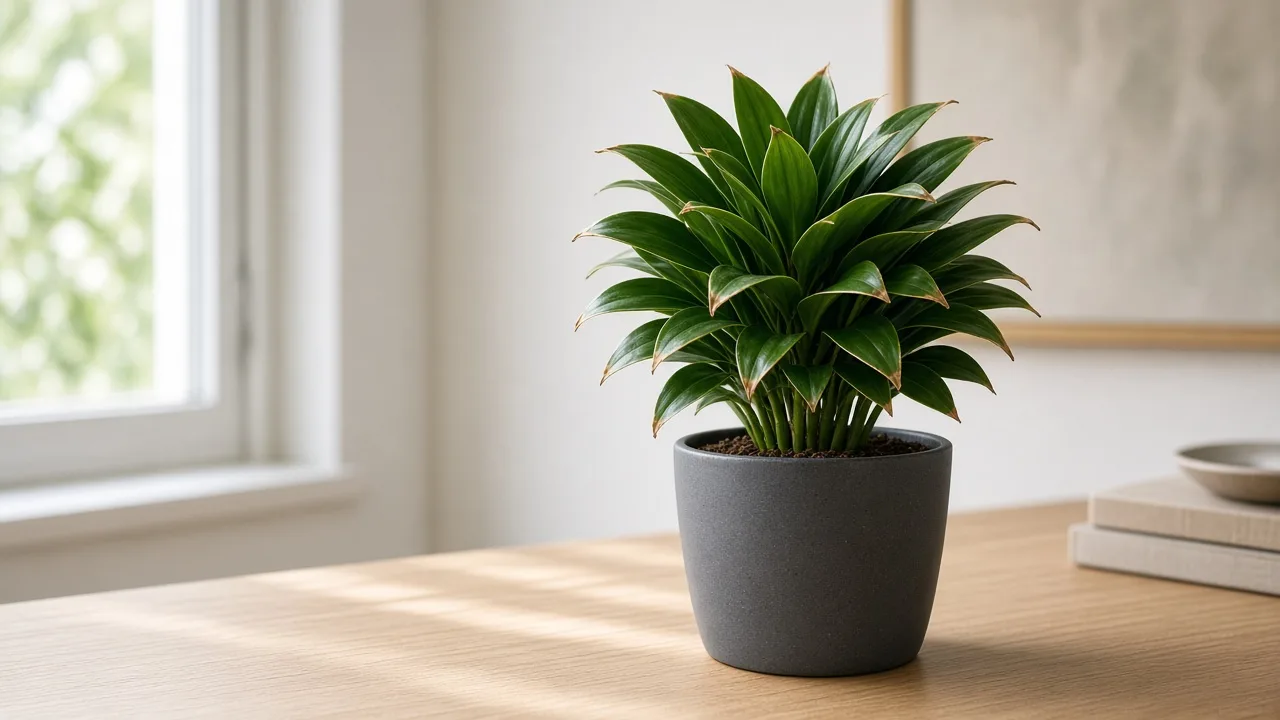
Brown Tips on Dracaena Compacta: Causes, Checks & Fixes
This guide covers brown tips on Dracaena Compacta. See also the general Brown Tips guide, watering, and light pages for this plant.
Brown Tips on Dracaena Compacta: Causes, Checks & Fixes
Quick answer
Brown tips on Dracaena Compacta (Dracaena fragrans ‘Compacta’, also sold as Janet Craig Compact) show up as dry, papery necrosis on the outer edges of short, glossy leaves packed in tight rosettes atop slow upright canes. Unlike the tall corn plant with long strap leaves, Compacta concentrates stress at the tips of many small leaves at once, so water chemistry and desk-level dry air often look worse than they would on a single large blade.
The leading causes are fluoride and dissolved salts in tap water, low humidity near heat vents and monitors, salt buildup from fertilizer or hard water, underwatering when the top 2 inches of mix go bone-dry, and direct sun on a tabletop rosette. For how margin burn works on houseplants in general, see our brown leaf tips guide. On Compacta, the pattern you want to separate is crown-first tipping on firm canes (water quality) versus crispy outer leaves with a light pot (drought).
First step: use rainwater, distilled, or filtered water exclusively for four weeks and watch the next rosette of new short leaves at the crown. If those leaves open with clean margins, fluoride or salt accumulation was likely the main issue. If new growth keeps crisping with good water, move the pot off heat paths and check humidity before you repot or fertilize.
What brown tips look like on the Compacta rosette
Dracaena Compacta forms dense columns of dark green leaves—each leaf is short, upright, and closely stacked on a slow cane, usually 2–4 ft indoors. Tip burn appears in recognizable patterns on that miniature corn-plant silhouette:
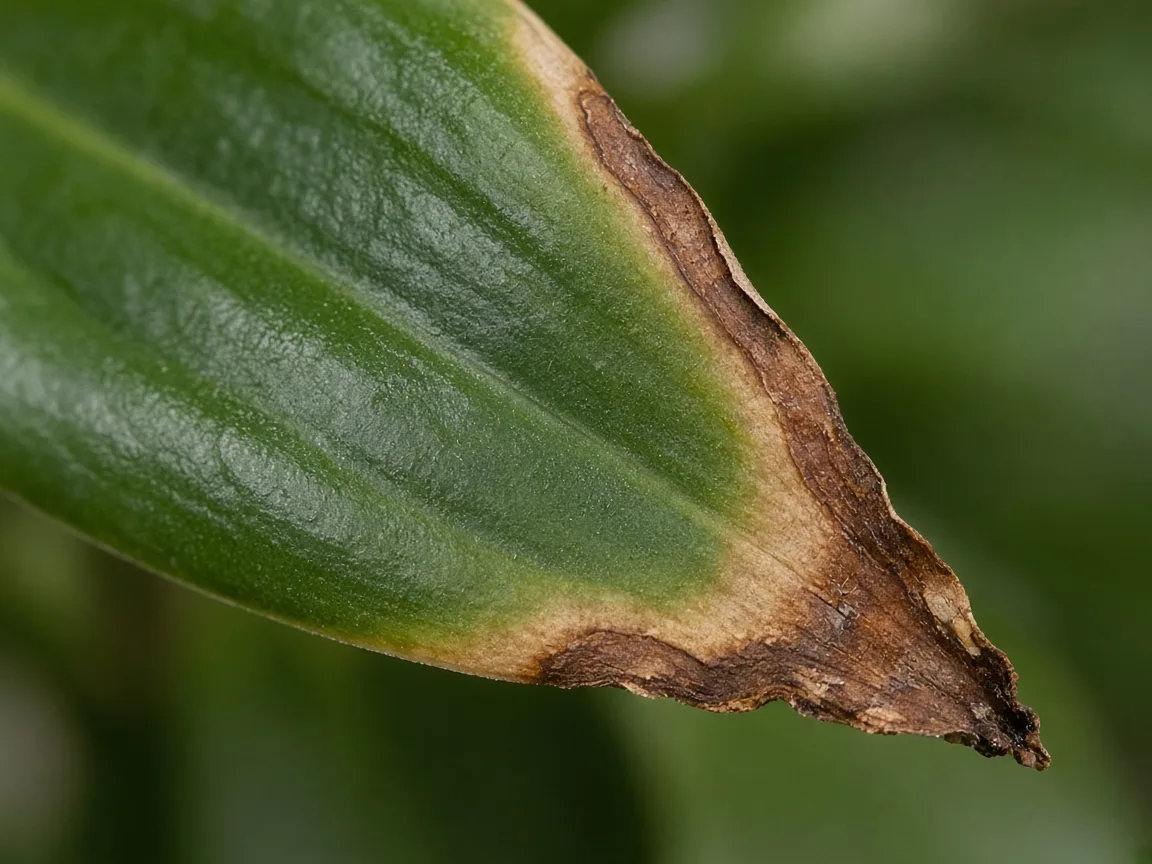
Brown tip symptoms on Dracaena Compacta — compare crisp margin tissue with healthy green on the same short leaf.
- Fluoride or salt burn — Crispy brown tips on the newest short leaves at the crown, sometimes with a thin yellow band before the dead margin. Older rosette leaves may stay mostly green while fresh growth shows damage first. White crust on the soil surface or pot rim points to mineral buildup from hard water or heavy feeding—see the Dracaena Compacta fertilizer guide for a lighter feed schedule while you flush salts.
- Low-humidity tip burn — Dry, papery tips on many outer leaves while leaves deeper in the rosette look fine. Common when the pot sits on a desk above a radiator, beside a forced-air vent, or near a monitor that warms the air. Soil moisture often looks normal; canes stay firm. See low humidity on Dracaena Compacta when placement is the main suspect.
- Underwatering — Tips crisp while the top 2 inches of mix are bone-dry, the pot feels light, and the tight rosette may droop slightly. Differs from fluoride burn, which can occur with appropriate moisture below the surface.
- Sun scorch — Bleached or brown patches on leaves facing intense window glass, not only the very tip. Compacta wants bright indirect light per the Dracaena Compacta light guide; direct midday sun on a small rosette scorches fast.
- Normal aging — One or two oldest short leaves at the base of a cane with minor tip tan on an otherwise stable plant. Low priority if new crown leaves stay glossy.
Worry when every new short leaf tips, soil stays wet and sour, or cane tissue softens—not when a single outer leaf near winter heat shows a few millimeters of brown.
Why Janet Craig Compact gets brown tips (and not just “bad luck”)
Fluoride and tap water (most common on dracaenas)
Both Dracaena deremensis and D. fragrans are very sensitive to fluoride toxicity. Fluoride from municipal water can accumulate in foliage over time, move with the transpiration stream, and collect in leaf margins where tips turn brown and necrotic. Compacta shares that corn-plant sensitivity even though its leaves are shorter; each small blade still exports water to a narrow tip.
Missouri Botanical Garden notes that leaf tips turning brown can follow high levels of water additives such as chlorine, and that using filtered water or rain water may help reduce leaf tip browning. RHS culture for ‘Compacta’ goes further: water preferably with rainwater as plants dislike tap water during the growing season.
Salt buildup and fertilizer
Repeated tap water and feeding leave minerals in the pot. Salts concentrate at leaf tips the same way fluoride does. Letting water sit overnight may reduce chlorine but does not reliably remove fluoride; if tips return on new growth despite a steady watering calendar, change the water source before you increase fertilizer.
Dry air at desk height
Compacta often lives on tables and shelves where warm, dry air from heating or electronics pulls moisture from leaf edges faster than roots replace it—especially in winter. Low humidity can brown dracaena leaves when water quality is not the issue. The tight rosette exposes many leaf tips to the same dry microclimate at once.
Underwatering on a slow-growing cane
PNW guidance notes that excessive drying between waterings can lead to brown tips and margins, especially if the plant was fertilized heavily. Compacta tolerates dry spells better than soggy soil, but repeated full desiccation damages fine roots and shows on the outer short leaves first. Align with the Dracaena Compacta watering guide—top 2 inches dry, then one thorough soak.
Overwatering lookalikes
Dry soils usually result in brown leaf tips, but too much moisture can also stress dracaenas. Wet mix with yellow lower leaves and soft cane bases is not a water-filter fix—probe roots and see root rot on Dracaena Compacta if damage spreads beyond dry margins.
Reading the crown versus lower leaves on a columnar dwarf
Compacta’s diagnostic trick is where the short leaves brown:
- Crown-first on newest stacked leaves — Think fluoride, salts, or occasional fertilizer burn on fresh tissue. Canes should feel firm; soil should dry on a normal schedule.
- Outer rosette only, crown clean — Think dry air from vents, radiators, or a hot windowsill. Moving the pot often stabilizes new growth within a few weeks.
- Lower yellow leaves plus wet soil — Think overwatering or root stress, not tip trimmers.
- Whole rosette limp with dry soil — Think underwatering or root damage preventing uptake; tips alone are not the whole story.
Because growth is slow, one clean whorl of new short leaves is a better success signal than expecting older tipped leaves to recover.
Desk and tabletop placement traps
The dwarf habit that makes Compacta popular also puts leaves close to heat sources:
- Pots on radiator covers or floor vents crisp outer tips while the crown still pushes leaves.
- South- or west-facing sills can combine low winter humidity with direct sun on a small rosette.
- Closed offices with constant HVAC may sit at 30–40% humidity—below the 40–60% band that keeps margins supple on tropical foliage.
Move the plant 12–18 inches away from heat paths before you repot. A small humidifier or grouping with other plants beats misting, which dries in minutes on short upright leaves.
How to confirm the cause
Work through this order—same logic as the Dracaena Compacta overview brown-tip checks:
- Which leaves tip — Newest short leaves at the crown first → water quality or salts. Many outer leaves only → dry air likely. Most leaves with bone-dry top 2 inches → drought likely.
- Water history — Months of municipal tap with recurring new-tip burn supports fluoride sensitivity. Filtered water with clean new growth for two rosettes confirms the fix.
- Soil surface — White crust → plan a plain-water flush when drainage is good (see recovery below).
- Moisture at 2 inches — Cool and damp with a heavy pot → do not water for thirst. Light pot and dry probe reading → soak once, then reset rhythm.
- Cane firmness — Soft base with sour soil → escalate to root inspection, not more trimming.
- New growth test — After four weeks on rainwater or distilled water, the next crown leaves should tell you if chemistry was the driver.
First fix for brown tips on Dracaena Compacta
Switch to rainwater, distilled, or filtered water for the next four weeks before you change anything else.
That single step targets the most common Compacta-specific cause—fluoride and salt accumulation at the tips of short leaves—without stacking repotting, fertilizer, and humidity gear on the same day. Water thoroughly until runoff exits drainage holes, then empty the saucer. Watch the next tight whorl at the crown for clean margins.
Do not compensate with extra fertilizer, daily misting, or an immediate repot unless roots are mushy or salt crust is severe.
After the water switch, match secondary fixes to what you confirmed:
- New crown leaves still crisp with good water and the pot near a vent → move off heat paths and target 40–60% humidity; see low humidity.
- White crust on soil → flush at the next watering (recovery steps below), not the same day you changed water if the plant is already stressed.
- Top 2 inches bone-dry and light pot → water deeply once, then follow watering checks.
- Sun-facing scorch patches → shift to bright indirect light only.
Make one major correction first. Wait two to four weeks before repotting, feeding, or running multiple water experiments unless salt buildup is obvious.
Step-by-step recovery
Fluoride or tap-water sensitivity (crown leaves tipping):
- Use rainwater, distilled, or filtered water exclusively for four to six weeks.
- Skip fertilizer until new short leaves open with clean tips.
- Trim old brown tips for appearance only—follow each leaf’s curve.
Salt buildup (white crust, tips on multiple leaves):
- Water slowly with plain room-temperature water until it runs freely from drainage holes—about three to four times the pot volume in one session—to wash accumulated salts.
- Let the pot drain fully and empty the saucer.
- Resume light feeding only during active growth, not while the rosette is recovering.
Low humidity and drafts (outer leaves only, clean crown):
- Move the pot away from radiators, vents, and hot electronics.
- Run a humidifier or group plants if the room stays below about 40% in winter.
- Watch for two consecutive crown whorls with clean tips.
Underwatering (dry top 2 inches, light pot, slight droop):
- Soak thoroughly until runoff appears, then empty the saucer.
- Check the top 2 inches before the next drink—Compacta wants dry-down between soakings, not a rigid calendar.
- Reduce winter frequency when growth slows; see slow growth if the plant stalls after you fix water.
Sunburn:
- Shift to bright indirect light—filter direct rays or move back from the glass.
- Remove severely scorched short leaves at the base if mostly dead; new crown growth should emerge unbleached.
How to trim brown tips on short leaves
Brown tissue does not re-green. Snip only the discolored portion with clean scissors, following the natural curve and leaving a thin brown edge. Cutting into green tissue can create fresh brown margins on small leaves where every millimeter counts visually. For whole dead leaves, follow the Dracaena Compacta pruning guide—do not pull living green leaves from the rosette.
Recovery timeline
Judge progress by new short leaves at the crown, not old brown edges:
- Tap-water burn — Clean tips on the next one or two crown whorls often appear within two to four weeks after switching water. Older tipped leaves stay brown unless trimmed.
- Salt flush — Leaching plus filtered water may take four to eight weeks before several consecutive whorls open clean.
- Low humidity — Moving off vents and raising humidity can stabilize new growth within two to three weeks; old papery tips remain unless trimmed.
- Underwatering — One deep soak and a corrected rhythm often stops spread within one to two watering cycles if roots are firm.
Signs of improvement: glossy new leaves stacking tight without margin burn, pot weight dropping on a normal schedule, browning that does not spread to every new short leaf. Signs of worsening: sour smell, soft cane, every new leaf tipping despite filtered water, or soil that never dries—inspect roots that week.
What not to do
Do not water more because tips look dry when the top 2 inches are still moist—wet soil stress can pair with tired-looking foliage and deepens root problems.
Do not mist as the only humidity fix on a desk rosette. Brief misting does not hold the steady moisture short leaf margins need.
Do not fertilize a tipped, stressed Compacta to force growth. Salts from overfeeding cause the same edge burn you are trying to stop.
Do not repot on day one unless roots are mushy, salt crust is severe, or drainage has failed. Extra unused soil in an oversized pot stays wet around slow canes.
Do not assume rested tap water fixes fluoride for dracaenas. Change the source if new crown leaves keep crisping.
Do not ignore yellow lower leaves and wet soil while treating water quality—see yellow leaves if the base of the cane is shedding.
How to prevent brown tips next time
- Water quality first — Rainwater, distilled, or filtered water if new crown leaves repeatedly tip; municipal water is fine only if tips stay clean on new growth for months.
- Humidity band — Target 40–60% near the rosette; act when readings stay below about 40% in heated rooms.
- Dry-down discipline — Water when the top 2 inches are dry, not on a fixed calendar; winter often means longer gaps per watering.
- Flush salts every 3–6 months if you feed or use hard tap water.
- Bright indirect light — Filter direct sun on tabletop placements.
- Feed lightly in season — Half-strength balanced fertilizer during spring and summer; skip when growth slows.
- Stable placement — Keep the column off radiators and out of forced-air paths.
When to worry
Treat brown tips as urgent when:
- Every new short leaf at the crown tips despite filtered water and stable placement.
- Soil smells sour or cane bases soften while margins crisp.
- Yellow lower leaves pile up with wet mix—inspect roots the same week.
- The rosette wilts despite moist soil—roots may not be absorbing water. See wilting if the whole cane goes limp.
A few tan tips on one outer leaf near a winter vent on an otherwise firm Compacta is cosmetic. Widespread margin burn with wet soil is not.
Dracaena Compacta care cross-check
| Checkpoint | Healthy target | Brown-tip risk when wrong |
|---|---|---|
| Water source | Clean new crown leaves over months | Fluoride / salts on newest short leaves |
| Canopy humidity | ~40–60%; act below ~40% | Desk vents and dry winter air |
| Soil moisture | Top 2 in. dry before soak; not soggy | Drought tips or wet-root yellowing |
| Light | Bright indirect; no hot direct sun | Scorched patches on window-side rosette |
| Salts | Occasional flush if feeding | White crust and recurring edges |
| Cane feel | Firm green canes | Soft base with sour soil |
Fix the failing row before repotting for size, adding fertilizer, or treating spider mites you have not confirmed.
When to use this page vs other Dracaena Compacta guides
- Dracaena Compacta watering — Use for routine top-2-inch dry checks and fluoride-safe water before assuming tips are the only issue.
- Dracaena Compacta problems hub — Browse all common issues on this species.
- Low humidity on Dracaena Compacta — Entry point when outer leaves crisp near vents but the crown stays clean.
- Underwatering on Dracaena Compacta — Entry point when the pot is light and the top 2 inches stay bone-dry.
- Overwatering on Dracaena Compacta — Entry point when yellow lower leaves and wet soil accompany margin damage.