Jamun Repotting Guide: When, Pot Size & Steps
Jamun Repotting Guide: When, Pot Size & Steps
Jamun Repotting Guide: When, Pot Size & Steps
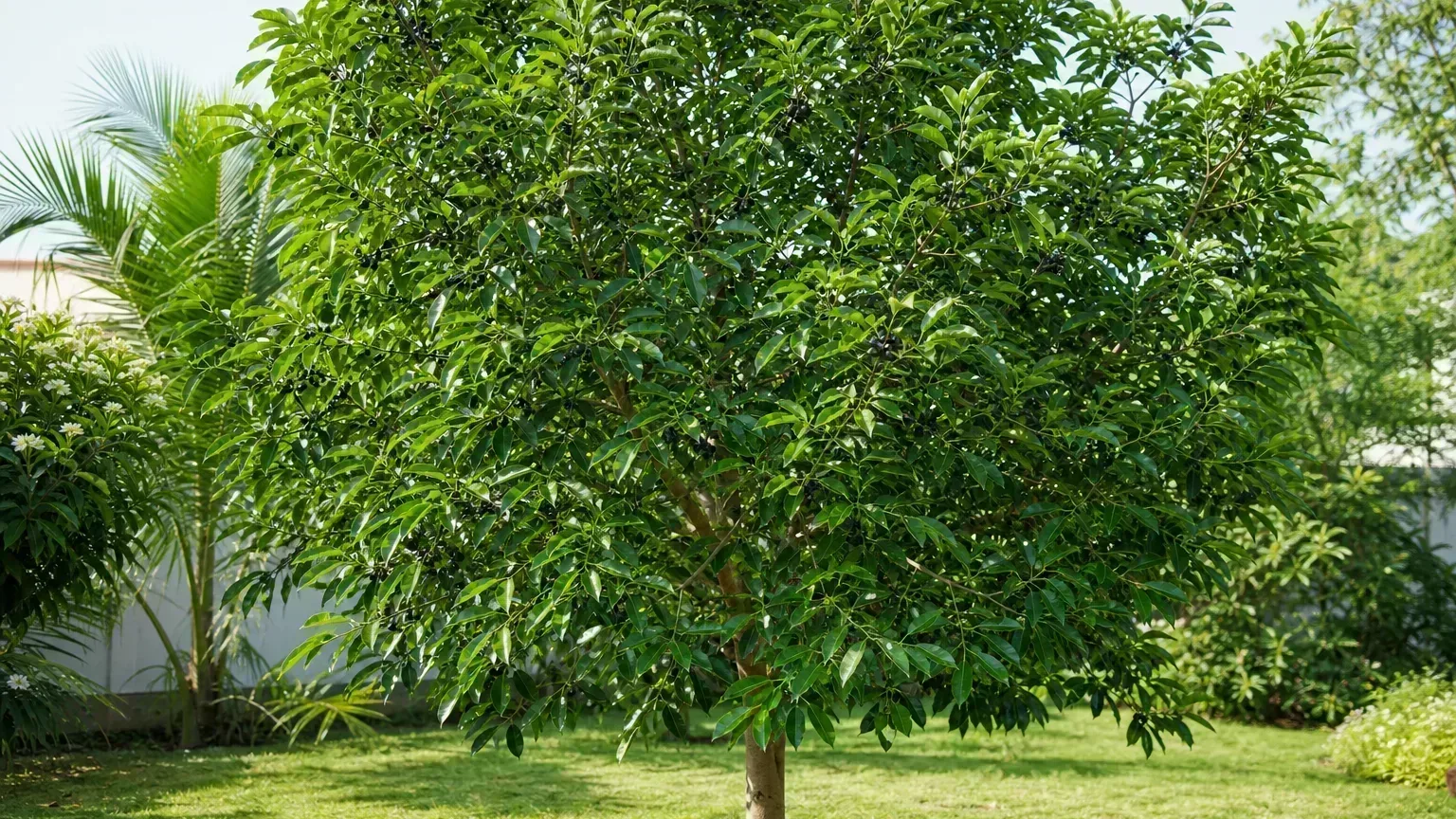
Jamun repotting is how you keep Syzygium cumini — also called Java plum, jambolan, or Indian blackberry — alive and stable in a pot when its natural destiny is a large evergreen fruit tree. Singapore’s National Parks Board describes Jamun as a fairly fast-growing tree with a dense crown that reaches about 12–30 m in open ground. On a terrace you usually aim for a pruned 2–4 m specimen, which means roots hit pot walls long before the canopy looks “finished.”
The job of a good repot is not to recreate a forest. It is to refresh fertile, free-draining mix, give modest new root room, and protect a woody root system from stagnant water after the move. Horticultural references note that Jamun grows best in well-drained soils even though established trees can tolerate waterlogging in the landscape. That paradox matters in containers: a pot that never drains will fail a plant that can shrug off short floods outdoors.
This guide covers timing, pot size, root checks, soil, step-by-step transplanting, ground planting, aftercare, and when to leave a healthy tree alone. Pair it with the Jamun care hub and the Jamun soil guide so the new container matches how this species actually drinks.
Why container Jamun needs careful repotting
NParks lists Jamun for full sun and moderate water, with root-zone tolerance that includes fertile loamy soils, well-drained soils, drought tolerance, and short-term flooding on sites that still drain. Plants For A Future similarly calls it a versatile tropical evergreen about 10–30 m tall that prefers well-drained soil across sandy, loamy, and clay textures, yet can tolerate drought once established and prolonged flooding in suitable ground.
In a pot, those field buffers shrink to whatever volume and drainage you provide. Circling roots, collapsed organic mix, and a top-heavy canopy are normal outcomes of healthy growth — not proof you need a giant decorative planter. Oversizing the pot leaves unused outer mix wet for days while the canopy still looks thirsty, which is how transplant stress turns into wet-root decline.
Landscape size versus terrace reality
Tropical Plants Database notes seedlings can reach about 4 m in only two years under good conditions, and that established trees tolerate flooding while still preferring versatile, free-draining sites. That growth pace is why young container trees need scheduled checks every couple of years. A balcony pot will never hold a 20 m shade tree; it only buys time while you prune for structure and decide whether the plant’s permanent home is a large patio container or open ground.
NParks also records underground tap and fibrous roots. In a shallow starter bag those roots circle quickly. When you repot, tease circling roots outward and keep the original soil line — burying the trunk deeper invites bark rot and weak anchorage.
How often to repot Jamun
For most young container trees, plan a check every 2–3 years, or sooner if roots exit drainage holes, the mix dries within a day in warm weather, or the canopy makes the pot tip. That matches the plant’s moderate-to-fast early growth and the practical limits of terrace culture.
Mature specimens already in a large, stable final pot may stretch longer if you root-prune lightly and refresh part of the mix instead of endless upsizing. Frequency is a decision tool, not a calendar law: if water still soaks evenly, new flushes stay firm, and a quick lift shows loose mix among roots, wait for the next late-winter window.
Nursery seedlings in tiny polybags often need an earlier first step-up after the first strong season. Seed-grown trees fruit late; grafted plants fruit earlier — neither type benefits from chronic congestion in sour, compacted media.
Signs your Jamun needs a new pot
Do not repot for a single yellow leaflet after a heat wave. Use root and pot behavior together. Penn State Extension’s pot-bound checks transfer cleanly to woody fruit trees in containers: mix that dries out very quickly, roots through drainage holes, and stalled top growth despite otherwise reasonable care — then confirm by sliding the plant out to see dense, circling roots with little mix visible in the lower third.
Also watch for a top-heavy crown that rocks when you water, soil pulling away from the pot wall as a solid mat, and water that races down the sides while the core stays dry or hydrophobic.
Root, drying, and stability cues
Repot soon when you see two or more of these: roots exiting holes; a pot-shaped root ball with almost no loose mix; summer drying within about a day after a thorough soak; a canopy much wider than the pot base; or a young tree that has not been moved through 2–3 years of active growth.
Do not repot for these alone: temporary leaf droop after missed watering; one lower leaf yellowing on an otherwise firm flush; or a newly purchased nursery plant still adjusting to full sun. If the mix smells sour and stays heavy for many days, you may need a soil rescue and lighter watering more than a size upgrade — see the Jamun watering guide before you disturb roots.
Best season to repot Jamun in India
Aim for late winter to early spring, typically February–March across much of India, just before a strong new flush. Penn State recommends spring repots so roots colonize fresh mix while the plant enters active growth (Penn State Extension — Repotting Houseplants). Jamun follows the same logic: rising light, warming mix, and a long growing season ahead.
Avoid routine moves in peak monsoon or during cool North India winters unless the pot is cracked, roots are rotting, or the tree is tipping dangerously. Wet-season humidity keeps new mix soggy; winter chill slows water use while roots are still regenerating. Emergency rescues still use a modest pot step-up, the freest-draining loam blend you can mix, bright sun, and a lighter watering hand until new leaves firm up.
Choosing pot size, material, and drainage
Drainage holes are non-negotiable. Penn State is blunt: containers need holes so mix does not stay waterlogged, and decorative cachepots without holes should only hold a drained inner pot (Penn State Extension — Repotting Houseplants). For terrace Jamun, use a real grow pot with open holes — never plant directly into a sealed planter that holds a lake after rain.
Prefer a stable, relatively heavy base once the crown spreads: terracotta, thick plastic, or concrete-style patio pots all work if drainage is clear. Unglazed clay dries faster (helpful after monsoon showers) but needs more frequent checks in peak summer. Tall, narrow “tree pots” tip easily when the dense crown catches wind; choose width that matches canopy spread as much as depth. Place the finished pot where purple-black fruit will not stain paving — NParks notes the berries attract birds and other wildlife and ripen to glossy purple-black (NParks — Syzygium cumini).
One size up — or same pot with root pruning
Move only one pot size up — roughly 5 cm (2 inches) wider in diameter than the current container for most patio trees. Penn State notes the new pot should be slightly larger; an oversized container looks unbalanced and, more importantly for Jamun, holds unused wet mix around roots that still need oxygen between soaks.
If the tree has reached its practical final container, do not keep upsizing forever. Slide the plant out, trim a thin outer rind of circling roots with clean shears, refresh the outer mix, and return it to the same pot. Pair that with canopy management from the Jamun pruning guide so shoot growth and root volume stay in balance.
Fresh mix for Syzygium cumini
Do not refill with moisture-control peat blends meant for thirsty foliage houseplants. PFAF prefers well-drained media with a useful pH band near 5.5–7 (wider tolerance roughly 4.5–8). World Agroforestry likewise emphasizes well-drained soils for best performance even where landscape flooding is sometimes tolerated (World Agroforestry — Syzygium cuminii).
A practical DIY container blend that matches LeafyPixels’ Jamun profile is about 50% loam-based potting mix, 25% finished compost, and 25% coarse sand, pumice, or perlite — moisture-retentive enough for moderate watering, open enough that excess leaves the holes. Moisten the mix before planting so it accepts water evenly. Full recipes and monsoon drainage checks live in the Jamun soil guide; use that page if the current failure is mix quality rather than pot volume.
Step-by-step: how to repot Jamun
Water the plant lightly the day before so the root ball holds together without being soggy. Gather the new pot, pre-moistened mix, clean shears, and a scrap of screen for the drainage hole if your mix is fine.
- Tip the pot gently; support the stem and slide the root ball out. If it sticks, tap the sides — do not yank the trunk.
- Inspect roots. Firm, pale-to-tan roots are fine; brown, mushy, foul-smelling roots should be trimmed back to healthy tissue. Tease circling roots outward so they can enter new mix.
- Add a base layer of mix so the old soil line sits about 2–3 cm below the new rim. Keep the trunk at the same depth it grew before.
- Center the plant, fill around the sides without burying bark deeper than before, and firm lightly — do not compact into a brick.
- Water thoroughly until runoff exits the holes, then empty the saucer within 15–30 minutes.
Return the plant to its brightest safe sun. NParks lists full sun as the light preference for this species (NParks — Syzygium cumini). Keep care boring for the first weeks: same light, same soak-and-dry logic, no fertilizer. If you also change placement, pot size, and watering all at once, you will not know which stress caused leaf drop.
Moving a young tree into open ground
Container culture is often a nursery stage, not the end of the story. When a tree outgrows every practical patio pot — or when you want shade and fruit at landscape scale — plant into free-draining loam in full sun with room for a dense crown. Dig a hole only as deep as the root ball and two to three times as wide; set the plant so the old soil line sits level with the surrounding grade, backfill without air pockets, and water deeply to settle the soil.
Do not plant into a sealed concrete pit that holds monsoon water against the trunk. Field Jamun can tolerate short-term flooding on draining sites, but a bathtub of stagnant water around a fresh transplant is a different stress. Mulch the surface, keep mulch off the bark, and stake only if wind rocks the root ball. Expect a quieter first season while roots explore beyond the former pot shape; resume structural pruning once the tree reanchors.
Post-repot care for the first month
Expect a short pause in growth and maybe minor leaf yellowing as roots reattach. That is transplant adjustment, not a cue to fertilize or water daily. Resume the Jamun rhythm: soak deeply only when the top 3–5 cm of mix are dry, then let the pot lighten again. Missouri Botanical Garden’s overwatering guidance explains why wet, oxygen-starved roots fail even when the canopy looks thirsty — dying roots cannot supply water, so another soak makes decline worse (Missouri Botanical Garden — Overwatering).
Hold fertilizer until you see a clear new flush of firm leaves, then follow the light feeding approach in the Jamun fertilizer guide. Keep newly moved plants out of frost and cold drafts; PFAF notes young growth is more cold-sensitive than mature wood (Plants For A Future — Syzygium cumini). Stake only if the canopy is top-heavy and wobbles in wind; remove ties once roots grip.
When not to repot Jamun
Skip elective repots when the plant is flowering heavily, holding a ripening crop you care about, sitting in peak monsoon humidity, or already showing severe drought wilt from missed watering. Fix water and light first; moving a dehydrated tree into fresh mix compounds stress.
Also skip upsizing when the real problem is shade, not pot volume. A dim balcony will not become productive because you bought a larger pot. Confirm placement with the Jamun light guide before you invest in another container. Same-size soil refresh is still fine if drainage has collapsed but the plant is otherwise stable.
When to use this page vs other Jamun guides
Use this repotting page when you are deciding timing, pot diameter, root inspection, transplant steps, ground planting from a pot, or first-month aftercare. Use the Jamun watering guide when the question is how often to soak after the move, or how to tell wet-root yellowing from dry wilt. Use the Jamun soil guide when you need mix recipes, pH, or monsoon drainage diagnostics without changing pots. Use the Jamun fertilizer guide only after new growth resumes. Use the Jamun pruning guide when canopy size — not root congestion — is the main limit. Start from the Jamun overview if you are still deciding whether container culture is realistic for your space.
Related Jamun guides
- Jamun care hub — species profile, mature size, and grower notes for pots versus ground
- Jamun overview — full care summary and when each sibling guide matters
- Jamun soil — loam-based mixes, drainage, and pH targets for containers
- Jamun watering — soak-and-dry rhythm after transplant stress
- Jamun light — full-sun placement that makes a new pot worth the work
- Jamun fertilizer — when to resume feeding after roots recolonize
- Jamun pruning — canopy control that pairs with root-space limits
- Jamun propagation — fresh-seed starts that will need their first pot upgrades
Conclusion
Jamun is a large Myrtaceae fruit tree wearing a temporary pot. Repot young plants every 2–3 years in late winter or early spring, step up only about 5 cm in diameter, and use a loam-based mix that drains freely while holding moderate moisture. When the tree reaches its final container, root-prune and refresh rather than chasing endless upsizing — or plant into open ground if you want landscape size. After the move, water thoroughly once, empty the saucer, wait for the top few centimetres to dry, and hold fertilizer until firm new growth appears. That sequence keeps Syzygium cumini stable on an Indian terrace without turning a helpful upgrade into weeks of transplant shock.