Brown Tips on Jamun: Causes, Checks & Fixes
Quick answer
Brown tips on Jamun most often mean the potted root ball swung between too dry and suddenly wet, or salts from fertilizer and hard water built up in the mix. Check the top 3–5 cm of soil and lift the pot: if it is dry and light, give one slow deep soak until water drains freely.
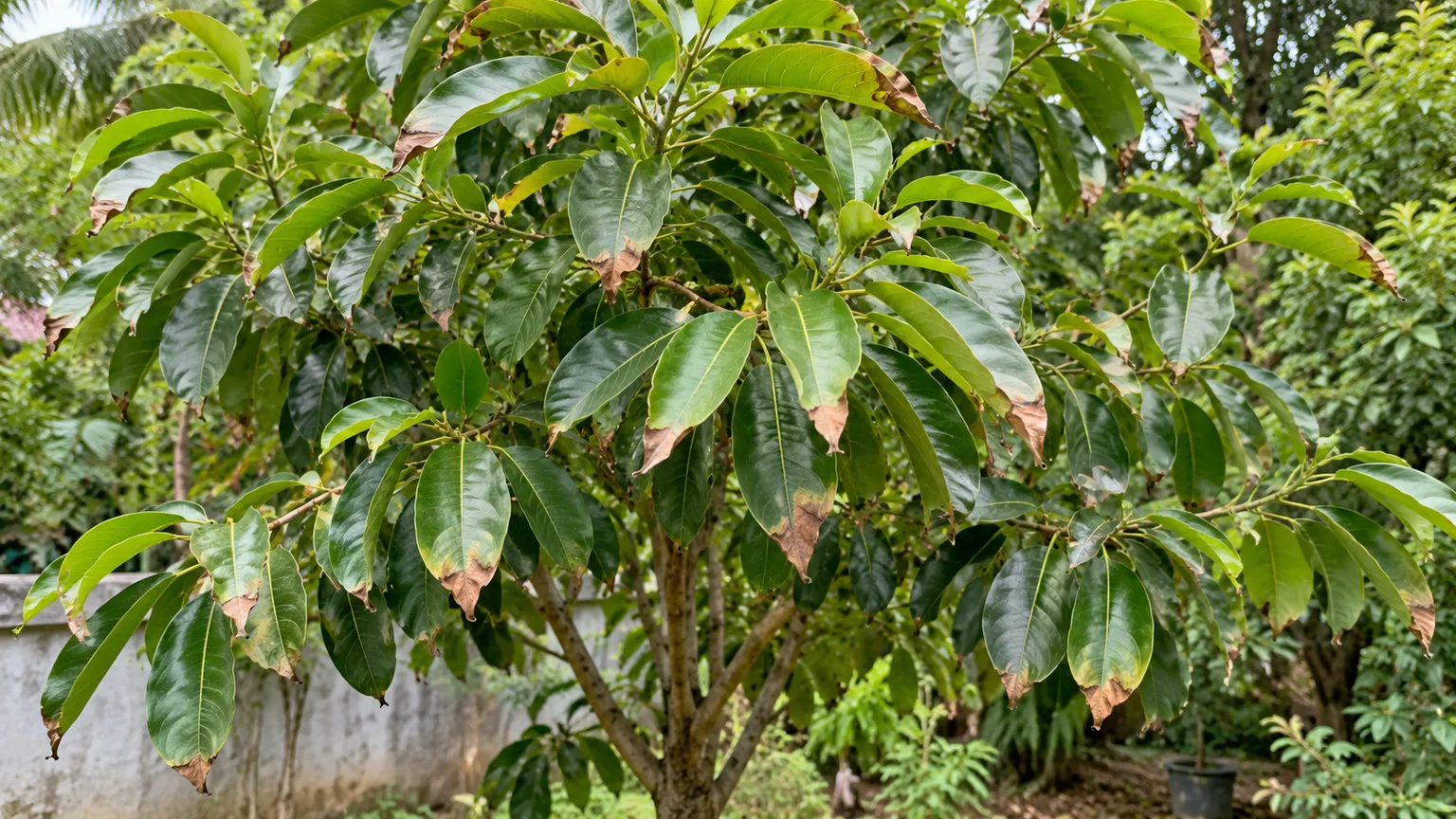
Brown Tips on Jamun: Causes, Checks & Fixes
This guide covers brown tips on Jamun. See also the general Brown Tips guide, watering, and light pages for this plant.
Brown Tips on Jamun: Causes, Checks & Fixes
Quick answer
Brown tips on Jamun (Syzygium cumini) most often trace to two container realities: the root ball dried out between waterings, or fertilizer and hard-water salts accumulated in the mix. Extension guidance notes that brown leaf tips are usually caused by overfertilization, salt buildup, or soil that swings between excessively dry and wet — and potted Jamun lives exactly that swing when a vigorous tree fills its pot. For the general mechanics of tip burn across houseplants, see our brown tips hub; on Jamun, the pattern usually shows up as crisp tan edges on older glossy leaves first, while the newest flush still looks pinkish-green and healthy.
First, push a finger 3–5 cm into the mix and lift the pot. Dry, light pot with crisp tips means drought stress; white crust on the surface plus recent feeding means salts; a heavy pot with sour mix means too much water. Each cause gets a different fix, so confirm before you act.
What brown tips look like on Jamun
Jamun carries dense, evergreen foliage — mature leaves are glossy dark green with a yellowish midrib, while the newest flush emerges pinkish before hardening off. That two-tone canopy is your best diagnostic background: genuine tip burn appears as dry, papery tan-to-brown edges starting at the very point of mature leaves, sometimes with a thin yellow band between dead tissue and the green blade behind it.
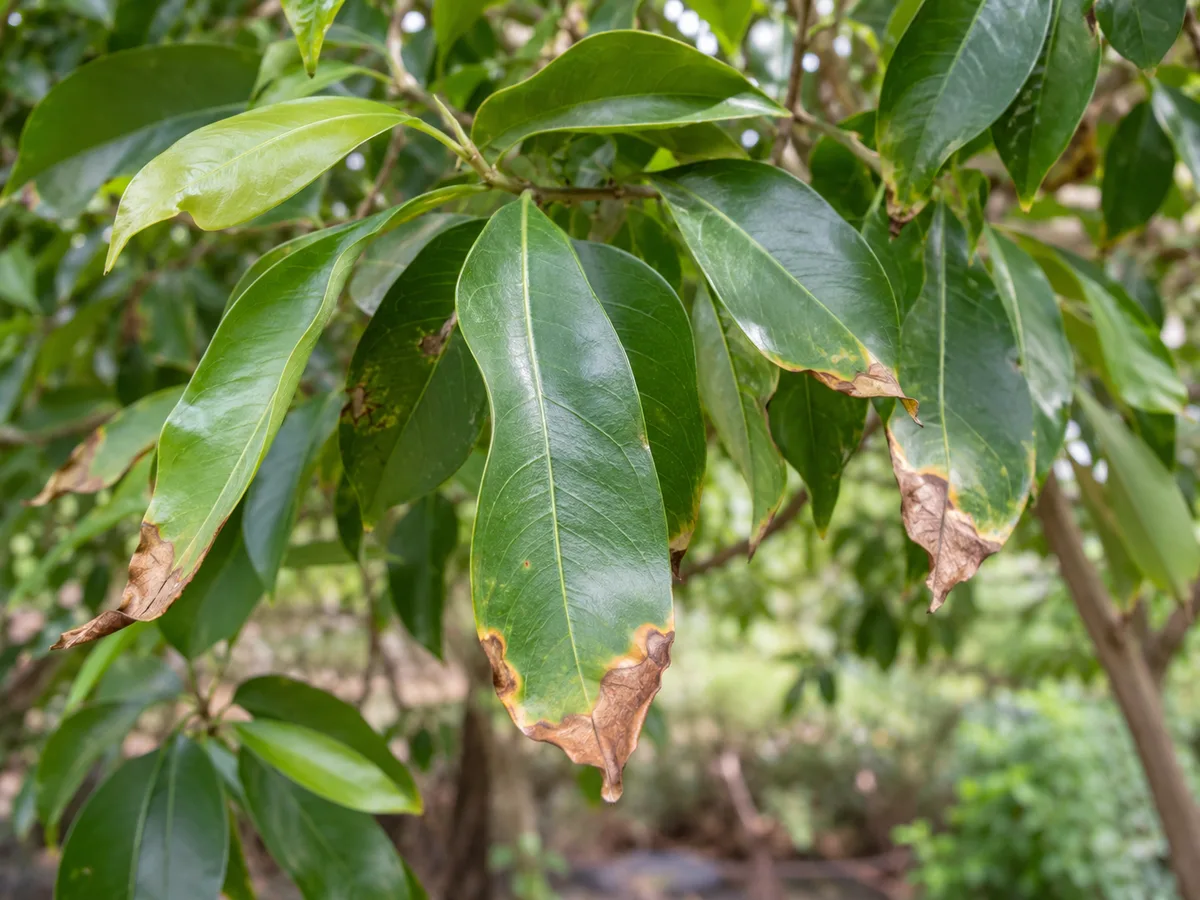
Brown tip burn on Jamun: crisp tan edges on mature glossy leaves — compare with the pinkish young flush, which should emerge unscorched.
Because Jamun is a fast-growing tree that can reach 12 m to 30 m with a dense crown, a container specimen packs a lot of leaf area over a small root volume. When transpiration outruns what the pot can supply — hot terrace afternoons, drying wind, a root-bound ball — the farthest tissue from the roots (the leaf tips) desiccates first. Tips on the sunward, windward side of the canopy brown before shaded interior leaves, which is a useful clue: uniform all-over browning suggests the root zone, while one-sided scorch suggests exposure.
Why Jamun gets brown tips
Container dry-down swings. Jamun wants deep watering when the top 3–5 cm of mix dries, and young or container-grown trees need steadier moisture than established landscape trees. A pot-bound Jamun in warm weather can dry within a day, so a tree watered on a fixed weekly calendar alternates between drought and flood. Feeder roots die back during each dry crash and cannot rehydrate the canopy evenly afterward — tips pay first. If your tree flags (drooping young leaves, dry brown margins) a day after watering, the pot, not the schedule, is the problem; see underwatering on Jamun for the drought pattern.
Terrace heat and wind scorch. Jamun is listed for Full Sun and Moderate Water, but a potted crown on a reflective terrace endures harsher conditions than the same tree in open ground: radiated heat from paving, hot wind stripping moisture, and a small soil reservoir. Extension notes tip browning may also result from too much sun or heat through an exposed position. Leaves that brown on the afternoon-sun side while shaded leaves stay glossy point here rather than to the roots.
Fertilizer and hard-water salts. Jamun is a fruit tree, so growers often feed it like an orchard specimen — but a container has nowhere to shed excess salts. Fertilizers are salts, and minerals from fertilizer plus irrigation water accumulate in container media, where soluble salt buildup can inhibit water uptake and scorch leaf tips. The signature is tip burn plus a white crust on soil or pot rim, often appearing weeks after feeding increased. Hard tap water adds to the load even without extra fertilizer.
Waterlogging and root damage. Established Jamun tolerates drought and brief flooding, but a pot left standing in a saucer is a different story — stagnant mix suffocates feeder roots, and a damaged root system cannot deliver water to leaf tips even when the soil looks wet. This is the confusing case: brown crispy tips on a plant sitting in damp soil. If the mix smells sour or stays heavy days after watering, treat it as overwatering first via overwatering on Jamun and root rot on Jamun.
Normal aging vs. stress. A few oldest lower leaves yellowing and dropping while the crown pushes glossy new growth is ordinary turnover on an evergreen tree. Tip burn is different: green leaves with dead brown points, spreading across multiple leaves and successive flushes. Do not chase a diagnosis for one or two spent leaves at the shaded base of a healthy canopy.
Note that real cases often mix causes — dry air plus heavy feeding, or a root-bound pot plus heat. Iowa State extension reminds growers that plant problems often involve more than one factor at once, so rank your clues rather than hunting a single culprit.
How to confirm the cause
Work through these checks in order on a dry morning, before watering:
- Finger test at 3–5 cm. Dry and crumbly means the tree is running on empty; damp and cool means water is not the shortage.
- Pot weight. Lift it. Feather-light confirms drought; heavy days after watering confirms slow drainage and possible waterlogging.
- Salt signs. White crust on the mix or pot rim, plus a memory of recent feeding, points to salt load — especially if watering has been light sprinkles that never drain through.
- Exposure map. Browning concentrated on the afternoon-sun or windward side suggests heat and wind scorch; even browning across the canopy suggests the root zone.
- New flush quality. Young pinkish leaves emerging with clean edges mean damage has stopped; new flush arriving pre-scorched means the stress is ongoing.
- Root-zone smell and drainage. Sour odor, algae, or water pooling in the saucer means roots are compromised — inspect before feeding or flushing.
The first fix to try
Give one slow, deep corrective soak — but only if the mix is dry or salt-crusted, not if it is already soggy.
Set the pot where it can drain freely, then water slowly in two or three passes until water runs clearly from the drainage holes and the saucer fills. Empty the saucer within 30 minutes. This single drink does double duty: it rehydrates a shrunken, hydrophobic root ball and leaches accumulated surface salts out of the mix. Then stop — resume normal watering only when the top 3–5 cm dries again, following the rhythm in the Jamun watering guide.
If the pot is already heavy and wet, do the opposite: skip water, empty any standing saucer, and move the tree to bright airy sun so the mix can breathe. Do not fertilize, repot, or prune in the same week as either first fix.
Step-by-step recovery
Once the first soak (or dry-out) is done, match the follow-through to your confirmed cause:
For drought swings: Shift from calendar watering to the finger-and-weight method — deep soak when the top 3–5 cm is dry, every 3–5 days in heat and 7–14 days in cool months. If the ball dried into a hydrophobic brick (water runs straight through), soak the whole pot in a tub for 20–30 minutes once, then drain. Mulch the surface lightly with compost to slow evaporation.
For salt buildup: Withhold fertilizer for at least a month. Flush the pot with plain water at two to three times the pot volume, letting it drain fully between passes — University of Maryland guidance notes badly affected small pots may need fresh mix, so if crust returns within weeks, repot into the aerated loam-compost-mineral blend described in the Jamun soil guide. Resume feeding at container rates, not orchard rates; the Jamun fertilizer guide keeps doses pot-appropriate.
For heat and wind scorch: Keep full sun (Jamun needs it) but buffer the extremes — move the pot off heat-radiating paving onto feet or a stand, group pots for mutual shelter, and water early in the day so the canopy faces afternoon heat fully hydrated. Check the Jamun light guide before shifting to shade; dimming a sun tree invites leggy growth and slow growth.
For waterlogged roots: Let the mix dry to the 3–5 cm mark, confirm holes are open, and never let the pot sit in a full saucer or sealed cachepot. If browning keeps spreading on wet soil or stems wilt despite dampness, unpot and inspect roots per the root rot guide — trim only mushy black tissue, keep firm pale roots, and repot to fit.
Trimming for looks is optional and cosmetic only: snip dead brown tips just inside the dead margin with clean scissors, keeping the natural leaf point. Brown tissue never greens up, so trim after new growth confirms recovery, not before.
Recovery timeline
Jamun is a moderately fast grower once warm, so stabilization is quicker than on slow houseplants. Expect no new browning within two to three weeks of the corrected routine, and clean-edged new flush leaves on the next growth push. Browned tips themselves stay brown — they are scars, not wounds still healing.
Signs you are winning: newest leaves harden from pinkish to glossy green with intact edges; pot weight becomes predictable between waterings; no fresh yellowing bands appear behind old burns.
Signs of worsening: browning creeps from tips down entire margins; whole young leaves scorch before expanding; canopy wilts while soil is wet; growth stalls through warm weather. Any of these means re-check roots and salts rather than waiting another month.
Lookalike symptoms
| Pattern | What you see | Likely cause | Next step |
|---|---|---|---|
| Crisp brown tips, green blade | Dry papery points, thin yellow band | Drought swings, salts, heat | This page — finger test + corrective soak |
| Yellow whole leaves, then drop | Uniform yellowing, shedding | Overwatering, light stress | Yellow leaves on Jamun |
| Wilt + brown tips on wet soil | Limp canopy, heavy sour pot | Root damage | Wilting → root rot |
| Drooping leaves, dry or wet | Flagging foliage, dull surface | Water imbalance either direction | Drooping leaves |
| Brown tips + sticky residue | Honeydew, sooty film, insects | Sap-sucking pests | Aphids, mealybugs, spider mites |
| Pale stretch, sparse canopy | Long internodes, small leaves | Too little light | Not enough light |
| Dry air, indoor browning | Tips crisp near vents, dusty leaves | Low humidity | Low humidity |
| Fungus gnats hovering | Tiny flies, damp surface, algae | Chronically wet surface mix | Fungus gnats and mold on soil |
When to use this page vs other Jamun guides
Use this page when the dominant symptom is dry brown tips or edges on otherwise green leaves. Move to a sibling when a different pattern leads:
- Whole-leaf yellowing or shedding without tip-first burn → yellow leaves
- Wet heavy soil, limp canopy, or sour mix → overwatering first, then root rot if stems soften
- Bone-dry ball with flagging young leaves → underwatering for the full rehydration ladder
- Visible insects, webbing, or sticky honeydew → pest guides (spider mites, mealybugs, aphids)
- Care baselines → watering, soil, light, fertilizer, and the Jamun overview for scale and placement reality
Mistakes to avoid
Do not mist the leaves and call it fixed — surface wetting does not rehydrate a dry root ball or leach salts. Do not fertilize a tip-burned Jamun to “push through it”; feeding into a salt problem deepens the burn. Do not repot, root-prune, spray, and relocate in the same week — pick the one fix matching your confirmed cause and read the response for two weeks. Do not move a scorched tree into deep shade; Jamun is a full-sun species and dim corners trade tip burn for weak stretched growth. And do not trim every browned leaf off at once — damaged-but-mostly-green leaves still photosynthesize for the recovering flush.
How to prevent it next time
Jamun grows in full sun with moderate water in rich, moist, well-drained soil. In pots that translates to: a heavy stable container with real drainage holes, the loam-compost-mineral mix from the soil guide, deep watering whenever the top 3–5 cm dries, and an emptied saucer every time. Feed at modest container rates during active growth and flush the pot with plain water every couple of months if your tap water is hard. Repot or root-prune every two to three years before the ball turns to solid root — a Jamun that dries within a day of watering is asking for a bigger pot or a root refresh, and chronic underwatering always ends as tip burn. Review the full problem list on the Jamun problems hub each season so small stresses get caught early.
Related Jamun guides
- Jamun overview — tree scale, sun placement, and container reality check
- Jamun watering — the 3–5 cm dry-down rhythm and seasonal intervals
- Underwatering on Jamun — drought wilt vs. salt burn confusion
- Overwatering on Jamun — heavy pots, sour mix, and the dry-down ladder
- Root rot on Jamun — mushy-root inspection and repot protocol
- Yellow leaves on Jamun — whole-leaf yellowing without tip-first burn
Tip burn on Jamun is almost always the pot talking, not the species failing: a big sun-loving tree asking for steadier water, lighter feeding, or more root room. Confirm with the finger test, apply one corrective soak, and judge success by the next flush — clean pinkish leaves hardening to glossy green mean you read it right.
How we wrote and verified this guide: Recommendations were checked against UC IPM, Singapore National Parks Board, Iowa State Extension, University of Maryland Extension, Royal Horticultural Society, and GrowPlants references cited inline. Author: sai-ananth. Reviewer: LeafyPixels Review Board. Methodology: plant problem guidance is reviewed against botanical references, extension resources, and LeafyPixels plant-care data before publication. Last reviewed: 2026-09-05.
Related tool
Use the Plant Problem Diagnosis Tool to narrow causes for brown tips on this plant before changing multiple variables at once.