Wilting on Jamun: Causes, Checks & Fixes
Quick answer
Wilting on Jamun is most often a container-watering mismatch: a dry root ball in a hot, sunny spot, or suffocated roots in mix that stays wet. Check the top 3–5 cm of mix and lift the pot first. Dry and light: give one deep soak. Moist and heavy: hold water and drain the saucer.
Wilting on Jamun: Causes, Checks & Fixes
This guide covers wilting on Jamun. See also the general Wilting guide, watering, and light pages for this plant.
Wilting on Jamun: Causes, Checks & Fixes
Quick answer
If your Jamun is wilting, check the soil before you touch the watering can. Push a finger 3–5 cm into the mix and lift the pot. Dry and light means a thirsty root ball: give one deep soak until water runs from the drainage holes, then empty the saucer. Moist and heavy means the roots cannot take water up: stop watering, drain standing water, and let air reach the root zone. For the general mechanics of why both dry and wet soil produce the same limp look, see our wilting guide. On Jamun, the pattern that follows is almost always about container life, not field hardiness.
What wilting looks like on Jamun
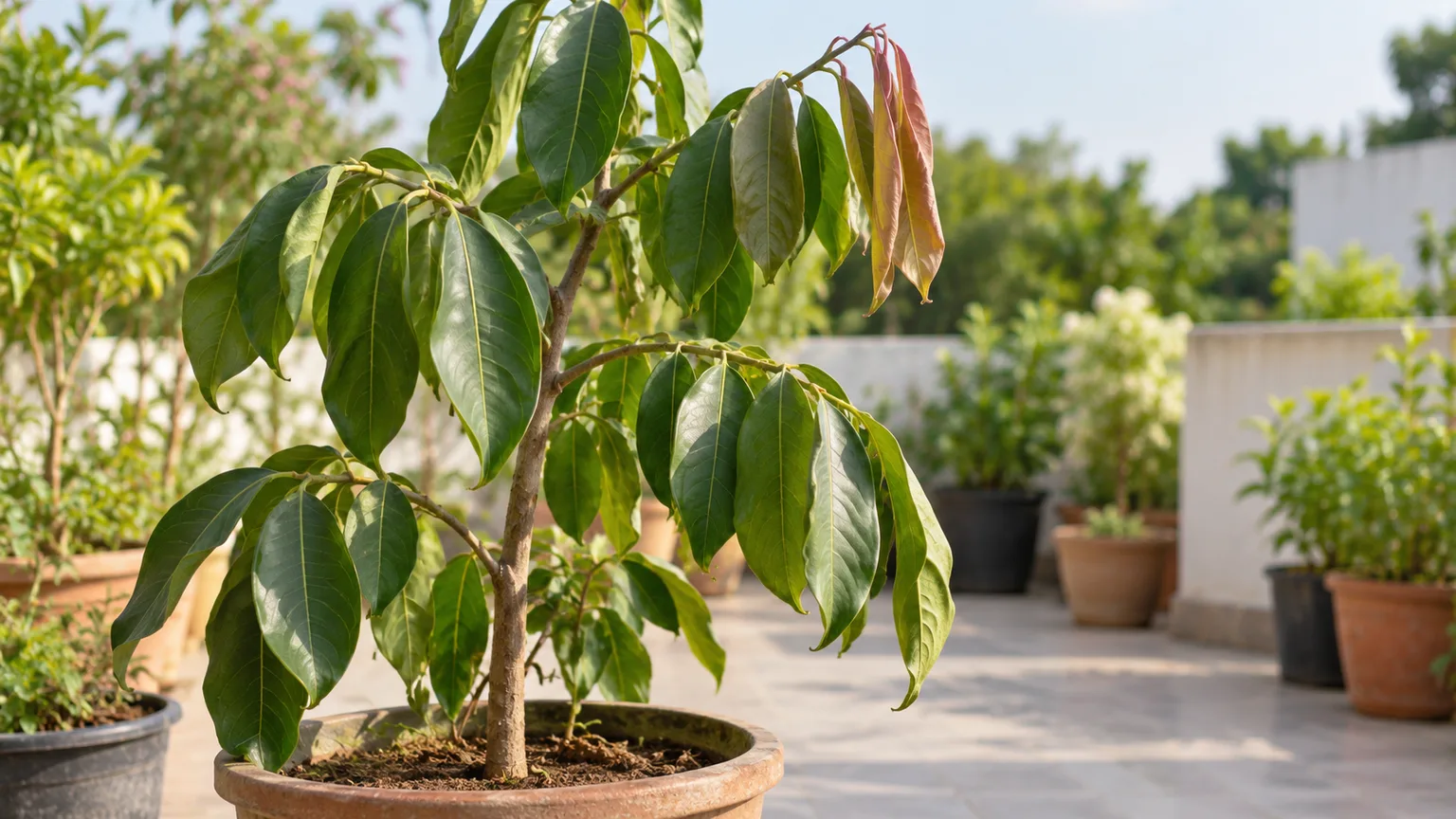
Jamun leaves are normally thick, glossy, and deep green with a pale midrib, and the newest flush emerges pinkish before hardening off. When the tree wilts, the gloss goes first: leaves turn dull and soft, and the tender pink flush flops hardest while older leaves may only droop at the tips. On a young container tree in full sun this often shows as dramatic afternoon flagging that partially recovers by morning, whereas root-zone failure shows as persistent limpness plus yellowing or leaf drop that does not lift overnight.
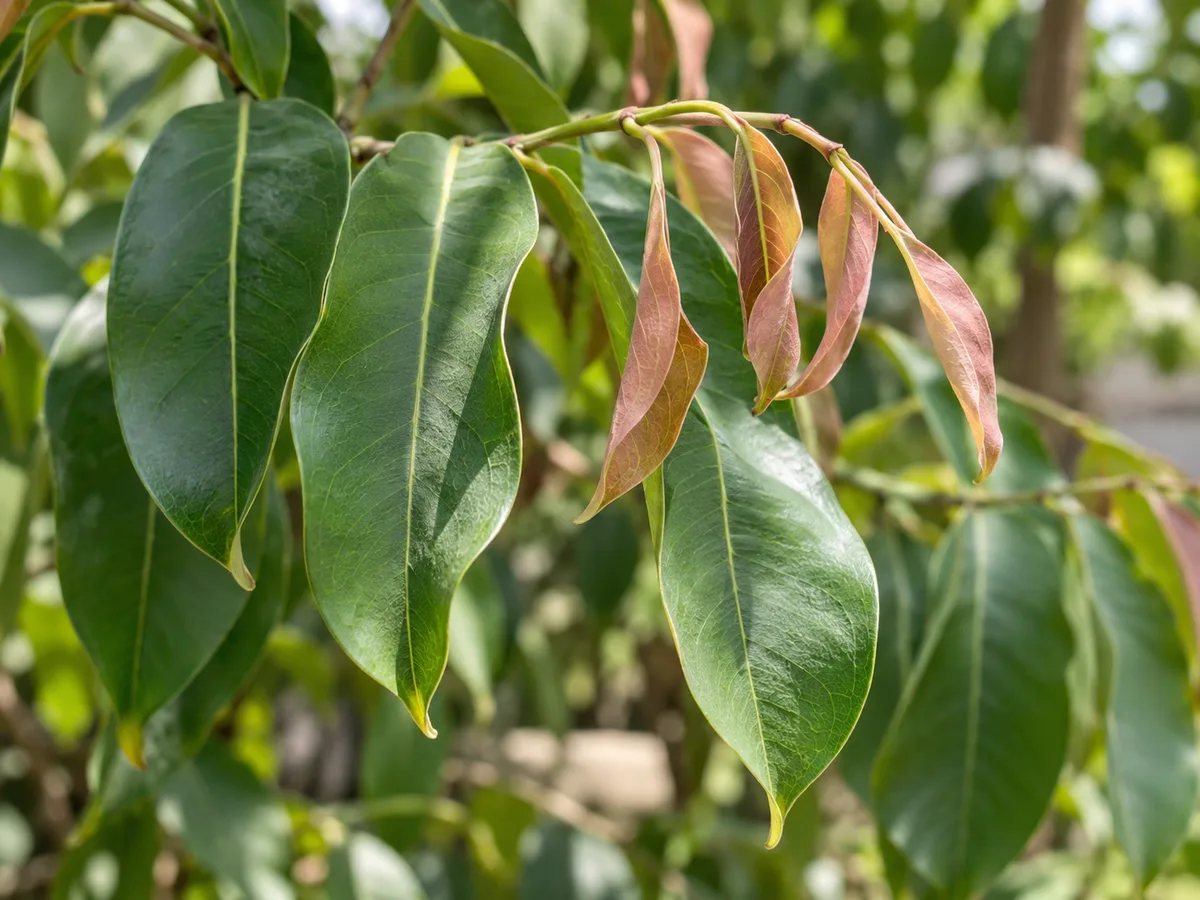
Dull, soft leaves with a flopped pink flush point to water uptake failure — confirm with the 3–5 cm soil check before treating.
Afternoon-only wilt on an otherwise green Jamun is a heat-and-supply story. Around-the-clock wilt with yellowing lower leaves is a root story. Telling these apart matters because the fixes are opposites, and watering a root-suffocated tree the way you would water a thirsty one finishes the roots off.
Why a full-sun fruit tree wilts in a pot
Jamun is a fast-growing evergreen tree that reaches 12–30 m outdoors, and Singapore’s NParks lists it for full sun with moderate water, noting that established trees tolerate both drought and short-term flooding. That field toughness misleads container growers. A pot removes the deep soil buffer, so a young Jamun in a small container on a hot terrace can swing from moist to bone dry in a single day, while the same tree in the ground would never notice.
The most common cause is simply a root ball that dried out between waterings. Jamun’s moderate growth rate and dense crown move a lot of water on sunny days, and once the top few centimetres dry, the fine feeder roots in a loam-based mix stop absorbing. Underwatered trees typically show dry, cracked soil and limp leaves that recover after a thorough soak, and Jamun follows that script closely: the whole canopy softens, and soil may even shrink from the pot edges.
The mirror image is wet wilt. When mix stays saturated, water fills the air spaces roots need to breathe, and oxygen-starved roots cannot absorb water even while sitting in it — the plant wilts in soaking soil. UC IPM notes that well-watered plants that start to wilt may have Phytophthora root and crown rot, a soilborne disease favored by prolonged wetness around the base. Tennessee forestry diagnosticians describe the same above-ground signature: symptoms mimic drought or nutrient deficiency, including chlorosis and wilting, worst in poorly drained spots. On Jamun this usually traces to a heavy container mix, a blocked drainage hole, or a saucer left full after watering.
Three Jamun-specific amplifiers complete the picture. A root-bound tree — roots circling the pot or poking from drainage holes — dries within a day no matter how carefully you water. Fresh repotting or root-pruning causes temporary transplant wilt while severed fine roots regrow. And peak summer heat can outpace even a healthy root system, so a large canopy in a small black pot flags every afternoon regardless of morning watering.
How to confirm the cause
Work in this order so the evidence, not the symptom, names the culprit.
- Finger test at depth. Push a finger 3–5 cm into the mix, Jamun’s own watering checkpoint. Bone dry means thirst. Damp or soggy with a wilted canopy means uptake failure, and the soil reading overrides the leaves — wet soil with wilting means overwatering, dry soil with wilting means underwatering.
- Lift the pot. Light confirms dry; heavy confirms wet. This thirty-second pairing — finger test plus pot weight — resolves nearly every ambiguous wilt, because heavy means wet and light means dry.
- Check drainage. Look for a saucer holding water, a blocked hole, or mix that has slumped into a soggy layer. Tip the pot and confirm water actually exits when you water.
- Smell and surface. A sour or rotten-egg smell, algae, or fungus gnats hovering over persistently damp mix all point to the wet side of the diagnosis. Cross-check with our mold on soil and fungus gnats guides if you see either sign.
- Read the canopy pattern. Young pink flush wilting first with green older leaves suggests simple thirst or heat flagging. Lower-leaf yellowing with all-day limpness suggests roots. One-sided or single-branch wilt deserves a closer look at that stem base for localized damage.
- Inspect roots only if wet wilt persists. Slide the root ball out and look: white or tan firm roots mean the trouble is elsewhere, while brown, black, or mushy roots confirm rot. A soft, dark stem base at the soil line is an advanced sign — treat it as urgent.
The first fix to try
Take the soil reading, then apply its single match and stop. If the mix is dry at depth, give one deep soak until water flows freely from the drainage holes, wait ten minutes, and empty the saucer completely. If the mix is moist, do the opposite: empty the saucer, move the pot where air circulates, and let the upper mix dry before the next watering. One targeted correction first lets you read the tree’s response; stacking a soak, a feed, a repot, and a spray on the same day hides which one worked and usually harms stressed roots further.
Step-by-step recovery
Once the first fix is in, follow the tree’s signals in this order.
Move a heat-flagging Jamun out of the fiercest afternoon sun for a few days — bright light still, just not baking reflected heat off paving while it rehydrates. Shade is triage, not the new home: Jamun is a full-sun tree and needs its sunny terrace back once leaves firm up, as our not enough light guide explains.
Re-water on the finger test, not the calendar. In hot weather that can mean checking every 3–5 days; in cool or rainy spells the same pot may need nothing for a week or two. Water deeply so the whole root ball moistens, since sips that wet only the surface train roots upward and worsen the next wilt.
Trim only what is clearly dead. Leaves that stay papery and crisp after rehydration will not recover — snip those. Leaves that are merely soft often firm up within hours, so give them a day before deciding. Do not strip a stressed tree bare; it needs its remaining canopy to photosynthesize its way back.
Hold fertilizer until new growth looks healthy for at least two weeks. Feeding a wilted tree forces growth its damaged roots cannot support, and excess salts in dry mix can burn the very feeder roots you are trying to save.
Repot only for a confirmed reason: circling root mass that dries daily, or mushy rotted roots that need excision and fresh mix. If you must repot for rot, trim only the dead roots with clean scissors, reuse a right-sized pot with free drainage, and water lightly afterward rather than soaking. If the tree is simply root-bound, move up one pot size in late winter to early spring and refresh the loam-based mix.
Recovery timeline
Thirst-only wilt is fast: leaves usually firm within hours of a proper soak, and a fresh pink flush within one to three weeks confirms recovery. Wet wilt is slow — underwatered plants often recover within hours while overwatered ones take days to weeks — so expect a week or more of steady, non-spreading symptoms before new growth resumes. Improvement means the wilt stops spreading and new leaves emerge glossy and firm. Warning signs mean escalation: blackening stem base, sour mix, continuing leaf drop in wet soil, or wilt that deepens days after you corrected watering all point to advancing root damage needing the root inspection above.
Lookalike symptoms
| What you see | More likely | Where to go |
|---|---|---|
| Leaves hang down but soil reads fine and color stays green | Temporary heat flagging or early thirst | Drooping leaves on Jamun |
| Limp leaves plus yellowing, soggy mix, sour smell | Overwatering progressing toward rot | Overwatering on Jamun |
| Limp leaves plus dry, shrunken mix pulling from pot edges | Underwatering | Underwatering on Jamun |
| Wilt plus mushy dark roots or soft stem base | Root rot | Root rot on Jamun |
| Wilt plus yellowing starting on lower leaves | Wet-soil nutrient uptake failure | Yellow leaves on Jamun |
When to use this page vs other Jamun guides
Use this page when whole shoots or the canopy go limp and soft — the turgor-loss event itself. If the leaves hang but the soil and roots check out and the main complaint is posture rather than softness, start with drooping leaves instead. If you already know the mix is chronically soggy or chronically dry, go straight to overwatering or underwatering; this wilting page is the fork in the road, those pages are the roads. And if unpotting reveals dead roots, root rot takes over from here.
Mistakes to avoid
Do not water on sight alone — the reflex that saves a thirsty Jamun kills a drowning one, because a wilting plant is just as likely to be drowning as thirsty. Do not fertilize a wilted tree to “give it strength.” Do not repot, prune hard, and spray on the same day. Do not leave the saucer full “so it can drink later” — Jamun tolerates brief flooding in the ground, not standing water in a pot. And do not move the tree into a dim corner for weeks; reduced light slows the very recovery growth you are waiting for.
How to prevent it next time
Prevention is container management. Keep Jamun in a heavy, stable pot with large drainage holes, in a fertile loam-based mix with compost and coarse mineral material that drains freely yet holds moderate moisture — and keep that mix mildly acidic to neutral, around pH 6.0–7.5. Water when the top 3–5 cm dries, deeply enough that excess escapes, and set a checking rhythm rather than a watering rhythm: every 3–5 days in heat, every week or two when cool. Full details live in our Jamun watering and Jamun soil guides.
Size the pot to the canopy and step up before roots circle the pot; a top-heavy tree that dries daily is asking for a bigger home. Mulch the surface lightly to buffer terrace heat, but keep mulch off the stem. After any repotting, expect a week or two of sulk and water lightly until new growth proves the roots are working. Keep Jamun where it belongs — the sunniest terrace or garden spot — since a vigorous tree in adequate light and a right-sized pot rarely wilts except in true heatwaves. Our Jamun light guide covers placement that keeps the canopy productive without baking the root ball.
Related Jamun guides
- Jamun overview — full care profile: full-sun placement, container scale, and fruit habits.
- Jamun problems hub — every diagnosed Jamun issue in one place when wilt is not the only symptom.
- Overwatering on Jamun — use when mix stays wet for days and leaves yellow from the bottom up.
- Underwatering on Jamun — use when mix dries fast and leaf margins crisp.
- Root rot on Jamun — use when roots are mushy or the stem base softens.
- Drooping leaves on Jamun — use when posture, not softness or color, is the main complaint.
- Jamun watering — the ongoing routine: depth checks, seasonal rhythm, and container sizing.
Related tool
Run the Drooping Leaves Diagnosis tool to walk the wilt-vs-droop decision with Jamun preselected, then confirm with the finger test above before changing anything.