Fungus Gnats on Jamun: Causes, Checks & Fixes
Quick answer
Fungus gnats on Jamun mean the top of the mix stays wet too long-usually a compost-rich container mix watered before the top 3-5 cm dries. First step: stop watering until the top 3-5 cm is dry, clear fallen fruit and debris off the surface, and set a yellow sticky trap. Add a BTI soil drench only if flies persist after drying.
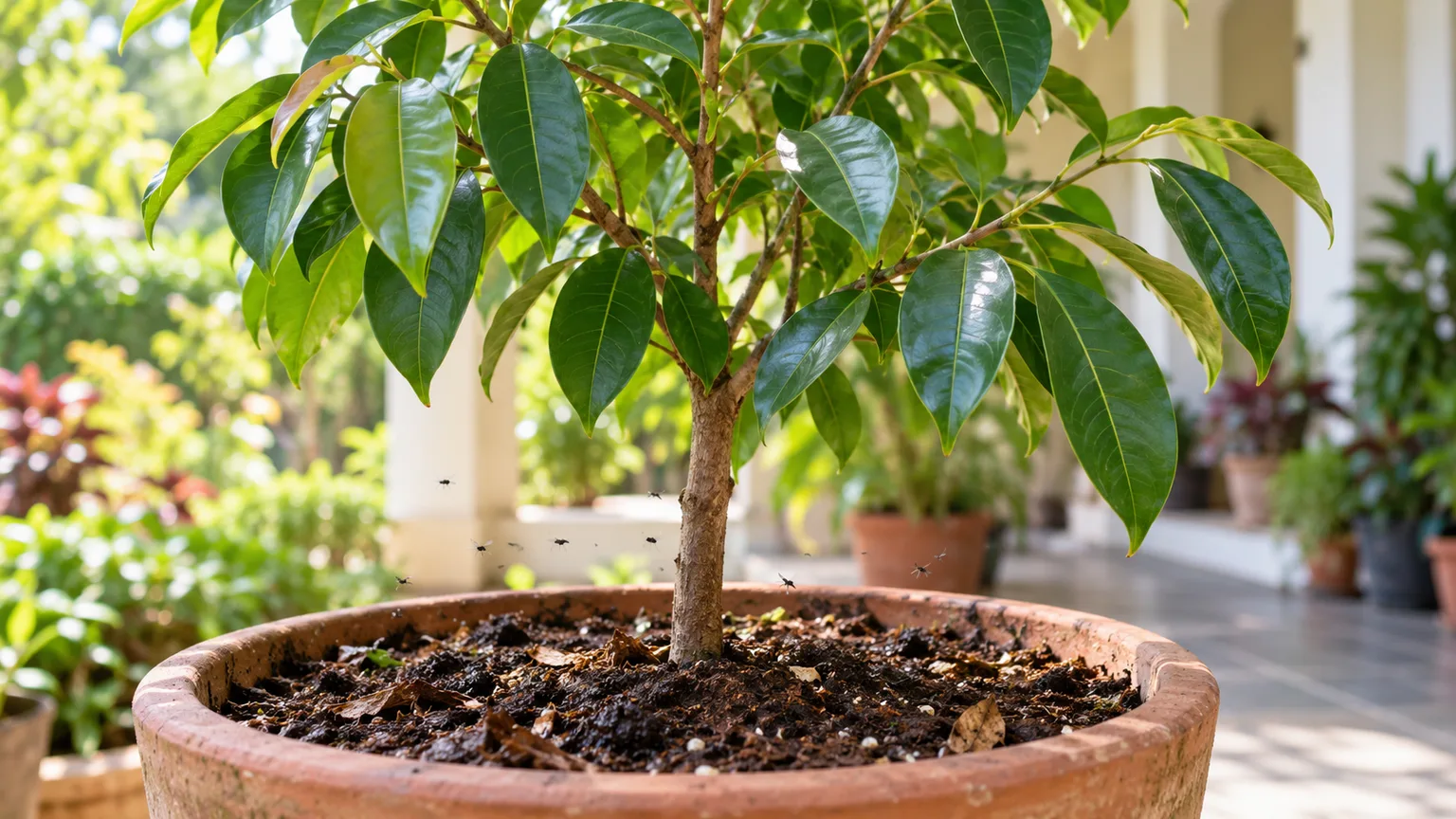
Fungus Gnats on Jamun: Causes, Checks & Fixes
This guide covers fungus gnats on Jamun. See also the general Fungus Gnats guide, watering, and light pages for this plant.
Fungus Gnats on Jamun: Causes, Checks & Fixes
Quick answer
Fungus gnats on Jamun are a soil-moisture problem, not a leaf problem. The tiny dark flies breed in the damp top layer of the mix, where their larvae feed on fungi and organic matter and chew tender roots. Adults themselves are a nuisance that do not bite or damage foliage, so spraying leaves misses the point entirely. For the general life cycle behind these flies, see our fungus gnats hub. On Jamun, the pattern almost always traces to a compost-rich container mix kept wet at the surface - the same habit that leads to overwatering on Jamun.
First step: stop watering until the top 3-5 cm of mix is dry, clear fallen fruit and debris off the soil surface, and set a yellow sticky trap at the pot rim. That single drying correction breaks egg-laying in the larval zone and matches the normal rhythm in the Jamun watering guide. Only if trap catches stay high after a week of true surface drying should you add a BTI soil drench.
What fungus gnats look like on container Jamun
The clearest sign is behavioral: small dark flies, about 1/16 to 1/8 inch long, that flutter up when you water, lift, or brush past a container Jamun. They are weak fliers that hover near the soil line, foliage, and windows rather than scattering across the room. On a terrace-grown Jamun you may first notice them drifting toward light in the evening or running across the damp mix surface.
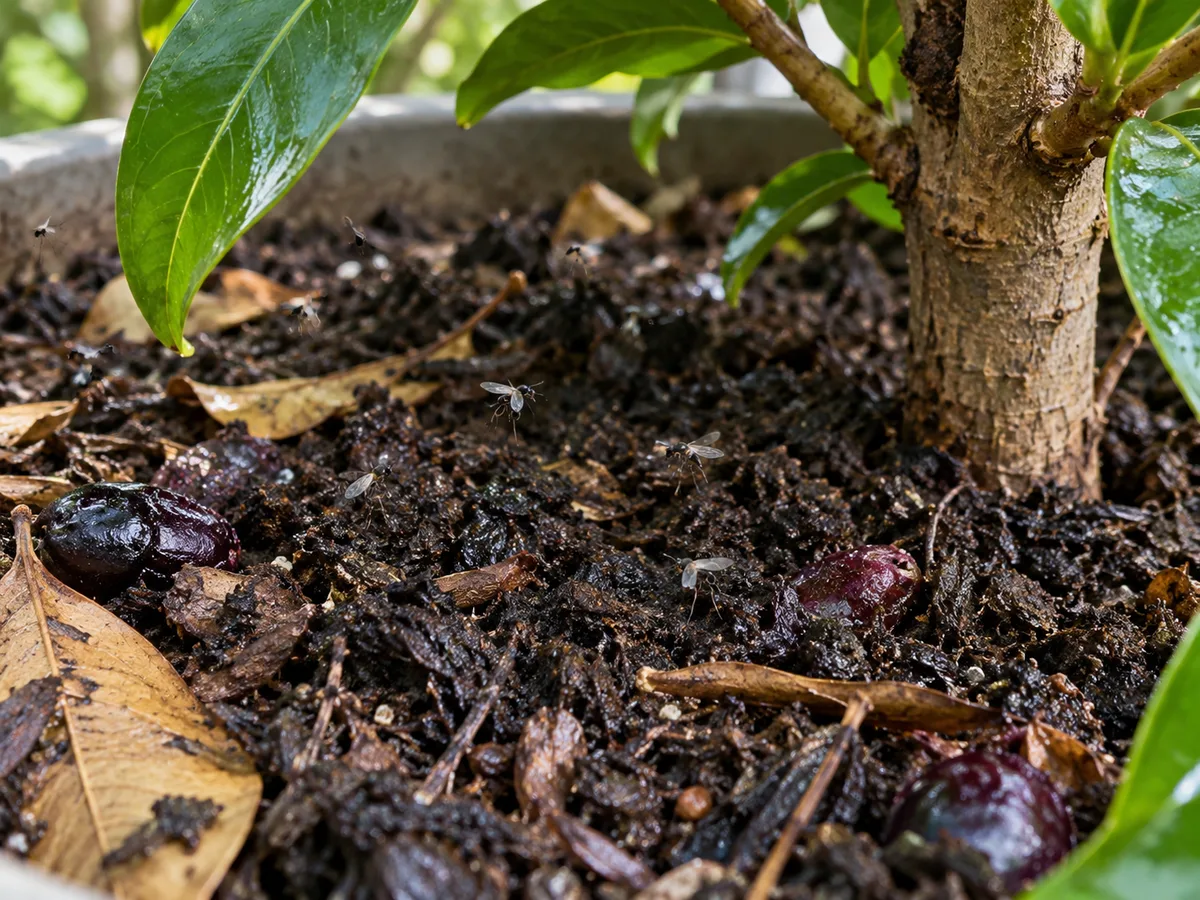
Adult gnats hovering over damp Jamun potting mix with compost visible at the surface - compare trap catches week over week, not day to day.
Jamun foliage itself usually looks normal at first. Unlike spider mites or mealybugs, gnats leave no stippling, webbing, or cottony wax on the glossy evergreen leaves. The evidence sits at and below the surface:
- Translucent worm-like larvae with shiny black heads in the top 2 to 3 inches of mix when you scrape the surface or flip an overnight potato wedge
- Surface mix that stays dark and damp days after watering, sometimes with white fuzzy mold on soil sharing the same wet cause
- Yellow sticky traps at the rim catching small dark flies within 48 hours
- Fallen berries or leaf litter rotting on the surface, feeding the fungi larvae eat
- Seedlings stalling or collapsing while a nearby mature container tree looks fine - larvae damage young roots first
If glossy leaves yellow and drop while the pot stays heavy and wet, treat that as moisture stress at the roots, not a leaf disease. Gnats and root trouble share one cause on this tree.
Why Jamun pots breed fungus gnats
Gnat females lay eggs in moist, organic-rich surface mix, and Jamun container culture hands them exactly that unless you manage drying deliberately.
Compost-heavy mix stays biologically active. The recommended Jamun soil blend runs about 25 percent finished compost in a loam base - fertile and moisture-retentive by design. Decomposing compost, organic fertilizers, and mulch are favorite breeding spots for egg-laying females. That compost fraction is good nutrition for the tree but must cycle through surface drying, or it becomes a permanent nursery for larvae.
Field tolerance does not transfer to pots. Established landscape Jamun tolerates drought and even brief flooding, but a container removes that buffer - a big pot of loam holds a large wet volume around a confined root ball. Watering a potted tree on a landscape-tree mindset (“deep and frequent”) keeps the larval zone wet for weeks while the canopy still looks vigorous.
Fallen fruit and leaf litter feed the cycle. Ripe Jamun berries drop readily, and a dense evergreen crown sheds leaves year-round. Fruit pulp and decaying leaves rotting on damp mix supply the fungal food larvae depend on. A terrace tree left unswept through fruiting season can breed successive generations without any change in your watering can.
Monsoon and cool spells slow every dry-down. Jamun drinks less and evaporates less when skies stay gray or nights turn cool. If you hold hot-season frequency - checking every 3 to 5 days - through rainy or cool stretches when the guide calls for 7 to 14 day checks, the top centimeters never dry. Outdoor pots catching rain plus your routine watering stay wettest of all.
Shade and still air stretch surface moisture. Jamun belongs in full sun with open airflow, where pots dry on schedule. A seedling parked in a shaded balcony corner or crowded behind larger pots can sit damp for a week after one watering even when you did everything else right. See the Jamun light needs before assuming the watering volume is the only variable.
Fresh-seed trays are the highest-risk pots in the collection. Jamun seed must be sown promptly in warm, evenly moist, free-draining medium - ideal egg-laying habitat - and larvae in large numbers damage roots and stunt growth, particularly in seedlings and young plants. One infested germination tray can seed every container on the terrace.
How to confirm the cause
Work through these checks in order before buying any product:
- Fly behavior - Do small dark flies rise from this pot when disturbed? Gnats fit; fruit flies cluster over fallen berries or kitchen waste instead, and whiteflies lift in clouds from leaf undersides.
- The 3-5 cm test - Push a finger into the mix. Damp at depth days after watering confirms breeding habitat; a genuinely dry surface with a few flies points to a neighboring infested pot.
- Potato wedge test - Press 1/4-inch potato slices cut-side down into the damp surface and check the undersides after two to three days. Translucent larvae confirm active breeding in this Jamun pot.
- Sticky trap count - Place a yellow sticky card just above the soil line. Catching small dark flies over 24 to 48 hours confirms adults are emerging from that container, and weekly counts show whether you are winning.
- Saucers and cachepots - Lift the pot out of any decorative outer pot. Standing water in the saucer or a soggy inner liner keeps the surface wet no matter how careful your watering looks from above.
- Surface debris - Rotting berries, fallen leaves, or algae crust on the mix surface all mark a larval food supply. Clean pots rarely sustain heavy breeding.
- Seedling check - If you run germination trays, inspect them first. Stalled or toppling seedlings with fine roots chewed short mean larvae are doing real damage there even if the big tree shrugs them off.
- Root-zone smell and stem bases - Sour mix, soft bark at the soil line, or wilting on wet soil means moisture damage beyond gnats - switch to the root rot workflow rather than trapping flies alone.
Confirmed diagnosis - flies rising from damp mix plus larvae on a potato wedge or steady trap catches. Suspected only - a few flies with a dry 3-5 cm layer and clean traps may be visitors from another pot or nearby fruit waste.
First fix: dry the surface, clear debris, trap adults
Stop watering until the top 3-5 cm of mix is completely dry, pick every fallen berry and dead leaf off the surface, and set one yellow sticky trap per pot.
Allowing the growing medium to dry between waterings, especially the top 1 to 2 inches, is the single most important control: dry surface mix kills eggs and young larvae and makes the pot unattractive to egg-laying females. For Jamun this is not extra stress - it is the standard check from the watering guide. Empty the saucer at the same time so the pot cannot rewick moisture from below, and move shaded seedlings or small pots into brighter airflow so the surface actually dries.
Hold fertilizer and repotting until the rhythm stabilizes. Wet compost-rich mix plus fresh nitrogen grows soft surface algae and fungi faster than it helps the tree, and unpotting a large container tree on day one masks whether moisture or pests caused the setback.
Step-by-step recovery
Once the surface is drying, add controls in this order based on severity:
- Keep the dry-top rhythm for two full watering cycles - Water deeply only when the 3-5 cm test passes, then let excess drain fully. Judge by pot weight: heavy means wait, light means drink.
- Run sticky traps continuously - Keep cards just above the soil line and replace when coated. Falling weekly catches prove the breeding cycle is breaking; flat or rising catches mean a nearby pot or tray is still wet.
- Top-dress or scrape the surface - Remove the top inch of old soggy mix, fallen fruit pulp, and algae, and replace with dry, gritty material matching the Jamun soil mix. A coarse sand or fine gravel top layer discourages new egg-laying.
- Apply BTI for persistent larvae - Drench the mix with Bacillus thuringiensis subsp. israelensis (Mosquito Bits, Gnatrol) per label, and repeat at about five-day intervals because BTI does not persist indoors or kill eggs and pupae. Gardening Know How’s practical walkthrough likewise pairs sticky traps for adults with BTI drenches for larvae rather than relying on either alone.
- Quarantine seedling trays - Move germination pots away from the main collection until traps stay clean for two weeks. Bottom-water trays lightly so the sowing surface stays drier, and discard any collapsed seedlings instead of nursing dead tissue that feeds larvae.
- Repot only when the mix will not dry - If a container stays soggy for weeks despite corrected watering, the loam has broken down and holds too much water. Move the tree into fresh aerated mix in a correctly sized pot - ideally in late winter to early spring per the repotting guide - trimming any soft dark roots during the move.
Skip bleach drenches, hydrogen peroxide pours, and cinnamon dusting as primary fixes. They do not replace drying plus larval control, and harsh drenches can injure the fine feeder roots a young Jamun depends on.
Recovery timeline
A generation from female to female takes about 17 days at warm temperatures, with overlapping stages, so expect two to six weeks before traps go quiet even after the surface dries. Eggs and pupae already in the mix keep emerging on schedule.
Improvement signs:
- Fewer flies per trap card each week
- Top 3-5 cm drying within the normal check interval
- Firm new flushes of glossy leaves at branch tips
- Seedlings resuming upright growth instead of toppling
Worsening signs:
- Trap catches climbing despite a dry surface - hunt for a second infested pot, tray, or soggy cachepot liner
- Yellow leaves spreading from lower branches on wet mix - shift to the overwatering workflow
- Soft bark at the soil line or sour-smelling mix - treat as root rot, not a fly problem
Lookalike symptoms
| What you see | Likely cause | Key check |
|---|---|---|
| Tiny dark flies rising from damp mix | Fungus gnats | Larvae on potato wedge; trap catches over 48 hours |
| Flies over fallen berries, rounder bodies | Fruit flies | Cluster on fruit waste, not pot soil; clean up fallen Jamun fruit |
| Stout flies on algae, short antennae | Shore flies | Same fix - dry the surface |
| White cottony masses in branch crotches | Mealybugs | Stationary wax clusters on stems, not soil flies |
| Fine webbing, stippled older leaves | Spider mites | Dry-air leaf pest; mites on undersides, not emerging from soil |
| White fuzz on damp mix surface | Mold on soil | Often co-occurs with gnats; shares the wet-mix cause |
| Limp shoots on heavy wet mix, no flies | Overwatering / rot | Sour soil, soft roots - see overwatering |
Mistakes to avoid
Do not spray flying adults with neem or soap while the surface stays wet - eggs keep hatching regardless. Do not water on a calendar through rainy or cool spells without the 3-5 cm check. Do not drown seedlings while trying to keep germination medium moist - bottom-water lightly instead. Do not leave fallen berries rotting on terrace pots during fruiting season. Do not upsize the container to fix gnats - a bigger wet volume around the same roots dries slower and breeds more flies. And do not quit after three good days: overlapping generations mean traps must trend down for two to three weeks before the cycle is truly broken.
Jamun care cross-check during treatment
| Check | Healthy target | Gnat-friendly mistake |
|---|---|---|
| Water timing | Top 3-5 cm dry before each deep drink | Calendar watering through rain or cool spells |
| Mix | Loam, compost, and grit that drains freely | Broken-down compost-heavy mix staying soggy |
| Drainage | Open holes, saucers emptied every time | Cachepot or saucer holding standing water |
| Surface hygiene | Berries and leaves cleared weekly | Rotting fruit pulp feeding fungi |
| Light and air | Full sun terrace with open airflow | Shaded corner where pots never dry |
| Seedlings | Pasteurized sowing mix, light bottom-watering | Warm soggy germination trays shared with mature pots |
| Pot size | Container matched to root ball, refreshed every 2-3 years | Oversized pot with a large permanently wet zone |
When to worry - seedling losses and root escalation
Escalate beyond drying and BTI if seedlings collapse in batches (larvae sever fine roots faster than sprays can compensate), if swarms persist across multiple pots despite every surface testing dry (check nursery stock, compost bags, and drains), or if the tree shows soft bark, sour mix, or spreading yellow leaf drop alongside flies. That last pattern is a root-health emergency - unpot, trim decay, and repot into fresh mix per the root rot guide rather than trapping adults alone.
A mature container Jamun with firm stems, a normal dry-top rhythm, and falling trap counts is managing the problem. Success means weekly catches trending down, surfaces drying on schedule, and clean new flushes - not zero flies overnight.
When to use this page vs other Jamun guides
- Jamun watering guide - Use for routine moisture checks before assuming gnats are the main issue.
- Jamun problems hub - Browse all 16 common issues on this tree.
- Overwatering on Jamun - Use when soil stays wet and leaves yellow with few or no flies.
- Root rot on Jamun - Use for soft bark, sour mix, or dark mushy roots.
- Mold on soil on Jamun - Use when white fuzz coats the surface with or without flies.
Related Jamun guides
- Jamun overview - species baseline, container scale, and sun needs
- Jamun watering - the 3-5 cm dry-down rhythm and seasonal checks
- Jamun soil - loam-compost-grit mix that drains yet feeds
- Jamun light - full-sun placement that keeps pots drying
- Overwatering on Jamun - wet-soil rescue ladder
- Root rot on Jamun - mushy roots and trim-and-repot protocol
- Mold on soil on Jamun - surface fuzz sharing the wet cause
- Yellow leaves on Jamun - moisture-stress differential
- Wilting on Jamun - when droop means thirst vs root damage
- Jamun repotting - mix refresh timing for broken-down soil
- Jamun problems - full issue index for this tree