Mealybugs on Jamun: Cottony Clusters, Checks & Fixes
Quick answer
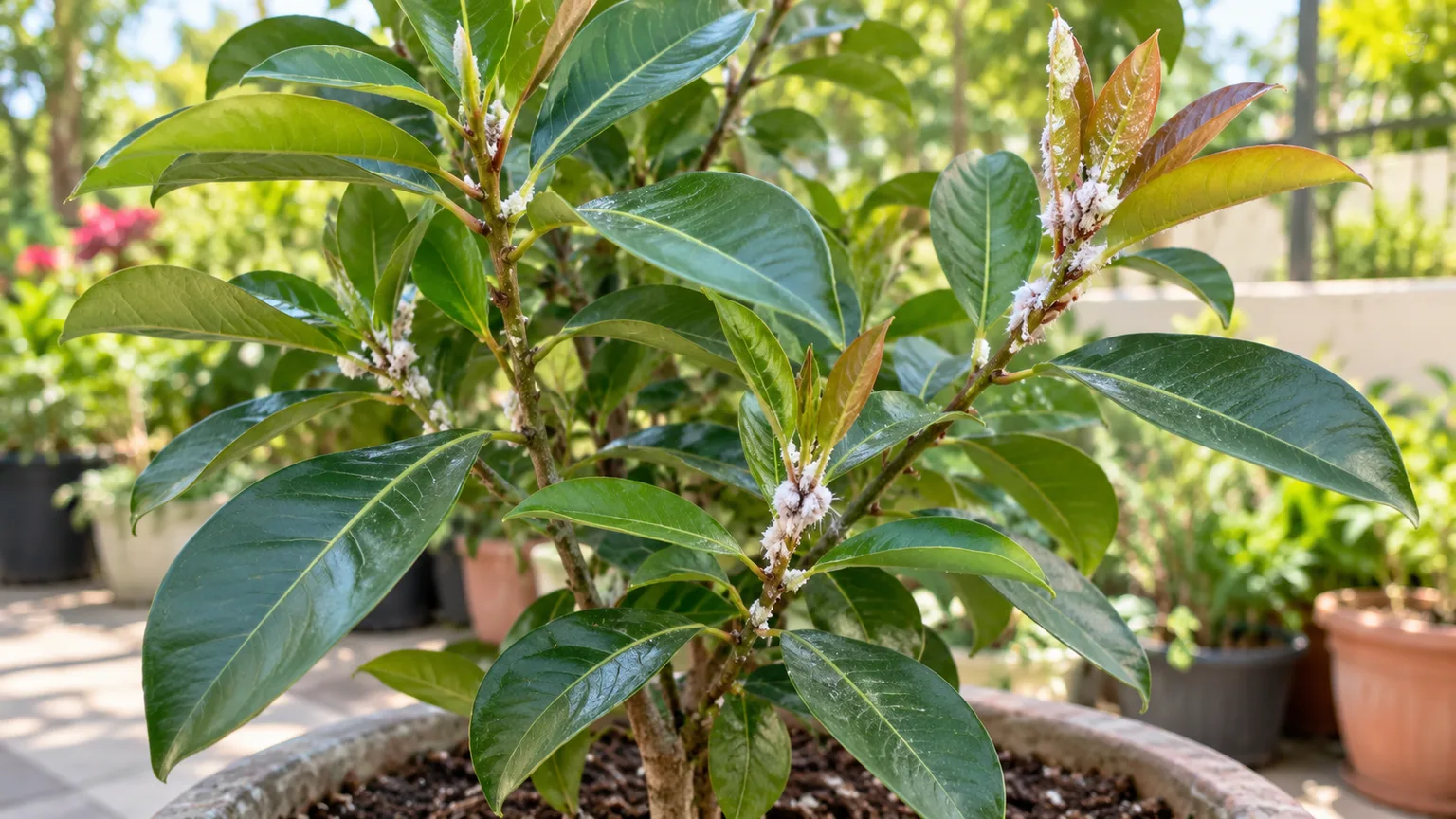
Mealybugs on Jamun show up as white cottony clumps on soft new shoots, leaf axils, and fruit stalks, often with sticky honeydew and ants. First step: isolate the tree, dab visible colonies with 70% isopropyl alcohol on a cotton swab after a leaf test, then re-check weekly for hatchlings.
Mealybugs on Jamun: Causes, Checks & Fixes
This guide covers mealybugs on Jamun. See also the general Mealybugs guide, watering, and light pages for this plant.
Mealybugs on Jamun: Causes, Checks & Fixes
Quick answer
Mealybugs on Syzygium cumini (Jamun overview) look like tiny white cotton balls tucked into soft new shoots, leaf axils, and fruit stalks. Leaves below the colonies often turn sticky with honeydew, grow a black sooty film, and attract ants marching up the trunk.
First step: isolate the tree from other plants and dab every visible cottony cluster with 70% isopropyl alcohol on a cotton swab, after testing one leaf and waiting a day for burn. For how mealybugs feed and spread in general, see our mealybugs hub. On Jamun, the pattern usually shows up on the softest new flush first, not evenly across old hardened leaves.
What mealybugs look like on Jamun
Adult mealybugs are small, oval, wingless insects covered in a powdery waxy white coating that looks like cotton wool pressed into the plant. On Jamun they gather where tissue is tender: the tips of new flush growth, the axils where young leaves meet the stem, the undersides of expanding leaves, and around flower and fruit stalks during the fruiting season.

White cottony mealybug clusters packed into a Jamun leaf axil, with sticky honeydew on the leaf below.
Secondary signs confirm the diagnosis before you treat:
- Sticky clear residue on leaves below the colonies. Mealybugs suck plant sap and excrete sugary honeydew that coats Jamun’s glossy leaves.
- Black sooty film growing on top of the honeydew. The mold itself does not infect the leaf, but heavy coating shades new growth.
- Ant highways up the trunk or pot. Ants harvest honeydew and actively guard mealybugs from predators.
- Stunted, curling new flush with yellowing at the shoot tips while older hardened leaves still look normal.
- Premature fruit drop on young container trees carrying a heavy colony load around the fruit stalks.
Why container Jamun gets mealybugs
A field-planted Jamun is a 12–30 m evergreen tree with predators, wind, and rain keeping sap-feeders in check. A potted Jamun on a terrace or courtyard loses most of that protection, and three habits invite mealybugs in.
First, mealybugs are hard to reach because they settle in protected areas such as branch crotches and stem joints. Jamun’s dense evergreen canopy and tight leaf clusters give them exactly those hiding places, especially on a young tree that has been tip-pruned into a bushy shape and never thinned for airflow.
Second, soft nitrogen-pushed flush is their favorite food. A container Jamun fed heavily after pruning pushes out a wave of succulent shoots with thin cuticles and sugar-rich sap. Colonies explode on that flush within weeks, which is why infestations often appear a month after a hard prune-and-feed cycle.
Third, honeydew plus ants creates a feedback loop. Outdoor Jamun hosts foraging ants naturally, and once ants discover honeydew they farm the colony, carry crawlers to fresh shoots, and chase off ladybirds and parasitic wasps. If you see persistent ant traffic on a sticky tree, the ants are part of the problem, not bystanders.
One honest framing: Tamil Nadu Agricultural University lists whitefly and leaf eating caterpillar as Jamun’s main recorded insect pests. Mealybugs are opportunists on this species, hitting stressed, overfed, or newly transplanted container saplings hardest. A vigorous outdoor tree in full sun with free drainage rarely carries more than a light, self-limiting population.
How to confirm the cause
Work through this inspection in order on a dry morning:
- Press the white fluff. Mealybug wax smears into a moist streak and may reveal a soft pinkish-yellow body underneath. Dry dust, perlite splash, or dried spray residue crumbles without smearing.
- Check the five hiding spots. New shoot tips, leaf axils, undersides of the youngest expanded leaves, fruit and flower stalks, and bark crevices near pruning cuts. Colonies in two or more of these spots confirm an active infestation rather than a stray insect.
- Look down, not just up. Hold a leaf below the colony to the light. A clear sticky film or black sooty coating means sap-feeders have been feeding above it for days.
- Follow the ants. A steady ant trail to one branch points to the colony even when the insects themselves are tucked out of sight.
- Tap-test for crawlers. Hold white paper under a shoot and tap sharply. Tiny yellowish mobile specks that walk are newly hatched crawlers, the stage most vulnerable to treatment.
- Rule out lookalikes. Woolly aphids cluster similarly but have visible legs and dark bodies under the fluff; scale bumps do not smear when pressed; powdery mildew wipes off as dry powder with no insects beneath.
First fix for Jamun
Isolate the tree from neighboring plants, then dab every visible colony with 70% isopropyl alcohol on a cotton swab. Touch the swab to each cottony mass until it dissolves and the insect beneath is wetted. Test the solution on one young leaf first and check it the next day for burn before treating the whole flush.
Alcohol is the right first move on Jamun because the waxy coating sheds water-based sprays, and a potted sapling cannot afford the leaf loss of aggressive pruning on day one. One careful session removes the egg-laying adults without drenching the canopy or disturbing the roots.
Step-by-step recovery
After the alcohol dab, work through these steps over the next three weeks:
- Rinse honeydew off. A firm jet of water over sticky leaves washes away honeydew and dislodges crawlers. Rinse in the morning so Jamun’s glossy foliage dries fully in sun, and repeat after each treatment round.
- Spray the survivors, not the whole tree. Coat remaining colonies and crawler zones with insecticidal soap, horticultural oil, or neem. These materials work best against young nymphs with less wax, so direct contact plus a repeat application 7–10 days later catches the hatchlings the first pass missed.
- Prune only the worst shoots. If one flush tip is matted solid with wax and distorted beyond use, snip it into a bag and bin it. Do not hard-prune the canopy; Jamun replaces foliage on its own schedule and drastic cuts just trigger more of the soft regrowth mealybugs love.
- Break the ant bridge. Wipe ant trails, clear weeds touching the pot, and use a sticky trunk band on container trees so ants cannot re-establish their guard. Without ants, resident predators start working for you.
- Hold fertilizer. Skip nitrogen feeds until two consecutive weekly checks find no fresh colonies. Feeding a colonized flush grows more food for the pest. Resume the normal schedule in the Jamun watering and feeding rhythm only once new growth emerges clean.
Never escalate to broad-spectrum insecticides on an outdoor or terrace Jamun. They kill the ladybirds, lacewings, and parasitic wasps that suppress mealybugs for free, and on a flowering fruit tree they put pollinators at risk.
Recovery timeline
Jamun is a vigorous tree, so recovery tracks the flush cycle rather than the calendar. Expect sticky honeydew to stop accumulating within days of removing the adults. Sooty film weathers off over two to four weeks and can be wiped from glossy leaves with a damp cloth.
Clean, undistorted new shoots are the real milestone, usually one flush cycle (three to six weeks in warm weather) after control. Keep checking weekly for at least a month because eggs hidden in bark crevices keep hatching after the adults are gone. If fresh cottony clusters keep appearing after three weekly treatment rounds, the colony base is likely in root-zone crevices or a neighboring host plant, and it is time to call your local extension service with photos.
Lookalike symptoms
| What you see | Likely cause | Where to go |
|---|---|---|
| Green or black soft clusters on buds, no cotton | Aphids on Jamun | Aphid guide, not alcohol-dab protocol |
| Fine webbing with stippled bronzed leaves | Spider mites on Jamun | Mite rinse-and-humidity routine |
| Uniform yellowing after wet weather | Overwatering on Jamun or yellow leaves | Drainage fix, not pesticide |
| Wilting despite wet mix | Root rot | Root inspection before any foliar spray |
| Whiteflies clouding up when shaken | Whitefly pressure (common on Jamun per TNAU) | Yellow sticky traps plus predator support |
What not to do
- Do not hose the tree daily and assume the job is done. Water knocks crawlers off but never dissolves adult wax.
- Do not drench the pot with systemic insecticide as a first resort on a fruiting tree. Residue and pollinator exposure are real costs, and UC IPM notes systemics are unreliable against mealybugs in many situations.
- Do not repot, root-prune, and spray in the same weekend. A colonized sapling is already stressed; stacking interventions stalls the clean regrowth you are judging recovery by.
- Do not ignore the ants. Treating colonies while ants farm them is mopping with the tap running.
- Do not fertilize sticky trees. Extra nitrogen during an active infestation feeds the next generation of crawlers.
Jamun care cross-check
Mealybugs gain ground fastest on trees already off their culture. Confirm the basics in the Jamun overview: full sun on a terrace or in open ground, deep watering only when the top 3–5 cm of mix dries per the Jamun watering guide, and the aerated loam-compost-mineral blend from the Jamun soil guide. Trees starved of light stretch out weak, thin-cuticled shoots (not enough light and leggy growth patterns), while soggy pots stall root function (overwatering) and drought-stressed saplings drop the fruit they cannot support (underwatering). Fix any of these alongside the pest treatment or reinfestation follows the same path back in.
How to prevent it next time
Quarantine every new nursery plant for two weeks before placing it near your Jamun; most terrace infestations walk in on a new purchase. Inspect new flush tips weekly through the warm growing season, when one unnoticed egg mass becomes a colony in a fortnight. Prune after harvest for an open crown that predators and sprays can actually reach, and clear fallen fruit promptly so fermenting berries do not feed ant and wasp traffic. Keep irrigation at the root zone rather than overhead where practical, since constantly wet foliage plus honeydew grows sooty mold faster. The Singapore Botanic record for Syzygium cumini places it in full sun with moderate water, and trees grown that way outgrow light pest pressure on their own.
When to worry
A few dabbed colonies on one branch of a mature outdoor tree need no drama. Escalate when honeydew varnishes most of the canopy, sooty mold shades new leaves faster than they expand, shoot tips distort across the whole crown, or a young container sapling stalls with wilting and drooping leaves that do not match its watering. Dieback spreading from crowded branch crotches after months of heavy infestation deserves an in-person diagnosis. Photograph the colonies, the honeydew, and the whole tree, and take them to your local extension office before buying stronger chemistry.
When to use this page vs other Jamun guides
- Jamun watering guide — Use when yellowing or drop follows wet or dry spells with no cottony insects present.
- Jamun problems hub — Browse all 16 recorded issues on this species when the diagnosis is still open.
Related Jamun guides
- Jamun overview — Full-sun placement, container scale, and fruit-tree habit that shape every pest decision.
- Jamun watering — Deep-watering rhythm that keeps saplings vigorous without the soggy stress pests exploit.
- Jamun light — Sun needs that harden new flush against sap-feeders.
- Jamun soil — Free-draining loam mix that prevents the root stress behind stalled, susceptible trees.
- Aphids on Jamun — Sister sap-feeder with overlapping honeydew signs but a different treatment sequence.
- Spider mites on Jamun — Dry-air pest to rule out when stippling, not cotton, dominates.
- Yellow leaves on Jamun — Nutrient and watering yellowing that mimics pest-weakened foliage.
- Jamun problems — Complete issue index for this tree.
Related tool
Use the Pest Identifier Tool to narrow causes for mealybugs on this plant before changing multiple variables at once.