Drooping Leaves on Jamun: Causes, Checks & Fixes
Quick answer
Drooping Jamun leaves usually mean the roots cannot keep up with what the canopy is losing: most often a dry container, sometimes soggy mix damaging roots, or heat and transplant shock. First step: lift the pot and test the top 3–5 cm of mix. If it is dry and light, soak deeply and drain; if it is damp and heavy, stop watering and check drainage before doing anything else.
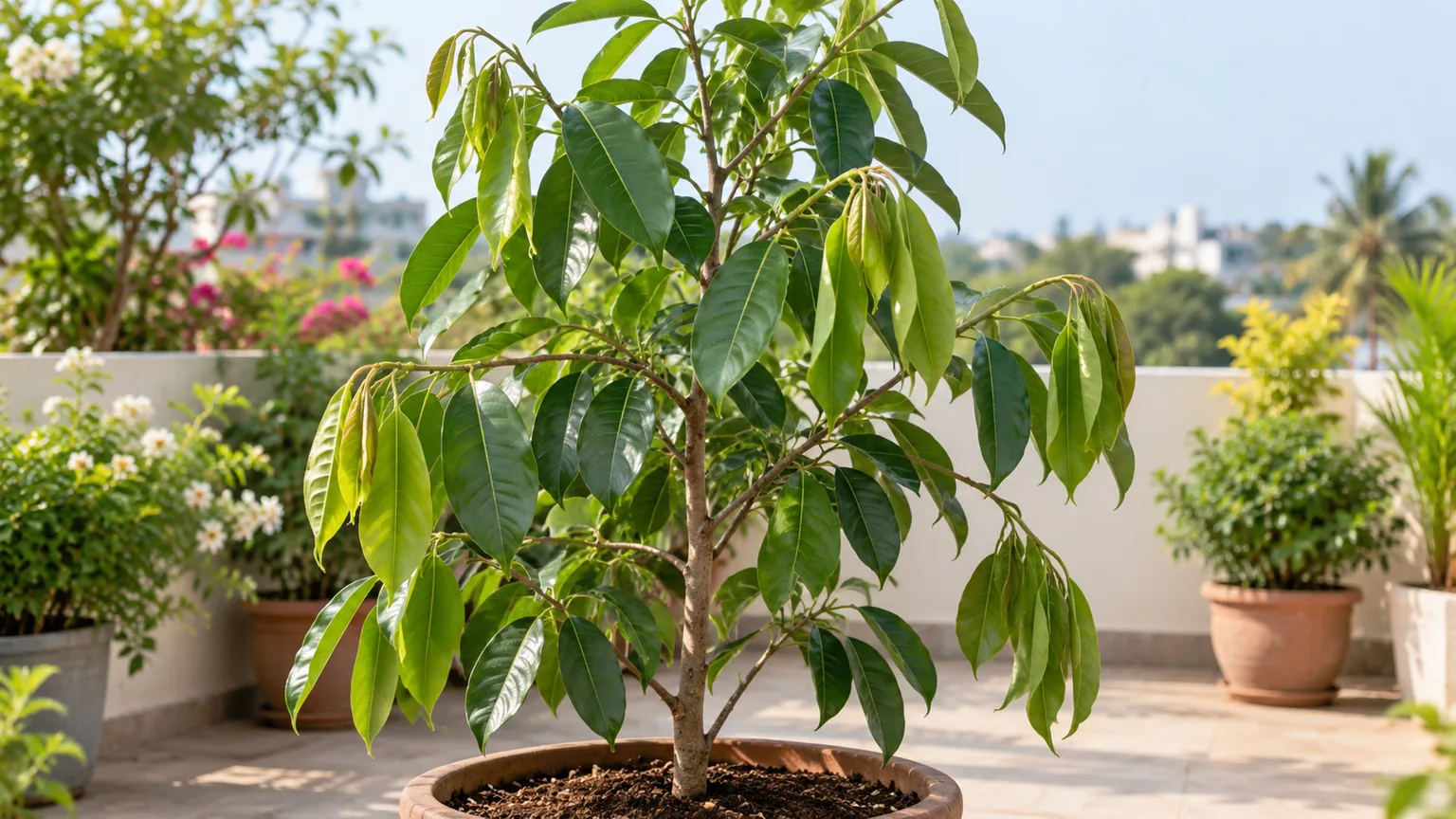
Drooping Leaves on Jamun: Causes, Checks & Fixes
This guide covers drooping leaves on Jamun. See also the general Drooping Leaves guide, watering, and light pages for this plant.
Drooping Leaves on Jamun: Causes, Checks & Fixes
Quick answer
Drooping leaves on Jamun (Syzygium cumini) mean the canopy is losing water faster than the roots can replace it. On this tree the usual order of suspects is short: a container that dried out between waterings, a container that stayed too wet and damaged the roots, a blast of terrace heat on soft new growth, or shock after repotting or moving. The leaves look similar in every case, so the fix depends entirely on which one is active.
First step: run the wet-vs-dry pot check. Lift the pot and push a finger 3–5 cm into the mix. Dry and light means soak deeply until water runs free, then drain the saucer. Damp and heavy means stop watering, open the drainage, and let the top dry before you touch anything else.
This page is a drooping diagnostic router for Jamun. For step-by-step drought recovery, see underwatering on Jamun. For wet-soil decline, see overwatering and root rot. Sudden floppy collapse with softening stems belongs on wilting — drooping here means the gradual hang of foliage that is still attached and mostly green.
What drooping looks like on Jamun
Jamun carries dense, glossy evergreen leaves on a woody framework, and a healthy young tree holds its foliage out at a firm angle along each branch. When turgor fails, the display changes character: leaf blades and their stalks hang downward, the canopy looks tired and thin, and soft new flush goes limp first while older leathery leaves hold out longer.
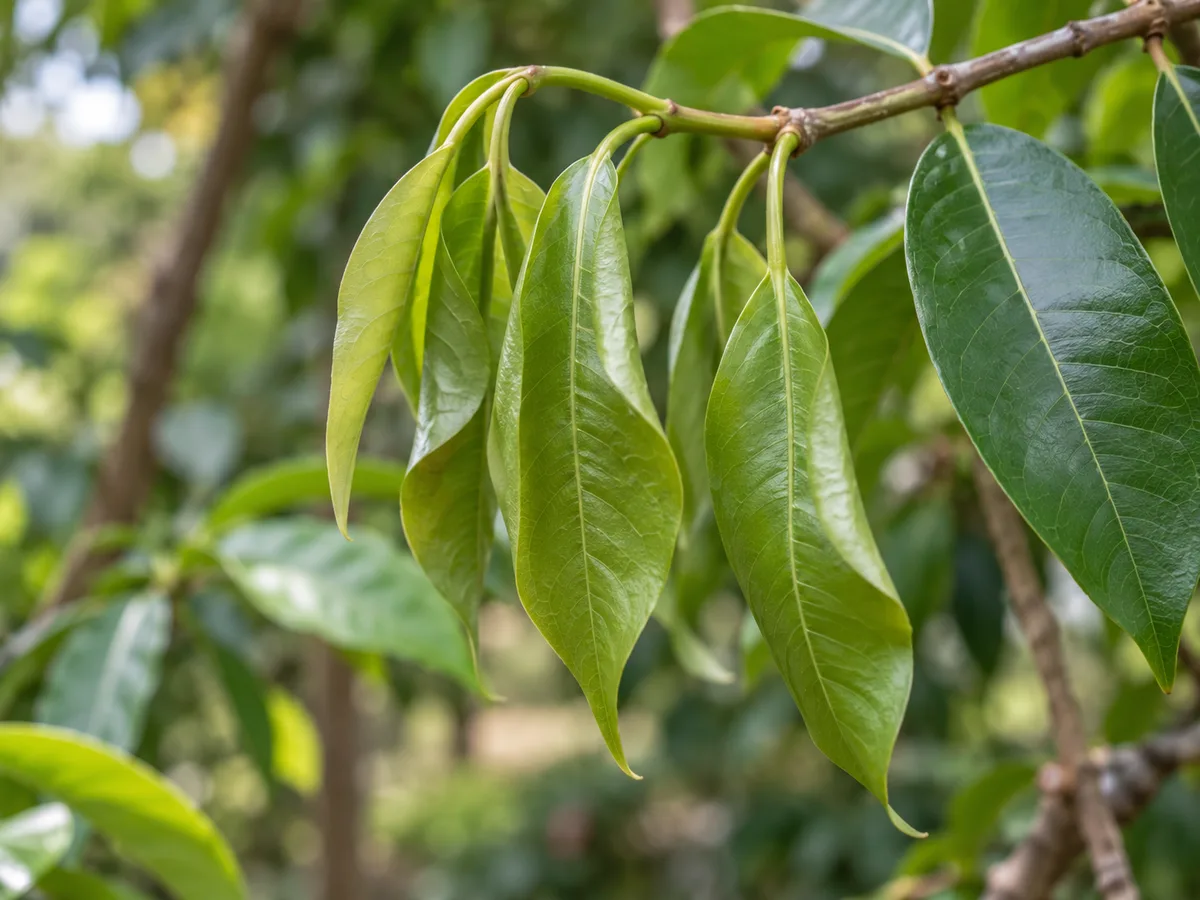
Drooping young Jamun foliage hanging soft along the branch — compare with firm new flush on the same tree.
Typical drooping patterns on container and garden Jamun:
- Soft new flush flags first while older leaves still look normal — the classic thirst signal, since young tissue has the least water reserve
- Whole-canopy hang after a hot windy day on a terrace, sometimes recovering by the next morning
- Limp leaves on wet mix — the paradox pattern where soil feels damp but roots cannot deliver, pointing at root damage
- Droop plus dry brown leaf margins or premature fruit drop, which confirms the underwatering branch
- Droop plus yellowing lower leaves in persistently damp soil, which confirms the overwatering branch
- Widespread droop within two weeks of repotting, root-pruning, or moving the pot, with moisture otherwise even
- Droop that never corrects in a dim indoor corner, paired with stretched leggy shoots — chronic light hunger weakening the canopy
What makes Jamun different from a typical houseplant: this is a fast-growing fruit tree that wants to become 12–30 m tall, not a compact foliage plant. Jamun belongs to the Myrtaceae family, and its woody root system drinks hard in warm weather — a container holds only a fraction of the soil volume a landscape tree would mine. By the time a potted Jamun visibly droops from thirst, the root zone has usually been dry longer than the owner thinks.
Why Jamun leaves droop (ranked causes)
Container dry-down between waterings
The most common cause, by a wide margin. Young and container-grown Jamun needs steadier moisture than its reputation suggests, and a pot in full sun can swing from moist to dry in a day or two of summer heat. Owners who water established landscape trees on autopilot underwater their potted seedlings the same way. The Jamun watering guide sets the rhythm: soak when the top 3–5 cm dries, not on a fixed weekday.
Soggy mix and root damage in pots
The mirror image, and the one most often misdiagnosed. Established Jamun tolerates drought and even brief flooding in open ground, but a pot with blocked drainage or a constantly full saucer keeps roots airless until they rot. Damaged roots cannot move water upward, so leaves droop exactly as in drought — and every extra watering makes it worse. As Gardening Know How notes for drooping plants, when overwatering is suspected the correct move is to pull the plant out and inspect the roots, pruning away smelly or discolored portions. For the general mechanics of wet-soil root failure, see our drooping leaves guide. On Jamun, the pattern usually shows up as limp foliage plus yellow lower leaves in a heavy pot.
Midday heat on soft new flush
Jamun pushes vigorous flushes of tender growth in warm weather, and that soft tissue transpires fast. On a hot terrace afternoon the new shoots can flag dramatically even with decent soil moisture, then firm up by evening. This is heat-flag, not a watering failure — but repeated day-after-day flagging in a small black pot that bakes means the roots genuinely cannot keep pace, and the pot or placement needs changing.
Transplant and repot shock
Jamun is repotted every two to three years while young, ideally in late winter to early spring, and larger specimens get root-pruning instead of ever-bigger pots. Any of that work shears fine roots, and the reduced root system cannot support the full canopy for a few weeks. Droop appearing within days of repotting, root-pruning, or moving the pot to a new aspect is shock until proven otherwise — hold care steady rather than flooding or feeding.
Chronic low light indoors
A dim room rarely causes overnight droop, but it sets the stage. Jamun is a full-sun tree — Singapore’s NParks lists Syzygium cumini for full sun and moderate water — and a seedling kept indoors stretches toward the window on weak stems that sag under their own leaves. Low light also slows evaporation, so calendar watering quietly becomes overwatering. Review not enough light on Jamun and the light guide if the canopy is leggy as well as limp.
Jamun’s young-flush droop vs true water stress
This distinction saves more Jamuns than any other, because the tree’s own growth habit creates a daily false alarm. Fresh Jamun flush emerges soft, pale, and dramatically willing to flag in afternoon heat; by morning it stands back up. True water stress does not reset overnight — a thirsty tree still hangs at sunrise, and the older leaves join the droop as the deficit deepens.
Read the flush this way: if only the softest new tips flag after 2 p.m. and the pot still has weight, shade the pot (not necessarily the leaves) and recheck at dawn. If the whole flush plus older foliage hangs in the morning cool, or young leaves combine droop with dry brown margins, that is real thirst — soak now. Mistaking normal evening flag for drought and drenching a moist pot nightly is one of the commonest routes to the soggy-root branch of this page.
The container trap: field tolerance does not protect pots
Jamun’s toughness reputation is earned in landscapes and misleading in pots. In open ground the species is tagged drought tolerant and rides out dry spells and short floods with a deep root system; the World Agroforestry profile describes a monsoon-climate tree that still demands well-drained soil around those roots. A container removes both halves of that bargain: a few litres of mix instead of cubic metres of soil, and a perched water table instead of free drainage.
Practically, this means two rules that surprise new owners. First, a potted Jamun can need water every day or two in peak heat even though “Jamun is drought tolerant” — the label describes established landscape trees, not your seedling. Second, monsoon rain on a saucer-blocked pot does the opposite damage: days of standing water rot the same roots that would have survived a flooded field. Size the pot to the canopy, use the loam-compost-grit mix from the soil guide, and never let the pot sit in its own runoff.
How to confirm the cause
Work these checks in order before changing anything:
- Pot weight — Lift one edge. Dramatically light after a hot spell means drought; heavy and unchanged days after watering means too wet.
- Finger test at 3–5 cm — The Jamun-specific depth. Dusty dry throughout supports thirst; cool, clingy dampness persisting for days supports overwatering.
- Flush vs canopy pattern — Only soft new tips flagging in afternoon heat suggests heat-flag; morning droop of young leaves first suggests thirst; whole-canopy limp on wet mix suggests root damage.
- Smell and drainage — Neutral dry soil versus sour swampy odor from the holes. Confirm the holes are open and the saucer empties.
- Recent disturbance timeline — Repot, root-prune, or move within two weeks with even moisture means shock, not a soil mismatch.
- Light and placement — Full sun all day on a small dark pot bakes roots; a dim indoor corner with leggy shoots means light hunger compounding moisture errors.
Wet soil vs dry soil fork
| Check | Points to underwatering | Points to overwatering / root stress |
|---|---|---|
| Pot weight | Noticeably light | Heavy days after last water |
| Mix at 3–5 cm | Dry, may pull from pot wall | Cool, dark, damp for days |
| Leaf pattern | Young leaves droop first, brown dry margins | Limp despite wet mix, yellow lower leaves |
| Fruit (if present) | Premature fruit drop, stalled new growth | Drop with soft stems, sour soil smell |
| Base of trunk | Firm | Soft or darkening at soil line — escalate |
| First fix | Soak and drain | Stop water; inspect roots if no lift |
If the fork is unclear — moist but not soggy, no recent move — wait 24 hours and re-lift the pot before soaking. One wrong drench on damaged Jamun roots sets the tree back weeks.
First fix for drooping Jamun
Branch on soil moisture — one action only:
If the top 3–5 cm is dry and the pot is light: Soak deeply until water runs freely from the holes, let it drain completely, and empty the saucer. If the mix has gone hydrophobic and water races down the sides, stand the pot in a bucket to bottom-soak until the surface moistens. Full drought-recovery steps: underwatering on Jamun.
If the mix is damp, heavy, or sour-smelling: Stop watering until the top dries. Open blocked holes, empty the saucer, and move the pot where air circulates. If leaves stay limp after the mix has returned to evenly moist — not saturated — for three to four days, unpot and inspect: white firm roots mean patience, brown mushy ones mean root rot — trim, dry, and repot into fresh mix.
If you repotted or moved it within two weeks and moisture is even: Hold everything steady. No fertilizer, no second repot, no hard prune in the same week. Park it in bright sheltered sun, keep the 3–5 cm dry-down rhythm, and give it two to four weeks.
If only new flush flags on hot afternoons but mornings are firm: Mulch and shade the pot body, shift watering to early morning, and consider a larger light-colored container. Do not drench nightly on top of moist soil.
Do not mist, fertilize, or prune heavily on day one. One clear correction lets you read the tree’s response.
Recovery timeline
Thirst droop reverses fast — foliage usually firms within a day of a proper soak, and the next flush emerges upright. Heat-flag resets each evening once the pot stops baking. Overwatering droop improves only after the root zone dries and any rot is cut out: count one to three weeks for mild cases, longer if the root ball was heavily damaged.
Transplant shock droop may persist two to four weeks with some leaf shedding even when watering is correct. Old drooped leaves often never fully re-stiffen; firm upright new flush is the success signal, not rescued old foliage. Drooping that grinds on for months without a clear wet-or-dry event means chronic root decline or chronic dim placement — inspect roots and review light and soil if moisture corrections keep failing.
Lookalike symptoms to rule out
| Symptom pattern | Likely cause | Where to go next |
|---|---|---|
| Light pot, dry 3–5 cm, young leaves first | Underwatering | Underwatering guide |
| Heavy wet pot, yellow lower leaves | Overwatering | Overwatering guide |
| Wet soil, mushy roots, sour smell | Root rot | Root rot guide |
| Sudden floppy collapse, soft stems | Acute wilting | Wilting guide |
| Even moisture, droop after repot or move | Transplant shock | Steady care; repotting guide |
| Leggy shoots, small pale leaves, dim room | Low light | Not enough light |
| Afternoon flag only, firm mornings | Heat-flag | Shade pot, morning watering |
| Yellow lower leaves only, firm canopy | Natural aging vs stress | Yellow leaves |
| Sticky residue, sooty coating, insects | Aphids or scale | Aphids |
A note on insects: Jamun’s fragrant flowers legitimately attract pollinators and its berries draw birds — that traffic is normal, not infestation. Treat only when you find colonies of sap-feeders with sticky honeydew on the leaves themselves.
What not to do
Do not water because leaves look limp without checking the mix — wet-soil droop is root failure until proven otherwise. Do not drench nightly after one dry scare; Jamun roots rot in stagnant pots even though landscape trees survive floods. Do not repot a drooping tree into a much bigger pot to “hold more water” — extra wet soil around a small root ball invites rot. Do not fertilize a drooping Jamun before moisture and roots stabilize; salts on damaged roots burn. Do not hard-prune the canopy to “reduce demand” on day one — you remove the very leaves that would tell you recovery is working. And do not assume a seedling’s needs match a street tree’s: research on Jamun seedlings shows drought triggers stomatal closure through rising abscisic acid, a defense that slows growth while it lasts — repeated cycles stunt the young tree even when each episode looks survivable.
How to prevent drooping next time
Build the routine around Jamun’s monsoon rhythm — generous water in active warm growth, restraint when cool or rainy weather keeps the mix moist:
- Test 3–5 cm deep every few days in heat, weekly in cool months — never water by calendar alone
- Weigh the pot occasionally so sudden lightness triggers a check before young leaves flag
- Size pots to the canopy — a mix drying within a day in summer is asking for the next size up, per the repotting guide
- Keep full sun on the leaves, kindness on the pot — light-colored containers and mulch beat black plastic baking on concrete
- Hold placement steady once acclimated; batch moves and repots for late winter before the spring flush
- Feed only a stable tree — see the fertilizer guide once new flush stays firm
- Watch fruit load — a heavy berry set drinks hard; premature drop means the water rhythm slipped
When to worry
Escalate beyond a soak or dry-down if:
- Leaves stay limp after correct moisture has been stable for four to five days
- The trunk base feels soft or smells sour at the soil line
- Most roots are brown and mushy on inspection
- Drooping spreads fast while soil is wet — rot may be advancing
- New flush stops for over a month after you corrected watering
A firm trunk with some shed lower leaves can still recover if the remaining roots are pale and solid. A trunk blackening from the base upward, or a root ball that collapses to mush, rarely comes back — salvage firm upper wood as cuttings (see propagation) rather than nursing a dead root system.
Conclusion
Drooping Jamun leaves are fixable when you split wet from dry before you act. Lift the pot, test 3–5 cm down, note whether young flush or the whole canopy hangs, and recall any recent repot, move, or heatwave. Route dry pots to a deep soak, wet pots to a pause and root check, shock to steady care, and afternoon flag to a cooler pot — then judge recovery by firm new flush, not by saving every hanger. Keep the watering, underwatering, and overwatering guides close, and browse the problems hub when symptoms overlap.
When to use this page vs other Jamun guides
- Jamun watering guide — Use for the routine 3–5 cm dry-down rhythm before treating drooping as a standalone problem.
- Jamun problems hub — Browse all 16 common issues on this species.
- Underwatering on Jamun — Different entry point when the pot is clearly light and dry.
- Overwatering on Jamun — Different entry point when the pot stays heavy and damp.
- Root Rot on Jamun — Different entry point when roots smell sour or feel mushy.
Related Jamun guides
- Jamun overview
- Jamun watering
- Jamun light
- Jamun soil
- Underwatering on Jamun
- Overwatering on Jamun
- Root Rot on Jamun
- Wilting on Jamun
- Jamun problems
Related tool
Use the Plant Problem Diagnosis Tool to narrow causes for drooping leaves on this plant before changing multiple variables at once.