Brown Tips on Maranta Red Prayer Plant: Causes, Checks &
Quick answer
Brown tips on Maranta Red Prayer Plant most often mean dry indoor air, fluoride or salt buildup from tap water, or uneven watering. First step: flush the pot once with room-temperature filtered, distilled, or rainwater until it runs freely, empty the saucer, and raise humidity around the plant.
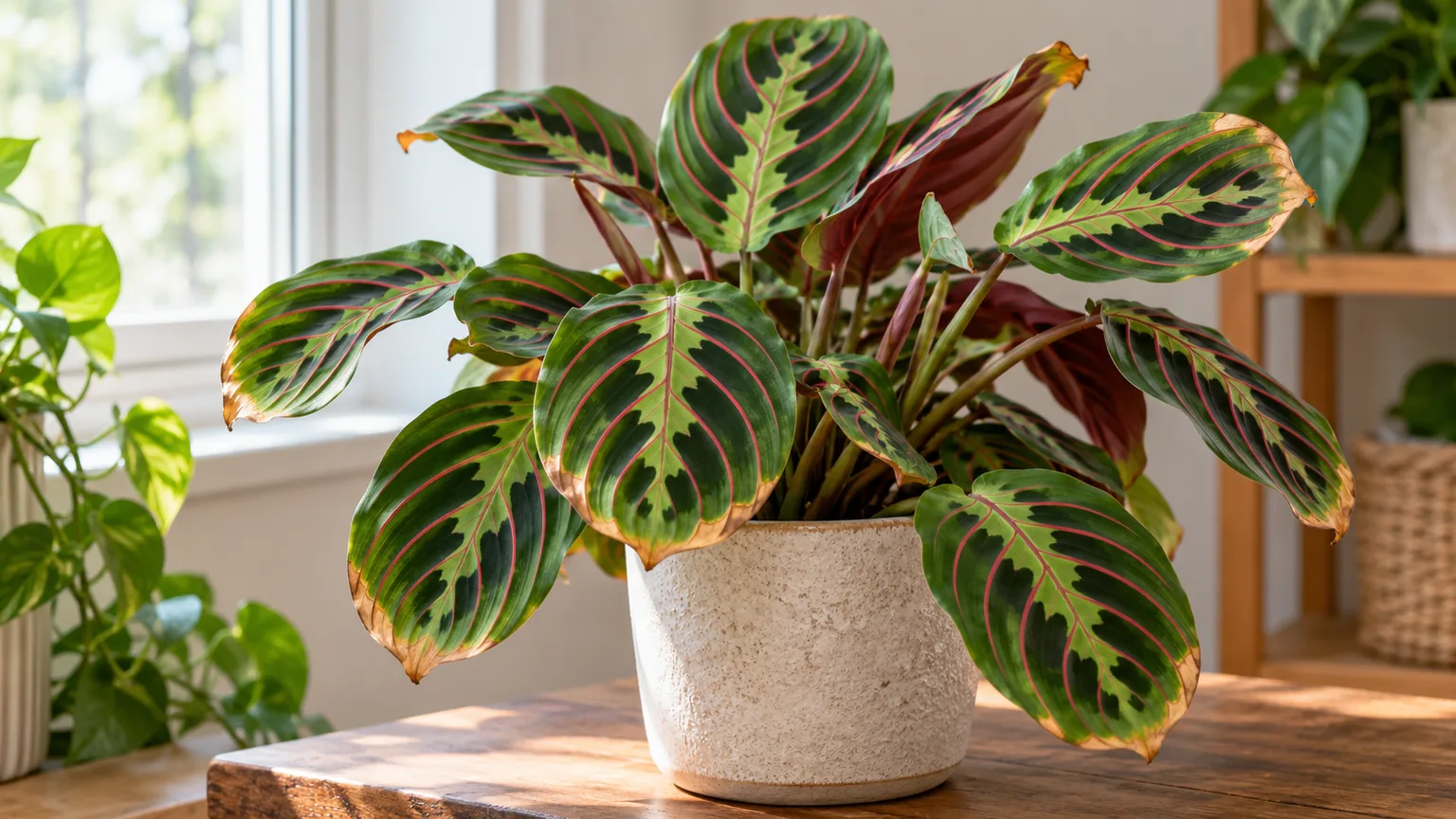
Brown Tips on Maranta Red Prayer Plant: Causes, Checks & Fixes
This guide covers brown tips on Maranta Red Prayer Plant. See also the general Brown Tips guide, watering, and light pages for this plant.
Brown Tips on Maranta Red Prayer Plant: Causes, Checks & Fixes
Quick answer
Brown tips on Maranta Red Prayer Plant (Maranta leuconeura var. erythroneura, Maranta Red Prayer Plant overview) almost always trace to dry indoor air, fluoride or dissolved salts in tap water, or an uneven watering rhythm — not to pests or disease. The thin red-veined margins crisp before green tissue does, so edges brown while the leaf center still looks healthy.
Your first move: flush the pot once with room-temperature filtered, distilled, or rainwater until water runs freely from the drainage holes, empty the saucer within 30 minutes, and move the plant somewhere humidity holds above 50 percent. Then change nothing else for a week and watch the newest leaves — they are the scoreboard, not the old browned edges.
What brown tips look like on Red Prayer Plant
On this cultivar, tip burn starts as a thin tan rim along the outer leaf margin, usually on the oldest or most exposed leaves first. The rim turns papery and crisp, sometimes creeping inward along the red lateral veins while the dark green leaf center stays intact. New leaves may unfurl with brown already on their edges if the cause is still active — a sign the problem is ongoing, not historical.
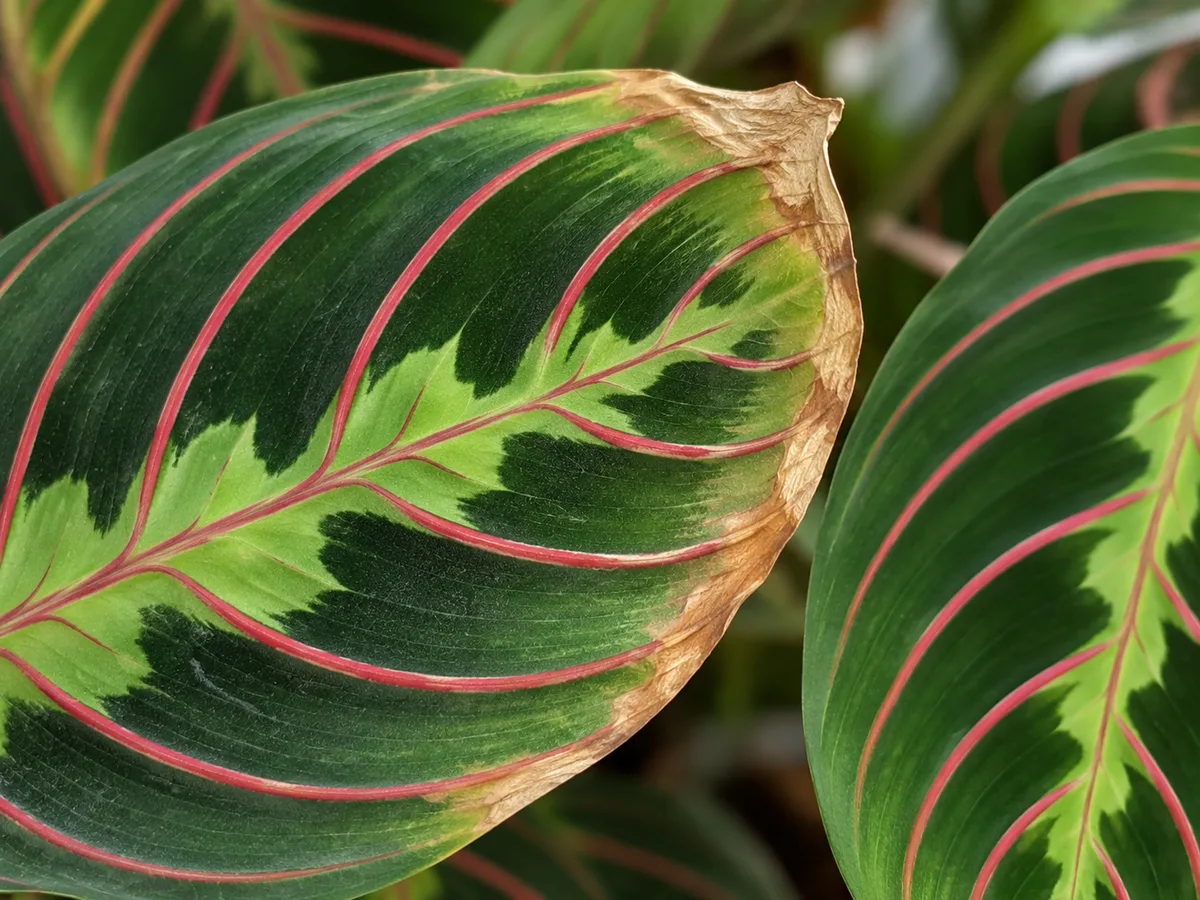
Close-up: crisp tan margins spreading along the red veins, with green centers intact — classic fluoride, salt, or dry-air edge burn rather than rot.
Severe or spreading cases look different: whole margins blacken, leaves yellow around the brown zones, or stems soften at the crown where leaves meet the rhizome. That wet, soft pattern belongs to root rot on Maranta Red Prayer Plant or overwatering on Maranta Red Prayer Plant, not cosmetic tip burn — check the confirmation steps below before deciding which page fits.
Why the red veins brown first
Red-veined Maranta leuconeura cultivars telegraph water-quality and humidity stress earlier than plain green foliage plants. The variegated margins are thinner and lose moisture faster, so dissolved fluoride, chlorine, and fertilizer salts concentrate at the leaf edges as water transpires — and NC State notes prayer plant leaves burn with high fluorides as well as with over-fertilization. Green centers keep photosynthesizing while margins die, which is why the plant can look half-fine and half-crisped at the same time.
The second reason is habitat: this species grows on the humid Brazilian forest floor and requires high humidity indoors, tolerating neither dry air nor cold drafts. Forced-air heating, air-conditioning vents, and single-pane winter windows drop local humidity far below what the leaf margins can handle. For how tip burn works across houseplants in general, see our brown tips guide. On Red Prayer Plant, the pattern usually shows up as crispy red-vein margins on otherwise firm leaves — with new rolled leaves emerging already edged in brown when the trigger is still active.
The four causes that cover most cases
1. Dry air. The most common indoor trigger. Humidity below roughly 45–50 percent near the plant desiccates margins faster than roots can resupply them, especially near heaters, vents, and sunny sills. The Maranta Red Prayer Plant humidity picture overlaps heavily here — if several tropicals crisp at once in winter, air is the prime suspect.
2. Fluoride, chlorine, and dissolved salts in tap water. Municipal water leaves minerals that accumulate in the mix and burn edges; a white crust on the soil surface or pot rim is the tell. These plants do best with filtered or distilled water where possible, and monthly flushing prevents slow buildup even with decent tap water.
3. Uneven watering rhythm. Both directions brown edges: long dry spells pull moisture from margins first, while chronic sogginess damages feeder roots so they cannot hydrate leaves even when the pot feels wet. Prayer plant leaves turn brown and crispy around the edges from too much or too little water, so cadence matters more than volume. Full rhythm detail lives in the Maranta Red Prayer Plant watering guide.
4. Overfeeding and too much direct sun. Heavy or frequent fertilizer scorches margins with salts — feed lightly and only in active growth. Strong direct sun bleaches the fishbone pattern and burns exposed edges; the plant wants bright indoor light but no strong direct sun. It also tolerates low to medium light, though color fades and growth slows in dim corners.
How to confirm the cause
Work through this order before changing anything — match one dominant pattern:
- Soil moisture at rhizome depth. Push a finger 2 cm into the mix. Dust-dry throughout points to underwatering; soggy days after watering points to drainage or overwatering trouble. See underwatering on Maranta Red Prayer Plant if the pot is chronically dry.
- Humidity and placement. Is the plant within a few feet of a vent, radiator, or drafty window? Crispy margins worst on the vent-facing side mean dry air. A cheap hygrometer reading near the leaves beats guessing.
- Water source and soil crust. White or crusty residue on the mix surface, or brown edges that appeared weeks after moving to a new home with different tap water, point to fluoride and salts. Note whether you use tap, filtered, or rainwater.
- Feeding history. Any fertilizer in the last month, or feeding through fall and winter, raises salt-burn probability. The safe schedule is a balanced liquid fertiliser monthly when in growth — never on dry, dormant, or stressed plants.
- Light exposure. Bleached patches plus brown edges on the window-facing side within days of a move mean sun scorch, not water chemistry. Check the Maranta Red Prayer Plant light guide for placement distances.
- The nightly fold test. Healthy prayer plants lift their leaves after dark. If folding has stalled along with tip browning, the plant is broadly stressed (light at night, cold, drought, or very dry air) rather than suffering a leaf-edge-only issue. Movement usually returns within days once evenings are dark and moisture steadies.
- Roots and crown. If browning spreads fast with yellowing, soft stems, or sour-smelling mix, unpot and inspect: firm pale rhizomes mean cosmetic burn, while black mushy tissue means rot. The soil guide covers the moisture-retentive but draining mix this plant needs.
Write down which check matched. Brown tips from three different causes need three different first fixes, so one clear diagnosis beats three simultaneous guesses.
First fix for Red Prayer Plant
Flush the pot once with room-temperature filtered, distilled, or rainwater — roughly two to three pot volumes poured slowly through the mix — then empty the saucer completely so the plant never sits in runoff. Move the pot to bright indirect light away from vents and cold glass while it drains.
This single step addresses the two most likely triggers at once (salt load and dry root zone) without repotting, feeding, or pruning on the same day. If you only have tap water, fill an open container and let it stand overnight before using it; that off-gasses some chlorine, though it removes less fluoride, so switching sources remains the better fix.
Step-by-step recovery by cause
After dry air is confirmed
- Raise humidity the ways that actually move the needle: a small humidifier near the plant first, a pebble tray with the pot above the water line second, grouping with other tropicals third. Skip misting as a primary strategy — it spikes humidity for minutes and can spot foliage.
- Keep temperatures steady; Missouri Botanical Garden warns this species prefers conditions that do not dip below 60°F and suffers in cold drafts.
- Trim fully brown tips with clean scissors if you like, leaving a hairline of brown so you do not wound green tissue.
After fluoride or salt buildup is confirmed
- Switch to filtered, distilled, or rainwater for at least a month.
- Flush monthly with plain water until runoff runs clear to wash accumulating salts.
- Pause all fertilizer until new leaves emerge with clean margins, then resume at half strength only in active growth.
After uneven watering is confirmed
- Water thoroughly when the top 2 cm feels dry — often every 5–7 days in warm months, less often in winter — and always empty the saucer.
- Water the soil surface directly and keep water off the crown where stems meet the rhizome, since pooled water rots stems fast.
- If the mix stays soggy for days, the pot or soil is the problem: check drainage holes and consider fresh mix per the soil guide rather than watering more.
After sun scorch or overfeeding is confirmed
- Move the plant back from direct sun to bright diffused light; morning sun behind a sheer curtain is the safe level.
- Stop feeding until clean new growth appears for several weeks — fertilizer on stressed roots worsens salt injury.
- Remove only fully dead leaves; half-green leaves still photosynthesize for the recovering rhizome.
Recovery timeline
Stabilization is fast; cosmetics are slow. New damage should stop appearing within one to two watering cycles after the fix — roughly one to three weeks. Fresh leaves unfurling as clean rolled tubes with vivid red veins are the success signal.
Existing brown tips never re-green. Once two or three consecutive new leaves open clean, trim old damage for appearance. If browning keeps appearing on new leaves after a month of corrected water and humidity, re-run the confirmation checklist — the usual miss is a second overlapping cause, such as salts plus dry air together. This plant has no serious pest or disease problems when culture is right, so persistent fresh damage almost always means culture still needs adjusting, not spraying.
Lookalike symptoms to rule out
| Pattern | Likely cause | Urgency | First step |
|---|---|---|---|
| Crispy tan margins, firm plant, dry air or tap water | Brown tips (this page) | Low | Flush with clean water; raise humidity |
| Crispy margins plus stalled nightly folding | Low humidity | Low–Medium | Humidifier; darker nights; steady moisture |
| Brown edges plus yellow lower leaves, wet mix | Overwatering / root rot | High | Stop watering; inspect rhizomes |
| Brown edges, light dry pot, limp daytime leaves | Underwatering | Medium | Deep soak; steady 2-cm check rhythm |
| Yellow leaves without crisping | Yellow leaves | Medium | Light, moisture, and feeding review |
| Bleached patches after a sun move | Too much direct sun | Medium | Pull back; re-acclimate slowly |
| Stippling, fine webbing, dusty undersides | Spider mites or thrips — Missouri Botanical Garden lists tip browning alongside these pests | Medium | Shower leaves; treat on a test leaf first |
What not to do
Do not mist heavily and call it humidity control — droplets evaporate in minutes while wet crowns invite stem rot. Do not fertilize browned plants to “green them up”; salts on stressed roots deepen the burn. Do not repot on day one unless the mix is sour, compacted, or pest-ridden — repotting adds root stress on top of margin stress. Do not place the plant in direct midday sun to “dry it out” after flushing; wet rhizomes plus harsh sun plus heat compound the damage. And do not trim every damaged leaf at once — half-brown leaves still feed the rhizome that grows the replacements.
How to prevent brown tips next time
Keep the mix moist but well-drained in a 60-percent-compost, 20-percent-perlite, 20-percent-coco-coir style blend, watering when the top 2 cm dries. Hold humidity near 60 percent with a humidifier through heating season. Use filtered or rainwater as the default, flush salts monthly, and feed monthly at half strength only in spring and summer. Give bright indirect light, nights above 60°F, and genuine darkness overnight so nyctinasty keeps time — a plant that folds nightly is a plant whose margins usually stay clean.
When to worry
Escalate quickly if browning races from tips across whole leaves, new rolled leaves emerge blackened, stems soften at the crown, or the mix smells sour — that is rot or crown failure, not edge burn. Cold exposure below 60°F with wet soil is the other urgent combination; move the plant warm and let the root zone dry toward just-moist before watering again. Isolated crispy tips on a firm plant that still folds at night and pushes clean new leaves can wait for the next scheduled check.
When to use this page vs other Maranta Red Prayer Plant guides
- Maranta Red Prayer Plant watering guide — Use for routine moisture checks before assuming brown tips is the main issue.
- Maranta Red Prayer Plant problems hub — Browse all common issues on this species.
- Low Humidity on Maranta Red Prayer Plant — Different entry point when dry air is the confirmed driver.
- Root Rot on Maranta Red Prayer Plant — Different entry point when browning pairs with soft stems or sour mix.
- Yellow Leaves on Maranta Red Prayer Plant — Different entry point when yellowing dominates over crisping.