Yellow Leaves on Maranta Red Prayer Plant: Causes, Checks &
Quick answer
Yellow leaves on Maranta Red Prayer Plant most often mean soil staying soggy, light too dim, or fluoride and salts in tap water. First step: push a finger 2 cm into the mix — if it feels wet days after watering, hold off on water, empty the saucer, and move the plant to bright indirect light while you read the leaf pattern.
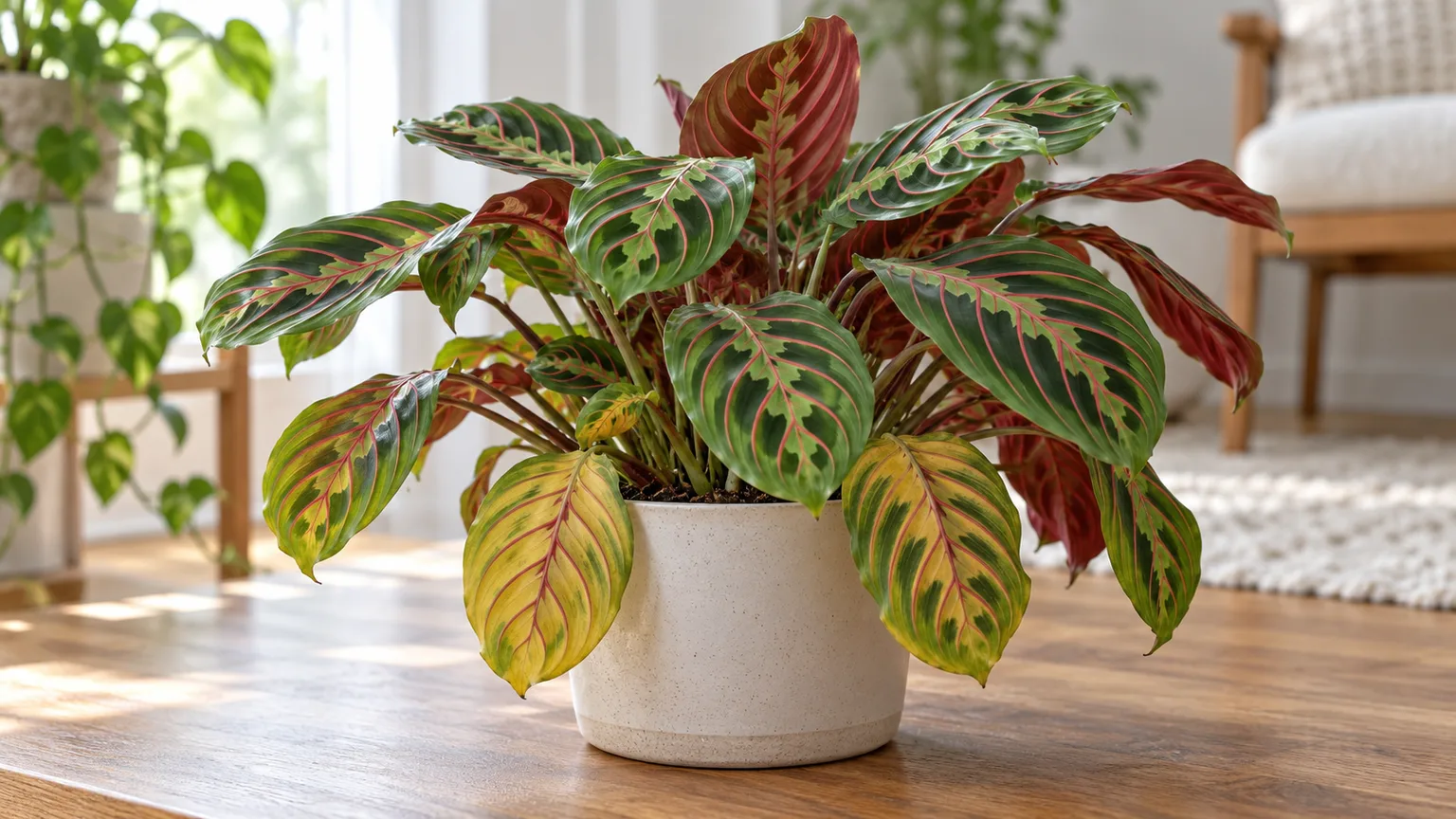
Yellow Leaves on Maranta Red Prayer Plant: Causes, Checks & Fixes
This guide covers yellow leaves on Maranta Red Prayer Plant. See also the general Yellow Leaves guide, watering, and light pages for this plant.
Yellow Leaves on Maranta Red Prayer Plant: Causes, Checks & Fixes
Quick answer
Yellow leaves on Maranta Red Prayer Plant (Maranta leuconeura var. erythroneura, Maranta Red Prayer Plant overview) most often mean the roots are sitting wet, the light is too dim for photosynthesis to keep up, or fluoride and dissolved salts in tap water are damaging tissue. Old-leaf aging, a cold draft, or spider mites can produce the same color, so the pattern — not the yellow alone — names the cause.
Your first move: push a finger 2 cm into the mix. If it feels wet several days after watering, do not water again — empty the saucer, move the plant to bright indirect light with nights above 60°F, and let the top layer dry before the next drink. Then change nothing else for a week and watch the newest rolled leaves. For how yellowing works in houseplants generally, see our yellow leaves guide. On this plant, the pattern usually shows up as bottom-up fading with limp stems when the mix stays soggy.
What yellow leaves look like on Red Prayer Plant
On this cultivar, early yellowing dulls the dark green background between the red herringbone veins while the veins themselves stay red for a while — the leaf looks washed out before it turns fully yellow. Soggy-root yellowing starts on the lowest, oldest leaves and climbs upward, often with limp stems that stop lifting at night. Light-starved plants fade more evenly across the whole plant, and new leaves emerge small and pale rather than vivid.
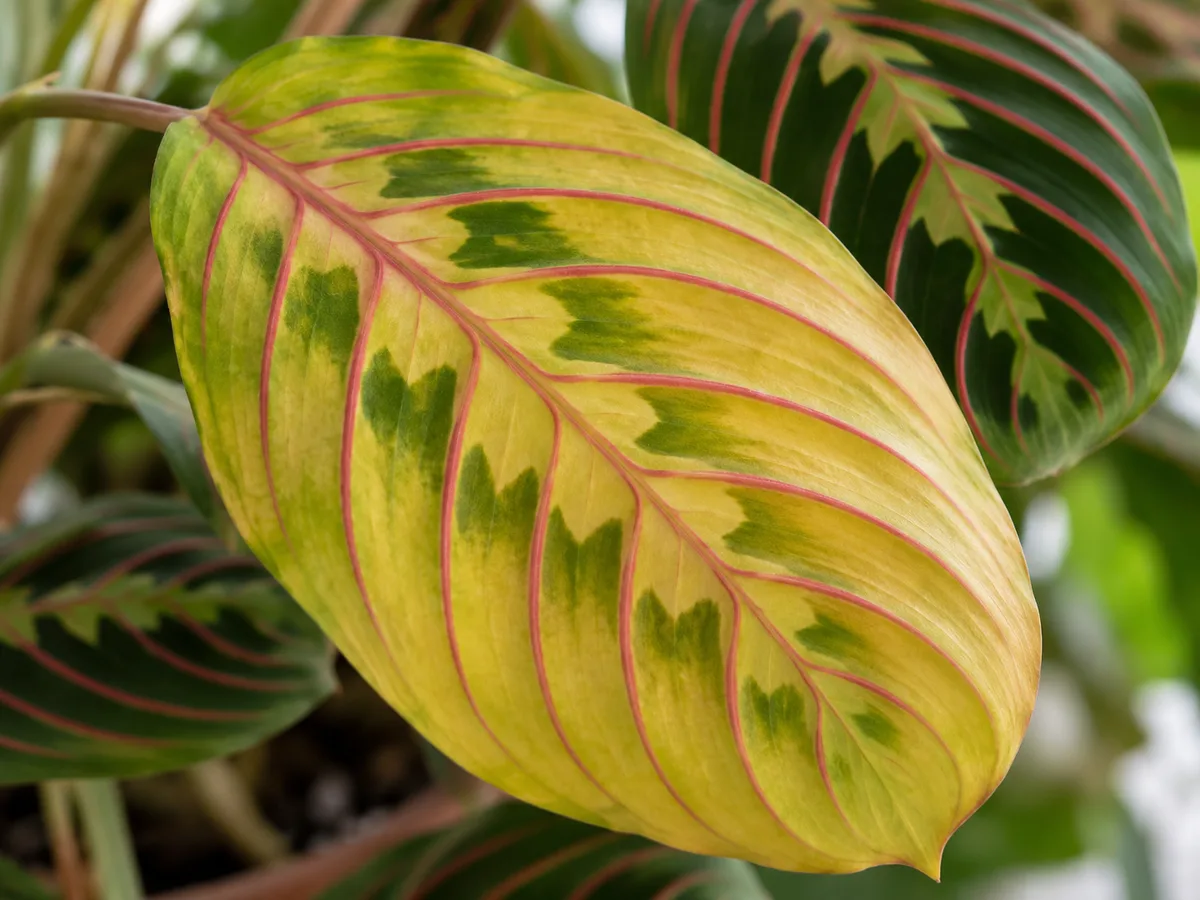
Close-up: lower leaf fading between the red veins with soft, limp tissue — classic soggy-mix yellowing rather than dry-edge burn.
Fluoride and salt damage looks different: leaf tips and margins scorch with a band of yellow tissue between the healthy green and the dead edge, a pattern extension sources describe as burn from excessive phosphate or fluoride. Fungal leaf spot shows as small water-soaked dots that yellow, spread, and turn tan with yellow halos. Mosaic virus produces irregular yellow line patterns alternating with green tissue plus stunted, distorted new leaves. If your plant has crispy brown margins without much yellow, compare with brown tips on Maranta Red Prayer Plant instead.
Why Red Prayer Plant turns yellow
Soggy mix and suffocated rhizomes
This is the leading cause. Maranta grows from shallow rhizomes that need oxygen around them; mix that stays wet for days starves the roots, and the plant sacrifices its oldest leaves first. NC State Extension advises growers to keep potting soil evenly moist through the growing season — moist, not wet — and notes that root rot follows poorly drained soils. Heavy peat mixes, pots without drainage, and saucers left full are the usual culprits, and they overlap directly with overwatering on Maranta Red Prayer Plant. If the crown where stems meet the rhizome feels soft or smells sour, read root rot on Maranta Red Prayer Plant next.
Too little light
Maranta tolerates shade but still needs enough photons to hold its pigment — NC State notes it tolerates low to medium light indoors, which means a dim corner or a spot meters from any window slowly starves it. Light-starved plants yellow evenly rather than bottom-up, stretch stems toward the window, and push out small pale leaves. Direct hot sun is the opposite error: it bleaches the patterned foliage and scorches margins. The target is bright indirect light, covered in the Maranta Red Prayer Plant light guide.
Fluoride, salts, and chlorosis
Red prayer plant is fluoride-sensitive: tap water high in fluoride or phosphate burns margins and leaves a yellow band between green and dead tissue. Young leaves turning yellow while veins stay green points to chlorosis — Gardening Know How recommends moving the plant to indirect light, switching to purified water, plus iron if the mix pH sits near 6.0 for chlorotic prayer plants. Over-fertilizing produces a similar salt-burn yellow, so check the Maranta Red Prayer Plant fertilizer guide before feeding a struggling plant.
Cold drafts and dry air
Maranta is a tropical understory plant that sulks below 60°F and near drafty windows, doors, or air-conditioner streams. A sudden chill after a move can yellow several leaves at once without any watering change. Dry heated air compounds the stress — the plant requires high humidity and is intolerant of arid conditions. Compare with low humidity on Maranta Red Prayer Plant when yellowing pairs with curling or crispy edges.
Natural aging of lower leaves
One bottom leaf yellowing every few weeks on an otherwise firm plant with clean new growth is normal turnover, not disease. Old leaves served their season and the plant reclaims their nutrients. The test is direction: aging works strictly bottom-up, one leaf at a time, while the crown keeps producing vivid rolled tubes. Practical problem guides describe this as normal lower-leaf loss over time — snip the spent leaf and keep the routine unchanged.
Pests and disease
Sap-feeding pests drain leaves yellow: spider mites stipple the surface and leave fine webbing on undersides, while mealybugs cluster as white cotton at stem joints. NC State lists occasional spider mites and mealybugs as the main pest issues on this species — compare with spider mites on Maranta Red Prayer Plant and mealybugs on Maranta Red Prayer Plant when stippling or stickiness accompanies the yellow. Chronically wet foliage invites Helminthosporium leaf spot with its yellow halos, and the rare cucumber mosaic virus — mottled yellow-green patterning with distorted new growth — has no cure and means destroying the plant so nearby houseplants stay safe.
How to confirm the cause
Work in this order so one check rules causes in or out:
- Soil and pot weight. Push a finger 2 cm down and lift the pot. Heavy and wet days after watering means soggy mix; feather-light and dry means the plant swung too far the other way. Review the rhythm against the Maranta Red Prayer Plant watering guide.
- Saucer and drainage. Standing water in the saucer or a pot with no holes keeps rhizomes wet regardless of schedule. Empty it and confirm water runs freely through the Maranta Red Prayer Plant soil mix.
- Leaf pattern and age. Bottom-up on old leaves signals water or natural aging; even whole-plant fading with small pale new leaves signals light or nutrient shortage; yellow bands at scorched margins signal fluoride or salts; mottled yellow-green with distortion signals virus.
- Nightly fold. Healthy Maranta raises its leaves after dark. Leaves that still fold have a working root system, so the cause is likely light, water chemistry, or age. A stalled fold plus spreading yellow means root damage or cold stress — unpot and inspect.
- Rhizome check (only if steps 1–4 implicate roots). Slide the root ball out: firm white rhizomes and pale roots mean the plant can recover with corrected watering, while black mushy roots with a sour smell confirm rot needing a trim and fresh mix.
- Pests and environment. Inspect leaf undersides and stem joints with your phone flashlight for webbing, cotton clusters, or stippling. Note distance to the nearest window and any vent, draft, or cold glass within a meter.
The first fix to try
Let the mix dry toward this plant’s normal threshold before doing anything else. If the 2 cm test feels wet, skip the next scheduled watering, empty the saucer, and set the plant in bright indirect light with nights above 60°F. One correction first — do not simultaneously repot, fertilize, prune heavily, and spray, because stacked interventions hide which change worked and stress an already weak rhizome.
If the mix already feels appropriately moist and light looks right, the first fix is instead a water-source switch: flush once with room-temperature filtered, distilled, or rainwater until it runs freely, drain fully, and use that source going forward.
Step-by-step recovery
- Correct the single dominant cause identified above — dry-down for soggy mix, brighter placement for light starvation, or a water-source switch for fluoride and salts.
- Snip only fully yellow or mushy leaves at the stem base with clean scissors; leave partly green leaves working, since they still photosynthesize.
- If roots were black and sour, trim to firm white tissue, repot into fresh airy mix at the same depth, and water lightly once — then resume the normal dry-down rhythm.
- Wipe remaining leaves gently to remove dust and check undersides weekly for mites or mealybugs for a month.
- Hold fertilizer until two consecutive new leaves unfurl clean; then resume monthly half-strength feeding in active growth, as the RHS feeding guidance recommends only during the growing season.
Recovery timeline
Expect the spread to stop within one to two weeks of the correction — no new leaves yellowing is the first win. Old yellow leaves never re-green; judge progress by fresh rolled tubes emerging with sharp red veining and by the nightly fold returning to full height. A mildly stressed plant looks presentable again in four to six weeks; a plant that lost roots to rot needs eight to twelve weeks to rebuild through its rhizome. If yellowing accelerates despite correct care, or new leaves emerge distorted and mottled, escalate to the disease and virus checks above rather than waiting out the season.
When to use this page vs other Maranta Red Prayer Plant guides
| What you see | Right page |
|---|---|
| Yellow plus limp stems, heavy wet pot, sour mix | Overwatering then root rot |
| Yellow plus dry lightweight pot and crispy edges | Underwatering |
| Yellow with drooping but firm stems | Drooping leaves or wilting |
| Crispy brown margins with little yellow | Brown tips |
| Yellow with curling in dry heated rooms | Low humidity |
| Pale stretched growth far from windows | Not enough light |
| Stippled yellow with webbing or white cotton clusters | Spider mites or mealybugs |
| Fuzzy mold or gnats on the soil surface | Mold on soil or fungus gnats |
Browse the full set from the Maranta Red Prayer Plant problems hub when symptoms span more than one row.
Mistakes to avoid
- Watering on a calendar. This plant drinks at different speeds by season and light; the 2 cm finger test beats any fixed schedule.
- Feeding a stressed plant. Fertilizer cannot fix soggy roots, dim light, or fluoride damage, and salts make all three worse.
- Repotting on day one. Fresh mix helps confirmed rot, but repotting a merely overwatered plant adds transplant shock to existing stress — dry-down first.
- Misting as a humidity fix. Wet foliage invites leaf spot while barely lifting humidity; use a pebble tray or humidifier instead.
- Blasting with direct sun. Moving a light-starved plant straight into a south windowsill scorches the same leaves you are trying to save — shift brightness gradually.
How to prevent it next time
Keep the core routine boring: water when the top 2 cm dry out, empty the saucer within half an hour, and use filtered or rainwater if your tap runs hard or fluoridated. Hold bright indirect light, nights above 60°F, and humidity near 60 percent, and feed monthly at half strength only while new leaves are actively unfurling. Inspect leaf undersides and the soil surface weekly — catching mites, salts, or sogginess early is what keeps this humidity-sensitive species from cycling back to yellow. Maranta is listed as non-toxic to dogs, cats, and horses, so routine leaf handling and pruning need no special precautions beyond clean tools.
When to worry
Worry when yellow spreads across many leaves within days, stems soften at the crown, the mix smells sour despite correct watering, or new rolled leaves emerge yellow, stunted, or distorted. Mottled yellow-green mosaic patterning with no response to corrected care suggests virus — isolate and discard the plant rather than nursing it near a collection. Slow single-leaf bottom yellowing with vivid new growth is maintenance, not emergency.