Drooping Leaves on Maranta Red Prayer Plant: Causes, Checks
Quick answer
Drooping on Maranta Red Prayer Plant is often normal daytime relaxation, not a crisis. True droop stays limp through the evening fold. First step: watch tonight's leaf fold, then check soil moisture at 2 cm before you water.
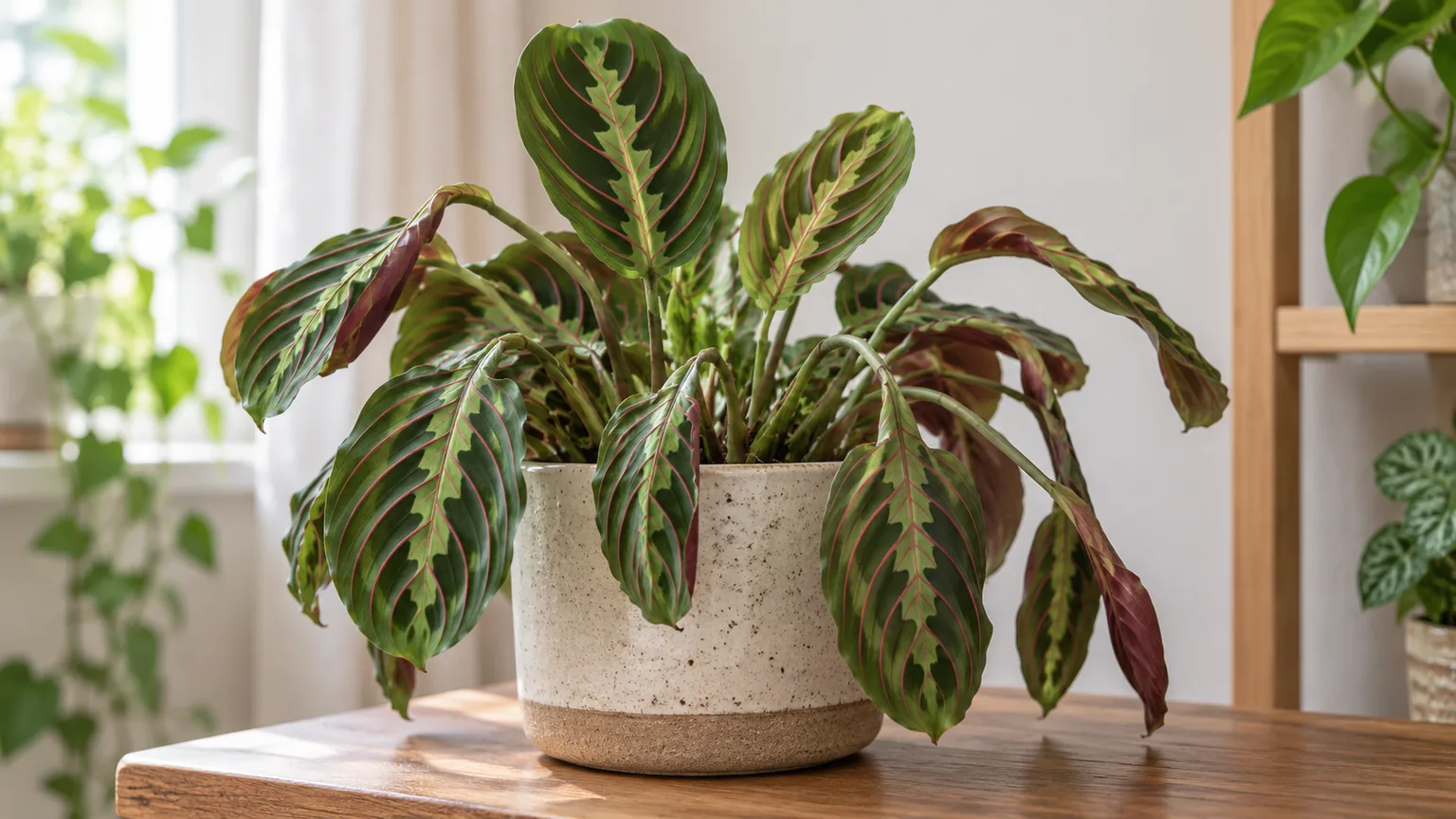
Drooping Leaves on Maranta Red Prayer Plant: Causes, Checks & Fixes
This guide covers drooping leaves on Maranta Red Prayer Plant. See also the general Drooping Leaves guide, watering, and light pages for this plant.
Drooping Leaves on Maranta Red Prayer Plant: Causes, Checks & Fixes
Quick answer
Maranta Red Prayer Plant earns its name because healthy leaves fold upward at night and relax flatter by day. That afternoon slump fools many owners into watering a plant that needs nothing. True drooping looks different: leaves stay limp through the evening when they should rise, lose their crisp hinge at the leaf base, and usually pair with dry dusty mix, saturated sour mix, or cold air.
For how limp leaves relate to water pressure in general, see our drooping leaves guide. On Red Prayer Plant, the pattern usually shows up as a failed nightly fold plus one of three root-zone stories: too dry, too wet, or too cold.
First step: watch tonight’s fold before you pour water. If leaves rise at dusk, note mild daytime relaxation and change nothing yet. If they stay flat and limp after dark, check soil at 2 cm depth and pot weight next, and make only that one correction first.
What drooping looks like on Maranta Red Prayer Plant
A healthy Red Prayer Plant holds its dark olive leaves with red herringbone veins out on angled stems by day, then lifts them near-vertical at dusk. Mid-afternoon relaxation is normal: outer leaves on a mature clump may sit slightly below horizontal in a warm room while the red veins stay vivid and the leaf surface feels turgid to a fingertip.
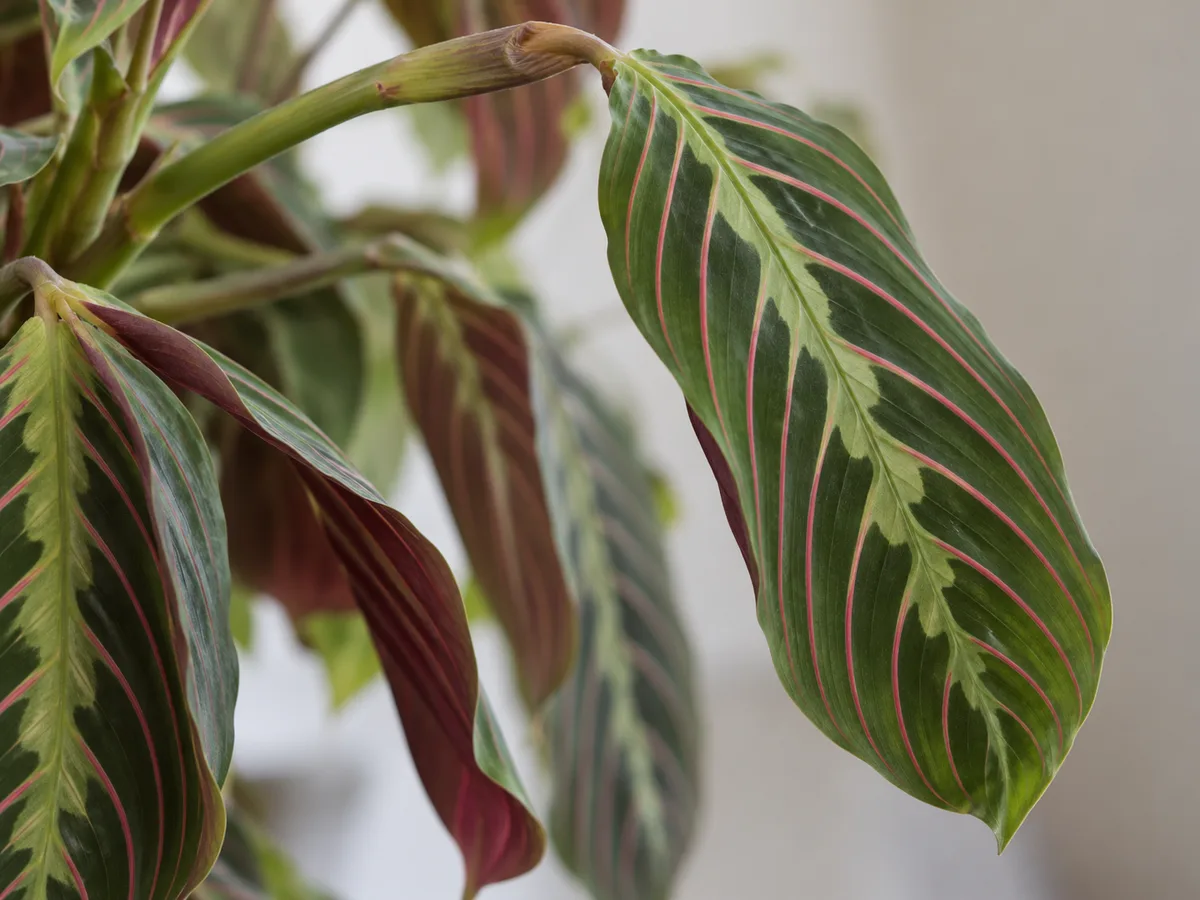
Limp red-veined leaves with a slack, wrinkled hinge at the leaf base, the diagnostic close-up of true droop rather than normal daytime relaxation on Maranta Red Prayer Plant.
Stress droop removes that structure. Leaves hang like cloth from thin stems, sometimes patterned-side down, and the newest rolled leaves unroll limp instead of crisp. On red-veined types the red sectors look dull before green tissue yellows, because the thin vein margins lose turgor first. Dry-mix droop pairs with a light pot and dusty soil at 2 cm, sometimes with crispy brown tips on the oldest leaves. Wet-mix droop is the paradox: limp leaves while the soil stays saturated, because damaged roots cannot move water even when the mix is wet. Never pour more water on a heavy, sour-smelling pot.
Cold contact adds a third look. Leaves resting against winter window glass chill faster than the room thermometer suggests, so outer leaves droop within hours while inner growth still looks fine. That one-sided pattern points to placement on your Maranta Red Prayer Plant overview, not to thirst.
Normal nightly fold vs true droop
This distinction is the whole diagnosis on a prayer plant, and no generic droop article can make it for you. Healthy movement runs on a roughly 24-hour clock driven by pulvini, the swollen motor cells at each leaf base that pump water in and out to raise and lower the blade. A crisp fold line at the pulvinus means the hydraulics work. A wrinkled, slack hinge means they do not.
Normal daytime relaxation:
- Leaves still rise noticeably at dusk
- The fold hinge at the leaf base looks crisp, not wrinkled
- Red herringbone veining stays vivid
- Soil at 2 cm feels evenly moist, not dusty or swampy
- Stems stay firm when you gently lift a leaf cluster
Abnormal stress droop:
- Leaves remain limp and flat through the evening fold window
- Soft, wrinkled tissue with no clean hinge at the pulvinus
- Yellowing margins or brown tips spreading on older leaves
- Newest rolled leaves open limp instead of crisp
- The whole clump slumps toward the pot rim while soil is very dry or very wet
A plant that stops folding at night is often the earliest stress signal, sometimes appearing before visible tip burn. Compare the same plant at mid-morning and an hour after dusk for two days before you decide anything is wrong.
Why Red Prayer Plant leaves droop
Red Prayer Plant is a low-growing tropical perennial from humid shaded forest floors, grown with shallow rhizomes and thin leaves that trade water fast. NC State Extension describes it plainly: bright indirect light, no direct sun, evenly moist soil through the growing season, and high humidity. Every common droop traces back to one of those needs breaking down.
Underwatering in a plant that must never fully dry
This Maranta wants consistently moist mix and punishes full dry-outs. Above a radiator or in a sunny winter window, the root ball can dry completely while the surface still looks acceptable, and fine roots lose uptake within a day. Leaves lose turgor, the nightly fold weakens, and peat that shrinks from the pot sides repels the next splash so the center stays dry. If the top 2 cm feel dusty and the pot lifts light, thirst is the likely story, and underwatering on Maranta Red Prayer Plant covers the rehydration sequence.
Overwatering and rhizome-root failure
The same shallow root system rots quickly in soggy, oxygen-poor mix. Lower leaves yellow while the pot feels heavy, and a sour smell from the drainage hole confirms anaerobic conditions. This looks like thirst but needs the opposite response: drying, drainage, and possibly root inspection, not another drink. Persistent wet-soil droop is the entry point to root rot on Maranta Red Prayer Plant, so treat saturated droop as a root problem from the start and read the overwatering on Maranta Red Prayer Plant pattern before you act.
Cold drafts and cold glass
Maranta is intolerant of chill and prefers temperatures that do not dip below 60°F. Below that threshold root metabolism slows while leaves keep losing water, so the plant wilts in mix that is technically moist. AC vents, heat-pump blasts, and winter window glass all qualify, and leaves touching cold panes droop one-sidedly while the rest of the clump looks fine. Moving the pot off the sill usually fixes this faster than any watering change.
Low humidity compounding afternoon droop
Prayer plants prefer humidity well above typical heated apartments, and Epic Gardening notes low humidity among the leading causes of prayer plant droop. Below roughly 50 percent relative humidity, thin red-veined leaves transpire faster than shallow roots can resupply, so the plant slumps by late afternoon even when soil moisture reads adequate. When brown tips arrive alongside droop with correct soil moisture, work the low-humidity on Maranta Red Prayer Plant fixes in parallel.
Tap-water chemicals and salt buildup
Epic Gardening also flags chemicals in tap water as a prayer plant stressor, and this variety shows it first on the thin red vein margins. Fluoride and accumulated fertilizer salts crisp edges, reduce root function over months, and make an already marginal plant droop under stress it once tolerated. Filtered or overnight-stood water plus periodic thorough flushing keeps salts from compounding every other cause.
Repotting and division shock
Division disturbs the fine roots this plant depends on, so temporary droop for several days after repotting, with firm stems and no sour smell, is common acclimation rather than failure. Hold stable placement and even moisture, and avoid stacking fertilizer on a freshly divided clump. Limpness that persists beyond two weeks in wet new mix is no longer shock alone; treat it as overwatering of fresh soil.
Too little light stalling uptake
In a dim corner the plant barely photosynthesizes, so it barely drinks, and the mix stays wet while leaves sag from stagnant roots. Pale washed-out leaves with stretched stems point here rather than to thirst. Confirm against not-enough-light on Maranta Red Prayer Plant before you change watering, because a brighter position often restores the wet-dry rhythm that prevents droop.
How to confirm the cause
Work through these checks in order. Stop at the first one that gives you a clear answer.
- Overnight fold test - Check an hour after dusk. Rising leaves with mild daytime slump mean normal nyctinasty. Flat limp leaves after dark mean stress droop.
- Soil at 2 cm - Push a finger to the second knuckle. Dusty and dry supports thirst; cool and saturated supports overwatering or root failure.
- Pot weight - Lift the container. Light means dry; heavy and slow to tilt means wet regardless of what the surface shows.
- Smell check - Sniff the drainage hole. A sour or swampy odor confirms root-zone failure and rules out simple thirst.
- Temperature at leaf height - Hold a thermometer near the pot. Below 60°F (16°C), leaves touching cold glass, or a nearby vent supports cold droop before any watering change.
- Pulvinus and crown feel - Press the leaf-base hinge and the soil surface lightly. Crisp hinges with firm crowns fit drought or cold; wrinkled hinges with soft crowns fit wet-root damage.
- Newest rolled leaf - Unrolling growth that opens limp means the problem is current and ongoing. Crisp new growth with limp older leaves means the plant is already recovering.
| Pattern | Likely cause | First move |
|---|---|---|
| Dry mix, light pot, fold weak or absent | Underwatering | Thorough soak with full drainage |
| Wet heavy mix, sour smell, yellow lower leaves | Overwatering / root failure | Stop watering, drain, inspect roots |
| One-sided droop by cold glass or vent | Cold stress | Move off sill, stabilize above 60°F |
| Correct moisture, brown tips, afternoon slump | Low humidity / salts | Raise humidity, switch water source |
| Firm stems, days after division, no smell | Repotting shock | Hold steady, change nothing |
The first fix to try
Check tonight’s fold, then correct only what the soil tells you.
If leaves rise at dusk, do nothing tonight and recheck moisture in the morning. If they stay flat after dark and the mix is dry at 2 cm, water thoroughly until runoff, empty the saucer, and recheck the fold tomorrow evening. If they stay flat and the mix is wet, do not water: tip out standing water, move the pot into gentle airflow and bright indirect light, and let the top of the root zone dry before you touch the can again.
One correction only. Stacking repotting, pruning, fertilizer, and sprays on the same day hides which change worked and stresses the shallow rhizomes further.
Step-by-step recovery
For thirst droop
Soak until water runs freely from drainage holes, let the pot drain completely, and empty the cachepot. Bottom-soaking for 15 to 20 minutes helps if shrunken peat repels surface water. Leaves should firm within 12 to 24 hours and the fold should return within two evenings. Resume the watering on Maranta Red Prayer Plant rhythm of evenly moist mix at 2 cm rather than calendar dates.
For wet-root droop
Stop all irrigation and drain every reservoir. If the pot stays heavy past three to four days or smells sour, unpot and inspect: trim black mushy roots with clean scissors back to firm white tissue, repot into fresh soil on Maranta Red Prayer Plant mix that stays moist but drains, and wait to water until the top 2 cm lose their wet sheen. The RHS notes this variety needs moist but well-drained conditions, which is exactly the balance a recovering root zone needs.
For cold droop
Move the plant off the sill and away from vents into a spot that stays above 60°F (16°C) day and night. Do not soak a cold plant; check moisture first, since cold roots drink slowly. Leaves usually lift within a day or two of stable warmth if roots are sound.
For humidity and water-quality droop
Cluster with other plants, run a humidifier nearby, or set the pot on a pebble tray, aiming above roughly 50 percent relative humidity. The Plant Manual recommends testing soil first and treating persistent curl and droop in moist soil as a humidity problem. Switch to filtered or overnight-stood water and flush the pot quarterly so salts never compound the stress.
For repotting shock droop
Keep light on Maranta Red Prayer Plant bright but indirect, hold even moisture, and wait. New rolled leaves emerging crisp within two weeks confirm recovery. Feed nothing until growth resumes; the RHS recommends balanced liquid fertiliser only monthly in active growth, never on a stressed or freshly divided plant.
Recovery timeline
Thirst droop is the fastest: visible firming within hours, full fold rhythm back within two evenings. Cold droop lifts within one to three days of stable warmth. Wet-root droop is slowest: leaves stay limp for one to three weeks while new white roots form, and improvement shows first as crisp new rolled leaves, not as old leaves re-inflating. Old limp leaves rarely regain perfect posture; judge recovery by new growth and a stable wet-dry soil cycle, then trim spent leaves once the clump is clearly growing.
Lookalike symptoms
True droop shares its limp look with several neighbors, so route by the distinguishing sign:
- Wilting on Maranta Red Prayer Plant - Whole-clump collapse with clearly lost turgor is the emergency page; start here for posture questions and escalate there when the plant will not hold itself up at all.
- Yellow leaves on Maranta Red Prayer Plant - Yellowing without limpness usually precedes droop in wet soil; when yellow lower leaves and droop arrive together, treat roots first.
- Brown tips on Maranta Red Prayer Plant - Crispy red-vein margins with droop in correctly moist soil point to dry air or tap-water salts rather than thirst.
- Low humidity on Maranta Red Prayer Plant - Curling plus afternoon slump that recovers overnight is an air-moisture problem more than a watering one.
- Leggy growth on Maranta Red Prayer Plant - Stretched pale stems with sparse leaves signal chronic dim light; droop there comes from stalled uptake, not from a missed watering.
Mistakes to avoid
Do not water on sight. Limp leaves in wet soil are the classic way a recoverable droop becomes rot, so the 2 cm check comes before every drink.
Do not fertilize a drooping plant. Salts stress compromised roots, and feeding cannot fix thirst, cold, or waterlogging.
Do not repot on day one unless the mix is waterlogged, sour, or visibly rotting. Unnecessary unpotting converts mild shock into weeks of setback on shallow rhizomes.
Do not move the pot daily chasing the perfect spot. Each relocation resets acclimation; pick stable bright indirect light above 60°F and leave it there while you read the response.
Do not mist as your humidity fix. Wet foliage in still air invites spotting while humidity falls back within minutes; use a humidifier, pebble tray, or grouping instead.
How to prevent it next time
Water by the root zone, not the calendar: evenly moist at 2 cm during growth, drying slightly deeper in winter when growth slows, always in a pot that drains freely. The Maranta Red Prayer Plant problems hub collects the full diagnostic set when more than one symptom appears at once. Keep humidity above roughly 50 percent through winter heating season, hold temperatures above 60°F (16°C) away from glass and vents, and give bright indirect light so the wet-dry cycle stays predictable. Flush with filtered or overnight-stood water a few times a year to keep salts off the sensitive red vein margins.
When to worry
Escalate quickly if stems soften at the crown, the soil smells sour while leaves collapse, droop persists more than 48 hours after you corrected moisture, or yellow lower leaves multiply in saturated mix. Those are root-failure signals, not patience situations.
You can wait if leaves still fold at night, soil moisture reads correctly, and only outer leaves relax on warm afternoons. Mild daytime slump with a crisp evening fold is this species behaving exactly as evolved, not a plant asking for rescue.
When to use this page vs other Maranta Red Prayer Plant guides
- Maranta Red Prayer Plant watering - Use for routine moisture rhythm before assuming droop is the main issue.
- Maranta Red Prayer Plant problems - Browse all 16 recorded issues on this variety when symptoms overlap.
- Underwatering on Maranta Red Prayer Plant - Follow when the 2 cm check reads dusty dry and the pot lifts light.
- Overwatering on Maranta Red Prayer Plant - Follow when the mix stays wet and heavy while leaves stay limp.
- Root Rot on Maranta Red Prayer Plant - Follow when sour smell, soft crowns, or black mushy roots confirm the wet-soil paradox.