Not Enough Light on Maranta Red Prayer Plant: Causes & Fixes
Quick answer
Low light on Maranta Red Prayer Plant shows as faded red veins, smaller new leaves, and leggy spreading stems. First step: move the pot to bright indirect light near an east window or a few feet back from a brighter window, then let the top of the mix dry slightly before watering again.
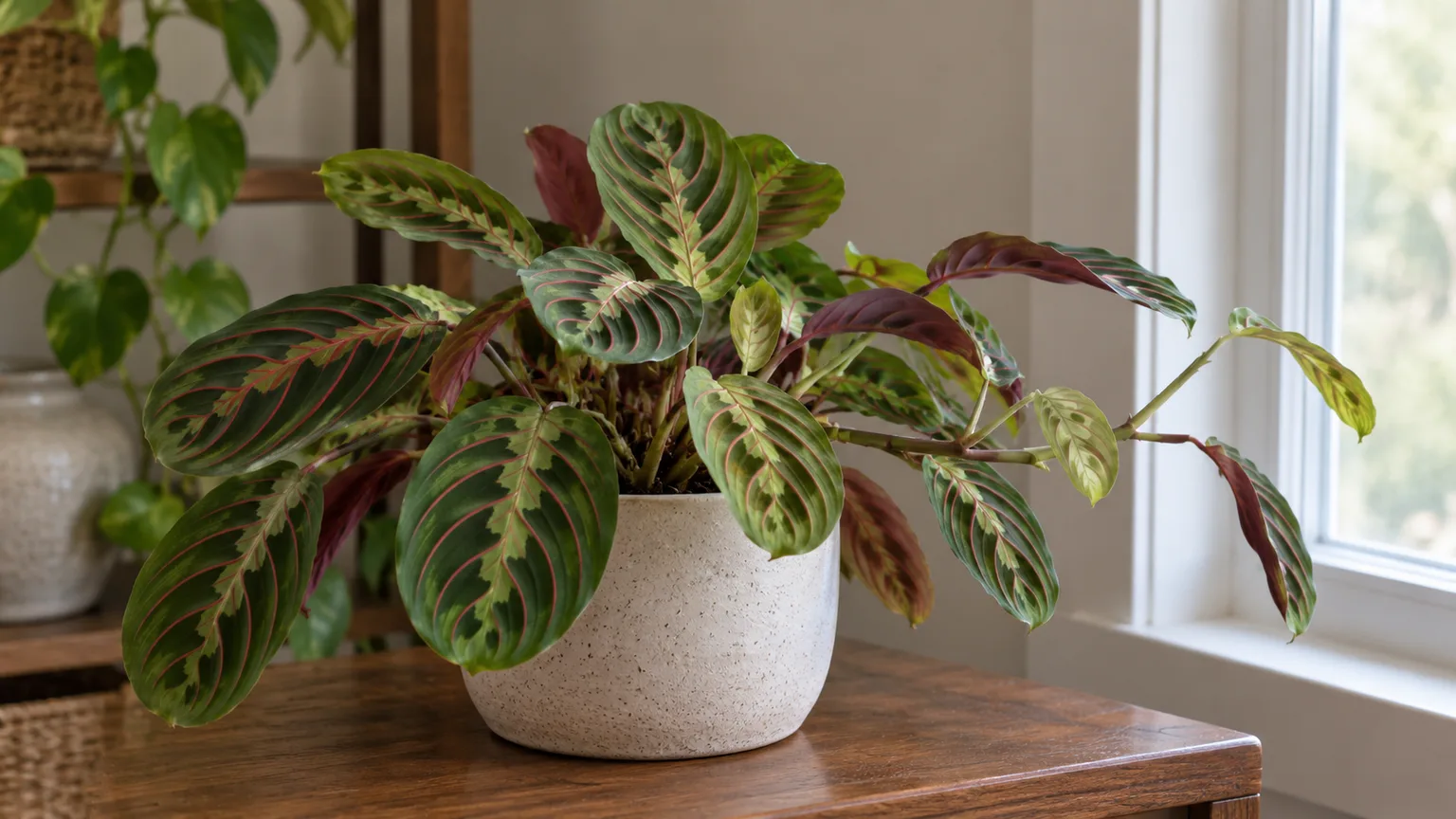
Not Enough Light on Maranta Red Prayer Plant: Causes, Checks & Fixes
This guide covers not enough light on Maranta Red Prayer Plant. See also the general Not Enough Light guide, watering, and light pages for this plant.
Not Enough Light on Maranta Red Prayer Plant: Causes, Checks & Fixes
Quick answer
Maranta Red Prayer Plant (Maranta leuconeura var. erythroneura) is sold as a shade-tolerant houseplant, and that label gets it parked on dim shelves where it slowly declines. In weak light the signature red herringbone veins fade toward muddy green, new leaves unfurl smaller than the old ones, and the low clump stretches outward instead of staying full. For how dim conditions act on houseplants in general, see our low light guide. On this Maranta, the giveaway is pattern loss plus slowed water use, not a single yellow leaf.
First step: move the pot to bright indirect light today. An east window, a bright north exposure, or a spot a few feet back from filtered south or west glass is the usual target. Do not fertilize, repot, or prune until the plant has spent two weeks in better light and you can see whether new leaves are sizing up.
When to use this page vs other Maranta Red Prayer Plant guides
| What you see | Read next |
|---|---|
| Faded veins + stretched stems + slow drying mix | This page (low light) |
| Stretched stems but color still strong | Leggy Growth |
| No new leaves for months despite decent light | Slow Growth |
| Yellow lower leaves on wet mix | Yellow Leaves or Overwatering |
| Crispy brown edges on otherwise okay leaves | Brown Tips |
| Leaves curling inward in dry air | Low Humidity or Drooping Leaves |
| Soft crown on sour-smelling mix | Root Rot |
| Routine moisture rhythm questions | Watering guide |
What not enough light looks like on Maranta Red Prayer Plant
Low light on a red prayer plant reads as pattern loss and habit change, not dramatic spotting. Healthy foliage holds broad elliptic leaves with a bright green central zone and vivid red midrib and veins, on a compact clump roughly a foot tall. In dim conditions that contrast washes out: the red veining dulls to olive, the pale central variegation narrows, and even the purplish leaf undersides look flat.
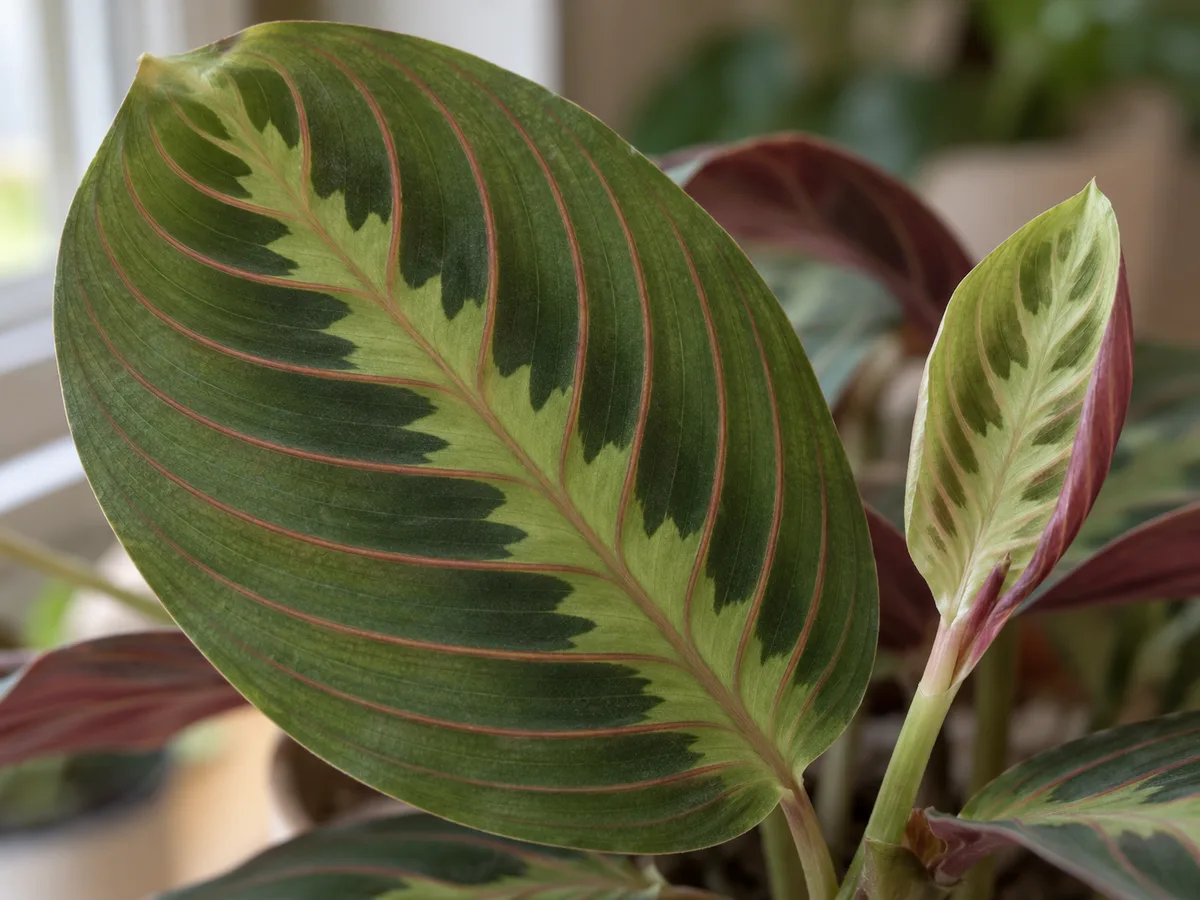
Faded herringbone veining and a small pale new leaf on Maranta Red Prayer Plant, typical of prolonged low light rather than sun scorch.
Typical signs include:
- Faded red veins that turn rusty or olive instead of cherry red, worst on the newest leaves
- Smaller new leaves unfurling from rolled tubes that never reach the size of older foliage
- Leggy, sprawling stems with wider gaps between leaves as the clump reaches sideways for brightness
- One-sided growth leaning toward the nearest window while the shaded side thins out
- Weak nightly folding, with leaves barely lifting into the prayer position after dark
- Stalled production of new rolled leaves for weeks even in warm weather
- Mix that stays damp long after watering, because a dim plant transpires slowly
This decline is slow enough to miss. Because the plant tolerates low to medium light, it survives on a bookshelf for months while quietly spending its rhizome reserves, and owners often blame water or humidity first.
Why Maranta Red Prayer Plant fades and stretches in dim rooms
Maranta is a rhizomatous, low-growing, clump-forming tropical perennial native to Brazil, built for dappled forest-floor brightness rather than deep shade or direct sun. It performs well with bright indoor light but no strong direct sun, and that narrow band explains most indoor failures: too much glass exposure bleaches the pattern, while too little starves it.
Three traits make low light hit this plant in ways you would not see on a pothos or snake plant.
The herringbone pattern is a light meter. NC State notes that the upper and undersides of the leaves lose color in low light and fertility situations. On var. erythroneura that color loss lands directly on the red veins buyers paid for. Fading that starts on new growth and spreads across the clump is the plant reporting insufficient energy, leaf by leaf.
Nyctinasty needs a real day-night contrast. By day the leaves lie flat to catch light and at night they rise into the prayer position, a daily movement driven by light cues. In a dim room with lamps on late, the rhythm weakens: leaves sit half-raised, barely move, or fold at odd hours. When an owner says the plant “stopped praying,” the first suspect is light contrast, not disease.
Rhizomes plus constant moisture turn dimness into root risk. Maranta stores energy in shallow rhizomes and wants soil kept evenly moist in the growing season yet moist but well-drained. A dim plant cannot use water quickly, so the same careful watering routine that worked in a bright window leaves the mix soggy for weeks. That is why root rot and overwatering symptoms so often follow months of unnoticed low light.
How to confirm the cause
Work through these checks before changing the watering routine or reaching for fertilizer:
- Shadow test at leaf level - At midday, hold your hand just above the foliage between the plant and the window. A soft, diffuse shadow means workable indirect light; almost no shadow means the spot is too dim. Remember that light intensity falls off fast as you move away from glass, so a bright-looking room can still starve a plant six feet from the window.
- Distance and direction - Note the window orientation and how many feet the pot sits from it. East glass or a bright north window suits Maranta; a spot across a north-facing room or behind heavy curtains usually does not.
- New versus old leaves - Compare the newest unfurled leaves with mature foliage. Smaller, duller new leaves with fading veins on firm stems point to light. Similar damage plus soft stems or sour mix points to roots instead.
- Prayer rhythm - Watch one evening and one morning. Leaves that barely lift at night in a room with evening lamps on may simply lack a clear bright-day signal.
- Soil rhythm - Press a finger into the top of the mix. If it stays damp two weeks after watering while stems stretch, metabolism is running too slowly for your schedule, which is exactly what prolonged dimness does.
- Bleach check - Pale, papery patches only on window-facing leaves mean too much direct sun, not too little. Even fading across the whole clump is the low-light pattern.
First fix for Maranta Red Prayer Plant
Move the pot to bright indirect light and leave everything else alone for two weeks.
Set it near an east window, beside a bright north window, or a few feet back from a south or west window softened by a sheer curtain for partial shade. Turn the pot so the thin side faces the glass. Then water only when the surface begins to dry, and skip fertilizer until new leaves emerge full-sized. One relocation tells you more than any corrective cocktail, and stacking repotting or feeding on moving day only hides the signal.
Recovery timeline
Faded leaves will not re-pattern, and stretched internodes will not shorten. Recovery is measured in new growth: within two to four weeks the next rolled tubes should unfurl larger and greener, and within four to eight weeks fresh leaves should show sharper red veins and stronger nightly folding. If new leaves keep emerging small and pale after two months in genuinely brighter light, revisit drainage, check for spider mites or mealybugs on leaf undersides, and confirm temperatures stay above 60°F (16°C) away from cold drafts.
Mistakes to avoid
- Shoving the plant into direct south or west sun to compensate, which bleaches the leaf colors it was moved to rescue
- Fertilizing a dim, stalled plant, since leaves already burn with over-fertilization and salts worsen brown tips
- Watering on the old schedule while the plant uses less, keeping rhizomes wet enough to rot
- Pruning every leggy stem on day one instead of letting new fuller growth replace it gradually
- Mistaking weak prayer movement for wilting and soaking the pot
How to prevent it next time
Site the plant where bright filtered or indirect light reaches the whole clump, not just one edge, and rotate the pot a quarter turn each week so veining develops evenly. Pair that with the soil and watering rhythm that keeps the mix moist but never soggy, plus the high humidity this species demands (a pebble tray or humid room per NC State guidance). Recheck the spot every autumn: shorter days quietly turn a fine summer shelf into a dim winter corner, and a small grow light beats a rescue repot. Browse the Maranta Red Prayer Plant overview and problems hub when new symptoms appear.
Related Maranta Red Prayer Plant guides
- Maranta Red Prayer Plant overview
- Light guide
- Watering guide
- Soil guide
- Leggy Growth
- Slow Growth
- Yellow Leaves
- Problems hub
Conclusion
Low light steals this plant’s identity slowly: red veins wash out, new leaves shrink, stems sprawl, and the nightly folding goes slack. Move it to genuine bright indirect light, ease watering to match its slower thirst, and let the next flush of leaves prove the fix. Prevention is simply placement discipline plus seasonal rechecks.