Wilting on Maranta Red Prayer Plant: Causes, Checks & Fixes
Quick answer
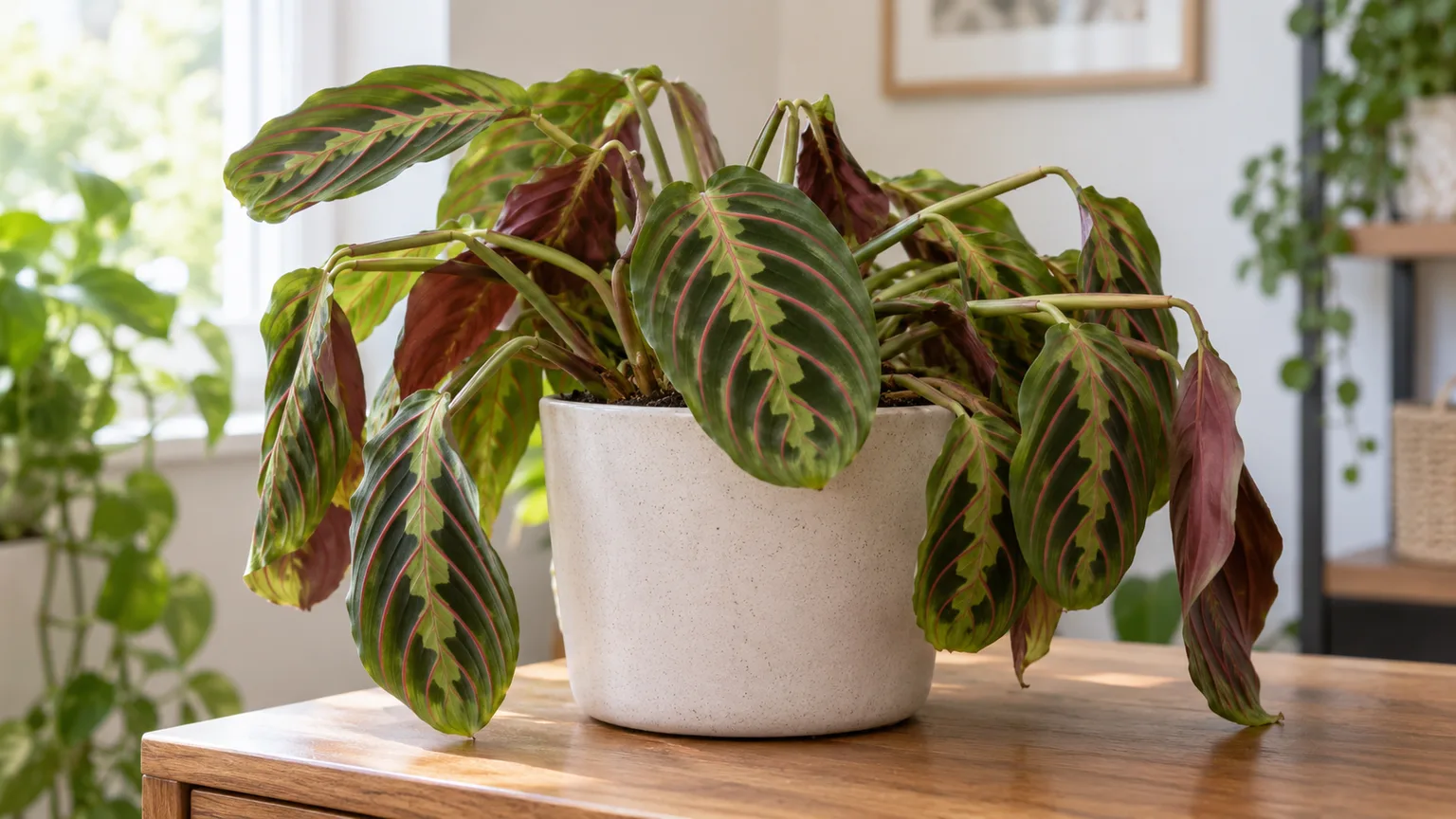
Wilting on Maranta Red Prayer Plant means lost turgor: thin red-veined leaves go limp and hang without spring, and stay that way through midday. First step: lift the pot and probe the mix at 2 cm depth before adding any water. Dry, light soil means one thorough watering; heavy, wet soil with limp leaves means pause watering and let the shallow roots breathe.
Wilting on Maranta Red Prayer Plant: Causes, Checks & Fixes
This guide covers wilting on Maranta Red Prayer Plant. See also the general Wilting guide, watering, and light pages for this plant.
Wilting on Maranta Red Prayer Plant: Causes, Checks & Fixes
Quick answer
Wilting on Maranta Red Prayer Plant (Maranta leuconeura var. erythroneura) means the thin, red-veined leaves have lost turgor: they hang limp, feel thin or papery, and stay collapsed through the middle of the day instead of holding flat. This is different from the normal evening fold, when healthy leaves rise upright on schedule and reopen by morning.
First step: lift the pot and probe the mix at 2 cm depth before you add any water. Light, dry-feeling mix with a light pot means thirst — water deeply once and drain fully. Heavy, cool, wet mix with limp leaves means the roots are failing to take up water — pause watering, empty the saucer, and let air back into the root zone. Pouring water onto an already saturated pot is the fastest way to turn a mild wilt into root damage.
What wilting looks like on Maranta Red Prayer Plant
A healthy red prayer plant holds its oval leaves out flat by day, showing the herringbone red veins against dark green. When true wilt sets in, the blades lose that platform: they sag downward, curl inward along the midrib, and feel soft rather than springy. Edges may crisp and brown first along the thin red-veined margins, and new rolled leaves in the center may stall half-open instead of unfurling.
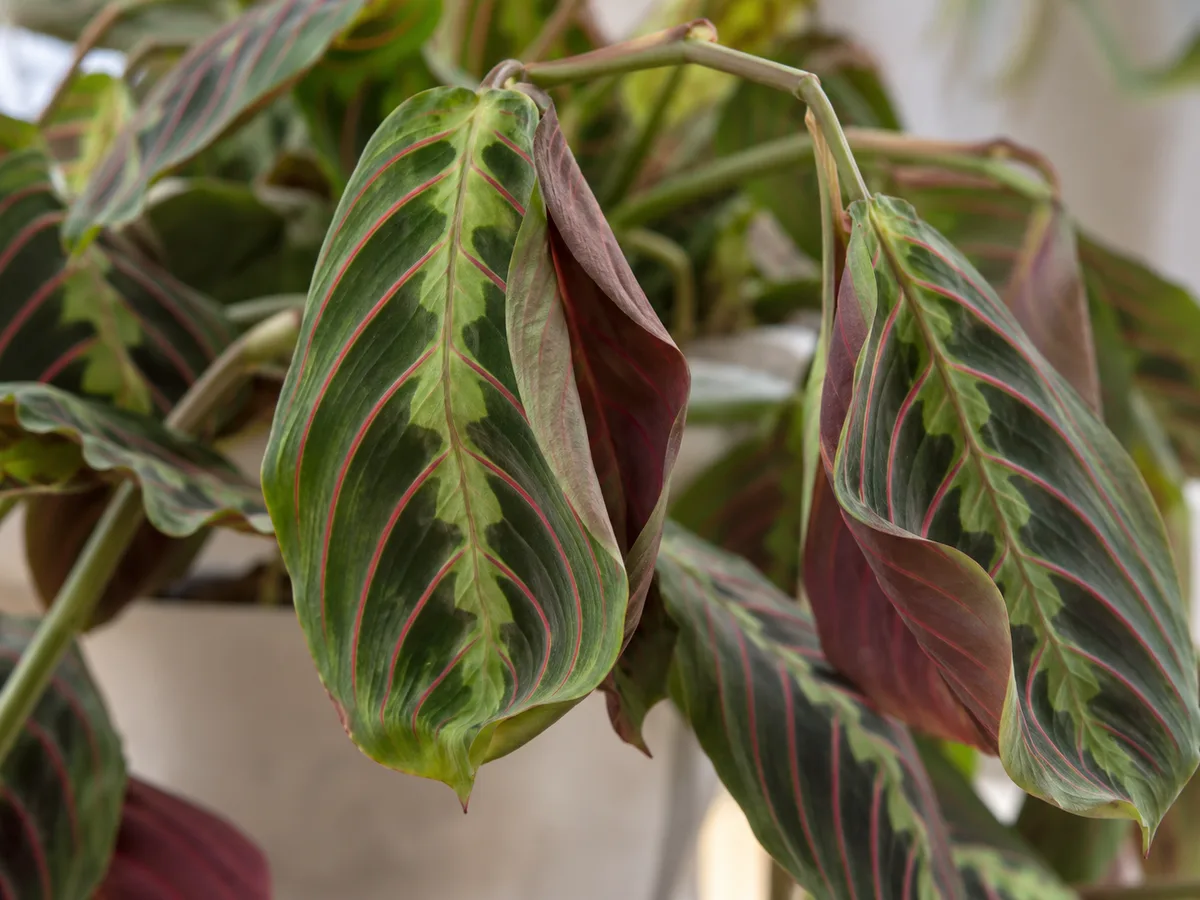
Close-up: limp red-veined blades with soft, stalled center roll — true wilt stays limp through midday, unlike the firm nightly fold.
Because this species moves its leaves daily, always judge wilt at midday. An evening check will fool you: every healthy prayer plant looks “wilted” to a beginner once its leaves stand up for the night. Midday limpness with thin-feeling blades is the real signal.
Night folding vs true wilt: the Maranta-only check
No other common houseplant group folds as dramatically as the Marantaceae, so this distinction matters more here than anywhere else. Normal nyctinasty is rhythmic — leaves rise at dusk, lie flat by morning, and feel firm in both positions. True wilt is arrhythmic — leaves hang without spring at noon, when they should be at their flattest and firmest.
Run this test: note leaf position at noon two days in a row. If blades are flat and firm at noon both days, you are watching normal movement, not wilt — see the drooping leaves guide if posture just looks tired. If blades are limp at noon and still limp the next noon, work through the diagnosis below. Gently lifting a limp blade is also informative: a wilted leaf stays soft and offers no resistance, while a folding leaf still feels structured at its pulvinus joint.
Why red prayer plants wilt
Maranta runs on a narrow moisture band. NC State Extension describes prayer plant culture as evenly moist through the growing season in bright indirect light, paired with the high humidity this genus demands. The RHS adds that the mix must stay moist but well-drained. Stray off either side of that band and the thin leaves flag it within a day or two.
Dry-down too far. This is the most common cause. Maranta’s shallow, rhizomatous root system explores a small soil volume, so a pot that felt fine three days ago can be genuinely dry today — especially in warm rooms or small nursery pots. When the top 2 cm dries completely, fine roots stop supplying the blades and turgor collapses. Peat-heavy mixes that dried out can also turn hydrophobic, so water runs down the pot sides while the root ball stays dry.
Wet-soil oxygen loss. The paradox twin: soil stays saturated, roots suffocate, and leaves wilt despite abundance of water. Saturated mix displaces the oxygen roots need, and damaged roots cannot move water to the blades — the same mechanism behind the overwatering collapse on this plant. Suspect this when the pot feels heavy days after watering, the saucer holds water, or lower leaves yellow while limp.
Cold shock. Maranta is intolerant of low temperatures and cold drafts, and Missouri Botanical Garden guidance keeps it above 60°F (16°C). A drafty windowsill, an air-conditioning blast, or a cold night near glass can leave leaves soft and droopy within 24 hours even when soil moisture is perfect. Practical Maranta references place the comfort range around 65–80°F, with damage below that floor.
Dry air plus heat. Thin Maranta blades transpire fast. In heated winter rooms or near warm vents, low humidity pulls moisture out faster than roots replace it, and the plant wilts despite damp soil. Indoor humidity around 50 percent or higher is the practical minimum for this species; crisping brown edges that precede the wilt are the signature that air, not soil, is the driver — compare with the low humidity guide.
Compacted old mix. After a couple of years in the same pot, organic mix slumps, air pockets vanish, and drainage slows — a pattern practical Maranta references flag around the two-to-three-year mark. Chronic mild wilt that never fully resolves between waterings, despite correct technique, points here rather than at any single watering event.
Spider mites. Dry conditions invite them, and their sap feeding drains vigor until leaves stipple, dull, and sag. Check for the fine webbing and pale stippling UC IPM describes for spider mite confirmation — mites are worst on water-stressed plants, so wilt plus stippling means treating both pest and moisture. See the spider mites guide if you find them.
For how chronic wet mix damages roots in general, see the wilting overview. On red prayer plant, the pattern usually shows up as midday limpness on thin blades with either a bone-light dry pot or a heavy sour pot — rarely anything in between.
How to confirm the cause
Work in this order at midday, before watering:
- Note the timing. Limp only in hot afternoons with morning recovery points to heat and dry air. Limp around the clock points to soil moisture or roots.
- Lift the pot. Noticeably light means dry; heavy days after watering means saturated. This single check separates thirst from paradox wilt better than any leaf symptom.
- Probe at 2 cm near the pot edge. Dry and crumbly confirms thirst. Cool, damp, and dense confirms wet-soil wilt. Probe the edge, not the stem base, where surface moisture misleads.
- Check the saucer and drainage hole. Standing water or a sour smell means oxygen loss — escalate toward the root rot protocol if stems soften.
- Feel the rhizomes. Gently expose the top of the shallow rhizome cluster. Firm and pale is good; brown and mushy means rot, not thirst.
- Flip three leaves. Fine webbing or pale stippling on undersides means mites are contributing; sticky residue or cottony patches point to other sap feeders instead.
- Review the last week. A missed watering, a cold night by the window, a heating vent switched on, or a recent repotting each point to their matching branch above.
First fix for Maranta Red Prayer Plant
Probe the mix at 2 cm and lift the pot — then act on what you find, not on the leaves.
If dry and light: water now, slowly and evenly, until water runs from the drainage holes, then empty the saucer after 20 minutes. If the mix repels water (it runs straight through), bottom-soak the nursery pot for 20–30 minutes so the root ball actually rehydrates. If wet and heavy: do not water. Empty the saucer, move the plant into bright indirect light with gentle airflow, and let the top layer dry before the next check. One targeted correction, then watch — this tells you which branch you are on.
Step-by-step recovery
Thirst branch (dry, light pot):
- Deep-water once as above and drain completely.
- Recheck in 6–12 hours. Firming blades mean the diagnosis was right.
- If the pot dries again within two days, the plant is root-bound or the mix is hydrophobic — plan a repot into fresh moisture-retentive but draining mix per the soil guide, following the watering rhythm afterward.
- Trim only fully brown, papery edges after recovery stabilizes; leave partly green blades working.
Wet branch (heavy, damp pot):
- Stop watering and empty all standing water.
- Improve evaporation: bright indirect light, gentle airflow, no cold drafts.
- If limpness persists past three to four days or stems soften, unpot and inspect the shallow roots and rhizomes. Trim brown mushy tissue with clean scissors and repot into fresh mix — the full sequence is in the root rot guide.
- Hold fertilizer until new center growth unfurls normally; feeding stressed roots adds salt stress. The RHS feeding rhythm is monthly during active growth — resume only then.
Cold or dry-air branch: move away from the draft or vent, keep nights above 60°F, and raise local humidity with a humidifier or pebble tray rather than misting, which wets foliage without lifting room humidity for long.
Recovery timeline
| Timeframe | What to expect |
|---|---|
| 4–12 hours | Thirst wilt firms up after one deep watering |
| 2–4 days | Heat or draft wilt stabilizes once the stressor is removed |
| 1–3 weeks | Wet-soil wilt slowly improves as roots regain function; new center rolls are the proof |
| 4+ weeks | Compacted-mix or mite-related wilt resolves after repot or pest treatment plus steady care |
Improvement signs: blades flat and springy at noon, new rolled leaves unfurling on schedule, pot settling into a predictable wet-dry rhythm.
Worsening signs: spreading yellowing on wet soil, soft stem bases, sour-smelling mix, or new rolls emerging already limp — inspect roots promptly.
Lookalike symptoms
| Pattern | Usually means | Key check |
|---|---|---|
| Gradual sag over days, leaves still fairly firm | Drooping leaves rather than acute wilt | Slow onset without a sharp collapse event |
| Limp plus yellow lower leaves on heavy soil | Overwatering tipping into rot | Pot weight, saucer water, soil smell |
| Mushy rhizomes, blackened bases | Root rot | Unpot inspection of shallow roots |
| Crispy brown vein margins, curling before limpness | Low humidity | Hygrometer reading, heating season timing |
| Pale stippling plus fine webbing under leaves | Spider mites | Underside inspection with phone light |
| Uniform pale blades, leggy stems toward window | Not enough light | Light direction and distance, not moisture |
| Brown tips only, leaves otherwise firm | Brown tips — often fluoride or dry air | Leaf burn with high fluorides suggests trying filtered or rested water |
Mistakes to avoid
- Watering a wilted plant without checking the soil — the single most common escalation on Maranta.
- Stacking repot, prune, spray, and fertilize on the same day. Make one correction, then read the response.
- Fertilizing limp leaves to “feed them back.” Salt stress on damaged roots deepens the wilt.
- Misting instead of fixing humidity. Droplets evaporate in minutes; the thin blades need sustained ambient moisture.
- Moving a wilted plant into direct sun to perk it up. Strong sun bleaches the patterned leaves and accelerates water loss — keep it in bright indirect light.
- Judging recovery by old leaves. Damaged blades rarely re-firm fully; new center growth is the honest scoreboard.
How to prevent wilting next time
Water by the pot, not the calendar: check 2 cm depth every few days and water when it begins to dry, keeping the evenly moist rhythm this species expects — the full cadence is in the watering guide. Grow in the moisture-retentive but draining blend from the soil guide, always with drainage holes and an emptied saucer. Keep the plant in bright indirect light per the light guide, hold humidity high, and keep nights above 60°F away from drafts. Repot every one to two years before the mix compacts, propagate crowded clumps by rhizome division at repotting time, and browse the full problems hub when a new symptom appears.
When to worry
Escalate quickly if stems soften at the base, the mix smells sour, most shallow roots are mushy on inspection, wilt spreads to new rolled leaves, or collapse persists a week after correct watering on confirmed dry soil. A plant with firm rhizomes and healthy growing tips can recover after root pruning; if rhizomes are hollow or fully brown, salvage firm stem cuttings below a node instead. Start from the plant overview if you need the baseline picture while deciding.
When to use this page vs other Maranta Red Prayer Plant guides
- Watering guide — routine moisture rhythm before assuming wilt is the main issue.
- Underwatering — confirmed dry-soil thirst with papery blades.
- Overwatering — confirmed heavy-soil saturation without rot yet.
- Root rot — mushy rhizomes, sour mix, soft stem bases.
- Problems hub — browse all issues on this species.
Related Maranta Red Prayer Plant guides
- Maranta Red Prayer Plant overview
- Maranta Red Prayer Plant watering
- Maranta Red Prayer Plant light
- Maranta Red Prayer Plant soil
- Maranta Red Prayer Plant problems
- Underwatering on Maranta Red Prayer Plant
- Overwatering on Maranta Red Prayer Plant
- Drooping Leaves on Maranta Red Prayer Plant
- Yellow Leaves on Maranta Red Prayer Plant
- Brown Tips on Maranta Red Prayer Plant