Mold on Soil on Maranta Red Prayer Plant: Causes, Checks &
Quick answer
White or gray fuzzy mold on Maranta Red Prayer Plant soil is usually harmless saprophytic fungus on wet organic mix, not a leaf infection. First step: scrape off the top quarter-inch of moldy mix, then let the surface dry before watering again while keeping deeper soil evenly moist.
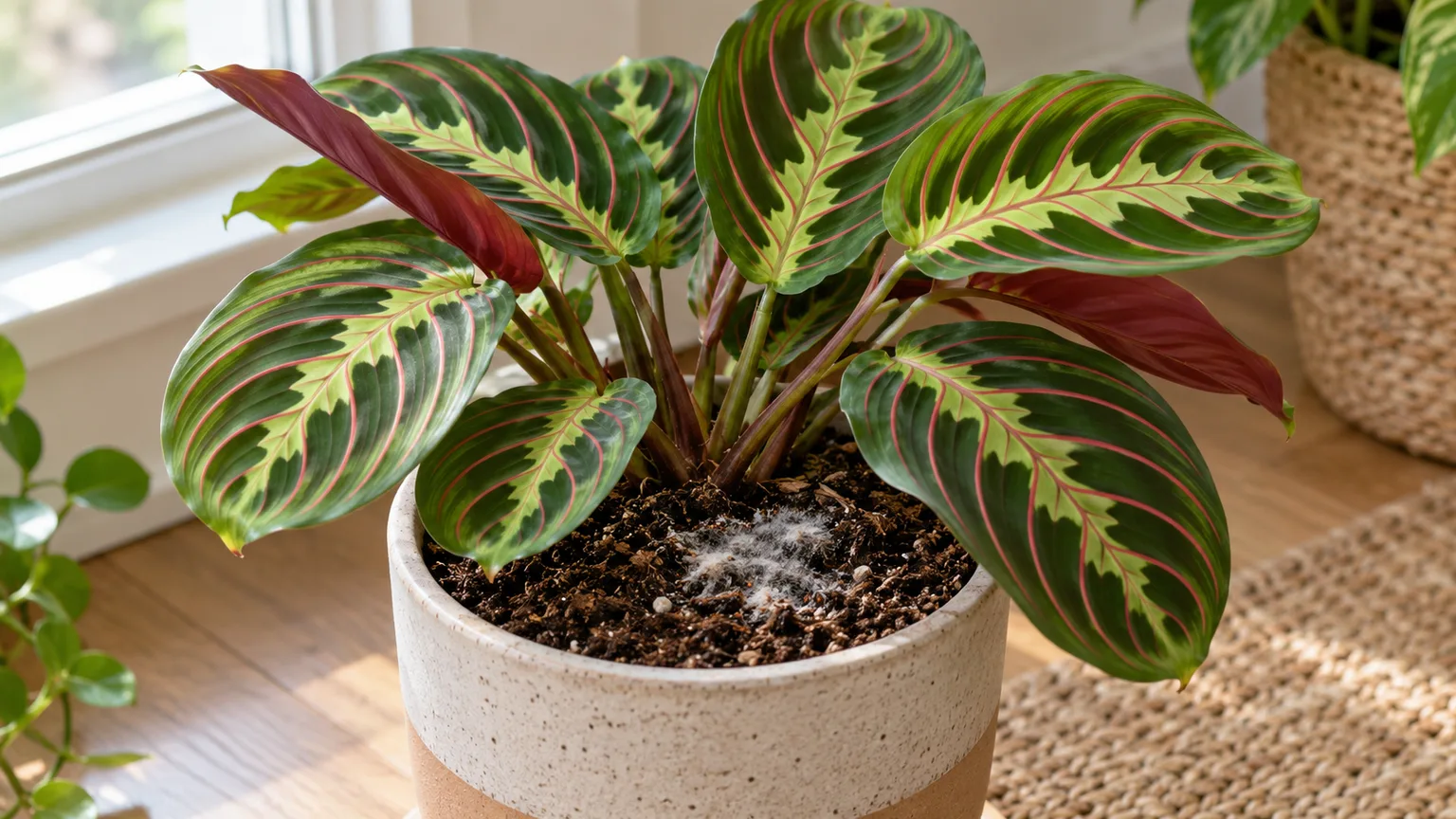
Mold on Soil on Maranta Red Prayer Plant: Causes, Checks & Fixes
This guide covers mold on soil on Maranta Red Prayer Plant. See also the general Mold on Soil guide, watering, and light pages for this plant.
Mold on Soil on Maranta Red Prayer Plant: Causes, Checks & Fixes
Quick answer
White or gray fuzzy mold on Maranta Red Prayer Plant (Maranta leuconeura var. erythroneura) soil is usually harmless saprophytic fungus feeding on damp organic potting mix, not a leaf infection. The herringbone leaves often look fine while the top layer of compost and coco coir stays wet for days.
First step: scrape off the top quarter-inch of moldy mix with a clean spoon, bag it for the trash, and let the surface dry before you water again. Do not mist the soil or spray the leaves on day one. This is a substrate moisture problem at the soil line, not foliage disease.
Red prayer plants want evenly moist mix at depth but hate a chronically wet surface, and that moisture paradox drives most mold cases. For the full rhythm, see our red prayer plant watering guide. For the general mechanics of surface mold on any houseplant, see our mold on soil guide. When wet soil and wilt overlap, start with the mold versus overwatering table below.
What mold on soil looks like on Maranta Red Prayer Plant
Typical harmless surface mold:
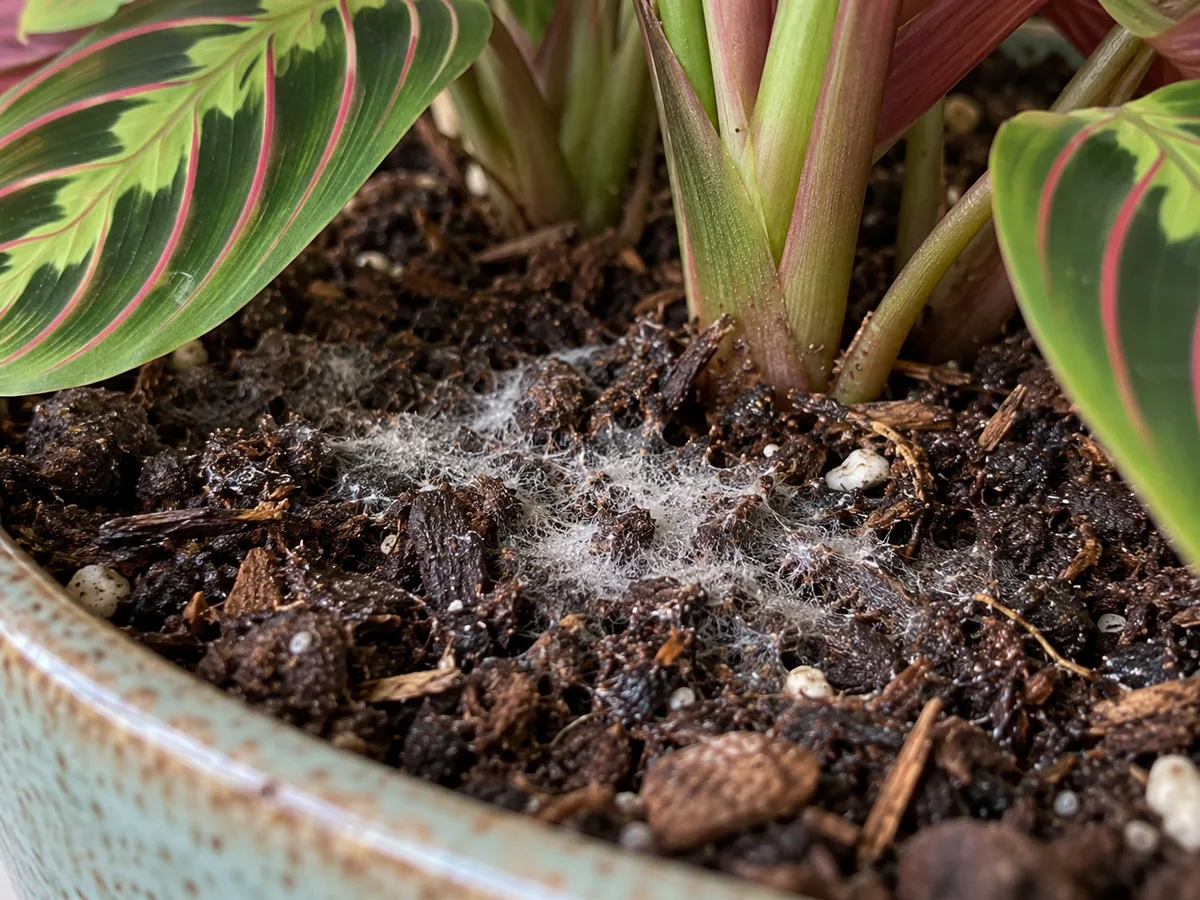
White fuzzy mold on the soil surface of a Maranta Red Prayer Plant pot, with firm stems and flat herringbone leaves above it.
- White, gray, or tan fuzzy patches on the soil surface, sometimes with thread-like mycelium spreading across damp coco coir near the crown
- Surface mix still damp or cool to the touch days after watering
- Musty smell when growth is heavy
- Herringbone leaves still flat by day and folding upward at night, with firm green stems, unless roots are already stressed
Green surface film (often algae, not mold):
- Smooth green layer on the soil and sometimes the pot rim
- Common in dim bathrooms where the surface never dries
- Same fix as white mold: dry the surface and improve light and airflow
Companion signs:
- Fungus gnats running across the soil or flying up when you disturb the pot
- Fallen red prayer plant leaves decaying into the wet mix
- A cachepot or decorative cover holding standing water under the drainage holes
Foliage does not develop mold patches when this is a soil-surface issue. Yellowing lower leaves, browning along the thin red vein margins, crown softness, or leaves that stop folding at night mean wet conditions have moved past cosmetic mold into plant stress.
Mold versus overwatering and root rot
Surface mold and chronic overwatering share wet soil, but they are not the same diagnosis. Read the pot before you scrape again.
| What you notice | Likely cause | First move |
|---|---|---|
| Fuzzy soil only, firm stems, leaves still fold at night | Harmless surface mold | Scrape top layer; dry surface between drinks |
| Heavy pot, wet top 2 cm, yellow lower leaves, no sour smell yet | Overwatering | Stop watering; let top 2 cm dry; check crown firmness |
| Sour smell, mushy stems at crown, wilt on wet mix | Root rot | Inspect roots; repot in fresh airy mix if mushy |
| Small dark flies on soil, mold returns fast | Wet habitat + fungus gnats | Dry top 1 to 2 inches; scrape; add sticky traps for adults |
| Light pot, dusty dry mix, limp leaves that still fold | Underwatering, not mold | See underwatering guide |
Mold means the surface stayed wet, organic, and still. Rot means the root zone has been anaerobic too long. Red prayer plants can show both at once: harmless fuzz on top while deeper mix is already sour.
Why Maranta Red Prayer Plant gets mold on soil
Maranta leuconeura var. erythroneura is a low, clump-forming tropical perennial with shallow fine roots that need even moisture at depth, but never a soggy soil line.
The red-vein moisture paradox
Growers learn that red prayer plants crisp at the leaf margins when they dry out, so after one brown-tip scare they start surface-flooding the pot at every watering. Water sits on compost and coco coir, debris collects between the low stems, and the top 2 cm never dry even when deeper mix is fine. Mold is the visible signal that the surface is too wet while you are trying to keep Maranta happy at depth. The variety’s thin red vein margins show fluoride and drying stress before green tissue does, which is why growers overcorrect with water in the first place.
Filtered water poured over the crown
Red prayer plants do best with filtered or overnight-stood tap water because fluoride burns leaf margins. Many owners carefully use the right water but pour it over the foliage and crown to rinse dust off the leaves. That pattern soaks the surface while the root ball below stays only partly hydrated, feeding surface mold without truly watering the plant. Water at the soil line only, and never leave water standing on crowns.
Clump-forming foliage and still air
Dense red prayer plant clumps trap humidity exactly where mold starts. Lower herringbone leaves shade the pot rim, fallen foliage decays into saprophyte food, and grouped plants in bathrooms or on crowded shelves slow evaporation further. Missouri Botanical Garden notes this plant wants bright light without direct sun and steady warmth, and a dim stagnant corner delivers neither the light nor the airflow the surface needs to dry.
Coco-coir crust and tired compost
The recommended mix for this plant is roughly 60 percent potting compost with perlite and coco coir, moisture-retentive yet well-draining. As that compost ages it breaks down into fine particles that crust at the surface, and coco coir wicks water upward and holds it at the top. An old, compacted top inch grows mold after every watering even when your rhythm has not changed. The soil guide covers when refreshing the top layer is enough and when the whole mix needs replacing.
Cool rooms and winter slowdown
Red prayer plants slow water use in cooler rooms and short winter days, and they suffer below about 60°F (16°C). A summer watering rhythm that worked in bright warmth keeps the surface damp straight through winter, exactly when still indoor air dries pots slowest and fungus gnat adults are most noticeable.
How to confirm the cause
Work through these checks in order:
- Location of growth - Fuzz or green film on soil only confirms surface mold or algae. Spots on living herringbone leaves point to different problems.
- Stem and crown firmness - Press the crown and lower stems. Firm green tissue supports a scrape-and-dry fix. Mushy bases mean escalate to root inspection.
- Night folding - Healthy red prayer plant leaves rise at night. Flat, limp leaves on wet soil suggest overwatering beyond cosmetic mold.
- Top 2 cm moisture - If the top 2 cm clings wet several days after watering, moisture is the driver, not random spores.
- Smell test - Musty surface mold differs from sour anaerobic rot smelled at the drainage holes.
- Return test - Scrape mold away. Fuzz returning within three to five days on still-wet soil means the environment is unchanged.
- Gnat check - Adults on the soil surface or yellow sticky cards confirm the same wet habitat mold prefers.
If stems are firm, leaves still fold at night, and mold sits only on damp surface mix, you are dealing with saprophytic surface growth, not an emergency leaf infection.
First fix for Maranta Red Prayer Plant
Scrape off the top quarter-inch of moldy mix with a clean spoon, discard it in a sealed bag rather than the compost pile, and let the surface dry before the next watering.
That single action removes the visible colony and most surface spores. Then pause watering until the top 2 cm of remaining mix feels dry to your finger. Move the pot into medium indirect light with space around the clump so air can move, and empty any saucer water the same day.
Do not spray the foliage with fungicide for soil mold. Do not repot on day one unless the mix smells sour, feels compacted, or mold returns immediately on still-soggy soil. When you resume watering, pour at the soil line only and keep water off the crown.
Step-by-step recovery
After the initial scrape and dry-down:
- Replace the scraped layer - Add a thin cover of dry, fresh mix so spores are not sitting on exposed wet compost.
- Fix the watering rhythm - Water thoroughly when the top 2 cm dries while keeping deeper mix evenly moist, per our watering guide. Allowing the surface to dry between waterings keeps fungal mats from reforming.
- Empty saucers and cachepots - Never let the pot sit in drained water. Standing runoff wicks back up and keeps the surface humid.
- Remove debris - Pick fallen leaves and old stem segments off the soil. Decaying Maranta foliage is mold food.
- Improve airflow - Leave space between grouped plants. A gentle fan in a stagnant bathroom helps the surface dry without blasting foliage.
- Brighten placement slightly - Move toward brighter indirect light if the pot lives in a dim corner, and review the light guide. Avoid hot direct sun, which bleaches the red veining.
- Address fungus gnats together - Let the top 1 to 2 inches dry between waterings and add yellow sticky cards for adults. Full lifecycle detail lives in our fungus gnat guide.
- Repot if mold keeps returning - Switch to fresh, airy compost-based mix with perlite and coir, confirm drainage holes are open, and size the pot to the root mass. The RHS notes this variety needs moist but well-drained conditions, and years-old compacted compost usually needs replacing, not more scraping.
Oversized pots are a common hidden driver: extra soil volume holds water the shallow roots cannot use, so poor drainage and pot size deserve a check when mold recurs in a pot that looks far bigger than the root ball.
Recovery timeline and what to expect
Surface mold should stay gone within one to two weeks once the top layer dries and airflow improves. Fungus gnat adults may take two to three weeks to taper as you dry the upper mix consistently. Judge success by a clean soil surface, no musty smell, and stable herringbone leaves that still fold at night, not by whether scraped areas look pristine on day two.
If older leaves yellow after you correct watering, that foliage may crisp while new rolled leaves emerge clean. That lag is normal when roots were briefly stressed but remain mostly firm. Crisped red-vein margins do not re-green; watch the newest growth instead.
Worsening signs: mold returning within days, sour smell, crown softening, several leaves collapsing at once, or heavy gnat swarms with stunted new growth. Those mean move to overwatering or root rot care, not another surface scrape alone.
What not to do
Do not scrape mold repeatedly without changing moisture habits. Spores are always present in compost-based mix, and visible growth returns whenever the surface stays wet.
Do not mist the soil or leaves to wash mold away. Extra surface moisture feeds the problem and risks water sitting on Maranta crowns, where stems rot easily.
Do not pile decorative moss or stones over wet soil without fixing watering first. Covers slow evaporation unless the mix underneath already dries properly.
Do not reach for fungicide on healthy herringbone foliage. Leaf sprays do not fix a wet substrate and can stress Maranta.
Do not assume mold is harmless when saucers stay full, gnats swarm, and leaves yellow on damp soil. That combination points to chronic overwatering heading toward root damage.
Do not compost scraped moldy mix. Bag it and trash it instead so spores do not recolonize nearby pots.
How to prevent soil mold next time
Match watering to how fast your pot dries in your room, not a fixed calendar. For most indoor red prayer plants, that means watering when the top 2 cm feels dry while deeper mix stays evenly moist. Details live in our watering guide.
Use a compost, perlite, and coco-coir mix that drains but holds moisture at depth, and refresh the top inch when compost breaks down into a water-holding crust. The soil guide has the full mix recipe.
Remove fallen leaves from the surface promptly. Low Maranta clumps shed older foliage directly onto wet mix, and that debris feeds saprophytic fungi that live on dead organic matter rather than attacking living tissue.
Maintain gentle airflow in bathrooms and grouped plant shelves where air stagnates.
In winter, let the surface dry a little more between waterings as growth slows, without letting the whole root ball go bone dry, and keep the plant above 60°F.
Empty cachepots and decorative outer pots so the plant never sits in standing runoff.
When to worry
Treat as urgent when mold returns within days after scraping, the mix smells sour, stems soften at the soil line, or leaves yellow and wilt while soil feels wet. Unpot, trim mushy roots, and repot in fresh airy mix, the same escalation path as root rot.
Heavy fungus gnat clouds with stunted new growth on a young red prayer plant also warrant a faster dry-down and larval control, not scraping alone.
A one-time fuzzy patch over otherwise healthy roots in a well-drained pot is not urgent. Scrape, dry, and adjust care. No panic repot required.
About this guide
This guide was written by sai-ananth and reviewed by the LeafyPixels Review Board against botanical references including the University of Maryland Extension page on algae and fungal growth on indoor plant soil, the Missouri Botanical Garden PlantFinder entry for Maranta erythroneura, the NC State Extension prayer plant profile, the RHS Maranta leuconeura var. erythroneura profile, Colorado State Extension fungus gnat guidance, and LeafyPixels watering, overwatering, fungus gnats, and root rot guides. Claims were validated 2026-09-05.
Conclusion
Mold on red prayer plant soil is an environmental signal: the top of your mix has stayed wet, organic, and still long enough for harmless saprophytic fungi to become visible. Scraping removes the growth you see, while drying the surface, improving light and airflow, and respecting the Maranta moisture paradox keep it from coming back. Confirm leaves and crowns stay healthy, with night folding intact, treat genuine wet-soil emergencies early, and leave fungicide on the shelf unless a different diagnosis appears on the foliage itself.
Practical checks
Urgency check
Mold plus sour smell, yellow leaves on wet soil, soft stems at the crown, or heavy fungus gnats is urgent. A single fuzzy patch on firm stems with a dryable surface is routine.
Best inspection order
Surface moisture and decorative covers, stem and crown firmness, night leaf folding, watering rhythm and saucer water, return of mold after scraping, gnat presence, root firmness if leaves yellow.
When to use this page vs other Maranta Red Prayer Plant guides
- Maranta Red Prayer Plant watering guide - Use for routine moisture checks before assuming mold on soil is the main issue.
- Maranta Red Prayer Plant problems hub - Browse all 16 common issues on this species.
- Fungus Gnats on Maranta Red Prayer Plant - Different entry point when small flies swarm alongside mold on soil.
- Overwatering on Maranta Red Prayer Plant - Different entry point when the pot stays heavy and leaves yellow on wet soil.
- Root Rot on Maranta Red Prayer Plant - Different entry point when stems soften and mix smells sour.
- Brown Tips on Maranta Red Prayer Plant - Different entry point when red vein margins crisp from fluoride or dry air rather than wet soil.
- Maranta Red Prayer Plant overview - Start here for general care, placement, and the 60-20-20 mix baseline.
Related tool
Use the Plant Problem Diagnosis Tool to narrow causes for mold on soil on this plant before changing multiple variables at once.