Slugs and Snails on Marigold: Causes, Checks & Fixes
Quick answer
Slugs and snails chew ragged holes in marigold leaves, buds, and petals at night, leaving silvery slime trails. Set a board trap tonight and check with a flashlight two hours after dark, then hand-pick and switch to morning base watering.
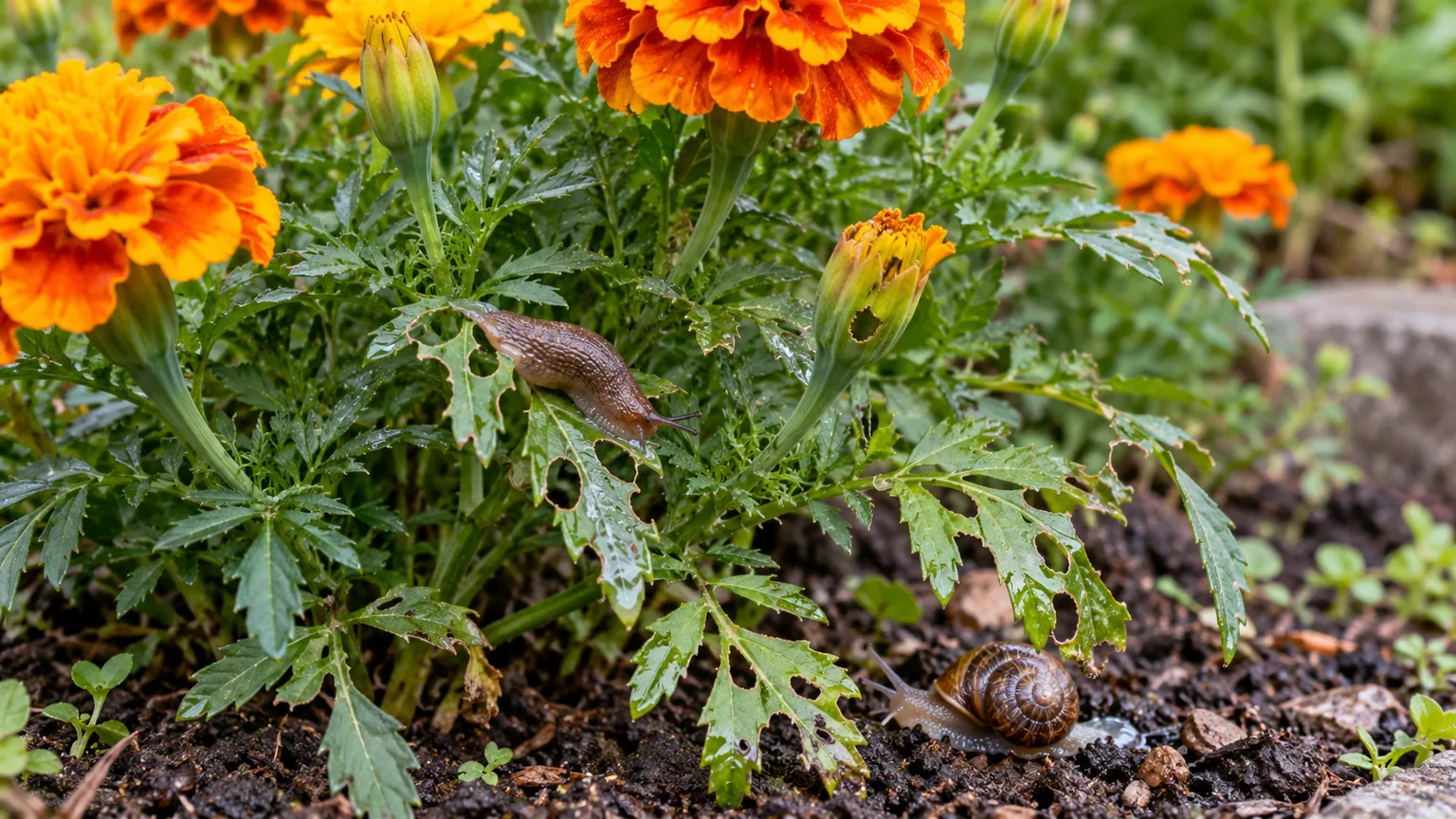
Slugs and Snails on Marigold: Causes, Checks & Fixes
This guide covers slugs and snails on Marigold. See also the general Slugs and Snails guide, watering, and light pages for this plant.
Slugs and Snails on Marigold: Causes, Checks & Fixes
Quick answer
Marigold buds and lower leaves with ragged holes overnight plus silvery trails by morning usually mean slugs or snails, not caterpillars. These nocturnal mollusks feed after dark and shelter in damp spots by day, which is why damage seems to appear from nowhere on bushy, low-growing marigolds.
First step: set one board trap tonight and check with a flashlight. Lay a damp board or folded newspaper beside the plant at dusk, return about two hours after dark, and hand-pick what you find into soapy water. Do nothing else until you have confirmed live slugs or snails, because daytime sprays aimed at insects will not touch a mollusk that feeds at night.
For how slug and snail damage works in general, see our slugs and snails guide. On marigold, the pattern usually shows up first on seedlings, low leaves, and opening buds rather than evenly across the plant.
What slugs and snails look like on marigold
Healthy marigold foliage is finely divided and aromatic, carried on bushy stems with buds held just above the leaves. Slug and snail feeding breaks that outline with missing chunks rather than spots or wilting.
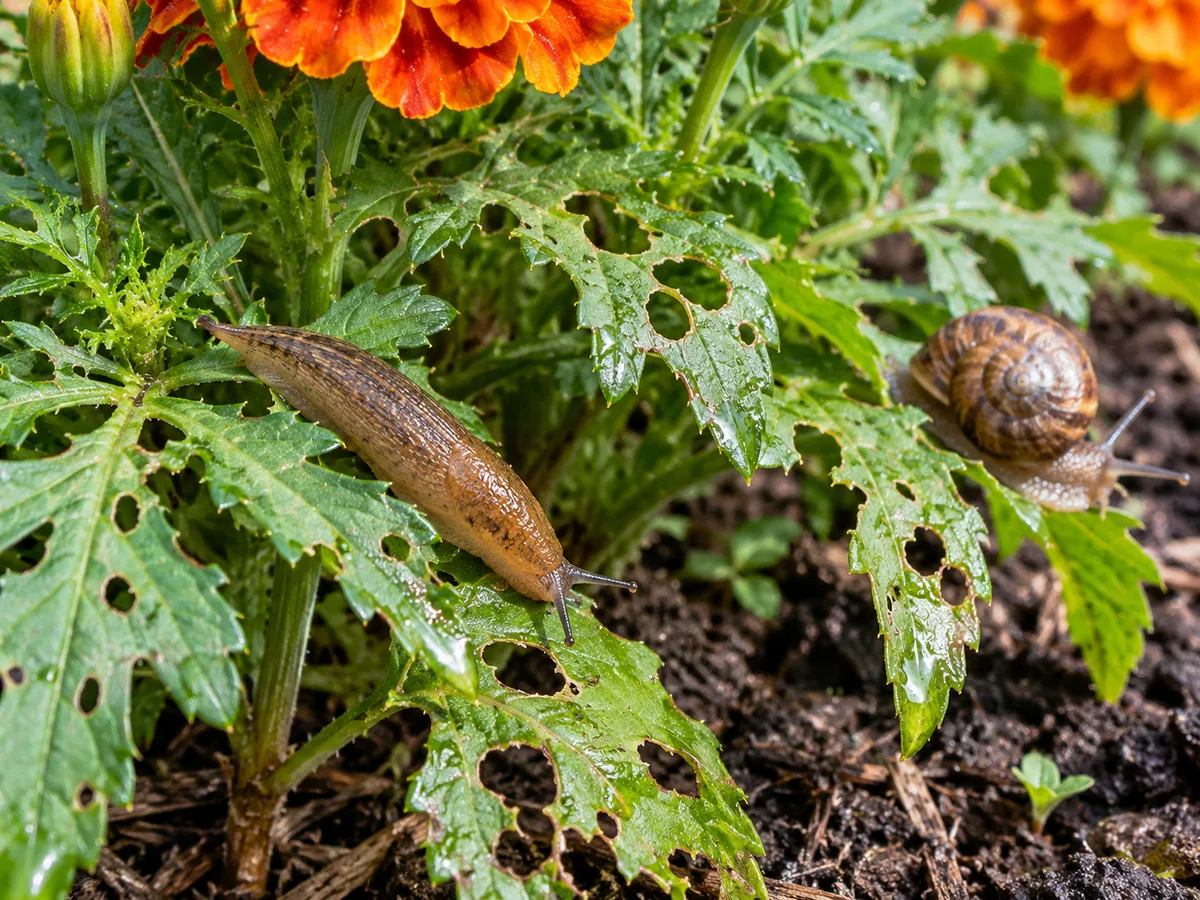
Slugs and snails damage on marigold: irregular holes with smooth edges and silvery slime on low leaves and buds.
Typical marigold slug damage:
- Irregular ragged holes in leaf edges and centers, sometimes with only veins left on seedlings
- Half-eaten buds and notched petals on flowers held low in the canopy
- Silvery slime trails on leaves, mulch, pots, or paths visible in morning light
- Missing seedlings overnight, especially fresh transplants and direct-sown rows
- Soft-bodied slugs or shelled snails clustered under low leaves after dark
Because marigolds branch low and bloom over many weeks, one plant can show chewed old leaves, clean new growth, and freshly notched buds at the same time. That mixed-age pattern is a useful clue: new buds keep opening into the same nightly feeding zone.
Three marigold-only reasons slugs hit this plant
These sections would make little sense on a tall succulent or an indoor fern. They exist because of how marigolds grow.
Low bushy canopy that traps evening dampness
Tagetes erecta forms a dense, much-branched mound 30-90 cm tall with foliage close to the soil. Evening overhead watering or thick mulch keeps that lower canopy humid well past dark, exactly when slugs emerge. The plant’s low tender foliage stays within easy crawling range all season, so even a few slugs can work the same plant night after night.
Seedlings and transplants as the weakest link
Marigolds germinate fast and are often direct-sown or transplanted small in September-October or February beds. A slug can remove a whole cotyledon-stage seedling in one night, leaving a bare stump that looks like failed germination. Check the seeds not germinating guide before re-sowing, and the damping-off guide when stems collapse at the soil line without chew marks.
Buds held inside the feeding zone
Unlike tall cut flowers, marigold buds sit just above damaged leaves. Slugs climb short stems easily on damp nights and rasp petals before flowers open. A bud with one side chewed that still tries to open is more characteristic of slugs than of bud drop, where whole buds abort, or flowers turning brown, where petals discolor without missing tissue.
How to confirm the cause
Confirm before buying bait or spraying anything. Most marigold slug cases are solved with a flashlight, not a product.
- Night check. About two hours after dark, inspect low leaves, stems, buds, and the soil surface with a flashlight. Slugs are soft and shell-less; snails carry an obvious shell.
- Morning trail check. Look for dried silvery mucus on leaves, pot rims, mulch, and nearby paving. Trails plus ragged holes strongly point to mollusks.
- Board trap. Lay a damp wooden board, upturned saucer, or folded newspaper at the base at dusk. Lift it mid-morning and count what sheltered underneath.
- Rule out caterpillars. Caterpillars on marigold leave dark pellet-like frass and often feed by day, while slugs leave slime and no pellets.
- Rule out damping-off and wilt. Seedlings that topple with pinched brown stems and no chew marks fit damping-off. Whole-plant limpness with dry soil fits wilting or water stress, not chewing pests.
If you find holes but no trails, no night visitors, and no shelter catches after two nights, treat it as something else and compare the yellow leaves and caterpillars guides before proceeding.
The first fix to try
Tonight: trap and hand-pick, nothing else. Place one damp board beside each affected plant, check with a flashlight two hours after dark, and drop slugs and snails into soapy water. Replace the board each evening for three nights.
This single action confirms the diagnosis, removes tonight’s feeders immediately, and tells you whether the population is large enough to need bait or barriers. Slugs feed primarily at night and hide in dark moist places by day, so daytime treatment without this night check usually misses the actual animals.
Step-by-step recovery
Once night checks confirm slugs or snails, work in this order over the next one to two weeks.
Nights 1-3: remove and dry the habitat
- Keep the board trap routine for three nights and record counts.
- Water at the base in the morning only, keeping foliage dry by nightfall. Marigolds prefer base watering anyway, which also reduces botrytis on flowers.
- Pull mulch back 5-8 cm from stems, remove fallen petals, and clear pots, boards, and debris where slugs shelter. Review the watering guide and soil guide if the bed stays soggy.
- Lift low foliage off wet soil with light staking or spacing; avoid overhead irrigation entirely during the outbreak.
Days 4-7: add barriers or bait only if feeding continues
- For pots and raised beds, fit copper tape just inside the upper rim so crawling slugs meet it before reaching foliage. The Royal Horticultural Society notes copper barriers can deter slugs on small areas.
- For beds with continued damage, scatter iron phosphate bait thinly on the soil around affected plants per label directions. Iron phosphate stops feeding and is a lower-risk choice than metaldehyde around pets and wildlife.
- Protect remaining seedlings with cut-off ventilated collars (yogurt cups with the base removed) until stems toughen.
Weeks 2-3: support new buds
- Deadhead freshly chewed flowers so the plant directs energy into clean new buds; see faded flowers for deadheading rhythm.
- Do not fertilize a heavily chewed seedling to force it. Hold feed until new leaves expand normally, then resume the light marigold schedule in the fertilizer guide.
- Re-sow gaps only after two clean nights in a row, or slugs will take the replacements too.
When to use this page vs other marigold guides
| What you see | Use this page or another |
|---|---|
| Ragged holes plus silvery trails, night visitors found | This page: slugs and snails |
| Ragged holes plus dark frass pellets, daytime caterpillars visible | Caterpillars |
| Whole buds abort or drop without chew marks | Bud drop |
| Petals brown from the edges without missing chunks | Flowers turning brown |
| Seedlings collapse with pinched stems, no holes | Damping-off |
| Whole plant wilts with dry or soggy soil, no holes | Wilting or overwatering |
| Small blooms but no chew marks | Small flowers or slow growth |
Recovery timeline
Chewed marigold leaves and petals do not heal. Judge progress by what emerges next, not by old holes closing.
- Days 1-3: fewer fresh holes and lower trap counts; no new slime on buds.
- Week 1-2: new leaves expand without notches; new buds open with whole petals.
- Weeks 2-4: bushy branching resumes; routine deadheading replaces damaged flowers.
Re-sow or replace seedlings chewed to bare stumps rather than waiting; a stump with no growing tip rarely restarts. Escalate if nightly catches stay high after a week of dry-morning watering and shelter removal, or if damage spreads to neighboring beds despite barriers.
Mistakes to avoid
- Spraying a general insecticide for night holes. Insecticides do not control mollusks and can kill ground beetles and firefly larvae that eat slug eggs and juveniles.
- Using metaldehyde or methiocarb baits casually. Older slug baits are hazardous to dogs, cats, and wildlife; prefer iron phosphate and read the label.
- Salting the soil or plants. Salt injures marigold roots and soil life without reliably stopping slugs.
- Relying on dry diatomaceous earth outdoors. It stops working once damp, which is exactly when slugs are active.
- Watering overhead in the evening. Wet foliage at dusk invites feeding; marigolds already do best with morning base watering per the watering guide.
- Thick damp mulch piled against stems. Straw and shredded wood shelter slugs; use a thinner compost layer pulled back from stems until damage stops.
Marigold care cross-check
Slugs thrive where marigold culture stays damp and crowded. Align the basics after the outbreak:
- Light: full sun with 6+ hours of direct light dries foliage fast and keeps growth compact; see the light guide.
- Water: base watering every 3-5 days in warm weather, only when the top 3-5 cm dry; see watering and overwatering.
- Soil: moderately fertile, well-draining mix rather than rich soggy beds; see soil and wrong soil mix.
- Spacing: thin bushy clumps so air moves through lower leaves; crowded humid foliage also invites botrytis and mold on soil.
Start from the marigold overview and the problems hub when several issues overlap.
How to prevent it next time
- Sow or transplant into beds that dry on the surface by evening; prefer morning drip or base watering.
- Keep a 5-8 cm mulch-free ring around each stem during seedling stage.
- Space plants to the label width so lower leaves dry between waterings.
- Clear boards, empty pots, and dense groundcover near marigold rows before bud set.
- Encourage toads, ground beetles, and birds with undisturbed corners and no lawn insecticides.
- Inspect new transplants at dusk for the first week; slugs commonly chew marigold foliage and flowers at night.
When to worry
Treat it as urgent when seedlings disappear overnight, most buds on a plant are rasped before opening, or nightly trap counts stay high for a week. Young stands may need re-sowing once the population drops. Mature bushy plants with a few lower-leaf holes and steady new buds are low urgency; keep trapping and adjust watering rather than applying more products.
FAQs
How can I confirm slugs and snails on marigold?
Check about two hours after dark with a flashlight for slugs or shelled snails on low leaves and buds. Confirm with silvery slime trails in the morning and slugs sheltering under a damp board trap by day.
What should I check first for slugs and snails on marigold?
Inspect low foliage, buds, and seedlings first, then daytime shelters like mulch, pots, and boards. Rule out caterpillars by looking for dark frass pellets, which slugs never leave.
Will chewed marigold leaves and flowers recover?
Chewed holes and notched petals do not heal, but marigolds branch and rebud quickly. Judge recovery by clean new leaves and whole new flowers within one to two weeks after night feeding stops.
When are slugs and snails on marigold urgent?
Act the same night when seedlings are chewed to stumps or most buds are destroyed before opening. Re-sow only after two consecutive nights with no catches, or replacements will be eaten too.
How do I prevent slugs and snails on marigold next time?
Water at the base in the morning, keep mulch pulled back from stems, and space plants for airflow. Clear daytime shelters before bud set and protect pots with copper tape where slugs return yearly.
Related marigold guides
- Marigold overview - full-sun placement, base watering, and seasonal rhythm
- Watering - morning base-watering schedule that denies slugs damp nights
- Soil - well-draining mix that dries on the surface by evening
- Caterpillars - frass and daytime feeding vs slug slime and night feeding
- Bud drop - whole-bud abortion without chew marks
- Flowers turning brown - petal browning without missing tissue
- Damping-off - seedling collapse without holes
- All marigold problems
Related tool
Use the Plant Problem Diagnosis Tool to narrow causes for slugs and snails on this plant before changing multiple variables at once.