Aphids on Monstera Dubia: Identification and Control
Quick answer
First isolate the entire Monstera dubia, including its board, from nearby plants. Then inspect the tender tip, leaf undersides, and nodes pressed against the support for live pear-shaped insects, shed skins, or sticky honeydew before choosing a treatment.
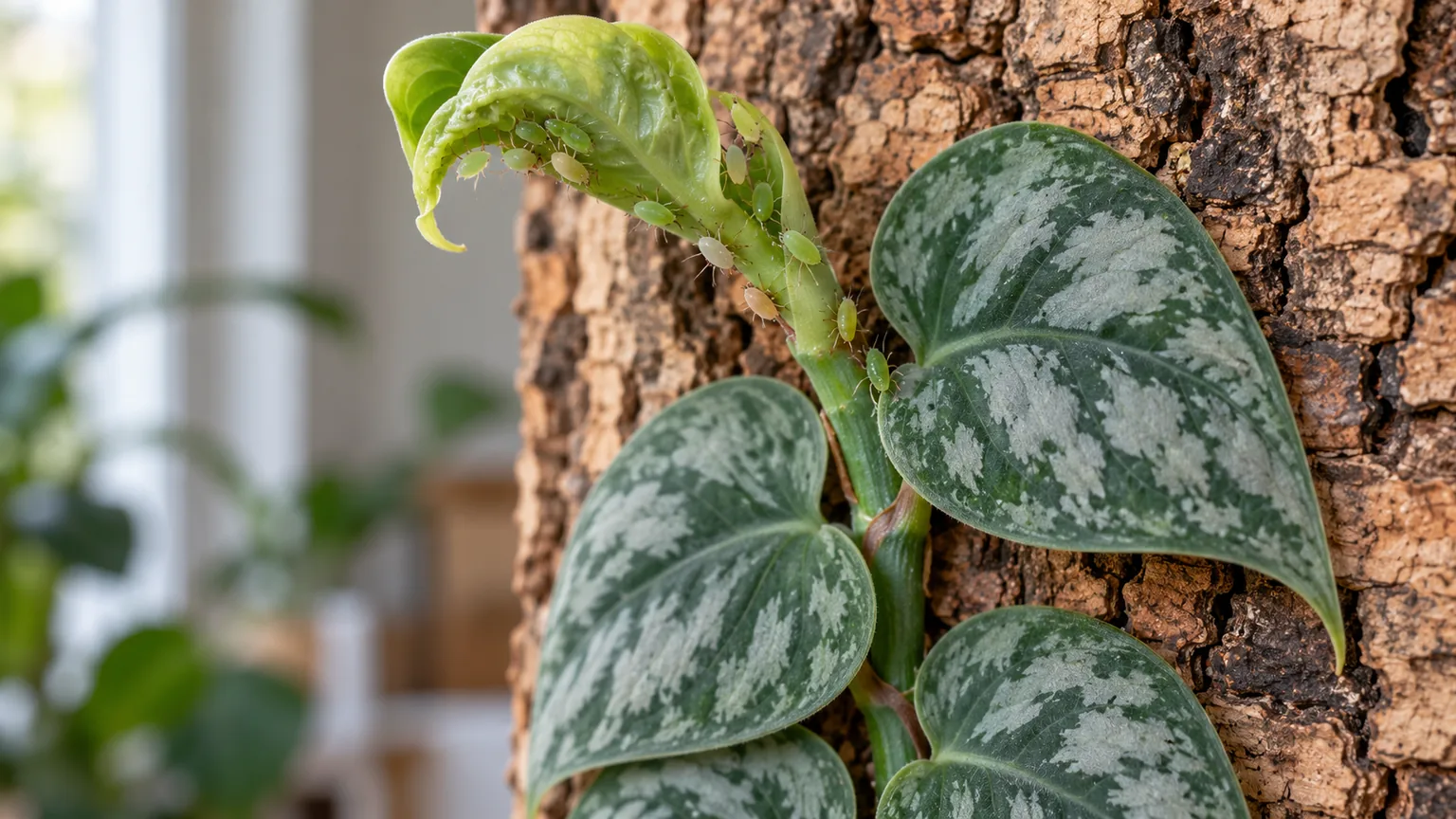
Aphids on Monstera Dubia: How to Identify and Control Them
This guide covers aphids on Monstera Dubia. See also the general Aphids guide, watering, and light pages for this plant.
Aphids on Monstera Dubia: How to Identify and Control Them
Quick answer
First, isolate the whole Monstera dubia, including its board or other support, from the rest of your plants. Do that before you wash or spray it. Aphids are small sap-feeding insects; on a shingling Dubia, check the soft growing tip, the back edge of each new leaf, and the nodes where the vine lies close to its support. A curled leaf is a clue, not proof. Look for live insects, shed skins, or sticky honeydew before treating.
This plant’s close-set juvenile leaves change the inspection. A quick glance at the patterned upper surfaces can miss insects tucked behind a petiole or under the leaf that is still opening. Keep the first response focused on the visible colony and avoid soaking the pot just because the board or aerial roots look dry. For general aphid biology, see our aphids pest guide; this page focuses on the inspection and recovery problems created by Dubia’s shingling growth. If you are still learning the plant’s climbing habit, the Monstera dubia overview explains how its juvenile leaves press against a vertical surface.
What aphids look like on Monstera dubia
Aphids are soft-bodied insects that feed in groups on tender stems and leaf undersides. On Monstera dubia, the first cluster is most likely to be noticed near the newest section of vine: the shoot tip, a young petiole, or the back of a leaf that has not pulled away from the board yet. Feeding can distort the small emerging leaf so it expands unevenly, curls, or stays smaller than the leaves below it. Penn State Extension describes houseplant aphids as small, soft-bodied insects on branch tips and leaf undersides that can distort new growth, while several other sap-feeding pests can leave honeydew too (Penn State’s indoor-plant pest guide).
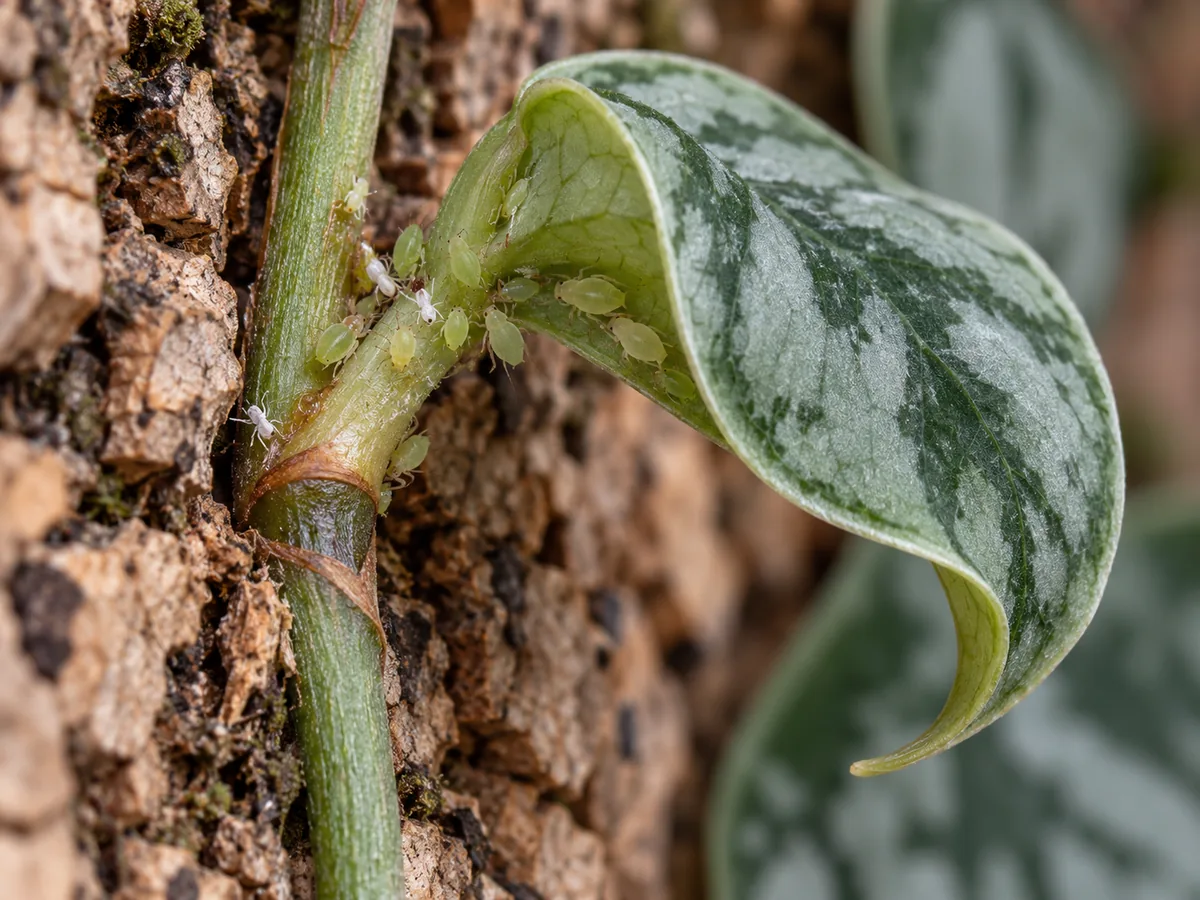
A small aphid colony on the tender stem and underside of an unfolding Monstera dubia leaf; check the nearby node and leaf edge because shingling growth creates narrow hiding places.
Do not rely on color alone. Aphids may be pale green, but their color varies; look for a soft, rounded or pear-shaped body, long antennae, and a pair of short tube-like cornicles near the rear. Many remain still or move slowly when disturbed, and younger nymphs look like smaller versions of adults. UC IPM describes these body features and the cornicles that distinguish aphids from other insects (UC IPM’s aphid identification notes). You may also find pale cast skins where nymphs have molted.
Honeydew is a useful supporting clue, not a stand-alone diagnosis. It feels tacky and may shine on the leaf below a colony or on the board beneath it; sooty dark growth can develop later on persistent residue. Because scale insects and mealybugs can also produce honeydew, confirm aphids by finding the insects themselves rather than treating every sticky leaf as an aphid problem. Gardening Know How likewise points readers to new growth, stem ends, leaf undersides, and honeydew when checking a houseplant for aphids (its indoor aphid inspection guide).
Where to inspect on a shingling vine
Monstera dubia’s juvenile leaves sit close together and lie against a flat support. That attractive shingling habit leaves narrow seams: the underside of a young leaf can face the board, a petiole can meet the stem in a tight angle, and an older leaf may partly cover a newer node. Aphids can occupy these protected spots while the silver-green surface in front still looks clean. Inspect the vine from the newest tip downward instead of scanning only the broad, visible leaf faces.
Use a flashlight and, if you have one, a hand lens. Hold a clean white card under one section and tap the support lightly; moving dots on the card help distinguish active insects from soil flecks or bark dust. Look first at the youngest leaf and the short stretch of stem immediately behind it, then examine each petiole joint and the leaf edge where it approaches cork, cedar, or another support. Check the board itself for honeydew streaks or cast skins, but do not pull a firmly attached leaf away just to see behind it. A new leaf can tear before it has finished opening, and an aerial root or node can be damaged by unnecessary handling.
A useful confirmation is a combination of signs: live pear-shaped insects clustered on tender growth, fresh distortion in the leaf they are feeding beside, and tacky residue or cast skins near that location. Aphids often sit openly in groups, but their size and the layered leaves can make a small colony easy to overlook. If the first inspection finds only one insect or a suspicious speck, check again under brighter light before applying a product. Mark the affected node mentally or with a removable tie placed on the support, not on the petiole, so you can compare it during later inspections.
Why aphids target tender Dubia growth
Aphids use piercing mouthparts to feed on plant fluids, and soft new growth is easier to colonize than a mature, firm leaf. Monstera dubia continually adds leaves along a climbing stem; while a new leaf is small and still pressed close to the support, its petiole and shoot are sheltered and harder to inspect. A colony near the growing point can therefore affect the next shingle before the older leaves show much change. This is a practical inspection pattern, not evidence that Dubia is uniquely susceptible to a particular aphid species.
Aphids may arrive on a recently purchased plant, a plant that spent time outdoors, or a neighboring plant with an unnoticed colony. A winged form can move between plants, and indoor warmth can allow aphids to continue developing when outdoor cold would slow activity. The Spruce notes that indoor aphids can crawl or fly to other plants and reproduce without the outdoor winter pause described for garden populations (The Spruce’s houseplant aphid guide). Finding aphids does not prove that the plant is under-watered, over-watered, in low humidity, or otherwise badly cared for; correct any real care problem separately rather than using fertilizer or extra watering as pest treatment.
Heavy nitrogen feeding can encourage aphid reproduction, so avoid trying to push a Dubia through an infestation with an extra fertilizer dose. That does not mean the plant needs to be starved or that ordinary feeding caused the insects. Resume a normal, modest feeding plan only after the plant is stable and actively growing. The goal is to avoid forcing a flush of especially soft growth while you are trying to reduce a colony at the tip.
The first fix: isolate the full plant and support
Move the entire Monstera dubia away from other plants before you handle the colony. Keep its pot, board, and vine together; do not detach leaves or aerial roots just to make the plant easier to carry. If the support is tall or loosely fixed, secure it first so the vine does not rub against neighboring foliage during the move. Penn State Extension recommends quarantining newcomers and plants brought indoors from outside until you are confident they are free of infestations (Penn State’s houseplant quarantine guidance).
Once isolated, inspect the whole climbing stem, including leaves that look healthy. Aphids can spread beyond the one leaf that first drew your attention, and a winged insect may have moved before the colony was noticed. Keep the Dubia out of direct contact with other plants while you work and for the monitoring period afterward. If a separate room is unavailable, create as much distance as practical and avoid placing the support against another plant, curtain, or shelf where leaves touch.
For a small colony, remove insects mechanically before reaching for a spray. Hold the leaf gently so it does not crease against the board, then lift visible aphids with a damp cotton pad or swab. Wipe the petiole and node as well as the leaf surface, and dispose of the material rather than leaving it on the potting mix. Gardening Know How describes water streams and careful wiping as manual options for houseplant aphids (manual removal methods). On a mounted Dubia, use the gentlest method that reaches the colony without bending the shoot or loosening the node. A forceful jet is unnecessary on a delicate new leaf.
If insects are spread over several accessible leaves, rinse the foliage with a gentle, controlled stream while supporting the vine and keeping water from pooling in the pot. Aim beneath the newest leaves and around the petiole joints; spraying only the visible silver fronts misses sheltered colonies. A handheld shower or low-pressure sink rinse may work if the plant can be held securely. Let the plant and board drain and dry with normal room airflow. The aim is to remove insects and honeydew, not to keep the support saturated or to change the plant’s watering routine.
Pruning is a narrow option, not the default. If one very small, badly colonized leaf or tip cannot be cleaned without tearing nearby leaves, remove only that affected piece with clean snips and preserve as much healthy stem and node as possible. Do not cut the entire climbing section merely because one leaf is misshapen; the remaining clean nodes are how the Dubia continues its shingling growth. For deliberate removal of damaged growth, use the Monstera dubia pruning guide after you have identified which node is affected.
When a labeled contact treatment is needed
If live aphids remain after physical removal, a product labeled for houseplants and aphids can be a next step. Insecticidal soap and horticultural oils work by direct contact, so the spray has to reach the insects rather than only wetting the visible upper leaf. UC IPM explains that contact products need thorough coverage, can miss aphids protected inside curled leaves, and may injure some plants or stressed foliage; test a small area and follow the product label before treating the full vine (UC IPM’s contact-treatment cautions). Penn State Extension also lists contact sprays for heavy houseplant infestations and emphasizes following label directions (houseplant control options).
For a board-mounted Dubia, protect the growth point and keep the spray focused. Turn or angle the plant only if the board and pot are stable, and direct the labeled product to the stem tip, leaf undersides, petiole joints, and other confirmed colony sites. Follow the label for whether the product should remain on the plant or be rinsed, the interval between applications, and any temperature or plant-sensitivity restrictions. Do not mix products or increase the concentration because the first application did not remove every aphid; a contact spray cannot reach insects hidden behind a tightly pressed leaf unless the coverage reaches that pocket.
Avoid homemade detergent mixtures, household cleaners, or untested oils on the silvery leaves. Their additives and strength are not controlled for plant use, and Monstera dubia’s leaves sit against the support where residue can be difficult to rinse away. Do not spray a dry, wilted, or heat-stressed plant. If the new leaf is still tightly rolled or tucked to the board, manual removal and close monitoring may be safer than flooding that pocket with product. Use a targeted, label-directed treatment only when the inspection confirms living aphids remain.
Lookalikes on Monstera dubia
Aphids are not the only reason a Dubia leaf may curl or develop a sticky patch. The table below helps route the next check; the plant-specific sibling guide is useful when that pest, rather than aphids, is confirmed.
| What you see | More likely explanation | What to check next |
|---|---|---|
| Soft, pear-shaped insects in a cluster at a growing tip, with fresh distortion or honeydew | Aphids | Confirm live insects at the newest node and use the steps above. |
| White cottony material tucked into a petiole joint or along the stem | Mealybugs | Look for waxy filaments and separate clusters; use the Monstera dubia mealybugs guide if those signs fit. |
| Fine pale stippling, bronzing, or very fine webbing rather than sticky droplets | Spider mites | Inspect leaf undersides closely; compare with spider mites on Monstera dubia. |
| Firm, fixed tan or brown bumps attached to a stem or leaf vein | Scale insects | Check whether the bumps scrape off as shells and whether honeydew is present; do not assume they are aphids because they are immobile. |
| A single leaf is lighter or curled but no insects, cast skins, or sticky residue appear after careful checks | Normal unfolding or a care-related issue | Give the leaf time to open, then review the plant’s watering guide and light guide before treating for pests. |
Sticky honeydew overlaps among sap-feeding pests, and a distorted leaf can persist after the insects are gone. Penn State Extension describes mealybugs as cottony, scale as shell-like, and spider mites as leaving stippling and fine webbing (houseplant pest comparison). The key distinction is whether you can find active aphids at the affected Dubia node. If you cannot confirm them, pause before applying insecticide. A wrong product can stress the silver leaves while leaving the real cause untouched.
Recovery: judge the next shingle, not the old one
A leaf that expanded while aphids were feeding may remain curled, puckered, or smaller even after the colony is removed; Penn State Extension identifies distortion of new growth as a common aphid injury on houseplants (distorted new growth). It cannot be made perfectly flat by wiping, extra water, fertilizer, or misting. Leave a slightly marked leaf in place if it is still firm and green; it continues to contribute to the plant and may help conceal the stem from harsh light. Remove it only if it is mostly dead, soft, or still holding an unreachable colony.
For Monstera dubia, the most useful recovery signal is the next leaf. If the new shingle opens without fresh distortion, no live insects return to the node, and sticky residue stops accumulating, the treatment is working even if an older leaf remains imperfect. Do not use the arrival of a new leaf as an immediate test; first look for live aphids and fresh residue, then use the next shingle as a longer-term signal. Keep the ordinary environment stable and avoid compounding the pest response with repotting, hard pruning, direct-sun moves, or extra feeding unless another diagnosis clearly calls for those actions.
Check the affected tip and nearby nodes every few days at first, then continue weekly inspections for several weeks. If a new cluster appears, remove it promptly and reassess whether the previous treatment reached the leaf undersides and board-facing seams. A few insects returning does not automatically mean the plant is failing; it means the contact treatment or inspection missed a protected pocket or a nearby source remains. Keep it isolated until repeated checks show no live aphids and the newest growth stays clean.
If the growing tip has been damaged, do not cut below healthy stem tissue simply to make the plant look tidy. A clean node lower on the vine may still produce growth, although restarting a climbing section can take time. If most of the vine is collapsing or colonies are repeatedly spreading to nearby plants despite isolation and careful labeled treatment, assess whether you can maintain quarantine and monitoring. Discarding a rare plant is a last resort for an unmanageable infestation, not the normal response to a few aphids on one new leaf.
Prevent aphids returning to the board
Inspect the Dubia as each new leaf appears. The most valuable moment is when a leaf begins to separate from the stem but still rests close to the support: check its underside and the node behind it before the next leaf covers that area. During routine care, scan the full vine from top to pot rather than looking only at the newest silver face. A soft, damp cloth can remove dust and residue from accessible leaves, but do not force folded leaves open or scrub the surface.
Quarantine new houseplants and any Monstera dubia that has spent time outdoors before setting them beside the collection. During isolation, inspect tips and joints rather than assuming that an attractive, clean-looking plant is pest-free. Keep tools and cloths used on an infested plant separate until they are cleaned, and avoid moving its board through foliage that could brush the vine. These habits matter because aphids can be present before distortion becomes obvious.
Feed for steady growth rather than a sudden flush. UC IPM notes that high nitrogen can favor aphid reproduction; avoid extra fertilizer while colonies are active and return to the plant’s ordinary schedule after it resumes healthy growth. Do not reduce light or keep the base mix wet in an attempt to discourage aphids. Monstera dubia has two care surfaces to monitor: its potting mix and the support where its aerial roots and shingling leaves make contact. If yellow leaves appear while the mix stays wet, check the watering and soil conditions as a separate issue. If the shingling becomes stretched or the new leaves turn away from the board, compare light before changing pest treatment.
Related Monstera Dubia guides
Use this page when you can confirm aphids on the new growth, leaf undersides, or nodes of a board-mounted vine. The Monstera dubia problems hub routes you to the plant’s other problem pages when the signs point elsewhere. For white cottony clusters, read mealybugs on Monstera dubia; for stippling and fine webbing, use spider mites on Monstera dubia. When the evidence instead points to water, light, or a persistently wet mix, use the plant’s watering, light, or soil guide. The Pest Identifier Tool can help compare visible signs when the insects are too small to identify confidently; return here once aphids are confirmed.