Aphids on Monstera Siltepecana: Causes, Checks & Fixes
Quick answer
If you find soft-bodied insects clustered on a Monstera siltepecana growing tip, isolate the plant first. Confirm them on the newest leaf and stem, then rinse the colony away with a gentle stream of water before considering a labeled contact treatment.
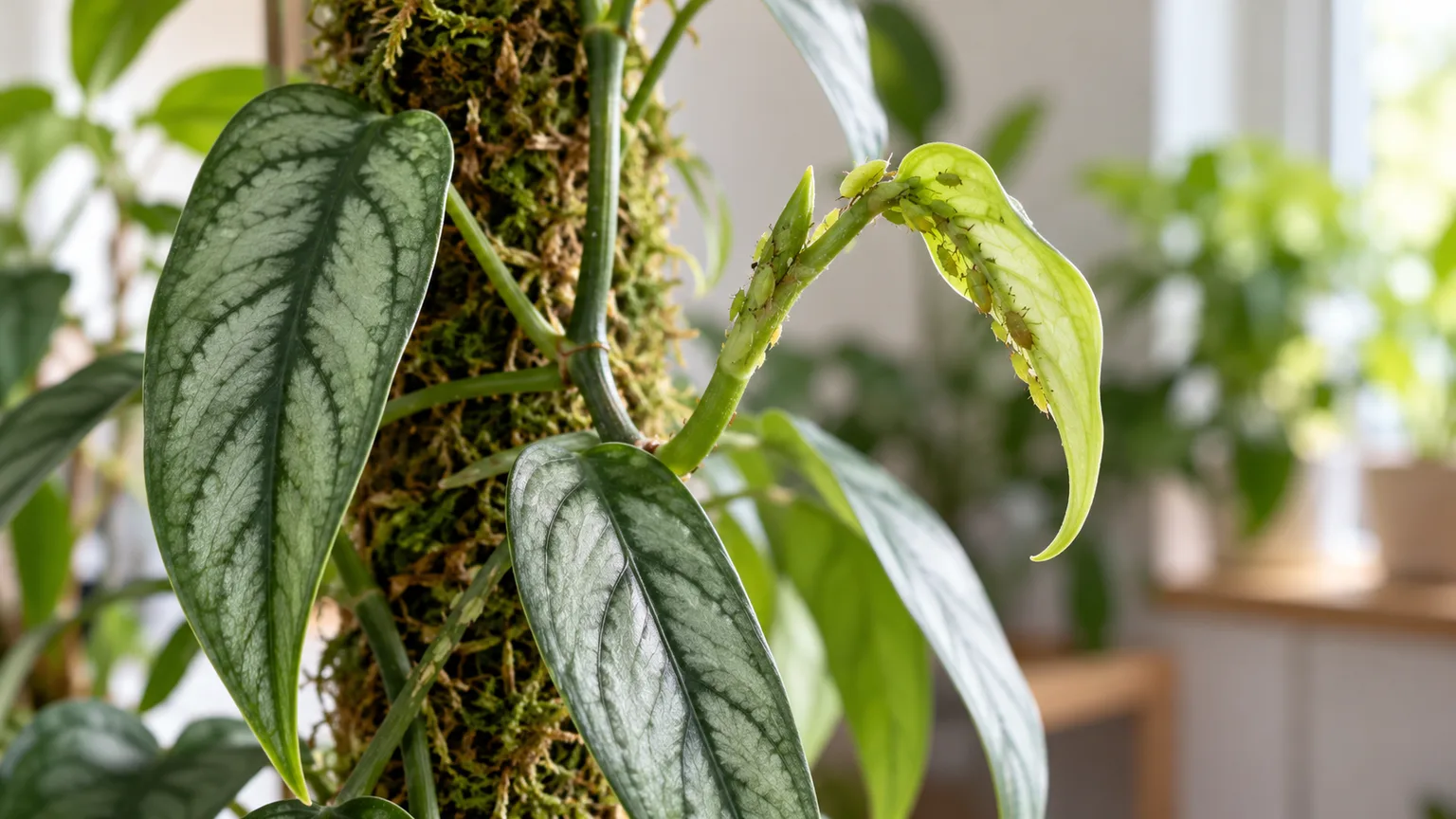
Aphids on Monstera Siltepecana: Causes, Checks & Fixes
This guide covers aphids on Monstera Siltepecana. See also the general Aphids guide, watering, and light pages for this plant.
Aphids on Monstera Siltepecana: Causes, Checks & Fixes
Quick answer
If you find small, soft-bodied insects grouped around the newest leaf, petiole, or stem tip, isolate your Monstera siltepecana from other plants first. Check for honeydew and fresh distortion as well as the insects themselves: a silver leaf pattern is normal on young siltepecana foliage, but a visible colony is not. Once you confirm aphids, rinse them from the vine with a gentle stream of water, then keep the plant apart while you inspect the next leaves that unfurl.
What aphids look like on Monstera siltepecana
Aphids are easiest to notice at the growing end of a siltepecana vine, where a folded leaf meets its petiole and the stem node below it. Healthy juvenile leaves are narrow and lance-shaped, with a silver-green surface and dark veins; that even pattern belongs to the species and does not mean insects are feeding.
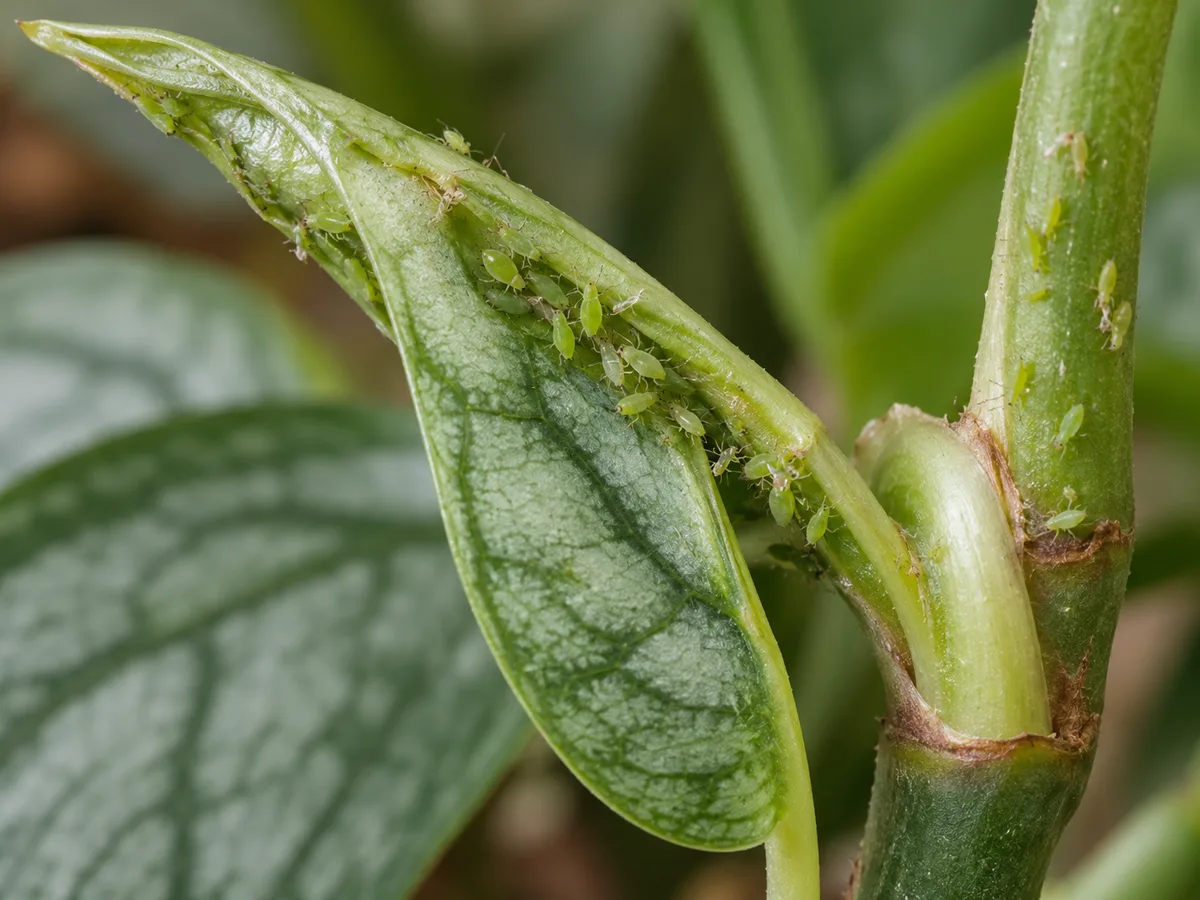
The normal silver pattern remains visible beneath a small aphid colony; check the folded leaf edge, petiole, and node rather than diagnosing from color alone.
Look for a group of tiny, soft, pear-shaped insects rather than a single speck. Aphids can be green, yellow, brown, or nearly black, and many have a pair of short tubes called cornicles at the abdomen’s rear. A cluster may include adults and smaller nymphs; pale papery skins shed as aphids molt can cling to the leaf or stem.
The feeding pattern is different from the plant’s natural silver markings. New leaves may remain puckered, twist as they open, or stop expanding evenly; the tip can look cramped while older leaves stay fairly normal. Aphids pierce tender tissues and remove sap; stunting and deformation are common injury signs. The sugary honeydew they excrete can leave a clear sticky film and, if it accumulates, support black sooty mold.
Why aphids gather on this climbing Monstera’s newest growth
Aphids feed on soft new growth, so the part of the plant to inspect first is the active tip, not the oldest leaf near the pot. On a climbing siltepecana, the tender leaf is briefly folded beside its petiole and stem node as it emerges. Those narrow folds and the point where a vine rests against its support are easy to miss when you only scan the broad, silvery leaf faces. Siltepecana naturally carries juvenile leaves along trailing stems and larger leaves higher as it climbs.
Aphids are not a sign that you watered incorrectly, used the wrong soil, or kept the room too dry. They are sap-feeding insects that have reached the plant, often on a recently purchased or outdoor plant, or from a neighboring infestation. Poor light or other stress can affect how well a vine replaces damaged leaves, but it does not confirm aphids. For the general pest profile and control options, see our aphids guide; the inspection below focuses on this Monstera’s growth points.
A long, supported vine needs a slightly different inspection than a compact rosette. Follow each stem to its newest tip, look beneath each petiole, and check where the stem passes around or touches a moss pole or stake. Do not assume every leaf on the vine is infested: aphids often form visible colonies on one or two tender tips while mature foliage remains clean.
How to confirm aphids before treating
Use a phone camera with zoom or a hand lens and start with the newest leaf that has not fully opened. Check the inner fold, the underside of the blade, the petiole, and the node where that leaf joins the stem. Then inspect the next node back and the nearest contact point on the support. Aphids usually stay clustered and move slowly when disturbed; a quick brush of air may make tiny insects shift, but the most reliable confirmation is seeing the insects’ soft bodies together on the plant.
Check for a second sign. Honeydew feels sticky on the leaf surface or on the shelf below, and pale shed skins can look like small white flecks near an active colony. A leaf that curls without insects, honeydew, or shed skins does not confirm aphids. If you find only a few old marks and no live insects, keep the vine isolated and check the next growth point rather than spraying on suspicion.
Inspect the other plants that touch this vine or sit close to it, especially their new leaves and stem tips. If you find similar colonies elsewhere, keep the affected plants apart and treat each confirmed plant. Do not treat nearby plants automatically if you find no insects; instead, include them in your next inspection.
The first fix: isolate and rinse the affected vine
Move the Monstera away from your other houseplants first. Set it somewhere with good light and enough room to turn the vine while you inspect it. Isolation limits contact with nearby foliage while you confirm the pest and remove the visible colony. Houseplant pest guidance recommends separating affected plants and checking nearby foliage before treatment.
Once aphids are visible, rinse the affected leaves and stem under a gentle stream of water. UC IPM recommends water to knock aphids off sturdy plants; on a siltepecana, support the vine with one hand so the flow does not whip the stem against the sink. Direct it across the leaf undersides, folded new leaf, petiole, and node. The goal is to dislodge the insects, not to force open a leaf that is still tightly rolled or blast soil out of the pot.
If the plant is too large to move to a sink, cover the top of the pot loosely with a towel or plastic while you rinse the foliage in place. Remove the cover afterward, let excess water drain, and empty any water that collected in the saucer or cachepot. Do not leave the climbing stem pressed against a wet wall or window while it dries.
Wipe sticky honeydew from the leaf surfaces, pot rim, shelf, and nearby support with a clean damp cloth. Rinsing removes many aphids but does not guarantee that every insect or nymph has been dislodged from a sheltered fold. Inspect the same nodes again after the leaves dry and check the nearest neighboring plants before returning the siltepecana to its usual spot.
When a contact treatment is justified
If live aphids remain after rinsing or new colonies appear at the next node, use a commercial insecticidal soap or horticultural oil only when its label permits use on indoor ornamental plants and aphids. Read and follow the product label for dilution, coverage, precautions, and reapplication; do not assume that a household detergent mixture is equivalent to a formulated product. Choose a product labeled for aphids and indoor use.
Contact sprays work only where they reach, so pay particular attention to the underside of leaves and the sheltered edges of new growth. Some plants are sensitive to soaps and oils, and a drought-stressed plant is a poor candidate for spraying. UC IPM advises testing a portion of foliage for several days before applying soap or oil to the whole vine; keep to the label’s interval if another application is needed.
Do not combine soap, oil, neem, alcohol, and other sprays in one treatment session. A layered mix makes it harder to tell what caused leaf injury and does not help you see whether rinsing alone worked. If the youngest leaf is still tightly rolled, start with water and manual inspection rather than forcing spray into a fold you cannot see.
Mistakes that can make an aphid problem harder to read
Do not diagnose aphids from silvery patches, a curled leaf, or a pale fleck alone. Silvery-green juvenile leaves with dark veins are normal for this species; aphids are confirmed by insects or a cluster of consistent signs such as honeydew, shed skins, and new-growth distortion. Treating a clean plant can add stress without solving the actual cause.
Avoid washing the plant so aggressively that the vine bends at a node or the newest leaf tears. Siltepecana’s climbing stems can trail around a support; hold the stem near the point you rinse and move the plant slowly rather than tugging the whole vine free. If an aphid colony is confined to one leaf that is badly damaged, you can remove that leaf with clean scissors, but do not strip healthy leaves or cut the vine back automatically.
Do not compensate for aphids by watering more often or adding fertilizer to force faster replacement growth. After rinsing, return the pot to its normal check-based routine and let the mix drain. Excess feeding can encourage a flush of soft foliage that is attractive to aphids, while a wet root zone creates a separate care problem that will not remove the insects.
What recovery looks like on a climbing vine
You should see fewer live insects immediately after a thorough rinse, but a single pass is not proof that the colony is gone. Recheck the original tip, the node below it, and nearby leaves after they dry; repeat the rinse if you still find aphids. If you used a labeled contact product, only repeat it as the label directs. Contact soaps and oils affect aphids they actually reach, so a sheltered nymph can be missed during one application.
An already distorted leaf may stay curled, puckered, or marked even after the pest is controlled. The damaged tissue will not become a reliable scorecard for treatment. Look instead for no fresh honeydew, no new clusters, and a subsequent leaf that opens without new distortion. In active growth that may be visible in the plant’s next ordinary leaf cycle; in a dimmer or cooler season the vine may take longer to make a new leaf, so keep checking the growing tip rather than expecting a fixed recovery date.
A mature climbing stem with firm tissue and several healthy leaves is usually worth treating rather than discarding. Aphids can reduce vigor and distort growing tips, but established plants commonly tolerate aphid feeding and outgrow the damage. If one tip stays crowded with aphids despite careful, label-compliant treatment, remove only that badly affected end back to healthy tissue and preserve the other leaves and nodes. If insects continue to appear, recheck nearby plants and supports instead of repeatedly cutting clean sections of the vine.
Preventing a return on Monstera siltepecana
Inspect the newest leaf, its underside, and the node below it whenever you water or turn the pot. Because the plant trails and climbs, look along the full stem rather than checking only the leaves facing the room. During active growth, a quick weekly look at each new tip can catch a small group before it spreads into the leaf folds.
Keep newly acquired plants and plants returning from outdoors apart from the siltepecana until you have inspected them more than once. Check the plant shelf, support, and the leaves of any plant that touched it. If the vine has spent time outside, rinse it and inspect the stem joints before bringing it back into a tight indoor grouping.
Use fertilizer conservatively while the plant is actively growing. Aphids favor tender growth, so avoid excess nitrogen or repeated feeding intended to force larger leaves; follow the plant’s normal feeding schedule and make gradual changes. Maintain suitable bright, indirect light and an airy, well-drained mix so the vine can replace damaged foliage without turning pest control into a second care problem.
After washing, let the pot drain and return to the normal moisture check rather than leaving the mix saturated. Use the plant’s watering guide if you are unsure when to water; use its light guide if growth becomes unusually small or stretched after the infestation. If the mix stays wet or compacted, check the siltepecana soil guide as a separate root-zone issue.
Aphids or a lookalike?
| What you notice | More likely explanation | What to check next |
|---|---|---|
| A cluster of small, soft insects on a stem tip or folded leaf, with sticky residue nearby | Aphids | Inspect the next node and leaf underside; isolate and rinse the confirmed colony. |
| Even silver-green areas and dark veins on an otherwise firm juvenile leaf | Normal Monstera siltepecana foliage | Compare with the plant’s overview; look for insects or honeydew before treating. |
| White wax-covered colonies in joints or cottony tufts | Mealybugs | Check stem crevices and petiole bases; compare with the mealybugs guide. |
| Fine stippling or webbing on undersides rather than sticky patches | Spider mites | Inspect leaf undersides closely and compare with the spider mites guide. |
Aphids and spider mites can both leave a leaf looking dull, but aphids usually make their presence easier to confirm because they cluster and may leave honeydew. Mealybugs are also sap feeders, but their white waxy coating looks like cotton rather than a group of pear-shaped insects. The general aphids guide covers the pest across plants; this page is for confirming it on the siltepecana climbing tip and choosing a fix that preserves the rest of the vine.
Related Monstera Siltepecana guides
Use the Monstera siltepecana overview to compare its normal juvenile and climbing leaf forms. If the leaves are curled but you cannot find insects, honeydew, or shed skins, start from the Monstera siltepecana problems hub and compare the symptom before spraying.
The watering guide is for moisture and dry-down checks, not for removing aphids. Review the light guide if the vine also has long gaps between leaves or unusually small new growth. Use the soil guide when the mix stays wet or drains poorly; those root-zone symptoms need a separate diagnosis.