Aphids on Okra: Apical Shoot Checks & Pod Protection
Quick answer
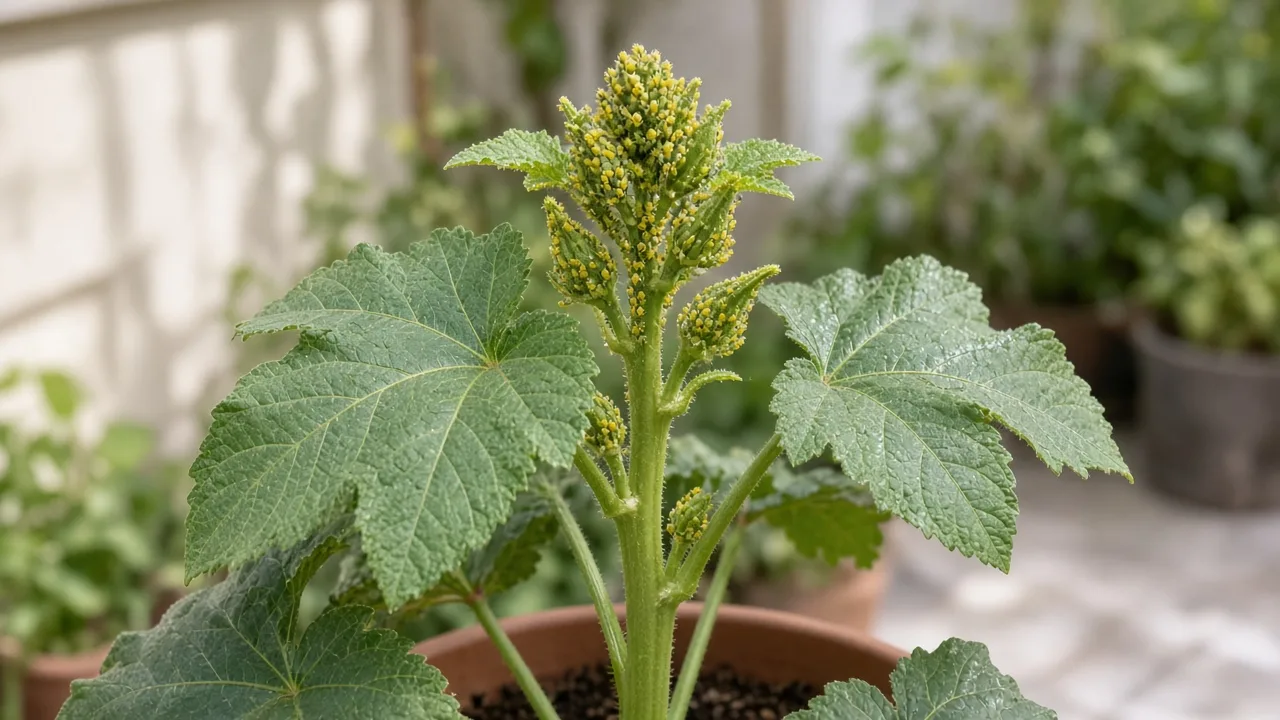
Aphids on okra—overwhelmingly the cotton or melon aphid (Aphis gossypii)—gather in dense colonies on tender apical meristems, flower calyxes, and developing young pods. They pierce sap vessels, causing downward leaf cupping, crinkled foliage, and sticky honeydew. First step: inspect the terminal growing tip and leaf undersides, then dislodge colonies with a focused early-morning water spray or spot-treat at dusk with potassium salts of fatty acids to avoid scorching open blossoms.
Aphids on Okra: Causes, Checks & Fixes
This guide covers aphids on Okra. See also the general Aphids guide, watering, and light pages for this plant.
Aphids on Okra: Causes, Checks & Fixes
Quick answer
Aphids on okra (Abelmoschus esculentus)—principally the cotton or melon aphid (Aphis gossypii)—target the tender apical meristem, emerging flower buds, and young developing pods. Because they pierce tender plant tissues and suck sap from expanding phloem cells, their feeding causes distinct downward cupping and crinkling of young palmate leaves, stunted terminal growth, and heavy coats of glistening honeydew.
For how aphids reproduce asexually, why ant mutualism protects them, and how systemic water knockdown works broadly across garden plants, see our global aphids pest guide. On okra, the critical challenge is that infestations concentrate right where the plant produces its edible harvest—at the terminal growing crown and flower buds—meaning aggressive, poorly timed chemical spraying easily triggers blossom drop and eliminates pod set.
First step: put on garden gloves to protect against okra’s irritating stem hairs, inspect the terminal growing tip, and knock colonies free with a focused jet of early-morning water directed at leaf undersides. Re-evaluate in two days before considering any foliar soap sprays.
When to use this page vs other Okra guides
This guide is the diagnostic protocol for soft-bodied sap feeders colonizing the terminal shoot and flower buds of okra.
| Symptom pattern on Okra | Most likely cause | Next guide |
|---|---|---|
| Pear-shaped soft insects on tips, downward cupped leaves, sticky honeydew | Cotton/melon aphid (Aphis gossypii) | This guide |
| Fine webbing under leaves, yellow stippling, bronzed dry foliage | Two-spotted spider mites | Spider mites |
| Lower leaves yellowing evenly, soft soil, sluggish root uptake | Over-saturation or poor bed drainage | Yellow leaves or Overwatering |
| Midday limp foliage that does not recover by morning, soil pulling from pot edge | Chronic soil moisture deficit during pod formation | Underwatering or Wilting |
| Elongated weak stems, sparse flowering, pale foliage in shaded spots | Insufficient direct sun exposure (<6 hours) | Not enough light or Light |
| General overview of okra cultivation, container sizing, and harvesting | Species culture and seasonal requirements | Okra overview |
What aphids look like on Okra
On okra, aphid infestations do not scatter evenly across the entire plant; they form tight colonies in sheltered, rapidly expanding plant parts. Aphis gossypii exhibits considerable color variation—ranging from pale translucent yellow and lime green to dark slate green or mottled black—and measures barely 1 to 2 mm in length.
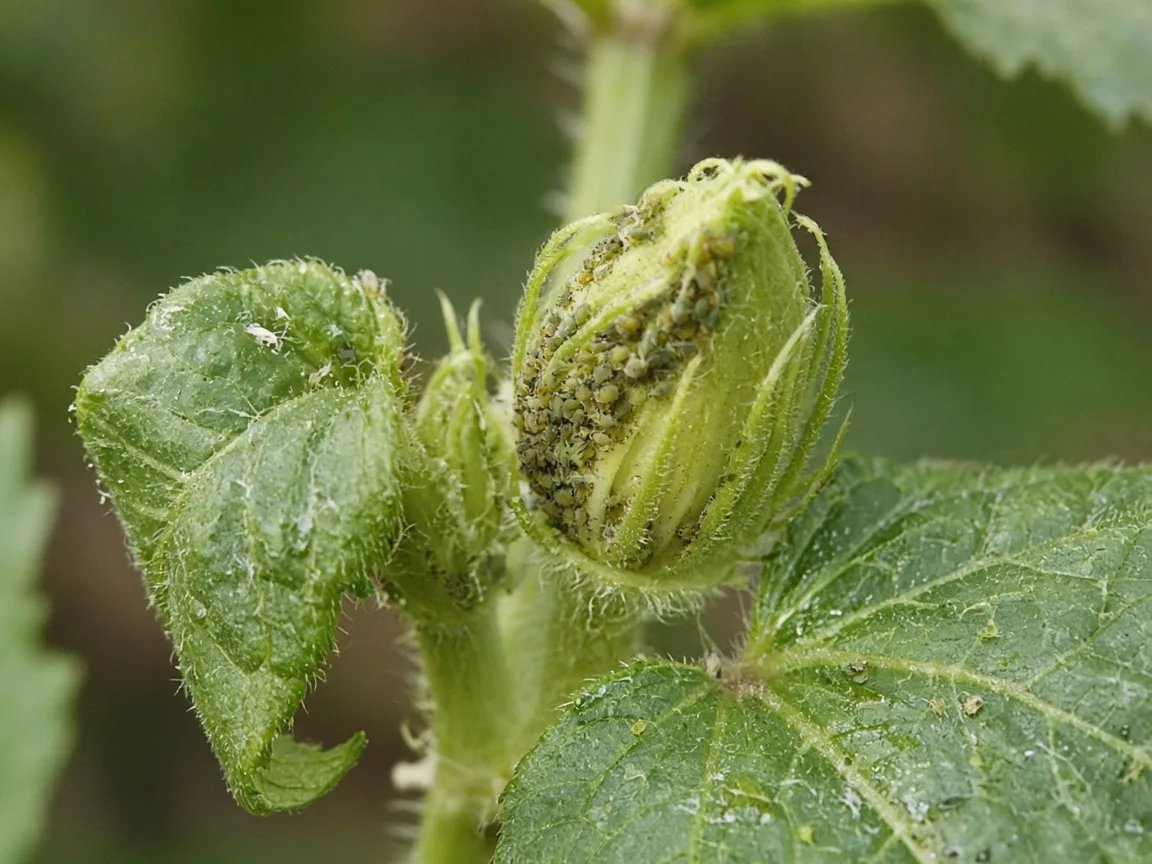
Cotton aphids (Aphis gossypii) crowded around the apical meristem and flower bud of an okra plant, causing characteristic downward leaf cupping and sticky honeydew accumulation.
Key visual markers of aphids on Abelmoschus esculentus include:
- Downward leaf cupping and crinkling: As aphids suck phloem sap from the lower leaf epidermis, the damaged lower cells cannot expand at the same rate as the unaffected upper surface. This differential growth pulls the margins downward, giving young leaves a puckered, cupped, spoon-like appearance.
- Dense clusters at the terminal shoot: Colonies gather thickly along the tender central leader, petioles of unfurling leaves, and the bracts enclosing immature flower buds.
- Sticky honeydew deposits: Heavy feeding produces copious sugary excretion that coats lower leaves and stems with a lacquer-like sheen.
- Secondary sooty mold: Airborne spores germinate on honeydew deposits, forming a velvety black fungal blanket across upper leaf surfaces. While the fungus does not infect plant cells directly, honeydew supports the growth of black sooty mold that physically blocks sunlight and impairs photosynthesis.
- Ant trails climbing the main stalk: Field ants regularly ascend okra stems to harvest honeydew, actively defending aphid colonies against predatory beetles and parasitic larvae.
- Cast white skins: As aphid nymphs molt through four developmental stages, they shed white papery exoskeletons that adhere to sticky leaf surfaces and can easily be mistaken for whiteflies or dandruff.
Unlike woody perennials, okra is a fast-growing annual in the mallow family (Malvaceae) where Abelmoschus esculentus produces edible immature pods continuously from upper leaf axils. Recognizing aphid damage early protects both vegetative vigor and flowering capacity.
Apical meristem and floral calyx vulnerability in Okra
Understanding why aphids are particularly destructive to okra requires examining the plant’s architecture. Okra develops an upright, semi-woody main stem topped by a primary apical meristem. Every future flower, leaf, and pod originates from this single growing crown.
Because Aphis gossypii feeds selectively on high-turgor phloem rich in amino acids, it bypasses tough, mature lower foliage and concentrates entirely on the topmost three to six inches of the plant:
- The Terminal Meristem: When hundreds of aphids feed on the growing point, cell division stalls. The main stem’s internodes fail to elongate, resulting in a stunted, congested “rosette” of distorted foliage at the top of the stalk.
- The Epicalyx and Floral Buds: Okra flower buds are enveloped by an epicalyx of slender bracteoles surrounding a fused calyx. Aphids wedge themselves between these bracts and the tender floral bud. Intense sap feeding here drains nutrients before the flower can expand, causing bud yellowing and premature dropping.
- Young Developing Pods: Even after successful pollination, colonies frequently migrate onto the tender base of newly formed pods. Feeding on tiny 1- to 2-inch pods causes localized scarring, corky ridges, and crooked, curled pods that fail to develop into marketable, tender fruit.
Because okra continues yielding only as long as the apical leader grows upward and produces new nodes, unchecked aphid pressure directly halts pod production.
Why Okra gets aphids
Several physiological and environmental conditions make okra an attractive host for cotton and melon aphids during the summer growing season:
- Rapid vegetative flushes: In warm summer weather, okra grows aggressively, pushing tender new nodes every few days. This surge of succulent tissue provides an ideal food source for parthenogenetic female aphids that produce live young without mating.
- Excessive nitrogen fertilization: Heavy applications of quick-release synthetic nitrogen fertilizers flood plant sap with free soluble amino acids. Aphids feed more efficiently and reproduce far faster on high-nitrogen foliage. Aligning fertility with proper soil amendments and slow-release organic nutrients prevents this vulnerability.
- Warm, sheltered microclimates: Okra thrives in full sun and warm growing conditions, but protected terraces, courtyard gardens, and greenhouse tunnels provide warm, wind-shielded environments where aphid generations cycle in as little as 7 to 8 days without wind disturbance.
- Dust and predator disruption: On open patios and dry garden beds, dusty foliage discourages delicate natural predators like lacewings and parasitoid wasps while ant activity protects aphid colonies from beneficial insects.
- Drought stress and vascular concentration: While okra possesses deep taproots and moderate drought tolerance, plants subject to irregular watering suffer fluctuating vascular pressure that weakens plant defense compounds and concentrates sugars in phloem sap.
How to confirm the cause: diagnostic steps
Before applying any treatments, systematically verify that aphids—and not physiological disorders or lookalike pests—are the cause:
- Invert the newest leaves: Turn over the youngest leaves at the top of the plant. A true aphid infestation reveals dozens of small, tear-shaped insects clustered tightly along the primary veins.
- Use a 10× hand lens: Inspect the insects closely. Look for the defining anatomical hallmark of aphids: a pair of small, backward-pointing abdominal tubes called cornicles (resembling dual exhaust pipes). If cornicles are present, the insect is an aphid.
- Examine leaf texture: Okra leaves experiencing water stress or root disturbance wilt evenly without puckering. Leaves infested by aphids display localized, blistered downward curls and feel sticky to the touch.
- Check for ant activity: Watch the lower stem. If an active column of ants is marching up the stalk toward the flower buds, they are almost certainly tending a sap-sucking colony.
- Inspect for mummies: Check whether aphid bodies appear tan, bloated, and papery with a tiny exit hole on top. These are “aphid mummies,” which confirm that beneficial parasitoid wasps are already actively biological controlling the infestation.
First fix: targeted morning water knockdown
The safest, most effective first action for aphids on okra is mechanical water knockdown. Unlike soft-leaved indoor tropicals, outdoor okra possesses sturdy fibrous stems and tough petioles that tolerate moderate water pressure.
Follow this first-fix protocol:
- Time it for early morning: Always perform water knockdown early in the day (between 7:00 AM and 9:00 AM). This gives the large okra leaves ample time to dry thoroughly under full midday sun, preventing fungal leaf spots like Cercospora.
- Adjust the spray nozzle: Use a garden hose fitted with a multi-pattern nozzle set to “jet” or “flat spray.” Adjust the pressure so it is strong enough to dislodge insects without snapping tender terminal shoots or tearing young leaves.
- Support the growing tip with one gloved hand: Place your hand behind the terminal shoot to brace the central stem against the water stream.
- Direct water upward from below: Spray upward into the undersides of young leaves and around the base of developing flower buds. Aphids dislodged by water jets onto the soil or mulch rarely climb back up the spiny stalk; their fragile mouthparts break, and ground predators consume them.
- Rinse lower foliage: Wash off accumulated honeydew from lower leaves to starve opportunistic sooty mold fungi.
- Wait 48 hours: Allow the plant to dry, monitor the apical shoot, and assess how many live aphids remain before escalating to insecticidal sprays.
Treating aphids with soaps and oils without flower abortion
When water knockdown is insufficient and aphid populations threaten terminal buds, horticultural sprays may be necessary. However, okra requires strict precautions because its large, delicate mallow flowers open for only one day.
Applying soaps or oils carelessly can cause severe phytotoxicity, burning floral organs and triggering premature flower abortion:
The flower-drop mechanism
Okra blossoms are diurnal; they open in the morning, accept pollination by bumblebees and honeybees over several hours, and close by late afternoon before dropping their petals over the following 24 to 48 hours to expose the developing pod.
If insecticidal soap or oil contacts open flowers:
- It dissolves the waxy cuticular layer of delicate petals and the central staminal column.
- It degrades pollen grains and coats the receptive stigma, preventing fertilization.
- In hot sun, oils cause rapid tissue burning on floral calyxes, leading the plant to drop the entire flower bud.
Safe spray protocol: potassium salts of fatty acids
Potassium salts of fatty acids (commercial insecticidal soap) kill soft-bodied insects by penetrating and dissolving their cellular membranes. To protect flower buds and foliage:
- Spray strictly at dusk: Apply insecticidal soap only after the sun has set below direct tree or fence lines and temperatures drop below 85°F (29°C). Because soaps and oils can cause leaf scorch in heat, evening applications allow the spray to remain wet longer—enhancing insect mortality—while evaporating safely before the next morning’s direct sun.
- Target leaf undersides and closed bud bracts: Avoid spraying directly into flowers. By dusk, the day’s open flowers have closed, and bees have returned to their hives, eliminating pollinator exposure.
- Use proper dilution: Mix commercial insecticidal soap at a 1% to 2% dilution (typically 2 to 4 tablespoons per gallon of clean water). Never use harsh household dish detergents, which strip protective plant waxes and cause severe marginal leaf necrosis on okra.
- Spot-treat colonies: Do not drench the entire 6-foot okra plant. Confine spray to the topmost 12 inches where active colonies feed.
- Neem oil alternative: If using cold-pressed neem oil (0.5% to 1% solution with a mild emulsifier), follow the identical evening application rule. Neem acts both as a contact smothering agent and an anti-feedant/growth regulator (azadirachtin) against immature nymphs.
Trichome handling safety and scouting protocol
Okra belongs to the Malvaceae family, and like many members of the genus Abelmoschus, it is armed with prominent epidermal appendages. The entire plant—especially stems, petioles, and the calyxes of developing pods—is covered in fine plant hairs on stems and leaves known as trichomes.
When inspecting leaf undersides or manually wiping aphid colonies, keep these physical safety measures in mind:
- Mechanical skin irritation: Okra trichomes are stiff, sharp micro-hairs that readily pierce human skin, causing mechanical dermatitis, itching, and red welts. This irritation is aggravated when broken hairs mix with plant sap.
- Wear protective gear: Always wear nitrile-coated gardening gloves and a lightweight long-sleeved shirt when parting dense okra foliage to inspect apical buds.
- Avoid bare-hand squashing: Never attempt to crush aphid clusters bare-handed along okra stems. The combination of crushed aphid fluids and dense, bristly trichomes can cause persistent skin irritation and micro-punctures.
- Use soft artist brushes for delicate checks: If you need to dislodge aphids from between closed flower buds without damaging floral bracts or contacting spines, use a soft, damp artist paintbrush dipped in soapy water.
Natural predators and biological control
In warm summer gardens, healthy okra plantings attract an impressive guild of beneficial insects that keep cotton aphid populations below damaging thresholds:
- Braconid parasitoid wasps: Tiny solitary wasps (notably Lysiphlebus testaceipes) inject eggs into living aphids. The developing wasp larva consumes the aphid from within, cementing its shell to the leaf and turning it into a swollen, coppery-tan “mummy.” When you notice that parasitic wasps turn aphids into bloated mummies, refrain from spraying; a single parasitoid wasp can destroy dozens of aphids per week.
- Ladybird beetles: Both adult ladybugs (Hippodamia convergens) and their alligator-shaped larvae feed voraciously on aphids. A single lady beetle larva can devour several hundred aphids during its development.
- Green lacewings: Lacewing larvae (“aphid lions”) possess sickle-shaped jaws that seize aphids and inject digestive enzymes. Together, lady beetle larvae and lacewings provide substantial biological suppression in open vegetable gardens.
- Hoverfly (syrphid fly) larvae: Often mistaken for small green caterpillars, legless syrphid fly maggots browse through aphid clusters on okra leaf undersides, consuming up to 30 aphids per day.
- Ant control for biological success: Because ants actively drive away ladybugs and parasitoid wasps to protect their honeydew supply, managing ants is essential for biological control. Apply a band of sticky barrier (such as horticultural grease) over a strip of protective tape wrapped around the lower main woody stalk, or place containerized ant baits around the base of the plant.
Recovery timeline: what heals and what stays distorted
Setting realistic recovery expectations prevents growers from repeatedly over-treating plants that are already healing:
- Days 1 to 3 after treatment: Knockdown or soap sprays kill active nymphs and adults. Surviving aphids stop feeding. White cast skins remain stuck to honeydew on the leaves until washed off by rain or watering.
- Days 4 to 7: The apical meristem resumes normal cell division. Small, pale green leaf buds at the growing point begin expanding outward without puckering.
- Weeks 2 to 3: A new flush of broad, flat palmate leaves emerges from the central leader. Damaged older leaves will not uncurl; their distorted shape is permanent because leaf veins hardened in their cupped configuration. However, as long as they remain green, they continue supporting the plant and need not be pruned off.
- Weeks 3 to 4: Flower buds that formed after treatment open with clean, unblemished yellow petals and strong purple centres, setting straight, tender pods without corky feeding scars.
Mistakes to avoid
Avoid these common missteps when managing aphids on okra:
- Spraying open blossoms in full morning sun: Applying oils or soaps to flowers during morning pollination scorches stamens, repels pollinators, and triggers blossom drop. Spray only at dusk.
- Applying broad-spectrum synthetic insecticides: Chemical sprays like synthetic pyrethroids or organophosphates kill lady beetles, parasitoid wasps, and pollinating bees. Because aphids reproduce rapidly and develop resistance, eliminating natural predators frequently triggers a severe secondary aphid outbreak.
- Overfeeding with high-nitrogen fertilizers: Dumping synthetic high-nitrogen plant food onto an aphid-infested okra plant fuels lush, tender growth that accelerates aphid reproduction. Switch to balanced, slow-release fertilizers.
- Pruning off distorted green leaves unnecessarily: Okra relies on its large palmate leaves to fuel pod production. Removing functional leaves simply because they are slightly cupped deprives developing pods of energy.
- Assuming one spray solves the problem: Because soaps have zero residual activity and aphid eggs or sheltered nymphs can escape initial sprays, failing to re-scout within 5 to 7 days allows surviving aphids to rebuild colonies quickly.
- Wetting foliage late in the evening: If using water knockdown, do it in the morning. Leaving dense okra foliage soaked overnight in humid conditions invites powdery mildew and leaf spot diseases.
How to prevent aphids next time
Long-term management relies on cultural practices that maintain sturdy, resilient okra plants:
- Balance plant nutrition: Provide moderate, balanced nutrition using compost-enriched soil and slow-release organic fertilizers rather than quick-release synthetic nitrogen.
- Maintain consistent root moisture: Water deeply when the top one to two inches of soil begin to dry, keeping the root zone evenly moist without saturation. Follow our detailed watering guide to prevent moisture stress swings.
- Ensure full sunlight: Grow okra in locations receiving at least 6 to 8 hours of unfiltered direct sun. Review our light guide to ensure strong, compact cell walls that resist sap penetration.
- Install reflective silver mulches: In garden beds, laying silver or aluminum-colored reflective mulch around young transplants disorients winged aphids during their seasonal migration, substantially reducing early-season colonization.
- Manage companion plants and weed reservoirs: Eliminate wild mallows, sowthistles, and pigweed near the garden, as these alternate hosts harbor Aphis gossypii before garden crops emerge.
- Scout the terminal shoot weekly: Make a habit of turning over the top two leaves on every plant once a week during peak summer heat. Catching a colony of 20 aphids is effortless; controlling a runaway infestation of 2,000 takes weeks.
When to worry
A modest cluster of 20 to 50 aphids on a single growing tip of a 5-foot-tall, vigorous okra plant is a minor cosmetic nuisance, not an emergency. Okra is an exceptionally tough, fast-growing vegetable that easily tolerates light sap feeding without measurable loss in pod yield.
Escalate treatment when:
- Colonies completely encase the central apical bud, causing terminal growth to stop completely.
- Developing flower buds turn yellow, shrivel, and drop from the plant before opening.
- Black sooty mold covers more than 25% of the upper foliage, significantly reducing photosynthetic capacity.
- Ant colonies actively swarm every node, preventing ladybugs and beneficial insects from accessing the aphids.
If lower leaves yellow rapidly while stems soften near the soil line, do not assume aphids are the primary culprit; cross-check your growing medium against root rot or drainage failure.
Related Okra guides
- Overview — complete culture, cultivar selection, and seasonal care
- Watering — root-zone moisture cycles to prevent stress
- Light — full-sun positioning for compact, sturdy growth
- Soil — well-drained fertility to avoid nutrient imbalances
- Spider mites — identifying fine webbing vs aphid feeding
- Yellow leaves — distinguishing nutritional and moisture issues from sap damage
- Wilting — diagnosing daytime limpness vs terminal insect damage
- Problems hub — complete diagnostic symptom matrix
Conclusion
Aphids on okra are a terminal shoot and flower bud challenge that directly impacts the plant’s productive harvest zone. Rather than reaching for harsh chemical insecticides that kill pollinators and induce flower drop, adopt an integrated management approach: knock colonies free with an early-morning water jet, preserve braconid wasp mummies and ladybugs, and spot-treat with potassium salts of fatty acids only at dusk when temperatures cool. With proper timing and protection of the central apical leader, okra plants rapidly outgrow aphid damage and continue yielding tender, straight pods through the end of the season.
Related tool
Use the Humidity Calculator to assess transpiration stress and ambient conditions for okra before adjusting care routines or spraying treatments.