Overwatered Panda Plant: Symptoms, Fixes & Root Checks
Quick answer
An overwatered Panda Plant (Kalanchoe tomentosa) exhibits soft, swollen, yellow-translucent lower leaves that drop off at the slightest touch, accompanied by damp, heavy soil. In severe cases, chronic saturation leads to cellular edema and basal stem rot. First step: withhold all water immediately, slide the rootball out of its container to inspect for root decay, and let the saturated root ball air-dry on dry towels for 24 to 48 hours.
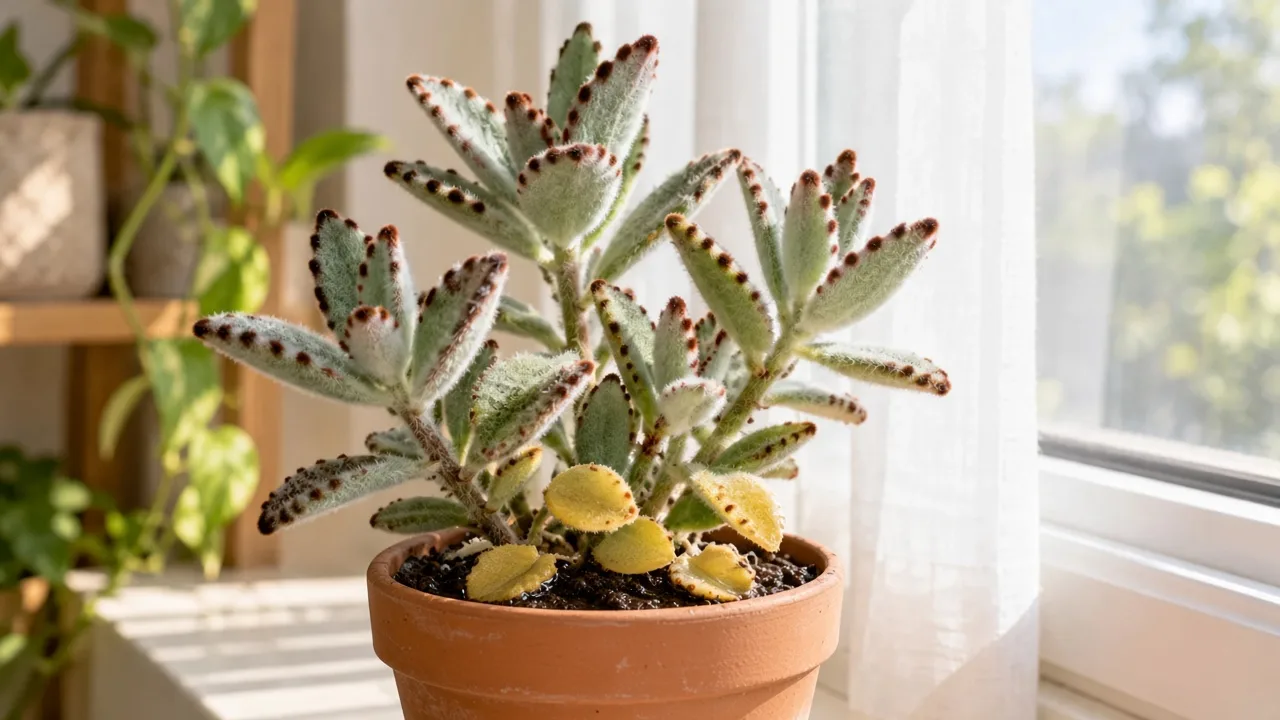
Overwatered Panda Plant: Signs, Cellular Edema & Urgent Recovery
This guide covers overwatering on Panda Plant. See also the general Overwatering guide, watering, and light pages for this plant.
Overwatered Panda Plant: Signs, Cellular Edema & Urgent Recovery
Quick answer
An overwatered Panda Plant (Kalanchoe tomentosa) displays distinct distress signals: lower velvety leaves turn pale yellow, translucent, and squishy, detaching at the slightest touch while the potting mix remains persistently heavy and wet. Because Kalanchoe tomentosa evolved in the semi-arid, rocky hills of central Madagascar, its root system requires abundant oxygen and cannot tolerate standing water. For broader irrigation science across all houseplant species, review our global overwatering guide.
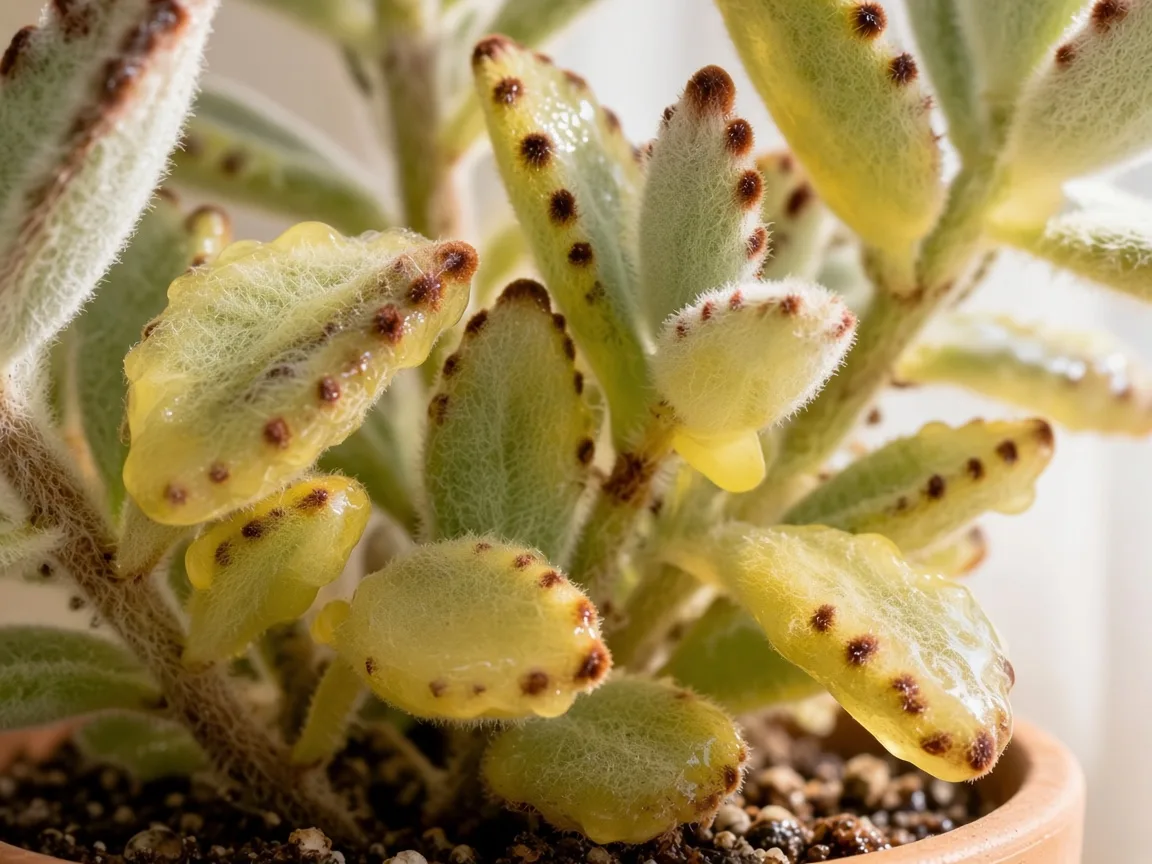
Soft, swollen, translucent yellow lower leaves on an overwatered Panda Plant above damp soil. Your first fix is urgent moisture cessation: stop watering immediately and gently slide the rootball free from its pot. If the roots are firm and light tan and the central stem feels solid, set the rootball on absorbent paper towels in a warm, bright room for 24 to 48 hours to evaporate excess moisture before returning it to dry, high-grit soil. If the stem collar feels soft or roots smell sour, transition immediately to our root rot rescue protocol.
How overwatering damages Panda Plant physiology
Unlike tropical foliage plants that transpire constantly through open daytime stomata, Panda Plant utilizes Crassulacean Acid Metabolism (CAM) to conserve water, opening stomata primarily at night to capture carbon dioxide. Excess moisture disrupts this delicate succulent balance in three phases:
1. Cellular edema and hydrostatic rupture
According to Clemson Cooperative Extension, persistent capillary water in potting media generates immense hydrostatic pressure within plant vasculature. In a Panda Plant, root pressure pumps water into fleshy leaf cells faster than nocturnal transpiration can release it. Vacuoles swell beyond their elastic limits until cell walls burst (cellular edema). The damaged leaf tissue takes on a water-logged, translucent, jelly-like appearance and drops from the stem.
2. Root-zone asphyxiation
Roots require soil pore-space oxygen for cellular respiration and nutrient uptake. Chronic saturation displaces all air pockets with stagnant water. Deprived of oxygen, fine root hairs suffocate and die within 48 to 72 hours. Once root hairs die, the plant can no longer take up water even though it sits in mud, causing paradoxical top-growth wilting and drooping leaves.
3. Fungal and oomycete pathogen invasion
As documented by UW-Madison Extension, decaying, oxygen-starved root tissue attracts opportunistic water molds (Pythium and Phytophthora) and pathogenic fungi (Fusarium). Pathogens consume the dead root cortex, enter the primary vascular bundles, and travel upward into the central stem collar, causing black leg, crown collapse, and fatal stem melt.
Diagnostic table: Is it overwatering, underwatering, or root rot?
| Diagnostic Feature | Early Overwatering | Severe Root Rot | Severe Underwatering |
|---|---|---|---|
| Leaf Appearance | Swollen, pale yellow, translucent, watery | Mushy, blackened, dropping en masse | Wrinkled, deflated, leathery, shriveled |
| Tactile Sensation | Soft, squishy, leaves detach easily | Wet, decomposing, slimy leaves | Thin, papery, rubbery, firmly attached |
| Stem Collar Condition | Firm and woody at the soil line | Soft, brown/black, hollow, or squishy | Completely firm, dry, and rigid |
| Soil Moisture | Heavy, saturated, damp at pot core | Muddy, waterlogged, emitting sour odor | Bone-dry, dusty, pulled away from pot walls |
| Root Inspection | Light tan, intact, but wet | Black, brown, slimy, stringy, foul odor | Pale tan, dry, brittle, healthy architecture |
Step-by-step recovery protocol for overwatered Panda Plant
Follow this systematic emergency triage based on your plant’s root inspection:
Step 1: Unpot and diagnose root integrity
- Gently squeeze the pot walls (or slide a dull butter knife around the inner rim of terracotta) and ease the rootball out.
- Inspect the exterior roots under good lighting.
- If roots are healthy (pale tan, fibrous, firm): Wrap the wet rootball in several layers of dry paper towels, set it on a wire cooling rack or cardboard box in a warm, ventilated room (out of direct sun), and let it breathe for 24 to 48 hours until excess water evaporates.
- If roots are compromised (black, slimy, slipping off inner core threads): Proceed immediately to surgical root excision in Step 2.
Step 2: Surgical root pruning (If rot is detected)
- Rinse away all old, saturated potting soil from the bare root system under lukewarm running water.
- Sterilize sharp pruning shears with 70% isopropyl alcohol.
- Snip off all brown, black, soft, or disintegrating root strands back into healthy, firm, light-colored tissue.
- Spray the trimmed root mass lightly with 3% hydrogen peroxide to disinfect cuts and oxidize any lingering pathogens.
- Lay the plant on paper towels in a shaded room for 24 hours so root cuts can form a protective dry callous.
Step 3: Repotting into ultra-gritty mineral substrate
Never put an overwatered succulent back into the same wet, peat-heavy soil. As recommended by the Missouri Botanical Garden, Kalanchoe tomentosa requires sharp, fast-draining substrate:
- Container: Select an unglazed terracotta pot with a large bottom drainage hole. Terracotta walls breathe, pulling excess moisture laterally out of the substrate.
- Soil mix: Blend 65% inorganic mineral grit (coarse pumice, perlite, crushed granite poultry grit) with 35% organic cactus soil.
- Dry potting rule: Pot the plant into completely dry mix. Do not water. Wait 7 to 10 days before applying any moisture to give trimmed root hairs time to heal and re-establish.
Step 4: Resuming soak-and-dry watering
When you finally irrigate:
- Verify that a wooden skewer inserted to the pot base emerges 100% dry.
- Water thoroughly around the soil line until runoff drains freely from the bottom.
- Empty the drainage saucer within 15 minutes—never let the pot sit in standing water.
- For complete seasonal watering schedules, follow our Panda Plant watering guide.
Mistakes to avoid during recovery
- Leaving the plant in wet soil to ‘dry out naturally’: Saturated peat in a plastic pot can take 3 to 4 weeks to dry, which guarantees fatal root rot. Unpotting accelerates air-drying safely.
- Fertilizing an overwatered plant: Adding synthetic fertilizers to damaged roots causes chemical salt burn and speeds root collapse. Withhold all fertilizer for at least 8 weeks.
- Misting the fuzzy foliage: Panda Plant’s dense trichomes trap foliar moisture, inviting powdery mildew and bacterial leaf spot. Keep water strictly on the soil.
- Pet safety precaution: ASPCA Animal Poison Control warns that Kalanchoe species contain bufadienolide cardiac glycosides. Ingestion by dogs or cats causes severe vomiting, diarrhea, and arrhythmias. Dispose of fallen or pruned leaves securely in outdoor trash.
Related tool
Use our Succulent Watering Calculator to calculate the exact watering volume and seasonal dry-down intervals for your specific container size and household humidity.
Related Panda Plant guides
- Panda Plant overview — comprehensive natural profile and species care requirements
- Watering guide — seasonal soak-and-dry intervals and moisture testing
- Soil guide — mineral pumice and grit formulations for succulent drainage
- Light guide — optimizing sunlight to drive transpiration and soil drying
- All Panda Plant problems — full diagnostic troubleshooting index