Brown Tips on Panda Plant: Natural Margins, Scorch & Salt
Quick answer
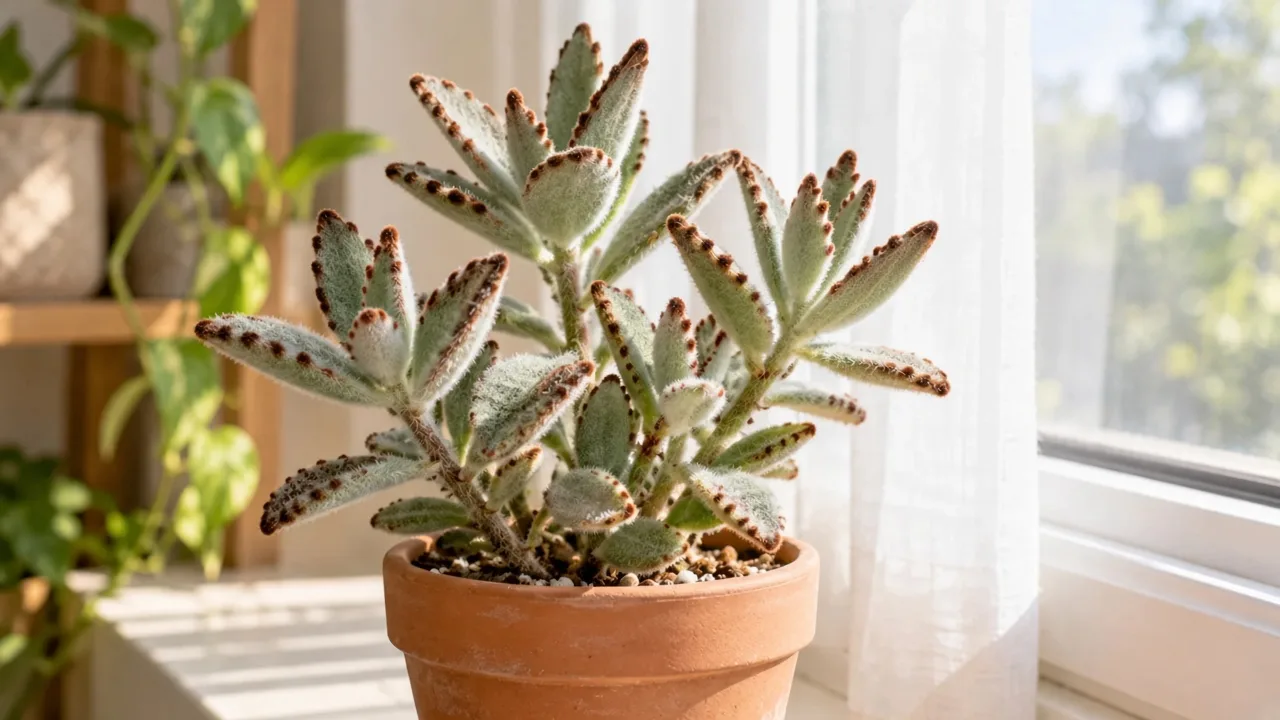
On Panda Plant (Kalanchoe tomentosa), the primary diagnostic trap is confusing normal, healthy chocolate-brown margin markings with pathological brown tips. Healthy leaves naturally feature dark rusty-brown or chocolate spots along the apical teeth created by trichome pigments. However, true problem brown tips are crispy, desiccated, crumbling, or sunken, caused by fertilizer salt accumulation, severe underwatering, or sudden sunburn. First step: feel the brown area—if it is soft velvet, it is natural; if dry, brittle, and spreading inward, flush the potting soil and adjust light.
Brown Tips on Panda Plant: Natural Margins, Scorch & Salt Burn Fixes
This guide covers brown tips on Panda Plant. See also the general Brown Tips guide, watering, and light pages for this plant.
Brown Tips on Panda Plant: Natural Margins, Scorch & Salt Burn Fixes
Quick answer
Brown tips on Panda Plant (Kalanchoe tomentosa) present a unique diagnostic puzzle: the species is celebrated for its natural, decorative chocolate-brown or rusty-cinnamon markings along the crenate teeth of each leaf tip. In an adequately lit environment, dark tips are a hallmark of botanical vitality, produced by specialized pigmented trichomes (hairs) designed to shield succulent cells from intense ultraviolet light.
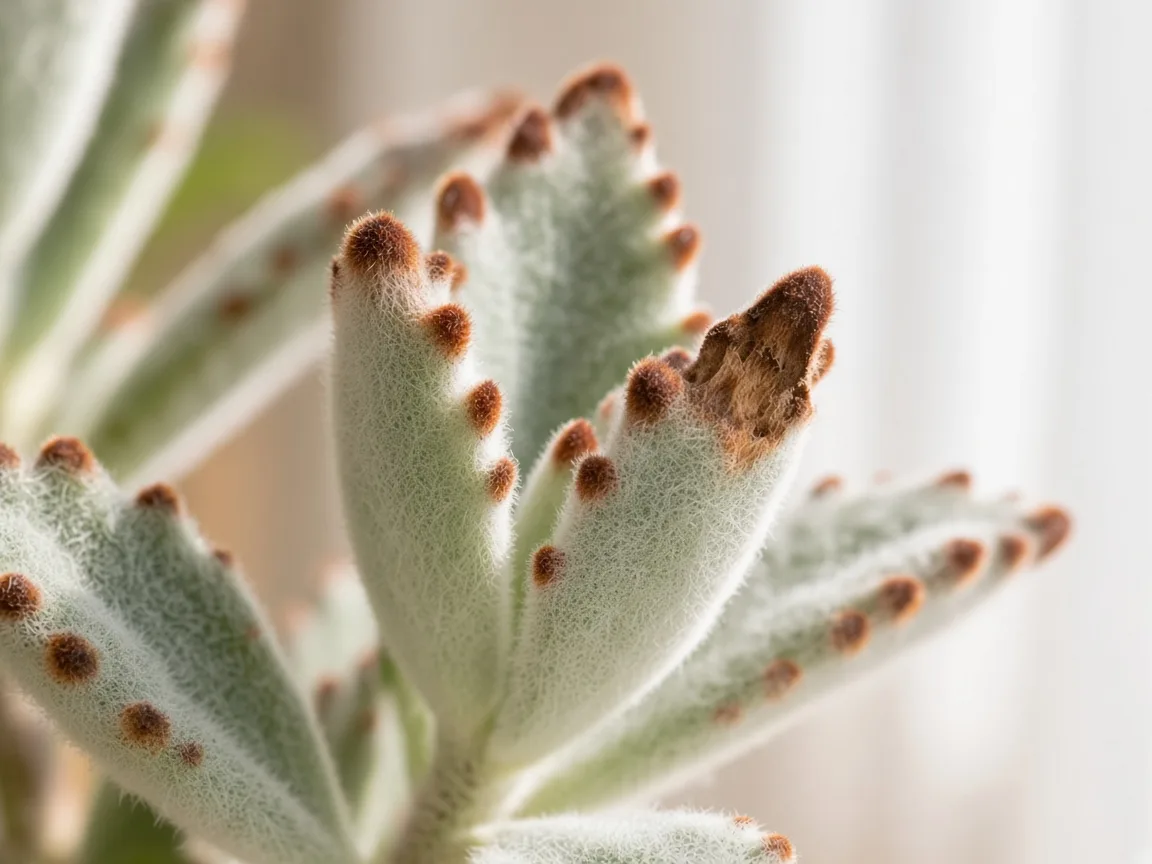
Crispy pathological brown tips on Panda Plant next to intact natural chocolate tooth markings on the same plant. However, pathological brown tips also occur, marked by dry, brittle, paper-thin, or crumbling leaf extremities that spread inward toward the central midrib. The primary cultural culprits behind real damage are soluble fertilizer salt buildup in the container, prolonged root dehydration during hot weather, and acute UV sunburn from sudden outdoor relocation.
First step: feel the leaf tip. If the brown markings are soft, fuzzy, and firm, celebrate your plant’s coloration. If the tip is hard, crispy, scorched, or crumbling between your fingers, flush the potting medium with clean water to leach salts and verify your light and watering cadence. For broader leaf margin issues across succulents and foliage, review our master guide on brown leaf tips.
Diagnostic triage: Natural markings vs. Real damage
Before altering your care regimen, differentiate normal genetic pigmentation from physiological injury using this comparison:
| Diagnostic Feature | Natural Chocolate Margins (Healthy) | Real Brown Tip Damage (Pathological) |
|---|---|---|
| Surface Texture | Soft, dense, velvety felted trichomes | Dry, rough, paper-thin, crispy, or brittle |
| Location | Confined strictly to tooth notches on margins | Extends inward past the leaf teeth into the blade |
| Leaf Thickness | Full, plump, succulent, three-dimensional | Sunken, deflated, shriveled, or crumbling |
| Color Pattern | Warm chocolate, rusty bronze, or cinnamon | Bleached tan, grayish-brown, or scorched black |
| Surrounding Tissue | Crisp, silvery-white or sage green | Often bordered by yellow chlorosis or wrinkled skin |
| Response to Light | Darkens and intensifies in bright sunlight | Worsens rapidly if moved suddenly into intense sun |
Why Panda Plant develops true brown tip damage
Kalanchoe tomentosa evolved in the arid, granite rock crevices of east-central Madagascar, developing thick water-storage leaves clothed in dense micro-trichomes to resist moisture loss, as detailed by NC State Extension and the Royal Horticultural Society.
When pathological browning occurs, it is driven by distinct physiological stresses:
1. Fertilizer salt accumulation (Osmotic root stress)
Panda plants have very modest nutrient requirements. Regular feeding with standard houseplant fertilizers leaves residual mineral salts in the potting mix. As the porous succulent mix dries out between waterings, the concentration of dissolved mineral ions spikes. This creates high osmotic pressure that draws water out of fine feeder roots rather than into them, as explained by Clemson Cooperative Extension. Unable to supply moisture to the leaf extremities, cells at the apical tips desiccate, collapse, and turn crispy brown.
2. Acute summer drought and root desiccation
While panda plants store water in specialized parenchymal leaf cells, months of missed waterings during hot weather can deplete vacuoles completely. When internal turgor pressure drops to zero, the plant sacrifices the cells furthest from the vascular supply petiole to preserve the apical meristem, leading to crispy brown tips alongside drooping leaves and severe underwatering.
3. Acute sunburn and heat shock
Although panda plants love bright light, moving an indoor specimen directly into blistering midday summer sun without gradual acclimation causes photo-oxidative stress. The sudden excess of ultraviolet radiation overheats the leaf tips, burning the tissue into tan, sunken, papery scars, as noted by the Missouri Botanical Garden.
4. Direct water drops on fuzzy foliage
Watering over the top of the plant traps water droplets within the dense trichome hairs. When exposed to direct sunlight, these droplets act as miniature magnifying lenses, causing localized heat scorch that turns tips and margins brown. In stagnant air, trapped moisture can also trigger localized fungal spotting from mold on soil.
Step-by-step remediation protocol
Restore healthy growth and eliminate cultural stressors with this systematic protocol:
Step 1: Leach the potting substrate
If you suspect fertilizer salts or mineral buildup (often visible as a chalky white crust on the terracotta rim or topsoil):
- Take the potted panda plant to a sink or wash basin.
- Slowly pour room-temperature distilled or filtered rainwater—equal to roughly twice the pot’s volume—evenly across the soil surface.
- Allow water to stream freely out the bottom drainage holes, dissolving and flushing away accumulated fertilizer residues.
- Let the pot drain completely for 30 minutes, then return it to its bright saucer.
Step 2: Calibrate soak-and-dry watering
Never water on a rigid calendar. Probe the soil 5 centimeters deep or lift the container:
- Water thoroughly only when the entire substrate column is 100% dry and the pot feels feather-light.
- Apply water directly to the soil surface around the base of the plant, keeping water completely off the fuzzy leaves and stem crown.
- Discard all drainage runoff from the saucer within 15 minutes.
Step 3: Proper light acclimation
If moving your panda plant to brighter outdoor sun or a sunny south-facing windowsill, acclimate it gradually over 10 to 14 days:
- Days 1–3: Bright indirect light or early morning sun (1 hour).
- Days 4–7: Gentle morning sun (2–3 hours).
- Days 8+: Full direct sun (4–6 hours). This gradual transition encourages dense silver trichomes and deep chocolate margins without tissue scorch.
Step 4: Eliminate high-strength fertilizers
Pause all fertilizer applications immediately for 6 to 8 weeks. When resuming in active spring growth, use a balanced cactus and succulent liquid fertilizer diluted to quarter-strength, applied no more than once every 6 to 8 weeks. Never fertilize dormant plants in late autumn or winter.
Long-term care to maintain pristine velvety foliage
Ensure rich, unblemished leaves with deep chocolate tooth accents year-round:
- Ultra-gritty mineral potting mix: Pot in a substrate containing 60% inorganic grit (pumice, perlite, coarse granite sand) and 40% organic cactus soil to guarantee rapid water passage and prevent salt entrapment.
- Breathable terracotta pots: Always grow in unglazed terracotta containers with an open drainage hole. Terracotta walls breathe, accelerating soil drying and preventing anaerobic moisture buildup that leads to root rot.
- Generous solar irradiance: Position within 60 centimeters of a sunny south- or west-facing window. Adequate light maintains rich chocolate-tipped tooth patterns, prevents leggy growth, and keeps leaves compact.
Related tool
Track soil drying rates and calculate exact watering volumes for your specific container with our Plant Watering Calculator.
Related panda-plant problems: