Aphids on Panda Plant: Causes, Velvet Safety & Removal
Quick answer
Immediately quarantine your Panda Plant (Kalanchoe tomentosa) away from other houseplants. Aphids target the tender apical rosettes and flower stems where foliar hairs are softest. Do not spray neem oil, horticultural oils, or harsh detergents on Panda Plant foliage—oils dissolve and mat the protective silvery trichomes, causing severe chemical burn and foliar collapse. Instead, spot-treat colonies with a cotton swab dipped in 70% isopropyl alcohol or use a shielded lukewarm water spray.
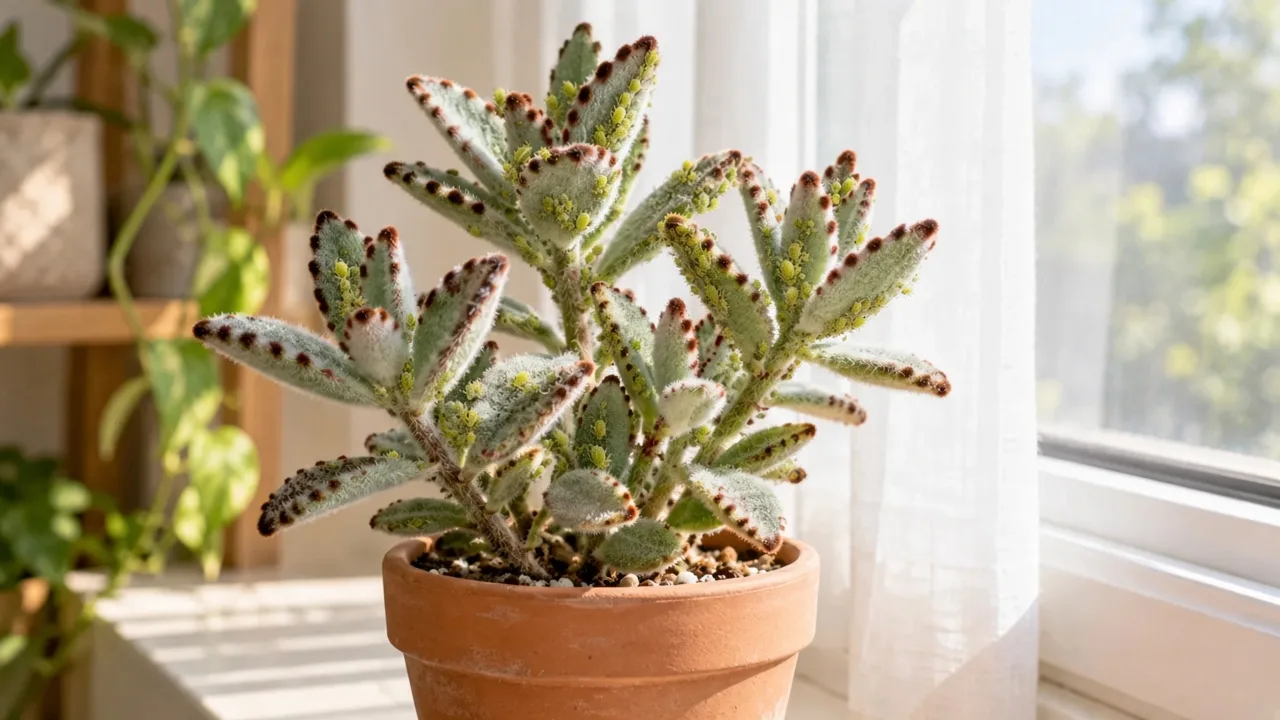
Aphids on Panda Plant: Diagnosis, Trichome Safety & Safe Removal
This guide covers aphids on Panda Plant. See also the general Aphids guide, watering, and light pages for this plant.
Aphids on Panda Plant: Diagnosis, Trichome Safety & Safe Removal
Quick answer
Immediately move your Panda Plant (Kalanchoe tomentosa) into quarantine away from all other houseplants to halt pest migration. Aphids (Aphidoidea) feed by inserting piercing-sucking mouthparts into the succulent’s tender vascular bundles, concentrating on soft apical buds, flower stalks, and newly emerging rosettes. For universal insect life cycle biology and cross-species management, consult our comprehensive aphids guide.
Your first fix requires strict restraint: never spray neem oil, horticultural oil, or dish detergent sprays across Panda Plant foliage. Kalanchoe tomentosa relies on dense, silvery-white felted trichomes that are quickly dissolved and permanently matted by oils and soaps. Instead, spot-treat visible aphid clusters directly using a cotton swab dipped in 70% isopropyl alcohol, or mechanically rinse the rosettes with a narrow stream of lukewarm water while shielding the potting soil with plastic wrap.
What aphids look like on Panda Plant
Because Kalanchoe tomentosa foliage is cloaked in a thick layer of microscopic trichomes, spotting an early aphid infestation requires a closer look:
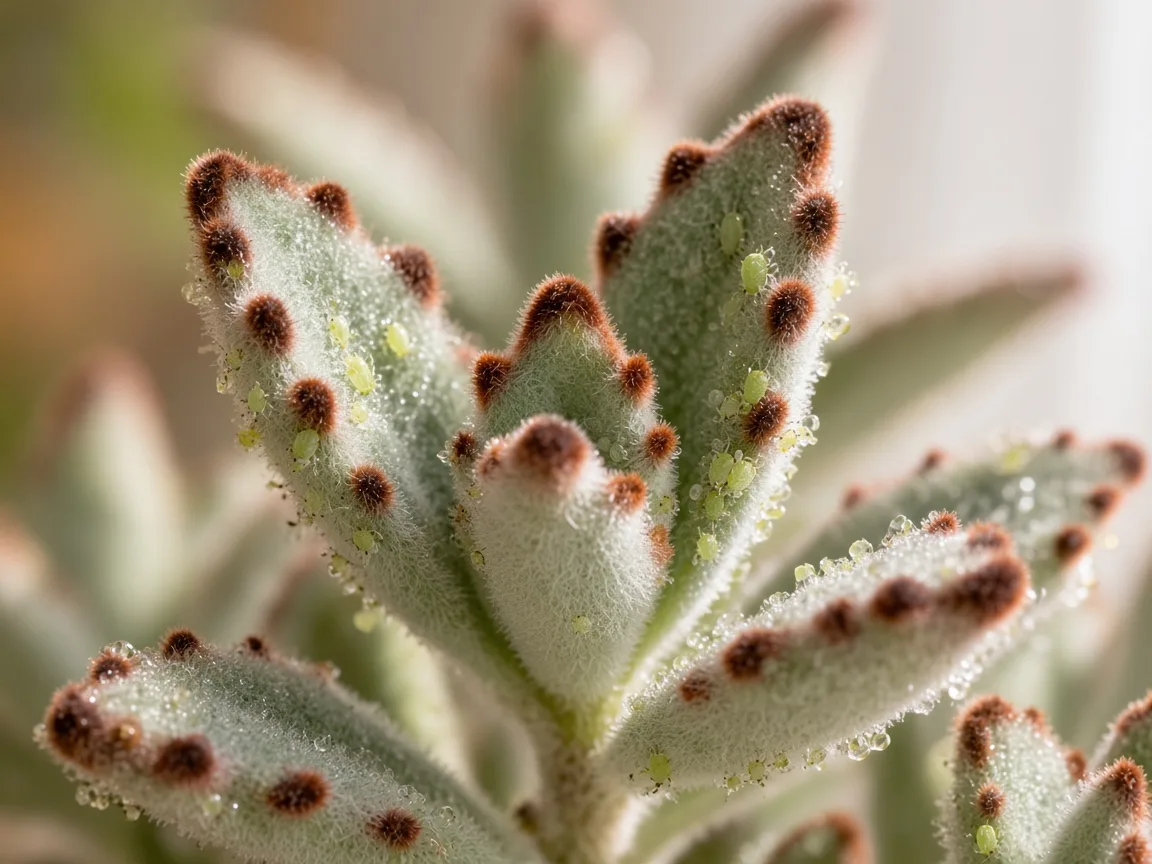
Small aphids clustered on the soft felted terminal growth of Panda Plant — compare with clean young leaves nearby.
- Appearance: Small, soft, pear-shaped insects measuring between 1 and 3 mm in length. Indoor infestations on succulents are typically pale green, yellowish-green, pinkish-peach, or dark brown.
- Location: Aphids congregate almost exclusively where tissue is softest: around the tender terminal growing tip, deep within the clefts of unfurling central leaves, and on seasonal flowering racemes. Mature, leathery lower leaves have thicker cuticles and dense felt that naturally deter aphids.
- Diagnostic signs: Under a magnifying glass, look for dual posterior tailpipes called cornicles pointing backward from the aphid’s abdomen. You will also see scattered white flakes—the empty, cast-off translucent exoskeletons left behind as nymphs molt.
- Honeydew and sooty mold: As aphids feed on high-pressure phloem sap, they excrete sticky, sugar-rich honeydew. On smooth plants, honeydew looks like glossy varnish; on Panda Plant, it glues the fine silver hairs together into crusty, wet patches that attract airborne spores of black sooty mold.
The trichome vulnerability: why broad sprays ruin Panda Plant
Many general gardening resources recommend spraying affected houseplants with insecticidal soap or neem oil. Applying these sprays to Panda Plant is a critical mistake.
According to botanical research documented by NC State Extension, the felted pelt covering Kalanchoe tomentosa consists of specialized multicellular trichomes designed to reflect solar radiation, trap insulating air, and prevent transpirational water loss in dry Madagascan habitats.
Spraying horticultural oils or soaps causes severe damage:
- Trichome dissolution: Lipophilic oils break down the waxy cuticle coating each hair, melting the silver velvet into flattened, greasy, translucent streaks that turn permanent muddy brown.
- Stomatal suffocation and heat scorch: UC IPM pest management guidelines highlight that soaps and oils can cause acute phytotoxicity on sensitive foliage. Trapped within the dense felt, oil cannot evaporate cleanly, suffocating respiratory pores and magnifying indoor sunlight into tissue-killing burns.
- Moisture-induced rot: Drenching fuzzy rosettes traps liquid at the stem core, inviting bacterial crown rot and fungal leaf collapse.
Confirming aphids vs. lookalike issues
Before treating, confirm that aphids are the actual culprit:
| Symptom / Sign | Likely Cause | Confirmation Test | Action |
|---|---|---|---|
| Tiny green/peach pear-shaped bugs with twin rear cornicles in terminal clusters; sticky honeydew | Aphids (Aphidoidea) | Move slowly when prodded; molt skins present; dissolve with alcohol swab | Isolate → alcohol swab spot-treat → monitor weekly |
| Cottony, irregular white wax nestled deep into leaf axils and stem nodes | Mealybugs (Pseudococcidae) | Segmented pinkish bodies under cotton; melts into reddish stain with alcohol | Treat per mealybugs guide |
| Fine silk webbing spanning leaf notches; tiny yellow stippling dots | Spider mites (Tetranychidae) | Microscopic mites moving along webs under 10x magnification | Treat per spider mites guide |
| Natural chocolate, cinnamon, or rust-brown tooth notches along leaf margins | Normal trichome genetics | Tissue is velvety, plump, and firm; does not wipe away | Healthy growth; no action needed |
| Distorted, cupped, or puckered leaves without pests or residue | Prior mechanical injury or draft | No insects found; leaves clean and dry | Review light and temperature stability |
Step-by-step safe eradication protocol
Follow this structured protocol to eradicate aphids without compromising your Panda Plant’s felted foliage:
Step 1: Immediate isolation
Move the infested plant to a separate room away from other houseplants. Aphids reproduce rapidly through parthenogenesis (females giving birth to live young without mating), allowing small populations to explode within days, as noted by the Royal Horticultural Society.
Step 2: Mechanical stream wash (Shielded pot method)
If the colony is dense:
- Wrap the entire container and exposed soil tightly in plastic cling wrap or a plastic shopping bag, taping it around the main stem base to prevent any water or dislodged insects from entering the potting soil.
- Take the plant to a sink and angle it horizontally.
- Using a sink sprayer with a narrow, moderate stream of lukewarm water, direct the spray precisely at the aphid clusters on the terminal rosettes. The water pressure will dislodge and wash the soft-bodied pests down the drain.
- Immediately place the plant in a warm spot with active air movement (such as near an oscillating fan) to dry any residual foliar moisture within 30 minutes.
Step 3: Precision alcohol spot treatment
For remaining aphids tucked deep into the tight central leaves:
- Dip the tip of a cotton swab or fine watercolor brush into 70% isopropyl alcohol.
- Tap off excess liquid so the swab is moist, not dripping.
- Touch each aphid or cluster directly. The alcohol dissolves their thin cuticular membrane, desiccating them instantly on contact.
- Keep the swab off clean leaf surfaces to prevent unnecessary dry spots.
Step 4: Systemic treatment for persistent re-infestations
If aphids continue emerging from hidden crevices over several weeks, University of Minnesota Extension recommends systemic insecticides for indoor ornamental plants. Granular systemic products containing imidacloprid can be scratched into the surface soil and watered in during an ordinary irrigation cycle. The roots absorb the compound into the sap stream, killing aphids as they feed without applying any damaging liquids to the velvety foliage.
Recovery timeline and tissue reality
- Days 1 to 5: Contact treatments destroy active adults and nymphs. Shed molts and dead aphids shrivel and fall away.
- Days 6 to 14: Scout every 3 days. Any newly hatched nymphs must be touched with an alcohol swab before they mature.
- Weeks 3 to 6: The aphid population reaches zero. The terminal bud resumes growth.
- Tissue reality: Leaves that were punctured and distorted while young cannot uncurl or regrow fallen trichomes. Pristine recovery is proven when newly unfurling central leaf pairs emerge symmetrical, plump, felted, and accented with clean chocolate tooth margins.
Long-term prevention on Panda Plant
- Maintain high light: Grow your Panda Plant in 4 to 6 hours of bright filtered sunlight or direct morning sun. Strong solar irradiance thickens leaf cuticles and stimulates dense trichome formation, making feeding difficult for aphids.
- Avoid high-nitrogen fertilizers: Excessive nitrogen produces lush, soft, watery succulent tissue with weak cell walls that aphids target. Feed sparingly with a low-nitrogen succulent formulation diluted to quarter-strength during spring and summer only.
- Inspect weekly: Use a small 10x hand lens to inspect the central terminal buds and leaf clefts every time you check the plant for watering. Catching 3 aphids early prevents an infestation of 300.
- Pet safety precaution: ASPCA Animal Poison Control warns that Kalanchoe species contain cardiac glycosides toxic to pets. Always keep isolated or treated plants in secure elevated locations out of reach of domestic dogs and cats.
Related tool
Use our Pest Identifier Tool to verify whether tiny insects on your succulent are aphids, thrips, or mealybug crawlers before applying treatments.
Related Panda Plant guides
- Panda Plant overview — comprehensive natural profile and cultural requirements
- Watering guide — soak-and-dry irrigation practices to prevent root stress
- Soil guide — mineral grit and pumice recipes for succulent containers
- Light guide — sun thresholds to promote thick cuticles and compact growth
- All Panda Plant problems — complete diagnostic hub for succulent issues