Panda Plant Slow Growth: Causes, Seasons & Boosts
Quick answer
Panda Plant (Kalanchoe tomentosa) is naturally a slow-growing succulent, typically adding only 2 to 4 inches of height per year indoors. However, if vegetative growth halts completely during spring and summer, the plant is stalled by low light, severely root-bound soil, chronic underwatering, or subterranean root mealybugs. First step: inspect lighting and slide the rootball free to check for root density, hydrophobic soil, or white subterranean wax.
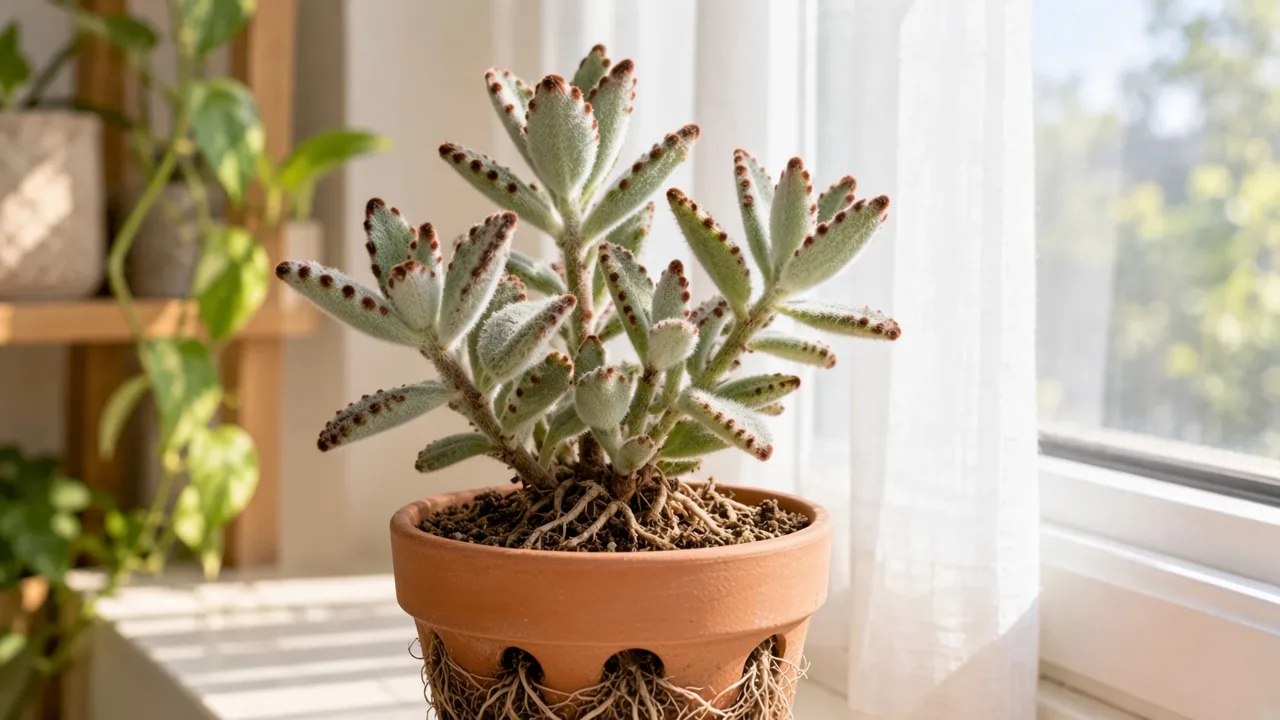
Slow Growth on Panda Plant: Natural Pace vs Stalled Stems & Care Fixes
This guide covers slow growth on Panda Plant. See also the general Slow Growth guide, watering, and light pages for this plant.
Slow Growth on Panda Plant: Natural Pace vs Stalled Stems & Care Fixes
Quick answer
A Panda Plant (Kalanchoe tomentosa) that shows little to no visible progress requires a balanced diagnostic assessment: this Madagascan succulent is naturally slow-growing, adding only 2 to 4 inches of height annually under optimal indoor care. However, if your plant produces zero new terminal leaves throughout the active spring and summer seasons, its metabolism is stalled by inadequate sunlight, a compacted, rootbound root system, chronic under-hydration, or hidden root pests. For universal growth rate metrics across houseplant families, review our global slow growth guide.
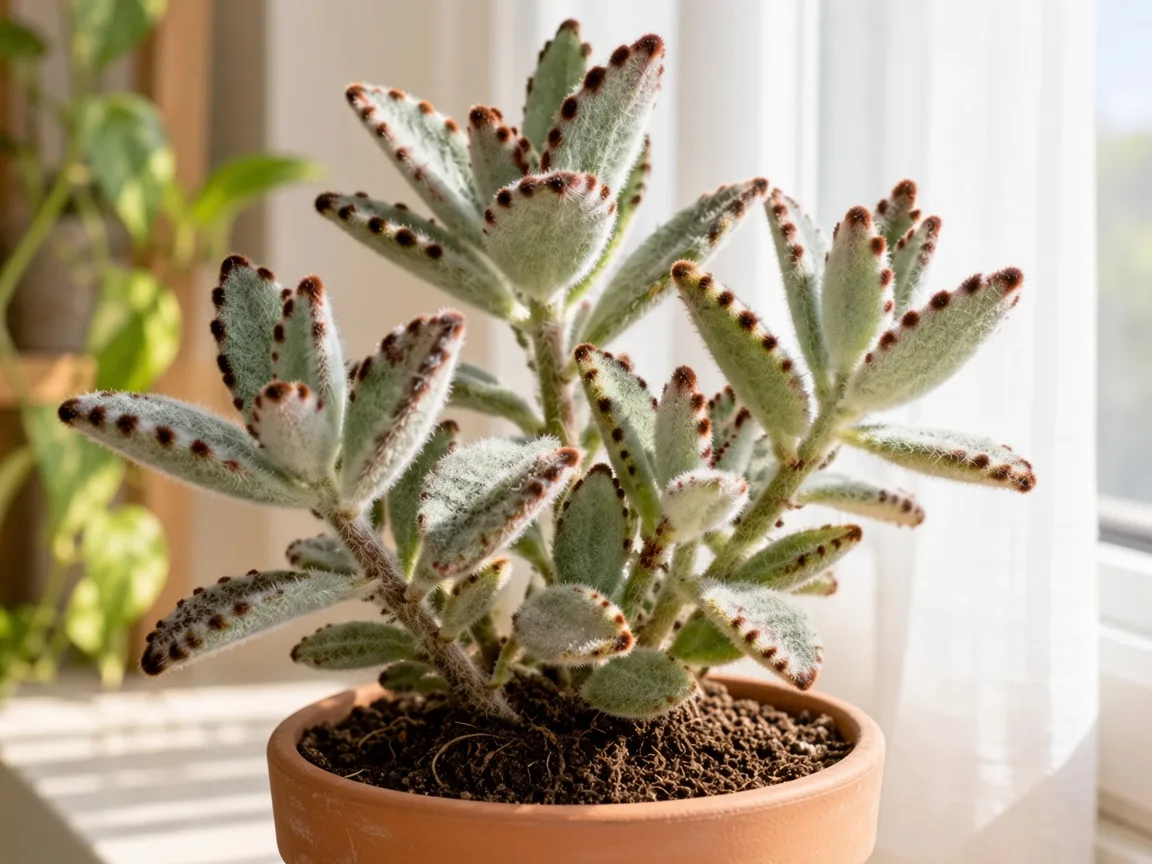
Stalled terminal buds and crowded root-bound soil at the crown of a Panda Plant with arrested growth. Your first fix is seasonal and diagnostic: during autumn and winter, respect its natural cool-weather dormancy by keeping soil mostly dry and withholding fertilizer. During spring and summer, slide the rootball out of its container to inspect root density and check for chalky white root mealybugs. If roots are circling tightly, repot into a container 1 inch wider filled with fresh, high-grit mineral substrate, and position the plant in bright morning sunlight.
Natural succulent pacing vs. pathological growth arrest
Before making major care adjustments, understand the species’ natural developmental rhythms:
- Natural growth pace: Kalanchoe tomentosa produces thick, water-retentive leaves covered in dense, felted trichomes. Constructing these complex, drought-adapted leaf structures requires significant photosynthetic energy. Producing one fully formed, chocolate-toothed leaf tier takes roughly 4 to 6 weeks during summer.
- Natural winter rest: As documented by the Royal Horticultural Society, Kalanchoes enter semi-dormancy between late October and March. Terminal bud development halts, water consumption drops to near zero, and the plant rests.
- Pathological stall: If temperatures are between 70°F and 85°F (21°C to 29°C) and the plant sits in bright summer light but fails to produce new terminal leaves over 90 days, an environmental or root-zone blocker is suppressing cell division.
Primary causes of stalled growth on Panda Plant
1. Light deficit (Low photon availability)
Photosynthesis powers cellular division and biomass accumulation. If a Panda Plant receives under 500 foot-candles of light, it produces just enough energy to keep existing tissue alive, with zero surplus for new growth. Review our Panda Plant light guide to verify that your windowsill supplies adequate irradiance.
2. Rootbound constriction and substrate exhaustion
Succulents in small nursery containers eventually fill the pot with a dense, spiraling mesh of roots. According to Clemson Cooperative Extension, a rootbound container suffers from severe water channeling—water streams straight down the container sides without wetting the compacted root core. Furthermore, decomposing old organic peat loses porosity and depletes trace minerals (potassium, iron, magnesium) essential for meristematic activity.
3. Chronic root dehydration
Succulents love drying out between waterings, but leaving a Panda Plant bone-dry for 6 to 8 consecutive weeks during the hot summer forces it into emergency estivation. Feeder roots desiccate and die back, causing the plant to burn its internal leaf water reserves just to maintain baseline cell turgor rather than developing new shoots.
4. Subterranean root mealybugs (Rhizoecus)
As highlighted by UW-Madison Extension, root mealybugs are specialized pests that live entirely below the soil line. They coat root strands in hydrophobic, powdery white wax and pierce delicate feeder roots to suck sap. Because the velvety aerial leaves show no obvious pests, growers frequently attribute the resulting growth arrest to generic ‘slowness’ until the plant begins shedding lower leaves.
Diagnostic checklist: What is stalling your plant?
| Symptom / Sign | Most Probable Cause | Diagnostic Check | Corrective Action |
|---|---|---|---|
| No new leaves in winter; plant looks healthy, firm, and silver | Natural seasonal dormancy | Normal cold-season pause (Nov–Feb) | Maintain dry soil → resume feeding in spring |
| Stems stretching tall, pale green; chocolate margins fading | Insufficient light | Measured light is under 400 foot-candles | Follow leggy growth guide → move to sun |
| Roots circling pot bottom tightly; soil dries in 24 hours | Rootbound constriction | Rootball slides out as a solid brick | Repot into 1-inch larger terracotta pot |
| Chalky white waxy deposits on outer rootball and pot interior | Subterranean root mealybugs | White powdery wax on root tips | Wash roots → drench with systemic insecticide |
| Lower leaves soft, translucent, dropping; soil damp | Overwatering / early rot | Soil stays wet >14 days; stem soft | Follow overwatering guide → dry out |
Step-by-step protocol to reignite healthy growth
If your Panda Plant is stalled during the spring or summer growing season, follow this revitalization plan:
Step 1: Rootball inspection and up-potting
- Gently slide the plant out of its pot when the soil is completely dry.
- If roots form a tight, solid cage around the rootball perimeter, gently loosen the outer root tips using your fingertips or a chopstick.
- Select an unglazed terracotta pot that is only 1 to 2 inches wider in diameter than the current container. Choosing an oversized pot leads to perched water accumulation and rot.
- Repot into a high-porosity mineral substrate consisting of 60% coarse pumice/perlite and 40% organic cactus mix, per our Panda Plant soil guide.
- Wait 7 days after repotting before applying water to allow any abraded root ends to callous over.
Step 2: Calibrate sunlight to 800+ foot-candles
Move the container directly onto an east-, south-, or west-facing windowsill receiving 4 to 6 hours of bright filtered sunlight or gentle direct morning sun. Strong light stimulates auxin and cytokinin production in the apical meristem, prompting the immediate unfurling of new terminal rosettes with rich chocolate margins.
Step 3: Implement proper soak-and-dry irrigation
During active spring and summer growth, water thoroughly whenever the top 75% of the pot has dried out:
- Pour room-temperature water around the soil perimeter until it streams freely from the bottom drainage hole.
- Empty the saucer within 15 minutes.
- Check depth with a wooden skewer every 7 to 10 days, watering again only when the skewer emerges clean and dry. Review our Panda Plant watering guide.
Step 4: Gentle micro-nutrient feeding
During active summer growth, feed your Panda Plant once every 6 to 8 weeks with a specialized low-nitrogen cactus and succulent liquid fertilizer diluted to quarter-strength (e.g., N-P-K 2-7-7 or 3-4-4). Never apply fertilizer to bone-dry soil—always moisten the mix lightly with clean water first to prevent root scorch.
Related tool
Use our Plant Growth Rate Calculator to benchmark your Panda Plant’s seasonal development against standard indoor growth rates and container sizing.
Related Panda Plant guides
- Panda Plant overview — comprehensive natural history and species care profile
- Light guide — sunlight intensity requirements to fuel active cellular growth
- Watering guide — soak-and-dry irrigation cycles for growing seasons
- Soil guide — mineral grit formulations to prevent root compaction
- Pruning guide — pinching apical buds to stimulate branching and bushy growth
- All Panda Plant problems — complete species diagnostic index