Aphids on Philodendron Burle Marx: Causes, Checks & Fixes
Quick answer
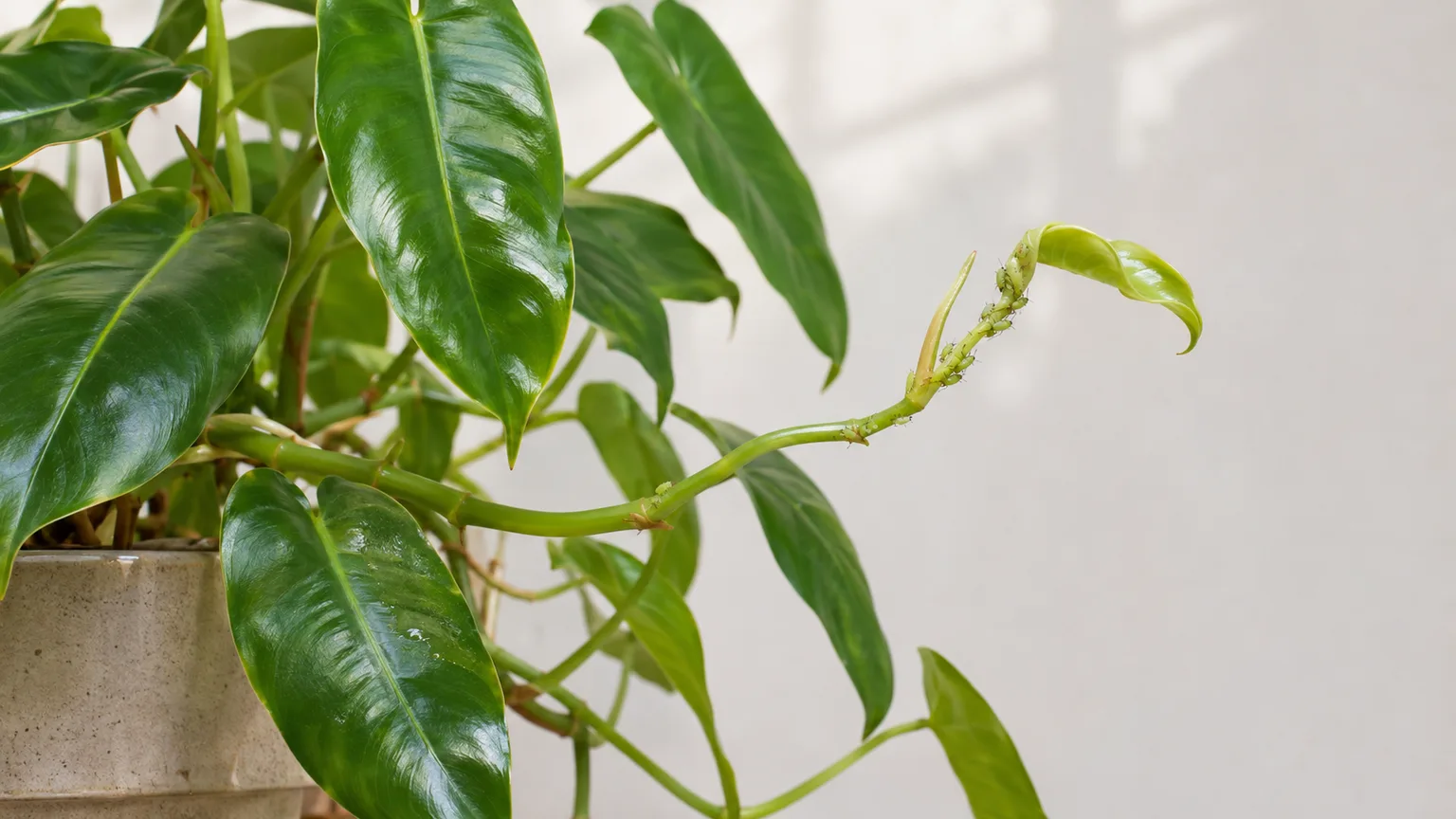
Aphids on Philodendron Burle Marx cluster on creeping runner tips and unfurling elongated leaves, leaving sticky honeydew that dulls the glossy foliage. First step: isolate the plant and rinse every runner tip and leaf underside with lukewarm water, then recheck in three to four days before spraying anything.
Aphids on Philodendron Burle Marx: Causes, Checks & Fixes
This guide covers aphids on Philodendron Burle Marx. See also the general Aphids guide, watering, and light pages for this plant.
Aphids on Philodendron Burle Marx: Causes, Checks & Fixes
Quick answer
Aphids on Philodendron Burle Marx gather on the creeping runner tips and the newest unfurling leaves, where the sap runs richest in this fast trailer. Look for tiny soft insects packed along a runner end, glossy elongated leaves turned sticky with honeydew, and new leaves opening curled or stunted. First step: isolate the plant and rinse every runner tip and leaf underside with lukewarm water, then recheck in three to four days before spraying anything.
For how aphids reproduce and why water knockdown works in general, see our aphids pest guide. On Burle Marx, the pattern usually shows up as tip-by-tip colonies along horizontal runners rather than one central crown, so you have to trace each runner to its end instead of checking a single growing point.
What aphids look like on Philodendron Burle Marx
Burle Marx leaves are narrow, elongated, and glossy, which makes aphid damage easy to spot once you know the pattern:
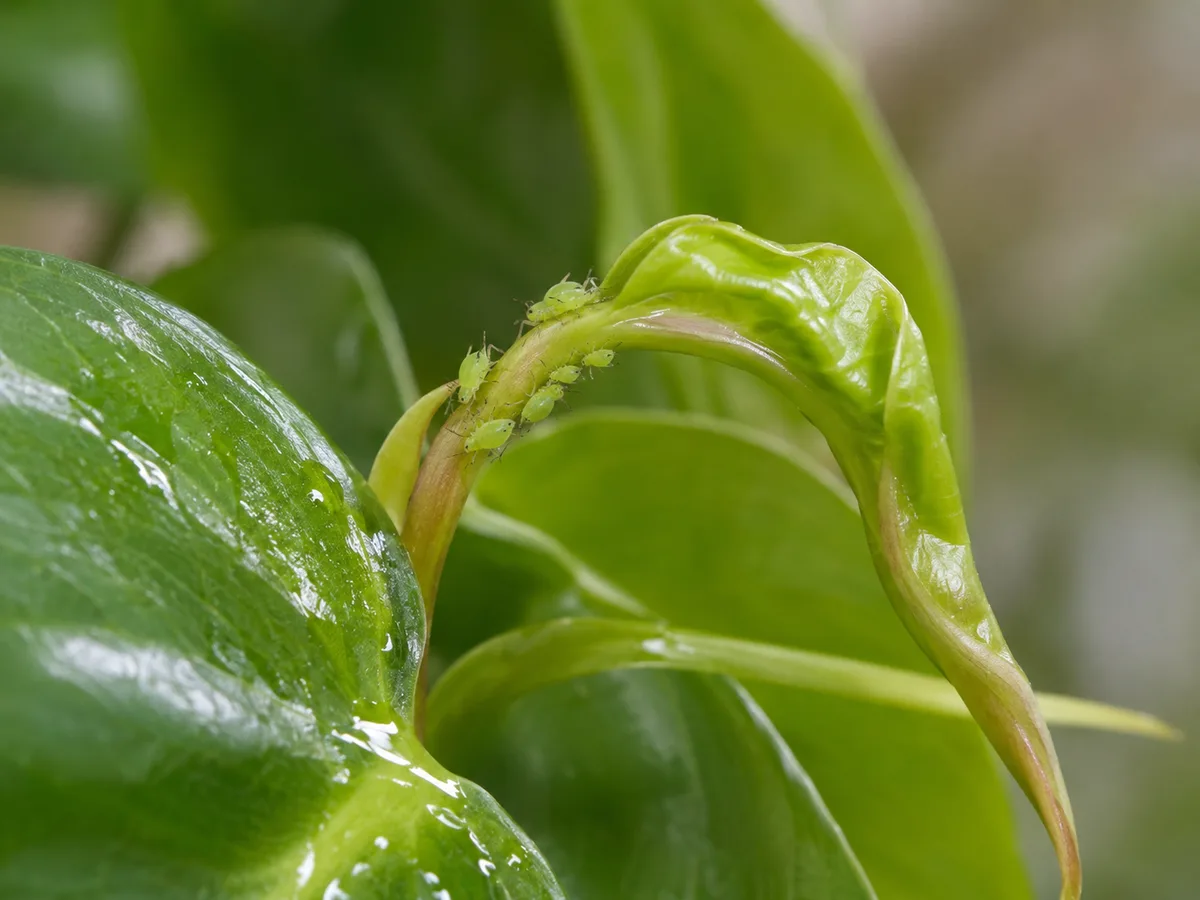
Aphids gather on tender runner tips and newly unfurling leaves, where feeding can distort new growth.
- Clusters of small (roughly 1/16 to 1/8 inch), soft-bodied insects in green, black, yellowish, or pink, packed on runner tips, unfurling leaves, and stem joints
- New elongated leaves opening curled, puckered, or stunted while older hardened leaves look normal
- A sticky, shiny film of honeydew on the glossy leaf surfaces below the colony
- Black sooty mold growing on untreated honeydew, dulling the shine Burle Marx is grown for
- White cast skins shed on leaves and around the pot rim after molting
- Ants traveling up the pot sides toward runner tips to farm the colony
Philodendrons are generally pest-free indoors, but aphids, mealybugs, scales, and spider mites can infest them, and Burle Marx most often shows aphids exactly where new growth is softest. Because this plant creeps rather than climbing, colonies hide under runner leaves pressed near the soil surface and in the leaf axils where each new leaf sheath wraps the stem. Check the overview of this plant’s creeping habit if you are unsure which stems count as runners.
Why Burle Marx gets aphids
Every runner tip is a target. Aphids prefer tender new growth near shoot tips, and a trailing Burle Marx carries several active tips at once across its runners. Each tip pushes soft elongated leaves in succession during warm weather, so one overlooked runner end can feed a colony while the rest of the plant looks fine.
Entry routes are predictable. Aphids arrive on new plants or through open windows and spread plant to plant by crawling or flying. The usual Burle Marx story is a new nursery plant placed beside the collection without quarantine, a summer spell near an open window, or a stint outdoors on a patio that brings winged hitchhikers back to the runner tips.
Soft nitrogen-flushed growth invites them. Aphids thrive on lush new growth, so overfertilizing makes the problem worse. Burle Marx needs only light feeding in active growth, and a heavy dose that pushes floppy, oversized leaves creates exactly the succulent tissue colonies prefer.
Indoors there is no backup. Outdoors, predators such as ladybugs and lacewings keep colonies in check. Inside, a few insects on one runner tip can coat several tips within a week or two of warm weather, and without winter cold to pause breeding, indoor aphids multiply fast.
How to confirm the cause
Work runner by runner, in this order:
- Trace each runner to its tip. Lift trailing stems and follow every one to its growing end. Aphid colonies sit on the newest unfurling leaf and the tender centimeter of stem behind it.
- Check leaf undersides and axils. Turn over the two or three youngest leaves per runner and peer into the sheath where each leaf meets the stem. Undersides of leaves and stems are classic aphid positions.
- Do the wipe test. Dab a suspect cluster with a damp fingertip or cotton swab. Aphids are pear-shaped insects that cluster in large numbers on new growth and crush soft; mealybugs smear waxy and white, and scale bumps stay hard and fixed.
- Read the sticky evidence. Shiny honeydew on leaves below a tip, black sooty mold growing on that honeydew, and ants on the pot rim all point to a sap-feeding colony above.
- Map the spread. Note whether colonies sit on one runner or all of them. One infested runner is a rinse-and-watch job; every tip coated plus sticky lower leaves means plan for soap treatment after the first wash.
First fix for Philodendron Burle Marx
Isolate the plant and wash every runner in lukewarm water. Carry Burle Marx to a sink or shower, wrap a plastic bag around the wide shallow pot so the creeping surface stems and mix stay put, and rinse each runner tip and both leaf surfaces with a firm but gentle stream. Pay particular attention to the undersides of leaves, and repeat the wash every few days since disturbed aphids drop and climb back.
This is the whole first fix: one thorough wash, not wash plus spray plus prune plus repot on the same day. Washing also clears honeydew and sooty mold off the glossy leaves so you can see what is new damage versus old residue at the next check.
Step-by-step recovery
After the first wash, escalate only if live colonies persist at the three-to-four-day recheck:
- Prune the worst runner section. If one tip is so coated that spray could never reach every insect, snip that section off and bin it (not compost). Removing heavily infested leaves and shoots beats drenching the whole plant.
- Spot-treat stragglers with alcohol. Dab remaining clusters with a cotton swab moistened in rubbing alcohol. Test on a single leaf first and wait a few days since strong alcohol can mark glossy Burle Marx foliage.
- Apply insecticidal soap if colonies hold. Use a commercial insecticidal soap per label, coating runner tips and leaf undersides, and repeat every few days until the infestation is under control. Spray in mild light, never on a sun-baked plant, and let leaves dry before returning the pot to a bright sill.
- Consider neem oil for stubborn cases. Neem works by contact and disrupts feeding and reproduction, so it must hit the insects directly and be repeated weekly. It is a follow-up, not a substitute for the wash.
- Break the ant link. If ants keep returning to the pot, wash the saucer and pot exterior and move the plant away from the ant trail until colonies are gone. Ant-defended aphids survive rinsing far longer.
- Save a clean backup cutting. Burle Marx roots readily from stem sections with nodes in water or moss. If one runner is clean, root a node cutting as insurance while the parent recovers (see propagation).
All parts of philodendrons contain calcium oxalate crystals that irritate mouth and skin, so wash your hands after handling rinsed foliage and keep cuttings away from pets and children.
Recovery timeline
Burle Marx is a willing grower, so recovery reads at the runner tips:
- Days 1–7: Live colony numbers fall after each wash; honeydew stops accumulating on lower leaves. Sticky residue already present stays until wiped.
- Weeks 2–3: New leaves at rinsed tips unfurl flat and glossy instead of puckered. Lightly curled older leaves stay as they are; only new growth tells the story.
- Weeks 3–4: Clean runner extension resumes and sooty mold wipes away without returning. If every tip still pushes distorted leaves after a month of consistent treatment, the colony is surviving somewhere (usually an unrinsed runner or ant-defended joint) rather than the plant being permanently damaged.
Lookalike symptoms to rule out
| What you see | Likely cause | Confirm test | First action |
|---|---|---|---|
| Soft pear-shaped insects on runner tips, sticky leaves | Aphids (this page) | Wipe crushes soft and green | Wash runners, recheck in days |
| White cottony masses in leaf axils and stem joints | Mealybugs (mealybug guide) | Wipe smears waxy white/pink | Alcohol dab, then soap |
| Fine webbing plus stippled dull leaves | Spider mites (spider mite guide) | Tap leaf over white paper for moving specks | Wash plus humidity check |
| Silvery scraped patches, tiny fast dark insects | Thrips (thrips guide) | Silver scarring on new leaves | Wash plus sticky traps |
| Uniformly pale plant, no insects, dry mix | Underwatering or low light, not pests | Mix dry deep, no honeydew anywhere | Correct watering and light first |
If leaves are sticky but you find no insects at any runner tip, suspect a colony you missed under a soil-hugging runner rather than a different disease. Finish the full runner trace before switching diagnoses.
Mistakes to avoid
- Spraying before washing. Soap and neem on top of honeydew and sooty mold coat the residue, not the insects. The wash comes first so follow-up sprays reach aphid bodies.
- Checking one tip and stopping. A Burle Marx with five runners can harbor colonies on two while three look clean. Every untreated tip re-seeds the plant within days.
- Overfertilizing during treatment. Extra nitrogen pushes the soft growth aphids want. Hold feeding until new leaves open clean, then resume the light schedule described in the fertilizer guide linked below.
- Repotting mid-outbreak. Aphids live on shoots, not in mix, so repotting adds root stress without removing pests. Keep the plant in its wide shallow pot (see soil for why that shape matters) and treat the foliage.
- Rubbing glossy leaves raw. Wiping sooty mold off with force scratches the shine permanently. Soften residue with a lukewarm damp cloth instead of scouring.
Burle Marx care cross-check
Aphids attack healthy and stressed plants alike, but firm, well-lit growth outgrows damage faster:
- Light: Bright indirect light keeps new leaves compact and glossy; weak light stretches runners into soft etiolated tips aphids colonize first. See light.
- Water: Let the top few centimeters of mix dry between soakings rather than watering by calendar (see watering). A wide pot whose center stays soggy slows runner vigor without causing aphids directly, so fix the dry-down rhythm while treating.
- Air and spacing: Good airflow around trailing runners dries honeydew-free foliage faster and makes weekly tip inspections practical. Uncrowd the basket so you can lift each runner.
- Feeding: Resume only light half-strength feeding in active growth once tips are clean. Heavy extra doses grow aphid food, so stay with the conservative routine.
How to prevent it next time
- Quarantine every newcomer. Keep new or returning-outdoor plants isolated about a month and inspect regularly before mixing them with the collection. Burle Marx runners touch neighbors easily on a crowded shelf, so distance matters.
- Inspect tips weekly in warm months. A ten-second lift-and-look at each runner end catches colonies of a dozen before they become colonies of hundreds.
- Feed lightly. The monthly half-strength routine grows firm leaves; heavy extra doses grow aphid food.
- Wash dust off seasonally. An occasional gentle shower keeps leaves glossy, removes stray honeydew early, and forces you to look at every runner.
- Prune for inspection access. Use clean cuts to remove tangled, soil-buried runner sections you cannot see into (see pruning). Fewer hidden joints means fewer hiding places.
When to worry
Treat the same day when all runner tips are coated, sooty mold spreads across multiple leaves, or ants defend colonies through repeated washes. A plant with zero clean growing tips cannot recover on rinsing alone and needs the soap step without delay. If the whole plant is sticky, distorted, and stalled after a month of correct treatment, take clean node cuttings if any exist and consider discarding the parent; heavily infested plants may be too damaged to save, and one sacrificed plant can protect the rest of the shelf.
Related Philodendron Burle Marx guides
- Philodendron Burle Marx overview — start here for this plant’s creeping habit, placement, and general expectations.
- Watering — use when the mix never dries or runners stall; fixes vigor so treated tips regrow cleanly.
- Light — use when runners stretch pale and soft; firms up the new growth aphids target.
- Soil — use when a tall narrow pot keeps the creeping center soggy; wide shallow pots suit this plant.
- Fertilizer — use before resuming feeding after treatment; keeps new shoots firm, not lush and aphid-prone.
- Pruning — use when removing infested runner sections or opening the plant for inspection.
- Propagation — use when rooting a clean node cutting as backup while the parent recovers.
- For other pest identities (cottony masses, webbing, fast tiny insects), use the global mealybug, spider mite, and thrips guides rather than this aphid page.
Related tool
Use the Pest Identifier Tool to narrow causes for aphids on this plant before changing multiple variables at once.