Aphids on Philodendron Ring of Fire: Signs, Checks and Safe
Quick answer
Aphids on Philodendron Ring of Fire cluster on the soft unfurling leaf, along serrated edges, and where leaves press against a climbing support. First, isolate the plant from nearby houseplants; then remove the visible colony with a controlled rinse and recheck the next new leaf before using any spray.
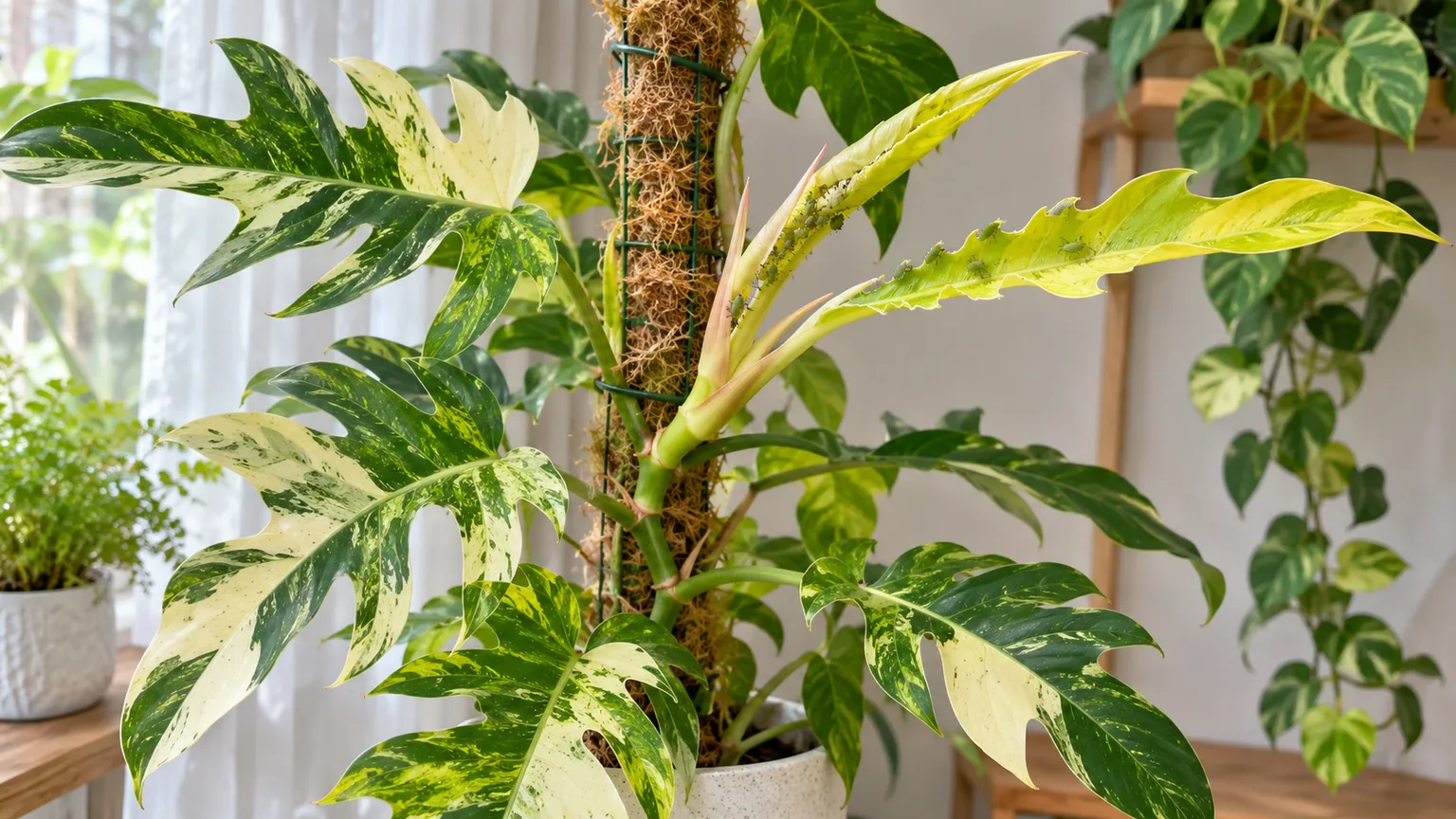
Aphids on Philodendron Ring of Fire: Where They Hide and How to Clear Them
This guide covers aphids on Philodendron Ring of Fire. See also the general Aphids guide, watering, and light pages for this plant.
Aphids on Philodendron Ring of Fire: Where They Hide and How to Clear Them
Quick answer
Aphids on Philodendron Ring of Fire are easiest to catch at the newest growth: look for tiny, soft-bodied insects gathered inside the unfurling spear, under the youngest leaf, or along its jagged edges. First isolate the plant from nearby houseplants. Then remove the visible colony with a controlled rinse aimed at the leaf undersides, and recheck the next spear before deciding whether a product is needed. Sticky film or a puckered leaf alone does not confirm aphids.
Aphids are listed among the pests to watch on philodendrons generally: NC State’s philodendron profile names aphids alongside spider mites, mealybugs, and scale, and Clemson’s philodendron factsheet says the same. Those sources support aphids as a possible pest on this genus; they do not establish that Ring of Fire is unusually susceptible. The useful evidence is the insect and its feeding pattern, not the plant’s price tag or variegation.
For general aphid biology and management, see the aphids guide. The checks below focus on where aphids hide on a serrated, variegated climber and how to treat it without scorching pale sectors or tearing a new leaf.
What aphids look like on Ring of Fire
Aphids are very small, soft-bodied, pear-shaped insects, usually well under a quarter inch long. On houseplants they can be green, black, pink, gray, or white, so color alone is not a reliable test; The Spruce’s indoor guide describes this color range and notes that aphids move between houseplants by crawling or flying. Look for a cluster of slow-moving insects rather than a single speck, and use a phone light or magnifier when the colony is young.
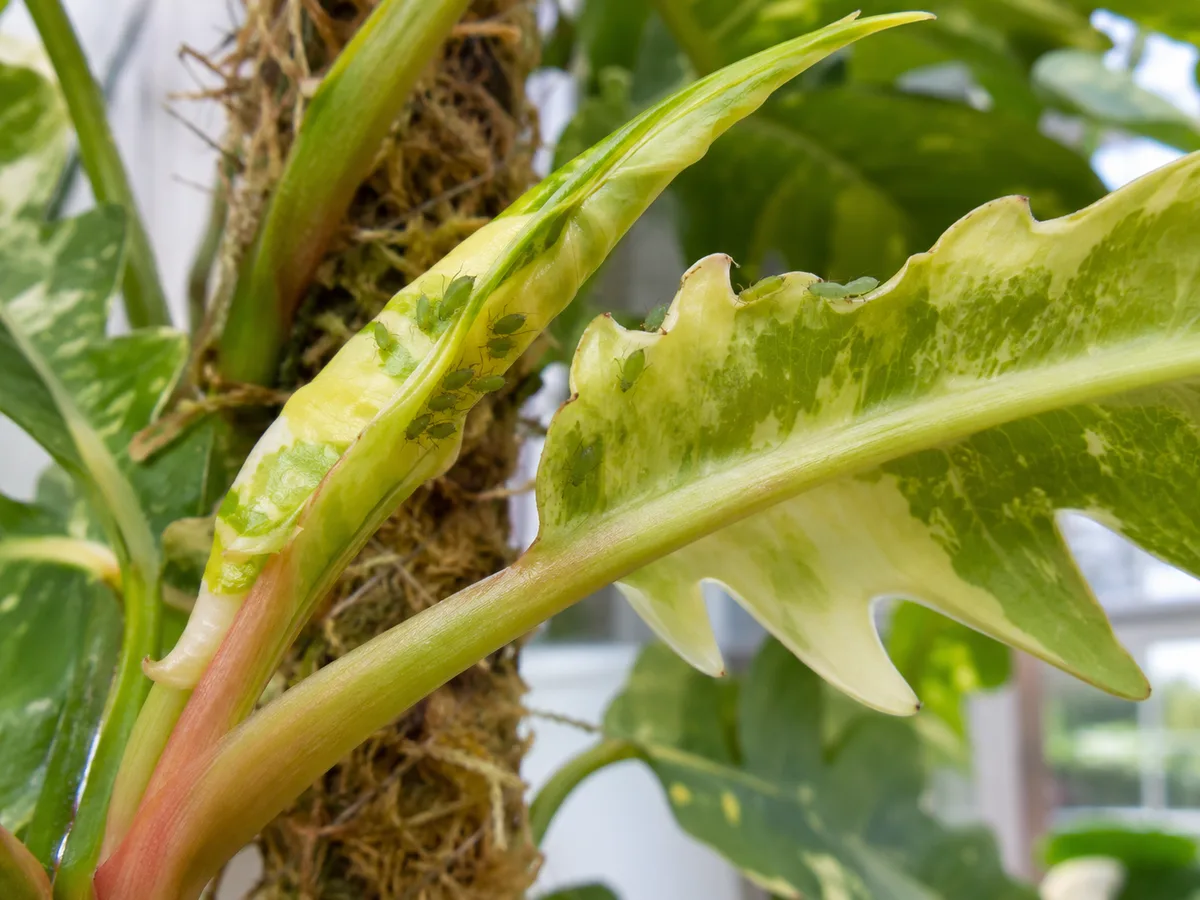
Aphids gather on soft new tissue, especially inside a leaf fold and along serrated margins.
Because they feed on sap, aphids concentrate on tender tissue. The RHS aphid guide notes that many species colonize shoot tips, flower buds, and the undersides of younger leaves, and that feeding can cause stunted growth with curled or distorted leaves. On Ring of Fire that distortion shows up on the leaf that was expanding while the colony fed, often as a pucker near the midrib or a crease along one of the serrated teeth.
Colonies also leave a sticky residue. The RHS guide explains that many aphids excrete honeydew on which black sooty moulds can grow. On Ring of Fire, honeydew is most obvious on the glossy green sectors or on the leaf below the colony, and dark mould specks stand out sharply against cream or yellow variegation. Wipeable stickiness is a supporting clue, not a diagnosis on its own.
Where they hide on this plant
Ring of Fire’s mature leaves have deep serrations with pointed teeth, and colonies settle into the notches between teeth where a quick top-down glance misses them. Tilt each new leaf and run your eye along both margins, checking the valleys between points as well as the midrib on the underside. A colony tucked into one notch can feed for days before the damage reads as anything more than a slightly uneven edge.
The unfurling spear is the highest-risk spot. A new Ring of Fire leaf emerges reddish and tightly rolled, and aphids work their way into the fold where fingers and casual sprays cannot reach. Do not force the spear open to look inside; tearing it creates damage that mimics feeding distortion. Instead, inspect the outside of the roll, the petiole below it, and the stem joint, and wait until the blade opens enough to check the underside properly.
On a climbing plant, check where foliage meets the support. Ring of Fire grows best with a moss pole or trellis, and the backs of leaves and petioles that rest against the pole stay shaded, humid, and easy to overlook. Move around the plant and look behind each contact point rather than dismantling the support. A sticky lower leaf may be catching honeydew dripping from a colony higher up, so trace any residue upward toward the nearest growth tip before you start wiping.
How to confirm aphids before treating
Work through this short sequence before reaching for a spray:
- Find live insects. Check the unfurling spear, the underside of the newest opened leaf, and the nearest stem joint with a light or magnifier. Aphids are tiny, soft-bodied, and usually grouped together.
- Look for a matching trace. Check for sticky honeydew on the leaf below the colony or on the support. Residue without visible insects is not enough to name the pest.
- Compare new and old leaves. Feeding is more plausible when the newest tissue is puckered and a colony is present. A stable variegation pattern or an old scorch mark without insects points elsewhere.
- Trace the margins. Inspect the serration notches on the two youngest leaves, since colonies hide in the valleys between teeth.
- Check the neighbors. Look at new growth and leaf undersides on adjacent houseplants, but leave clean plants in place; do not spray a whole shelf because one plant has aphids.
Reddish new growth can mask pink or red aphid species, and cream variegation can look like chlorosis at a glance. Keep the diagnosis anchored to verifiable signs: clustered moving insects, sticky deposits, and fresh distortion on tissue that was expanding. Gardening Know How’s indoor aphid guide names new growth, stem tips, and leaf undersides as the standard inspection points, which matches exactly where Ring of Fire colonies settle.
Why aphids show up on an indoor Ring of Fire
An aphid colony does not point to a failure of care. Aphids can arrive on a new plant or drift over from an infested neighbor, so consider recent purchases, cuttings, and any summer spell outdoors when tracing the source. A healthy root zone does not make a plant pest-proof; check where the colony is feeding before changing the regular routine.
Tender growth explains the location. Each new spear is softer and richer in sap flow than a mature, firm blade, and its rolled shape shelters insects until the leaf opens and the distortion suddenly becomes visible. This is why an infestation can seem to appear overnight: the colony was present in the fold before the damage was obvious.
Feeding history matters too. The Missouri Botanical Garden’s aphid guidance notes that aphids multiply more rapidly with high nitrogen levels. That does not make routine fertilizer the cause of every outbreak, but it is a reason not to push a soft flush of growth with extra feeding while a colony is active. Hold off on growth-chasing doses until the infestation is under control, then return to the plant’s normal schedule.
Ring of Fire prefers warm, humid, bright conditions indoors; NC State notes temperatures between 65 and 85 degrees Fahrenheit with partial shade for this group. Those same warm conditions let indoor aphid colonies reproduce without a winter pause, so repeat inspections over several weeks matter more than any single treatment.
First fix: isolate the plant
Move the Ring of Fire away from neighboring plants before rinsing or pruning. Choose a bright spot with filtered light where you can inspect all sides, and avoid carrying it through dense foliage with leaves brushing other plants. Keep it separated while you remove the colony and until repeat checks show no live insects.
Isolation comes first because it sets a boundary: you will know which nearby plants to inspect and you lower the chance that mobile aphids, including winged forms from an established colony, reach fresh growth on adjacent pots. You do not need to discard the plant or clear the room; the goal is containment plus a clear inspection zone.
Remove the visible colony with a controlled rinse
After isolation, rinse aphids from the leaves and stems with a steady, moderate stream of lukewarm water over a sink, shower, or outdoor spot where runoff is manageable. Support each leaf near its midrib with your free hand and aim at the underside, where the insects cluster. Use enough pressure to move the insects without bending petioles sharply or tearing the unfurling spear; for a still-rolled leaf, rinse the outside of the roll and the petiole rather than forcing water into the fold.
Plain water is a legitimate first treatment, not just a prelude. The Missouri Botanical Garden recommends spraying aphids off plants with plain water or removing them by hand with a cloth. For serration notches a colony clings to, follow the rinse by wiping the valleys between teeth with a damp cloth or cotton swab. Wear gloves or wash promptly afterward: Clemson notes that philodendron tissues contain calcium oxalate crystals that irritate skin and mouth, so avoid chewing contact and keep the plant away from pets and children during handling.
Let the pot drain fully after rinsing. The aim is to wash foliage, not to add a second watering while the mix is already moist. If water ran into the pot, lift the nursery pot from any cachepot until drainage stops, then resume the normal moisture check described in the Ring of Fire watering guide. Wipe remaining honeydew with clean water so old stickiness does not get mistaken for a live colony later, then recheck the undersides under good light. One pass rarely removes every insect hidden in a fold, so repeat the rinse or hand removal if moving aphids remain.
When a labeled contact product is warranted
If colonies return after careful washing, cover several growth points, or keep appearing on each new spear, consider a commercially labeled insecticidal soap or horticultural oil registered for aphids on indoor ornamentals. Choose a product whose label covers both the pest and indoor ornamental use, and follow that label for dilution, coverage, protective equipment, and repeat timing. A kitchen-detergent recipe is not a substitute for the label.
Contact products only reach insects the spray touches, so thorough coverage of undersides and serration notches matters more than concentration. The Missouri Botanical Garden advises using insecticidal soap in moderation since it can also kill beneficial insects. On Ring of Fire there is an extra reason for restraint: pale cream and yellow sectors mark and scorch more readily than green tissue. Test a small, discreet area first, wait the interval the label specifies, and only then treat more foliage. Apply out of direct sun and let leaves dry before returning the plant to its usual bright position.
Do not stack products, raise the labeled concentration, or combine soap with oil to make the spray stronger. Do not reach for a broad-spectrum insecticide as a first response to a small colony. If the test area reacts poorly or a labeled product does not suit the room, stop and continue with manual removal while you reassess.
Lookalikes that need a different response
| What you notice | What it suggests | How to separate it from aphids |
|---|---|---|
| Clustered pear-shaped insects on a new spear or leaf underside, plus sticky film | Aphids are likely | Confirm grouped, moving, soft-bodied insects before treating. |
| Fine pale stippling with delicate webbing, no honeydew | Spider mites may be more likely | Webbing and pinprick marks follow a different pattern; check the plant’s pest guides for confirmation steps. |
| White waxy or cotton-like tufts at joints and crevices | Mealybugs may be more likely | The coating is woolly rather than exposed insects; compare carefully before choosing a treatment. |
| Stable cream, yellow, or orange sectors with no insects or stickiness | Normal variegation | Variegation is symmetrical, stable tissue, not a spreading colony; no treatment needed. |
| Scorched or bleached pale patches after a move into sun | Light exposure | Check recent placement against the Ring of Fire light guide rather than spraying. |
| Yellowing older leaves with clean new growth and no colony | Watering or root-zone issue | Review soil moisture with the Ring of Fire watering guide instead of treating for pests. |
These patterns can overlap: an old sun mark can sit beside an active colony, and wiped honeydew can outlast the insects that made it. If symptoms continue after no live aphids are visible, confirm the cause again rather than repeating the same treatment.
What recovery looks like on Ring of Fire
The first sign of progress is fewer live aphids and no fresh honeydew after cleaning. Next, check that the same spear and neighboring growth points stay clear over the following weeks. Because indoor colonies reproduce continuously, schedule at least two or three follow-up inspections, timed to each new leaf as it unfurls.
A leaf that expanded with distortion usually keeps that shape. Removing aphids stops further feeding; it does not straighten tissue that formed with a crease or a puckered serration. Keep a leaf if most of the blade is firm, and remove only a badly damaged or heavily infested one when cleaning is impractical. Use clean scissors, keep enough healthy foliage for the climber to keep growing, and remember the handling caution above when cutting.
The clearest recovery marker is the next fully opened leaf: it should unfurl without a colony, with petiole and stem firm and new serrations forming evenly. Growth pace varies with season, light, and root condition, so a pause in new leaves alone does not prove aphids remain. If distortion keeps appearing on successive spears, return to the underside and notch checks; if the plant’s overall vigor is declining without visible insects, compare care against the Ring of Fire overview rather than escalating sprays.
Prevent aphids from settling on the next leaf
Inspect each new spear from both sides as it opens, including the serration notches and the section resting against the support. Once the blade opens fully, check nearby leaves and any sticky spots beneath it. A short, repeatable check at each new leaf beats waiting until several leaves are distorted or tacky.
Quarantine recently purchased plants or cuttings long enough to inspect more than once; a single clean glance at upper leaves cannot rule out a small colony inside a fold. If aphids were confirmed, wipe down a visibly contaminated cachepot or support, and check neighboring plants before returning Ring of Fire to its display spot.
Feed at the plant’s usual rate rather than adding nitrogen to force faster growth while a colony is active, since high nitrogen favors aphid reproduction. Keep the plant in bright filtered light and water when the top few centimeters of the chunky mix have dried, as described in the Ring of Fire watering guide. These steps support steady growth but do not act as pesticides. Avoid calendar spraying: treat a confirmed colony when you see it, and otherwise keep checking the places aphids favor so pale sectors are not exposed to unnecessary products.
When to use this page vs other Ring of Fire guides
Use this page when you can see small clustered insects on a new spear, leaf underside, or serrated margin and want to confirm aphids before choosing a treatment. If no insects are visible, start from the symptom instead: yellowing, scorch-like pale patches, or soggy mix each point to care guides rather than pest treatment. The Ring of Fire overview covers cultivar identity and whole-plant context, the watering guide addresses root-zone questions after rinsing, the light guide helps separate scorch marks from feeding damage, and the soil guide is the right next page when the mix stays soggy or drains poorly.
Related Ring of Fire guides
The overview sets cultivar context and whole-plant care; the watering and soil guides cover root-zone questions that rinsing can raise; the light guide helps compare scorch-like marks on variegated sectors with pest damage. Work from visible insects first, then follow the care guide that matches any remaining symptom.
Related tool
Use the Pest Identifier Tool if you can see insects but need help separating aphids from mites or mealybugs before treating the plant.