Low Humidity on Philodendron Ring of Fire: Causes, Checks &
Quick answer
Dry indoor air shows on Philodendron Ring of Fire as brown, crispy edges on the jagged leaf margins and pale variegated sectors, plus new spears that unfurl slowly or tear. First step: run a small humidifier near the plant to hold steady 55-70% humidity, away from heating vents and cold drafts.
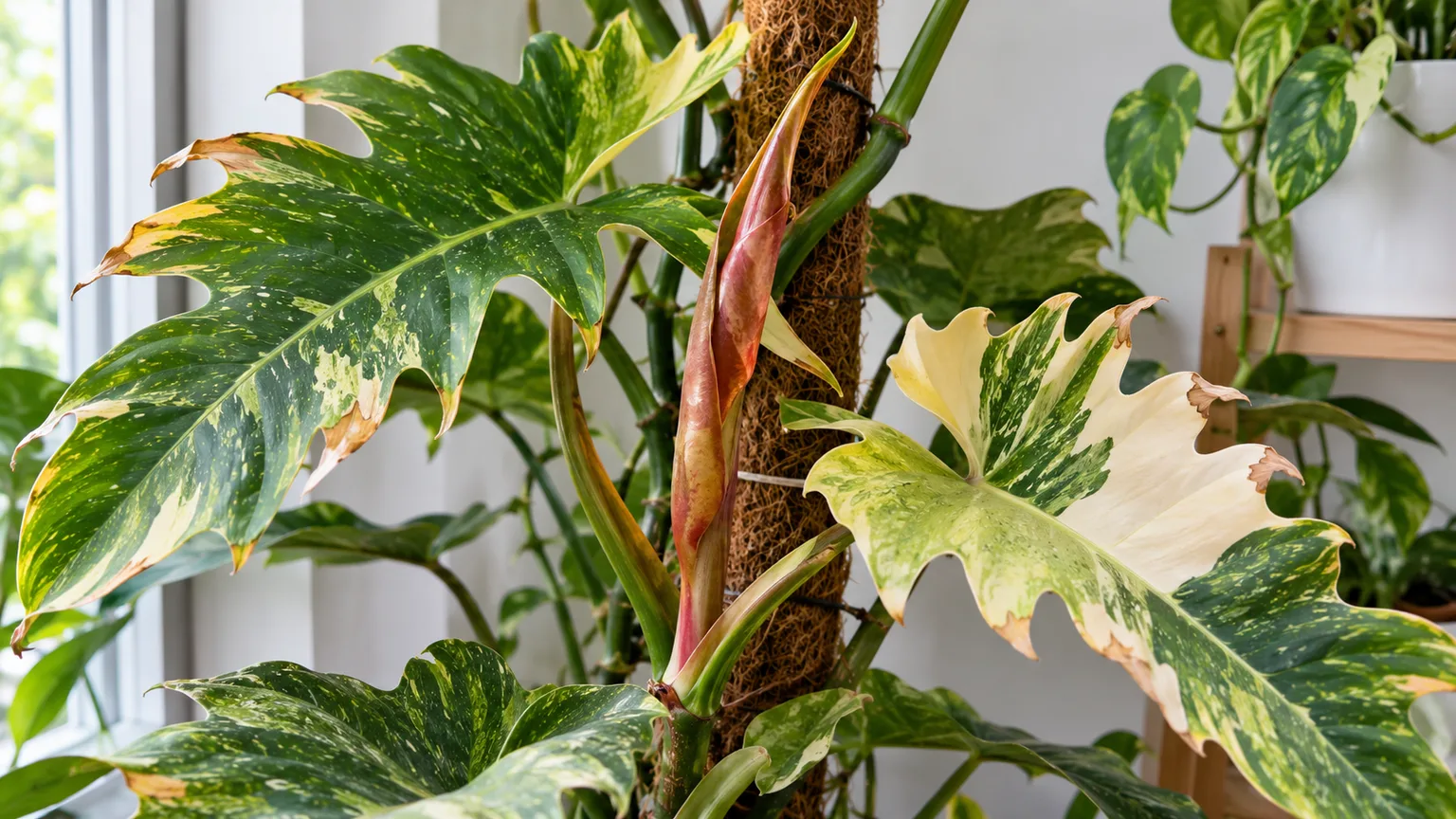
Low Humidity on Philodendron Ring of Fire: Causes, Checks & Fixes
This guide covers low humidity on Philodendron Ring of Fire. See also the general Low Humidity guide, watering, and light pages for this plant.
Low Humidity on Philodendron Ring of Fire: Causes, Checks & Fixes
Quick answer
Dry indoor air shows on Philodendron Ring of Fire as brown, crispy edges along the jagged, serrated margins and on the pale cream or yellow variegated sectors, while the rest of the leaf stays green. New spears may unfurl slowly, stick, or tear at the edges. For how dry air stresses houseplant foliage in general, see our low humidity guide. On Ring of Fire, the damage concentrates exactly where the leaf is thinnest and palest — the serrated teeth and variegated patches.
First step: run a small humidifier near the plant to hold steady 55–70% humidity, with the plant away from radiators, heating vents, and cold drafts. Give it one to two weeks at stable humidity before changing anything else, so you can read whether the crisping has stopped.
What low humidity looks like on Ring of Fire
On this cultivar, dry air rarely yellows whole leaves. Instead you see narrow brown, papery rims on the serrated teeth of mature leaves, often starting on the palest variegated sectors first. Those white, cream, and soft-yellow patches hold less chlorophyll and dry out faster than the deep-green tissue beside them, so a leaf can look half-healthy and half-scorched at the same time.
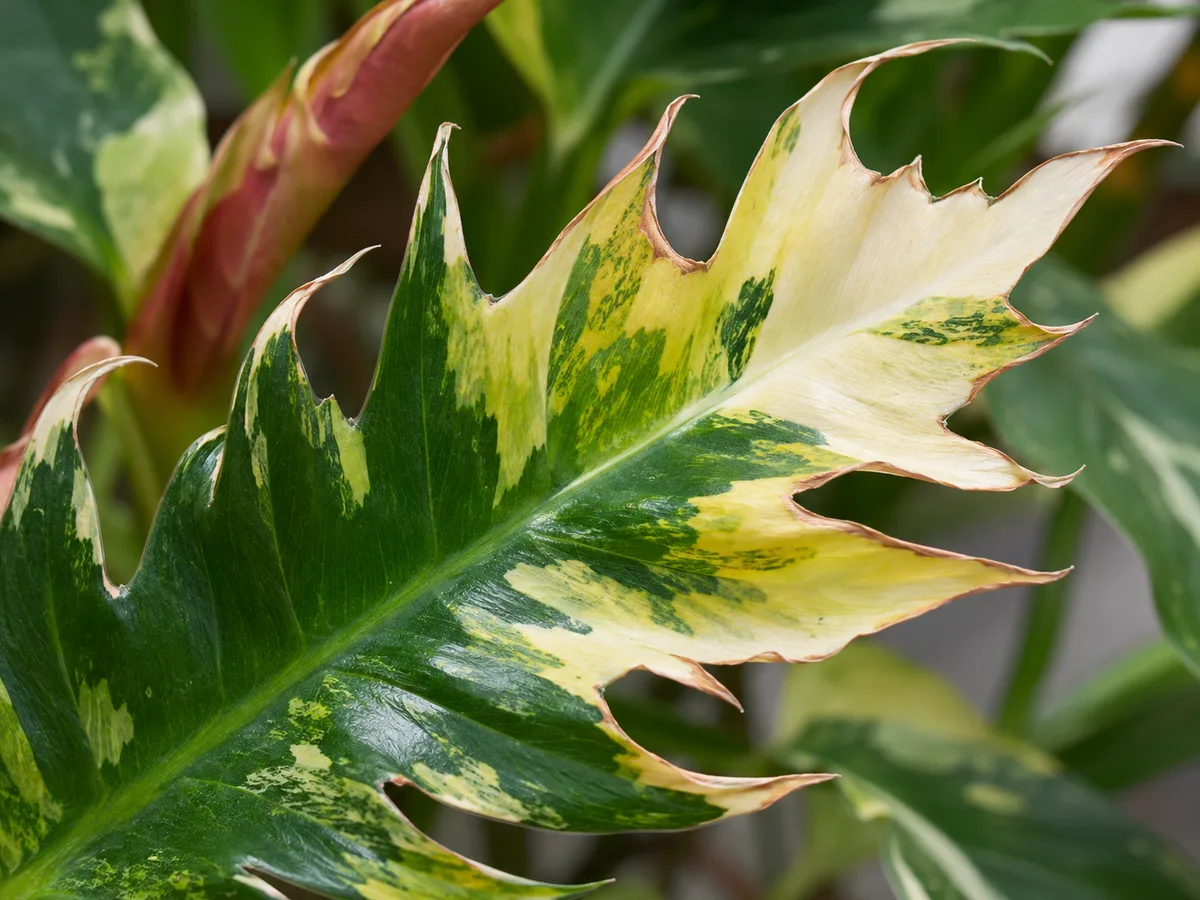
Dry air often marks the thin serrated teeth and pale variegated sectors first, while the central blade stays green.
New growth tells the story even earlier. Emerging spears may sit furled for an extra week or more, unfurl with a stuck tip, or split along one edge as the sheath dries before the blade inside is ready. Because Ring of Fire leaves emerge reddish and harden into their dramatic patterns, a spear that stalls in dry air often opens smaller and duller than the leaf before it.
Why Ring of Fire suffers first in dry air
Ring of Fire is a tropical climbing aroid grown for oversized, deeply serrated, multicolor leaves — a lot of thin leaf surface relative to its root system. NC State Extension describes closely related blushing philodendrons as preferring warm temperatures, high humidity, and moist, well-drained soil rich in organic matter, which matches this cultivar’s rainforest ancestry. When heated winter air drops indoor humidity toward 20–30%, those big serrated blades lose water through transpiration faster than the roots can replace it, and the margins crisp.
The variegation makes it worse. Pale sectors run hotter in bright light and transpire heavily, yet they photosynthesize weakly and cannot repair themselves as readily as green tissue. That is why Ring of Fire can crisp at humidity levels a plain-green heartleaf philodendron shrugs off — Clemson Extension notes that high humidity is ideal for philodendrons generally, though many tolerate typical low home humidity, and this variegated climber sits at the sensitive end of that range.
How to confirm dry air is the cause
Confirm the pattern before treating, because crispy edges also come from underwatering, sun scorch, and fertilizer salts.
- Read the room. Place a hygrometer at leaf level for a day. Readings persistently below 40%, or a plant parked beside a radiator, forced-air vent, fireplace, or drafty single-glazed window, point strongly at dry air.
- Feel the mix. Push a finger 3–5 cm into the chunky aroid mix. If it is still lightly moist while edges crisp, watering is not the problem. Dry, shrunken, feather-light pots with widespread droop point to underwatering instead.
- Map the damage. Low-humidity crisping favors leaf margins, serrated teeth, and pale sectors across leaves of all ages, and newest spears stick or tear. Damage limited to the window-facing side suggests sun scorch; damage starting on the oldest lower leaves suggests watering or age.
- Check the calendar. Onset within a few weeks of central heating switching on, or after moving the plant to a brighter, warmer room, is the classic dry-air signature.
The first fix to try
Run a small humidifier within a few feet of the plant and hold 55–70% humidity. This single change addresses the actual deficit — moisture in the air — without disturbing roots, light, or feeding. Refill it daily through the heating season and keep the plant out of the direct mist plume and away from heat sources so humidity stays even rather than cycling between damp blasts and dry spells.
Specialist Ring of Fire growers rate humidity around 60 to 80 percent as ideal for this cultivar, with brown crispy edges and sluggish unfurling as the signature of air that is too dry. A cool-mist humidifier is consistently the most reliable way to hold that range; pebble trays and occasional misting give only a modest, short-lived local boost.
Stuck spears: helping new leaves unfurl
Ring of Fire’s serrated blades have to slide out of a tight sheath, and dry air can glue that process shut. If a spear has been stalled for more than a week with a browning tip, raise the humidity around that leaf specifically: tent the plant loosely with a clear bag for a few days, or move it into a steamy bathroom for a few hours of warm humidity, then return it to its spot.
Do not yank a stuck spear free or slit the sheath with a blade — torn Ring of Fire leaves never knit back together, and the wound invites rot. If the emerging tip is already fully brown and papery, leave it attached until the next leaf starts; the plant reabsorbs some resources from the failed spear. Judge success by the following spear emerging cleanly, not by rescuing the stuck one.
Moss pole moisture: the climbing-stem humidity trap
A dry moss pole in dry air doubles the damage on a climbing Ring of Fire. The aerial roots gripping the pole desiccate, the stem above them stiffens, and new leaves attached to that section emerge smaller with crisped teeth even when the pot mix is perfectly watered. Feel the pole weekly: if the moss is bone-dry and the aerial roots look silvery and brittle, the climbing stem is living in a drier microclimate than the pot suggests.
Water the pole itself — pour room-temperature water slowly down the moss until it is evenly damp but not dripping — on a separate rhythm from watering the pot. A lightly moist pole buffers the stem and developing leaves through dry spells. Keep gentle airflow around the plant at the same time, since foliage that stays wet in still air can develop fungal spotting; the RHS advises balancing humidity measures with improved airflow rather than sealing the plant into stagnant dampness.
Step-by-step recovery
- Stabilize humidity first. Humidifier on, 55–70%, plant away from vents and drafts. Wait 7–14 days and watch whether browning stops spreading.
- Water the pot normally. Keep the existing rhythm — top 3–5 cm dry, then soak until water drains, saucer emptied. Do not overwater to compensate for dry air; soggy mix plus dry leaves gives you root trouble on top of crisped edges.
- Dampen the moss pole as described above so aerial roots rehydrate.
- Trim only fully dead tissue. Snip brown, papery margin slivers with clean scissors, leaving a thin brown rim rather than cutting into green tissue. The RHS advises cutting off fully shrivelled brown leaves but retaining leaves that are predominantly green until fresh growth replaces them, since they still photosynthesize.
- Group tropicals together or set the pot on a tray of damp pebbles with the pot base above the waterline for a small extra lift.
Expect existing brown edges to stay brown — they will not green up. Recovery means crisping halts and the next one or two leaves open larger, cleaner, and closer to the plant’s normal color.
Lookalike symptoms
| What you see | Likely cause | How to tell it apart |
|---|---|---|
| Brown papery rims on serrated teeth and pale sectors, soil still moist | Low humidity | Hygrometer reads low; heating season onset; spears stick |
| Whole pot light, leaves drooping plus crispy margins | Underwatering | Mix dry deep down; plant perks within hours of a thorough soak |
| Bleached white patches turning tan on the window side only | Direct-sun scorch | Damage faces the glass; pale sectors affected first after a move to stronger sun |
| Fine stippling, dull leaves, faint webbing under leaves | Spider mites | Mites thrive in the same dry air; tap a leaf over white paper and watch for moving specks |
| White crust on mix surface plus tip burn after feeding | Salt build-up | Crust visible; flush the pot and ease off fertilizer rather than raising humidity |
Note the mite row especially: NC State lists spider mites among the common pests of blushing philodendrons, and dry, warm air favors outbreaks. If you find mites, rinse leaf undersides thoroughly and treat — but keep the humidifier running, since dry air is what invited them.
Mistakes to avoid
- Misting as the whole plan. Light misting gives minutes of relief and constantly wet foliage can invite leaf spotting. Use it as a supplement to a humidifier, never the replacement.
- Flooding the pot to fix the air. Roots in saturated mix suffocate while leaves still crisp. Water the pot by soil dryness, the air by hygrometer.
- Cutting damaged leaves off immediately. A half-green Ring of Fire leaf still feeds the plant and shades the stem. Remove only fully dead leaves, and never more than a quarter of the foliage at once.
- Feeding a stressed plant. Hold fertilizer until new growth emerges cleanly; salts in dry mix concentrate and burn the same margins you are trying to heal.
- Chasing maximum humidity. Pushing past 80% in still air trades crisp edges for fungal spots. Hold the middle of the range with gentle air movement.
When to worry
Treat it as routine if one or two older leaves show narrow brown rims in midwinter while new growth still opens. Escalate if spears repeatedly emerge stuck or torn, browning spreads across several leaves within days, stems soften, or webbing and stippling confirm spider mites. Ring of Fire is a moderately fast grower in good conditions, so a plant that stalls completely for a month despite corrected humidity deserves a root check for rot or severe compaction.
How to prevent it next time
Ring of Fire wants tropical steadiness: warmth above 15°C, with night temperatures of 65 to 70°F and day temperatures of 75 to 85°F cited as ideal for philodendrons generally, alongside bright indirect light and 55–70% humidity. Set up the humidifier when the heating comes on rather than after leaves crisp, keep the moss pole lightly moist through winter, and group the plant with other humidity lovers so they buffer each other. A weekly glance at a hygrometer costs seconds; regrowing a crisped collector leaf costs months.
Related tool
Use the Humidity Calculator to estimate what your room needs to hold steady 55–70% humidity for this plant before rearranging your whole setup.