Not Enough Light on Philodendron Ring of Fire: Causes
Quick answer
Not enough light on Philodendron Ring of Fire shows up as smaller, greener new leaves with fading orange and cream variegation, plus longer gaps between leaves on the stem. First step: move the plant to bright indirect light near an east window or a sheer-filtered south or west window, and acclimate it over a week so pale sections do not scorch.
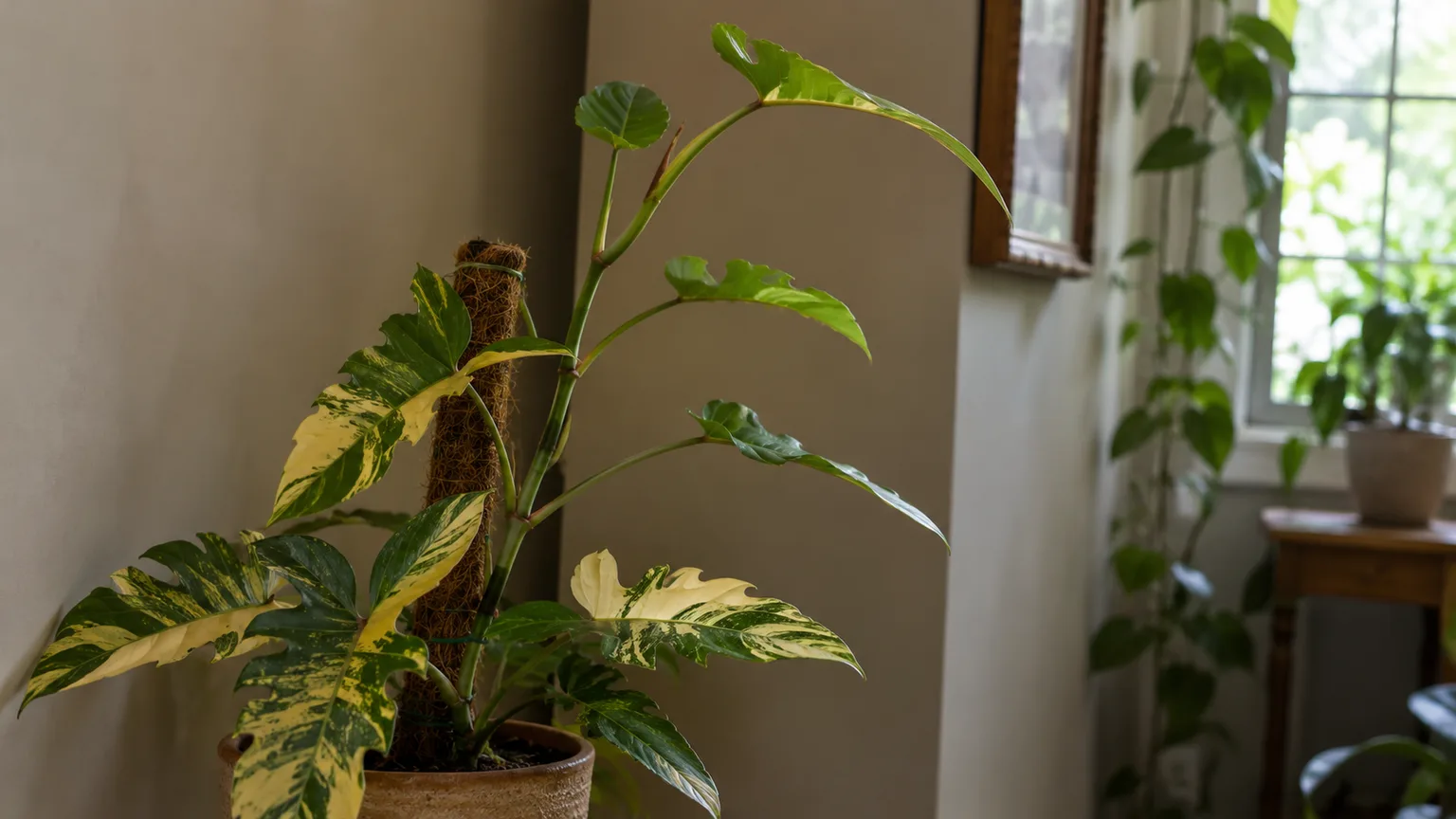
Not Enough Light on Philodendron Ring of Fire: Causes, Checks & Fixes
This guide covers not enough light on Philodendron Ring of Fire. See also the general Not Enough Light guide, watering, and light pages for this plant.
Not Enough Light on Philodendron Ring of Fire: Causes, Checks & Fixes
Quick answer
On Philodendron Ring of Fire, dim light does not just slow growth, it erases the reason you bought the plant. New leaves emerge smaller and plainer green, the orange, yellow, and cream sectors fade, and the stem stretches with wider gaps between leaves. The RHS advises bright but indirect light for philodendrons, and this variegated cultivar punishes dim corners faster than plain green types.
First step: move the pot to bright indirect light, near an east window or a few feet back from a sheer-filtered south or west window. Move it in stages over about a week rather than parking a shade-adapted plant in strong sun on day one, because the pale variegated sectors burn first. For how weak light affects houseplants in general, see our not enough light guide. On Ring of Fire, the pattern shows up as fading color plus stretch, not just slow growth.
What not enough light looks like on Ring of Fire
Low light on this cultivar reads first in color, then in shape:
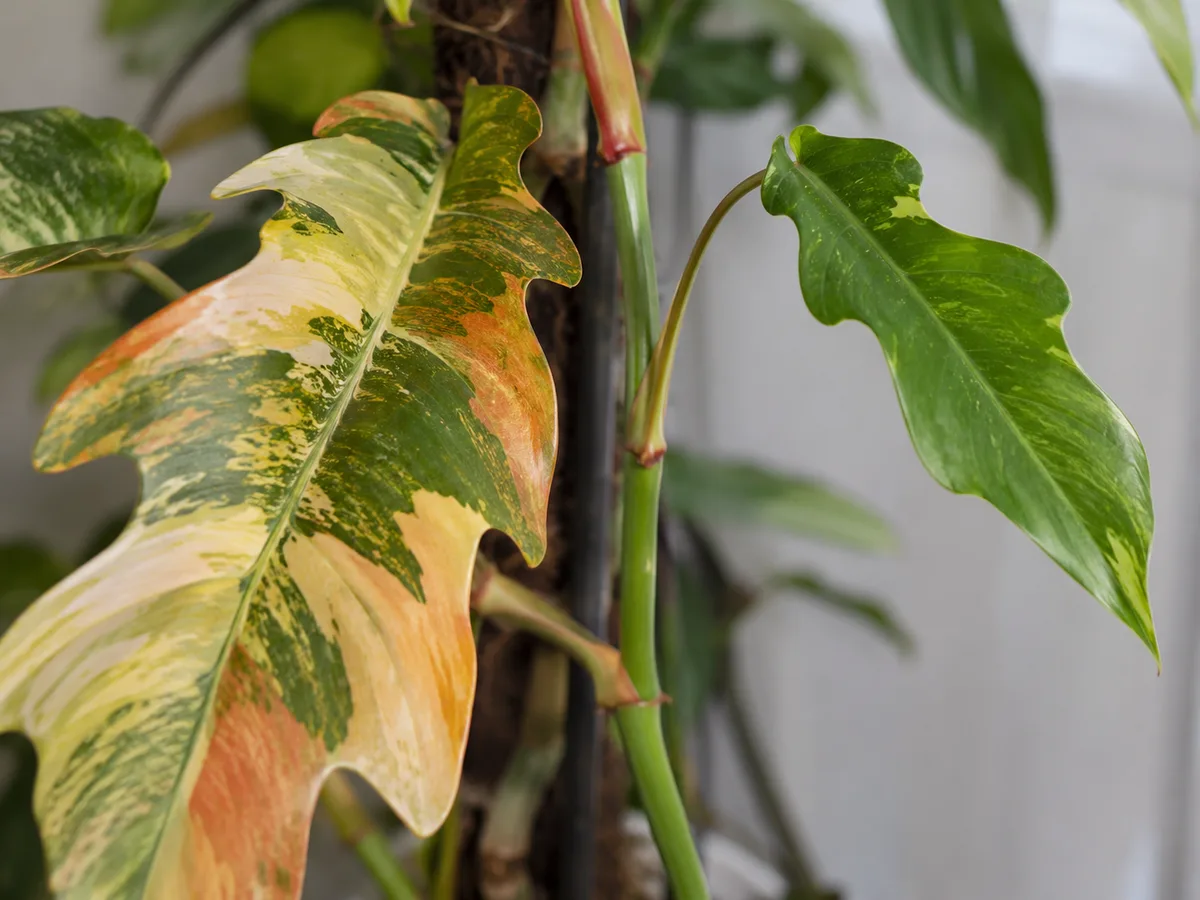
Smaller, greener new leaves and longer node gaps can reveal that a Ring of Fire needs brighter indirect light.
- Fading variegation - new leaves open mostly green with weak cream or yellow streaks instead of bold orange, gold, and white sectors
- Smaller new leaves - each fresh blade is noticeably narrower than mature serrated leaves lower on the stem
- Stretching stems - longer bare gaps between leaf nodes as the climber reaches for brightness
- Weak serration - young leaves stay smooth-edged longer instead of developing the jagged mature margins
- Leaning growth - the crown tilts toward the nearest window or lamp
- Slow wet mix - the chunky aroid mix stays damp well past its normal rhythm because the plant uses little water
A healthy Ring of Fire in good light, described in the Philodendron Ring of Fire overview, keeps producing multicolor new leaves with progressively bolder teeth along the margins. When only the newest growth turns plain while older leaves hold their pattern, light is the prime suspect rather than age.
Why Ring of Fire shows low light first in its variegation
Variegated tissue carries less chlorophyll than plain green tissue, so every cream or pale-yellow sector contributes little energy. In bright filtered light the green portions photosynthesize enough to fund colorful new growth. In a dim corner the plant cannot afford the luxury patterning, so it shifts new leaves toward plain green to survive. Insufficient light can cause this plant to lose its variegation and turn completely green, as the Le Botanist variegation guide notes, and growers report the same reversion after long dim spells.
Shape follows color. Philodendrons starved of light become leggy and produce fewer, smaller leaves, per the RHS growing guide, and the Missouri Botanical Garden notes stems turn spindly when conditions are too dark. On a climbing cultivar like Ring of Fire, that etiolation is conspicuous: internodes lengthen along the upright stem, and leaves that should broaden and serrate with maturity stay narrow.
Dim light also slows drinking. This is a slow-growing plant in a chunky bark mix, and a pot that dried every 7 to 10 days in a bright room can sit wet for weeks in a dark one. NC State Extension warns that overwatering causes root rot on philodendrons, so the secondary danger of a dark corner is a rotted root zone, not just dull leaves. Cross-check your rhythm against the Philodendron Ring of Fire watering guide before assuming the roots are fine.
How to confirm insufficient light
Work through these checks before feeding, repotting, or pruning:
- Read the light at the pot - stand where the plant sits on a bright day. If the spot gets no clear window brightness for most of the day, or sits far from glass in a north-facing room, it is likely too dim for this cultivar.
- Compare new versus old leaves - hold a newly opened leaf next to a mature one. Greener, smaller, smoother new growth with fading sectors confirms the light diagnosis better than any meter app.
- Measure node gaps - look at stem spacing between the last three leaves versus older sections. Widening gaps mean the plant is stretching.
- Check dry-down speed - push a finger 3 to 5 cm into the mix. Persistently damp mix days past your normal watering point supports a low-light plus slow-metabolism picture.
- Inspect leaf undersides - rule out spider mites, mealybugs, and aphids, which also distort new growth but leave webbing, cottony clusters, or sticky residue.
- Sniff and probe for rot - if lower leaves yellow and the mix smells sour, gently unpot and check roots. Firm white roots keep the diagnosis at light; brown mush pivots priority to rot treatment.
If the plant leans hard toward one window while the shaded side stalls, that directional signal alone is strong confirmation.
The first fix to try
Move the plant to your brightest indirect spot, in stages over about a week.
Good targets, following the detail in the Philodendron Ring of Fire light guide:
- A meter or two back from an east window with gentle morning sun
- Behind a sheer curtain at a bright south or west window, so strong afternoon rays arrive filtered
- Under a full-spectrum grow light for 10 to 12 hours daily where no window gives several hours of bright filtered light
Dutch grower guidance matches this placement logic, noting morning sun is acceptable while harsh afternoon sun scorches pale sectors first. The Spruce likewise recommends several hours of bright indirect light and suggests adding a grow light when windows fall short (The Spruce Ring of Fire guide).
Do one thing only at this stage: relocate. Do not simultaneously repot, fertilize, and prune, or you will not know which change the plant is responding to.
Step-by-step recovery
Once the pot sits in brighter filtered light:
- Acclimate gradually - start slightly farther from the glass and edge closer over 7 to 10 days. Watch cream sectors for pale bleaching, the first sign of too much direct sun.
- Hold water until the mix dries - let the top 3 to 5 cm dry before soaking, and empty the saucer. The brighter spot will speed dry-down over the coming weeks; follow the pot, not the calendar.
- Dust the leaves - wipe blades with a damp cloth. Dust blocks light from variegated tissue that already runs an energy deficit, and the RHS recommends wiping leaves so plants absorb sufficient light.
- Rotate weekly - give the pot a quarter turn so all sides color evenly instead of one-sided lean.
- Skip fertilizer for now - feeding a light-starved plant cannot restore variegation and risks salt stress in slow-drying mix.
- Stake or tie the climber - secure stretched stems to the moss pole so new tighter growth climbs compactly rather than flopping.
- Prune selectively, later - once two or three colorful new leaves have opened, trim the worst bare stretched sections back to a node if shape bothers you. Old plain leaves never regain pattern.
Recovery timeline
Judge recovery by new leaves, never by old ones. Existing green blades will not repaint themselves with orange and cream.
Within 3 to 4 weeks of the move, the next emerging leaf should look slightly bolder than the previous dull one. Over the following two to three leaves, expect stronger sectors and tighter node spacing if light is truly adequate. Full contrast and mature serration can take a full growing season on a plant that spent months in the dark, because each leaf sets its pattern as it unfurls.
If three successive new leaves stay small and plain green despite a clearly brighter spot, recheck: is a sheer curtain plus dirty glass cutting more light than assumed, or is the root zone still soggy from the dim period? Persistent stall plus wet mix means unpotting for a root inspection.
Lookalike symptoms to rule out
Overwatering and root rot - yellowing lower leaves, soft stems, sour mix smell, wilt despite wet soil. Dim light often contributes by slowing dry-down, but mushy brown roots need rot treatment first. Compare with the Philodendron Ring of Fire soil guide to confirm the mix still drains freely.
Sunburn after a sudden move - bleached or crispy brown patches on the palest sectors facing the glass. This is the opposite error: too much direct sun too fast, not too little. Distinct from low-light fading because tissue crisps rather than simply turning green.
Natural juvenile leaves - young plants open narrower, less serrated leaves even in good light. Juvenile smoothness without color loss or stretch is development, not a light emergency.
Underwatering - thin, curling leaves with bone-dry mix that pulls from the pot edges. A deep soak revives thirst; light correction does not fix drought wrinkling.
Pest distortion - spider mites stipple leaf undersides, mealybugs cluster white and cottony at joints, aphids crowd tender new growth. These leave physical evidence that low light never produces.
Mistakes to avoid
Do not shove a shade-adapted Ring of Fire into direct afternoon sun to force color back quickly. Cream tissue scorches first, and burned sectors never heal.
Do not fertilize in a dim spot hoping to push variegation. Nutrients without adequate light cannot manufacture pattern and can damage roots sitting in wet mix.
Do not keep the old watering calendar after moving the plant either direction. Brighter light accelerates dry-down; darker corners stall it. Both demand finger checks, not habit.
Do not prune all the plain green leaves at once. They still photosynthesize and fund the colorful replacements. Remove stretched growth gradually once new patterned leaves arrive.
Do not assume one colorful new leaf means the fix is complete. Variegation stability needs consistent brightness across several leaves, since stable light produces more predictable new-leaf color.
Philodendron Ring of Fire care cross-check
Light, water, and mix move as one system on this plant. NC State Extension describes philodendrons as partial-shade plants where direct sunlight should be avoided, which indoors translates to strong filtered brightness without hot beams. Pair that placement with the chunky bark-and-perlite mix so extra light does not turn into a soggy-then-baked root zone.
Temperature sits in the background: typical room warmth around 18 to 29 C keeps metabolism steady enough to use the improved light. Cold drafts near a bright winter window can stall new growth even when brightness looks right, so keep the pot clear of icy glass and hot radiators alike.
Humidity at 55 to 70 percent supports clean unfurling of new patterned leaves, but it never substitutes for light. Mist systems and pebble trays will not restore variegation in a dark hallway.
How to prevent it next time
Choose the brightest filtered position from day one and treat it as this plant’s permanent home rather than a temporary fix. Reserve genuinely dim corners for plain-green tolerant species.
Track new-leaf color as your early warning gauge. The moment two successive leaves open plainer than the last, light has slipped before stretch becomes obvious.
Adjust seasonally. Winter short days cut intensity in the same window, so edge the pot closer to glass and extend watering intervals together. A sheer curtain that was perfect in July may starve the plant in December.
Keep glass clean and sightlines open. Sheers, tall furniture, and grimy panes each shave meaningful brightness at the pot. If no window delivers several hours of bright filtered light, install the grow light before variegation fades rather than after reversion sets in.
When to worry
Low light alone is rarely fatal on Ring of Fire. Escalate when:
- The mix stays wet for weeks and stems feel soft at the base, signaling possible root rot
- Several leaves yellow rapidly or collapse despite the brighter position
- New growth halts entirely for months in verified bright indirect light
- Pale sectors bleach and crisp right after a move, meaning sun arrived too fast
A firm plant with dull new leaves and dry-down that still completes is a cosmetic problem with a clear fix. A soft-stemmed plant in sour mix is a rescue regardless of window quality.
Conclusion
Not enough light on Philodendron Ring of Fire announces itself in the variegation first: greener, smaller, smoother new leaves with widening gaps along the stem. The fix is a single deliberate move to bright indirect light, staged over a week to protect pale sectors, followed by patient watering and dusting while fresh growth rebuilds the pattern. Old leaves keep their plain look permanently, so success is measured in the color of what unfurls next.
Related Philodendron Ring of Fire guides
- Philodendron Ring of Fire overview - growth habit, variegation basics, and when this page applies
- Light guide - target brightness and window placement for steady color
- Watering guide - dry-down checks that shift with light levels
- Soil guide - chunky aroid mix that protects roots in dim spells
- Repotting guide - use when root inspection reveals crowding or rot, not for light alone
- Propagation guide - node cuttings once the parent shows stable colorful growth
Related tool
Use the Light Requirement Calculator to assess your window direction and distance from the glass for not enough light on this plant before changing multiple variables at once.