Leggy Growth on Pomegranate: Causes, Checks and Fixes
Quick answer
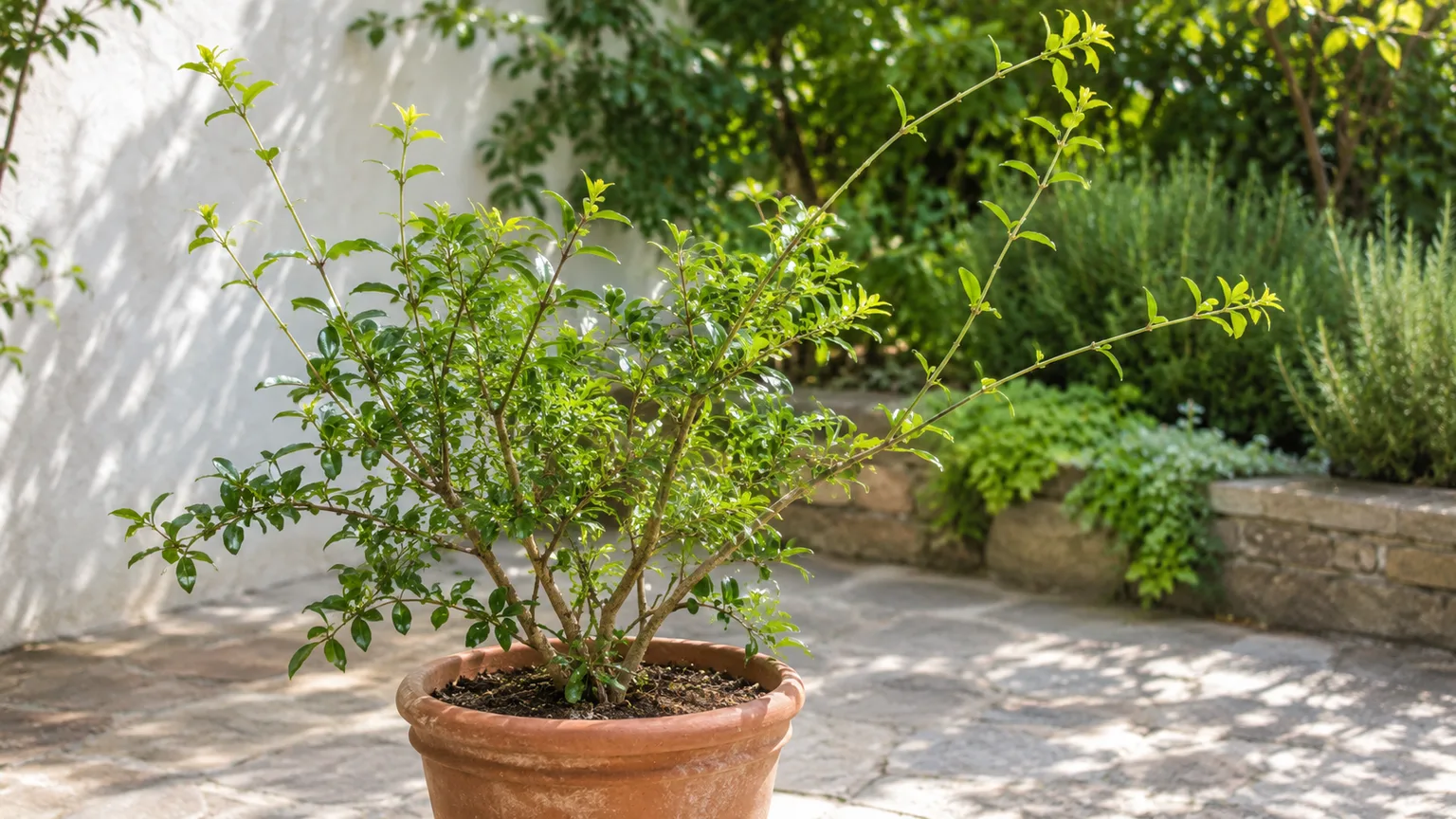
Leggy growth on pomegranate looks like long thin arching shoots with wide gaps between small sparse leaves, usually caused by too little sun combined with a thicket of unthinned root suckers. First step: move the plant into full sun and leave major pruning until late-winter dormancy, then thin to a few strong trunks.
Leggy Growth on Pomegranate: Causes, Checks and Fixes
This guide covers leggy growth on Pomegranate. See also the general Leggy Growth guide, watering, and light pages for this plant.
Leggy Growth on Pomegranate: Causes, Checks and Fixes
Quick answer
Leggy growth on pomegranate means long, thin, arching shoots with wide gaps between small leaves instead of the stout closely jointed canes a healthy bushy shrub produces. The two drivers behind it are almost always too little sun and a crowded mass of root suckers shading each other out. For the general mechanics of stretched growth, see our leggy growth guide. On pomegranate, the pattern usually shows up as pale whip-like suckers racing upward from the root crown while the outer sunlit canopy still looks normal.
First step: give the plant full sun now and postpone hard pruning until late-winter dormancy. Move containers to the sunniest spot you have and clear anything shading an in-ground bush. Do not shear the leggy shoots back the same day you move it. Let the plant register the light change, then thin properly when dormant.
What leggy growth looks like on pomegranate
Pomegranate is naturally a multi-stemmed suckering shrub, so some arching is normal. Legginess looks different: new shoots emerge pale green, soft, and whip-like, with internodes twice as long as on older wood and leaves that stay small and widely spaced. Interior suckers lean and flop outward as they chase light through the outer canopy, and the center of the bush turns into a tangle of bare thin stems with tufts of foliage only at the tips.
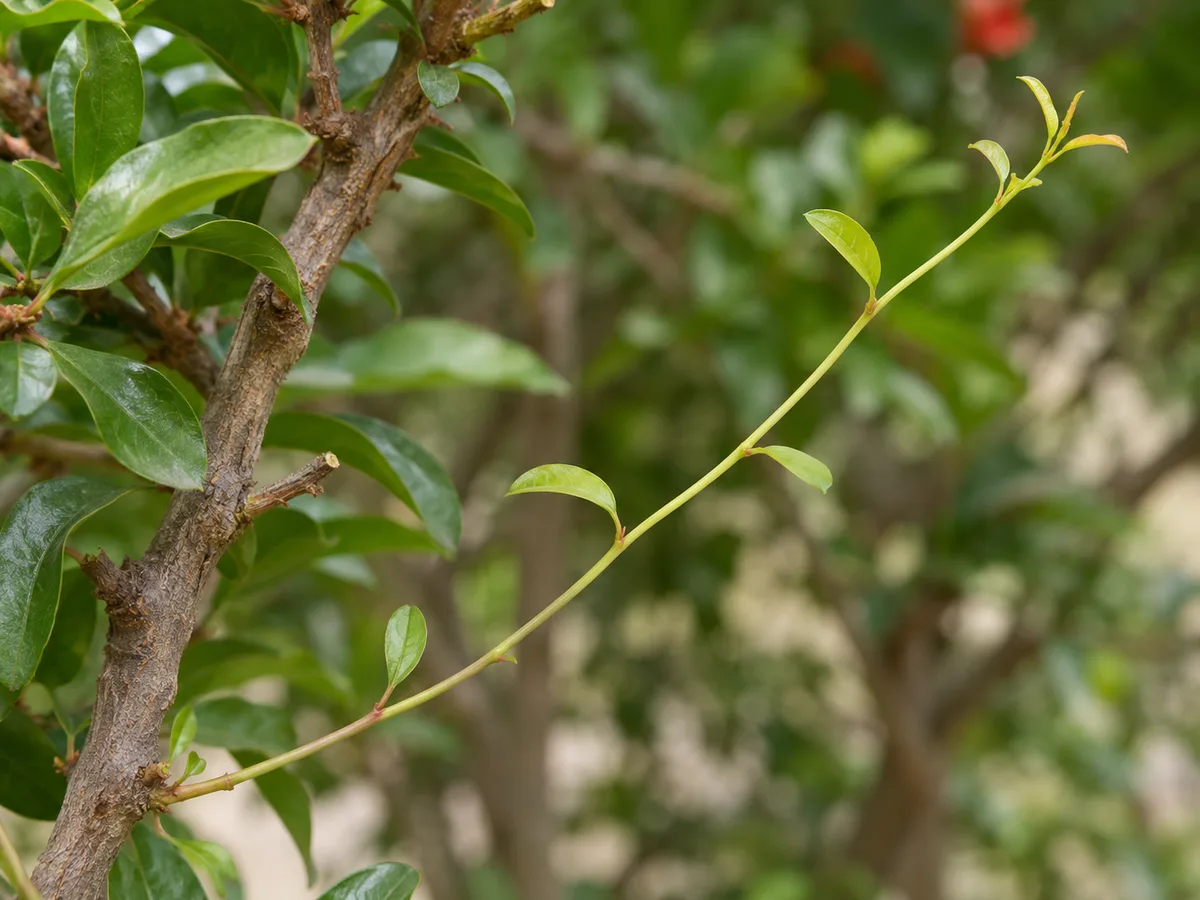
Long internodes and leaves clustered near the tips show the stretched growth pattern.
Container plants show the same signature more dramatically, with one or two dominant shoots bolting upward while the rest stall. Because pomegranates demand six or more hours of direct sun a day, anything less stretches each new flush a little further, and the effect compounds over the season.
Why pomegranate gets leggy
Three causes explain nearly every case, and they often stack.
Too little light. Pomegranate is a warm-climate fruiting shrub built for open sun. In shade it stretches new shoots toward the brightest gap, producing the classic spindly result: stretching toward sunlight yields tall weak stems that cannot support fruiting wood. A north-facing patio, an overhanging tree, or a bright-but-indirect indoor window all qualify as too dim.
Unthinned suckers. Pomegranates characteristically push up many suckers arising from the root and crown area, and each one competes for light. Left alone, a dozen or more thin shoots shade each other so every stem stretches. Suckers also sap the plant’s energy, diverting vigor away from the scaffold limbs that should carry fruit.
Soft growth from excess nitrogen. A heavy dose of high-nitrogen fertilizer in spring pushes a flush of fast leafy extension before stems have the girth to support it, and too much nitrogen is a recognized trigger for floppy leggy plants generally. On pomegranate this shows as lush but weak shoots that arch over under their own weight. Check the pomegranate fertilizer cadence before assuming the plant simply needs feeding.
How to confirm the cause
Work through these checks in order on a dry morning:
- Map the sun. Note when direct sun first hits the plant and when it leaves. Less than six hours of direct sun confirms a light deficit. Compare shaded interior shoots against sunlit outer shoots on the same bush.
- Count the suckers. Part the canopy and count thin vertical shoots rising from the base. More than six to eight crowded stems with bare interiors confirms a thinning problem.
- Feel the stems. Firm but thin and pale means stretching. Soft, water-soaked, or blackened means rot or cold damage instead, which needs different triage than legginess.
- Review feeding and watering. A recent heavy nitrogen feed plus constantly damp soil points to soft rank growth. Cross-check against the pomegranate watering baseline so you do not confuse thirst wilt with stretch.
- Check new growth direction. New shoots all leaning one way toward light confirm placement as the driver. Uniform all-over stretch with yellowing suggests nutrition or root crowding instead.
The first fix to try
Move the plant into full sun and change nothing else for two to three weeks. For containers, that means the sunniest south or west exposure available, shifted gradually over several days if the plant has been in deep shade to avoid scorch. For in-ground bushes, prune back only the neighboring plants or overhang casting the shade, not the pomegranate itself yet.
This single action comes first because every cut you make in shade just redirects the same stretched response into fewer shoots. Watch the newest leaf tips: greener, tighter-jointed emerging growth tells you light was the limiter. If new shoots keep stretching in proven full sun, the sucker mass is the remaining cause and dormant thinning becomes the fix.
Selective sucker and branch thinning
Do structural thinning in late winter while the bush is dormant, before buds swell. Pomegranate guidance calls for removing dead or damaged wood during late winter along with surplus suckers, keeping the framework open and stocky.
- Pick your form. Keep three to five well-spaced trunks for a vase-shaped bush, or train a single trunk by keeping one strong cane. Remove the rest at ground level.
- Clear surplus suckers first. Cut unwanted root-crown shoots flush with the base rather than snapping them. Never remove more than about one-third of total canopy in one dormant season.
- Shorten the worst leggy canes. Head back floppy arching branches to an outward-facing bud or a stout side shoot, keeping the center open so light reaches the interior.
- Use clean sharp tools. Pinching suits soft herbaceous tips, but anything woody needs clean pruners for thicker stems to avoid tearing bark. Wipe blades between bushes.
- Stop and reassess. Step back after every few cuts. An airy framework where you can see dappled light through the center is the goal, not a tight ball.
For cut placement and seasonal timing detail, follow the pomegranate pruning calendar alongside this page.
Step-by-step recovery
After the light correction and dormant thinning:
- Stake only the keepers. Loosely tie one or two load-bearing trunks if they flop, but let thinned shoots stand on their own so weak ones reveal themselves.
- Water deeply but infrequently. Let the top few inches dry between waterings per the pomegranate watering guide. Soggy soil keeps new growth soft.
- Hold fertilizer until spring push. Do not feed a freshly thinned plant in winter. Resume modest balanced feeding only when new compact growth is visibly underway, following the pomegranate fertilizer schedule.
- Rub out new surplus suckers early. When unwanted basal shoots are a few inches tall, rub or snip them off so energy stays in the chosen trunks.
- Refresh container soil if root-bound. A pot-bound root ball that dries in hours keeps canopies thin no matter the sun. Repot into fresh gritty mix per the pomegranate soil guidance at the start of the growing season.
Recovery timeline
Be honest with yourself here: older stretched stems will not shorten again, so old canes are not the scoreboard.
- 2–4 weeks after the light fix — Newest leaf tips emerge greener with tighter spacing. Old leggy stems look unchanged, which is expected.
- One full growing season — Thinned bushes push stouter replacement shoots from the base and kept scaffolds. Flowering on new compact wood is the real turnaround sign.
- Second dormant season — The framework looks vase-shaped and open, and annual late-winter thinning becomes a small maintenance job rather than a rescue.
Judge progress only by growth that emerged after the correction. If two successive flushes in proven full sun still stretch, suspect root crowding, chronic overwatering, or a nutrient imbalance rather than light alone.
Lookalike symptoms
| Pattern | More likely | Next step |
|---|---|---|
| Thin pale shoots leaning toward light, bare interiors | Leggy growth (this page) | Full sun, then dormant thinning |
| Uniform yellow leaves plus stretched soft shoots | Excess nitrogen or low light combined | Ease off feeding, confirm sun hours |
| Wilting thin shoots with soggy soil and smell | Root stress, not simple legginess | Check drainage before any pruning |
| Blackened shoot tips after frost | Cold damage | Wait for spring bud-break, then cut to live wood |
| Fine webbing and stippled leaves on weak shoots | Spider mite pressure on stressed canopy | Inspect leaf undersides before fertilizing |
| Naturally arching but stout glossy canes with fruit | Normal pomegranate habit | No fix needed |
Mistakes to avoid
- Shearing leggy tips in midsummer. Tip shearing in active growth forces a flush of even thinner replacement shoots and removes the leaves funding recovery.
- Removing more than a third of the canopy at once. Hard buzz cuts trigger a panic flush of weak suckers that sucker-prone shrubs like pomegranate produce aggressively under stress.
- Feeding to fix stretch. Nitrogen on a shaded plant grows longer weaker shoots, not bushier ones. Fix light first, feed second.
- Staking every shoot upright. Splinting the whole canopy hides which stems are structurally hopeless and shades the interior further.
- Ignoring the root crown. Pruning upper branches while leaving twenty basal suckers untouched preserves the exact crowding that caused the problem.
How to prevent it next time
- Site in full sun from day one. Confirm the pomegranate light requirement before planting, not after the first leggy season.
- Remove surplus suckers as they appear during the growing season instead of letting a thicket build up all year.
- Prune lightly every dormant season to hold the chosen trunk count and open center, per the pomegranate pruning routine.
- Feed modestly. One balanced spring feed beats repeated nitrogen pushes that force rank soft growth.
- Keep containers right-sized. Pot up before the root ball chokes, using the pomegranate soil mix so watering stays even and canopies stay dense.
Related Pomegranate guides
- Pomegranate light
- Pomegranate pruning
- Pomegranate watering
- Pomegranate fertilizer
- Pomegranate soil
- Pomegranate problems
Related tool
Use the Plant Problem Diagnosis Tool to narrow causes for leggy growth on this plant before changing multiple variables at once.