Drooping Leaves on Scindapsus Treubii Dark Form: Causes
Quick answer
Drooping leaves on Scindapsus Treubii Dark Form can follow dry mix, prolonged wetness, or environmental stress. First check moisture through the upper half of the pot and whether it drains; use those findings with leaf and stem changes before deciding to water or inspect roots.
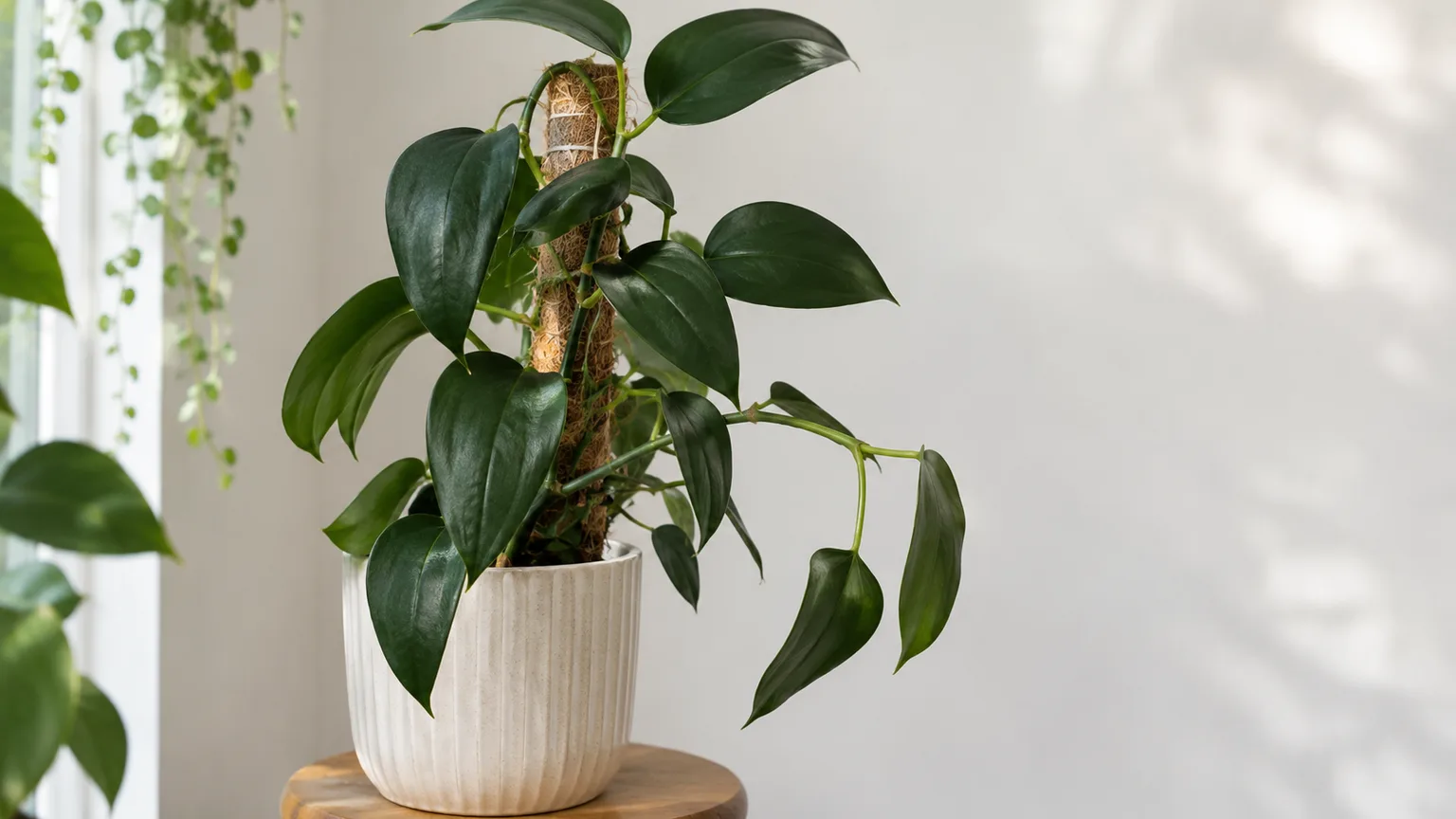
Drooping Leaves on Scindapsus Treubii Dark Form: Causes, Checks & Fixes
This guide covers drooping leaves on Scindapsus Treubii Dark Form. See also the general Drooping Leaves guide, watering, and light pages for this plant.
Drooping Leaves on Scindapsus Treubii Dark Form: Causes, Checks & Fixes
Quick answer
Drooping leaves on Scindapsus Treubii Dark Form can follow dry mix, prolonged wetness, or environmental stress. First check moisture through the upper half of the pot and whether it drains; use those findings with leaf and stem changes before deciding to water or inspect roots.
What drooping looks like on Scindapsus Treubii Dark Form
Healthy Dark Form leaves are thick, firm, and held out from trailing or climbing stems. Drooping means the leaves or stems have lost their usual firmness, but it does not identify a single cause. Check the mix and the plant’s recent conditions before watering: both dry roots and roots damaged by prolonged wetness can leave foliage limp.
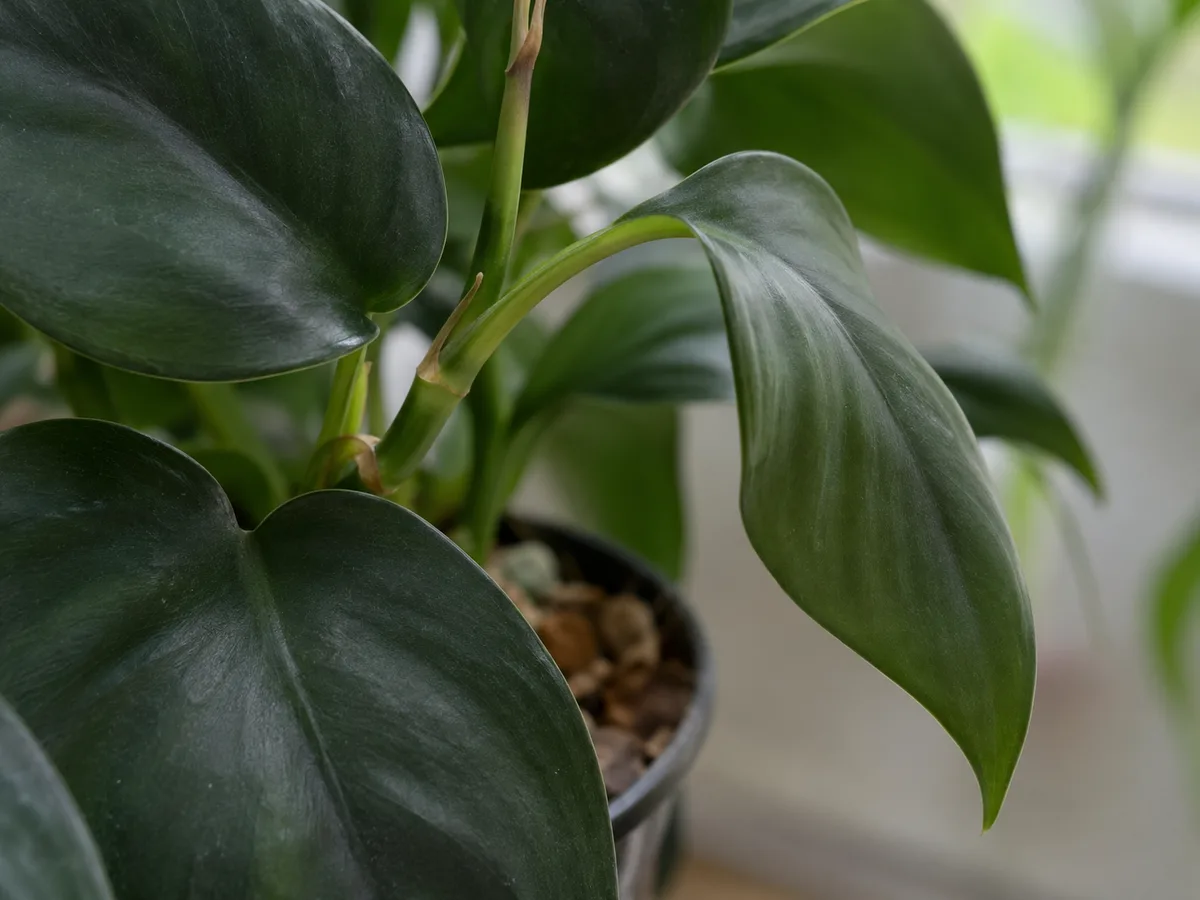
A sagging leaf shows lost firmness, but soil moisture and stem condition are needed to identify the cause.
The nearly black-green mature leaves can make subtle color changes harder to spot. Inspect older leaves, stem bases, and the mix in good light; color alone is not enough to diagnose a watering problem.
Why this plant droops
For general wilt mechanics, see our drooping leaves guide. On Dark Form, begin with the moisture level and drainage, then consider light and temperature. NC State Extension describes this species as preferring bright indirect or filtered light, well-drained soil, and watering after the soil has dried partway; prolonged wetness can lead to root rot.
Underwatering is plausible when the potting mix has dried well down and the pot is lighter than usual. This slow-growing vine can use water more slowly when light and temperatures are lower, so a fixed schedule can overshoot its needs in either direction. NC State lists curling leaves as a possible underwatering sign, but drooping by itself is not diagnostic.
Prolonged wetness is a concern when the mix remains wet, drainage is poor, or stems and roots become soft. NC State specifically notes that overwatering can cause root rot in S. treubii. Drooping in damp soil warrants checking drainage and roots if it persists; wetness alone does not prove that roots are already rotted. The Spruce’s Scindapsus pictus guide also recommends well-drained soil and allowing the mix to dry between waterings, useful genus-level context rather than a diagnosis for this cultivar.
Light and temperature can alter water use. NC State recommends bright indirect or filtered light and room temperatures of about 65–75°F for S. treubii. A plant near cold glass or in a dim spot may use water more slowly, so check the pot before repeating a watering routine; do not infer cold injury from drooping alone.
Thick leaves warn late on Dark Form
Dark Form’s firm leaves can make a subtle change easy to miss, but leaf texture is not a reliable clock for how long the roots have been dry or wet. Compare the potting mix and pot weight with their normal state, and look for accompanying yellowing, stem softness, or root changes before treating.
How to confirm the cause
Work through these checks in order before touching the watering can:
- Check moisture down through the upper half of the mix and lift the pot to compare its weight with its usual feel. Dry mix and a light pot support underwatering; a persistently wet pot means check drainage and recent watering before adding more.
- Lift the nursery pot out of any decorative cachepot and check the bottom. Water often pools there invisibly while the surface looks merely damp.
- Smell the mix at the base of the stems. A sour or musty odor means the soil has gone anaerobic and roots are in trouble.
- Squeeze a stem gently near the soil line. Firm stems with limp leaves can fit a moisture problem; soft or discolored stems raise concern about rot.
- Note the setting: a plant near a drafty winter window or an AC vent that droops on a normal watering schedule is likely cold-stressed rather than thirsty.
Dry mix with firm stems supports underwatering. Wet mix plus a sour odor, yellowing, or soft stems raises concern about root damage; confirm by inspecting roots if the plant continues to decline.
The first fix to try
Make one correction based on the moisture check. If the mix has dried well down, water thoroughly and let excess drain away. If it is still wet, do not add water; empty standing water and check that the pot drains. The Spruce’s Scindapsus pictus care guide likewise recommends well-drained soil and allowing the mix to dry between waterings.
Do not stack repotting, pruning, fertilizing, and spraying on the same day. One targeted moisture correction lets you read the plant’s response; a bundle of treatments hides which one worked and stresses an already weak plant.
Step-by-step recovery
After the first fix, reassess the plant and potting mix before taking another step:
- Recheck the plant and mix. A response after watering supports thirst as the cause, but lack of rapid change does not by itself prove root rot.
- If wet-soil droop persists, unpot and inspect the roots. White or tan firm roots are alive; brown, mushy, foul-smelling roots are rotted. Trim only the mushy portions with clean scissors.
- If the old mix stayed soggy or has poor drainage, repot into a fresh, well-drained mix in a pot sized for the remaining roots. The Spruce also recommends well-drained growing medium for the related Scindapsus pictus.
- Return the plant to medium to bright indirect light and its usual warm spot. Details on placement are in the light guide, and mix recipes are in the soil guide.
- Resume the plant’s normal dry-down rhythm described in the watering guide, checking the mix before watering rather than following fixed dates. NC State’s care guidance for S. treubii recommends letting the soil dry partway between waterings.
Reading the vines and aerial roots
Dark Form can climb or trail, but aerial-root appearance alone cannot confirm whether the potting mix is too dry or wet. Use NC State’s species-specific watering and drainage guidance to set a baseline, then check this pot directly. If the plant is trained on a support, check that it is not keeping the stem base and adjacent mix constantly wet; make the diagnosis from the whole plant, potting mix, and roots rather than a single aerial root.
Recovery timeline
Recovery time depends on whether the roots remain healthy and whether the mix can dry normally. Leaves may regain firmness after a confirmed dry-soil problem is corrected, while root damage can delay improvement. Yellowed or mushy tissue will not return to its former condition; look for stable stems and healthy subsequent growth rather than a fixed deadline.
Lookalike symptoms
Droop overlaps with several other issues on this plant, so confirm before treating:
- Curling leaves with dry, crispy edges can accompany low humidity or a previous dry spell; they do not establish the cause of whole-vine droop.
- Yellow lower leaves in wet mix point to overwatering damage, while a single old leaf yellowing in dry mix is often normal aging.
- Brown, papery patches after a move to a sunnier window suggest sunburn, since direct sun scorches these understory leaves.
- Fine webbing, stippling, or cottony residue with a slow progressive droop suggests pests rather than watering; inspect leaf undersides closely.
- Sudden collapse after a cold night near glass indicates chill injury, which mimics rot but starts with water-soaked, translucent patches.
If you are unsure which pattern matches, the full list of possibilities for this plant is on the Scindapsus Treubii Dark Form problems hub.
Mistakes to avoid
- Watering on a calendar instead of checking the mix. Its water use can change as light and temperature shift.
- Adding more water to a drooping plant in wet soil. That instinct drowns the remaining healthy roots.
- Fertilizing a wilted plant. Extra salts stress damaged roots; wait until new growth looks healthy for a few weeks.
- Repotting, pruning, and spraying all at once. Each is a separate stress, and stacking them hides the real diagnosis.
- Misting drooped leaves as the fix. Misting does not rehydrate roots or fix soggy mix, and wet foliage invites fungal spots.
Slow growth means a slow dry-down
Dark Form grows slowly, and lower light or cooler conditions can slow water use further. Check the upper half of the mix before watering and reassess drainage if it stays wet. The plant’s dry-down varies with pot size, mix, light, and season, so a set number of days is a poor substitute for checking its actual pot.
How to prevent it next time
Prevent repeat drooping by using a pot with drainage, a well-drained mix, and bright indirect light. Check the watering guide when the mix is drying too slowly, the soil guide if it stays compact or wet, and the light guide if growth is weak or the plant sits in a dim location. Pot size and season also affect dry-down, so check conditions before increasing frequency.
When to worry
Some drooping improves after its cause is corrected, but the symptom is not always a simple watering miss. Escalate when stems soften or turn brown at the soil line, when the mix smells sour, when many leaves collapse within days, or when unpotting reveals mostly mushy roots with little firm tissue left. A plant with no firm roots and rotting stems may not be salvageable; in that case, healthy top cuttings rooted in water are the realistic rescue path.
When to use this page vs other Scindapsus Treubii Dark Form guides
Use this guide when the leaves or vines are limp. If the mix is wet, check the root rot guide; if leaf edges are crisp or curled without whole-vine droop, compare the curling leaves guide. The plant overview summarizes its baseline care.
Related Scindapsus Treubii Dark Form guides
- Watering guide — use when the finger test and dry-down rhythm are the open question.
- Light guide — use when droop follows a move, a dark corner, or a sunburned window.
- Soil guide — use when the mix stays soggy or you are repotting after root trim.
- Repotting guide — use when roots circle the pot or the plant dries out unnaturally fast.
- Problems hub — use when the pattern does not match droop and you need the full symptom list.
Related tool
Related tool
Use the Drooping Leaves Diagnosis Tool to narrow whether overwatering, underwatering, cold stress, or root problems best explain the droop before changing multiple variables at once.