Mold on Soil on Scindapsus Treubii Dark Form: Causes
Quick answer
White or gray fuzz on Scindapsus Treubii Dark Form soil is usually harmless saprophytic fungus feeding on damp mix, not a leaf disease. Scrape off the top layer, hold water until the pot reaches its normal half-dry point, and fix the moisture habit that caused it.
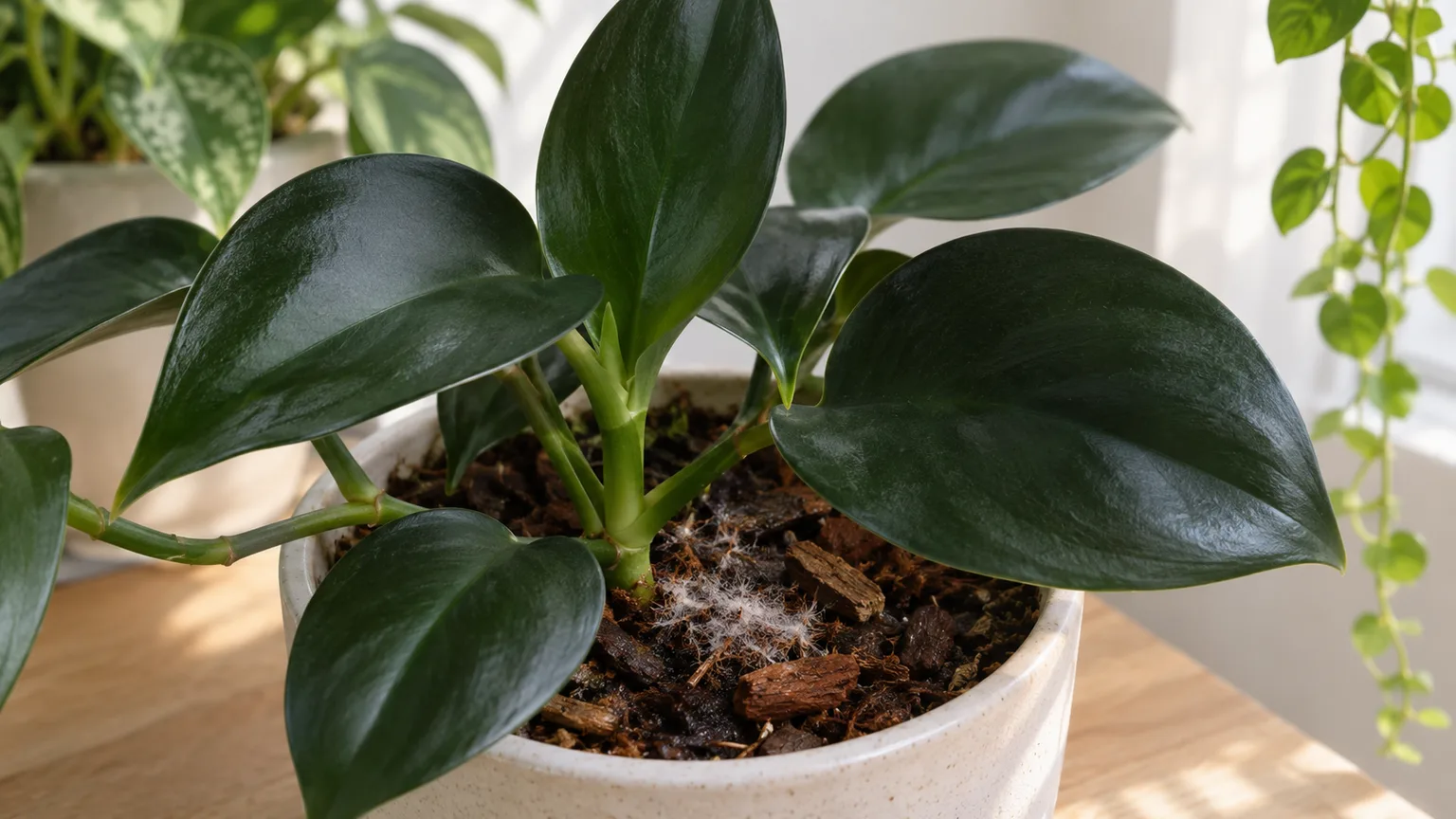
Mold on Soil on Scindapsus Treubii Dark Form: Causes, Checks & Fixes
This guide covers mold on soil on Scindapsus Treubii Dark Form. See also the general Mold on Soil guide, watering, and light pages for this plant.
Mold on Soil on Scindapsus Treubii Dark Form: Causes, Checks & Fixes
Quick answer
White or gray fuzz across the top of your Dark Form pot is usually saprophytic fungus feeding on damp bark and peat, not an infection of the leaves or stems. For how chronically wet mix grows surface fungus in general, see our mold-on-soil hub. On Scindapsus Treubii Dark Form, the pattern usually shows up as a slow-growing vine in a pot that stays damp days longer than its owner expects, because this cultivar drinks slowly and its thick, near-black leaves hide stress until the roots are already struggling.
First step: scrape off the top 1–2 cm of mix along with the mold, then stop watering. Let the pot dry to this plant’s normal watering point before the next drink, and fix the moisture habit that let the fungus grow.
What mold on soil looks like on Scindapsus Treubii Dark Form
A healthy Dark Form pot has a dry, crumbly surface between waterings. Mold changes that picture in a recognizable way: white, gray, or occasionally tan fuzzy patches spread across the top of the mix, often thickest around stem bases and wherever fallen leaves or bark chips collect. The surface feels cool and clings to a fingertip days after the last watering, yet the vines above still look fine — firm stems, glossy dark foliage, no spots.
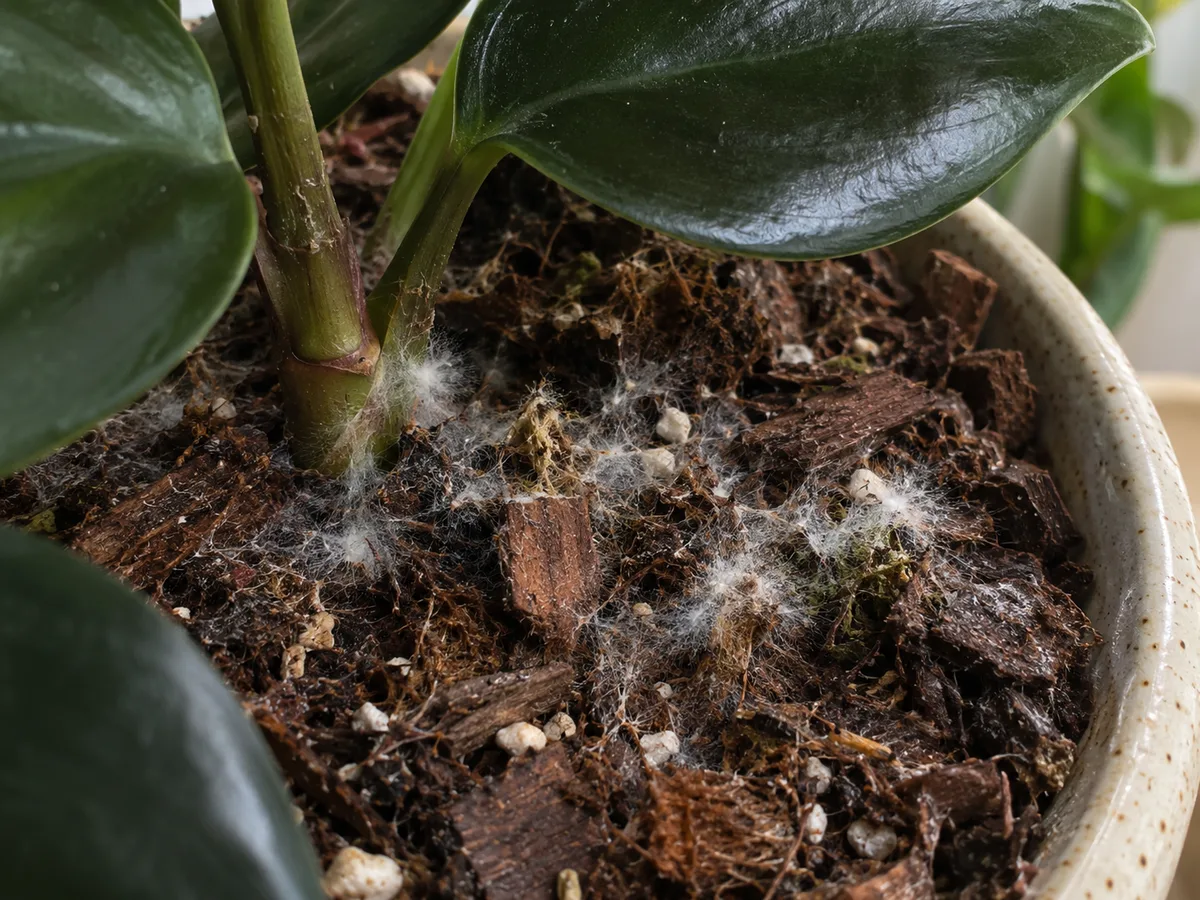
Fine surface fuzz on damp mix is a moisture warning; Dark Form leaves can remain firm while the pot stays wet.
That mismatch is the signature of this problem on this plant. Because Dark Form grows slowly and its foliage shows trouble late, the pot surface is often the first place overwatering becomes visible. Warning signs that the wet conditions behind the mold are already hurting the plant include a sour or swampy smell from the pot, lower leaves yellowing while the soil stays wet, stems turning soft where they meet the mix, and tiny dark flies rising when you disturb the surface.
Why slow-growing Dark Form pots stay wet enough to grow mold
Dark Form is a cultivar of Scindapsus treubii whose young leaves emerge deep green and mature to glossy, nearly black foliage (NC State Extension). It comes from the tropical rainforests of Malaysia and Indonesia, where it climbs trees in loose organic debris that wets and drains quickly — never a soggy pot. Indoors it wants bright indirect or filtered light and room temperatures between 65 and 75 degrees Fahrenheit (NC State Extension).
The critical trait for mold is its pace. This is a slow grower with modest water demand: NC State advises watering only when the soil is half dry to almost completely dry, and warns the plant does not tolerate overwatering. A weekly watering habit built for a thirsty philodendron keeps a Dark Form pot permanently damp, and saprophytic spores already present in peat-based mix germinate within a day or two of constant surface wetness. Poor drainage compounds it — Missouri Botanical Garden notes roots may rot in poorly drained soils on this species group.
Dim placement makes everything worse. A Dark Form parked in a dark corner photosynthesizes slowly, transpires little, and leaves its pot wet for weeks, while the owner keeps watering on the old schedule. Cool winter rooms slow drying further. Mold in that setting is not bad luck; it is the expected outcome of a slow drinker watered like a fast one.
Moss poles, aerial rootlets, and hanging baskets keep Dark Form surfaces damp
Dark Form climbs by aerial rootlets, and a moss pole may be kept moist to support attachment. If the pole touches the potting mix or water runs down its base, keep that contact area clear so the soil surface can dry between waterings. Treat persistent surface dampness as a cue to check the pot and drainage rather than assuming the pole alone caused the mold.
Hanging baskets and cachepots add a second trap. A trailing Dark Form in a glazed outer pot looks tidy, but runoff pools invisibly at the bottom after every watering and the surface never fully dries. Lift the nursery pot out, water at the sink, let it drain completely, and only then return it. Decorative top-dressings such as sphagnum moss or fine bark mulch have the same effect: they hold moisture against the surface and feed the very fungi you are trying to starve.
Thick Dark Form leaves mask overwatering until mold speaks first
Unlike thin-leaved plants that wilt dramatically when roots struggle, Dark Form carries water reserves in its thick, fleshy leaves and keeps looking glossy while the root zone deteriorates. By the time foliage signals trouble, the soil has usually been too wet for weeks. NC State notes that on this species group, yellow leaves may signal overwatering while curling leaves signal underwatering — so yellow lower leaves on a moldy, heavy pot confirm the diagnosis, while inward curl on a light, dry pot points the other way entirely.
Read the leaves together with the pot, not alone. Firm dark foliage over fuzzy soil means you caught a moisture warning early. Yellowing foliage over fuzzy soil means the warning has expired and the roots need inspection now.
How to confirm surface mold versus root rot
Work through these checks before repotting or spraying anything:
- Surface moisture test — Press a finger into the top 5 cm. If mix clings cool and damp days after watering, conditions favor mold regardless of what the surface looks like.
- Pot weight — Lift the container. A heavy pot long after watering confirms saturation through the root ball, not just a damp surface.
- Stem-base firmness — Gently feel stems where they enter the mix. Firm stems with glossy leaves suggest cosmetic surface fungus; soft or darkening stem bases suggest decay moving upward.
- Smell check — Earthy odor is normal potting mix. A sour or rotten smell means anaerobic breakdown in wet soil, and scraping alone will not fix it.
- Gnat check — Small flies rising when you disturb the surface share the same damp habitat as the mold and confirm chronic wetness.
- Light and season context — Mold appearing in a dim room or in winter after unchanged watering is a strong overwatering signal on this slow grower.
Lookalike comparison
| What you see | Likely cause | How to tell apart |
|---|---|---|
| White or gray fuzzy threads on damp soil | Saprophytic surface mold | Soft threads over wet mix; spreads across the surface |
| Hard white or tan crust, gritty between fingers | Mineral salt buildup from fertilizer or hard water | Crystalline, not fuzzy; rings near pot edges where water evaporates |
| Smooth green film on wet surface | Algae on constantly wet mix in low light | Slimy rather than fuzzy; same dry-down fix as mold |
| White threads only right after repotting | Harmless mycelium in fresh peat before first dry-down | Fades once the pot dries; no sour smell, firm stems |
First fix for Scindapsus Treubii Dark Form
Scrape off the top 1–2 cm of affected mix with a spoon and stop watering until the pot reaches its normal half-dry point.
The Spruce recommends scraping away light surface mold and adding fresh mix once the rest of the soil dries, while University of Maryland Extension advises discarding the upper layer when fungal growth appears on indoor plant soil. Bag what you remove and trash it rather than composting it. Leave the plant in place — mild mold on firm stems does not require day-one repotting. Do not mist the leaves or soak the moss pole while the pot is correcting.
Step-by-step recovery
If mold was cosmetic and stems are firm:
- Wait until the top half of the mix feels dry and the pot is noticeably lighter.
- Water deeply once until excess runs from the drainage hole, then empty the saucer or cachepot the same day.
- Resume the half-dry rhythm described in the Scindapsus Treubii Dark Form watering guide — check with a finger or skewer, never the calendar.
If mold returns within a week:
- Scrape again and replace the top few centimeters with dry, chunky aroid mix per the Scindapsus Treubii Dark Form soil guide.
- Confirm the drainage hole is open and the pot is not sitting in trapped runoff.
- Downsize if the container is much wider than the root ball — excess mix stays wet that Dark Form roots never use.
If fungus gnats appear with the mold:
- Let the top few centimeters dry fully between waterings to break the gnat cycle.
- Set yellow sticky traps for adults and clear fallen leaves from the surface.
- If flies continue despite allowing the surface to dry, inspect the mix and drainage; consider a grittier blend if the pot remains wet well below the surface.
If stems feel soft or the pot smells sour:
Stop surface fixes. Unpot, trim brown or mushy roots with clean scissors, let cuts air-dry a few hours, and repot into fresh airy mix following the Scindapsus Treubii Dark Form repotting guide. Mold was the visible tip of a deeper moisture failure.
Mistakes to avoid
- Spraying cinnamon, hydrogen peroxide, or fungicide first — surface treatments do not fix overwatering or poor drainage, and the mold returns within days.
- Soaking the moss pole daily while the pot stays wet — keep support humidity and pot moisture on separate schedules.
- Misting to raise humidity — Dark Form tolerates average indoor air; extra surface moisture only feeds mold.
- Repotting on day one for cosmetic mold — a dry-down and a grittier top layer resolve most cases without transplant shock.
- Fertilizing a stressed plant — feeding does not cure wet soil and can burn compromised roots; wait until new growth looks healthy.
- Watering on a calendar through winter — check the mix before watering; adjust to how quickly this pot dries instead of using a fixed seasonal interval.
Recovery timeline
Surface mold usually stops spreading within one to two weeks once the top layer dries and stays dry between waterings. Expect a lighter pot before each watering, no new fuzz after the scrape, firm stems at the soil line, and existing leaves staying glossy. New mold within a week, persistent gnats, or yellowing on wet soil means the moisture fix was incomplete — escalate to a mix change, pot downsizing, or root inspection.
Dark Form shows recovery slowly, so judge by the pot rather than the leaves: a surface that dries on schedule and stays clean for a full watering cycle is the real all-clear.
How to prevent mold next time
Build the routine around this cultivar’s slow drinking pace. Check the top half of the mix before every watering as the Scindapsus Treubii Dark Form watering guide describes, and grow in the chunky, perlite-rich blend from the Scindapsus Treubii Dark Form soil guide so air re-enters the root zone after each soak. Place the plant in bright indirect light so pots dry predictably instead of lingering damp in a dark corner, a placement Missouri Botanical Garden supports for this species group (bright indirect light).
Keep drainage holes open, empty cachepots within minutes of watering, and clear fallen leaves from the surface so fungi have less to feed on. Finally, give the plant moving air — a horticulturist quoted by Family Handyman notes white mold itself is relatively harmless to the plant, while stagnant corners and poor air circulation keep soil wet enough for it to thrive. A fan on low or simply uncrowding the shelf often ends recurring mold.
When to worry
Escalate beyond surface cleanup if stems soften at the soil line, the pot smells sour, or leaves yellow while the mix remains wet. These signs can indicate root damage; NC State notes this species does not tolerate overwatering and may develop root rot in persistently wet conditions (Scindapsus treubii care). Inspect roots promptly and follow the Scindapsus Treubii Dark Form root-rot guide if they are brown or mushy. A recurrence by itself is a reason to recheck watering, pot size, and drainage, not proof of root rot.
Mild fuzz on a firm-stemmed plant with glossy leaves is low urgency. Correct the watering habit and the problem usually resolves without losing the plant.
FAQs
How can I confirm mold on my Scindapsus Treubii Dark Form soil is harmless surface fungus?
Harmless mold stays on the top layer as white or gray fuzz over damp mix while vines stay firm and leaves stay glossy and dark. Probe near the stem base: firm stems, an earthy smell, and no fungus gnats point to surface fungus only. Soft stems, a sour odor, or yellowing leaves on wet soil mean the wet conditions behind the mold need urgent attention.
What should I check first for mold on soil on Scindapsus Treubii Dark Form?
Check soil moisture at depth, pot weight, and drainage before anything else. Dark Form drinks slowly, so a heavy pot days after watering confirms the mix never dried enough. Then check light, season, and whether a damp moss pole or a cachepot holding runoff is keeping the surface wet.
How long does mold on Scindapsus Treubii Dark Form soil take to clear?
As the surface dries and conditions that favor fungal growth are corrected, the visible fuzz should recede; the time varies with the mix and room conditions. Epic Gardening describes moisture control and surface removal as practical steps. Watch for a drier surface and no new patches rather than a fixed deadline.
When is mold on Scindapsus Treubii Dark Form soil urgent?
Treat it as urgent when stems feel soft at the soil line, the pot smells sour, several leaves yellow while soil stays wet, or mold returns twice despite dry-downs. Those signs point to root stress or rot risk beneath the surface, not cosmetic fungus. Unpot and inspect roots the same day in those cases.
How do I prevent mold on Scindapsus Treubii Dark Form soil long term?
Water only when the mix is about half dry, use a chunky perlite-and-bark aroid mix, keep the drainage hole open, and empty cachepots after every watering. Give bright indirect light so the pot dries on schedule, improve airflow around the plant, and clear fallen leaves from the soil surface.
Related Scindapsus Treubii Dark Form guides
- Scindapsus Treubii Dark Form watering — use after mold clears to lock in the half-dry rhythm that keeps surfaces dry
- Scindapsus Treubii Dark Form soil — use when mold returns or mix stays soggy; chunky aroid blends explained
- Scindapsus Treubii Dark Form light — use when a dim spot keeps the pot wet for weeks
- Scindapsus Treubii Dark Form repotting — use when roots need inspection or the pot is oversized for the root ball
- All Scindapsus Treubii Dark Form problems — use when symptoms point beyond mold, such as pests, leaf spots, or nutrient issues
Related tool
Use the Plant Problem Diagnosis Tool to narrow causes for mold on soil on this plant before changing multiple variables at once.